West Coast Adventure: day five

The final day of our West Coast Adventure with North Coast Seatours arrived on Monday. If we hadn’t have had such a fun-packed day lined up then it may have felt a little sad. There was no time to be sad though as some north west lighthouses awaited.

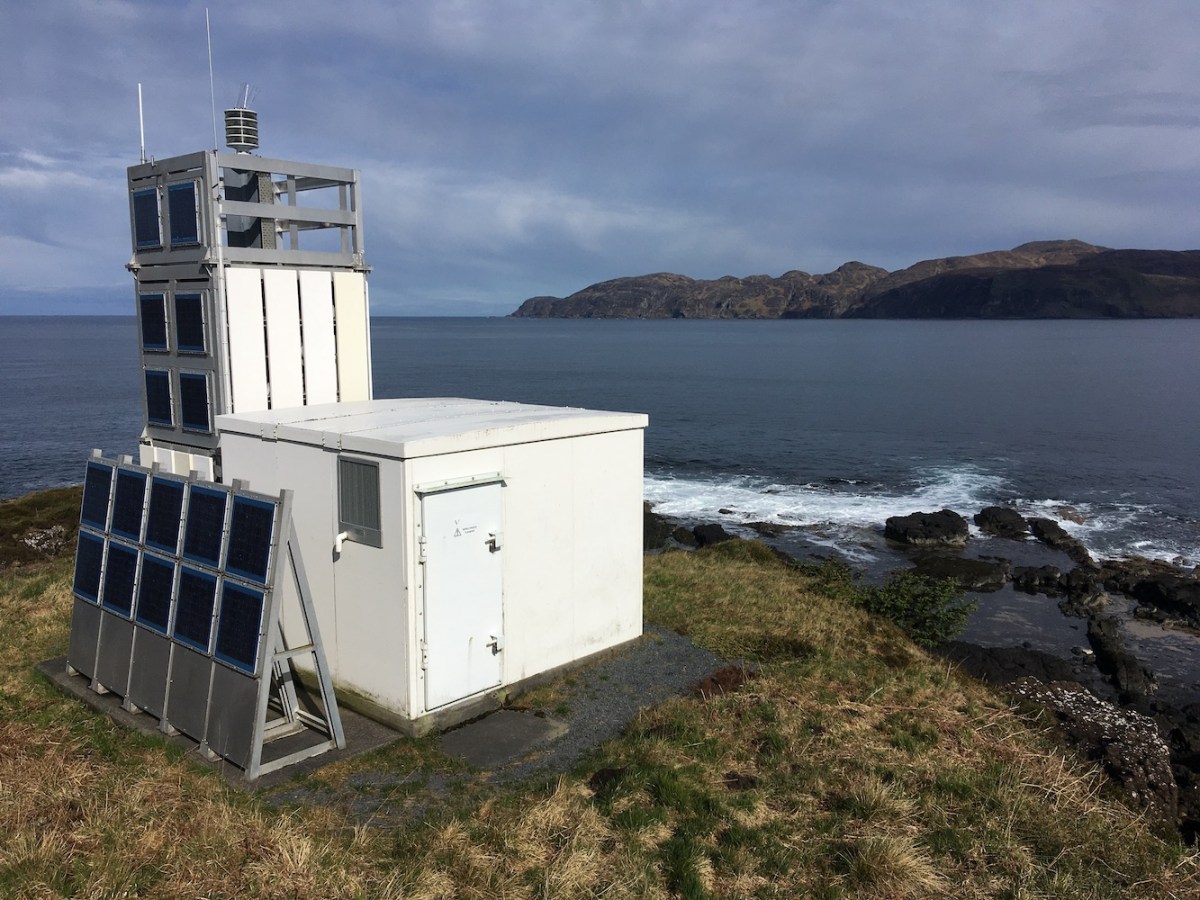
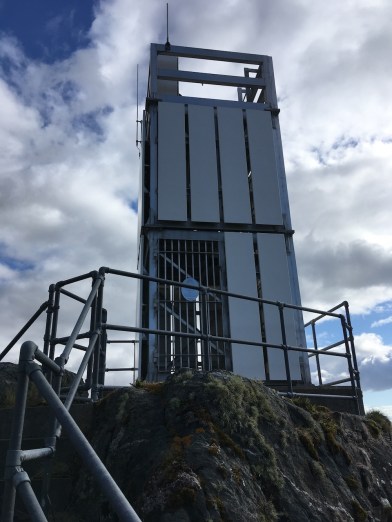
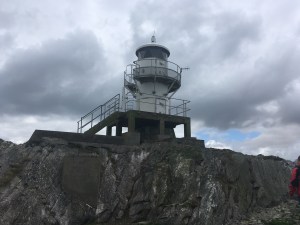
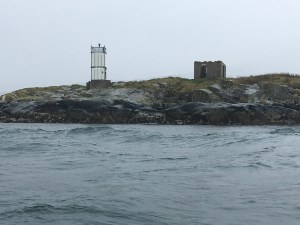
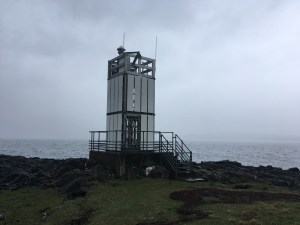
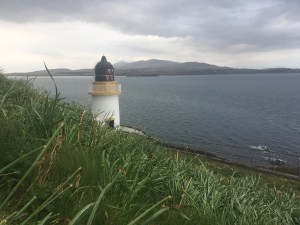
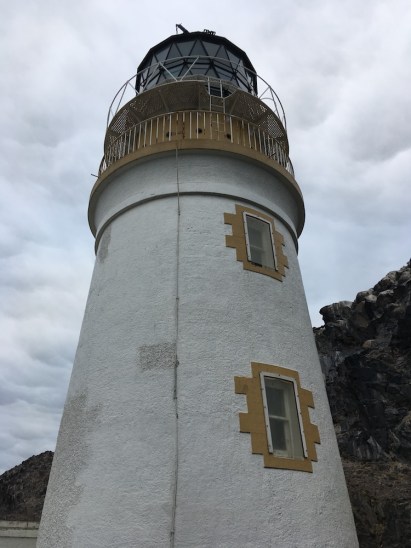
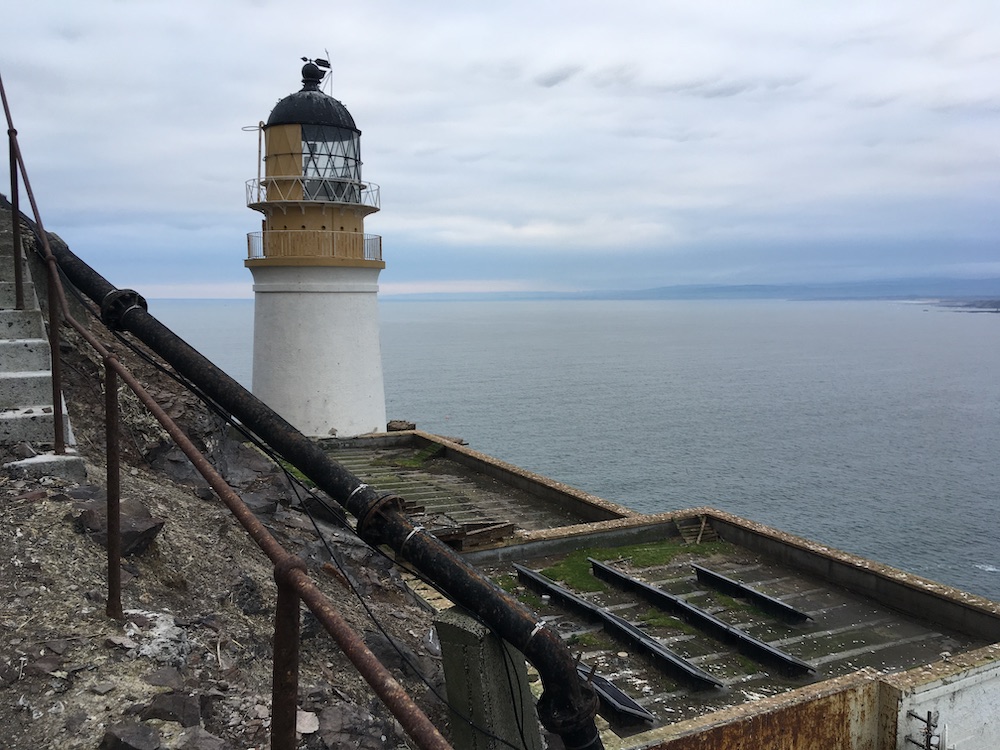
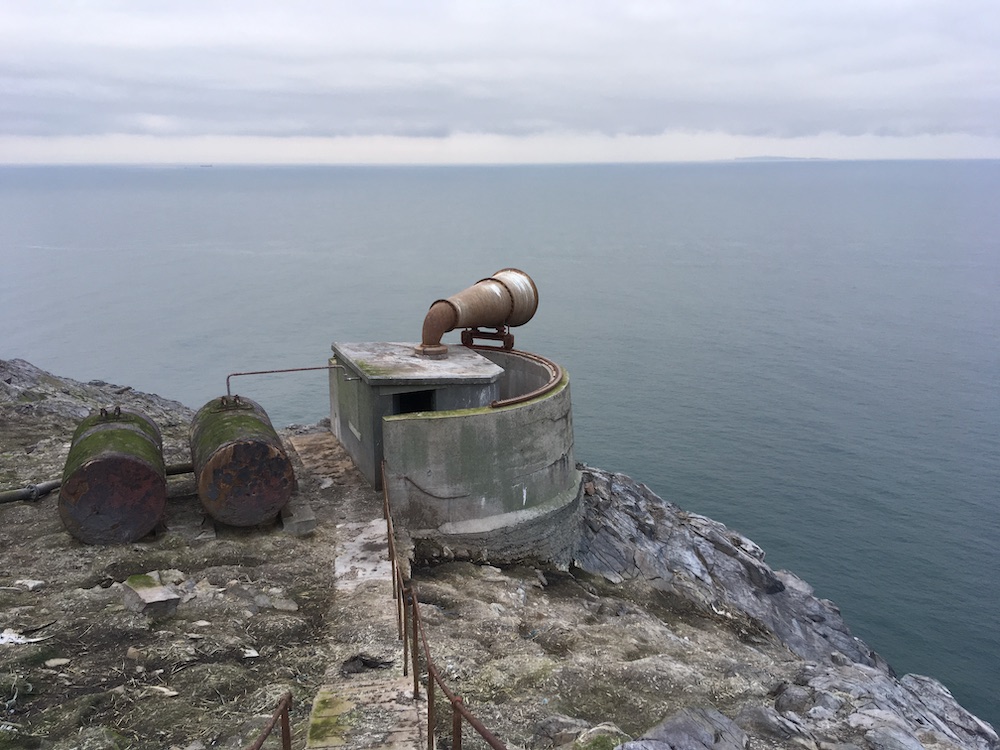
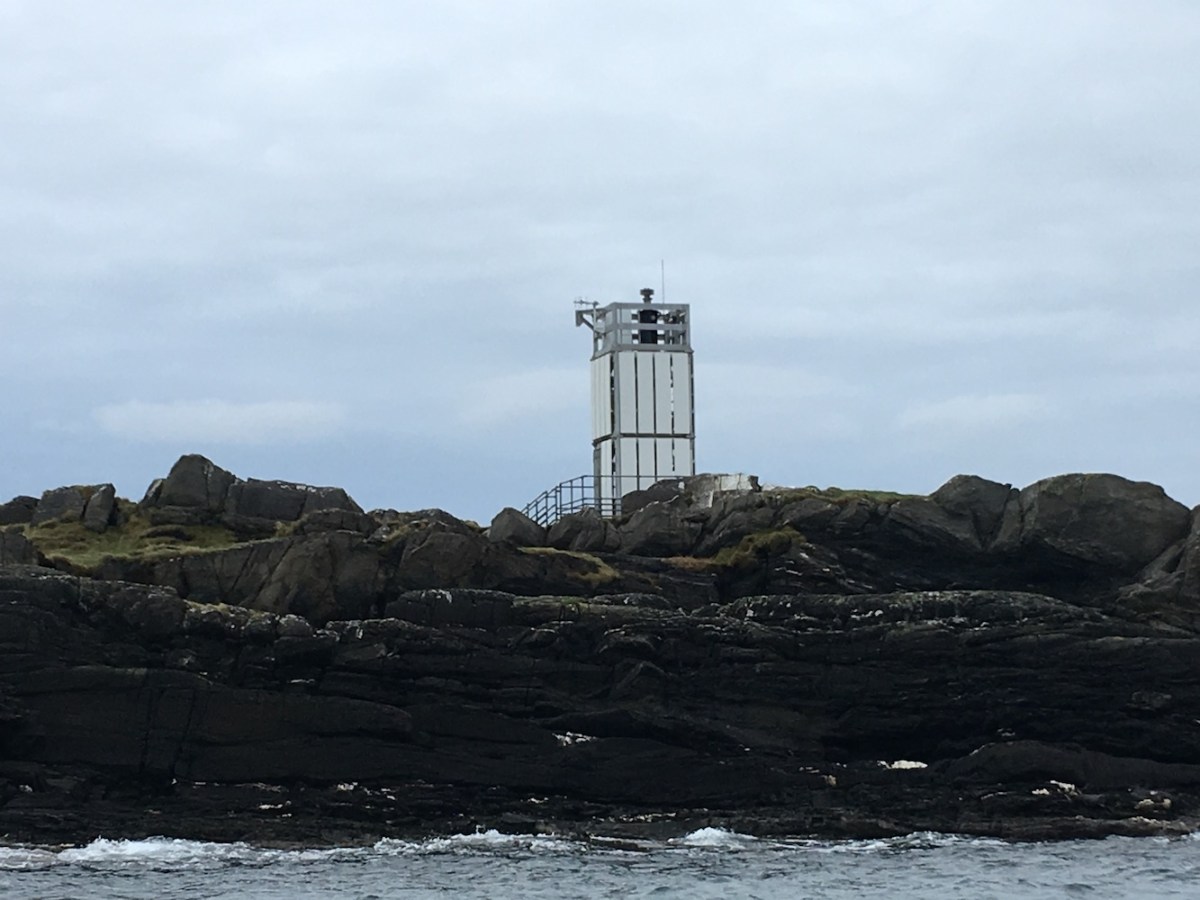
While the majority of our trip had taken us further and further north, our first lighthouse stop after setting off from Gairloch was the island of Eilean Trodday off of the northern tip of Skye. This was perhaps a bit of a detour, but an important one as it was on the “to do” list for a number of members of the group. Again we were greeted with sunshine and calm seas –  we really were so lucky with the weather. Briefly pausing to look at a sea stack off of the coast of Eilean Trodday we then made our way around the coast looking for a section that would not involve a climb up sheer cliffs. I’d not expected the cliffs to be so high on the island. Luckily there was a more accessible landing area and we all made it safely onto the island. Once again we were faced with the joys of vegetation and not knowing where to put your feet. Being so slow with my short legs, I was in a fortunate position to take pictures of the two group members who fell over, which amused me no end. Reaching the lighthouse was tough going at times, but we got there even though I complained a couple of times, asking “why does everyone else seem to find it so easy?”, referring to the difficult terrain. The Northern Lighthouse Board have certainly stocked up at Eilean Trodday. There are solar panels galore (14 to be precise) and even separate white cabinets outside the tower as there is no room for them inside. Maybe it’s an island they don’t want to have to visit too often! The views from the lighthouse, which I should say is a standard size flat-pack, are fantastic. It was a clear day and we could see the Western Isles and Shiant Islands to the north west. A lovely spot and the return journey wasn’t quite so bad with Bob leading me around the most difficult bits.

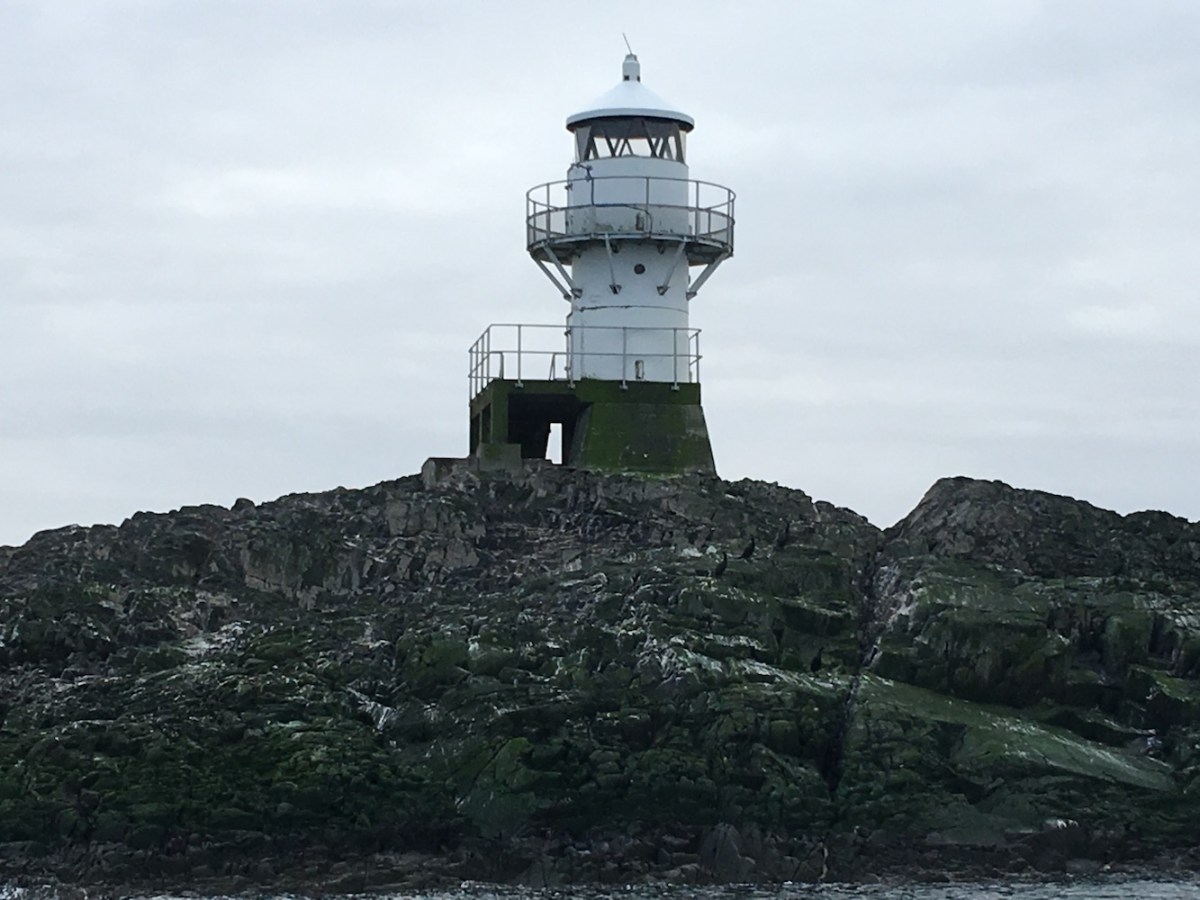
Eilean Trodday
Eilean Trodday lighthouse

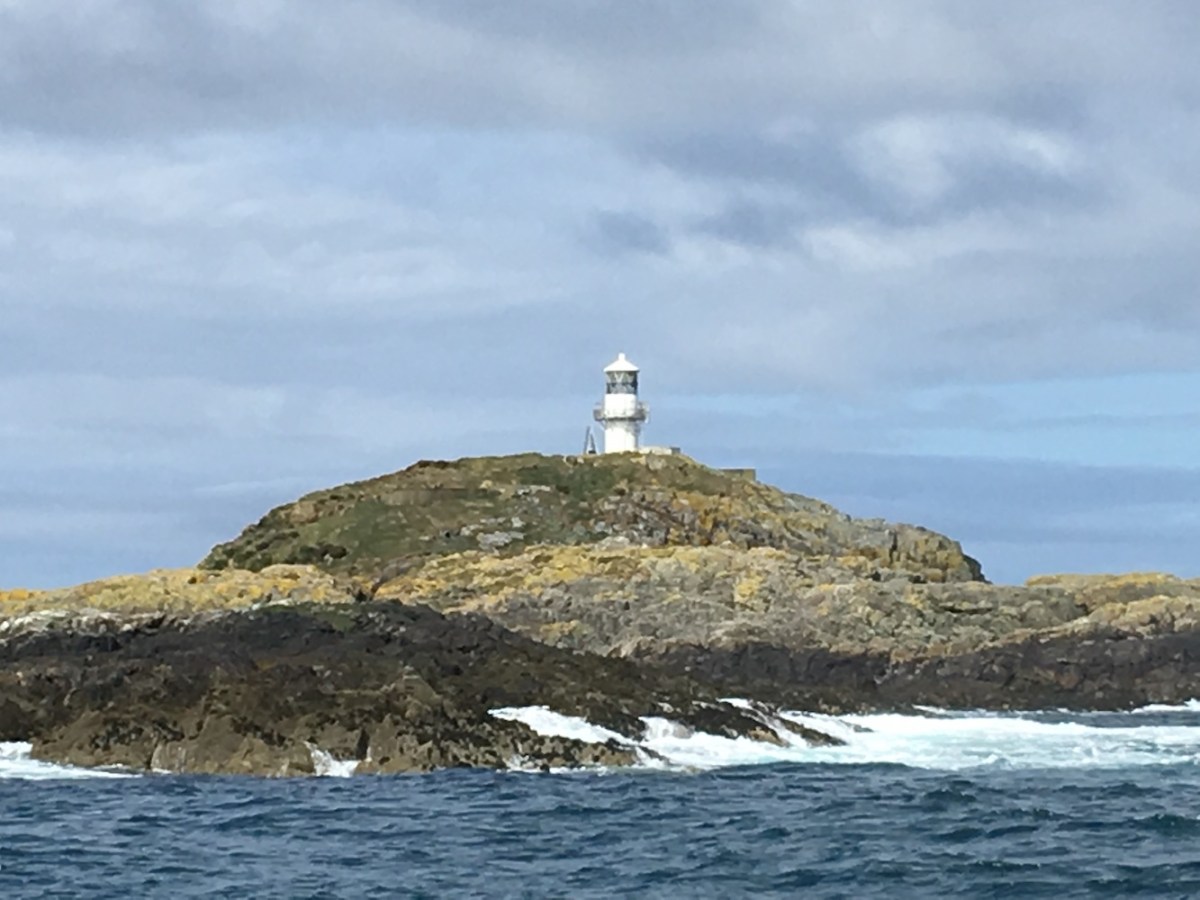
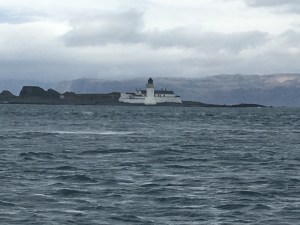
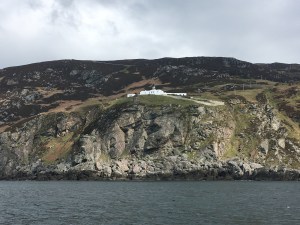
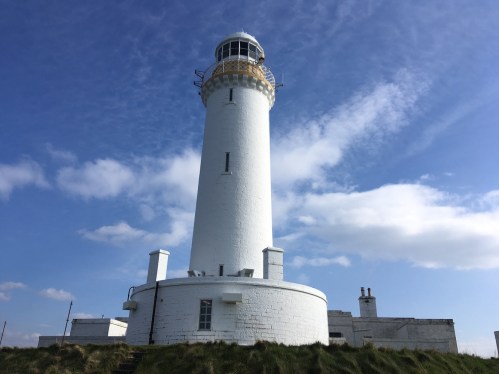
Onwards we went, this time to the north east, passing Rubha Reidh lighthouse. I’d not been to Rubha Reidh since my original tour and I know that there are now some access issues, which makes it a bit more challenging. It’s always fascinating to see these lights from the sea. Straightforward access to almost all of the mainland lighthouses means that, unless you are on a ferry heading somewhere and happen to pass the lighthouse, you don’t really get to see them from that perspective. Rubha Reidh is a fairly low-lying lighthouse with no high cliffs. It looks beautiful though, even if the scenery lacks the drama of some west coast locations.
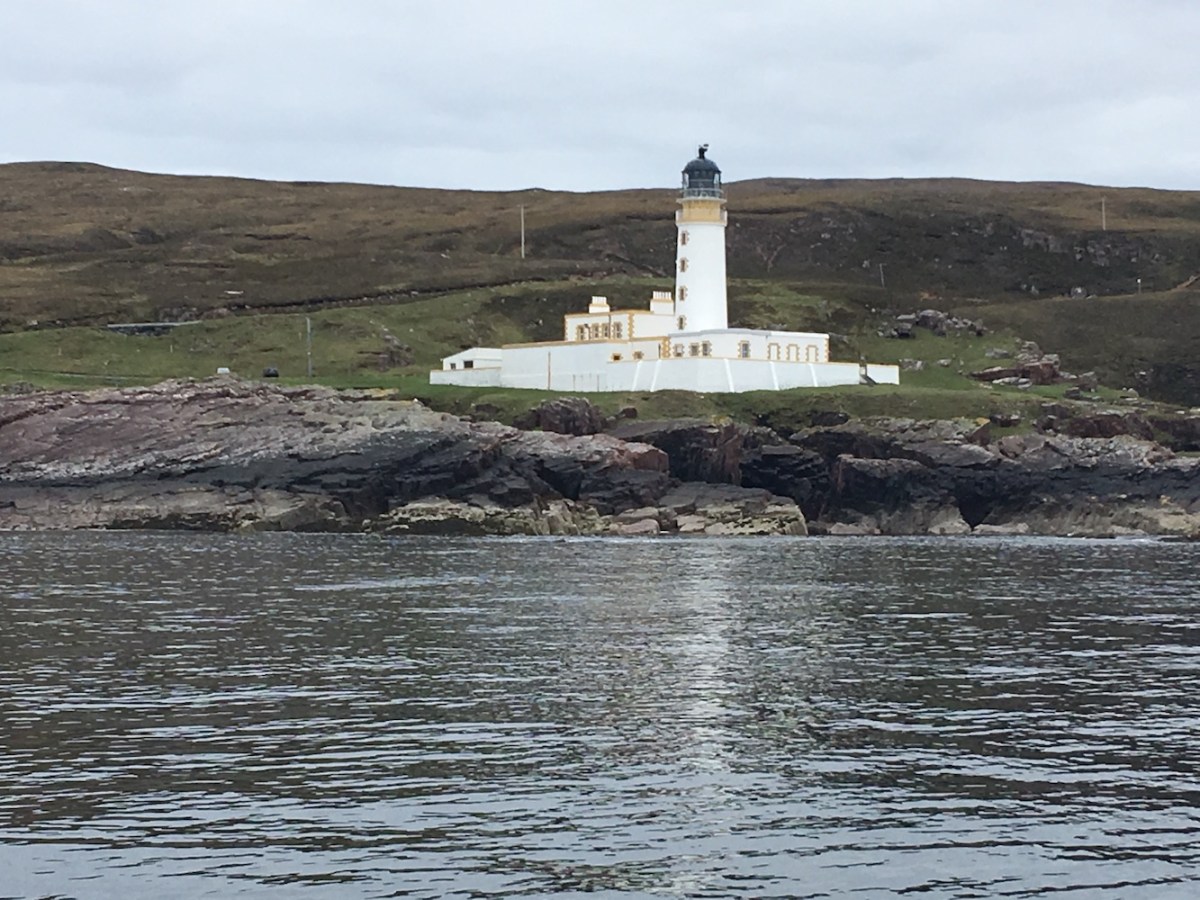
Rubha Reidh
Rubha Reidh lighthouse

You may have noticed that I mentioned in the last paragraph that almost all of the lighthouses on mainland UK are straightforward to reach. Well, this can certainly not be said for the next two lights on the trip. I’d been desperate to get to the very remote village of Scoraig for some time. This was, of course, mainly due to its lighthouses, but also because there is something very intriguing about a village that has no mains electricity and no connections to the rest of the country’s road network. The only ways of getting to Scoraig (unless you have a boat in the area like we did) is by walking along a 5-mile path or by trying to organise hopping on a local boat across Little Loch Broom from Badluachrach. There is a great quote from a local man Hugh Piggott on the We The Uncivilised website: ‘Scoraig is not an “intentional community” but a collection of individuals who feel connected by our common location with its peculiarities.’ When you visit the village it is clear that it is not a standard community. The houses aren’t all huddled together in one area, they stretch across quite a large area. There are bikes near the entrance to a lot of the properties and you can see the appeal of getting about on wheels rather than on foot.

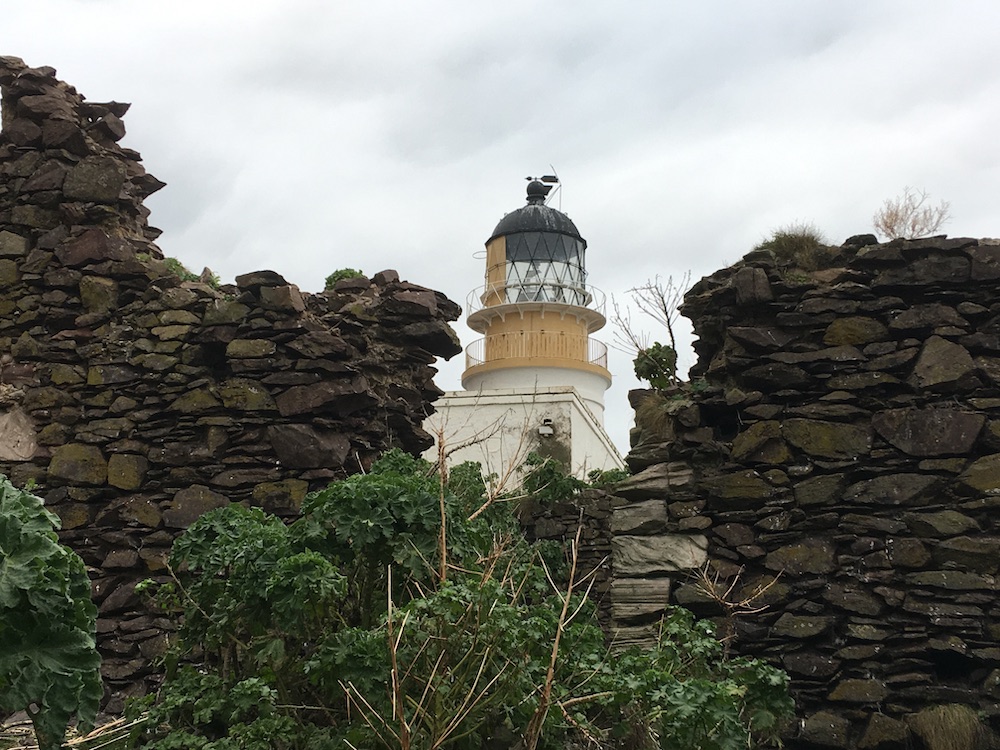
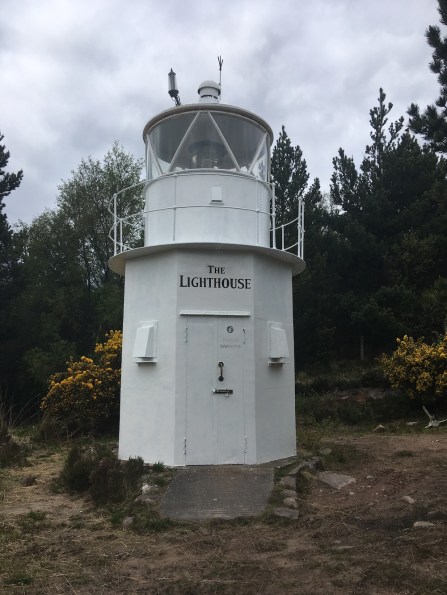
From the jetty we set off towards the school to see the old lighthouse that formerly sat at the end of the Scoraig peninsula at Cailleach Head. In the same way that the community in Glenelg rescued the old Sandaig Island lighthouse, the community here campaigned to keep their lighthouse – and it still has its lens too! It’s amazing what they have done with it. It now features in bold black letters ‘The Lighthouse’ above the door and it houses a range of information about what life is like for those who live in Scoraig. The lighthouse is always open for visitors. It’s a very calm location for it and close to the tower is a low, C-shaped stone wall featuring lighthouse drawings from local children and a series of carved messages and quotes. One example read: “On and on the lights will flash and those lost ships will crash on the craggy rocks of Scoraig”. Such a lovely thing to do and with that sort of personal touch it says so much more about the community than most other redundant lighthouses ever could. A really interesting place, and somewhere I would certainly not mind visiting again in the future.
Scoraig2
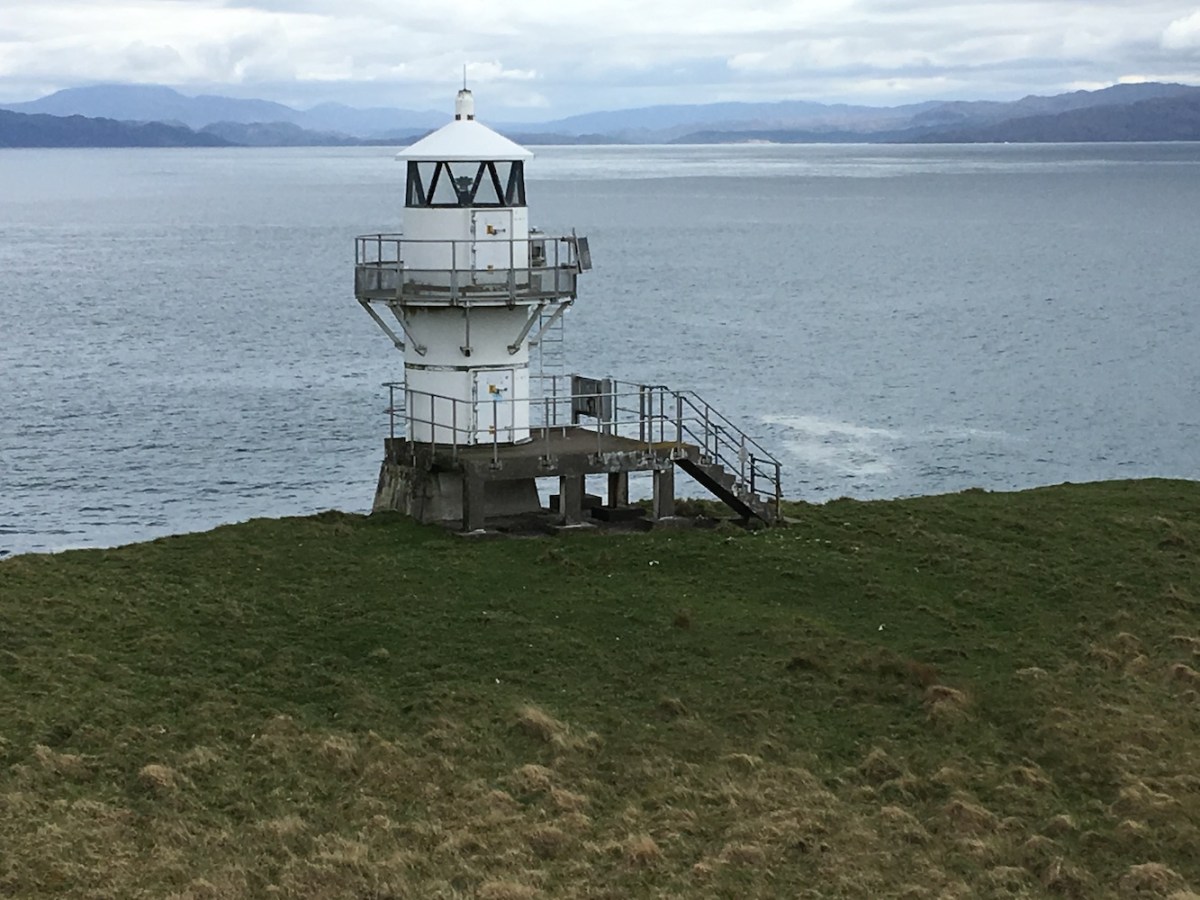
The old Cailleach Head lighthouse, now in Scoraig village

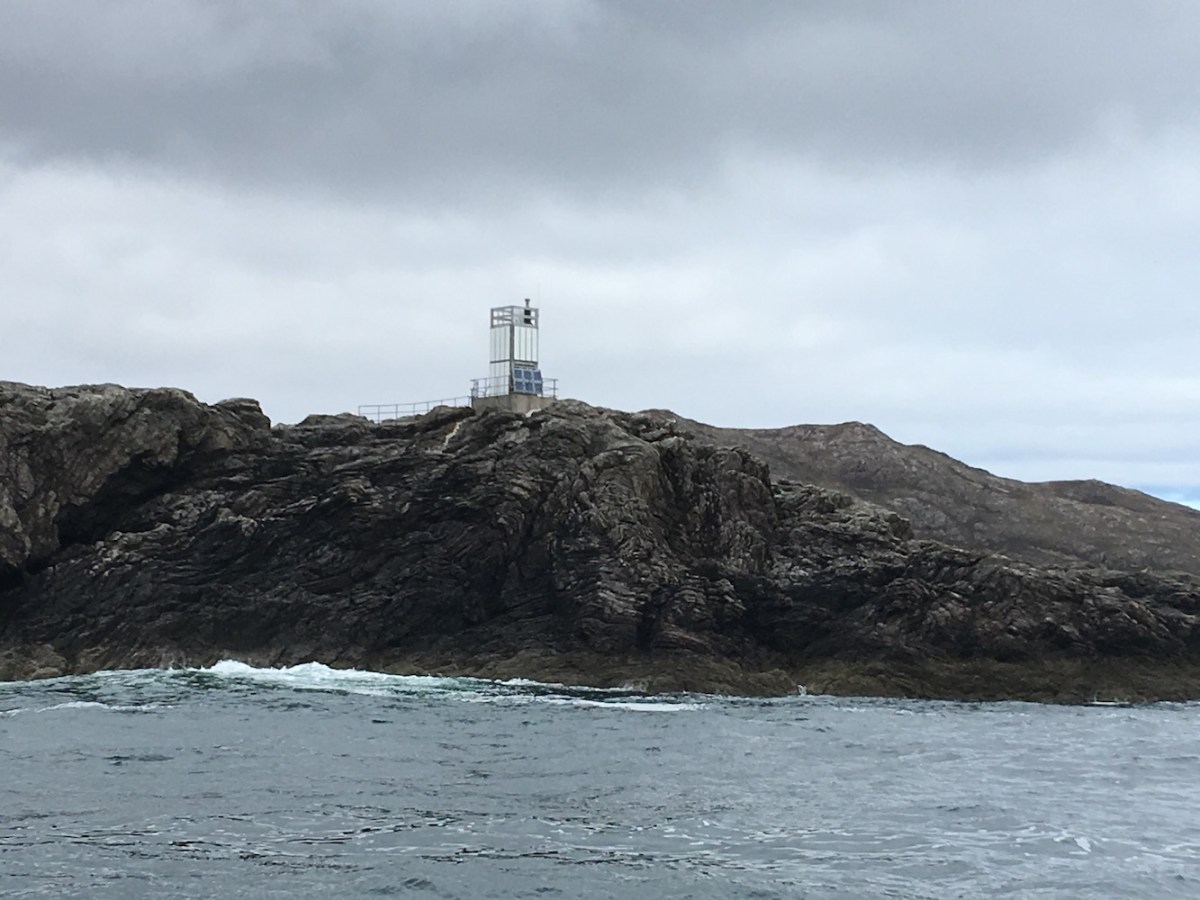
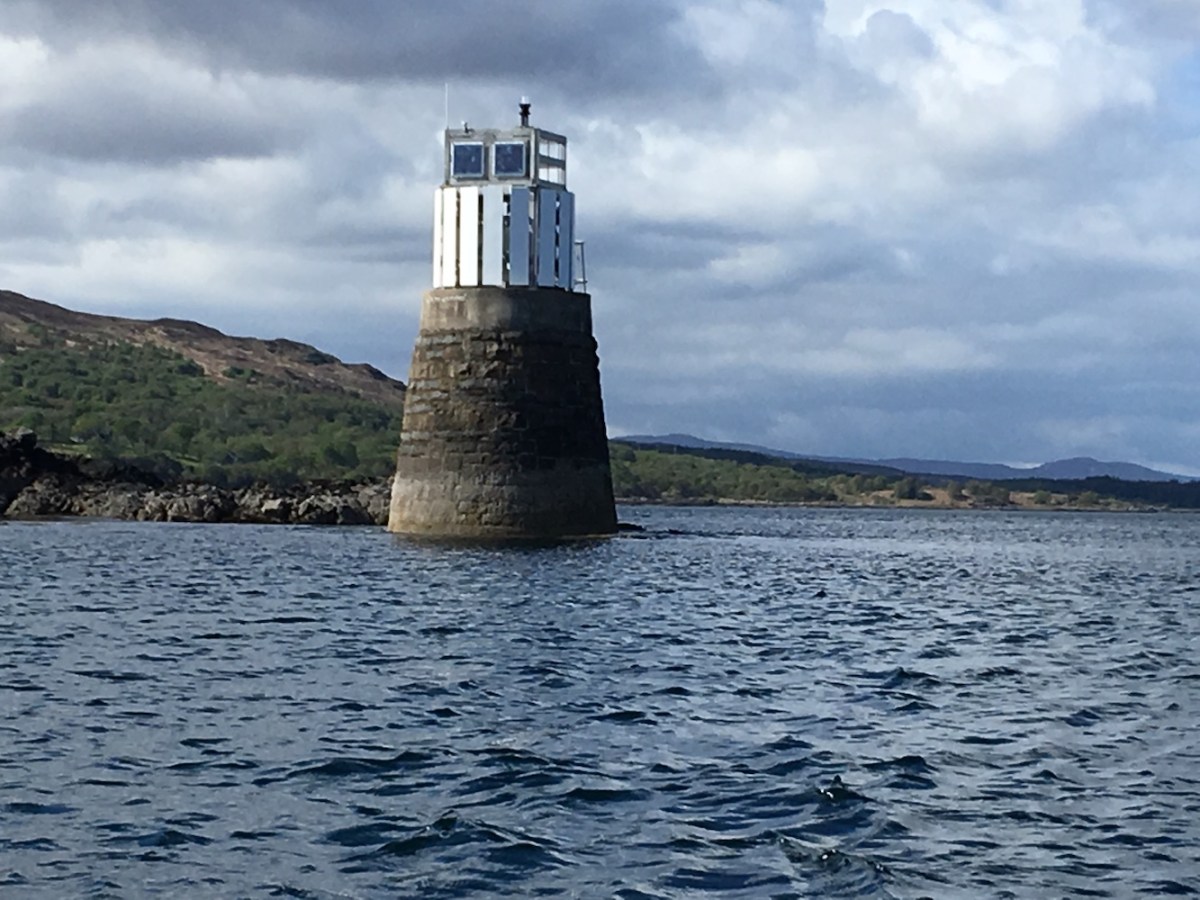
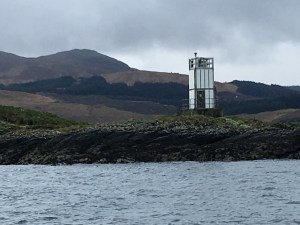
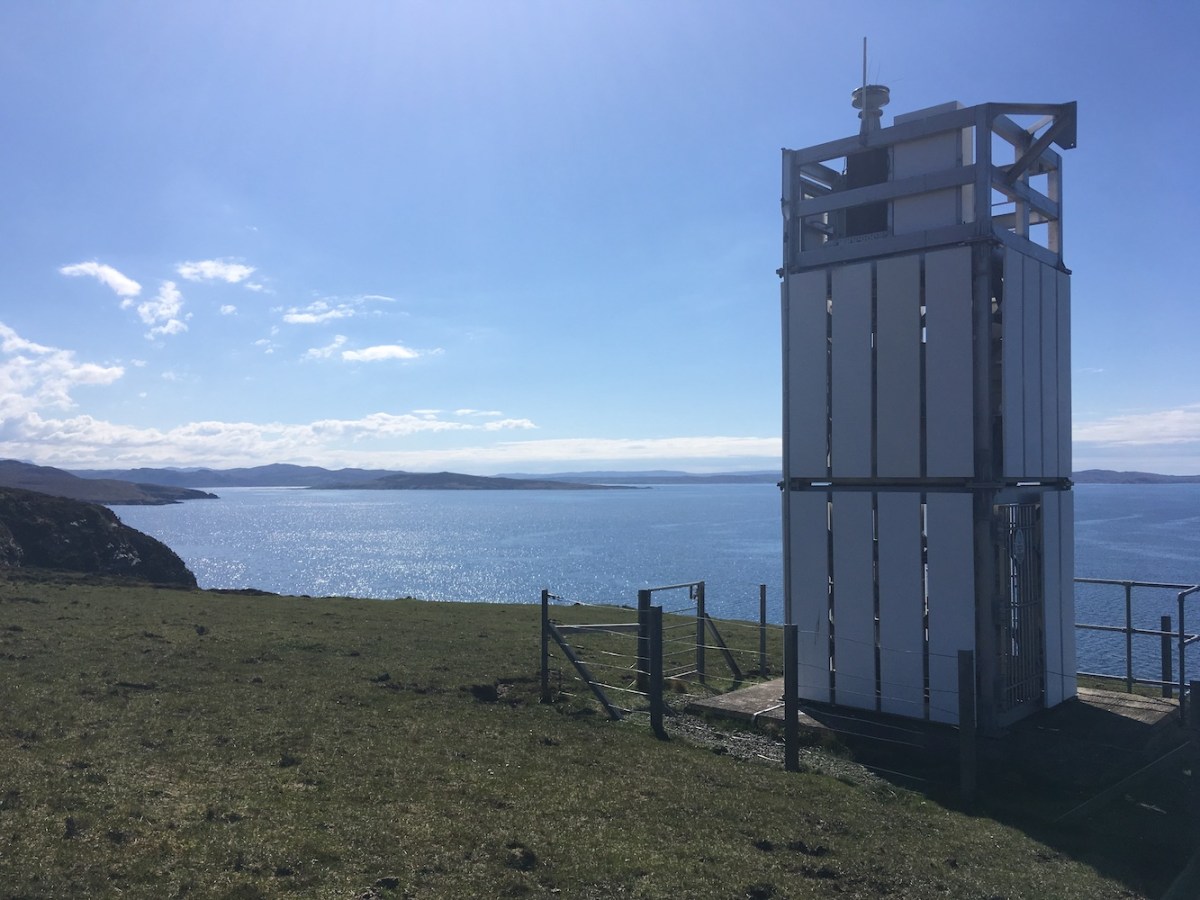
Time was not on our side with Scoraig as we still had one more lighthouse to see: the flat-pack light that had replaced the tower in the village. This wasn’t going to be the easiest to visit, but I was hopeful that it would be worth it. Initially I thought we would need to head all the way back down through the village and then up again onto the headland. Fortunately, Bob had thought it through and decided that the best approach to take would be to continue gaining more height by heading north east and then cutting across once we were at the highest point on the path or before we started going too far to the east. This worked well and, due to the lack of rain in the area in recent weeks, the ground was very dry, meaning there was little in the way of tough vegetation. The views as we gained height really opened up and were pretty spectacular, especially towards the south east with the hill straight ahead, Loch Broom to the left and Little Loch Broom to the right. Blue skies always help with that sort of view too. It wasn’t a quick walk by any stretch of the imagination and in order to save time we had arranged for the skipper, Derek, to pick us up from the rocks to the east of the lighthouse two hours after we arrived at the jetty. Bob, John and I made fairly good time on our walk to the end of the headland, meeting up with a couple of the other group members on the way to the lighthouse. The headland felt like it went on forever until eventually the lighthouse appeared. I was delighted when the other four formed an arch made up of three walking poles and one rucksack for me to walk through. The reason for this was that Cailleach Head marked my final lighthouse in the Northern Scotland region. It was a fantastic place to celebrate. A really lovely, isolated place alongside friends, what could be better? With only 20 minutes to spare before the boat was due to pick us up we followed a clearer path down to the rocks. There was a little more swell by this point, but we all made it into the tender and then back to the boat safely.
Cailleach Head
The modern lighthouse at Cailleach Head

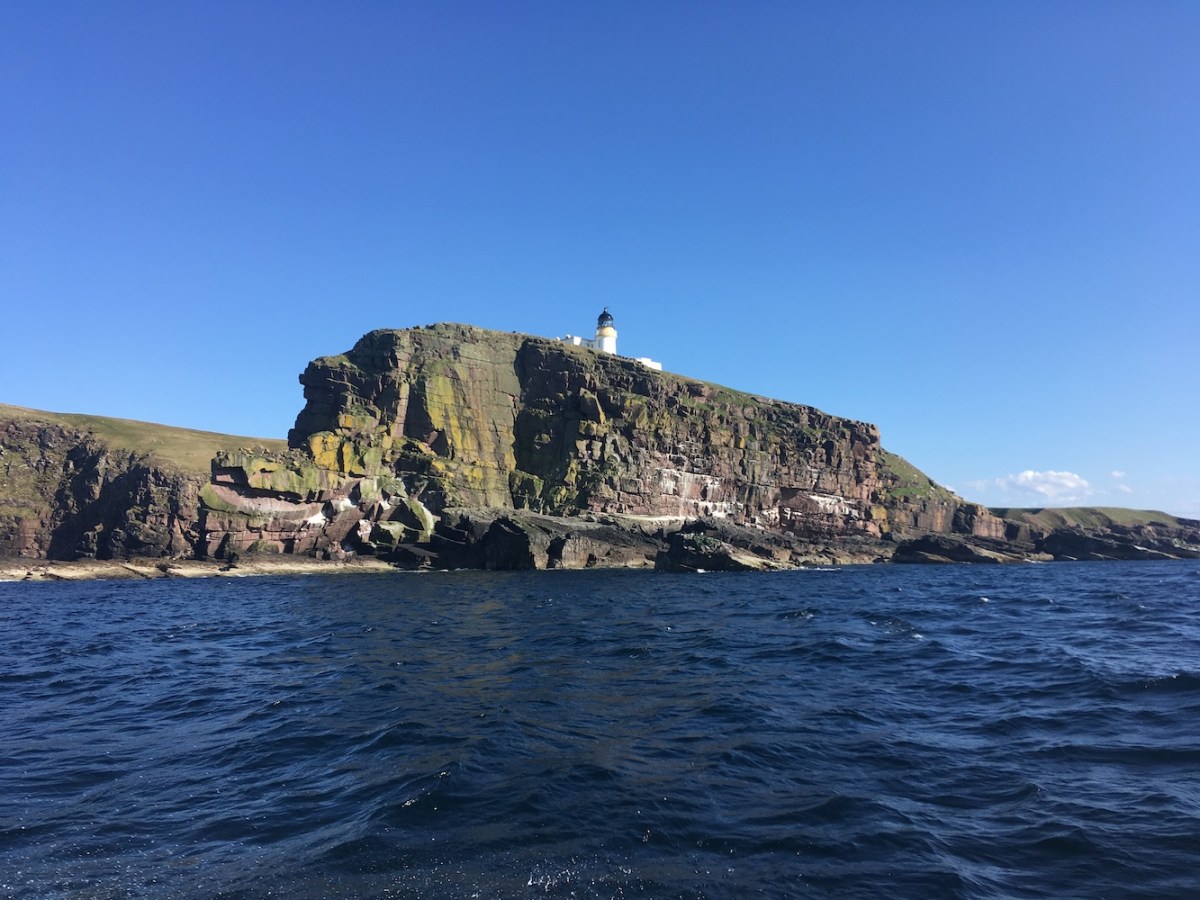
Basking in the wonderful feeling that comes with visiting a unique place we had one more point of interest before we arrived at Kylesku, our final destination. Passing Stoer Head was wonderful. While Rubha Reidh from the sea lacks drama, Stoer Head certainly doesn’t. Having visited it by land and remembering the uphill section that takes you the last little distance to the lighthouse, I’d never considered what the shape of the coastline would be there. It is only when you see it from the north that you realise the lighthouse sits on a raised section of rock that is surrounded by relatively lower land. It’s a stunning angle on the lighthouse and I’m so glad I’ve been able to see it from the sea in order to appreciate it fully. Once beyond the lighthouse the land rises up again as you head further north where The Old Man of Stoer is on display. The Old Man is impressive, there is no denying that. While some members of the group were talking about climbing it sometime – and one already has – I was more than happy to just enjoy the view, safe in the knowledge that I will never even attempt to do such a thing.
Stoer Head
Stoer Head lighthouse

As we arrived in Kylesku I expected to feel sad, but instead I was elated. We’d had the most wonderful week. With the exception of the Cairns of Coll everything had gone perfectly. The group had really bonded, everyone felt that they had achieved something and I felt so lucky to have been on the trip. We made a lot of memories over those five days (as well as Rathlin for four of us) and I was certain that everyone would leave Kylesku the following day feeling like they’d made new friends and been part of a unique experience. I mentioned above that we all felt that we had achieved something. Well, the boat was full of “baggers” or, as the skipper so eloquently put it, “collectors of all things”. Here are some statistics that give an idea of what we achieved. We travelled 349.7Nm taking in 37 lighthouses (for me this was 18 new and 19 revisits), 36 Mervlets (islands on a list devised by our good friend Mervyn), 18 Significant Islands of Britain (SIBs), 16 TuMPs (hills with 30 metres of prominence), 1HuMP (hills with 100 metres of prominence), 3 Ordnance Survey trig points, 1 Ordnance Survey bolt, 55 bird species and 4 marine mammal species. All in all very impressive.

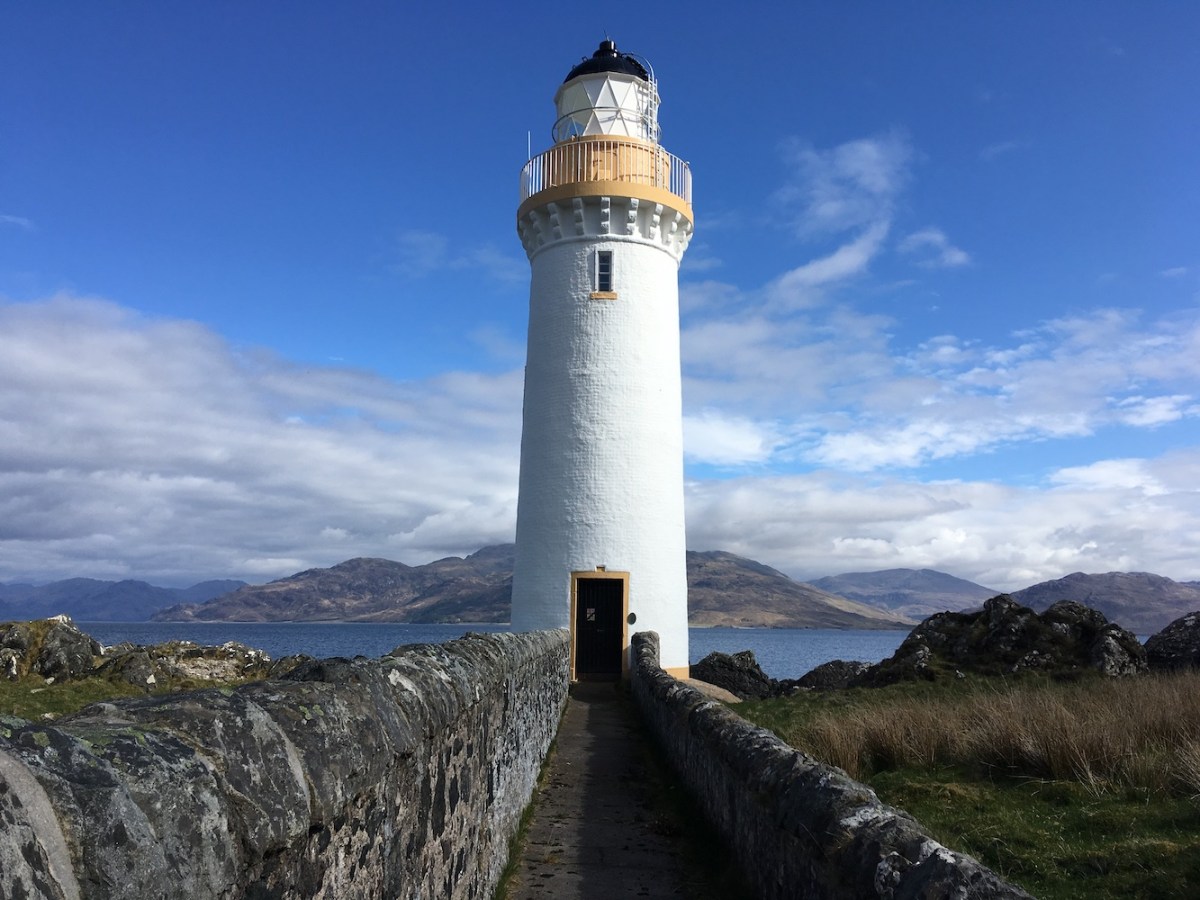
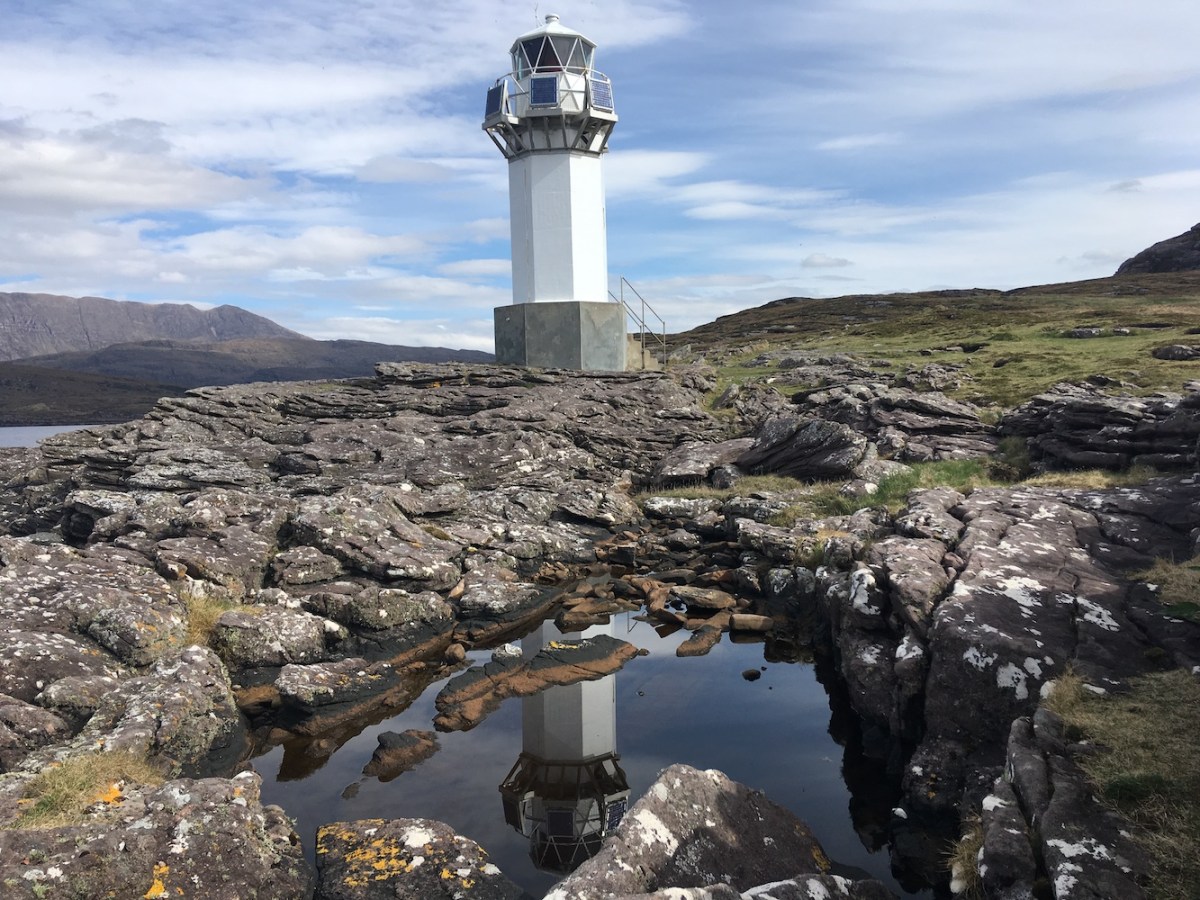
Not wanting the trip to be over, the following we day we stopped off at Rhue for a wander down to Rubha Cadail lighthouse. Yet again it’s a tower in an awe-inspiring location and for one final time the sun was shining down on us. It was a perfect day for reflections and I was glad to see a couple of little pools of water close to the lighthouse to get some nice pictures of these reflections. A really great end to a trip that will never be forgotten.
Rubha Cadail
Rubha Cadail lighthouse

These adventures sure do make you glad to be a lighthouse bagger 🙂

West Coast Adventure: day three

I have got a little behind with these posts due to having too much fun on the West Coast Adventure. On Saturday, day three of the adventure, we had another lighthouse and island-filled time. Setting off from Kilchoan it was only a short journey to our first stop, Ardmore Point on the north coast of Mull. The sun was already shining bright and the sea was fairly calm, which made landing on the rocks below the lighthouse straightforward. The lighthouse sits a little way up from the sea so we needed to find an appropriate route up, which was a bit of a struggle for me – although Bob was leading the way so I really just needed to follow him. John joined us too and it was only after we’d spent a while clambering up onto the rough grass that we spotted the skipper hopping across the rocks and taking what looked like a much more direct route. I didn’t enjoy the walk to the lighthouse, but as usual the lighthouse managed to cheer me up. Although the tower itself is a standard flat-pack (with multitudes of solar panels), it differs from most others in that it is accompanied by an extra little building.

Ardmore Point
Ardmore Point lighthouse

Returning to the ‘mothership’ we set off again. We’d planned to head out to the Cairns of Coll, but a storm was forecast for the afternoon so we weren’t sure if it would be worthwhile. As it turned out the storm never reached us (or passed over the night before), so we decided to attempt it. Waving to Ardnamurchan on the way, we began the journey out to the north end of Coll. On our trip last year, we had been to the Cairns of Coll, but had not been able to land on the lighthouse island, Suil Ghorm, from the RIB we had been on due to the shallowness of the water. As we arrived at the island group it became fairly clear that we would be unsuccessful again. A couple of members of the group attempted a landing on a neighbouring island, which didn’t go particularly well so the decision was taken to abandon any attempt to land. Skipper Derek from North Coast Seatours did sail as far around the lighthouse as he was able to though so we could get some good pictures. It was nice to see it again even if it wasn’t as closely as we’d hoped.

Cairns of Coll
Cairns of Coll lighthouse

The Small Isles were our next destination. I was looking forward to this as it included a stop at Eilean Chathastail, home to Eigg lighthouse. I’d been here with Bob and a group of island baggers back in 2015 and absolutely loved it. It’s the type of lighthouse I am very fond of and the opportunity to revisit was one I jumped at the chance of. It was also one that John had been wanting to visit too as he’d previously only seen it from the sea. With the storm nowhere to be seen and  the sea calm, there was no problem at all with landing on the north west of the island. This was a little different to last time when we landed on the east coast of the island, closer to the lighthouse. This did mean we’d need to walk a bit further and I was glad that Bob had offered the use of his GPS device as it kept us on track for getting to the lighthouse. As it is set down a little from the highest ground on the island it is difficult to see from the north of the island until you are almost at it. The walk wasn’t too bad and we were rewarded with some fantastic views when we got to the lighthouse. We could see across to the pencil-looking Ardnamurchan lighthouse, this time to the south west, standing tall. I was reminded again of how calm the place feels and I enjoyed the visit as much, if not more, than the first one.

Eigg.JPG
Eigg lighthouse

After lunch at the cafe on Eigg, we continued our journey north. We were soon approaching Skye and we sailed close to the flat-pack lighthouse at the Point of Sleat. It’s quite a walk to the lighthouse, but an interesting one as explained in my post from 2016. Certainly much easier to visit/see from the sea!

Point of Sleat2
Point of Sleat lighthouse


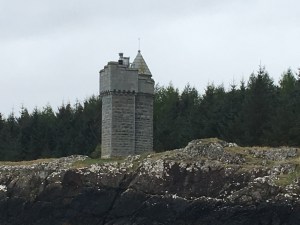
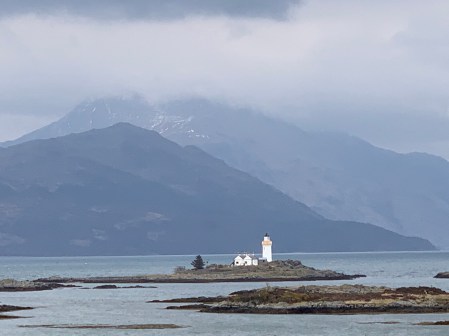
I’d been looking forward to our next stop and I felt a little bit like a child in the back of a car as we sailed up the east coast of Skye. I had to stop myself a few times from asking “Are we nearly there yet?” On my original tour I’d seen Ornsay lighthouse from the village of Isleornsay when the tide had been in. On the second visit, Bob and I had walked out to it at low tide, and a last visit a few weeks ago was again just a quick stop looking across the water to the island of Ornsay and it’s tiny neighbour Eilean Sionnach, the island with the lighthouse. I wrote a fair amount about the beauty of the lighthouse in a recent post so I won’t go into too much detail in that respect this time. However, I was intrigued to see whether the lighthouse would lose any of its beauty for other angles. With the mountains as the backdrop from the general viewing area, I was concerned that it was just that view that made it so stunning. I am happy to confirm that there was no need for concern. I’m not sure what it is about the lighthouse, but it is amazing whichever side you see it from. Of course, with conditions being so calm, we had to land on the island for another opportunity to see it close up. While the sky at Ornsay lighthouse always seems to have been blue when I have visited, it was bluer than ever this time with a few clouds for added effect. I could have happily stayed there for hours and if the cottages ever come up for sale, well… I think the picture below says it all really.

Ornsay2
Ornsay lighthouse

I’ve got a bit carried away and not yet mentioned the Ornsay Beacon Lighthouse, which we actually visit in the small tender before landing at the big lighthouse. Although, from a distance, it doesn’t look like there is much to this one, when you see it close up it’s far more substantial. It is a solid round stone tower topped with one level of the flat-pack arrangement. Of particular note though is that, everywhere else, the flat-pack has a square footprint, but this one has rounded edges. It’s a good structure and really nice to get a chance to see it at close range. This is why I enjoy getting closer to this type as it is difficult to appreciate them from a distance when they all look pretty much the same. You also don’t get a true feel for the location unless you are on the island they sit on or very close to it. This one was great to see.

Ornsay Beacon
Ornsay Beacon lighthouse

Once the island baggers had bashed their way to the high points of a number of islands as we moved further north, we arrived at the Sandaig Islands. The Sandaig lighthouse is on Eilean Mor which, unlike most of the other islands within the group, is not accessible from the mainland at low tide. As the group were all looking to achieve different things on these islands, only a few of us were dropped off on Eilean Mor. With Bob joining us a little later, John took on the role of lead navigator, establishing whether attempting to walk along the rocks or across the island was the better route. Opting for the more foliage-filled option it wasn’t too long before John spotted a series of wooden posts sticking out of the ground that seemed to lead in the direction of the lighthouse. The path that these posts followed was quite good in places and a little rougher in others, but we were definitely glad to have found it. As we approached the lighthouse John joked that Bob was likely to just turn up around the corner at any moment and then, as if by magic, he appeared strolling across the rocks. I’ve taken to referring to Bob fondly as ‘Goat Legs’ on these trips due to his ability to make any walk across any terrain like like a stroll in the park. This is another brilliant island and so it was a pleasure to visit the flat-pack structure. I must admit though that it would have been nice to have seen the old lighthouse (now located at Glenelg pier – see my earlier post for more information on that one) in place, but still a great place to visit. Once we’d finished at the lighthouse we followed the posts across the island and to a little sheltered rocky bay. The three of us sat, chatting in the sunshine surrounded by beautiful views, while we waited to be collected.

Sandaig
Sandaig Island lighthouse

That was the end of our lighthouse adventures for the day. Glenelg was where we based ourselves that night. What a wonderful day we all had. While a large percentage of the UK was experiencing the wrath of Storm Hannah, we had avoided it entirely. What a lucky bunch we were 🙂
West Coast Adventure: day two

If I had started this series of posts with more imaginative titles I would have probably called this one “a day of little lights” or something similar. I think that describes it quite well really.

We started the day slightly earlier than the rest of the group and took the tender out from Craighouse on Jura across to land on Eilean Nan Gabhar, which is home to one of the “flat-pack” lighthouses – the one we had seen flashing while we ate dinner the night before. While the crossing was a little rocky, landing was absolutely fine and it was really just a hop across the rocks (I never enjoy that sort of thing very much though, but will do it if there’s a lighthouse at the end) to reach the lighthouse. This one is a fairly standard flat-pack so there’s not a great deal to say about it. It is always nice to see these ones close up though and, I believe, this is the first one I visited with my friend John who also has a rather rare appreciation of these structures.

Eilean Nan Gabhar lighthouse in the Sound of Jura

Once we’re returned to the “mothership” as our North Coast Seatours skipper Derek so nicely refers to it, we joined the rest of the group and set off northbound again. It wasn’t too long until we reached the great lighthouse that is Skervuile. While we did see this one earlier in the year, the tide was out then and this time it was higher so we got to see Skervuile in its full rock lighthouse glory with the waves lapping at its base. It’s a very interesting tower and considerably smaller than any others sitting on rocks often submerged by the sea. This was our closest view that day of one of the Northern Lighthouse Board’s larger lights and those on the boat couldn’t fail to be impressed.

Skervuile lighthouse

Continuing north we landed briefly on Ruadh Sgeir for a visit to the lighthouse. This was another one we had seen in January, but not landed on then. I am very fond of this type and it’s always nice to have a chance to see one close up. They strike a nice balance between the modern and the traditional. Although they don’t have the majesty of the old stone towers they have more substance to them than the flat-packs.

Ruadh Sgeir lighthouse

We sailed past Reisa an t-Sruith, another one we’d seen earlier in the year. In the interests of time we passed on landing at this one as lunch beckoned! The sea conditions in the area reminded me of the boat trip we did in January where the skipper informed us of the translation of the islands name, which was something along the lines of “the island in the rushing currents”. How very true that is.

A short distance on we sailed past both Fladda and Dubh Sgeir, almost at the same time, which always make it difficult to know which side of the boat to stand on. Do I look at the more beautiful one that I’ve landed at previously or the smaller, less impressive one that I’ve not seen close up before? I like to think I managed to get a bit of both in.

Fladda lighthouse

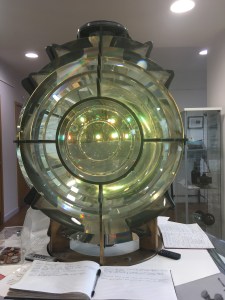
Not that it mattered too much as our lunch stop was on Luing from where Fladda lighthouse becomes the centrepiece of an incredible view. We were booked in for lunch at the Atlantic Centre, which I was particularly pleased about as it is now home to the old Fladda lens and I caught sight of it as soon as we walked in the door. It is very nicely displayed, surrounded by information about the lens itself as well as the lighthouse and details of what life was like for the keepers and their families on the island. That wasn’t it though as, very excitingly, the Centre has a really interesting lighthouse exhibition upstairs. There is information about the Stevenson’s and their lighthouses as well as some fantastic old pictures. The most interesting, in my opinion, due to its relevance to that particular day was a 1947 picture of the old Reisa an t-Sruith lighthouse. Also, a couple of historical pictures of the Garvellachs light with one from the 1950s showing a few people posing on the gallery. A really interesting exhibition.

The old Fladda lens on display in the Atlantic Centre on Luing

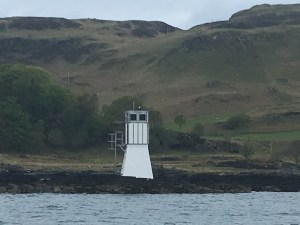
After lunch we were off again and sailed past the lighthouse on Sgeirean Dubha. This is an interesting one and a little different from your average flat-pack as you can see from the picture.

Sgeirean Dubha lighthouse

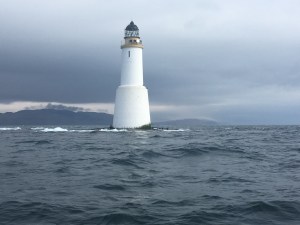
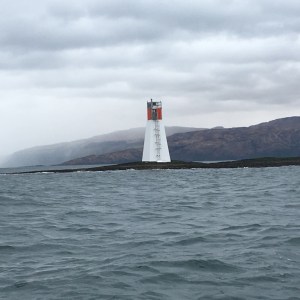
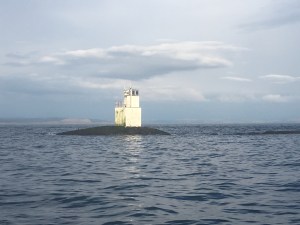
A little while later we passed Oban and obviously saw Dunollie and Lismore lighthouses. We also sailed close to Lady’s Rock, a rock completely submerged by water at high tide, where a husband allegedly abandoned his wife only to then see her wander into the pub later that day after she was rescued by a passing fisherman. An interesting story, that one. Lady’s Rock now features a lighthouse. It’s a different one as the base is solid concrete while the top section is like a layer of the flat-pack design (like Sgeirean Dubha or Na Cuiltean), but the flat-pack section is clad in red rather than white panels.

Lady’s Rock lighthouse

A sail past of Duart Point on Mull was next on the agenda. Although we’ve been to Mull we’d not quite made it there and it will be nice to visit from the land at some point.

Duart Point

Further up was Glas Eileanan. As a structure in itself it’s a fairly standard flat-pack. The only difference really with this one is that it has a little stone hut – probably not associated with the lighthouse at all – fairly close by on the same small island.

Glas Eileanan lighthouse

Ardtornish was our penultimate stop of the day. Bob, John and I managed to land here at the little steps, presumably used by the Northern Lighthouse Board to access the tower. Once off of the rocks it was a really easy walk along the grass to reach the lighthouse. Again, there’s not much to be said about it, and the visit there was possibly not quite as fun as it would have been if it hadn’t been raining.

Ardtornish lighthouse

The final scheduled viewing of the day was Eileanan Glasa (not to be mistaken for Glas Eileanan!). Another flat-pack (I did say it was a day for the little lights, didn’t I?!)

Eileanan Glasa lighthouse

Before heading for our final stopping place for the night, Kilchoan on the Ardnamurchan peninsula, we popped to Tobermory on Mull. There was a music festival taking place and we bought fish and chips to eat on the pier before spending an hour or so in a one of the pubs listening to some local music. On our way back across the water to Kilchoan that evening we could see the flashing lights of both Rubha nan Gall and Ardmore Point. More on Ardmore to come tomorrow.

A really good day and great to have seen so many of those lights that many would just shrug their shoulders at. I think John and I may be converting some of those on the trip towards liking these structures though 🙂
West Coast Adventure: day one

As mentioned in my previous post, we had positioned ourselves in Ballycastle, Northern Ireland in preparation for a sail with North Coast Seatours up to Kylesku. Yesterday was the first day of the trip and what a day it was.

Heading out in considerably calmer conditions that we had expected, our first intended stop was to be possibly the highlight of the trip. Sanda, off of the Mull of Kintyre, has become a very difficult island to access for reasons I won’t go into. While it has never been easy to get to, it has become one of those places that those in both the lighthouse and island bagging communities alike dream of getting to. With the conditions as they were it was looking hopeful that our attempt would be a successful one.

On the approach to Sanda

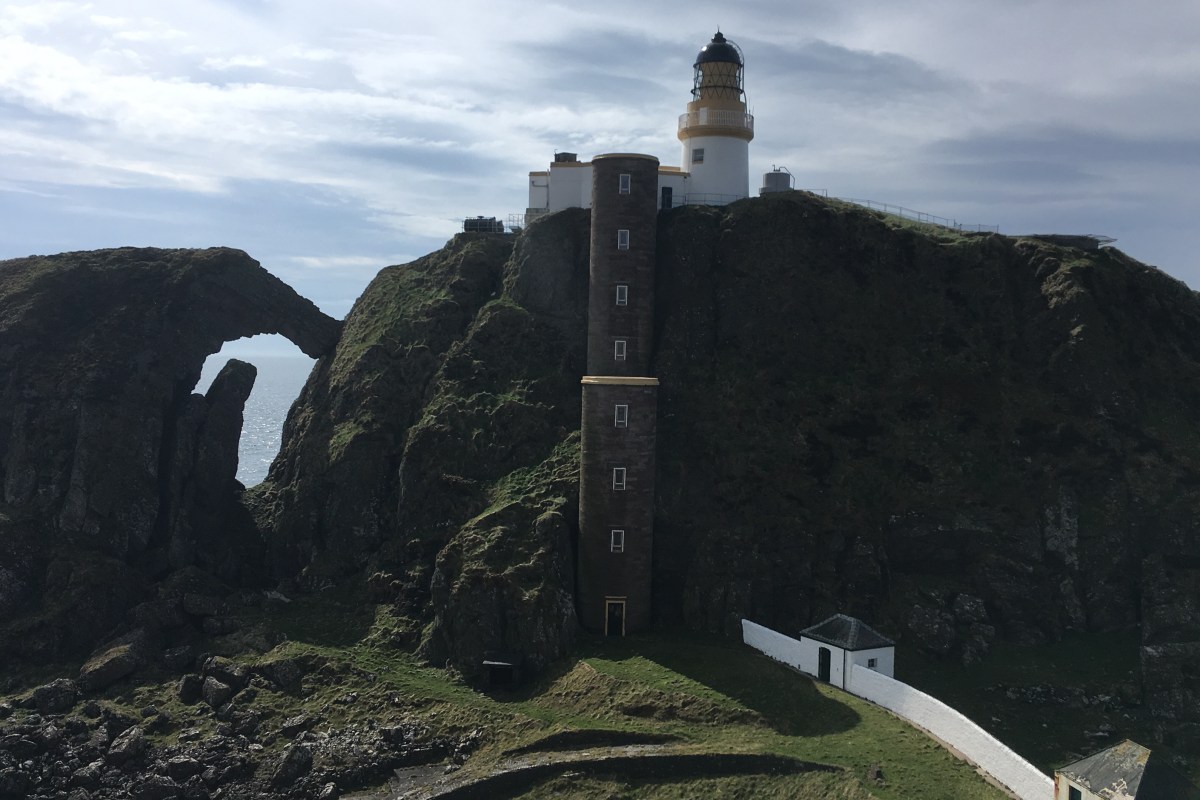
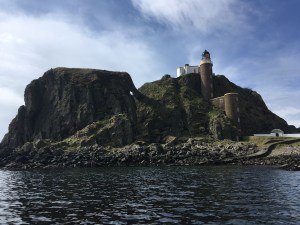
I think we had all anticipated landing at the north of the island followed by a walk down to the lighthouse at the south end. As it turned out the conditions were perfect for landing right next to the lighthouse, which was fantastic as you immediately get the views before you even leave the boat. The jetty there was fine to land on and then the shortest of strolls took us to the base of the lowest tower. Sanda lighthouse is breathtaking. It really is unlike any other with the two brick towers containing the staircases that would take the keepers up to the third and final tower, one much more in-keeping with the standard Northern Lighthouse Board tower. When I saw the towers I was reminded of a friend of mine, a former keeper who served on Sanda, and how he said he never liked Sanda as you had to climb three towers to get to the top. I’d never thought of it like that and it makes sense, although I can certainly forgive Alan Stevenson for that as it is such an incredible structure.

The three towers of Sanda lighthouse

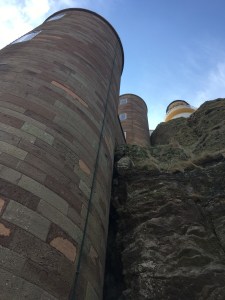
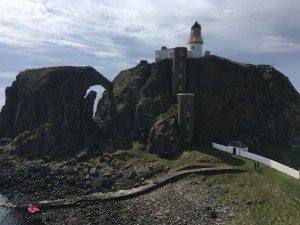
The natural landscape around the lighthouse is equally impressive with the elephant-shaped rock next to it, it’s trunk reaching out towards the lighthouse. The views of Sanda lighthouse are impressive from every conceivable angle. I particularly liked looking up from the base of the bottom tower where you could see all three towers looming large above you. The best view though is from the top of the hill on the opposite side of the little bay we landed at. This spot offers the ultimate view of both the lighthouse and the elephant rock. The best way to describe it really is to include a picture.

The best view of Sanda lighthouse

The old keepers building and store rooms are looking a little worse for wear now, but still make up an important part of the scene. We eventually dragged ourselves away and back into the boat.

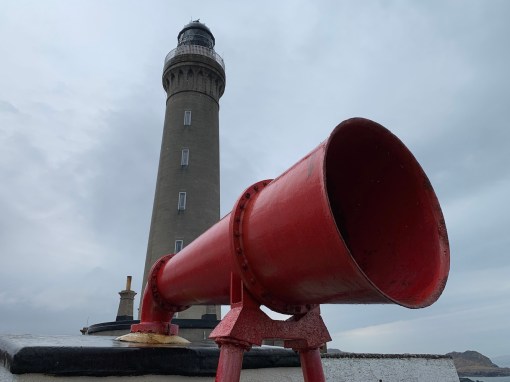
Our journey is, in general, taking us north so we needed to sail around the Mull of Kintyre, which for a lighthouse bagger like me is never a problem. We caught sight of the more modern foghorn first, which I’d never realised was there. A short while later the Mull of Kintyre lighthouse came into view. The height of the cliffs there dwarfs the lighthouse, but it was fantastic to see from the sea. It’s not something I ever thought I would see. It takes some effort to get there by land, but is worth it.

Mull of Kintyre

Onwards we went. After some short visits to islands for others we arrived at our next stop: McArthur’s Head. In our Islay trip in January we’d landed at McArthur’s Head and walked up the amazing steps to the tower and fortunately the conditions allowed us to do exactly the same this time. It wasn’t as calm, but once we were in the tender approaching the little landing area we were fine to step off. Last time we had stunning views from above the lighthouse and again we were rewarded with a very picturesque landscape, albeit very different from the one we had last time. I imagine it is one of those places from which the views are constantly changing. It is a really enjoyable place to be and a good opportunity to show other non-lighthouse people how great it can be. After Sanda and McArthur’s Head I’m pretty certain that they are converted now.

McArthur’s Head lighthouse

Our destination was Jura, so of course we couldn’t possibly have arrived at Craighouse without passing by both Na Cuiltean and Eilean Nan Gabhar lighthouses (more on the latter tomorrow). As the sun was going down by this point it was nice to see these two in the yellowish light, which made a difference to last time.

Na Cuiltean lighthouse

We ended the day in the Jura Hotel having dinner while routinely gazing out of the window while waiting for Eilean Nan Gabhar’s light to come on – and come on it did and a short while later we also spotted the light of Skervuile flashing away in the distance.

A truly fantastic day and one I can guarantee I will never forget 🙂

A cup of tea in Glenelg!

If you were based on the north coast and travelling home from Fort William which way would you go? Probably the A82 and then the A9 I would imagine. We’ve done that route many times and there’s nothing wrong with it at all, it’s quite beautiful in places, although it can get quite busy in the summer months. There may be other slightly more convoluted routes available, but one you’d possibly not choose to take would be via Skye.

Anyone who knows Bob will know that he rarely takes the path of least resistance, and today was a perfect example of that. But it was all fine because the reason for going that way was to pay a visit to the old Sandaig lighthouse, which is now located near the Glenelg-Kylerhea ferry. The lighthouse is really quite easy to access, you can either drive right up to it or take the ferry across from Kylerhea to see it. I had done neither and had just seen it from the other side of the water at Kylerhea a couple of times.

Setting off from Fort William, the first leg of the trip involved getting across to Mallaig for the ferry to Armadale. I booked it on the way there to avoid getting all of the way there to find it was fully booked. The joy of technology! We managed to get on an earlier ferry and in just over half an hour we were on Skye.

I think Skye is a wonderful place, but it is vast. While many might think that it’s just an island it can’t take that long to visit everything, I have found that no matter how many times I’ve been, there is still something left to see ‘next time’. It really is a massive island. Today though, we were just spending a short time on it, but fortunately that short time involved passing by the village of Isleornsay. Anyone who has spent any length of time visiting Scottish lighthouses will know the lighthouse on (and this is where it gets complicated) the islet of Eilean Sionnach, a tidal island off of the island of Ornsay which itself is a tidal island off of Isleornsay. Now, whoever decided to put a lighthouse in that particular location – I’m going for David and/or Thomas Stevenson – must have known that they were about to create what is, in my opinion, one of the most beautiful views in Scotland. Some might say they wouldn’t have thought of that, but I think they must have done. Or even if they hadn’t they would have stood back at the end and said to each other “Well that was definitely worth the effort”!

Ornsay
Ornsay lighthouse

Continuing back up the main road we spotted the Ornsay East Rock light, which I hope to get a closer view of later this month – a very exciting trip coming up so look out for reports of that in a few weeks’ time!

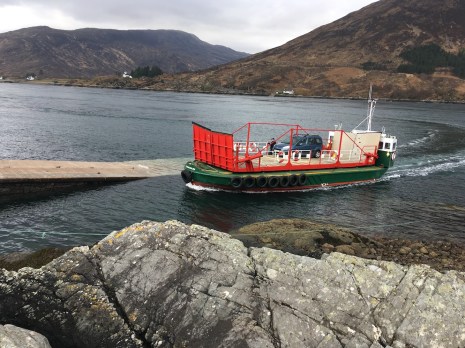
A while later we arrived at the ferry at Kylerhea. From here it is possible to see the Kylerhea light to the north and the object of my attention today, the old Sandaig light, just across the water. The Glenelg ferry, a turntable ferry, is fascinating to watch, such a clever invention and not one I’d seen in action before. The ferry only started running for the season yesterday so that was lucky!

Glenelg ferry
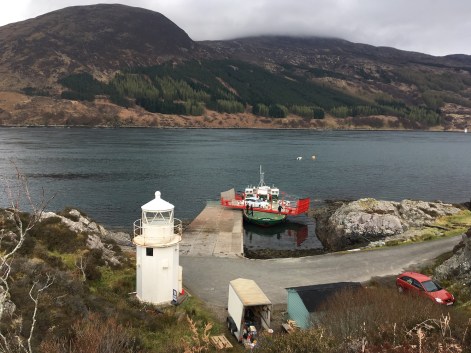
The turntable Glenelg-Kylerhea ferry

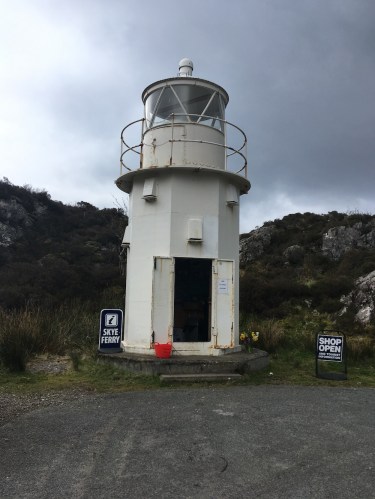
As we approached Glenelg on the ferry I got particularly excited as the lighthouse doors were open. I’d heard that it was possible to go inside and I’d had my fingers crossed that it was still the case, which it certainly is.

Glenelg
The old Sandaig lighthouse, now at Glenelg ferry

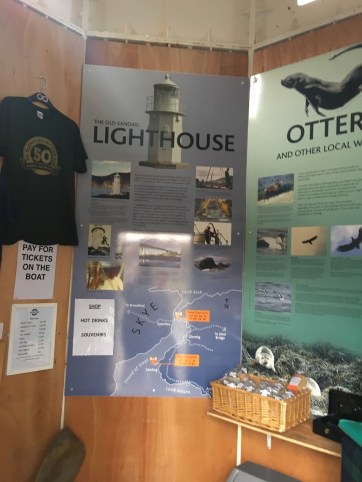
Now for the history bit and how the lighthouse came to be in it’s new home. The cast iron tower, designed by David A Stevenson, was constructed on one of the islands off of Sandaig around 5 miles to the south west of Glenelg in 1909. As is often the way, as technology progresses organisations are always looking at ways to reduce costs and replacing these structures was one of the ways the Northern Lighthouse Board (NLB) did this. The tower was replaced in 2004 and this is where the local community stepped in and said they wanted to keep the lighthouse and move it to is current location. The NLB were very helpful, firstly giving some money towards the project along with a number of other funders, and then supporting the relocation itself. After the light had been dismantled it was taken by the NLB to it’s Oban depot to be renovated before being delivered to Glenelg.

Inside Glenelg
Inside the lighthouse

The lighthouse now contains the details of this process as well as information about the local area, including the turntable ferry. Various items are for sale there too, but of equal importance is the fact that you can get a cup of tea or coffee! It all works on an honesty box system. What a great place and a wonderful community effort.

Above Glenelg
The old Sandaig lighthouse with the turntable ferry in action

It is another picturesque location and the place has a good feel about it. Unfortunately not quite accessible enough to stop by for a cup of tea in passing regularly, but definitely somewhere I’d like to return to. Needless to say, I was very glad of our detour today 🙂

The long road to Ardnamurchan

The Association of Lighthouse Keepers (ALK) Oban-based event continued today (see yesterday’s post for adventures on Lismore and the in Northern Lighthouse Board’s Oban Depot). While yesterday involved very little travel time, today was a different matter – as it always the way when you attempt to get all the way to the most westerly point of the Ardnamurchan peninsula.

Corran across the loch
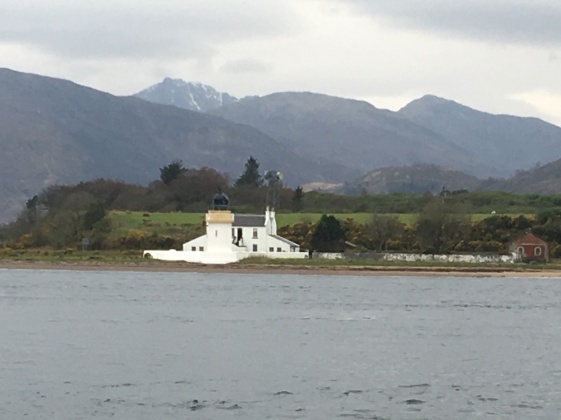
Corran Point lighthouse seen from the other side of Loch Linnhe

I met the rest of the group at the Corran ferry and had a little while to wander around taking in the views of the Corran Point lighthouse on the other side of the narrow stretch of Loch Linnhe. It was a dull morning with drizzly rain and overcast skies. I knew this would be the case as I have a theory that there are never blue skies at Ardnamurchan lighthouse, which is a shame as the beautiful Alan Stevenson granite tower would look much more wondrous with a bit of sunshine on it. Anyway, the group arrived on the minibus and I joined them before crossing over on the ferry. The plan had originally been to stop for a look around Corran lighthouse before heading along the peninsula, but with the weather as it was and the conditions looking better for the afternoon we decided to stop at that one on the way back.

You forget just how long a road it is out to the lighthouse at Ardnamurchan. There is no doubt it is picturesque, but there are some pretty scary moments when you are on a small coach, passing other vehicles on single-track roads or on particularly narrow stretches with a fairly sheer drop on one side. We stopped briefly at the distillery for a break before continuing the journey. We finally got there and the group showed their true commitment to lighthouse bagging by heading straight to the cafe!

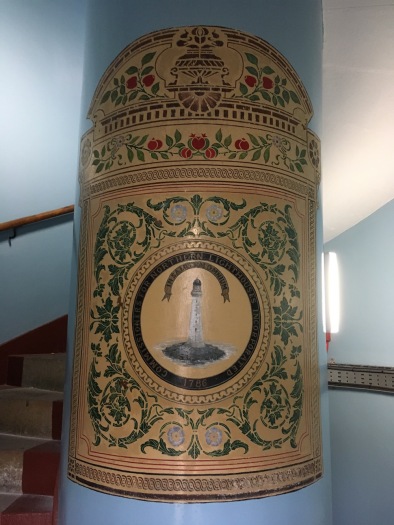
After a cup of tea we set off to the lighthouse. I can’t recall a lighthouse with a more beautiful welcoming design inside the door. I could describe it, but instead I shall just include a picture as it really does speak for itself (see below). Ardnamurchan lighthouse has some very subtle design features which take some time to notice. The walk (or should I call it a hike) to the top of the tower is fairly exhausting and there is very little to see on the way up – in fact there is nothing except the stairs, blue walls and the occasional window.

Ardnamurchan entrance
Welcome to Ardnamurchan lighthouse

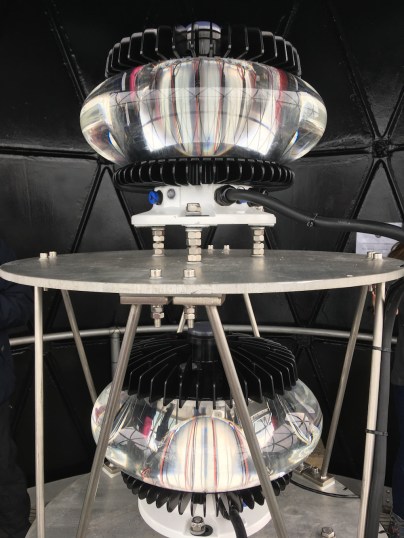
Near the top of the tower we met Stevie. He had a tough job today with all of us turning up in groups of 2 or 3 at a time and often overlapping. We did chat to him for a while though and he explained the concerns they have over the new LED arrangement they have very recently had installed in the tower. He, quite understandably, misses the rotating beam and is hopeful that at some point they may bring it back in some way. He used to enjoy seeing the sweeping beam across the beach near his home.

Ardnamurchan light
The current lights at the top of Ardnamurchan lighthouse

I went for a somewhat bracing stroll around outside at the top of the tower, looking down on the old fog horn and as far as I could see in all other directions. Neil Wright from the Northern Lighthouse Board, who also joined us on the trip, said that on a clear day you could see all the way out to the incredible Hyskeir from the top of Ardnamurchan lighthouse. It certainly wasn’t that clear today.

At the top of the tower Neil had turned the new LED light on. We were warned not to look directly at it due to the power of the light. As I mentioned before, the detail at the lighthouse is subtle. There are small lion heads within the metal frames around the windows which would very easily escape your attention. As I have tended to do at the top of all of these towers over the past couple of days, I was chatting to Neil about all things Northern Lighthouse Board. He said that when they do any work at Ardnamurchan they most often travel by road, which takes around 2.5 hours from Oban, but they sometimes arrive by boat, which knocks about half an hour off of the journey time. It really is quite remote. Stevie explained to us what life is still like out there and how you are fairly self-sufficient due to not being able to just pop to the shop! It’s refreshing to hear when so many people’s lives these days are all about convenience and spending money.

Adnamurchan decoration
An example of the decoration inside the tower at Ardnamurchan


I had a wander around the buildings there before we left. They have the original lens from the tower on display in the exhibition room and you can also see the old compressors for the fog horn. I had a quick look down towards where Neil said the NLB boat arrives when they do travel there by sea. There are even picnic benches down that way. I was surprised to learn that the lighthouse still attracts visitors in the winter months, which often causes problems for the NLB guys when they are trying to work.

Ardnamurchan fog horn
The lighthouse and fog horn at Ardnamurchan

Once we had all gathered back on the coach we set off on the long return journey. The sky had cleared a little by that point, although there was still some low cloud hanging around the hills, which was very atmospheric.

We made it back to Corran lighthouse and spent a while in the chilly breeze on the beach in front of the tower. From here it was possible to see across to the Corran Narrows light on the opposite site of the loch. I recalled from our visit to Islay in January that the Loch Indaal lighthouse seemed to very closely resemble the Corran lighthouse, and this was confirmed by Neil. Not only are they similar towers, but they both benefit from having a mountainous backdrop. They also, apparently, feature the same type of LED light, although the Loch Indaal light still holds a lens rather than the two lights we saw inside Corran today.

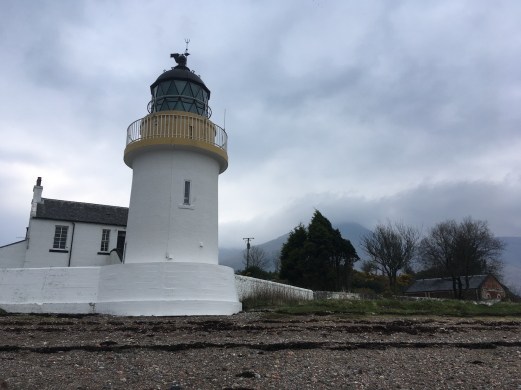
Corran Point
Corran Point lighthouse

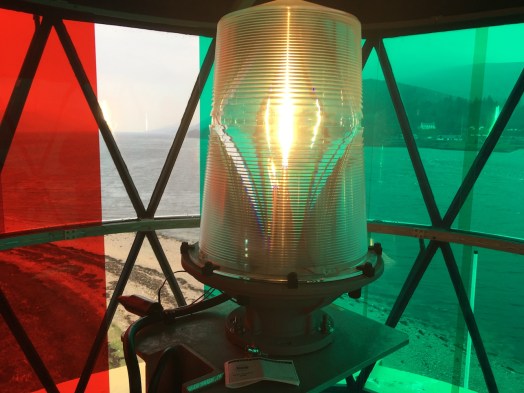
It’s a tiny tower in comparison to Ardnamurchan and features three sets of very steep ladders. There’s not a lot to it, but the sector light panels at the top make for a very colourful picture. The light had been turned on again so we could get the full experience. Although there is no longer a lens filling the lantern it was a wonderful place to be and we did need to be kicked out in the end as we’d been up there too long! I could happily have stayed there for longer.

Corran light
Inside the lantern at Corran

Once we’d left the lighthouse we returned on the ferry and that was where I left the group. What a fantastic couple of days it has been, meeting new people, getting to know others I’d met before a bit better and seeing some great places I would never have otherwise been able to see. The highlights for me: Lismore, the tour of Pharos (the Northern Lighthouse Board’s vessel) and probably getting inside the tower at Corran. It’s been a lot of fun and I’m looking forward to more adventures with my new-found lighthouse friends 🙂

Day one of some Oban escapades

As mentioned in previous posts, about six months ago I took on the role of Events Coordinator alongside two others for the Association of Lighthouse Keepers (ALK). Although I had attended their AGM in South Wales last year, it was only a matter of time before a trip coordinated by the new team would take place. Today the time finally arrived in the form of a two-day event based in Oban.

The blue sky made an early appearance today, just in time for our journey over to Lismore lighthouse on the small island of Eilean Musdile, not (as the name suggests) on the island of Lismore itself. I’d previously landed on Eilean Musdile and seen the lighthouse at close range in 2015, but this time we were going to get inside the tower as well as meeting the couple who now own the cottages. Lismore is one of those lighthouses that you can’t go past on a ferry without noticing. The lady who now owns the cottages on the island said that you can almost see the ferry tilting over as people rush to take pictures of the lighthouse before it then starts to tip the other way as they get closer to Mull and Duart Castle.

Lismore from below

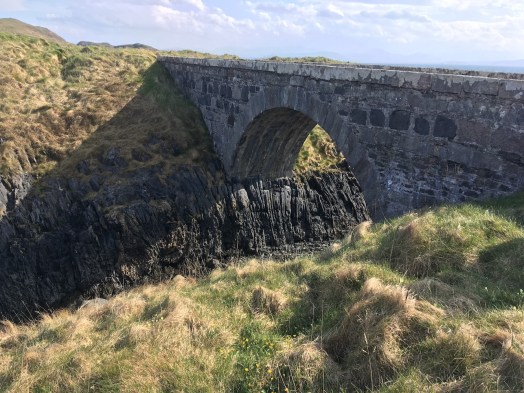
The boat ride over to the lighthouse with Coastal Connections, who also took us over last time, was good and it was nice to catch up with Struan, today’s skipper, and chat to my ALK friends. Landing on the island is a fairly dignified affair and as soon as you are there you are captivated by just how beautiful the place is. The owners of the cottages clearly do a fantastic job of keeping the island from getting overgrown and too wild, while also maintaining its natural beauty. When the owners first arrived, they knew there must have been a path there somewhere that joined the top end of the island (where the stone for the lighthouse arrived), across the beautifully constructed bridge, past the slipway and to the tower. The owner described how he spent a good few years (they are usually on the island for around 10 weeks every year) finding the path again and one of his jobs each year is to maintain the path. Another reason for doing this was so that nesting birds on the island could remain undisturbed in the longer undergrowth. They have also installed a small wind turbine to provide electricity to the cottages as well as pumping the fresh water from the well on the island to their houses.

Lismore entrance

The path that takes you to the lighthouse is a perfect match for the stunning white tower at the end of it. Before we got carried away with wandering up the tower we decided to walk down beyond the tower to get some pictures of it standing tall. There really is no angle that Lismore lighthouse doesn’t look awe-inspiring from. An incredible piece of architecture from Alan Stevenson and his attention to detail is evident at the top of the tower. With perfectly carved features inside the lantern room as well as even more impressive additions when you step outside the door at the top, you realise the thought that must have gone into so many elements of this amazing structure. I got chatting to Neil Wright, one of the Northern Lighthouse Board’s technicians who has recently been to and worked at the Flannans, Sanda, Skervuile and the Bell Rock. Neil posts some fantastic pictures on Twitter of parts of these lights that the general public would never be able to see. Needless to say we chatted for a while about his work with the NLB, where it has taken him and he also showed us how the remote monitoring of the lighthouses works. It is incredible to see just what they can find out about a lighthouse from just a laptop.

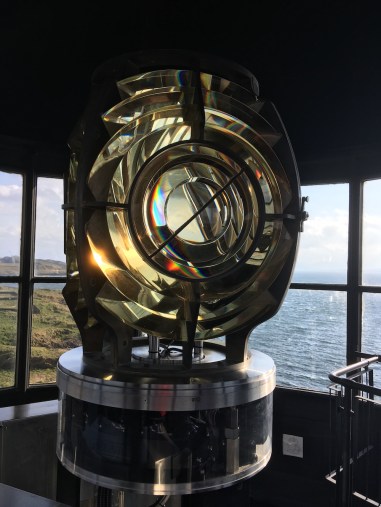
Lismore lens

Neil also pointed out how the lighthouse differs from many others as it has rectangular window panes rather than triangular, which is related to the characteristic of the light. The little lens in there is small but perfectly formed allowing for plenty of space to wander around. The lighthouse has not been upgraded to an LED light…which means it still has a number of buttons and panels inside. Neil told us that he was, sadly, responsible for the change of the light at Noss Head from a rotating lens to an on/off LED. They have recently upgraded Duncansby Head, but fortunately have decided to retain the rotating lens and just replace the lamp with an LED. We were informed that this will also be the case at Dunnet Head in the coming months. I am pleased to learn that the light will still work with a rotating lens, but I will miss the warm colour of the light as it is at the moment.

Back down at the bottom of the tower we stopped off to have a cup of tea with the couple who own the lighthouse. The cottage is very spacious with large rooms, a wide corridor and windows that allow plenty of natural light in. You can tell that they have maintained some of the original style of the cottages while also adding their own personal touches here and there. They are a really lovely couple and were incredibly welcoming considering they had 20 lighthouse enthusiasts wandering about.

Lismore bridge

Before heading back to the slipway, we took a short walk to the top of the island where you can look across the short stretch of water to Lismore itself and the snow-capped hills beyond. It felt a little bit like heaven, and I found that the longer you stayed there the more you wanted to stay. But leave we had to unfortunately. It was a very enjoyable and memorable morning at a wonderful place which I would return to in a heartbeat.

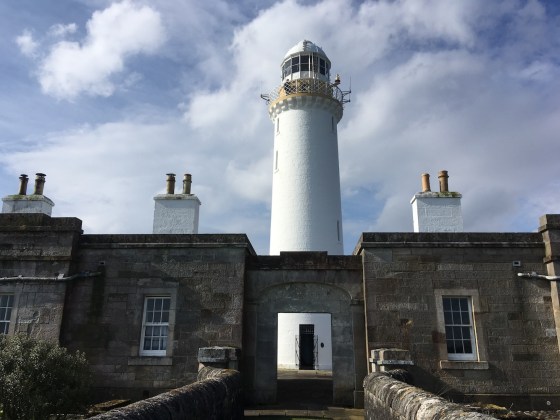
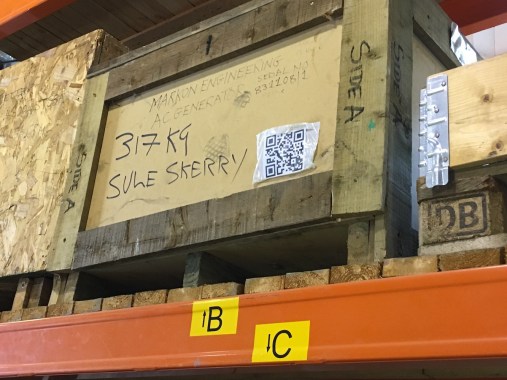
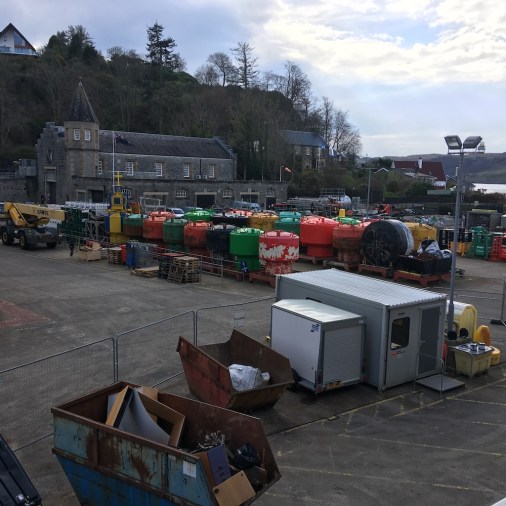
Back in Oban we had lunch before the second instalment of the day: a tour of the Northern Lighthouse Board’s Oban Depot and Buoy Yard. I always get excited when I see the Northern Lighthouse Board logo and it can be seen everywhere here! We were shown around by the Depot Manager initially who gave us a tour of the storage facility. When you first walk in all you see is large shelves filled with wooden boxes that appear at first glance to be of little interest. It’s only when you take a closer look that you notice that each box has the name of a lighthouse on it and, in some cases, the boxes contain the old lenses from the towers. Among the names written on the boxes were Calf of Man, Strathy Point, Sule Skerry, Barra Head, Stoer Head, Chicken Rock, Ruvaal and Rona. It was clear that there is a big plan for upgrading Eilean Glas lighthouse as we saw its new kitchen, tins of paint and various other items all destined for that beautiful place.

Storage Sule Skerry

The Buoy Yard gives you some idea of the scale and amount of work that takes place there. Every eight years the buoys are brought in and cleaned and then go through various other stages before being re-painted ready to go back out. It was really interesting to see the range in types of buoy and how big they actually are. In comparison to most things you see at sea buoys always look so small, but they aren’t small at all. I was particularly interested to see an example of the buoys used to mark wrecks.

Buoy yard

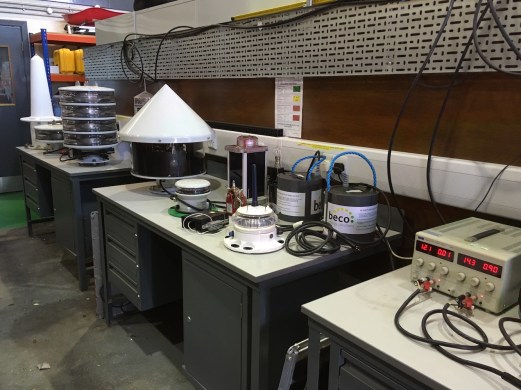
The next part of the tour involved Neil showing us the variety of LED lights that the Northern Lighthouse Board currently use. From his talk it became very clear just how quickly technology is progressing and as Neil said himself it will be interesting to see the types of lights they have lined up there in 5 years’ time. They also have some of the old lamps in storage in this area, including those from Cailleach Head and Lady Isle. It is clear that the shelves here are already becoming full and, over time, there will only be more and more coming in. Eventually another long-term solution for their storage/use will need to be found and I really hope there is something that can be done with them. While they aren’t as impressive as the Fresnel lens, for example, they are a big part of lighthouse heritage.

Lights

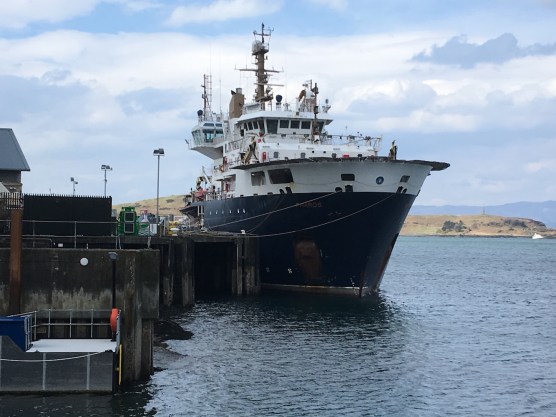
It was very obvious before we even arrived at the Depot that the Northern Lighthouse Board’s maintenance vessel, Pharos, was there. I recall the first time I saw Pharos and that was at the Bell Rock. Every time I’ve seen it since it’s been from a distance and you don’t realise just how big it is until you are standing right next to it! We were on our way towards the exit when we were delighted to hear that the captain of Pharos was happy to give us a tour. I’m not going to lie, I dashed back down the gangway before they changed their mind! Getting on board Pharos was a real treat for me. It was certainly not somewhere I ever thought I would get a chance to look around and here we were being offered the chance to do just that. First we set off for the helideck – what a place that must be when the helicopter comes into land. I’ve obviously stood on a number of helipads at some of the more remote lighthouses on Scottish islands, but this was somehow different.

Pharos

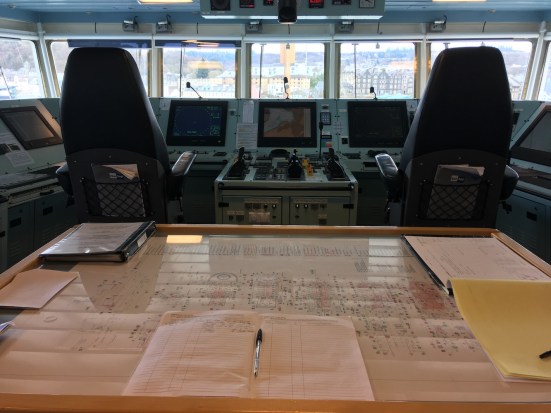
We were also shown the deck above where the crew communicate with the helicopter crew as they are coming in to land. We then looked down over the winch area at the back of the boat. The winch is huge, but then it would need to be with so much weight to be lifted in those buoys. Last, but by no means least, we were shown around the bridge where the magic happens. And when I say “magic” it really is magic. Thanks to advances in GPS, weather and sea monitoring the boat can near enough sail itself these days. The paper maps and amount of buttons and levers in the bridge though are a reminder that, if things do go wrong, the manual back up of a person is still very much a requirement. We finished off our incredible tour of this vessel with a group picture alongside the Northern Lighthouse Board’s longest-serving captain. What a special opportunity that was and, as much as I enjoyed seeing the maintenance vessels before, I appreciate them on a whole new level now.

Pharos bridge

More adventures to come tomorrow! 🙂

Fraserburgh: where the lights are kept alive

This afternoon a slight detour on the way home took us to Fraserburgh for another trip to the fantastic Museum of Scottish Lighthouses. I first visited the museum on my original tour in 2012 and then again in January 2014. Five years and countless new lighthouses later I knew it was time for a return and that I would appreciate it so much more than I ever had before. Hence why it is getting its own blog post this time.

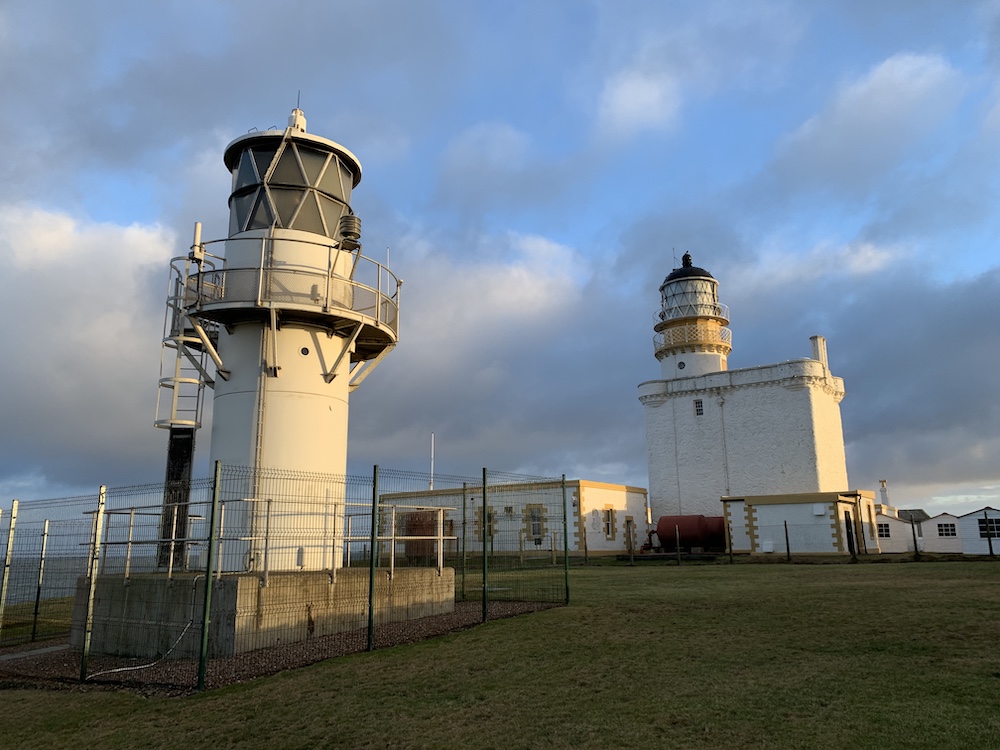
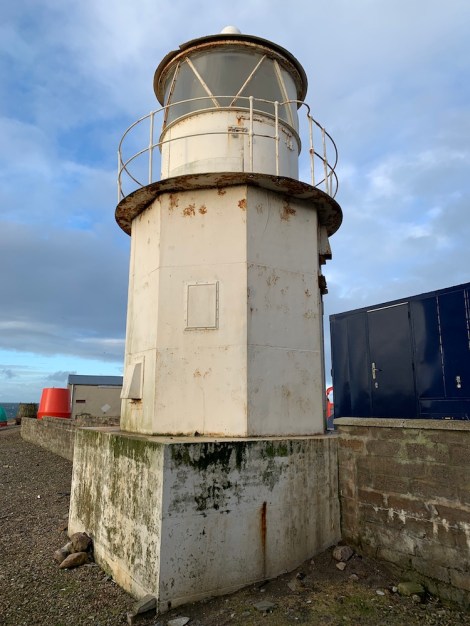
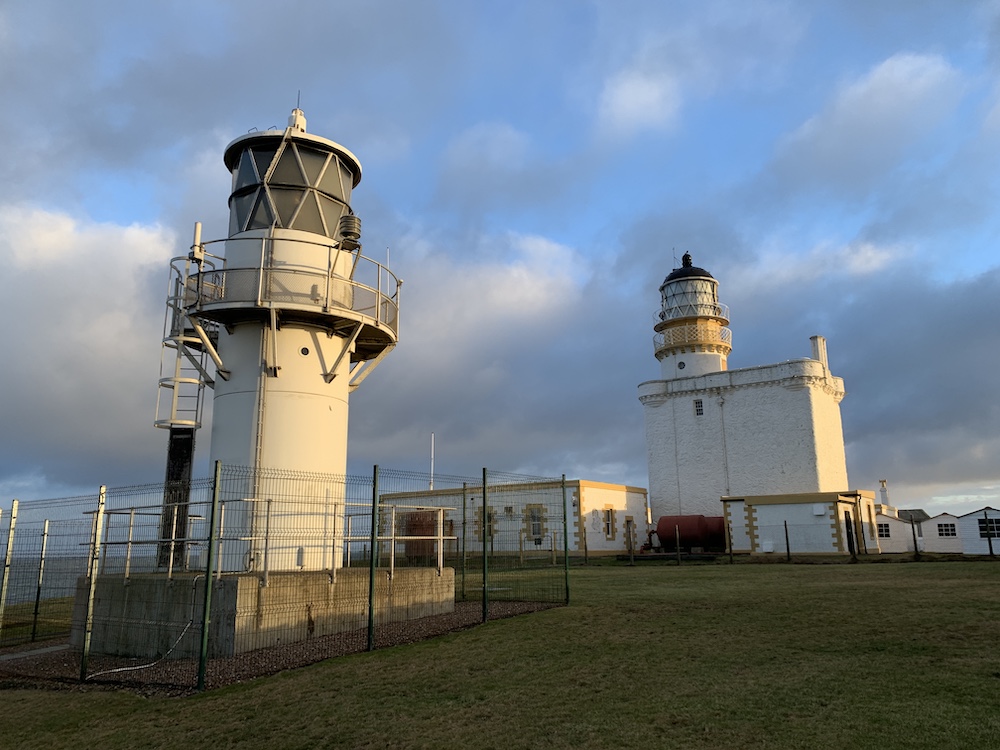
For anyone into lighthouses it’s a gem of a place. Not only is it home to the old Kinnaird Head lighthouse (the first to be built and lit by the Commissioners of Northern Lights (now the Northern Lighthouse Board), but its modern replacement as well as the former towers from Suther Ness in Shetland and Hoxa Head in Orkney.

img_1838
The old Suther Ness lighthouse from Shetland

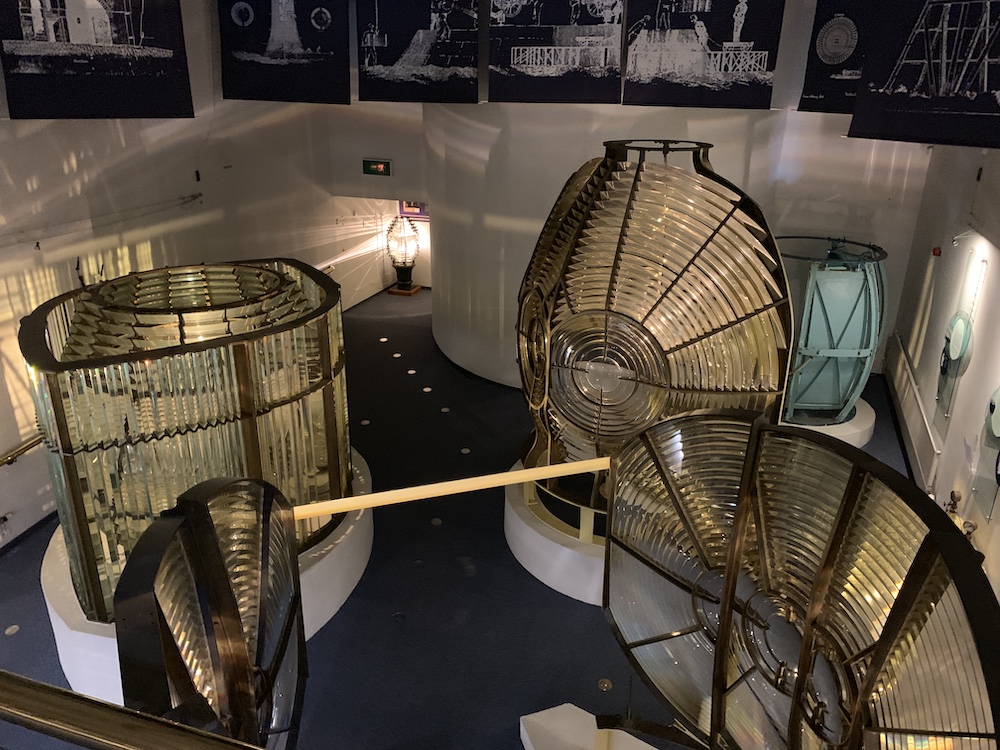
As soon as you step inside the door you know you’re in a very special place. The staff, for a start are so welcoming, and as soon as you enter the exhibition you are greeted by the most beautiful display of lighthouses lenses. The first room is home to 10 stunning pieces originally from the likes of Dunnet Head, Turnberry, Fair Isle South and Neist Point.

img_1902
The wonderful display of lighthouse lenses. Pictures here are those from Fair Isle South, Chanonry, Dunnet Head, Neist Point and Turnberry

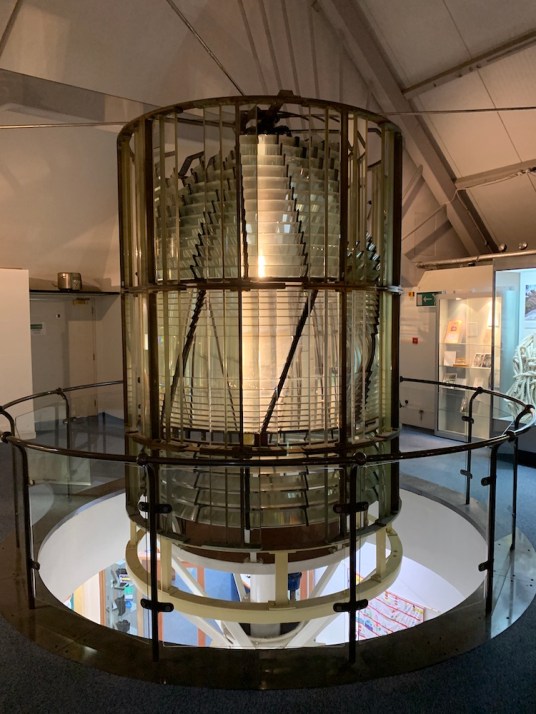
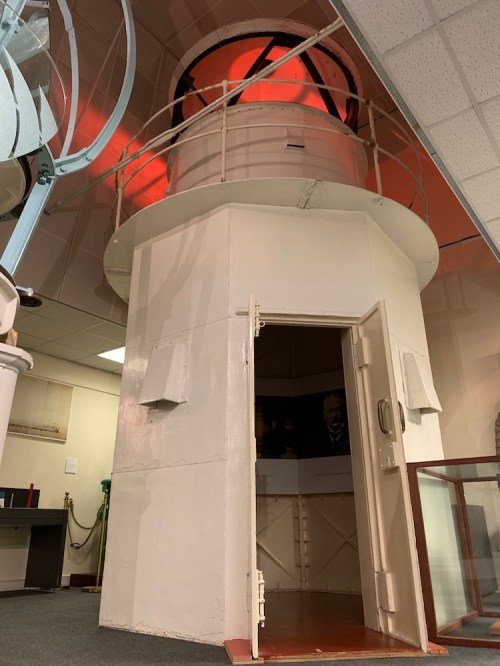
We didn’t have time to catch the film this time, but we enjoyed the other exhibition rooms, including one I couldn’t recall seeing before, oddly. That’s the one featuring the old Hoxa Head lighthouse. You can walk inside and read the information on display – or just treat it like a fun little house to walk into and out of repeatedly as the kids did. There are far too many artefacts in the room, and all of the rooms for that matter, to even consider mentioning them all. Definitely worthy of mention though is the lantern and lens from the former Roseness lighthouse in Orkney as well as the lenses and light mechanisms from both Ailsa Craig and Langness. The award for most impressive lens and mechanism combination goes to Sanda though, which is so huge it needs two storeys to show off its full glory. The mechanism itself is visible at the entrance to the exhibition while the optic appears on the upper floor. Truly amazing.

img_1932
The old Sanda lens

It was approaching 3pm and we set off back down to the museum entrance for the guided tour. I’d been in contact with Michael Strachan, Collections Manager at the museum, prior to this visit in relation to a couple of questions I had for my book. Fortunately, it was Michael who was our tour guide today, which was a good opportunity to put a face to a name and thank him for his help.

img_2084
The modern and old lighthouses at Kinnaird Head

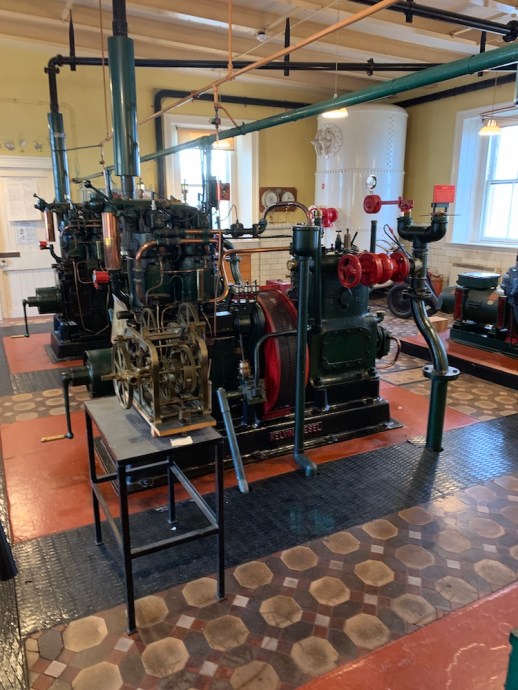
Due to the chilly breeze at Kinnaird Head, which Michael informed us is always windy, we went straight to the old foghorn engine room to start the tour. I imagine that even hundreds of years down the line, the smell of these rooms will not have changed. As if they were only used yesterday. Every time I am in one now I will remember watching Brian at Sumburgh Head starting the machines up with such meticulousness.

img_2098
The foghorn engine room at Kinnaird Head

From here we went to the old castle through which the lighthouse was built. There is nothing now to indicate how the building was used before the lighthouse was constructed. The tower is still as it was when the lighthouse was manned though. The wonderful paraffin smell is very much present and I always enjoy seeing an old television with buttons on it such as the one in the old occasional lighthouse keeper’s room. There is a distinct lack of buttons these days!

img_2140
At the top of the tower

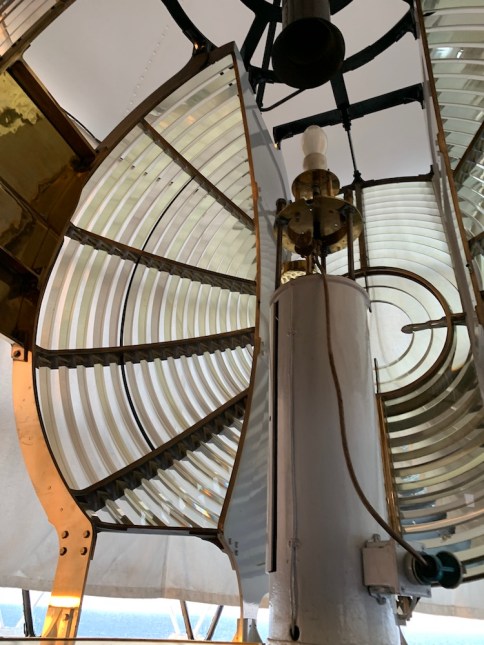
The original lens still sits proudly in position at the top of the tower. Always a great room to spend some time and then we had a brief wander around on the balcony. After leaving the tower, we had a chance to quickly look around the Principle Keepers’ accommodation, which is full of information about the life of lighthouse keepers.

Back in the shop, the kids received their certificates for climbing the tower, although now I think of it, I don’t know that I have one myself yet!

Michael has very kindly provided me with information about the lenses the museum own as well as others he is aware of. I spoke to him about the old lens from Sule Skerry, which I’d attempted to visit yesterday at the National Museum of Scotland in Edinburgh. He’d had the same experience recently and had found out through social media just yesterday that it is indeed in storage there. Let’s hope it becomes more visible to the public soon. It’s a shame to let these things sit in storage with no one able to enjoy them. I’m obviously biased though and think that every museum should have at least one lighthouse exhibition!

img_2007
The old Hoxa Head lighthouse from Orkney

I thoroughly enjoyed returning to the museum again and will make more of an effort to ensure it’s not another 5 years before I am back there again. It sounds like there are exciting plans for introducing the old Fair Isle North lens, among others, to the collection. Something to look forward to seeing next time hopefully! 🙂

Back to the Bass!

My last post mentioned that I was banned from lighthouse trips and probably wouldn’t do another for at least six weeks or something. Well, as usual, I was wrong…

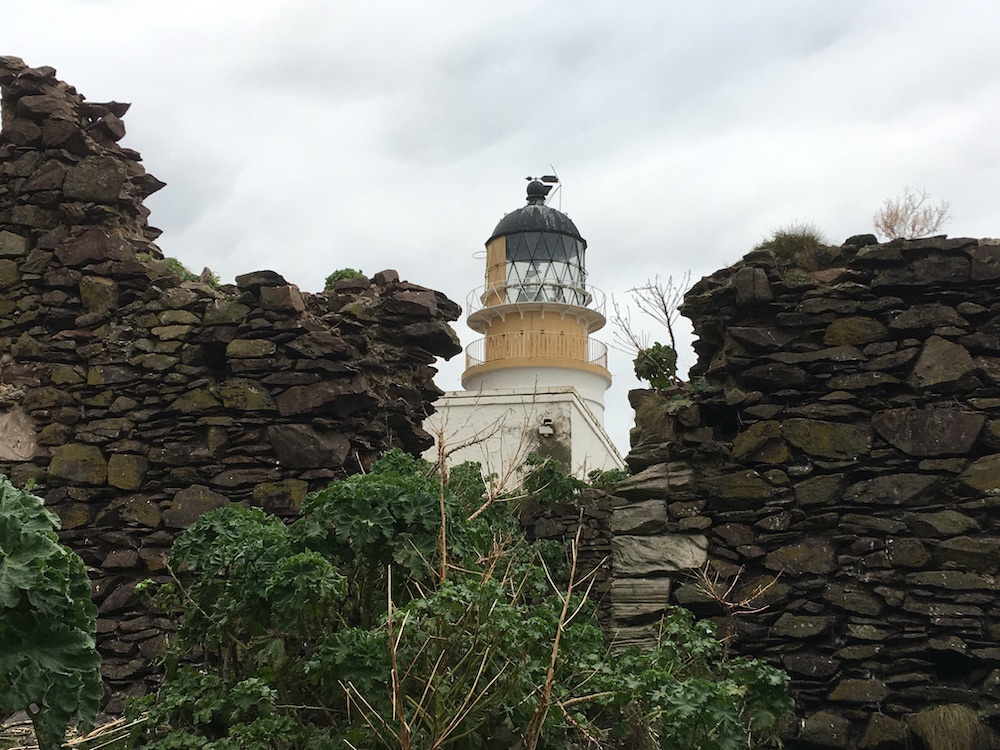
Last month I joined a chartered boat to take a trip out to Bass Rock with the intention of landing. You can read about it here but, put simply, I didn’t land and as a result it remained on the “to do” list.

The ever-persistent Alan, who has organised a number of boat trips including the Bass Rock trips, maintained his regular contact with Dougie who operates Braveheart out of North Berwick. He’d said that this weekend was the next potential date but being in January, which is often the stormiest month in Scotland, I wasn’t hopeful. However, I was very glad to be proven wrong when Alan got in touch on Thursday to say the trip may go ahead and then confirmed that it would later on that evening. This time Bob wanted to come too, to make sure I landed this time. There was also another trip straight afterwards to Craigleith, so he would have the opportunity for a new island too. My ever-willing mother-in-law came across to look after the kids, and didn’t seem to mind the short notice!

img_9030
“The view” of Bass Rock

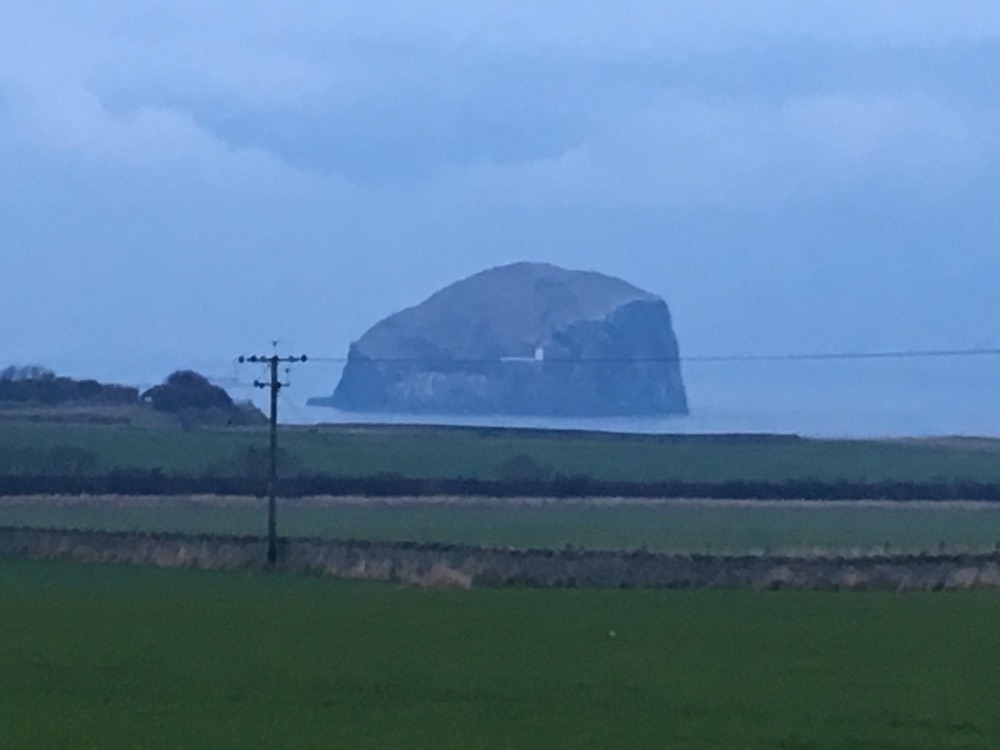
We took the scenic route into North Berwick today, which meant we got “the view” of Bass Rock. In my opinion the best view you can get of it from the mainland is near Tantallon Castle. Being fairly early it was still flashing away at us, although not quite as magnificently as it would have been before the new light was installed. I’d planned to pay a visit to the Coastal Communities museum in North Berwick after the trip as the old optic is now on display there, but shortly after finding out that the optic was there, I discovered the museum doesn’t open until Easter. A reason to go back to North Berwick, which is never a bad thing.

Off we went on the boat and the sea seemed to be similar to last time, so I was prepared to be scared all over again. It was actually a lot better than before, really nothing to worry about. I didn’t even need that much help! I was absolutely delighted as soon as I set foot on the island. The lovely Jane, who was “catching” us as we landed, celebrated briefly with me. She understood my fear, even if she was quite comfortable getting onto and off of the boat herself. There I was, on the Bass!

img_9038
The view from the landing area

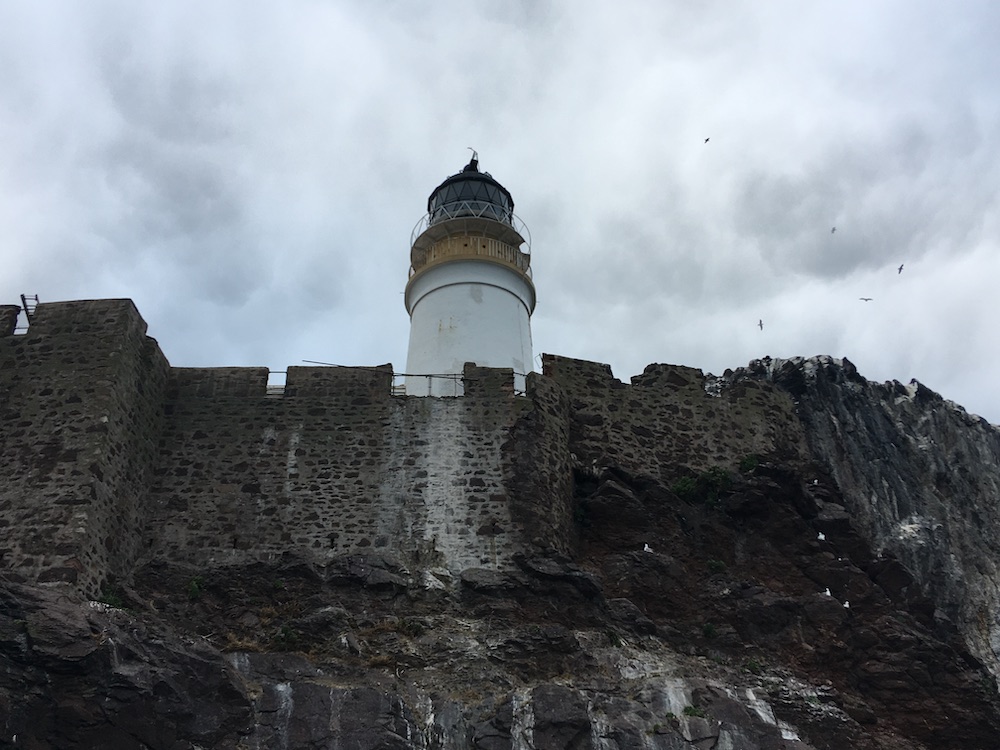
As soon as you arrive you have a wonderful view looking up at the lighthouse. In fact, you have amazing views all around. A fascinating island, with so many steps! Everything is covered in guano, but that pales into insignificance with the enjoyment of being on the island. Just above the landing area is the helipad for the lighthouse and slightly further up you can walk along to the alternative landing point (the skipper chose the best place to land us, for sure). The concrete path and steps take you past all of the highlights of the island. My priority was obviously the lighthouse, which is where I, Bob and our friend Adrian went first. As I told Bob on the way back, it was best to go there first to get pictures without lots of people there, and also if the trip had been cut short for whatever reason, I wouldn’t have wanted to miss the lighthouse.

img_9040
The approach to the lighthouse

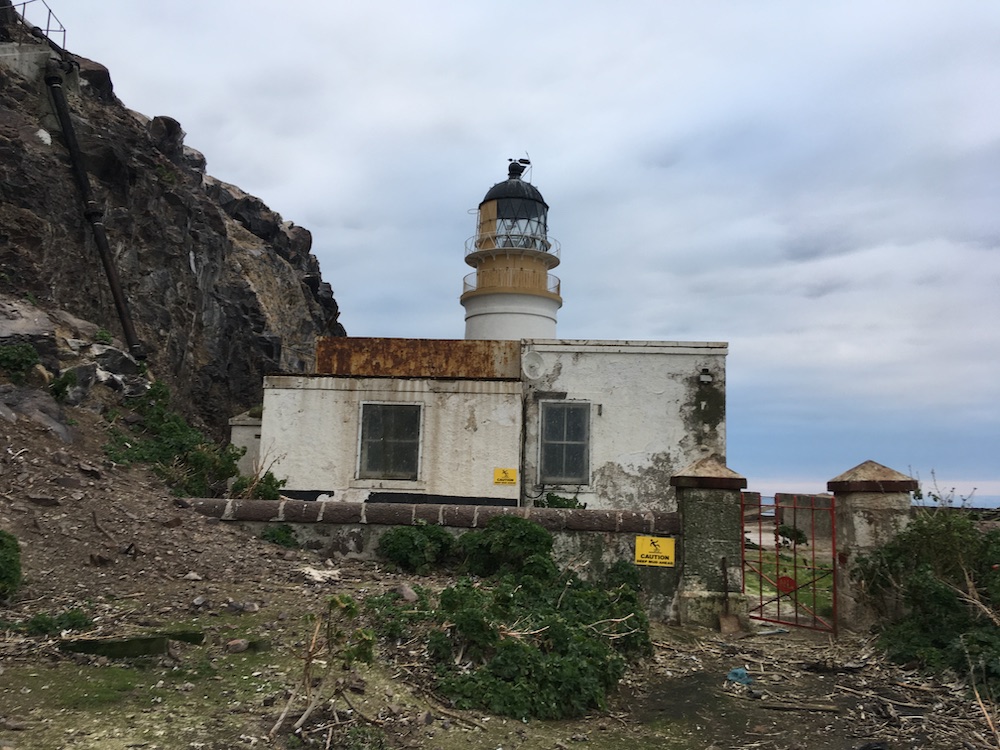
It was a really good feeling to finally reach the lighthouse I’d seen so close before. The island really does add to the beauty of the lighthouse. The giant cliffs that sit behind the tower and its associated buildings, while being the source of some of the major landslips (or mudslides) in the area are the perfect backdrop. When I’d been on the trip in December, Dougie had told the group to take care near the lighthouse as there was deep mud from a recent landslip, which resulted in a lot of mud gathering near the lighthouse. It is clear that this has fairly recently been shifted as the area surrounding the lighthouse is now clear and actually very tidy. There are warning signs on the approach to the lighthouse about mud, but it certainly wasn’t an issue today.

img_9046
Bass Rock lighthouse

What a place that must have been to serve as a keeper. So close to the mainland and yet so disconnected. It is a massive shame to see the state of the cottages, which have been long neglected since the light was automated. This became even more evident as we climbed higher and higher above the lighthouse on the main path. The light continued to flash away (or turn on and off as the modern LEDs do) as we continued on up the path. It’s not often you get higher than a lighthouse at such a close range.

img_9051
The view from above the buildings


There is evidence of mud sliding in other areas on the island. In some areas, the steps are buried, probably not helped by the number of birds that choose to reside there in the spring and summer. The presence of birds on the island cannot be forgotten when you visit. Every now and then, while on the path, you will spot the remains of a number of gannets in particular. There is a gannet who clearly met a very grisly end involving a metal stake in the old chapel. It is positioned almost halfway along, opposite the main entrance doorway and, as such, gives the impression of being almost a prized display. It was odd and obviously not a great way for the gannet to go (I don’t often sympathise with gannets).

Very handily, the path has a handrail all of the way long, and the path takes you to the north of the island where there is a little foghorn sitting, ironically, in perfect peace and quiet. The weather was by no means wild today, but the calmest place on the whole island seemed to be at exactly the point where the foghorn once operated. The old equipment, or at least some of it, is still inside the little building. The foghorn faces the Isle of May, which was visible today from the foghorn. The views, in general, are fantastic from Bass Rock. The further you move up the island, the more visible the coastline to the south becomes.

img_9070
Bass Rock foghorn

Bass Rock was an incredible place to visit. I am so glad I went back and finally got onto the island. For such a small space, there is something that would be of interest to anyone I should imagine. Our group consisted of those who wanted to get to the island high point, but also the lighthouse, the foghorn, to take pictures, or just generally to get to the island. It is one of those islands that seems so close and yet incredibly inaccessible. That certainly adds to its appeal.

img_9086
One of my favourite views on the island, of which there are plenty

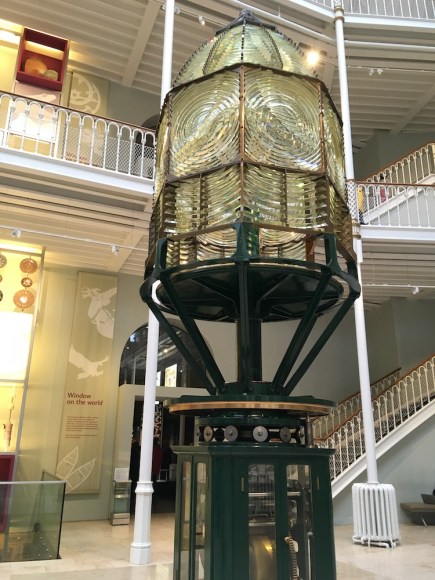
Once back on dry land I began my journey to Edinburgh to meet the others while Bob continued his boat trip. My destination was the National Museum of Scotland. While being the place that I would meet up with the kids and Bob’s mum, it is also home to a small number of lighthouse-related exhibits. The key exhibit is definitely the old optic and mechanism from the Inchkeith lighthouse, which stands proudly in the Grand Gallery. Jane had described the old Bass Rock optic in the museum in North Berwick as almost a piece of art. Well, that’s what they are really. Absolutely beautiful, while also completely functional. Jane had said that the light from Bass Rock used to be visible for miles. I won’t say I got annoyed with people being in my pictures of the optic at the museum – although that would be a lie. I wouldn’t have minded so much if they were also appreciating it, but they just weren’t.

There was a small area in the museum dedicated to lighthouses, which featured a model of the Eddystone lighthouse, a modern LED light, a section of the old hyper-radiant lens from South Foreland lighthouse, a RACON (radar beacon), an electric arc lamp, an oil lamp and reflector, and an electric filament bulb as well as a Fresnel lens. Considering it is only small display it the museum, it’s quite a nice collection. The old Sule Skerry optic also now calls the museum its home, although I believe it is currently in storage. The old Eilean Glas optic, now on display in the Science Museum in London, is also officially owned by and on loan from the museum.

img_9116
The old optic and mechanism from Inchkeith

Overall, it’s been a great day. To have successfully landed and enjoyed Bass Rock was a big achievement for me. Maybe in summer it would have been easier to get onto the lighthouse, but there would have been birds to contend with. Today it felt like it was our place to enjoy and we just had to share it with each other. Luckily the others didn’t get in the way of my pictures! 🙂

Minor lights of major importance

After such a fantastic couple of lighthouse days – or do I mean weeks, or maybe even months?! – I needed to gently be brought back down to normality. Today has been the day for that with a short boat trip to see a couple of minor lighthouses at the north end of the Sound of Jura.

Craignish Cruises were the boat operator of choice for today’s trip from Ardfern. Originally it was just going to be me on the boat while Bob manhandled the kids. Having seen details of the boat (a heated cabin!) online last night we asked Lindsay, who owns the boat, if he would be happy for the kids to go too. He was fine with that, so off we set.

It’s not quite so easy bagging with young children and the constant demands, but it helps towards my plot to turn them into the next generation of lighthouse baggers. The bagging is definitely strong in the eldest. The younger one still needs some work!

The tide was against us on the way out, but it wasn’t too long until we arrived at the tiny island of Ruadh Sgeir. It was interesting hearing the opinions of both Lindsay and Don who was helping him out on the trip. Lindsay has always thought the light was quite sweet (he seems quite fond of lighthouses, even the small ones, from the point of view of someone who uses them for their intended purpose – aiding navigation). Don, on the other hand, said he thought it was just a light on a rock. I think it deserves more credit and, I’m sure, by the end of the trip he was beginning to see the beauty of lighthouses, even the small ones. It’s quite common for boatmen to say that they have travelled along a stretch of coastline frequently and never noticed the lighthouse. They just need to be enlightened (no pun intended), that’s all.

ruadh sgeir
Read Sgeir lighthouse

I really like the Ruadh Sgeir light. I’m a fan of this type, and I always think there is a lot more to them, in terms of design, than they get credit for. It’s not just a small white tower that’s been dropped on a rock.

Our second stop was Reisa an t-Sruith. Lindsay told me this translates as ‘island in the strong tidal current’. There is certainly a lot of movement in the area, in terms of tides. It looked a lot choppier than it felt. Like Ruadh Sgeir, Reisa an t-Sruith is just a small island, a slightly bigger small island than Ruadh Sgeir. The lighthouse is a standard Northern Lighthouse Board flat-pack. Not much more to say about it other than that. It replaced a light designed by David A and Charles Stevenson. The island itself is home to some goats who watched us from afar, probably wondering what on earth we were up to. I’m assuming they don’t think much of the lighthouse!

reisa an t-sruith
Reisa an t-Sruith

As well as the goats, our wildlife tally increased again today with a brief appearance of a pod of 4 to 6 bottlenose dolphins.

A short, but important trip. It marks a first round completion of the wonderful lights of the Islay and Jura area. In such a short space of time, it’s been quite full-on, but not rushed. I definitely want a closer look at the Rinns of Islay at some point, but for now I’m satisfied – and of equal importance, I got those much-needed pictures for my book.

This afternoon we paid an enjoyable visit to Ian who served on Skerryvore lighthouse and who visited that very lighthouse with us last year (see this post for more on Ian). He and Doreen are wonderful hosts and it was lovely to catch up with them.

Now back to reality. I always put a smiley face at the end of these posts and I’m going to do the same for this one as it’s been a good day and I’m hopeful that it won’t be long until my next post. There certainly is plenty of lighthouse fun lined up for the year 🙂