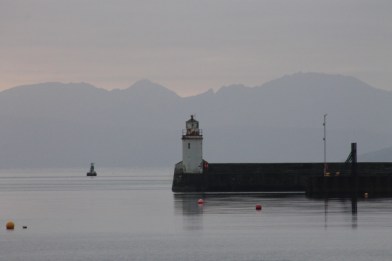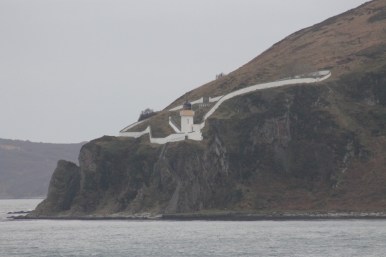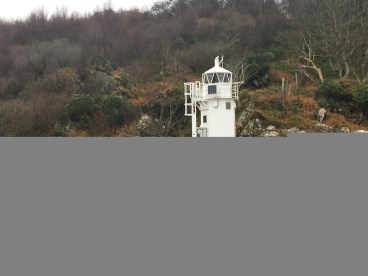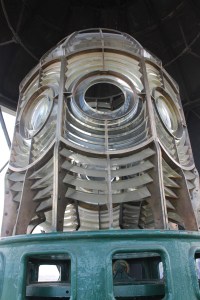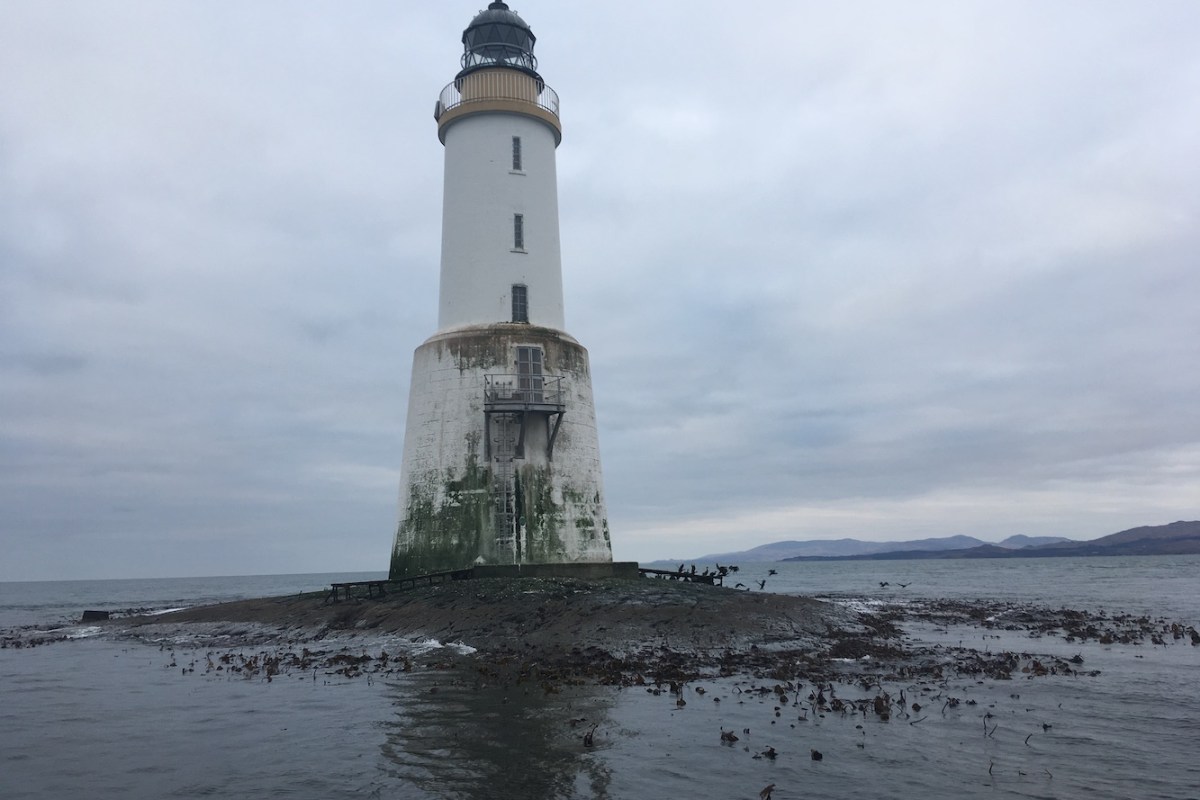
The incredible lights of Islay and Jura

What a day! In this lighthouse bagging game you experience some days where, at the end, all you can do is throw yourself onto the sofa and say “wow, did that really happen?”. Today was definitely one of those days.

It’s our final day on Islay and Bob had been in touch with Gus and Rebecca from Islay Sea Adventures in the lead up to our visit to Islay to sort out a trip taking in some of the lighthouses in the Sounds of Jura and Islay. Gus had said that Friday looked to be the best day for it, so this morning we arrived at Port Ellen and spent a while throwing on even more layers in preparation for a RIB trip in January (mental!). You can’t imagine my delight at seeing a beautiful covered RIB gliding into port. Covered RIBs are my favourite!
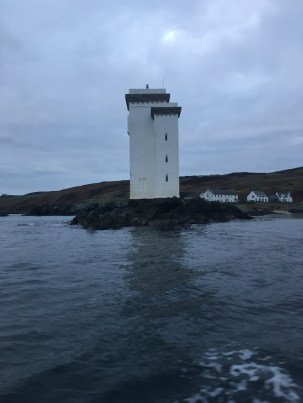
carraig fhada
Port Ellen/Carraig Fhada lighthouse

Before we’d even got on the boat, Gus offered us a cup of tea and we chatted to Gregor who was helping him out on the boat while Gus went for the hot drinks. A short time later, and with tea firmly in hand, we set off and Gus offered to sail around the Carraig Fhada/Port Ellen lighthouse on the way out. It was great to see a bit more detail from the sides you can’t see from the land. We asked Gus if the walkway is covered at high tide and he said that it can be, and that a man and his son were washed away trying to reach the lighthouse about 100 years ago. Regardless of that, it really is a lovely tower, and the sentiment behind its history is wonderful (more details of this can be found on the Canmore website). I would be quite happy to have a lighthouse built for me (preferably while I’m still alive). With the cost of the recent trips though, I don’t think Bob would be very willing to oblige!

Back on the waves, or lack of I should say, off we went again. A short time later we passed a few small islands and spotted a couple of sea eagles closer than I’ve ever seen them before. They are very impressive, but I wouldn’t want to be get too close!

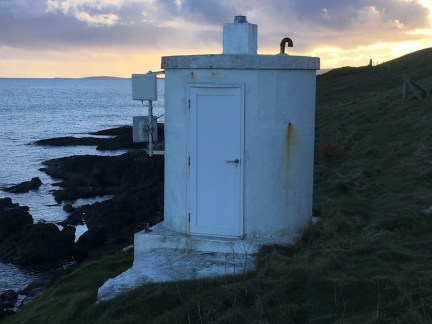
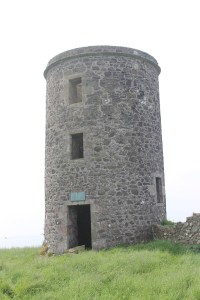
Eilean a Chuirn was destination number 1. I really like this kind of lighthouse, although I’m not entirely sure why it needs so many doors – perhaps so they can access it in high winds and which door they use depends on the wind direction. That sounds like the only plausible reasoning and would be my guess anyway. It’s a lot like the Waternish light on Skye. Gus explained that the large concrete block next to the lighthouse was part of the pulley system used for moving supplies from the landing point to the lighthouse.
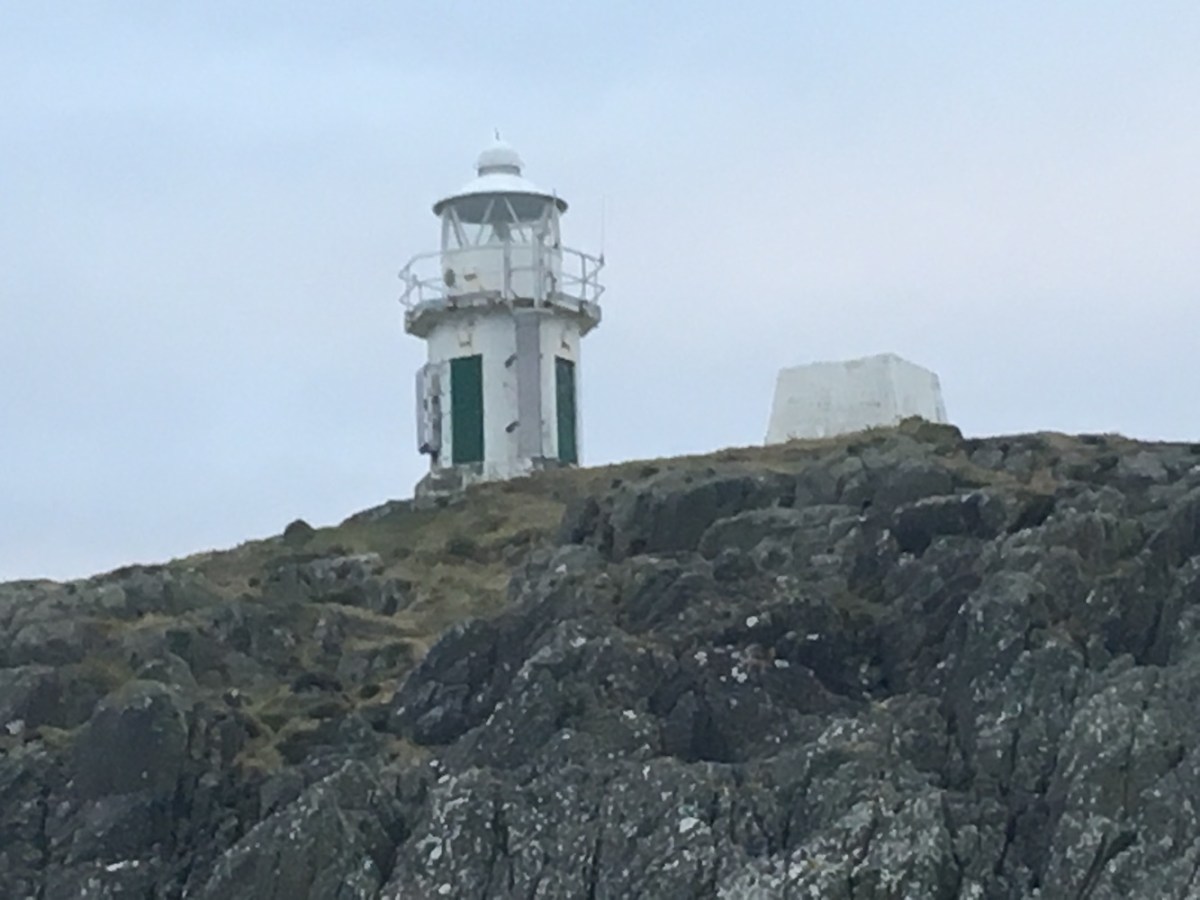
eilean a chuirn
Eilean a Chuirn lighthouse

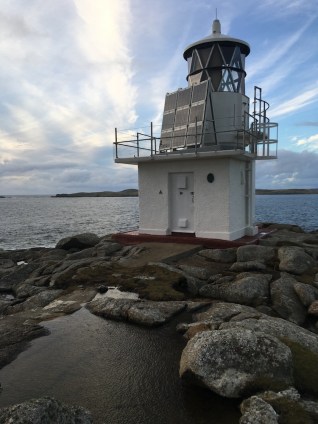
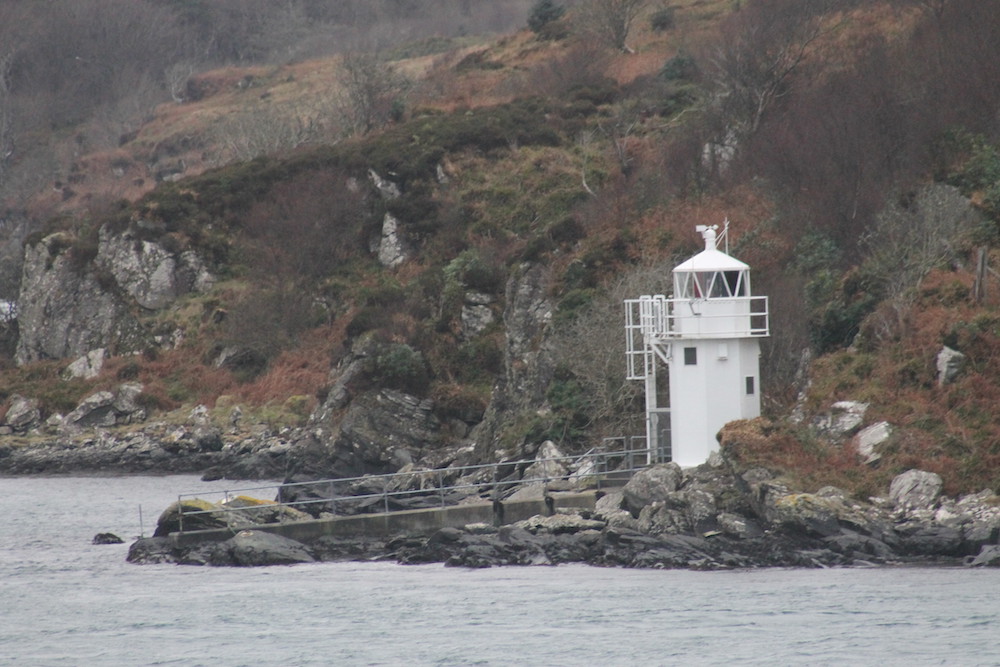
After a quick wave to McArthur’s Head, more on that one to follow, we went onwards to Na Cuiltean, which I’d seen from a distance from the ferry on Wednesday. It’s basically a solid platform with one level of the Northern Lighthouse Board’s flat pack arrangement on top. The base of the structure clearly takes a bit of a battering at times. One side of the base is almost completely covered in a layer of green algae and birds are obviously very fond of the rock it sits on!
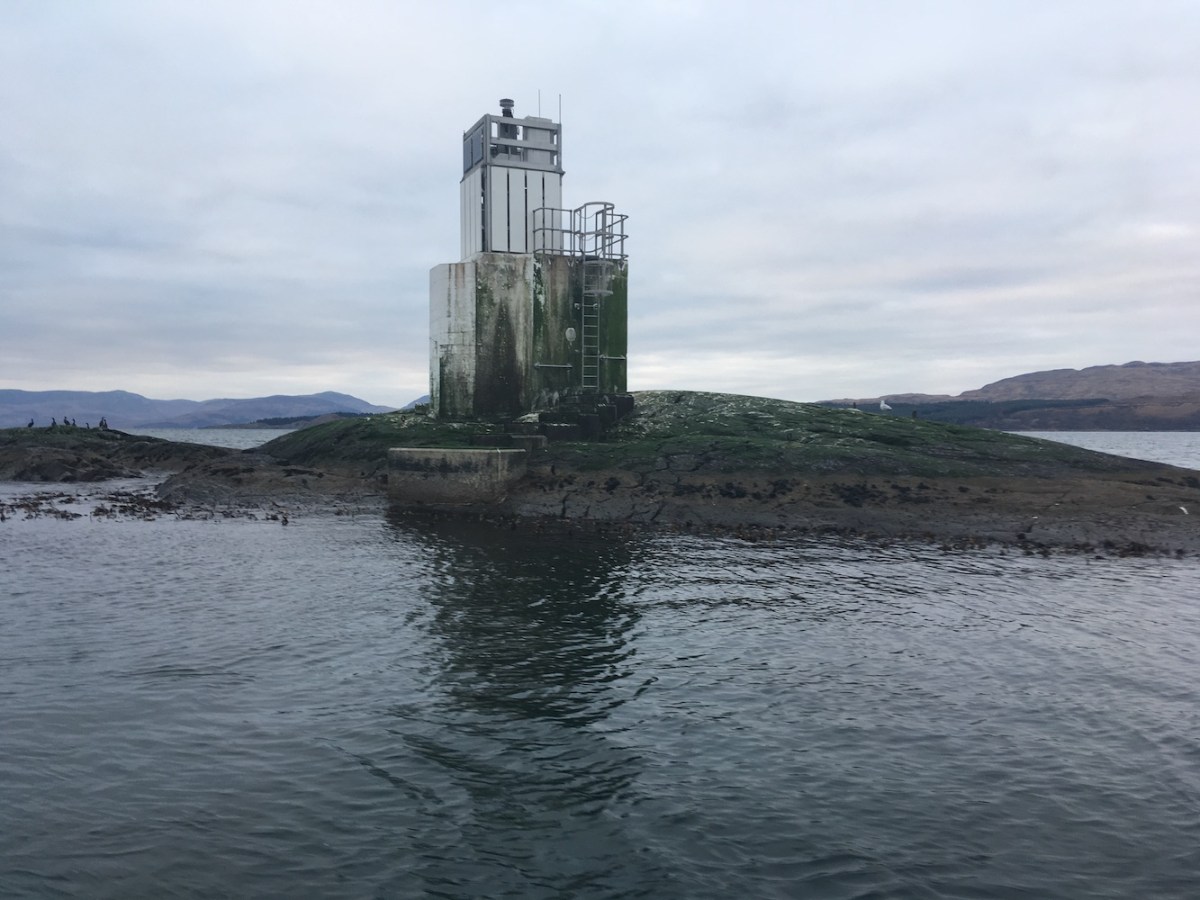
na cuiltean
Na Cuiltean lighthouse

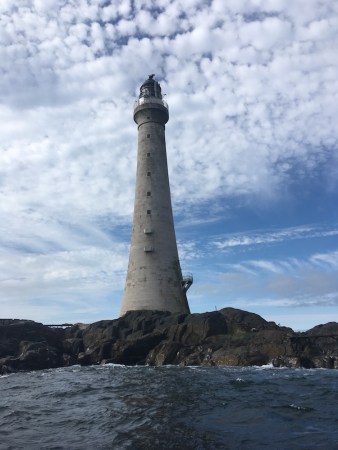
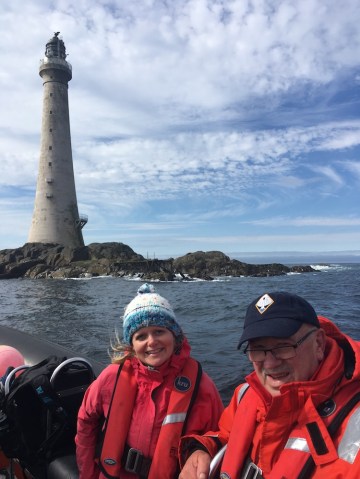
I was very excited about the next one. Skervuile isn’t really that far from land, but the land it is close to is very remote and fairly inaccessible, which makes seeing this one a bit of a challenge. I’d seen it as a small white pencil of a thing in the distance from the ferry. As we approached it was getting bigger and bigger and yet there still seemed to be some distance to go. It reminded me of a term I’d heard from Christian Nock who walked around the coastline of mainland UK: “lighthouse syndrome”. Anyone who has ever walked any distance to a lighthouse will know the feeling. You see the lighthouse and think “Great, I’m nearly there” and an hour later you are still walking towards it. Well, the approach to Skervuile was a little like that, except it wasn’t an hour. We did eventually get there though and I was very surprised to see the rock below it exposed. All of the pictures I’d remembered of it were at high tide where the sea completely surrounds the base of the tower. With the tide fairly low, the small landing platforms were also exposed. As with all rock lighthouses, I stood staring at it thinking “wow, I have no idea how they built that, but I’m so glad they did”!
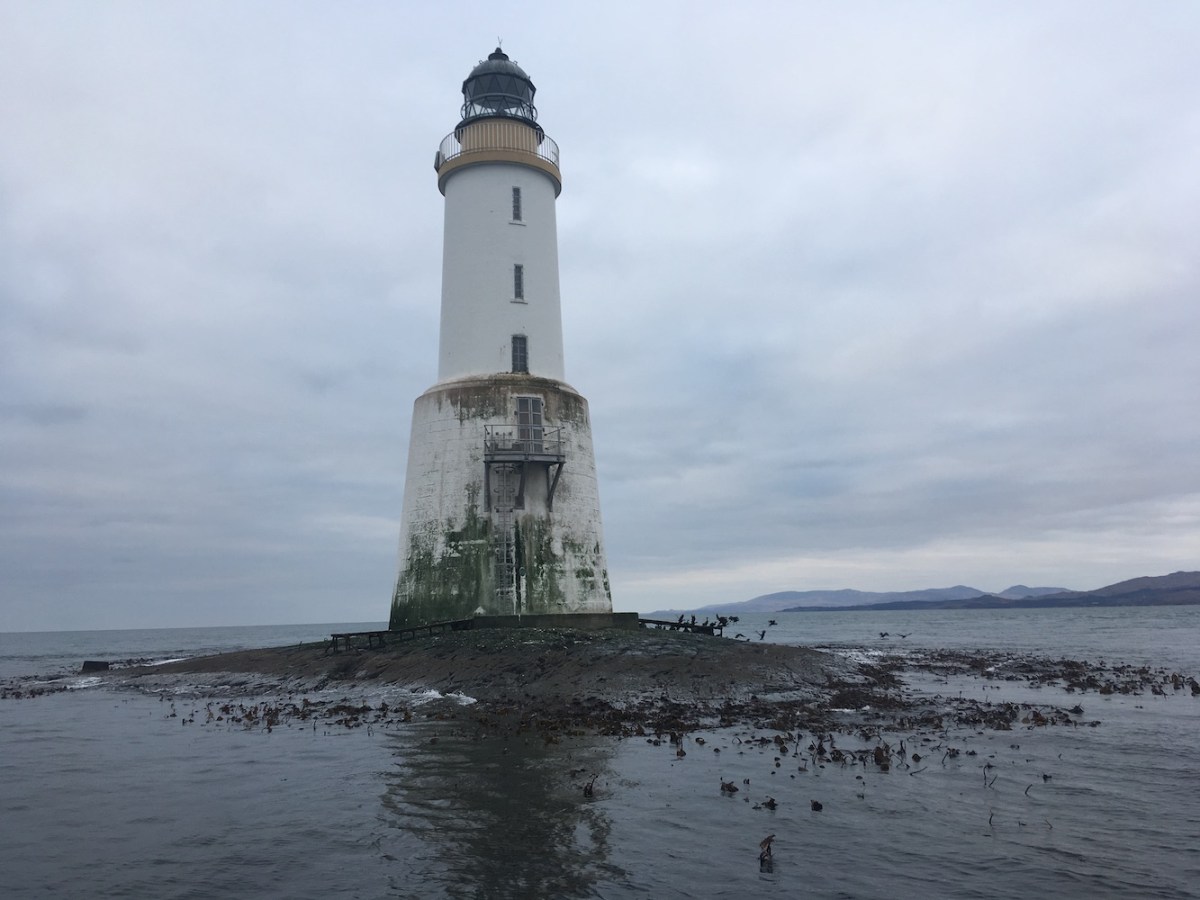
skervuile
Skervuile lighthouse

Eilean nan Gabhar was next on the agenda as we sailed back down the Sound of Jura. This one is a fairly standard flat pack, except it’s a flat pack with those Paps in the background from certain angles! I’ve become a little obsessed with getting pictures of lighthouses with the Paps of Jura in the background. The joy of it being that it is very easily done in the Islay/Jura area. I believe the term “commanding the landscape” is very apt as that is exactly what the Paps do – well, until you stick a lighthouse in front of them, of course!
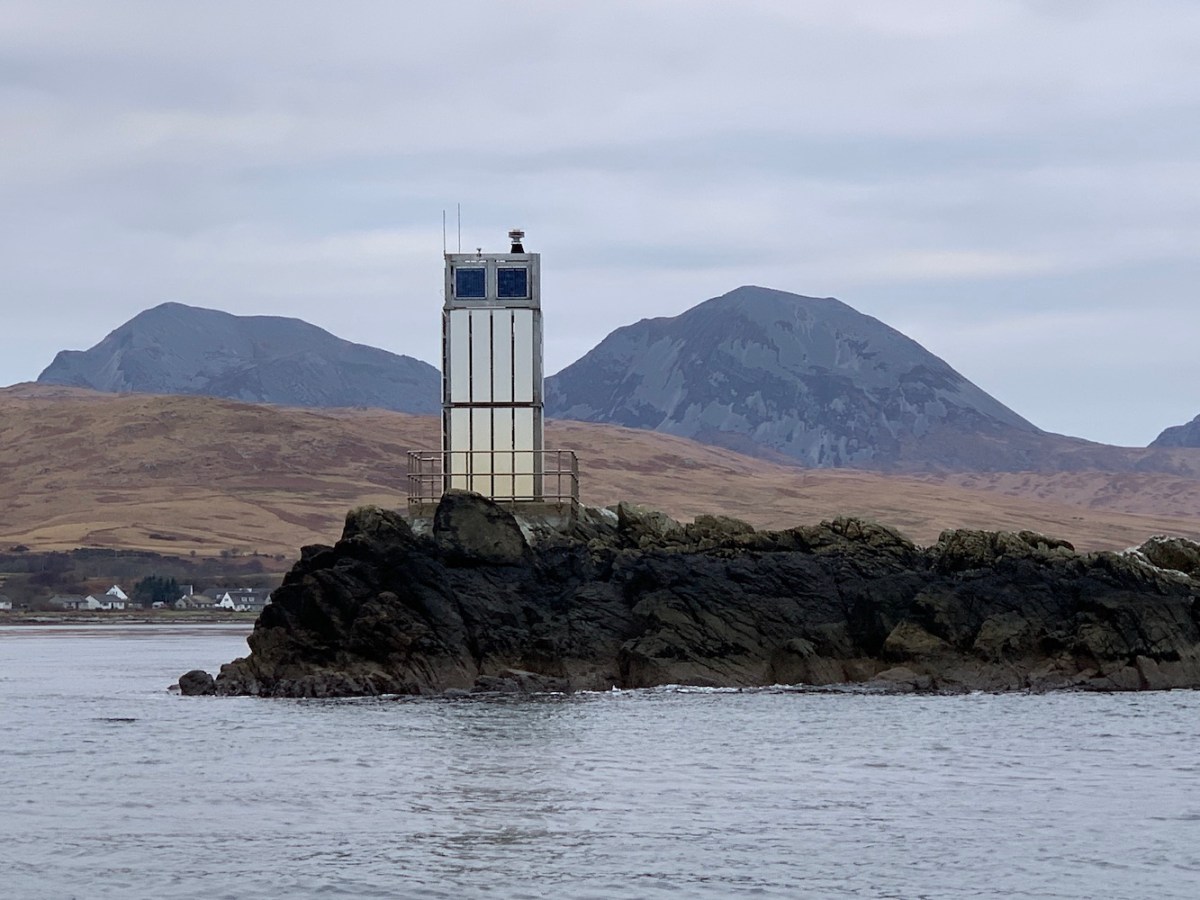
eilean nan gabhar
Eilean nan Gabhar lighthouse

Another wave to McArthur’s Head as we entered the Sound of Islay. The ferry had given us a very good view of Carraig Mhor, to the south of Port Askaig, on Wednesday, but this was an opportunity to get even closer. Not landing close (although that would have been possible, but was not a priority for today). With the reduced elevation compared to the ferry, and the calm sea conditions it was also a good chance to catch some nice reflection shots. Love a reflection! It still looked from our closer angle like it would be quite difficult to access by land.
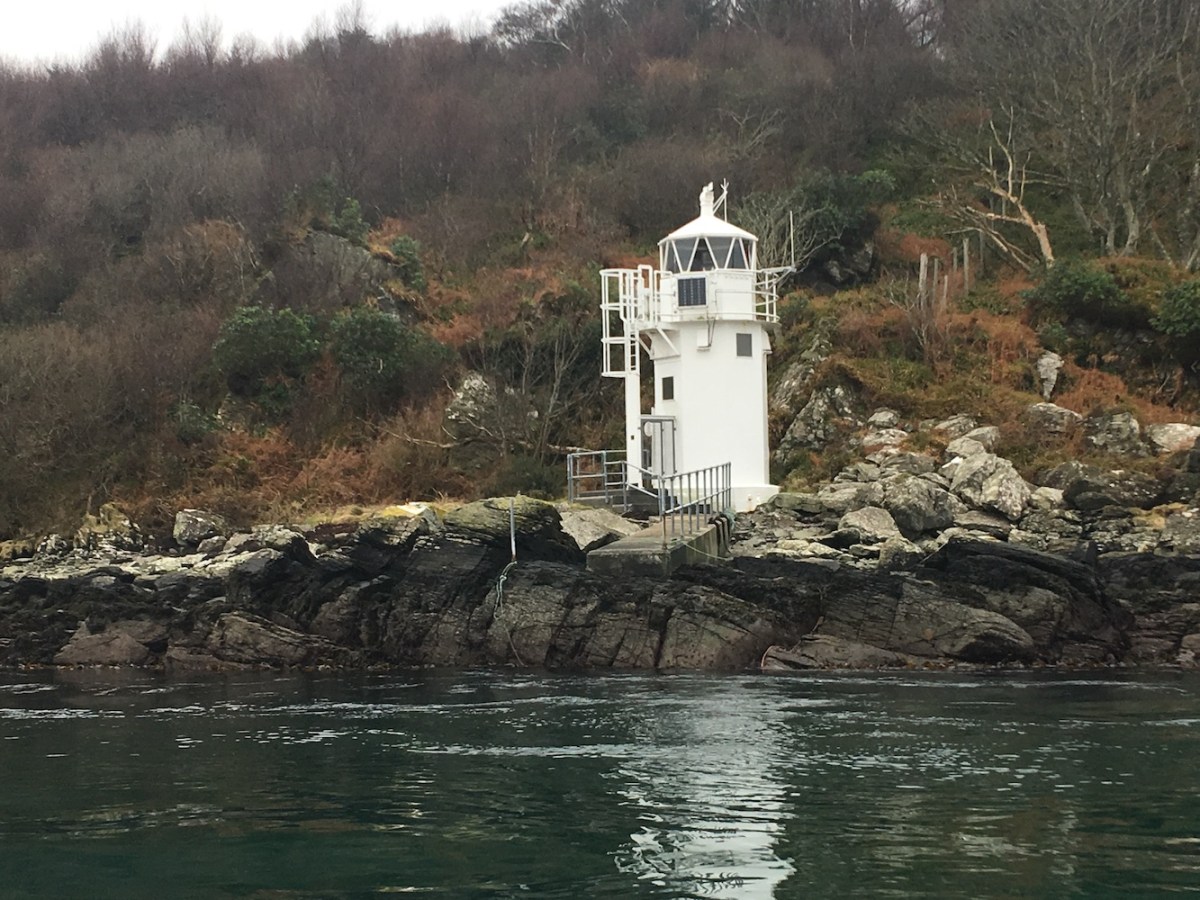
carraig mhor
Carraig Mhor lighthouse

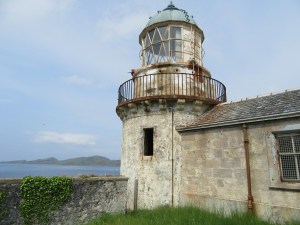
From the ferry on Wednesday, I’d quickly caught the little lighthouse, Carragh an t-Sruith on the west coast of Jura. Very similar in appearance to Eilean a Chuirn, this one looks to be a nice little walk from the landing point for the ferry across the short stretch from Islay. Must put that on my “to do” list.
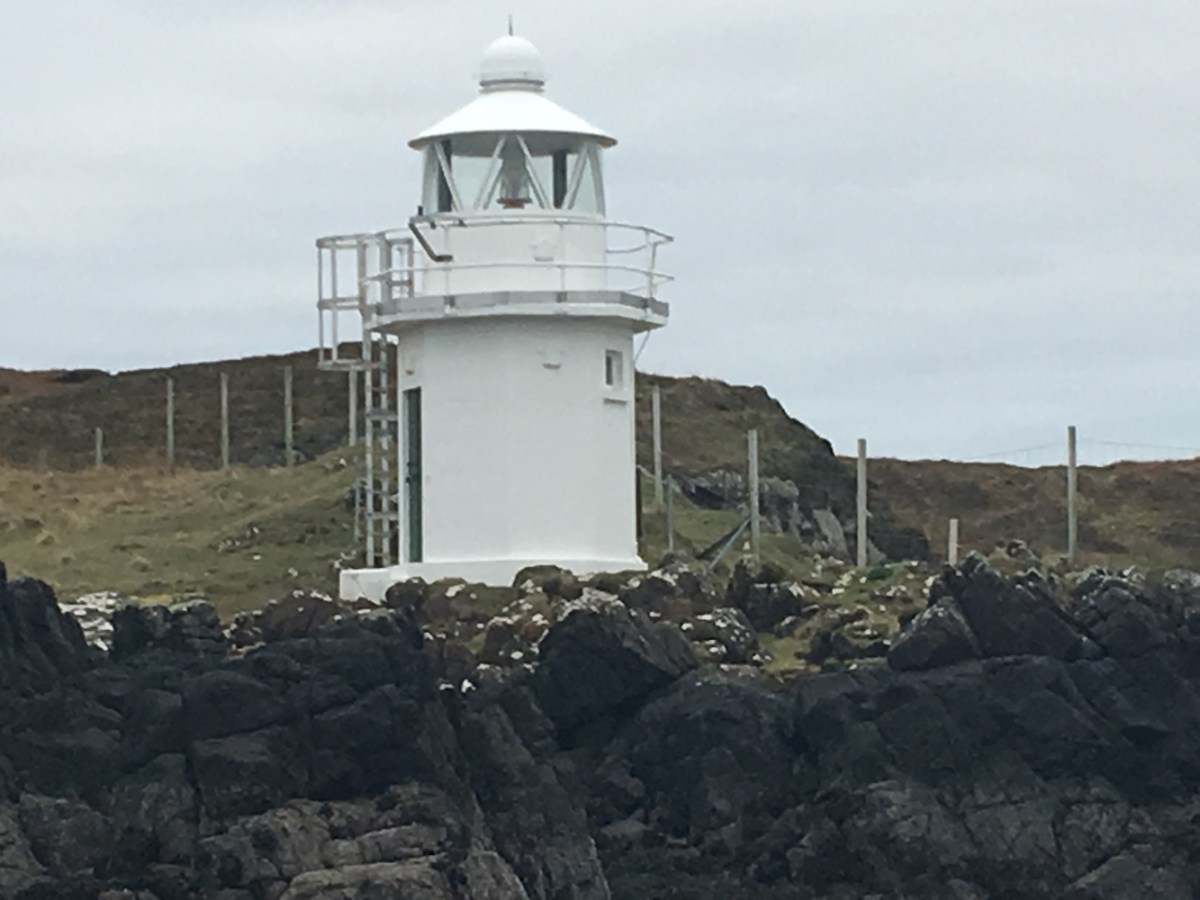
carragh an t-sruith
Carragh an t-Sruith lighthouse

Ruvaal hadn’t been part of the original plan, but I asked Bob this morning if we would be going that far. I think he sensed from my tone that I wanted to go there. We asked Gus nicely and he was more than happy to add it on. On the way there he told us about the couple who own the lighthouse and how they manage being such a long way from a road. The majority of their journeys to Port Askaig are done by small boat. They do have a quad bike to drive across the difficult terrain, but Gus explained that the land they cross is mostly mud. He had once driven up there on the quad once with a passenger and saw a big puddle, which he thought he could get through. As it turned out, a pole had blown down in the wind and had been removed along with its base, leaving a gaping chasm (my words, not his). So, Gus ended up stuck in this gaping chasm with water almost up the seating level in the quad. Fortunately he was able to get them out and back on the track. The challenges they must face seem endless to me and it would take a certain type of person to be able to live (or enjoy life) there. As much as I love lighthouses, I would need to draw the line when it comes to choosing which one to live in, and Ruvaal falls below this line! Having said that, the lighthouse is beautiful. Incredibly slender! If I were a lighthouse, I would want to look like Ruvaal. It was lovely to sail around it and see the side with the windows too. Maybe I could live there – perhaps – just for a few days.
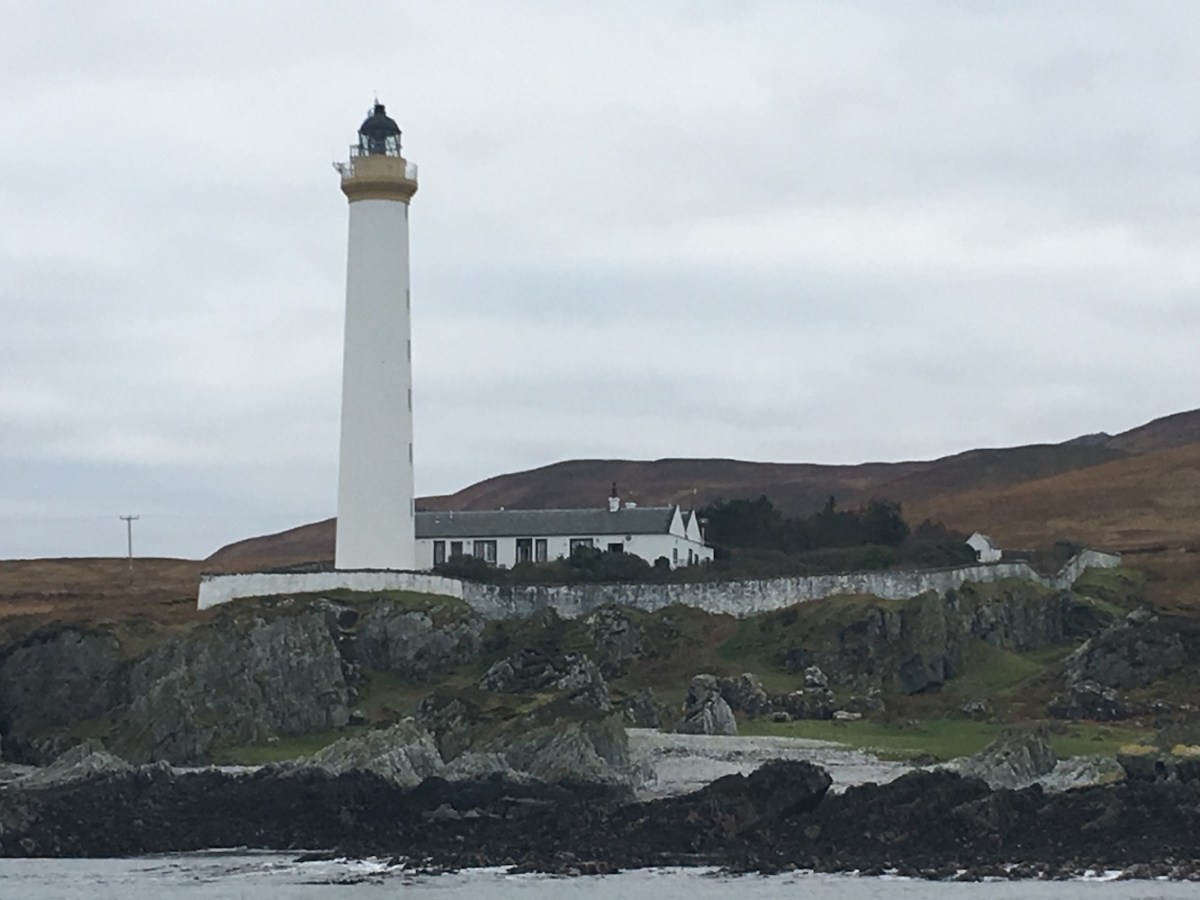
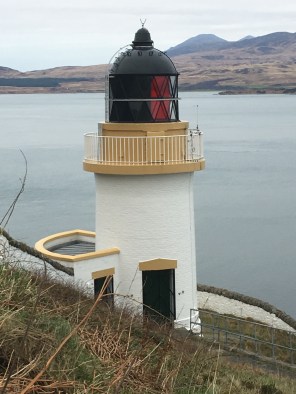
ruvaal
Ruvaal lighthouse
mcarthur's head1
McArthur’s Head lighthouse

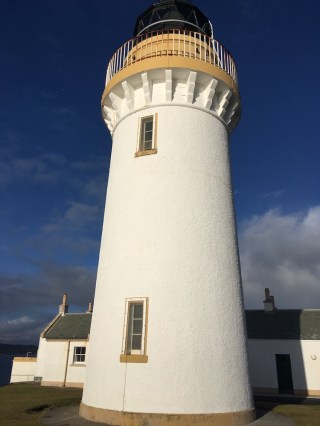
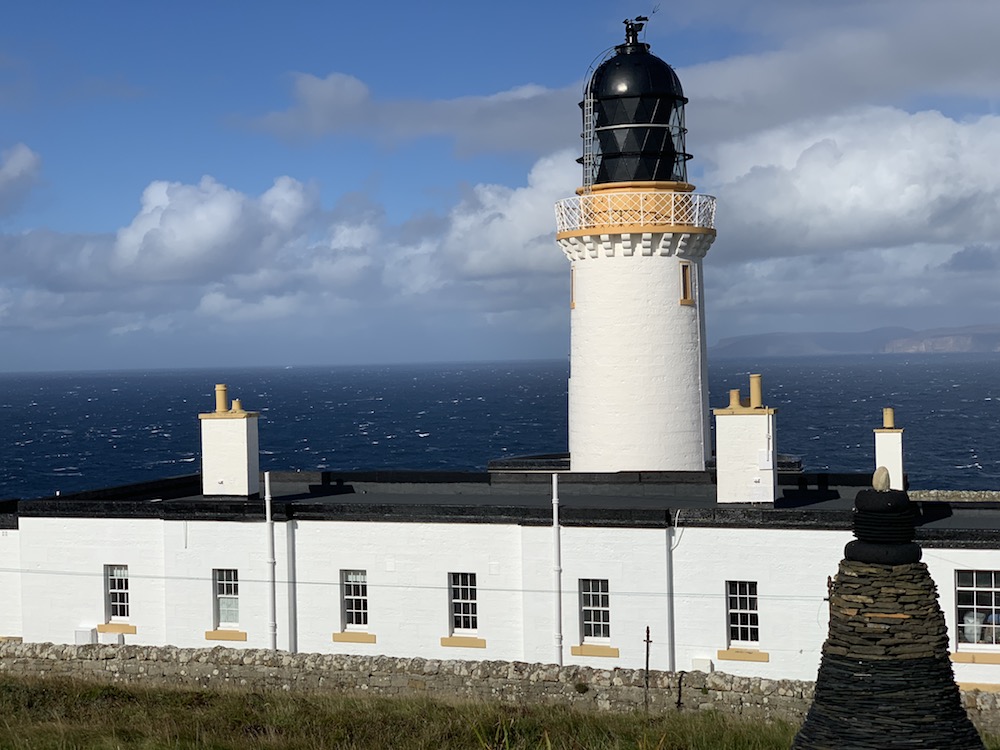
We had purposely saved McArthur’s Head for the way back. We’d rather cheekily asked Gus if he thought it might be possible for us to go ashore there and climb those glorious steps. He explained that it is not possible to land at low tide, he’d once been stranded in a nearby cave due to the tide going down. To maximise our chances of landing, he suggested saving it until the end of our trip when the tide would be in. He wasn’t wrong and I may have squealed a little (just a little) when he said that he’d get us in! We hopped ashore and made for the steps. I approached the steps thinking that there weren’t that many and it would be easy enough. About 10 or so steps from the top I changed my mind. It’s a long way up! But it was so worth it. The lighthouse, while not unlike a number of others in the area, was stunning and the extra effort you put into getting to it adds to the enjoyment. My favourite views though were from the end of the path beyond the lighthouse looking back at it with Jura in the background. Just beautiful. Gus told us that the lighthouse was painted last year and they flew in 2.5 tonnes of paint for the job. I imagine at least half of this paint was used on the wall rather than the tower itself. The wall is so long that I didn’t even realise we were inside it! McArthur’s Head now holds the record for the most number of hugs it has had from me (3). I even enjoyed walking back down the steps. I can’t decide though whether the lighthouse looks better from the land or from the sea. It is just an all-round wonderful lighthouse and I want to go back already!
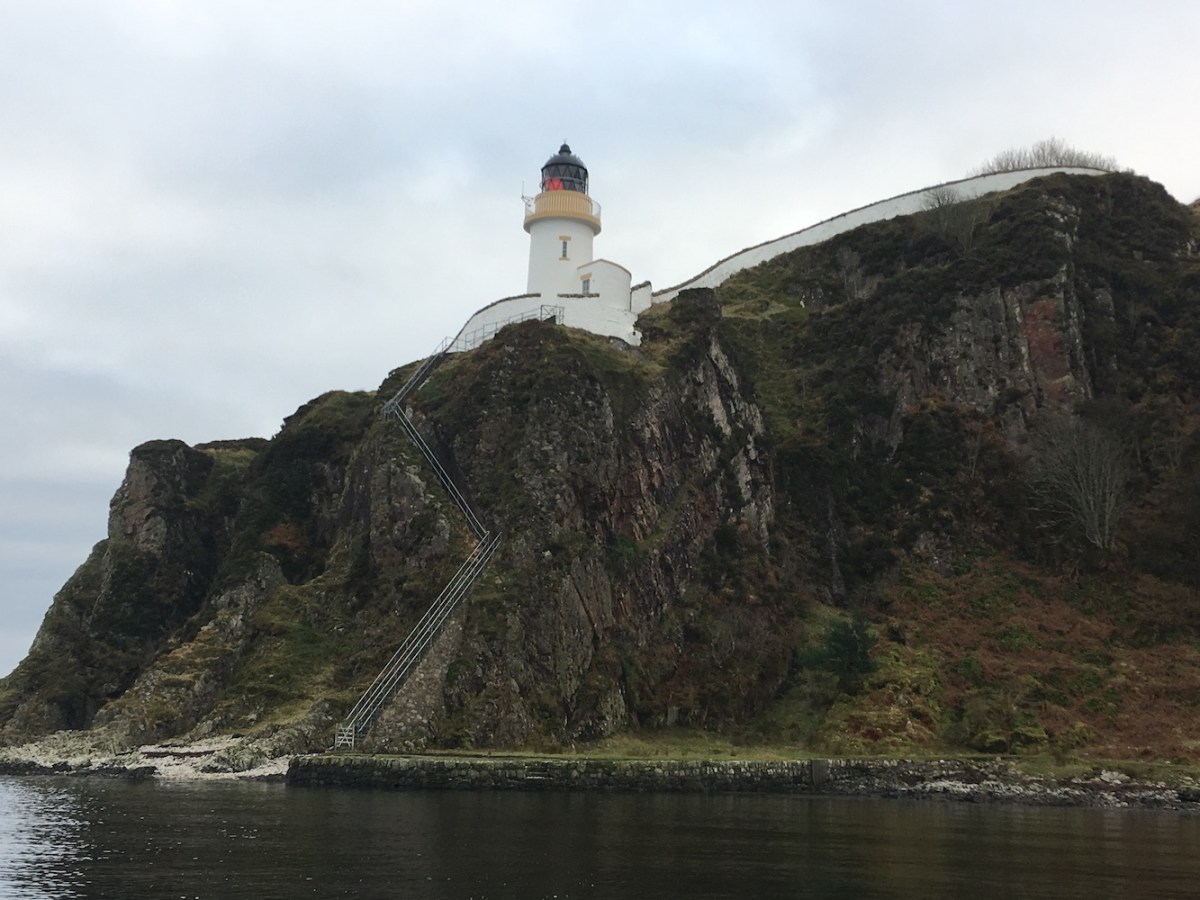
mcarthur's head2
McArthur’s Head from the sea

Heading back to Port Ellen, the sea eagles were out in force again, being wound up by some gulls. Gus had told us about a group of stags he’d seen swimming between islands near Eilean a Chuirn the other day. By some wonderful chance, we spotted one in the water as we passed. Gus did a very quick and very sharp turn in the RIB to enable us to see the deer swimming at close range. After it arrived on the island it looked back at us briefly before wandering off onto the island.

A wonderful and very successful day. Certainly one never to be forgotten. 🙂
Getting serious with some January bagging

Happy New Year to you! I’m not sure I’ve managed to say that in a blog post before with the key reason being that bagging season for me doesn’t usually start until at least March. Winter isn’t always conducive to enjoyable lighthouse visits, although last weekend’s trip to Northern Ireland is evidence that it’s not necessarily the case.

Feeling the need to continue the brilliance of last year, and fill some gaps in pictures required for my book (see this earlier post for details of this), a little time in the Islay and Jura area was required. It’s very much been uncharted territory for me so far.  It’s also not the easiest area for visiting lighthouses as some of the lights aren’t so easy to access, being either on rocks in the middle of the water or involving a long distance walk on very rough or boggy terrain.

Ardrishaig
Ardrishaig lighthouse

There is a plan to address this later in the week – more on that in a couple of days, all being well. Before that though, today has been a day of “glimpsing” the lights, almost in preparation.

Travelling from Ayrshire to Kennacraig to catch the ferry, we stopped on the west bank of Loch Fyne at Minard. From here the black and white Sgeir an Eirionnaich (or Paddy Rock) light can be spotted. From such a distance there’s not a lot to say about it, except that one day I hope to get a little closer! Continuing the journey south, we gave the lighthouse in Ardrishaig a quick wave as we passed.

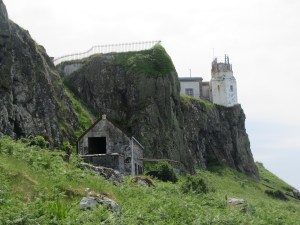
McArthur's Head
McArthur’s Head lighthouse

We weren’t sure what it would be possible to see from the ferry between Kennacraig and Port Askaig, more specifically the section to the south of the Sound of Jura. I braved the elements and stepped outside with the zoom lens in tow. At first I spotted a white tower in the distance and, checking the map, established that it must have been Skervuile. I was actually on the look out for the Na Cuiltean light at the time, not expecting to see Skervuile, so that was a bonus. I’m really looking forward to seeing Skervuile close up (fingers crossed it will happen this week). Scanning the coast, I finally caught sight of the Na Cuiltean lighthouse, another one to get closer to. It’s not a huge tower anyway, but even if it had been it would have been dwarfed by the incredible Paps of Jura in the background. What an island Jura looks to be from the sea!

I’d had my eye on McArthur’s Head between views of the two lighthouses to the north. I had a few minutes to go back inside and warm up a bit, before it was time to head out again on the approach to the Sound of Islay. Although I’d never seen it in person before, the lighthouse and its surrounding wall at McArthur’s Head are very recognisable. It was wonderful to pass it and see it from a number of different angles with more detail of the landscape emerging with every moment.

Carraig Mhor
Carraig Mhor lighthouse

The final lighthouse of the journey was Carraig Mhor just to the south of Port Asking. There was no need for a zoom lens for this one. The small, but perfectly formed tower would not even be worth attempting to visit from the island itself, but the very surroundings that make it so inaccessible from land is exactly what makes it such a picturesque view from the sea. The lighthouse is nestled there quite happily with its own jetty.

I’d just started to make my way back inside again when I remembered there was one left to see – Carragh an t-Sruith on Jura. We weren’t particularly close to it, but it was visible and yet another one for later in the week – hopefully. As I said, it’s been a glimpsing day with hopefully better views and clearer pictures to come. 🙂

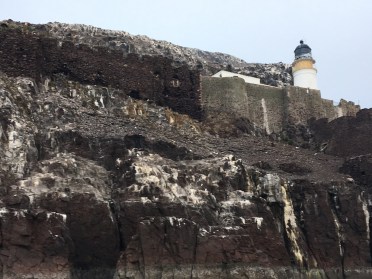
A closer look at Bass Rock

So, eagle-eyed followers of my blog will recall that my last post claimed to be the final one for the year. It turns out that wasn’t quite right, which I suspected at the time might be the case, such is the way when opportunities seem to arise out of the undergrowth, even at this time of year.

For a few years now we’ve had our names on a list to go on a winter trip to Bass Rock at the entrance to the Firth of Forth. Every winter the organiser, Alan, would be very helpfully communicating with the boatman and sending emails every couple of weeks with new potential dates and each time it would come back with the instruction “Stand down”. However, last year Bob got lucky and managed to be around for the trip out on the Braveheart from North Berwick. With a four-month-old baby at the time, I was the one who stayed at home, but with the promise that I would still get there, one day.

Fast forward a year and, again the emails were coming and then the disappointing messages would follow. A couple of weeks ago we were about to pack our bags when a second email confirmed that, contrary to the first message, the trip was in fact cancelled. When you do these things frequently you accept that sometimes conditions change. That’s just the way of it. You can’t control it, so you just go with it as and when you can.

Well, the email came through at the weekend to say that while Tuesday was not an option, Thursday might be. We had an “amber light” on Monday and then again on Tuesday. Final confirmation was to come at 6pm on Wednesday. Of course, living as far from North Berwick as we do, I needed time to get there. So, after work on Wednesday I continued down the road to Inverness and waited for news to come at 6pm, which it did and it was a green light! So, I hopped onto a train bound for Edinburgh.

It was an early start in Edinburgh for me this morning to make sure I arrived in time for the boat. I am not at my best in the mornings, but I ended up quite pleased to have arrived in North Berwick while it was still dark. Not only could I see the light on Bass Rock flashing away, but the light on Fidra too. Most impressive of all was the Isle of May though. While both the Bass Rock and Fidra lights have been replaced with LEDs, the Isle of May light is still something that slightly resembles a rotating optic and was fabulous to see flashing brightly in the dark. As soon as the first sign of daylight emerged though the flash was significantly less visible. I strolled out to the end of the harbour which is a particularly good vantage point for seeing the three lights already mentioned. I also spotted one across the Firth of Forth, which (based on its location) was most likely to be that lovely little Elie Ness light.

IMG_7159I met up with the rest of the group and we set off. I must admit I was fairly confident that we would get landed as the sea conditions were calmer than the day we went out to Fidra earlier in the year. Bass Rock is an amazing island, very imposing and you can sense that even from a distance away. I had seen “the Bass” a number of times from North Berwick in various conditions, from perfect sunny afternoons to gloomy days when it was shrouded in mist or low cloud. It’s got a similar feel to Ailsa Craig. The approach to the island is awe-inspiring. Seeing that recognisable shape close up is pretty special. We slowed and sat back for a while as the crew had a look at the landing area. There was more swell that we’d be expecting, with the occasional wave from the east skirting around the base of the island. As soon as the skipper, Dougie, started giving advice on exactly when we should go and that he would do two at a time before pulling back and going in again, I began to wonder if landing might not be as straightforward as I had hoped.

I got in the queue and watched as the others flung a leg over the handrail , got a foot on the island when the boat has momentarily stopped lurching up and down, and were then – in some cases – partially dragged onto the island by the crew member on the steps. Having seen the height of the handrail and the speed the others had needed to move I decided not to risk it. I went back down to the skipper and then saw the last guy get off in a slightly more controlled manner and thought “maybe I can do this”. Once I got back to the front of the boat again I changed my mind though. It just was not going to happen. Had it not been for having to climb over the handrail and if it’d had a gap in the middle that I could have walked through then I would have absolutely gone for it. I’ve since spoken to Bob about the landing conditions today and he informed me that “It would have been fine, you just need the confidence and experience”. I have neither, and I’m certain I made the right decision. The skipper himself said it was marginal for landing today, which made me feel a bit better about my choice!

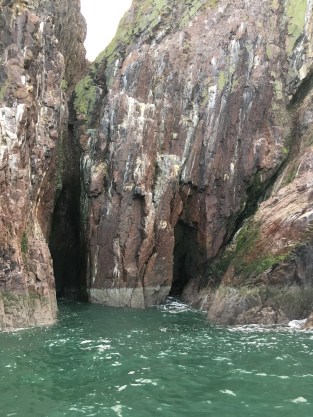
IMG_7169Anyway, not having to endure the stress of landing and getting back on the boat, I chatted away to Dougie while watching the lighthouse and the changing colours as the sun continued to rise. He sailed around to the east of the island to show me the alternative landing “for a laugh”. It was a very uninviting landing today! After that we took a spin around to the west of the island where he pointed out the cave (see picture below) that goes through the entire length of the island and, at low tide, it is possible to wade through. Interestingly, the water to the west of the island is very shallow, at only about 7 metres, while the depth at the east is more like 40. The geology is truly incredible and this is further enhanced on the south by the remains of the various buildings that have called Bass Rock their home, including the castle, which once operated as a prison.
IMG_7192Dougie clearly knows the rock and its history particularly well. He recalls there once being sheep and grass there, which is difficult to imagine now, but the gannets who insist on making it their home each year have destroyed that, as well as seeing away the puffins who used to nest there. Aside from the boat operators at the Seabird Centre in North Berwick, Dougie in the only boatman who has permission to land on Bass Rock, which he has obviously done a number of times. He described the state of the old lighthouse buildings on a recent visit with the roof now threatening to fall in as a result of damp. There has also recently been a mudslide near the lighthouse, which has left a layer of deep mud across some of the path.
He has also dealt with Northern Lighthouse Board engineers a lot in the past. He recalled one time he took them out to the island in the morning to work on the light and returned at dusk to pick them up, but which time conditions had deteriorated considerably. Luckily they managed to get them off safely, but it sounded a bit hairy! He had also taken the engineers out to Inchkeith in 1986 when they were automating the lighthouse there and he spoke very fondly of his memories of looking around the keepers’ accommodation during those visits.

IMG_7241The topic of the yellow-ish paint that the Northern Lighthouse Board use on their lighthouses (I’ve heard recently that it is called “bamboo”) came up. He had a funny story about a local resident who was looking to paint the top of their wall, but didn’t have any paint for it. They had asked if anyone had any and a few massive cans of this bamboo paint appeared and shortly afterwards the wall may have every so slightly resembled a Northern Lighthouse Board shore station, or even lighthouse, wall. I imagine that happens fairly routinely where there is a lighthouse nearby.

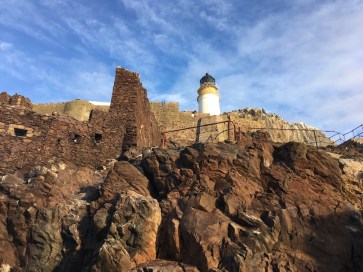
By the time the others started heading back down to the landing point the blue sky had appeared and I was able to get some pictures of the lighthouse bathing in the golden sun with blue skies in the background. Sometimes these things happen and you think that maybe there is some force looking down on you thinking “Oh, let’s just send in some beautiful conditions, just for her, just for a few minutes.” It often happens when you don’t expect it, as was very much the case at Barra Head earlier this year.

IMG_7251You could tell Dougie wasn’t entirely looking forward to everyone getting back on the boat when he turned to me and said “This should be fun” as they were coming down the steps. Their return was thankfully straightforward with no men injured or overboard, and we set off back to North Berwick. I think we all appreciated the final close-up views of Bass Rock as we sailed away. It really is a magnificent island, even if the others were keen to clean their boots in puddles once we got back to the harbour! One of the guys told me he’d spotted some kind of liquid of various colours and he had no idea what it was. The island was also described as “aromatic” by another!
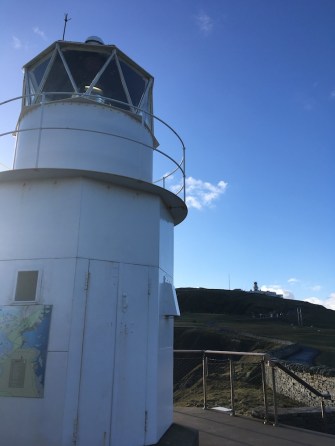
I may not have landed this time, but I’m not too disappointed. I had a fun morning and got to see the lighthouse much closer than I ever had before. Maybe I will need to join one of the tourist trips during the summer and just accept that I’m going to be surrounded by birds, as much as I dislike the thought. A good day today though, and definitely worth the effort, even if it was just to get a closer view.

I won’t say that this will be my last post for the year this time as it won’t be. Exciting plans lie ahead for one final bagging trip before 2018 is over. More to come on that in just over a week! 🙂

The mad plan: Shetland – part one

The mad plan for this week was introduced in my post from Sunday. We successfully completed the Jersey part of the week, and today the second half began: Shetland!

I’ve struggled a little with Shetland recently. Having never been there I was getting to the point with my lighthouse list where it felt like everything was miles apart with massively long walks to each of them. The reason for coming to Shetland for three days was to take pictures of some of its lighthouses, but after the first day it has already become one of my most exciting trips to date.

After just a couple of hours sleep last night and an early flight from Aberdeen to Sumburgh, I wasn’t quite bouncing off of the walls with excitement. That soon changed though as we spotted the lighthouse at Sumburgh Head flashing away as we came in to land. The start of our time here was also enhanced by meeting up with Brian who, in his “retirement”, carries out maintenance work on 37 lighthouses across Shetland. I had come into contact with Brian through my membership of the Association of Lighthouse Keepers and Ian Duff who joined us for the Skerryvore trip earier this year. Brian and Ian have known each other for many years and worked together in a number of lighthouses. Brian had very kindly offered to act as our tour guide for seeing some of the major lights, and he suggested heading straight to Sumburgh Head. I was, of course, delighted with this suggestion.

IMG_6167
Sumburgh Head lighthouse

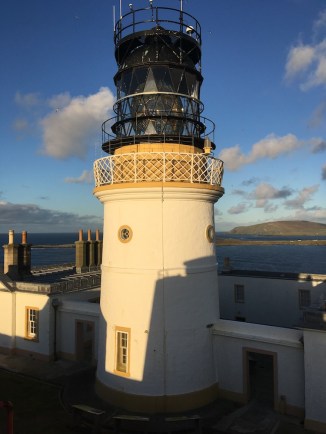
Brian made arrangements with the Northern Lighthouse Board for us to go up the tower. The day was just getting better and better already! Throwing into the mix the fact that the sun was just rising made it even more amazing! The tower at Sumburgh Head is fairly short – one of the benefits of sitting on top of high cliffs, I suppose. This made it particularly pleasant to climb up. The optic and light must be turned off before anyone goes up there. It is a massive optic and, partnered with the views from the tower, made for a really special experience. He also showed us how the foghorn equipment worked and we got to witness him starting the engines, which he routinely does just to keep them up and running.

It didn’t take us long to realise that Brian is an absolutely master of his trade. He knows everything about Shetland’s lighthouses as well as so many others. There are only a few he hasn’t been too, and by all accounts it sounds like he was often specifically chosen to address problems with the lights across Scotland. He’s served in some of the most impressive including Sule Skerry, Skerryvore, Chicken Rock and Ardnamurchan and has stories to tell about them all. Watching him doing anything within the lighthouse at Sumburgh as well as the foghorn was fascinating. His attention to detail and his knowledge are outstanding. Definitely the right person to have around if anything goes wrong!

IMG_6191
The old Muckle Roe lighthouse with Sumburgh Head in the background

From Sumburgh we headed back down the road and stopped at the old Muckle Roe light which welcomes visitors to Sumburgh Head at the main parking area. Brian had already informed me that he and a colleague had re-built the tower in its current location – no mean feat considering most of the detail necessary to assist with building it had long gone. As if the day wasn’t exciting enough, we were able to get inside this little tower and climb to the top where we saw the small optic, more great views and got to spend some time in one of these lovely structures that I’d never had the opportunity to get inside before. I felt very privileged, especially as Brian had taken the time to show just the two of us around.

After lunch we hopped over on the very short ferry crossing to Bressay. As well as continuing to work for the Northern Lighthouse Board, Brian also does some work for the Shetland Amenities Trust who own both the old Muckle Roe light at Sumburgh and the old lighthouse at Bressay as well as the associated buildings. As soon as you arrive at Bressay lighthouse you know you are somewhere very special. I don’t even know where to begin in describing the coastline around it, and then with the lighthouse standing tall above it… There are really no words. If the geo and surrounding rocks next to the lighthouse weren’t enough, the tower itself stands not far away at all from a natural arch (known as the “Giant’s Knee” by the keepers). It’s places like Bressay that remind me of why I enjoy lighthouses so much. To actually explain why I enjoy them is tough – just go to Bressay and you will find out for yourself!

IMG_6215
Bressay lighthouse

Brian had warned us that the lamp room was now completely empty (the old optic can be seen in the Shetland Museum and Archives) and I was expecting to feel sad about it once we reached the top, but I felt anything but. Firstly, they’ve raised the floor level slightly making it exactly the perfect size of room for someone of my short stature. The views from every single angle are awe-inspiring and the acoustics inside are fascinating!

Standing around in the lamp room at Bressay was a brilliant opportunity to hear lots more of Brian’s stories from his days travelling the lights of Scotland. One question I asked which prompted numerous stories was “what do you think really happened to the keepers who missing from the Flannans?” He said that there is something very strange about the Flannans lighthouse and recalled various occurrences of things happening that made no sense. Some of the stories he told were particularly creepy, such as one of the keepers seeing a man in a storeroom and when he returned to Brian was clearly frightened. When they went back to the room there was no one there and the keeper pointed to the spot he’d seen this man and it was within a small area that always felt considerably colder than the rest of the room. Brian also felt like he was being watched sometimes when no one else was around. By this point I definitely wasn’t smiling anymore! There was one really funny story though when one of the keepers was outside the lighthouse on a very misty day and saw three man emerging from the mist and he thought it was the missing men. It turned out to be three fishermen from the Channel Islands who had landed on the island and wandered up to the lighthouse. We laughed about it, but it would have been pretty scary for him!

Anyway, I digress (very easy to do with Brian’s stories). We eventually pulled ourselves away from the lighthouse and took a drive up to the island high point in the hire car, as you do! It was quite bumpy and the road wasn’t really suitable for a Micra, but it’s still intact.

Before we left Brian for the day he had a look through my list and shared his knowledge of the best way(s) to access the lighthouses he regularly visits. There is no end to his knowledge!

Twageos
Twageos Point lighthouse

We decided to finish the day with a couple of stops off at some of the smaller lighthouses. Being in the Lerwick area anyway, the structure at Twageos Point was just begging us to visit. It turned out to be a very simple visit – the lighthouse basically has its own gate and a well-trodden path leading to it. In comparison with the lights we’d already seen that day it wasn’t the most amazing, but it has its own charm and was obviously built to be functional above anything else.

With just a short time left before the sun was due to go down, we obviously felt the need to cram in another lighthouse.

IMG_6249
Fugla Ness lighthouse

We opted for Fugla Ness based on it being fairly easy to access and not too far from where we were. The walk out there was a combination of easy grassy sections and big old boulders. Bob rushed off ahead with all of the abilities of a mountain goat to then have to wait for me to catch him up (or came back and accompany me along). As soon as I saw this one from the road I knew I loved it! The surrounding scenery probably helps, but it really is a beauty, sitting there on its own little grass and rock peninsula. I think I might just take that one home. I will let the picture speak for itself.

On top of the lighthouses we’ve visited, we also had distance glimpses of a number of other lights today, including Mousa, Hoo Stack and Moul of Eswick. We’ve seen the islands of Foula and Fair Isle too. So many islands still to do here…

I am hoping this post goes some way in conveying just how much I have enjoyed today. All of the smiling and fun of the day (and probably the lack of sleep last night) is catching up with me! We have another day lined up with Brian tomorrow. More on that tomorrow evening! 🙂

I should also note that, in my last blog post, I mentioned that we would be going on a RIB ride along the Clyde to catch a few of the lights there. For technical reasons relating to the boat we weren’t able to do this on Wednesday. It has instead been postponed until Monday.

A well-timed return to Dunnet Head

As you can imagine, we have a few lighthouse-related items around our house and so it was no surprise really that our 4-year-old son requested a visit to a lighthouse yesterday. With pretty strong wind about, we realised that there’s really no such thing as a sheltered lighthouse, so we decided to go all-out and head to Dunnet Head. Dunnet Head is probably our most visited lighthouse, partly because it’s one of the closest (after Strathy Point and Holburn Head) and also because it’s a great place to take visitors.

Photo 2018-09-22 14.24.05
Inside the lighthouse compound

I had been in contact with the man who now owns the buildings within the compound (excluding the lighthouse, of course) about visiting, but our timing had never been quite right. So we were nicely surprised to see the “Gallery Open” sign on the gate when we got there. I was mostly pleased to have the opportunity to get closer to the lighthouse, which we headed straight for.

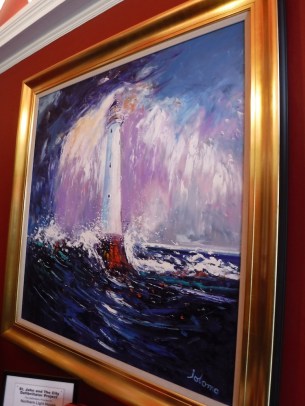
After we’d touched (bagged) the lighthouse we popped into the art gallery, which is within the old engine room. There are some beautiful pictures in there, clearly very much inspired by the local landscapes. A number of local artists have paintings on display there, and it’s really interesting to see their different styles and takes on local views. While we were in there, we were accompanied by a friendly dog – clearly the compound tour guide as he was also wandering around the paths outside when we left. There are a number of artistic features around the compound too.

Photo 2018-09-22 14.19.42
Dunnet Head lighthouse, the view from the fog horn

After we’d been to the art gallery we briefly went through the gate towards the old fog horn. There is a sign next to the gate warning visitors of the high winds and that dogs and children are not allowed beyond that point. So, clinging on to our son’s hand, we went through. The wind direction meant that it was actually a little sheltered once we were down the steps. It was good to be able to see the lighthouse from the seaward side for a change.

It’s really good to see something being done with the lighthouse buildings that allows the public access. The man behind what happens there has set up a website which contains contact details if you are ever looking to visit 🙂

The beautiful island of Fidra

As mentioned in my previous post, we were informed of a fairly last minute boat trip that was headed for Fidra on Wednesday. Fidra is one of those islands that, although it is fairly close to the mainland, isn’t so easy to get to. During bird nesting season landing on the island isn’t really allowed, meaning boat operators just won’t take you there. It is the same for Bass Rock, which is even more of a challenge to land on. Obviously as soon as the nesting season is over the weather starts to turn, so you just need to hope for a good weather window in autumn or winter in order to get to these places.

Bass Rock
Bass Rock from North Berwick

When we arrived at North Berwick and managed to jump into a newly vacated parking space on the sea front, we had wonderful views over to Bass Rock with its immediately identifiable shape and lighthouse. The sky was blue, but there was a fair wind coming from the west, which we thought wouldn’t have much of an impact on the Firth of Forth, but it certainly does!

We found our fellow passengers and the boat, Braveheart, where the skipper informed us we would need our waterproofs for the crossing. Always nice to hear! He was definitely not wrong though. While it wasn’t a particularly bad ride it was bumpy at times with a lot of splashing. Two of our party had taken up the most unfortunate positions at the back of the boat. You may recall in older television comedies where it was clear that buckets of water were being thrown at people to resemble being in a boat on choppy seas. Well that was what it was like. It was good fun though.

Fidra arch
The natural arch

As we approached the island the conditions became much calmer and by the time we pulled in alongside the jetty it was positively calm. Landing on the jetty was easy, much easier than many other landings. A couple of members of the group wandered off over to the tidal section of the island (the South Dog) while the rest of us followed the route of the old tracks leading up to the lighthouse, passing the ruins of the old 12th/13th century chapel. There is a wonderful natural arch in the rock to the right as you walk up. It’s not a big island, but it’s stunning. I wasn’t expecting it to be so beautiful, possibly because it isn’t particularly remote. I always felt that islands that took a long time to get to were often the most beautif

Fidra3
Fidra lighthouse and the old cable drum

As the highest point of the island is to the east of the lighthouse, once you’ve landed on the island it’s not possible to see the lighthouse. It was only after a few minutes of walking up the old tracks that it came into view. Just after passing through the wall that surrounds the compound, we saw the old cable drum that was used to haul the carts up from the jetty to the lighthouse. We also spotted one of the wheels from a cart on our way back down too.

The different land levels around the lighthouse give a variety of perspectives on it. The large rock to the south of island, as one of the other group members said, almost seems as if it was placed there just for people to get a good view/take pictures of the lighthouse from. So often it’s the surroundings of the lighthouse that add to its appeal and that’s definitely the case with Fidra.

Fidra
Fidra lighthouse from higher ground

The lighthouse here was designed and built under the leadership of Thomas and David A Stevenson. The light was established in 1885 and was automated in 1970. In 2009, along with lighthouse on Inchkeith and Elie Ness lighthouse, ownership of the light was transferred to Forth Ports.

After we left the lighthouse, we had a stroll around the old lighthouse garden, which is a fair size. It is covered with old puffin burrows so we had to tread carefully.

Fidra is a stunning island and I thoroughly enjoyed our visit. A little gem in the Firth of Forth! 🙂

To Skerryvore or not to Skerryvore? That was the question!

Back in June an island-bagging friend of ours started plans for a trip to Tiree in August, taking a boat out to a number of islands, but more importantly to Skerryvore lighthouse. Now, anyone who knows anything about lighthouses will understand the delight I felt on hearing of such a trip. We’d previously been out to Dubh Artach with Coastal Connection based in Oban. They had said they would be willing to take us out to Skerryvore, but this trip would take us out from Tiree, which would give us the opportunity to see the shore station, signal tower and museum at Hynish. Another boat trip for the same weekend would be heading north to Coll, taking in the Cairns of Coll including the lighthouse on Suil Ghorm.

We were short on a few people to get a boat-load and I had recently been in contact with the Secretary of the Association of Lighthouse Keepers, of which I am a member, so I asked him if he knew of anyone else interested in joining us. Due to the short notice of the trip there were a number of people interested, but had other plans. However, one particular person was able to make it – a former keeper on Skerryvore!

We set off ridiculously early to catch the ferry from Oban to Tiree and were informed on the ferry that, although the trip to Skerryvore was originally planned for that afternoon, it might happen the following day. While the sea seemed calm at Oban, once we were past Mull we could see a change in conditions. On the boat we met up with Ian Duff, the former keeper at Skerryvore who was joining us. He had served there for 4 years of his career with the Northern Lighthouse Board, as well as Duncansby Head, Fladda and Sanda. If there’s one way to pass time quickly on the ferry journey from Oban to Tiree it’s listening to a string of fascinating stories from a former lighthouse keeper! We were to hear a lot of stories over the weekend, leading me to wish I had been recording everything Ian had said while we were there!

Once we had arrived, the organiser spoke to the boatman from Tiree Sea Tours, who were taking us out on the trips in their RIB. Tiree Sea Tours have only started running trips from the island this year and, over the summer have regularly organised trips out to Skerryvore when the weather has allowed. For us, we were hoping to get onto the rocks surrounding the lighthouse, which the boat company will only allow on a private charter, so that was the plan. The boatman said that they would meet us that afternoon to discuss the plan, with a view to running both of the proposed trips in one day as the swell was due to go down the following day. It was clear from the sea conditions that going out that afternoon would have achieved nothing, so we headed off to Hynish with Ian and Brian (the organiser of the trip).

Hynish signal tower
The signal tower at Hynish

The key buildings and features at Hynish are the shore station for Skerryvore, including the accommodation for the keepers’ families, the signal tower to/from which semaphore signals were sent to communicate with the keepers at the lighthouse, workshops and a man-made dock. As with Skerryvore itself, the shore station building and dock were designed by Alan Stevenson, who also oversaw the building work. Hynish was also the location from which the stone for the lighthouse was dispatched after being quarried on Mull and then transported by tender to Tiree. The shore station and signal tower at Hynish have not been used since 1892 when it was moved to Erraid, which was already the location of the shore station for Dubh Artach. Ian pointed out that Hynish was a better location for the shore station due to its proximity to Skerryvore lighthouse, whereas it was often not possible to see the lighthouse from Erraid. By the time Ian was a keeper on Skerryvore the shore stations for Skerryvore, Dubh Artach, Barra Head and a couple of others in the area were all located next door to each other on a single street in Oban – I imagine there must have been good community spirit there!

The museum at Hynish is wonderful and it was great to be able to visit it with Ian, who was able to point out that the old telescope on display was definitely from Skerryvore, but the clock wasn’t! We took a stroll up to the signal tower, which unfortunately was closed, and then we had a look around the dock that was built for use during the construction and servicing of the lighthouse. To visit a place that would have been so busy back in the late 19th century and which is now so quiet is fascinating. The world has changed so much and Hynish is a good example of how advances in communication and transport technology have led to the abandonment of places. Luckily, The Hebridean Trust have stepped in and have done some wonderful work there, of which there are details on their website. It is great to see everything that was built there either being maintained or used for another purpose.

Scarinish
Scarinish lighthouse

That afternoon we met up with Fraser and Kris from Tiree Sea Tours at the Scarinish Hotel, which confirmed that we would be hoping to get both trips done in the one day on the Saturday. It also gave us a chance to wander across from the hotel to Scarinish lighthouse, which used to be a more substantial structure (similar to Sgeir Bhuidhe at Port Appin, but hexagonal in shape). Now it is a much less interesting structure (for me anyway), but it wasn’t a lot of effort to get to so I couldn’t complain! A little later we went for a drive around the island and the air must have cleared a little as we got our first glimpse of Skerryvore from Tiree. Would we get there? – only time would tell.

Overnight I was hopeful that the wind would drop and we’d wake up to calmer seas and blazing sunshine in the morning. I was a little disappointed that this wasn’t the case, with the sea calmer but not flat and lots of cloud and light rain. We all got onboard the boat and off we went. It was bumpy from very early on as we began our journey out to Skerryvore, with there being little in the way of shelter on the pier. Not long after we set off the skipper decided to abandon the attempt and head north that morning, with the aim of returning to try Skerryvore that afternoon. My heart sank a little, but all was not lost as the Cairns of Coll beckoned.

Cairns of Coll
Cairns of Coll lighthouse on Suil Ghorm

After a stop off on Coll to pick up a man who had done extensive work in surveying the Cairns of Coll, we continued north. As we sailed through the many islands in the area it took a while before Suil Ghorm and its lighthouse emerged. It’s a wonderfully-shaped island, almost like the top half of a whale sticking up out of the sea – with a lighthouse on its head! The lighthouse was built in 1909 by David A and Charles Stevenson, who were responsible for a significant number of the smaller lighthouses, including the former light at Scarinish as mentioned above – particularly those that, in more recent years, have been replaced with the “flat pack” type. They were also the creators of some of the larger lighthouses too. We had planned to land on Suil Ghorm and there had been no indication that getting onto the island would be a problem. However, when we got there, the tide was fairly high with rocks just under the surface of the water all around the island. This meant we couldn’t get in close enough to be able to get onto the land without damaging the boat. I was happy to see it from the sea though.

That afternoon came the chance to try again for Skerryvore. The sea seemed to have calmed down a little and the skipper sounded slightly more optimistic that he’d be able to get us out there, but pessimistic about us getting off of the boat and onto the rocks. I was satisfied with that, as long as I could see it close up I was happy – besides, getting good pictures of lighthouses when you are sharing a rock with them can be really tricky. Ian had told us that, if he had been making the final decision as the whether or not it would be possible for a NLB boat or helicopter to land that day he would have said “no”, and he knows those rocks better than most.

Skerryvore2
Skerryvore lighthouse

We had a bumpy old ride out to Skerryvore, but as soon as I saw her pointing up ahead of us it all felt like it was worth it – and I knew that the return journey would be an easier ride. It is fairly widely reported that Skerryvore is often considered the most “graceful” lighthouse and there would be no argument from me on that. The Trinity House habit of replacing the top of rock lighthouse lanterns with helipads hasn’t done most of their wave-washed structures any favours, which automatically gives its Northern Lighthouse Board counterparts an advantage. In comparison to the Bell Rock or Dubh Artach lighthouses, which are both painted, Skerryvore’s untainted granite tower has more of a natural-ness to it.

While the sea to the east of the lighthouse (the side we were on) was relatively calm, you could see how rough things were to the west with waves breaking over the reef running north. Ian told us about a time that the Principal Keeper at Skerryvore had given the helicopter the go-ahead to land on the helipad (which sits on the rock next to the lighthouse), but after it had landed a wave broke over the top of the helicopter and damaged the blades. At the same time one of the other keepers was washed off of the rock and dislocated their shoulder. The coastguard helicopter needed to come and rescue both the NLB helicopter and the keeper. A pretty dramatic day!

Skerryvore1
Skerryvore’s helipad is located on the flat section in the centre of this picture

Another, more amusing, story he told was of a video he had made while serving on Skerryvore that he had shown to his mother. The video was of the other two keepers walking in circles around the outside of the helipad. His mother, understandably, asked what they were doing and Ian responded that they were getting some exercise and seeing how many laps they would have to do of the helipad to walk a mile.

Visiting Skerryvore was very special for me. It’s a real pinnacle lighthouse and takes me one step closer to visiting some of the more harder to reach lighthouses. This year has been a great year for that, what with the Flannans, the Monachs, Barra Head and now Skerryvore – it’s turned out to be a pretty successful year, probably thanks to the good weather we have had. The visit to Skerryvore, though, was made just that little bit more special by visiting it with Ian.

Skerryvore with Ian
With Ian Duff at his former “home”, Skerryvore

Ian spoke very fondly of his time as a keeper and the range of characters he encountered at the various locations. He described how Duncansby Head lighthouse was a big part of the local community while he was there, and that it marked the first time his wife had moved away from her hometown of Oban. It was also interesting to hear that he wasn’t too keen on the lighthouses on Oigh Sgeir and Sanda, which I think are wonderful. A particular point he made, which I’d never thought of before, was that he needed to climb three towers at Sanda in order to get to the lamp! Very true – I still think it looks amazing though!

For Ian, working for the Northern Lighthouse Board was more than just a job, it was (and still is) a hobby too. We had the pleasure of being invited to visit his house after arriving back in Oban and it is clear before you even step foot inside the door that he has a great appreciation for lighthouses (as I believe everyone should). While we were there I was amazed by his extensive collection of lighthouse books and we got to see the Skerryvore model that he had built during his time living in the lighthouse itself.

So, there we were – we made it to Skerryvore! A fantastic weekend 🙂

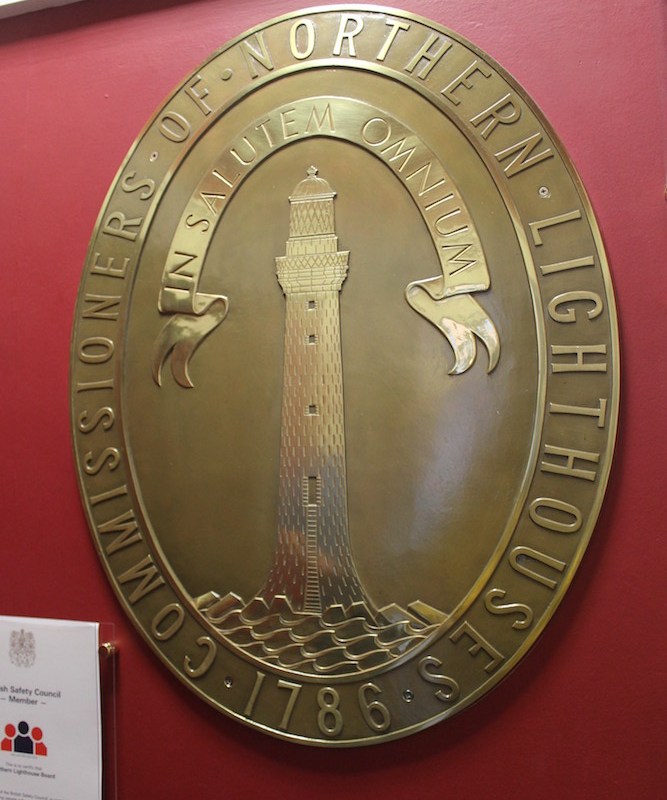
A look behind the Northern Lighthouse Board scenes

At the end of September we were fortunate to be in the Scottish central belt at the time the Edinburgh Doors Open weekend was happening. The Northern Lighthouse Board (NLB) tweeted to say that they would be welcoming the public into their George Street headquarters in Edinburgh for free and I was delighted when Bob suggested we should go. So, on the Sunday, we packed everything we needed for a day out with the kids and hopped on a train.

DSCF6946
One of the beautiful paintings of the Bell Rock lighthouse – this one just inside the entrance

As we approached I recognised the small model of the Bell Rock lighthouse, which flashes every now and then. Inside there was a real sense of Bell Rock being their most treasured structure, with a number of paintings and pictures of it appearing throughout the building. Among the Bell Rock-related experiences we had there was wearing NLB caps while posing behind a big frame with Bell Rock lighthouse as the backdrop. We were also informed by one of the members of staff in the exhibition area of an experience she had while undertaking some training on the Bell Rock. They had been taken out to the lighthouse by the local boatman who regularly runs trips out there (and whom we had gone out with a few years ago). He clearly had some friends who were intrigued by the lighthouse and wanted an opportunity to have a look around it. That evening or night this NLB staff member thought she heard some unusual noise outside the lighthouse and went to open the door leading to the outside only to find a number of faces looking up at her. Those lucky people!

We also spoke to the same lady about the challenges of getting to Sule Skerry and she was impressed to hear that we’d managed to get out to North Rona.

IMG_0893
Lights of the past, present and future in the exhibition area

We had a little while in the Board room where the NLB meet. It’s just as you would imagine a Board room would have been in years gone by, with a huge, sturdy wooden table, heavy chairs and beautifully framed paintings. Mike Bullock, the NLB’s CEO, spoke to us for a while about what they do with some facts and figures. The room also boasts some display cabinets with models of the NLB’s maintenance vessels past and present.

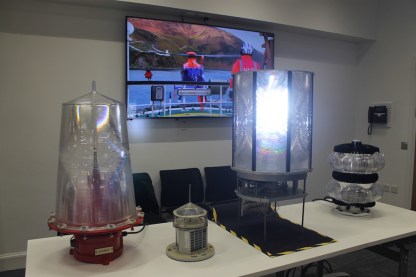
In the exhibition area there was some information about the technical side of their work with examples of the different types of lamps they use (and the new ones they are introducing at the moment) or have used as well as the personal protective equipment their staff wear while out and about.

It was a really good experience and an opportunity that we just couldn’t miss 🙂

Discovering Wee Cumbrae’s lighthouse heritage

At the weekend we spent some time in Ayrshire and, thanks to our friend Rick, we went on a fantastic trip over to Little Cumbrae (also know locally as Wee Cumbrae). It’s always exciting to visit a small island with more than one lighthouse – sort of like visiting the Calf of Man. It’s always a treat. Wee Cumbrae is particularly special though in that it has three generations of lights.

Little Cumbrae old lighthouse

The ride over to the island in a RIB was very short and uneventful, which made a nice change! After saying goodbye to our chauffeurs and their very excitable dog, we began making our way towards the island high point, which was of interest to us all. For me it was to see the island’s oldest lighthouse, while the rest were keen to reach the high point in order to legitimately say they had bagged the island. There was a nice path most of the way to the high point, but as we got closer it became apparent that we would need to go off piste, so we cut across the grass, ferns and various other types of foliage.

We finally reached the old lighthouse and explored the remains. The tower was originally built in 1757 and, according to Canmore, was a 30ft tower with 3ft thick walls. The coal for the light was supported by an iron cage or grate. From inside the tower it is still possible to see where steps up the light used to be and, to the north of the tower, are the remains of the old keeper’s cottage. Less than 40 years after it was first lit, the lighthouse was replaced. From the lighthouse it was just a short walk to the island high point.

Little Cumbrae lighthouse
The 1793 lighthouse on Little Cumbrae

Our next destination was the second of the island’s lighthouses, first lit by the Cumbrae Lighthouse Trust with funds generated from the shipping dues from the old lighthouse. The lighthouse was designed by Thomas Smith, the first Northern Lighthouse Board’s engineers, and its construction was overseen by Robert Stevenson, the first of the “Lighthouse Stevensons”. The lighthouse is a fascinating place to visit now that it is no longer operational. The tower, all of the keeper’s cottages and associated buildings are now open so you can have a good look around. We were pleased to be able to get right to the top of the lighthouse and there is still a distinct smell of mercury about the tower. The keeper’s cottages are home to an interesting array of relics, including some 1970s editions of Reader’s Digest and, oddly, a few sets of old airplane seats. We spent quite some time exploring the buildings and everyone seemed to enjoy it.

Little Cumbrae beacon
The Little Cumbrae beacon now sits on the old fog horn tower

Located close to the lighthouse was the old fog horn control room and tower, upon which the operational beacon now sits. By this point the sun had come out and we enjoyed lunch near the lighthouse, explored the old pier area which was clearly where access to the lighthouse from the sea had previously been, and then headed back across the island.

When we arrived back at our drop-off point we still had a fair amount of time left before we were picked up so a few members of the group wandered across to Castle Island, a very short distance off of the east coast of the island. When I say “wandered” what I mean is that, initially, the group used various methods of getting across the fairly shallow stretch of water. Bob was first across and just waded his way through with his shoes on and everything. The next three sensibly removed their shoes and paddled across. As the tide continued to recede, the next two or three people threw rocks into the water to use as stepping stones for getting across. By the time most of the group had crossed, the water had gone down enough for me to just stroll over to the island without getting wet feet at all.

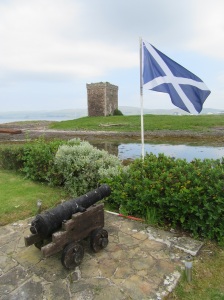
Castle island
Castle Island viewed from the grounds of the yoga retreat

Castle Island is so called due to the beautifully preserved lighthouse which sits upon it. Apparently dating back to the 16th century, there is now a set of wooden steps leading up to the castle entrance. There are some fantastic rooms in the castle, some of which contain some wooden tables and benches. The views from the top, where more benches can be found, are stunning. We spent quite some time up there. By the time we returned from Castle Island the tide was fully out and the crossing was dry.

We spent the remainder of our time on the island looking around the grounds of the yoga and meditation centre. A really well-kept garden and definitely a good island for some relaxation. It was a great island and I was pleased to be able to bag two new lighthouses there 🙂

Cramming in some lighthouse visits

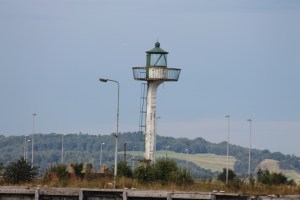
The middle pier light at Granton

At the weekend, we travelled down from the north coast to the Isle of Wight to see my family for our son’s first birthday. Of course, it wasn’t possible to do the journey without at least one lighthouse stop! In my attempt to finalise a list of lighthouses in the UK, I have discovered more and so we took a detour along the coast north of Edinburgh after our stopover in Perth. I’d been to Granton during my lighthouse tour in 2012 to see, what I have recently discovered, is actually a former Northern Lighthouse Board training facility. There is a Stevenson-style lamp room sitting on top of a building and, rather than being used for navigation, it was only ever used for trainee light keepers. I had found out about the additional two lighthouses here though just last week, one on the end of the east pier and the other on the middle pier. I won’t say a huge amount about either as there’s not a lot to say. We weren’t able to get very close to the middle pier light, which is essentially a small lamp on the top of a pole. The other was a white square structure on the end of the pier. It was a nice wander out to it, but it’s looking a little derelict now with graffiti all over it. We’re not sure if it is still in operation as it doesn’t look like it, but there is a solar panel on top. We didn’t spend long in the area as we had to get down the road.

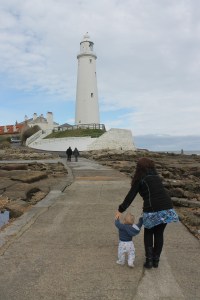
Off we go to St Mary's lighthouse!
Off we go to St Mary’s lighthouse!

This didn’t stop us from calling in on St Mary’s island lighthouse nearly Whitley Bay as we passed by though. When I’d originally been in 2012 the tidal island had been cut off and when Bob and I had made a quick stop there more recently we didn’t have time to enjoy a walk across the causeway to the island. This time around we chose to make time for it. It’s a stunning tower and it’s tidal access adds an extra appeal to it. It turns out they have a real good set-up there, although the funding hasn’t come easily to keep it going.

We had a quick walk around the outside of the tower before heading in to the shop and buying tickets to go to the top of the lighthouse. What I often find in many lighthouses that you can reach the top of is that you need to go on a guided tour with someone who works there. St Mary’s is different though and you can wander up at your own leisure. This time we had our son with us and he is very keen to walk up steps at the moment, so he was more than happy to wander on up (holding his daddy’s fingers). He got about two thirds of the way up before Bob decided it was too much for his back, so he was carried the rest of the way up. It was a bit of a challenge to get Bob and our son through the small opening up to the lamp room, but they got to the top and, for our little man, it was the first time he’s been to the top of a lighthouse.

The old Withernsea optic in St Mary's lamp room
The old Withernsea optic in St Mary’s lamp room

There were some great views from the top and, although the optic in there is not the original (it came from Withernsea), it is still nice to see an optic in there. After having a good look around we started our descent. At the bottom of the tower we noticed live footage of the nearby rocks so people could look out for seals. However, I noticed that the camera could be spun around to see the lamp room. So, I then headed back up to the top, leaving Bob with the instructions to take pictures of me at the top once I got there. I’m not really sure why I decided to go back up – it’s much more exhausting the second time around, but we got the pictures and I then returned to the bottom of the tower. While we were there, we got a certificate for our little man to mark his climbing of the lighthouse.

By the time we left the lighthouse the sun had come out and so we took a slow wander back along the causeway before grabbing an ice cream and hitting the road again.

The following day was particularly exciting as I managed to bag another lighthouse on my third attempt at it. That’s all I’ll leave you with! More to follow soon 🙂