Revisiting the Lady and the not so Little Cumbrae

Whilst it’s true that I do spend a lot of my lighthouse time trying to get to those I’ve not seen before it is always nice to be able to say “yes!” to an opportunity for a revisit, especially if it is revisiting two places that I enjoyed so much the first time around: Lady Isle and Little Cumbrae.

My lighthouse accomplice, John, had been very keen to get to Lady Isle to see its wonderfully unique lighthouse for a long time and had organised a trip in May, which of course had to be postponed. He’d spoken to the boatman at the weekend who had said that Monday (today) was looking suitable. I told John that I would be happy to go along if there was space with boat companies limiting numbers due to social distancing. Fortunately I was given the thumbs up and this morning we departed Fairlie on board Black Magic, an open RIB operated by C&C Marine. This was the boat that I’d previously visited Lady Isle on so we knew he had been there before and could get us onto the island as long as conditions allowed. Along for the ride too were Steve and Lianne who had driven for 5 hours to make it up just for this boat trip. They are fantastic company and such a lovely couple.
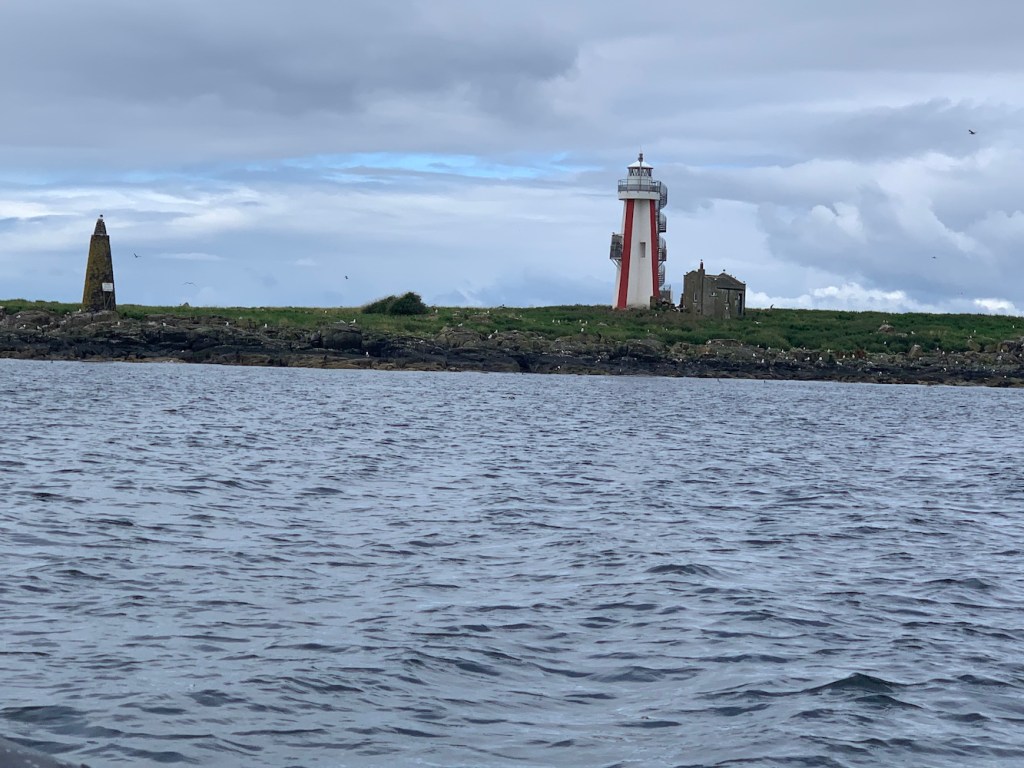
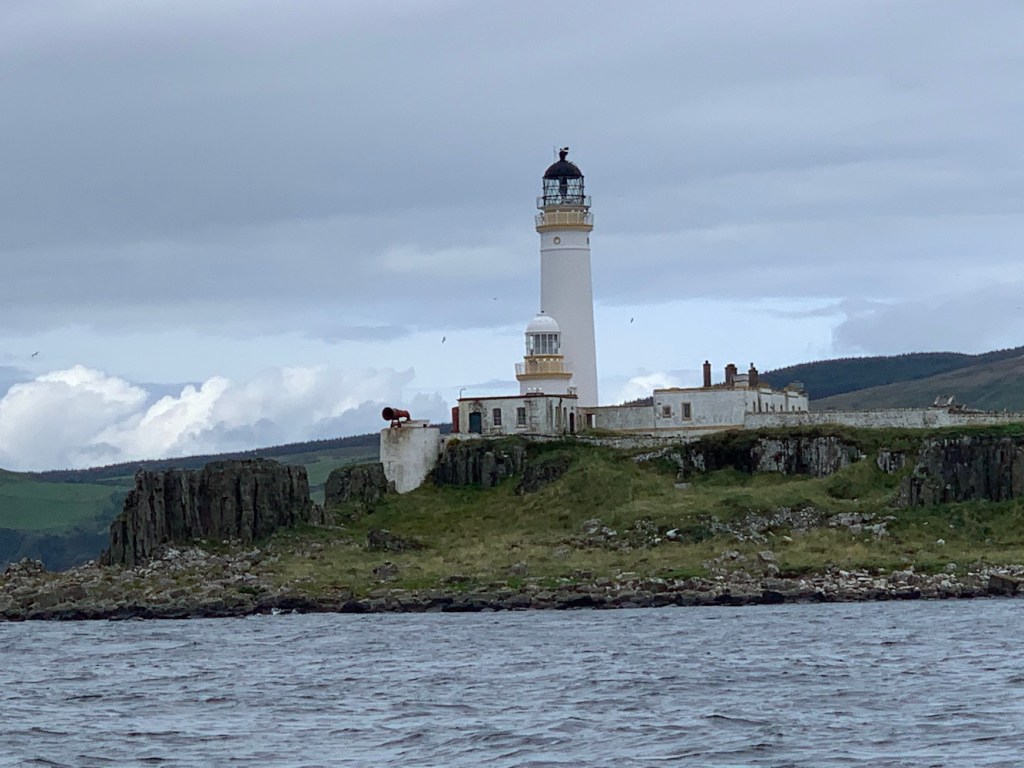
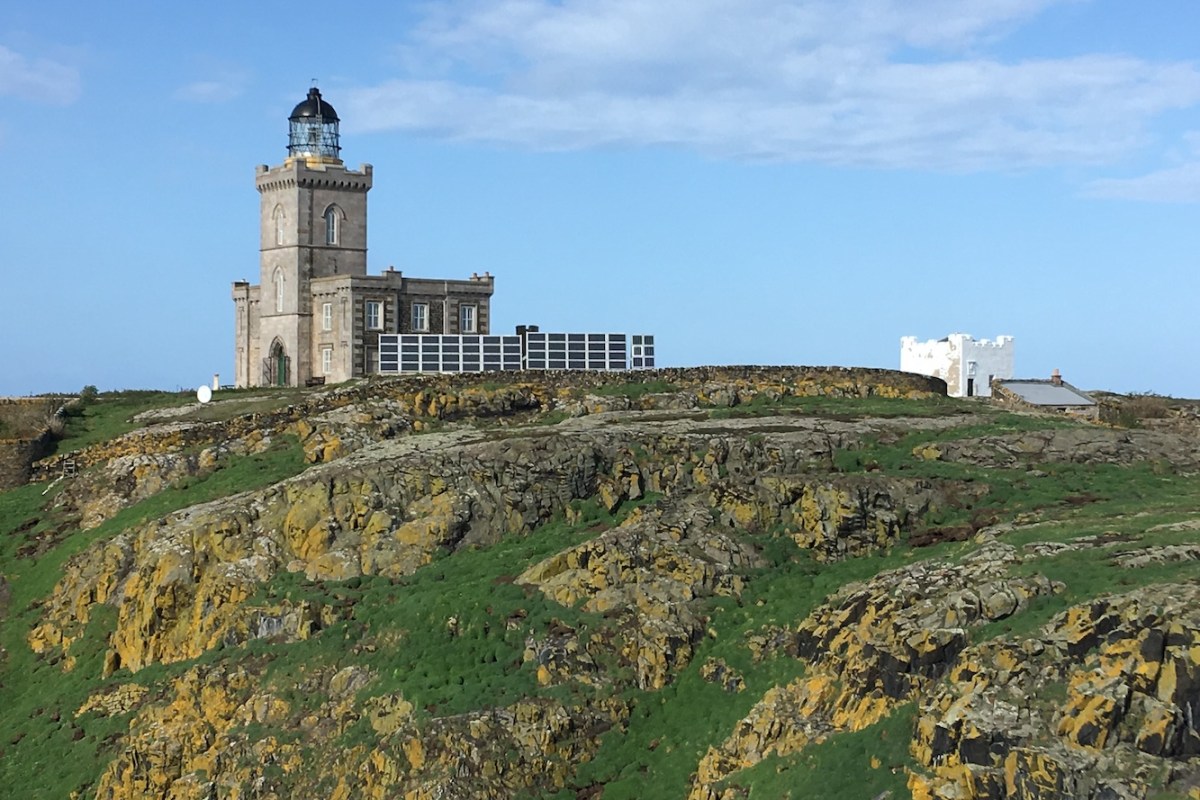
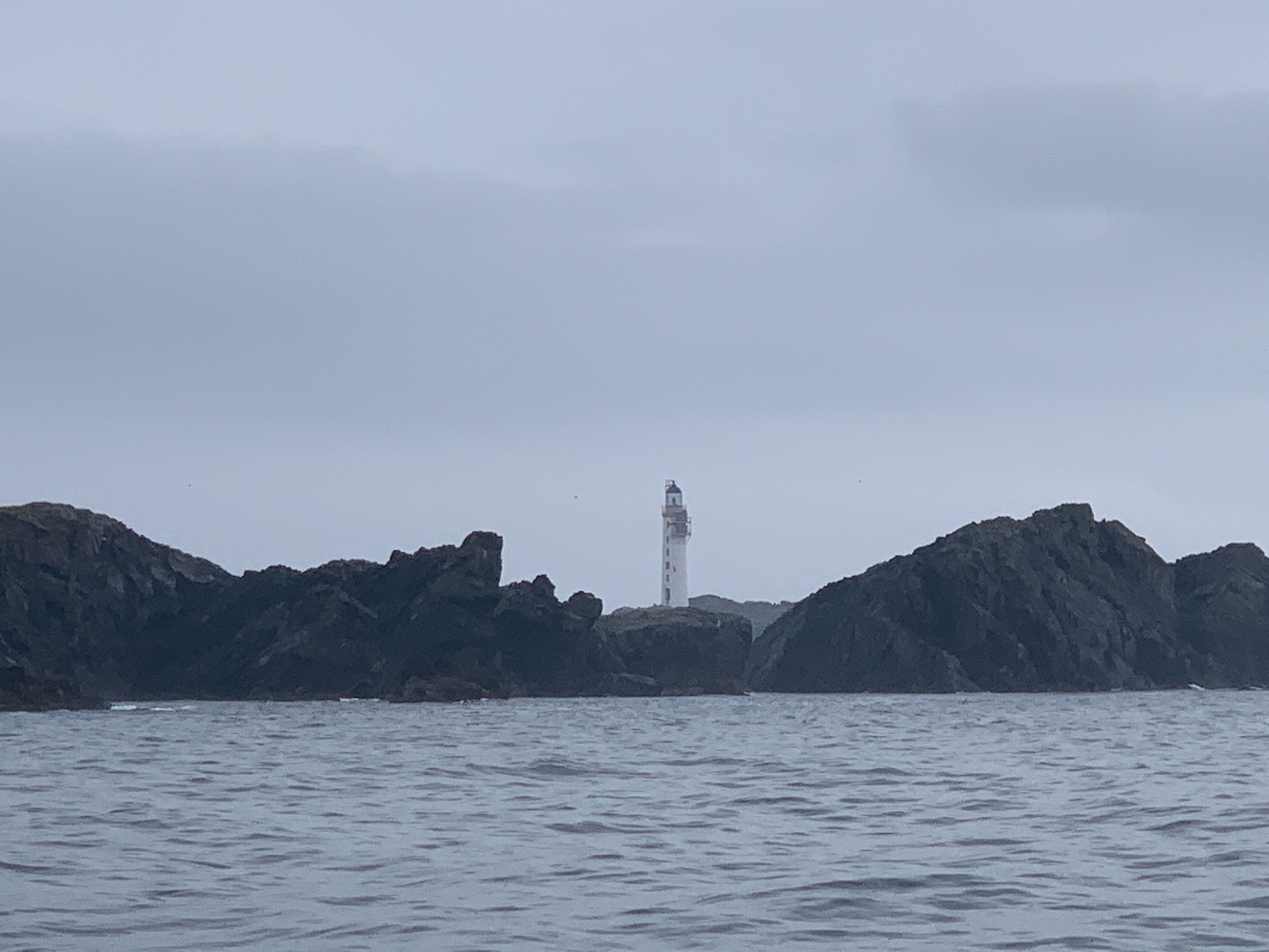
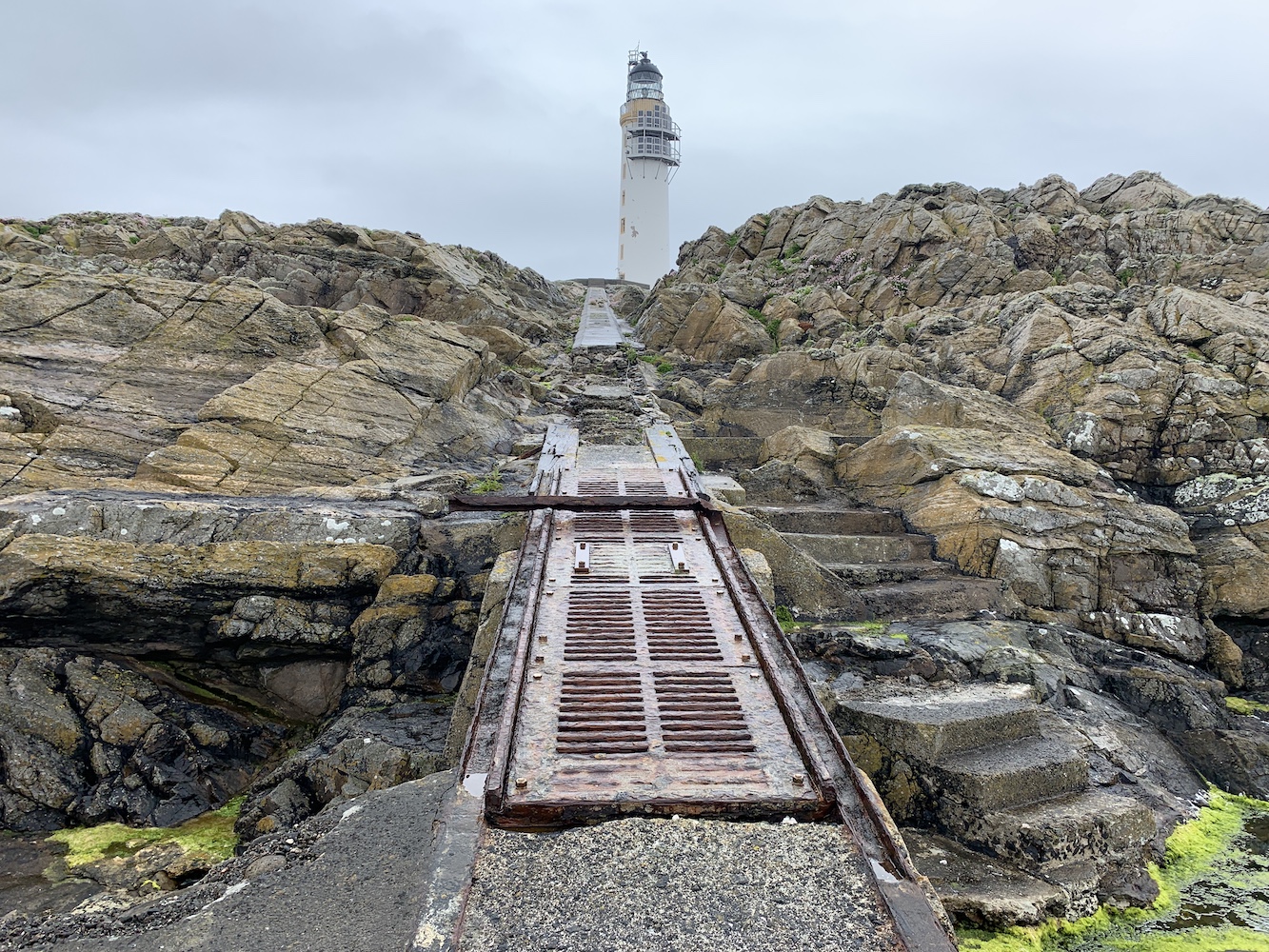
Lady Isle with its daymark and lighthouse

It took us about 90 minutes to reach Lady Isle and was a pretty comfortable journey – or at least it was for Lianne and I who sat on the nice comfy seat while the men bounced about a lot on the sides of the boat. As we approached the island the skipper had a look around at the area we’d landed at previously, but feeling it was just too bumpy we pulled back and moved in closer to the day mark on the east of the island. This was a good area to slide down on to the rocks without getting wet feet. Thankfully it hadn’t rained for a while so the rocks were nice and dry for walking over. What wasn’t so easy to walk over was the grass on the island itself, which was particularly long but nothing compared to what was to come later that day!
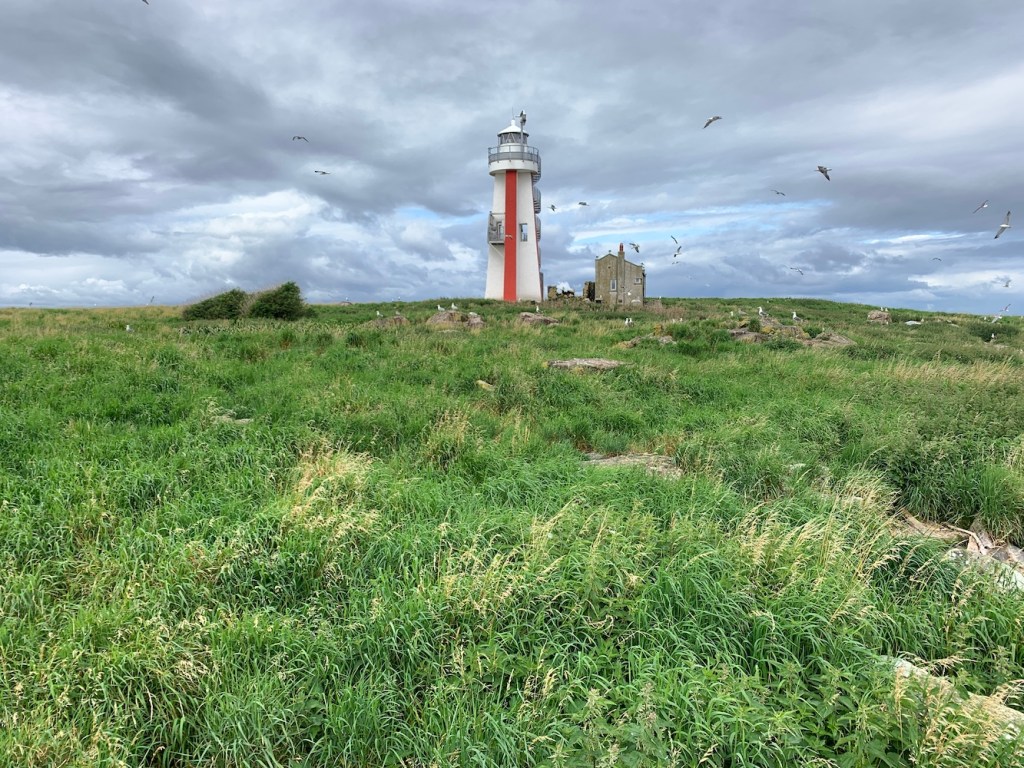
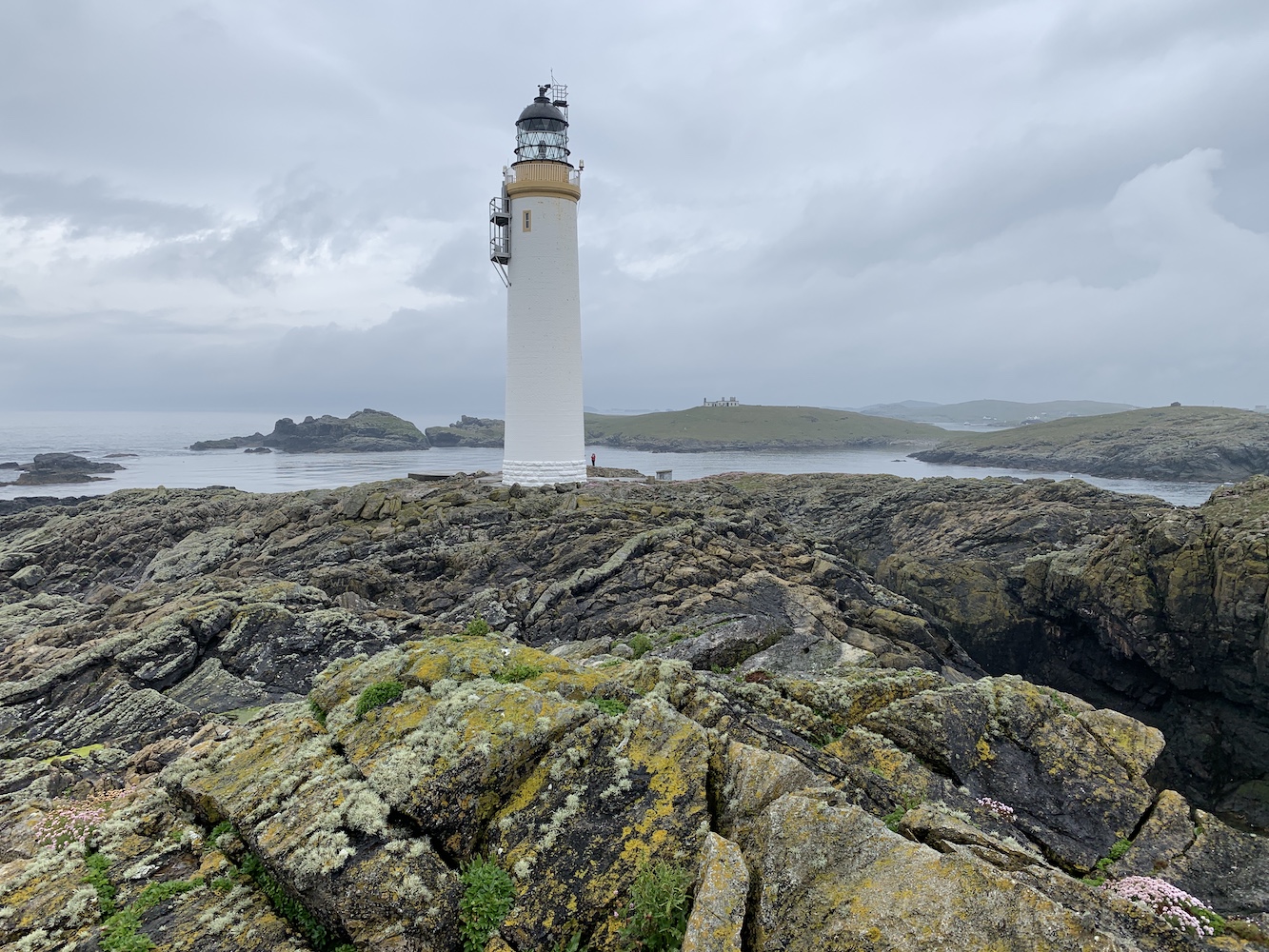
Lady Isle lighthouse

Lady Isle lighthouse really is very special and, as Lianne pointed out, it’s nice to have the island to yourself. I find that’s often one of the wonderful things about visiting these lights on islands that require a chartered boat. For the period you are there it almost feels like its your own little space. While we were there I sent a picture over to Bob of the island and it turned out the family were down at the seafront in Troon and spotted our boat approaching the island.
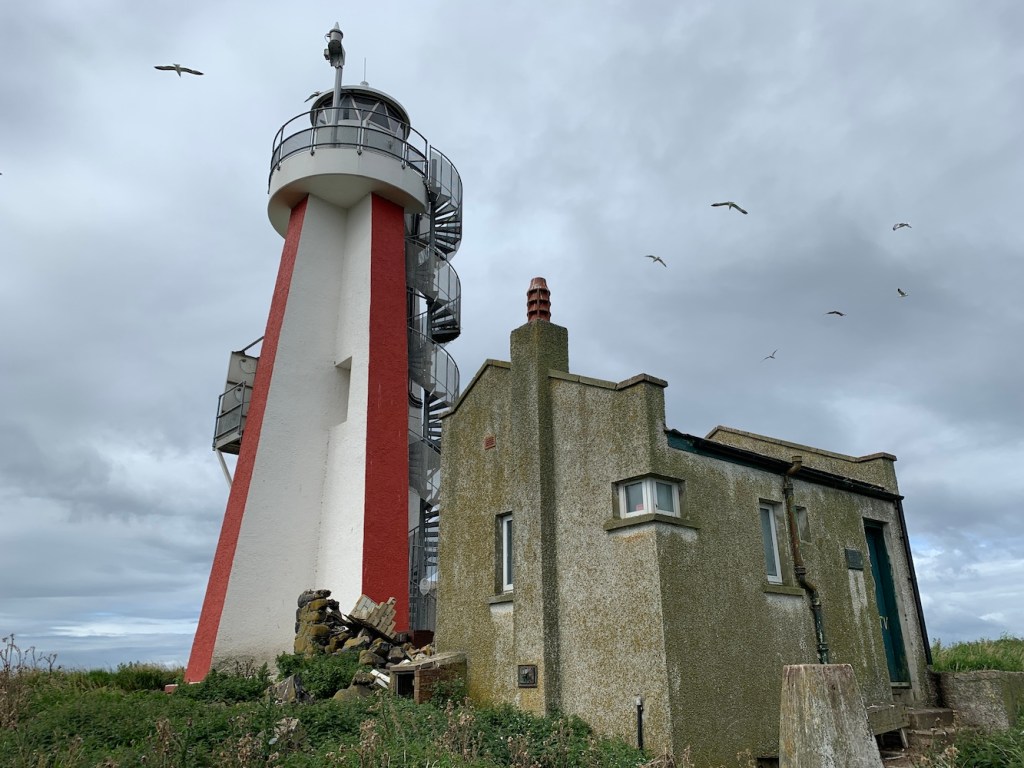
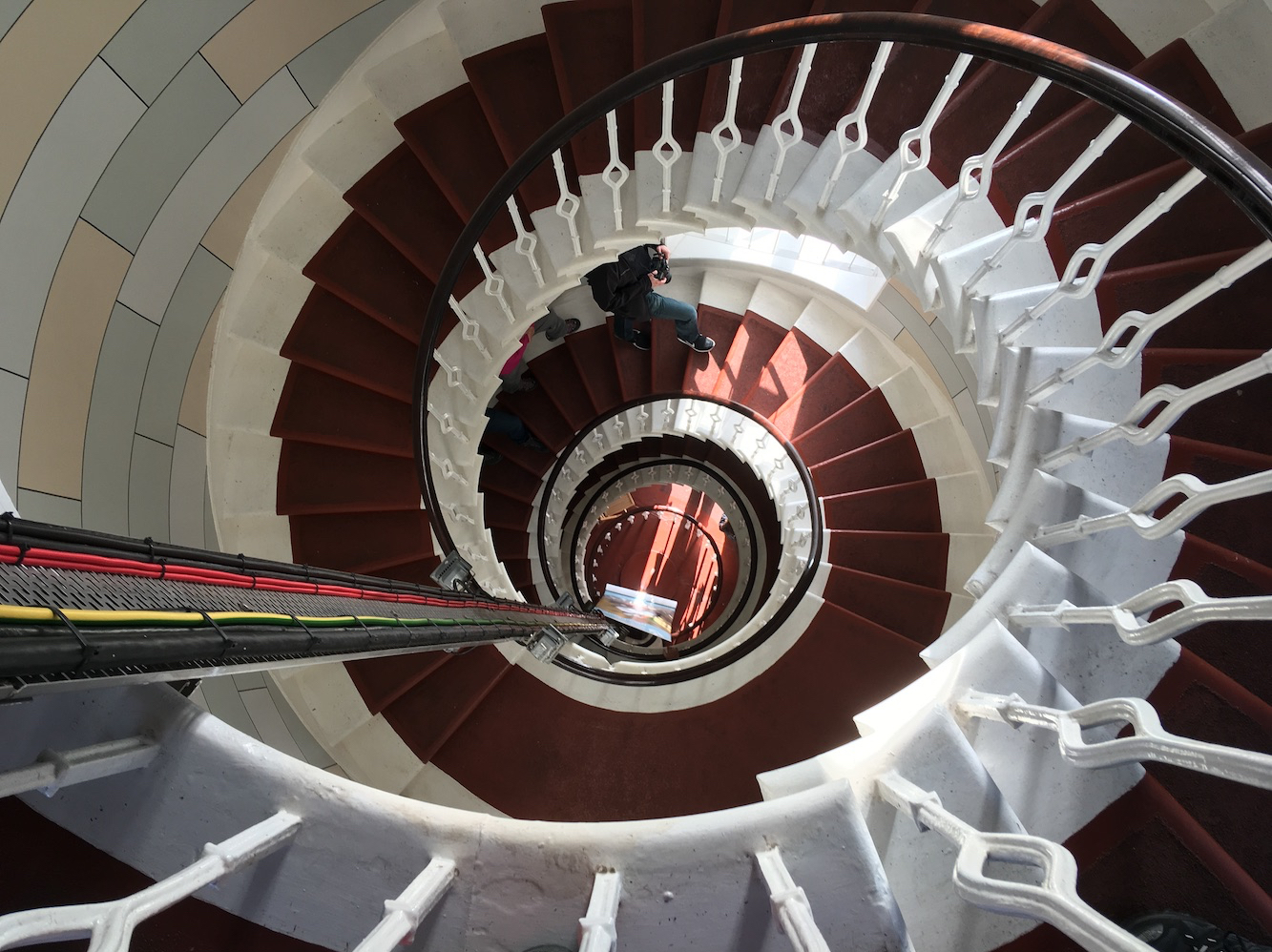
Lady Isle lighthouse with its external spiral staircase

There was genuine excitement amongst the group at managing to get there and land and I was pleased for John as, not only was it his final lighthouse in the area, but he had been very worried about whether or not we would make it and if it would be a wasted trip for Steve and Lianne. It certainly wasn’t and we all eventually returned to the boat. Getting back on the boat for Lianne and I with our short legs was rather amusing, but we managed it with a lot of help from the others!

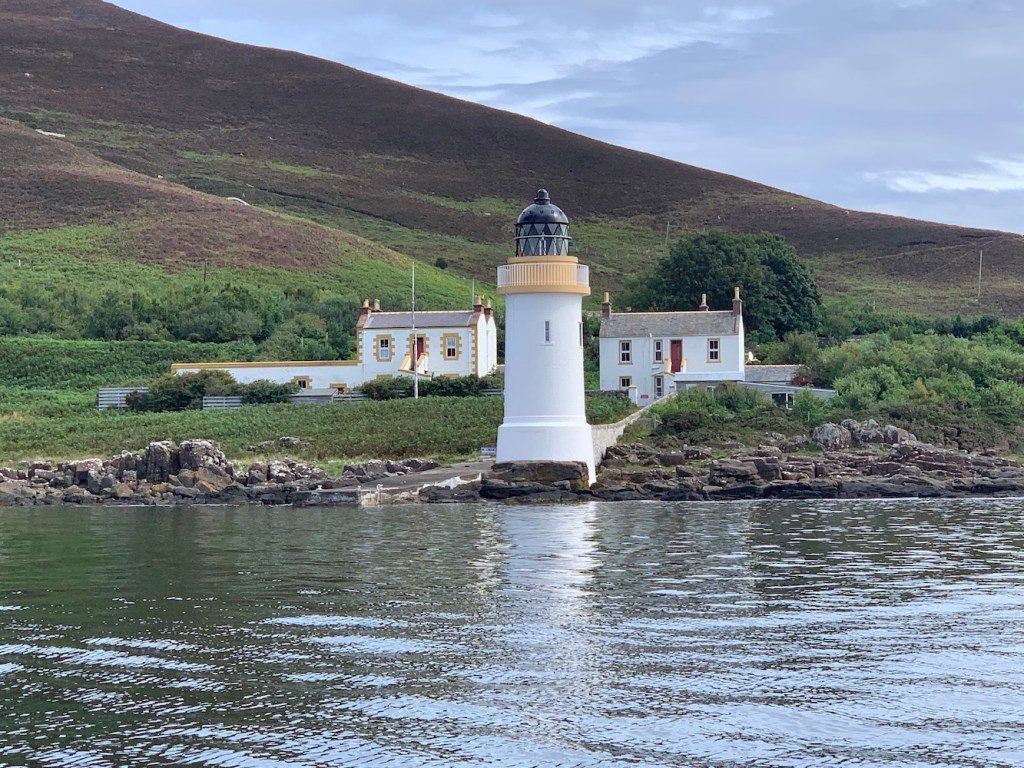
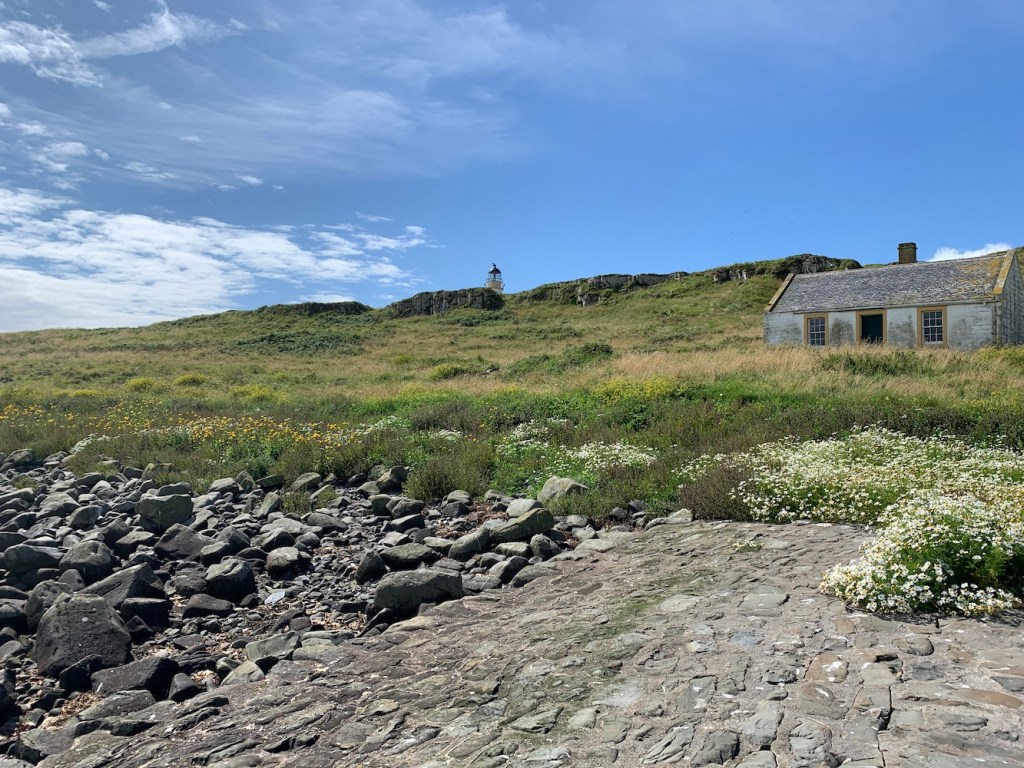
One island simply wasn’t enough though and our second stop for the day was Little Cumbrae, which was a new island for Steve and Lianne. We weren’t sure, due to the wind direction, whether we would be able to land at the pier on the west side of the island, closest to two of the lighthouses, but the crew managed to get us in and it was lovely to follow the old tracks and steps up to the two more modern lighthouses.
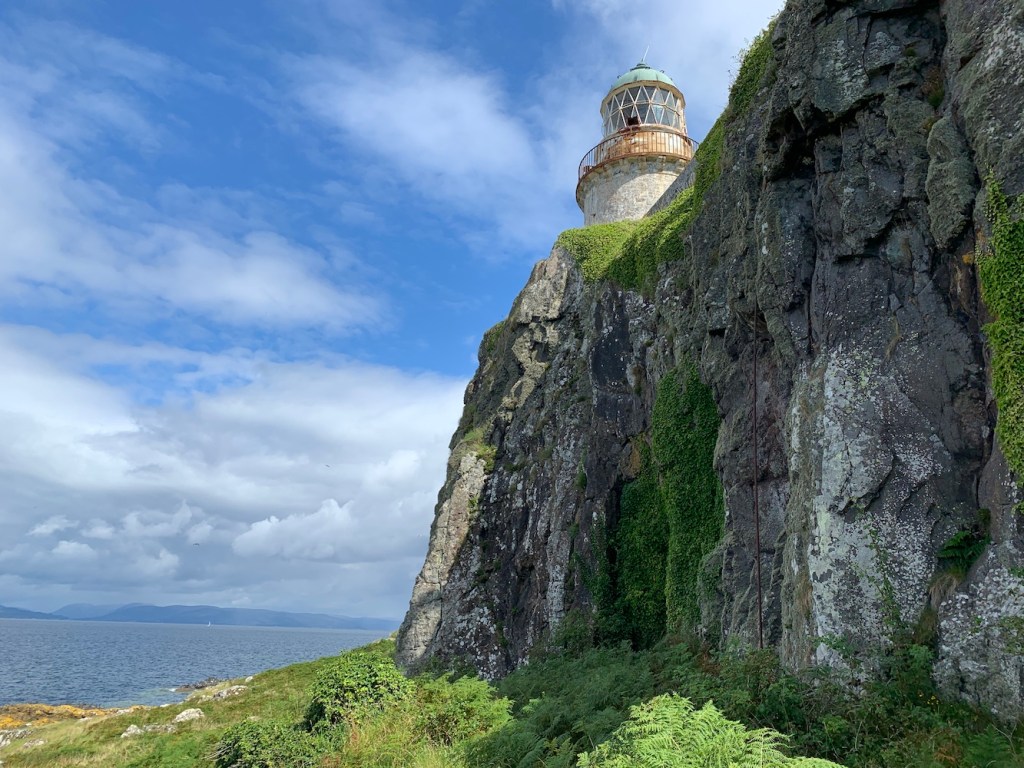
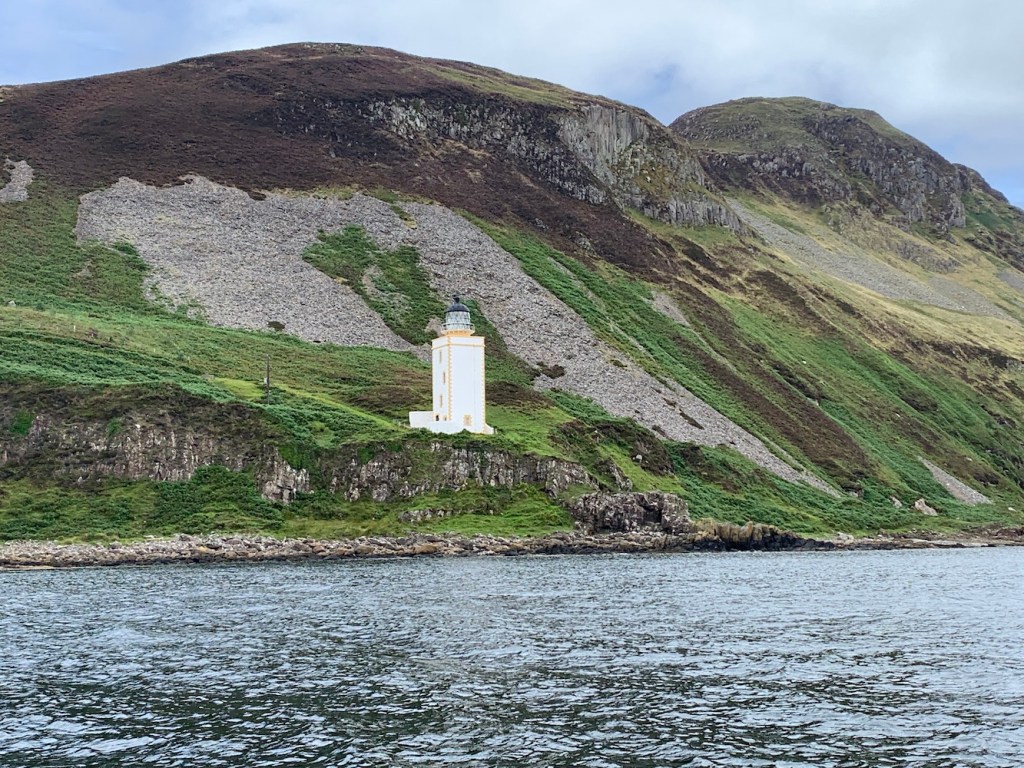
Little Cumbrae lighthouse taken from the steps up from the pier

Cumbrae Elbow is the active light that now operates on the island and presumably it works quite nicely alongside Rubh’an Eun on Bute to guide vessels through the channel between the two islands. Next to this light is the old engine room for the foghorn which still contains the machinery, although it’s not looking anywhere near its best. I usually love the smell of these rooms, but with broken windows and open doors the smells seems to have gone in this one.
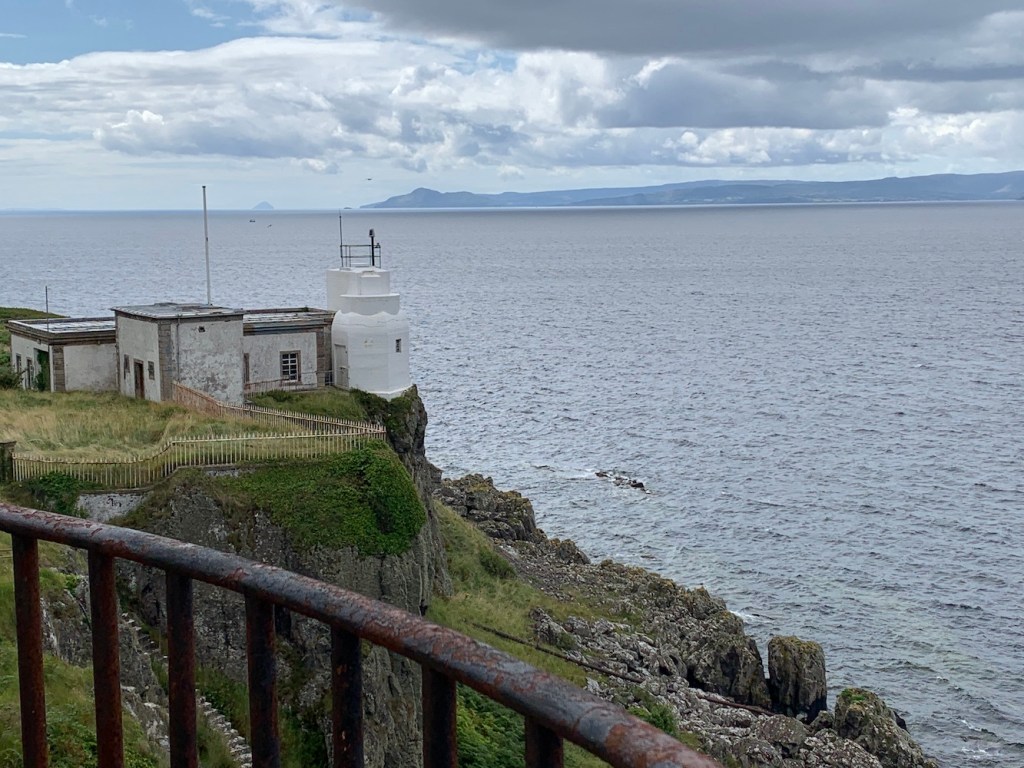
Cumbrae Elbow lighthouse

Exploring the old keepers’ cottages for the older lighthouse was again rather sad as the buildings have so much potential and could make incredible homes. There are signs that some improvements were made, but it is still in a bad way.

Inside the old foghorn engine room

Having both been to the island before, John and I knew there was a way to get into the tower and we thought this was through one of the cottages, but it became clear that it wasn’t and we eventually found the entrance around the side. One benefit of not remembering where we needed to go though was that John was able to show us a really nice carving of a lighthouse above one of the windows on the outside of the building. It seemed like such a nice little touch, but a bit odd that it was above a window when normally these things would be over doors.
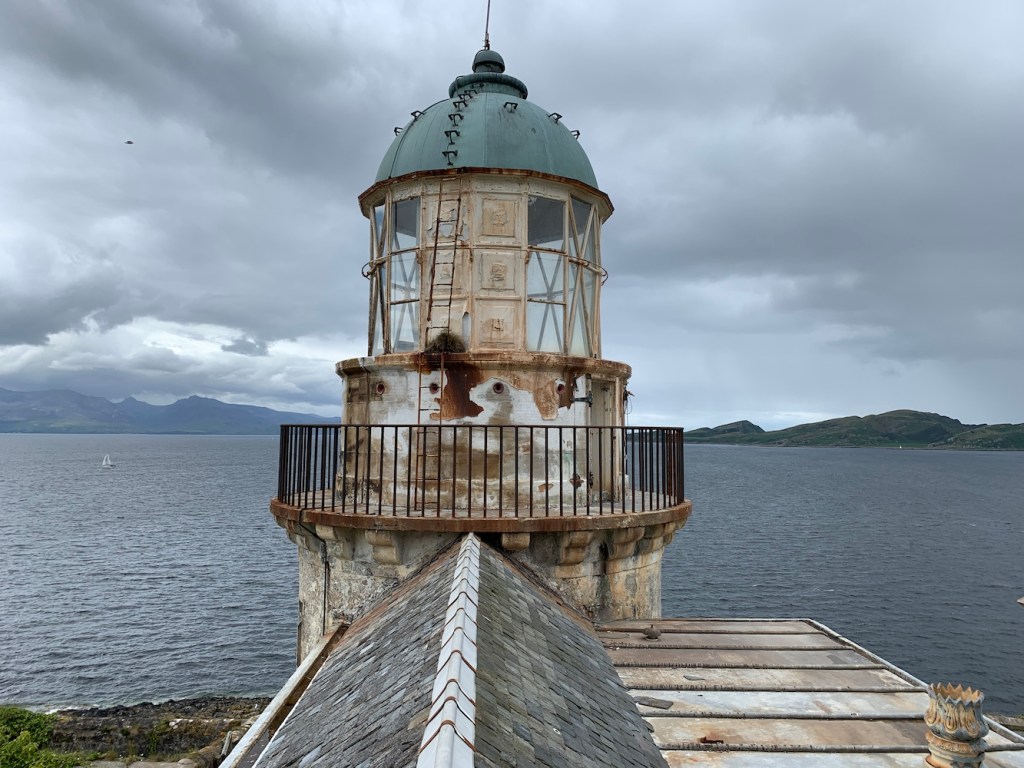
Little Cumbrae lighthouse

After eventually finding the entrance to the tower (and Steve who had already happened upon it) we set off up the tower. Not much had changed up there, but the views were still fantastic and it was just nice to be there again and enjoy the feeling of being at the top of a lighthouse.

With what looked to be a patch of rain approaching we decided to retreat to one of the cottages to eat lunch. We were going to head straight off from the lighthouse after lunch, but another building caught our attention and so we spent some more time exploring that and, in trying to establish what was at the far end of the building, John managed to find the old foghorn lying in the long grass!
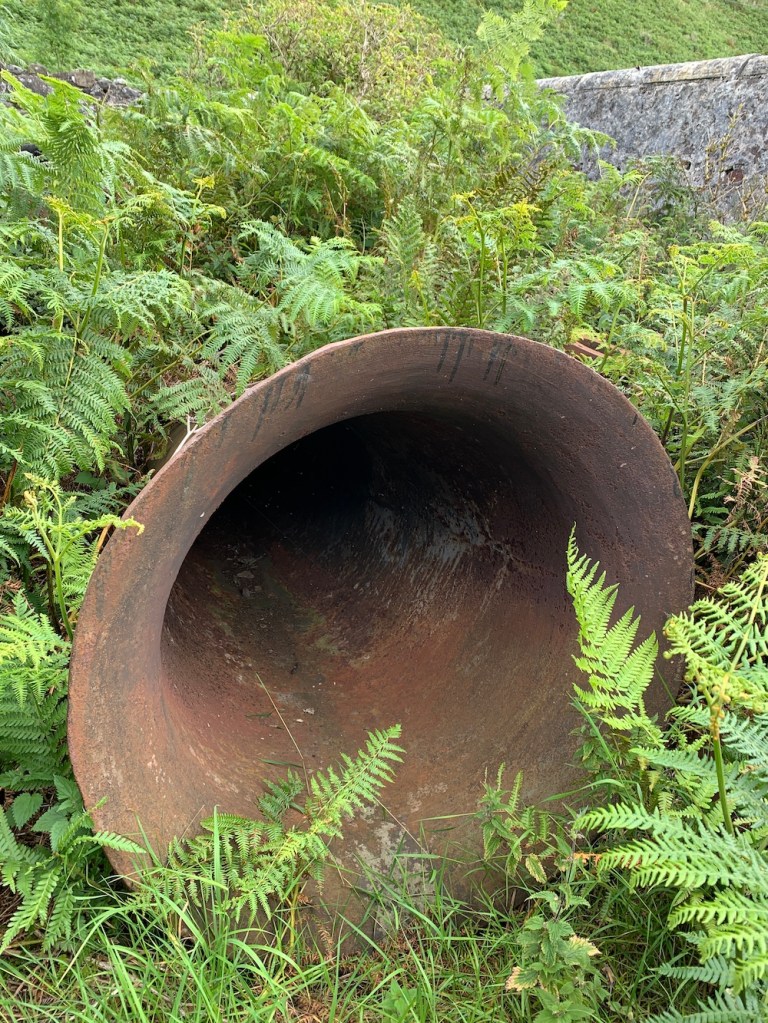
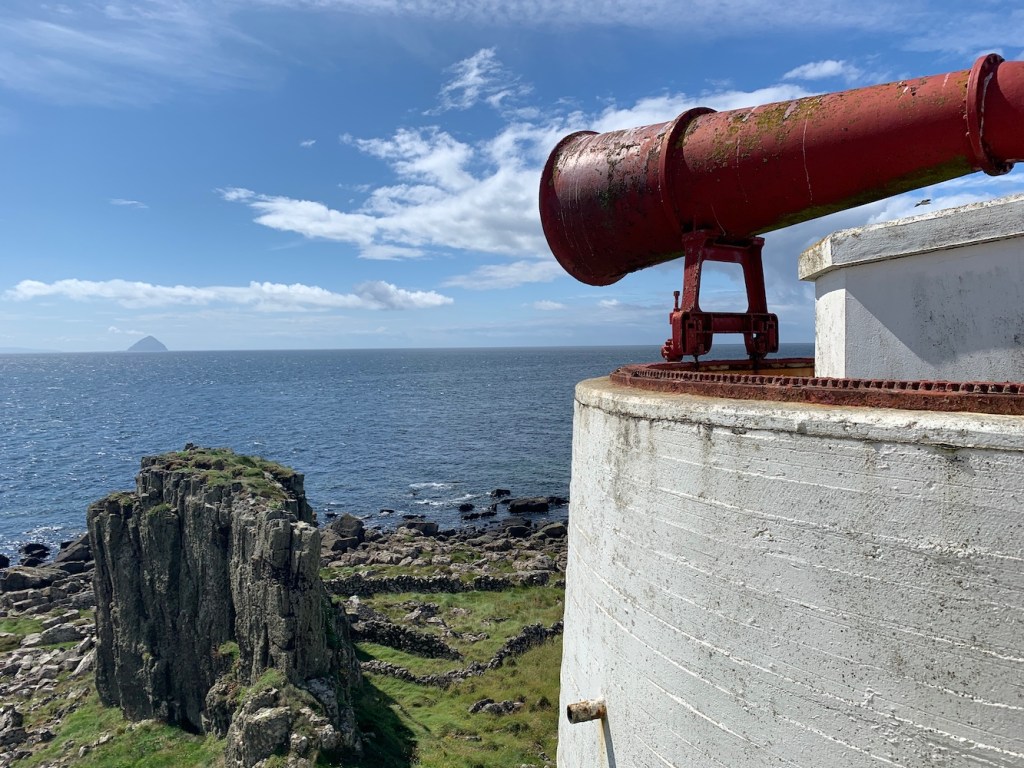
The old Little Cumbrae foghorn

Realising that we were running short on time for making it across the island we set off up the hill, which seemed steeper than I remember it being last time. The path on the approach to the hill was very overgrown in places, but it was still clear enough that we could find our way through. We’d already decided that we wouldn’t attempt to reach the remains of the oldest of the three lighthouses on Little Cumbrae which is close to the highest point on the island. The grass and ferns were already becoming difficult enough to get through to even consider battling our way through even less tamed terrain. We could see it from the path though.

The old lighthouse on the summit of Little Cumbrae

In most places the path was relatively obvious, but a couple of times we were met with what seemed to be a dead end, but Steve and John managed to guide us through. Some of the ferns were ridiculously long with some reaching up higher than mine and Lianne’s heads. It seemed an almost unrecognisable place compared to my last visit and the path seemed to go on for such a long time, leading at least two of us to say that Little Cumbrae wasn’t so little after all.

We were all very pleased when we spotted the top of the castle on the little tidal island near the pier that we were aiming for. The boatmen were there waiting for our arrival – thankfully only 5 minutes after the agreed time – and a couple of other men there who had camped on the island overnight had said they’d been across the island and attempted to resurrect the path a bit. During the recent Covid-19 lockdown there have obviously been fewer people visiting the island and stomping down the path and so nature has started to reclaim the island again.
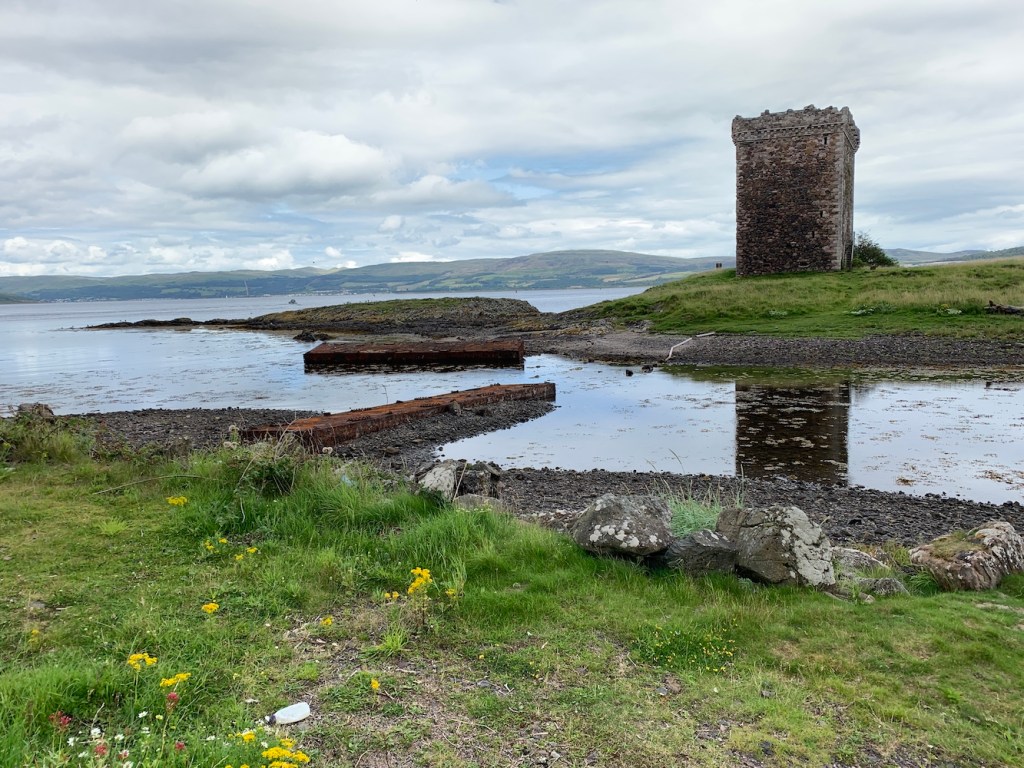
The castle on the small tidal island off of Little Cumbrae

Once back on the boat it was a short little journey back across to Fairlie. It was an excellent day and a real pleasure to return to both of these islands. The company was great and the weather did hold out for us with the rain only starting as we were heading back to the marina. As Steve said a few times today while we were out – and I often say it on this blog – this type of day is what it’s all about. 🙂

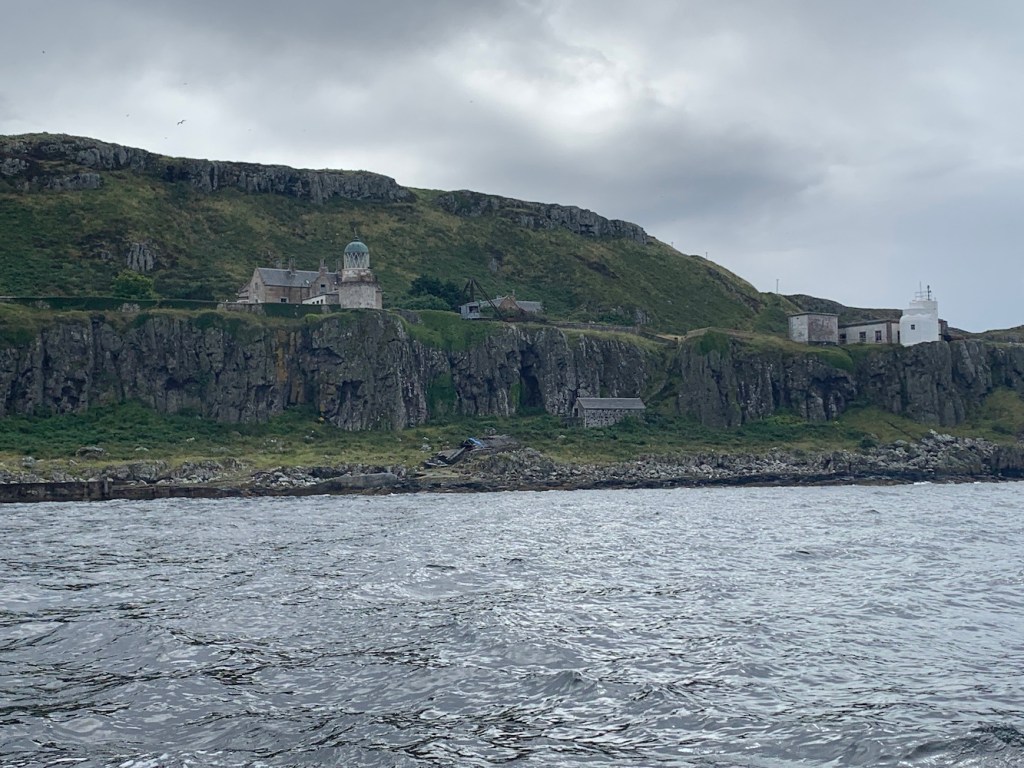
Pladda at last

After the success of yesterday’s adventure on Loch Long, the crew at Sea Clyde had reserved the best weather day this weekend for getting to the island of Pladda – and what a day it was!

We set off from Largs mid-morning – the fabulous four: Bob, John, Seumas and I – with skipper Dan and were pleased to hear that conditions we’re looking great for landing on the island, but there was a fair amount to see from the boat even before we got there.

After an unsuccessful attempt to see Kylie, the resident dolphin, we continued on our way towards Little Cumbrae. Hugging the coastline as we went to protect us from any swell, we sailed down the west side of the island, taking in the views of the two lighthouses (and of course the old lighthouse on the approach) while at the same time occasionally glimpsing across to Bute where Rubh’ an Eun lighthouse could be seen from a greater distance. This felt like a proper return to the islands, even if we were just bypassing them.

The old and modern lighthouses on Little Cumbrae

Onwards towards Arran we went and as we approached the small stretch of water between Arran and Holy Isle the skipper pointed out a submarine in the water ahead of us. Now I know I was there for the lighthouses, but to see a submarine in real life was very exciting. Needless to say Seumas was delighted too! There are restrictions on how close you can sail to these monstrous vessels, so it wasn’t like sailing straight past it at close range, but it was still great to see.

It wasn’t long until we were sailing down the west side of Holy Isle and, of course, there was the Holy Isle Inner lighthouse ahead of us. This little tower is in such a great location and seeing it reflected in the water with the land rising to the highest point of the island behind it was just beautiful. That really is the best angle to see this one from.

Holy Isle Inner lighthouse

Back out into the sea again and rounding a corner I heard the cry “lighthouse” from the back of the boat – Seumas has really taken to the role of lighthouse spotter. There ahead of us was Pladda with the fantastic two towers basking in the lovely sunshine.

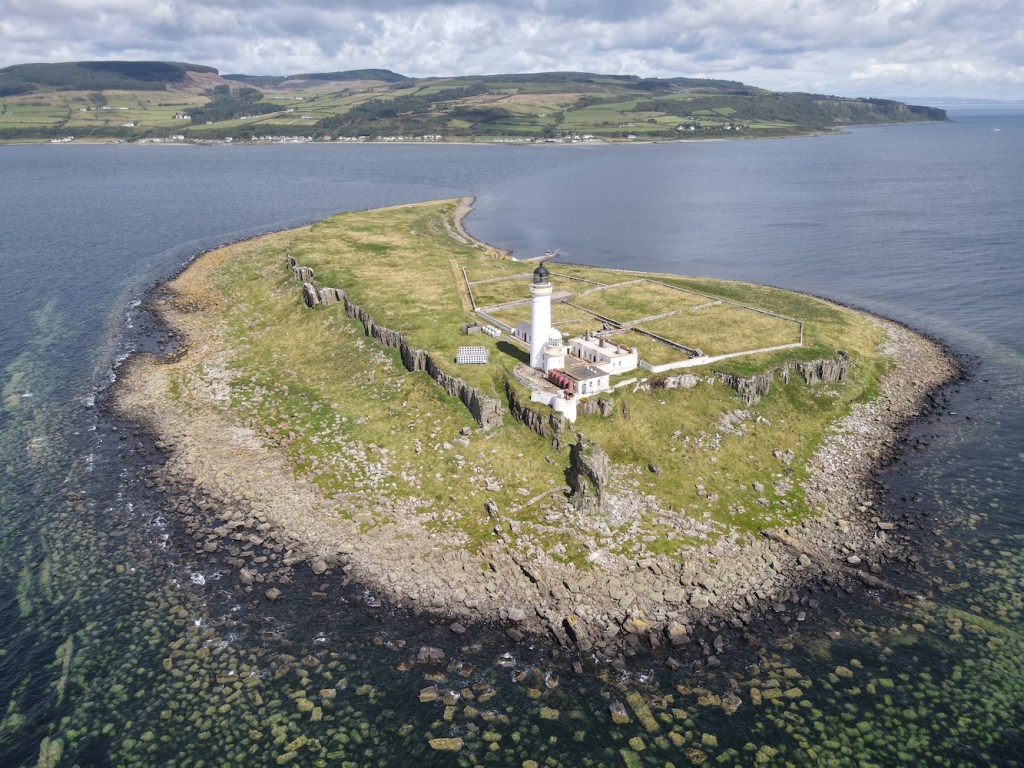
An aerial view of Pladda

It’s always a pleasure to land onto a nice jetty rather than rock hopping. It feels a little like luxury. The jetty is actually looking a little worse for wear now with large cracks running down it. Still it held together under our combined weight and that’s the most important thing.

Arriving on Pladda

From the jetty it was a short uphill walk to the level grassy section of the island following a good, clear path which took us all the way to the lighthouse. The double towers are absolutely fantastic and, although the low light is no longer in operation it is still very well maintained on the outside.

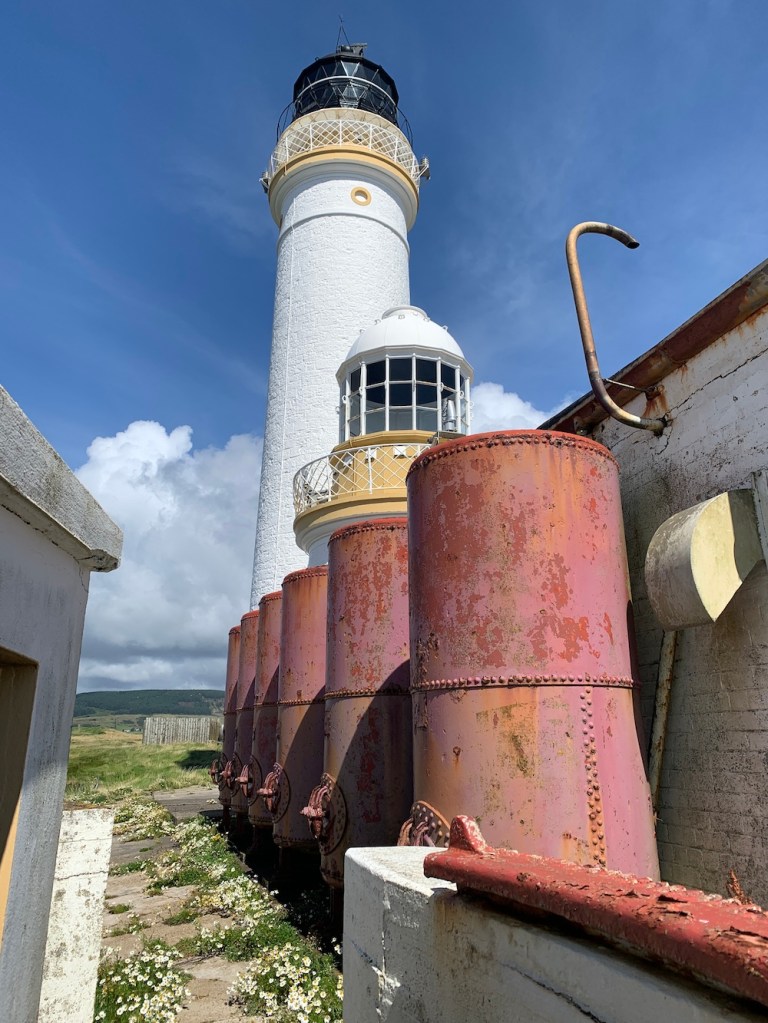
One thing about Pladda lighthouse is that it’s not the easiest one to take a picture of, particularly if you want both towers in the same shot without one looking like it’s leaning toward the other. You can get some rather dramatic views from the courtyard though.

The two towers on Pladda and the old foghorn air compressors

While Bob was flying his drone and capturing various aerial views, the rest of us explored around the old foghorn and took a number of pictures of the foghorn looking out towards the beautiful lump that is Ailsa Craig.

Looking out towards Ailsa Craig from the Pladda foghorn

In our next attempt to get a good view of the two towers I suggested the best area might be down near the rocks to which John replied that it would, but it would be a bit of a “jaump” (which I believe is a combination of “jump” and “jaunt”!?) He was right, although I wouldn’t have jumped it! There was another spot a bit closer next to the solar panels that I thought could be a good angle so we made our way around there, wading through the thick grass. This was a slightly better viewpoint, but still not quite right. John did find a ladder though that went down to the lower level. He went down, but decided not to walk too far as the birds were getting a bit stressed.

The Pladda towers, taken from the solar panels

We did a quick selfie using the drone (a “dronie” I believe it is called) and then explored the old gardens a bit. It was here that we discovered the best angle for getting both towers in the one picture and although it did mean upsetting a few birds we tried not to disturb them too much.

The two towers on Pladda seen from the garden

We trekked across the long grass towards the highest point on the island, which gave some excellent views towards the lighthouse (minus the little tower, which is obscured at that angle) with Ailsa Craig sitting quietly in the middle of the sea in the distance.

The view from the highest point on Pladda

It was then time to head back to the boat where we found Bob and Seumas playing on a small section of rocky beach. Seumas had built a lighthouse in the water and was throwing rocks (or asteroids) into the water surrounding it. That was his favourite part of the day!

Hopping back on the boat we took a quick spin around to see the lighthouses and foghorn from the sea, which again gave another interesting angle.

Pladda lighthouse towers and foghorn from the sea

Then the return journey began. This time we sailed up the east side of Holy Isle to get a nice view of the Pillar Rock lighthouse, which lived up to my expectations in terms of views. The steep slopes behind it looked a little frightening and Bob pointing out one of the crevasses up near the high point added to this.

Holy Isle Pillar Rock lighthouse

There was still no sign of Kylie the dolphin on the way back, but arriving back in Largs I think we all agreed that it had been a very successful and enjoyable day out. Pladda has most certainly moved up a number of places in my favourite lighthouses list. It’s such a great island with its unique two tower arrangement. Days like this really is what it’s all about. 🙂

Gadding about in Galloway

It was going to be difficult to beat the success of Saturday’s Hestan Island visit Saturday’s Hestan Island visit, but we had a very good go yesterday anyway.

After a two-hour drive over to the Rhins of Galloway we met up with John, Steve and Lianne at Port Logan. The little harbour lighthouse at Port Logan had alluded me on previous visits to the area. Somehow I’d not known about it and, with it being so easy to get to it seemed rather odd that I’d still not made it there.

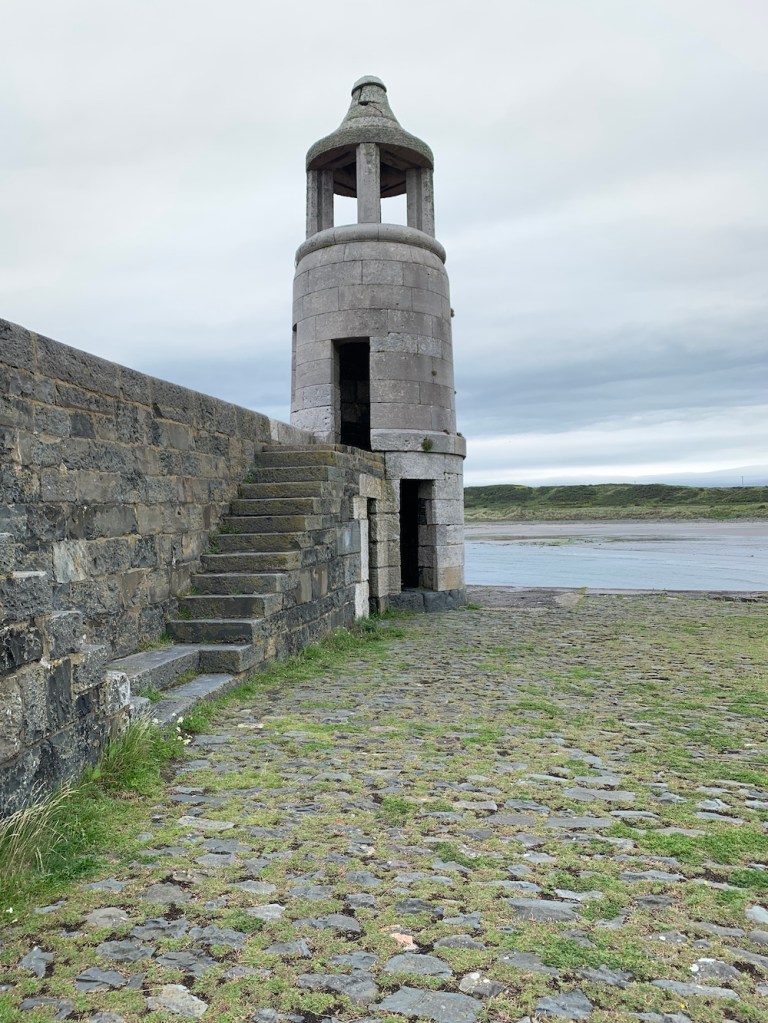
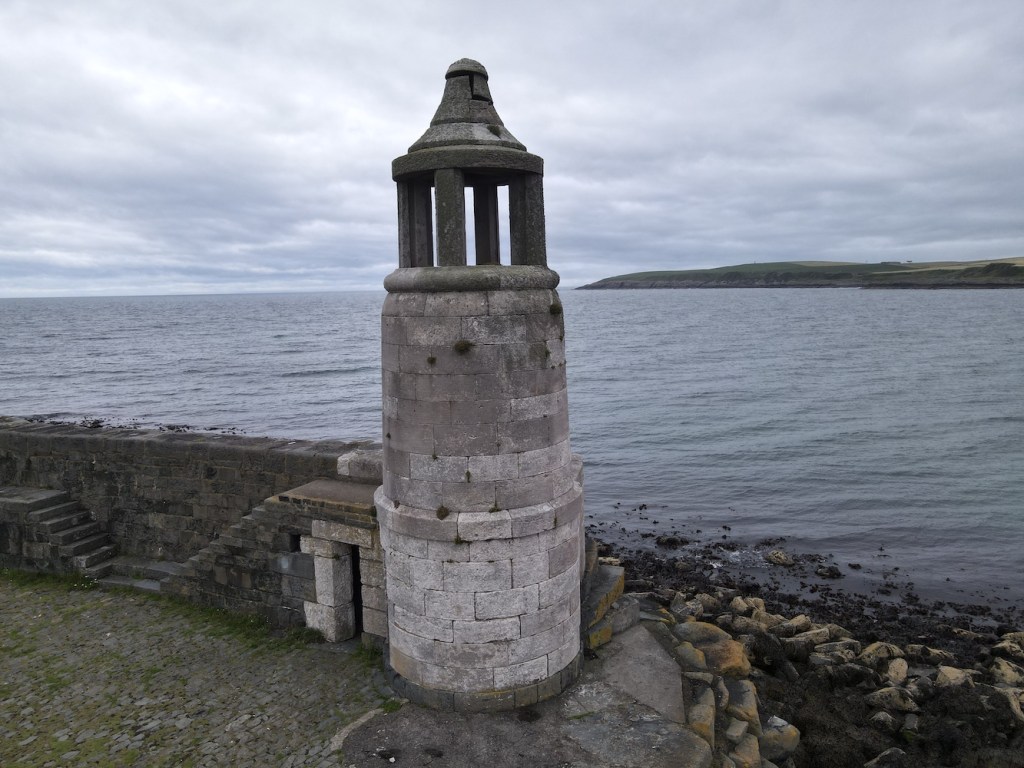
Port Logan lighthouse

It’s a lovely little tower, dating back to 1818, although obviously no longer in use. The original report proposing the introduction of a lighthouse as part of a new harbour here was drawn up by John Rennie. It’s possible to access both the ground and first floors as well as the attached little out-house type room which looks like it contained a bath! From the first floor you can look up and see the inside of the old lantern area. Originally the lantern would have been accessed by ladder from the first floor. It was nice to wander around and the kids enjoyed going in and out too, sheltering from the wind that had picked up overnight.

Looking up to the lantern in Port Logan lighthouse

Bob had taken along his drone and this was his first opportunity to experiment with using it around lighthouses. Of course they are an excellent feature for drone images.

A drone’s eye view of Port Logan lighthouse

Leaving my parents and the kids to play on the beach the rest of us set off for an attempt to visit Crammag Head lighthouse. Steve and Lianne had visited last year, although found it was not the most pleasant of experiences as it involved crossing a field of cows. I think we were all expecting the same again yesterday, but we thought we had to try it as it was one that John and I had both been keen to get a closer view of – having previously settled for a view from the road.

After a brief chat with the people staying at the holiday accommodation at the nearby farm we set off towards the gate and were very pleased to discover two empty fields with no cows to contend with. Aside from a muddy section the walk was easy and it was such a fantastic feeling to see the top of the tower emerge over the hill. I am particularly fond of this type of lighthouse and it was wonderful to see a new one of these close up. John clearly shared my joy by giving the lighthouse a hug alongside me. It’s almost as if the weather knew what a happy moment it was as it sent in blue sky shortly after we‘d arrived.

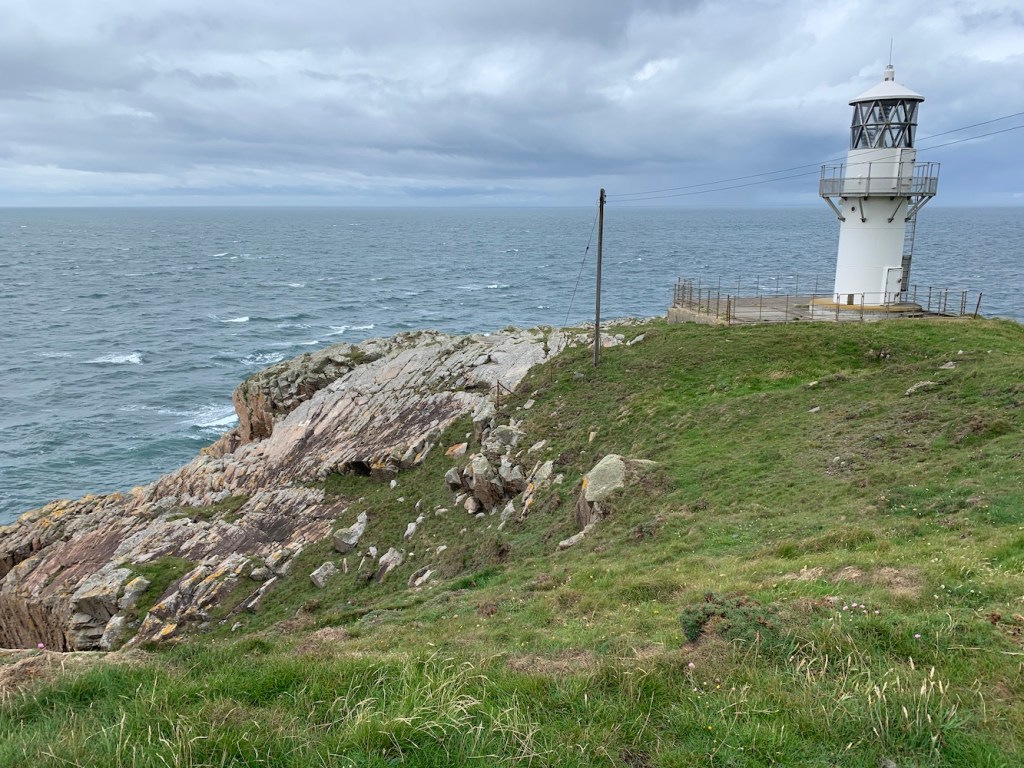
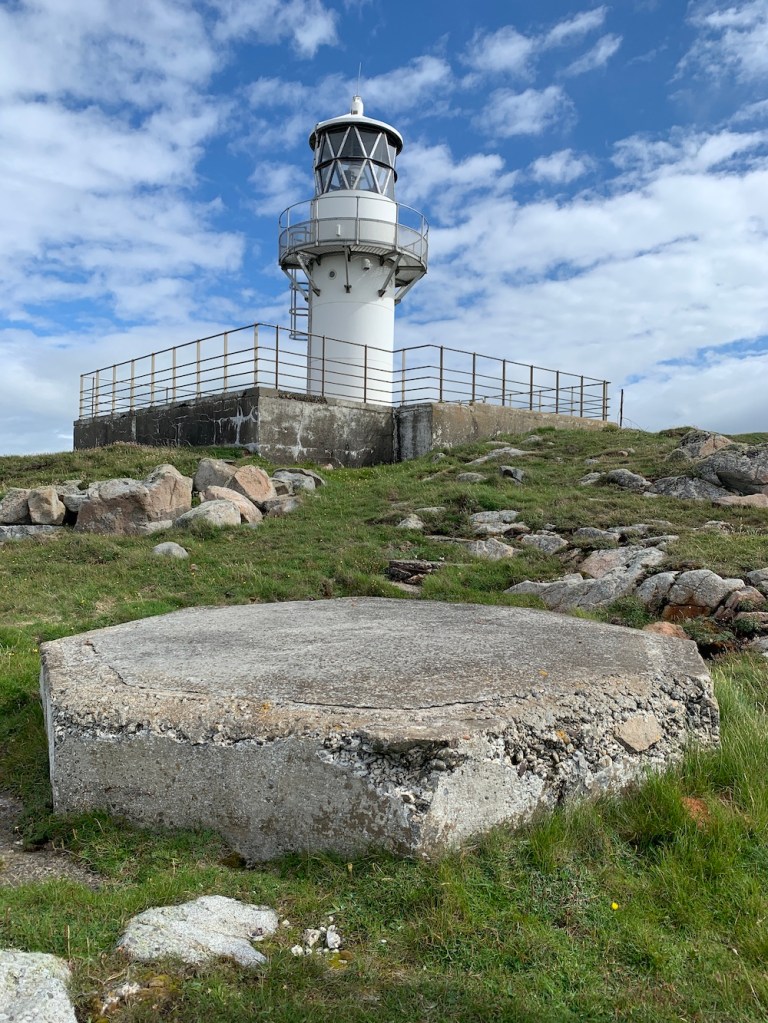
Crammag Head lighthouse

While there we saw the base of the old lighthouse, which made a perfect take-off and landing pad for Bob’s drone. We took a stroll down to the old landing area for the lighthouse, which we assumed must have – at some point – featured a derrick for bringing materials etc. in as it was nowhere near sea level.

The base of the former lighthouse at Crammag Head with the modern light behind

I’d always associated this lighthouse with cows, but the visit yesterday changed my mind entirely. It’s a relatively new tower, although a lighthouse has stood here since 1913, having been replaced in December 2009.

Crammag Head from the sky

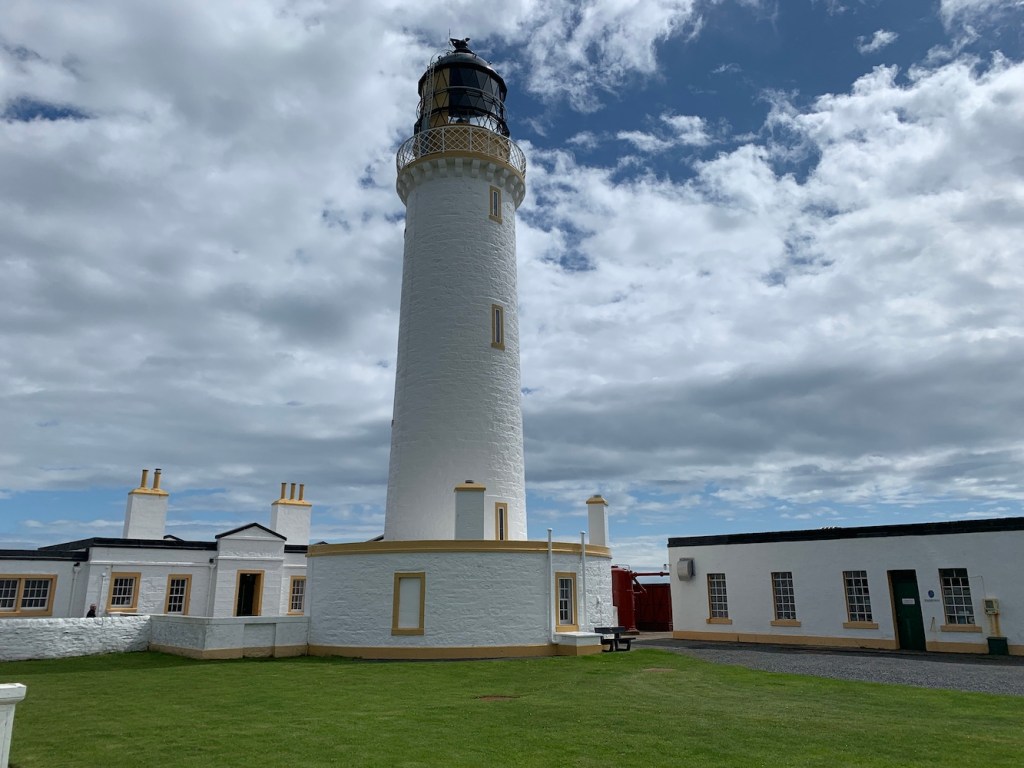
We stopped back in Port Logan briefly to pick up the others we set off for the Mull of Galloway for lunch. My plans for a nice picnic were perhaps a little unrealistic as the wind was a bit “fresh”. It was 8 years ago I last visited the Mull of Galloway lighthouse and that was on my original tour. I managed a tour of the tower that time. Due to the pandemic, the lighthouse is closed this season, but that didn’t seem to have put people off. It was the opposite end of the scale to Crammag Head where we were alone.

Mull of Galloway lighthouse

While walking around the lighthouse complex I mentioned to John that Mull of Galloway wasn’t one of my favourite lighthouses and he asked if it was because you could “just drive up to it and wander around” – clearly he’d paid attention while reading yesterday’s blog post! I suppose I’ve spent a lot of time visiting more remote lighthouses and I have grown to love not seeing lots of people at these places. It somehow makes the visit feel more personal and special when you are the only ones around.

Looking up to Mull of Galloway lighthouse from the foghorn

On my previous visit I’d not paid much attention to the foghorn, apart from seeing it from the top of the lighthouse. I received a message from Bob to say that our son wanted to go down to the foghorn so we set off to join them. There are a fair amount of steps down to it, but it’s worth it for the views. Foghorns are really starting to grow on me and one day it would be great to go back there to hear it being sounded.

Mull of Galloway foghorn

All in all it was a great day with Crammag Head being the real highlight. I’ve missed the lighthouses in recent months and it’s great to be getting back to them again. 🙂
A paddle to Hestan Island

This post feels like it’s been such a long time coming. After months of no new lighthouses, no travelling and cancelled trips today was the day I’d been waiting for.

We had originally booked 10 days in Shetland over this period, but with the ferry journeys cancelled for us we decided to chance it and book a week’s stay at a cottage near Lockerbie with a good cancellation policy. Thankfully restrictions were lifted enough to enable the trip to happen.

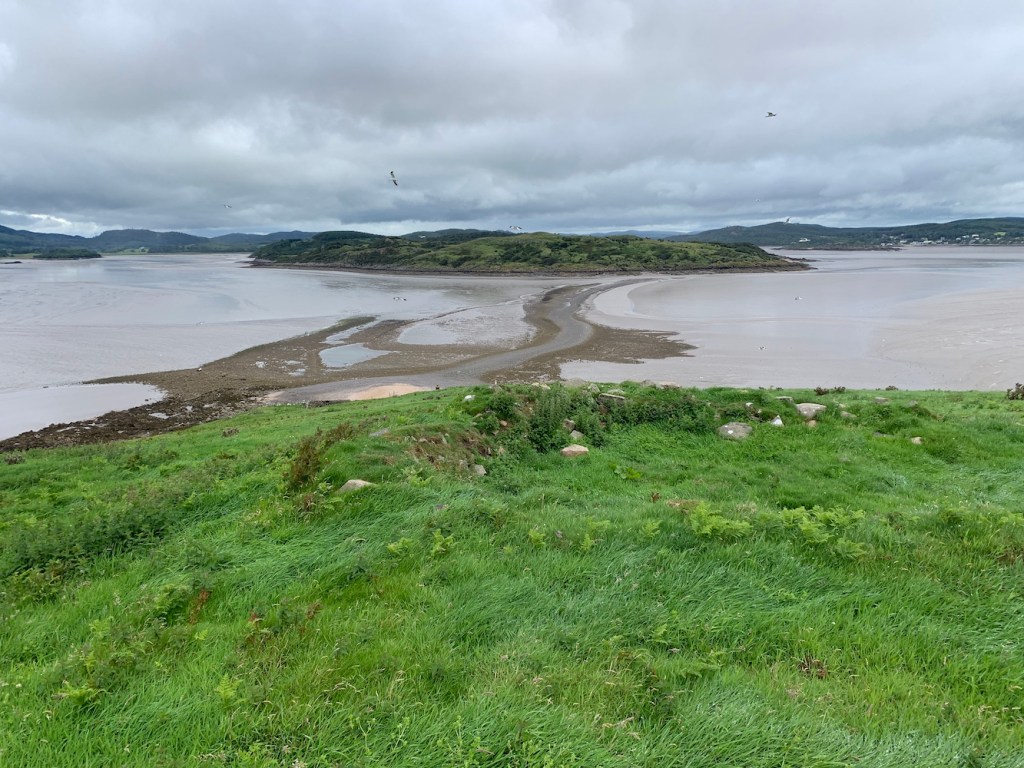
One of the key lighthouses I wanted to get to while in Dumfries and Galloway was on Hestan Island. Hestan Island is accessible at low tide from Almorness Point and so, in preparation for the trip, I looked at the days with the lowest tide during our stay in the area, which happened to be the first morning when it would be 0.93 metres at 10.18am. This meant an early start, meeting at 8.15am to allow us to begin our walk, returning from the island at the lowest tide.

The forecast was looking grim to say the least with heavy rain on the agenda, but we must always continue when the opportunity is there. The opportunity was even more appealing as we were to be joined by my wonderful lighthouse partner in crime, John, and a couple of lighthouse friends who share our enjoyment of islands and lighthouse, Steve and Lianne. There was no way this could be missed.

As we approached Palnackie, just to the north of Almorness Point the rain stopped and the cloud began to look like it was clearing. We parked up, met the others and all set off (with my dad along too) in our waterproofs. It turned out the waterproofs weren’t needed as the grey clouds continued to clear and the sun and blue sky even came out at a few points.

Part of the first section of the track

The walk to the sea was great. A clear track all the way and interesting enough to make it feel like it wasn’t onerous. It became muddier towards the end, evidence of the recent heavy rainfall.

Our first view of the lighthouse, which can just about be seen in the far distance

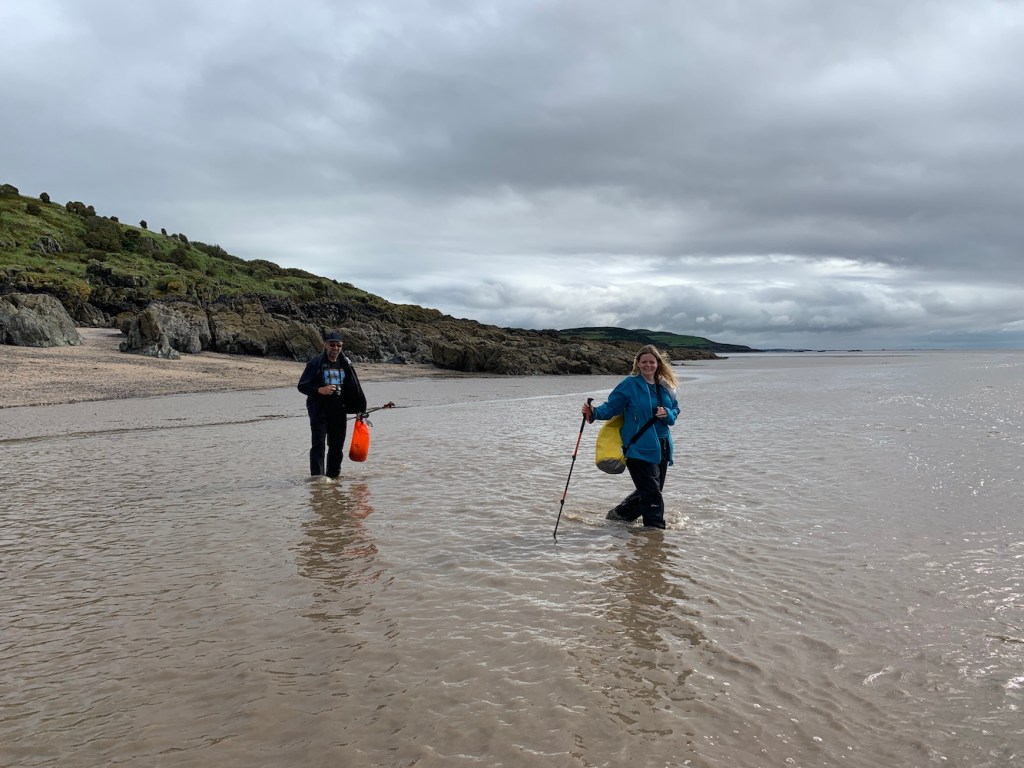
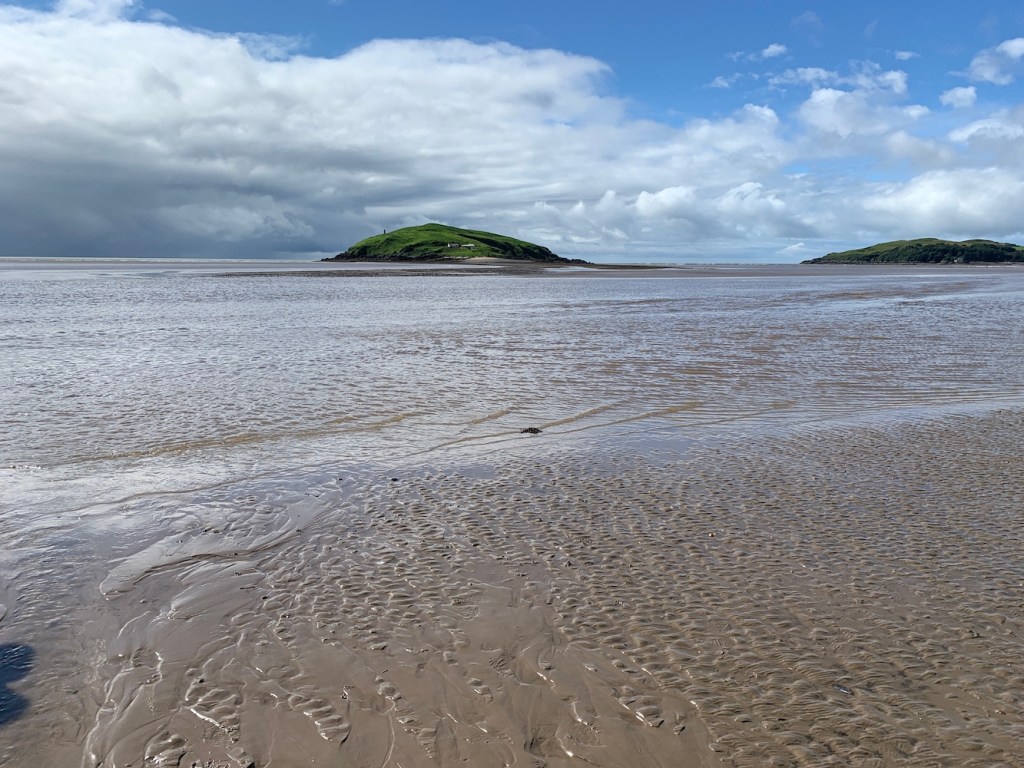
We arrived at the coast, a nice beach, and caught our first glimpse of the lighthouse in the distance. Changing into our wellies, applying Skin So Soft to put the flies off and removing a layer of clothing, we then set off from the beach across the, sometimes sticky, sand to reach the “wet” section. I say the wet section as it is never fully clear of water.

Enjoying time with friends

Thankfully Bob had visited last year and knew the best place to cross the water. After giving us instructions to walk sideways, facing the current, if we felt it was getting too strong we set off. Never before have I paddled in water that deep to see a lighthouse, but it was great fun. The water level was higher than we had expected, although we crossed around 45 minutes before low tide. We put this down to the amount of rain we’d had overnight and that morning. The pebble section beyond it was harder to walk on, but we were rewarded with some fantastic views of the island ahead of us.

Paddling to the island

There is a holiday home on the island and the owners were clearly there as their dog jumped around barking in welcome at us. Once on the island we set off to the right of the house and up toward the high point. I’m not really a fan of walking uphill and John echoed my thoughts when he said “Is he [Bob] taking us to the high point?” He was, but it turned out that was the most direct route to the lighthouse. I must also give him extra credit as the views from the top were stunning, especially down towards the lighthouse and then back across the way we had come.

Looking back from the island

Of course, after we’d reached the highest point we then had to go back down the other side and, throwing our hoods up to avoid the circling gulls doing their business on our hair, we set off straight for the lighthouse.

The rather grubby lighthouse

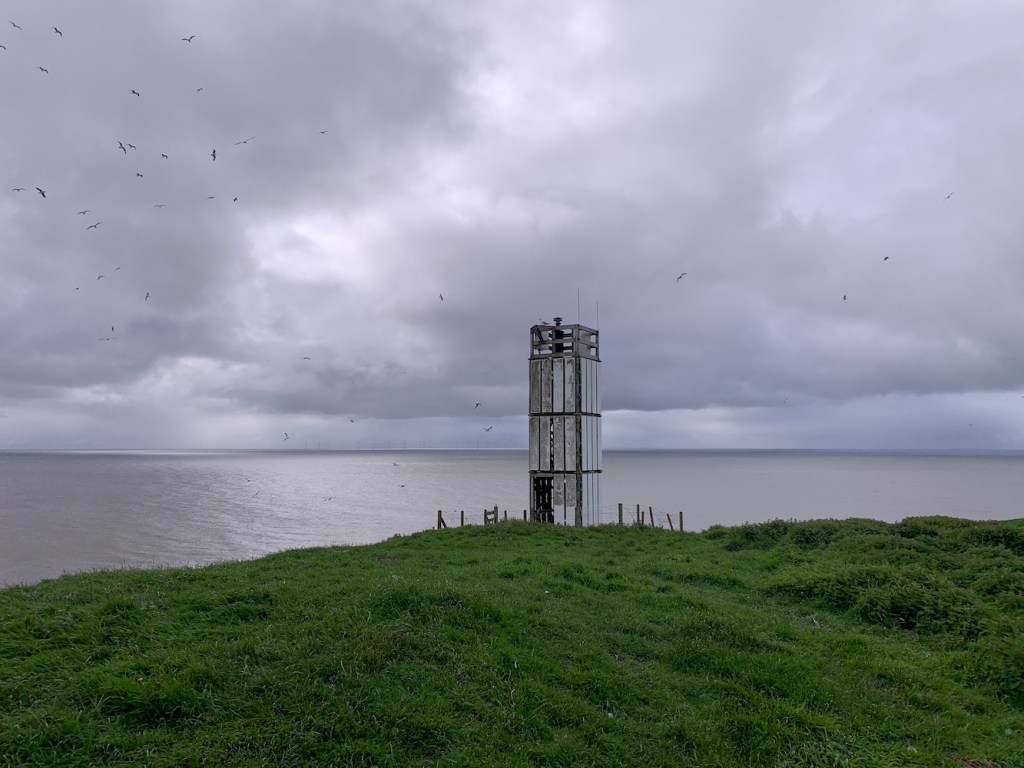
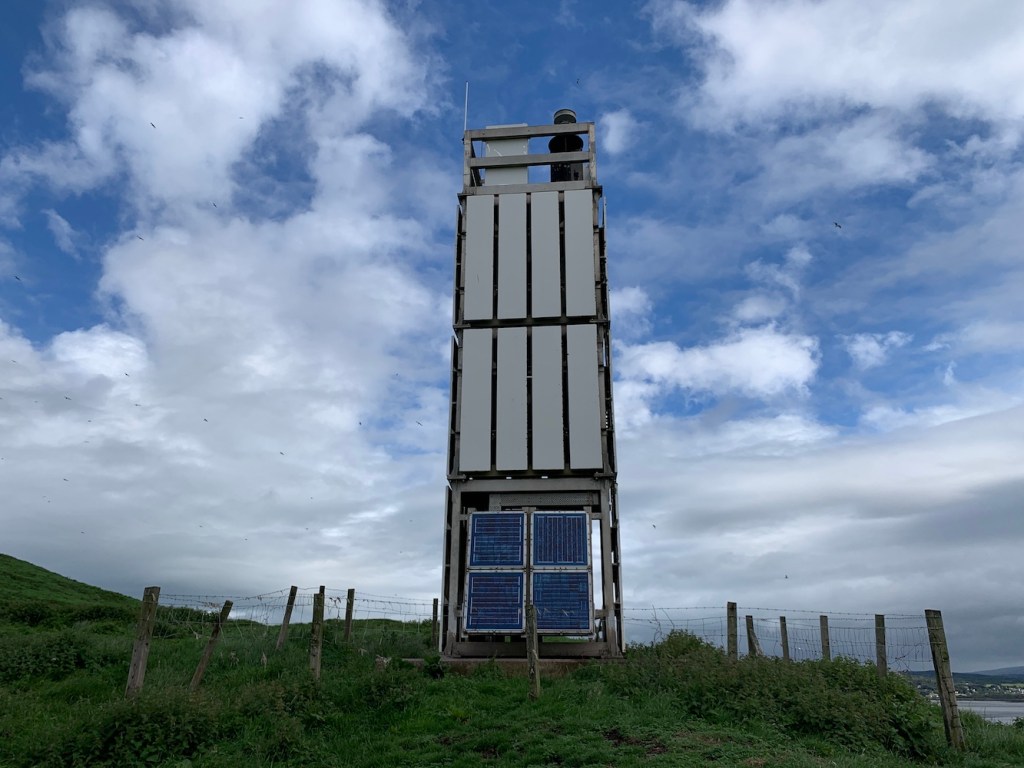
The lighthouse is a flat-pack (or IKEA) style, but what is worthy of note is that it is a three tier flat-pack and these are fairly rare – the only others that we could remember between us being on Hoo Stack and Shillay in the Monach Isles. This one is not pretty-looking and is quite dirty. As we approached we spotted the lack of a door. It would have been rude not to have stepped inside and so we did. The hatch up to the next level of the tower was sadly padlocked so we had to settle for viewing the ground floor level only, but we had made it and all thoroughly enjoyed the walk there. I think the lack of lighthouse visits in recent months added to this enjoyment and we were all relieved that we could be back out there and doing something we love.

Hestan Island lighthouse

I still strongly feel, and I said this today, that I often enjoy the journey getting to these flat-pack lighthouses more than I do the bigger lights. Their remote and challenging locations often make for some much more memorable moments, especially compared to driving to a car park next to a lighthouse wall and wandering around for a while.

Being up against the tide meant we couldn’t stay long so we began our return journey. We were all expecting the tide to have dropped further on the way back, but there appeared to be little change apart from the final section where we now had to move fast to avoid getting stuck in the sand.

Celebrating with Tunnock’s Caramel Wafers for a moment we enjoyed the views back to the island before continuing our walk back.

Looking back towards the island

These few hours going to and from Hestan Island were fantastic and sharing it with some brilliant friends and family made for a very special occasion. I will remember it for a long time to come and it was a perfect way to start a rather late bagging season this year. 🙂
The Duncansby foghorn returns

Last weekend I had a phone call from a friend on the North Coast to say that he was at John O’Groats and a foghorn had just been delivered there. It seemed like a rather unusual event and yesterday he called again with more information. We had already planned to head over there today anyway, but this gave me a little more to work with during the visit.

En route we called in at Dunnet Head lighthouse. We arrived just after 10am and I was surprised to see the light still on, but I was glad it was. Although it no longer houses the original lens, I watched the lights rotating for a little longer than I normally would, knowing that at some point in the near future it will be replaced.

dunnet head
Dunnet Head lighthouse at 10am – with the light still on


I also wanted to make the most of being in the lighthouse complex. It’s not open to the public so often and we have been speaking to the current owner on a number of occasions in recent months so we have been able to take a look around the cottages and other buildings too. He is selling the cottages and engine room and had offered me a lovely picture of Bressay lighthouse in Shetland, which I’d recognised and liked when we had first looked around. It’s a beautiful painting. He’d also thrown in a picture of some Norwegian lighthouses too.

bressay painting
The oil painting of Bressay lighthouse

Onwards we went to John O’Groats, but of course we couldn’t go there without a quick visit to Duncansby Head itself. It was cold and windy, as it always is there, but the beautiful views are always worth it.

duncansby lighthouse
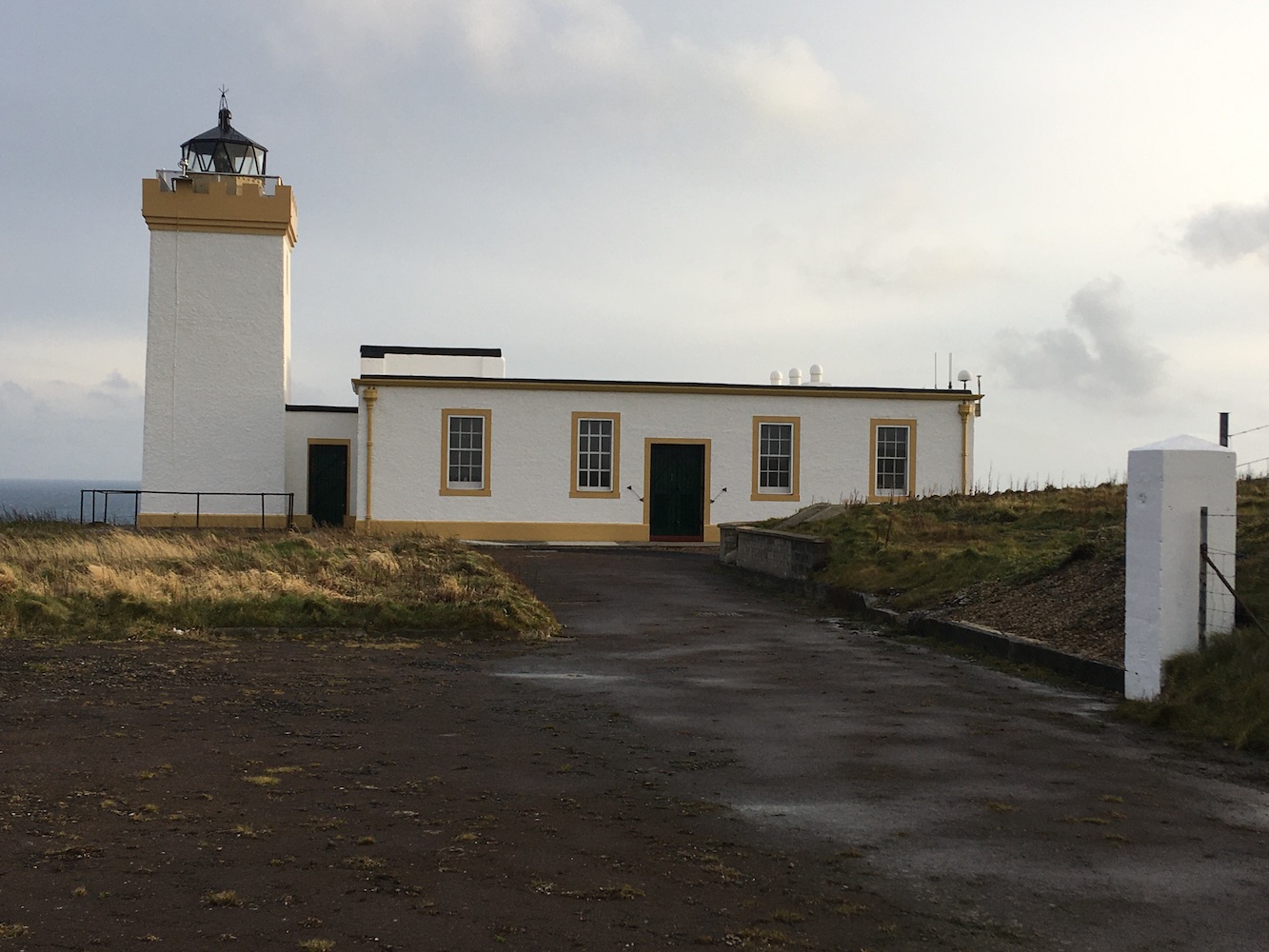
Duncansby Head lighthouse

This time it was even better as the two towers on Muckle Skerry, the largest of the Pentland Skerries, were visible and anchored just off of the island was the Northern Lighthouse Board’s maintenance vessel Pharos. Stroma lighthouse was also visible from here.

pharos and pentland skerries
Not the greatest picture by any means, but good enough to make out the Pharos and the two towers on Muckle Skerry – hopefully

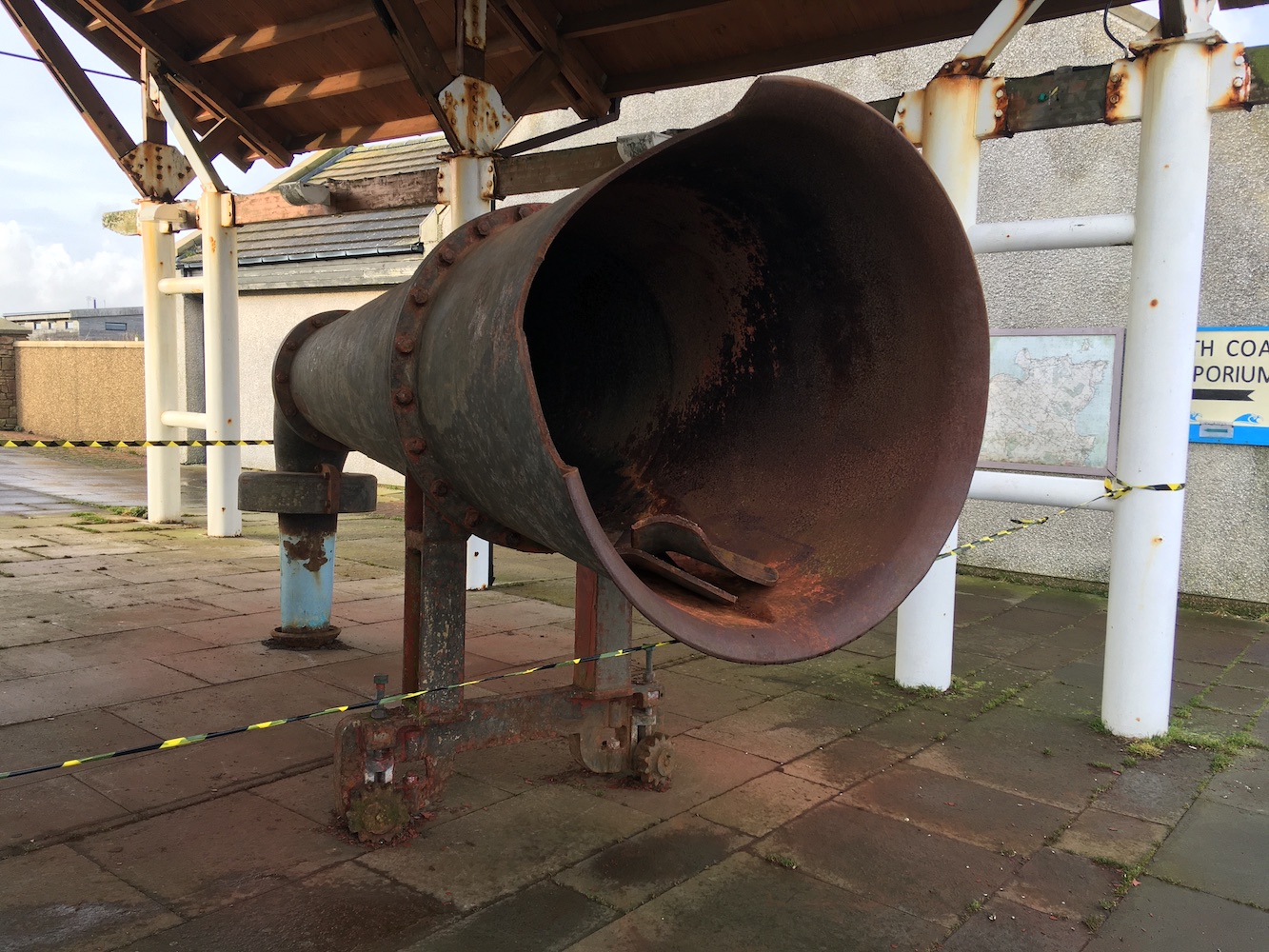
John O’Groats beckoned and, as expected, there was the foghorn under the arch next to the ice cream shop (which was closed). I’d expected it to be red like the others I’d seen, but it wasn’t. This was explained a little later on in the day. It looks like it needs a fair amount of work, and this is exactly what it is getting. We met the friend who told me about it in the local cafe and afterwards I stopped off at Seaview Hotel at John O’Groats to speak to the man behind the whole project.

foghorn
The old Duncansby Head foghorn

So here is the story behind the foghorn since it was removed. Back in the early 2000s (if the man at the hotel remembers correctly), the Northern Lighthouse Board had the old keepers’ accommodation at the lighthouse demolished as well as the foghorn. Everything was destined for landfill, but members of the community clearly spoke nicely to the demolition guys and it was agreed that the foghorn itself would be left and has since been living on the land of one of the local residents. While it was there it was damaged by a digger and a slightly rough job was made of welding the pieces back on. What this meant was that when the work began on it recently to remove the paint and clean it up, these pieces fell off and can now be seen laying inside the horn. They will be welded back on properly in due course.

inside foghorn
Looking inside the foghorn

The foghorn has been placed in its current location to enable it to be re-painted without being too exposed if it rains. It was quite amusing to see the interest it generates. While we were there the children were enjoying booming into it with their best foghorn sounds. As we headed back to the car after lunch another family were doing the same – it was the dad who started it in their case too!

foghorn and sign
The foghorn’s current home

There are now big plans in John O’Groats, led by the John O’Groats Development Trust, to improve an area behind the First and Last House, which marks the beginning of a walk along the coast to Duncansby Head. The foghorn was included in the plans for this area along with a memorial to those who lost their lives in two shipping disasters in the area. The first is the trawler George Robb which was lost with all 12 of its crew in December 1959. Also lost during this incident was a land-based coastguard officer who died on the way to the scene. The second wreck to be remembered is the Cyprus-registered cargo ship, Cemfjord, which sank in the Pentland Firth in January 2015 with the loss of eight lives. The memorial will feature the names of all of those who lost their lives in these tragedies and their names will be displayed facing the direction in which the ships went down. It sounds like it will be a very touching way of remembering these 21 men who came to such a terrible end in the area.

There will be a memorial event for those lost on the George Robb on 6th December this year at Duncansby Head lighthouse, exactly 60 years to the day since the boat went down. I plan to go along to this event (which is at 2pm if anyone who is interested reads this) and will hopefully also meet up with Ian, my lighthouse keeper friend, who served at Duncansby back in the 80s. He and his family were very much a part of the community when they lived there and the man I spoke to this afternoon remembers him well. It will be nice to see Ian back with that community.

Once restored, the foghorn will be accompanied by an interpretive panel, which will explain where the foghorn came from, how it worked and its history. Interestingly, the father of the man I spoke to this afternoon has recordings of the foghorns at Duncansby, Stroma and Pentland Skerries and the idea of running some power to the area has been suggested so that buttons can be installed on the base of the foghorn to allow people to hear what the horns sounded like. It sounds like a wonderful idea to me and I hope it happens. They hope to have the area tidied up and the memorial and foghorn installed by Easter next year.

There is plenty more in the pipeline for John O’Groats too including: the improvement of the coastal path to Duncansby Head in general; the renovation of an old nearby mill to accommodate a hub for the local community to meet and socialise; a children’s play park; and, eventually, a golf course.

It’s all rather exciting and I look forward to seeing it all coming together. It’s fantastic to see a community really embracing and encouraging both their heritage and the number of tourists who visit the area. It’s very refreshing when so many people are keen to complain these days about increased tourism. 🙂

One opportunity leads to another…

As mentioned in my previous post, we set off towards Montrose on Saturday pre-positioned for a visit to Scurdie Ness on Sunday. Not only was it going to be a visit to the lighthouse though, it was also an opportunity to get inside thanks to the combined efforts of the organisers behind Angus Coastal Festival and the Northern Lighthouse Board. Not an opportunity to be missed!

Leaving our accommodation just to the south of Aberdeen, we decided to pay a quick visit to Tod Head lighthouse while we were in the area. I really like Tod Head, it has a wonderful silhouette. We parked up and had a quick wander around – I say quick because we were keen to get to Ferryden and walk along to Scurdie Ness for the start of the event at 11am. I hadn’t really gone beyond the lighthouse before, so I thought I’d give it a try as the headland looked nice in itself and I expected the views back to the lighthouse to be wonderful. I wasn’t wrong. Why had it taken me so long to go for a walk down there?! There are the remains of an old concrete path with old pipes alongside leading towards the edge of the headland. We later discovered this was where the foghorn used to be, although nothing remains of the foghorn building itself now. When I received a message from Bob asking where I was I thought it was probably time to head back.

Tod Head from coast
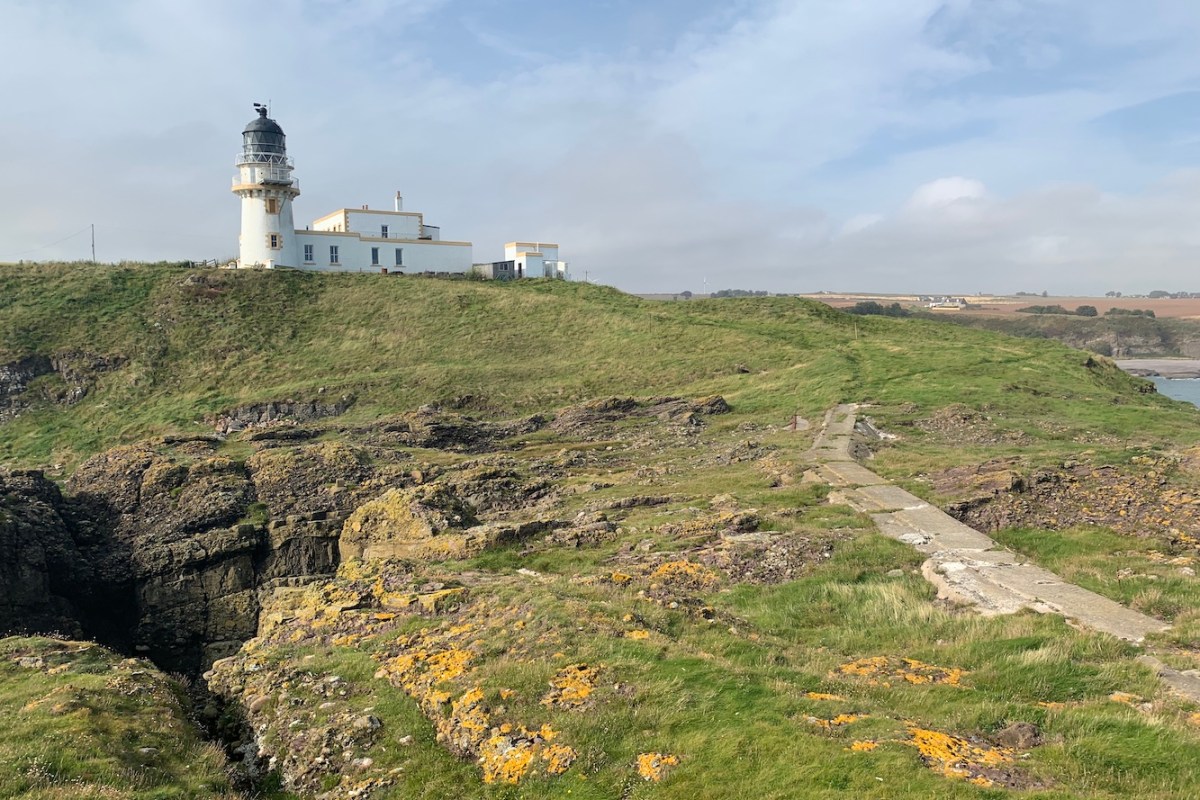
Tod Head lighthouse

While we were keen to get there, Bob suggested he take a closer look at the light at Gourdon, which I’d seen up close on a previous visit, but he’d had to settle for a view from the car that time. It’s a difficult one to get a picture of unless you are content to photograph it from behind. Nice little tower though.

Gourdon
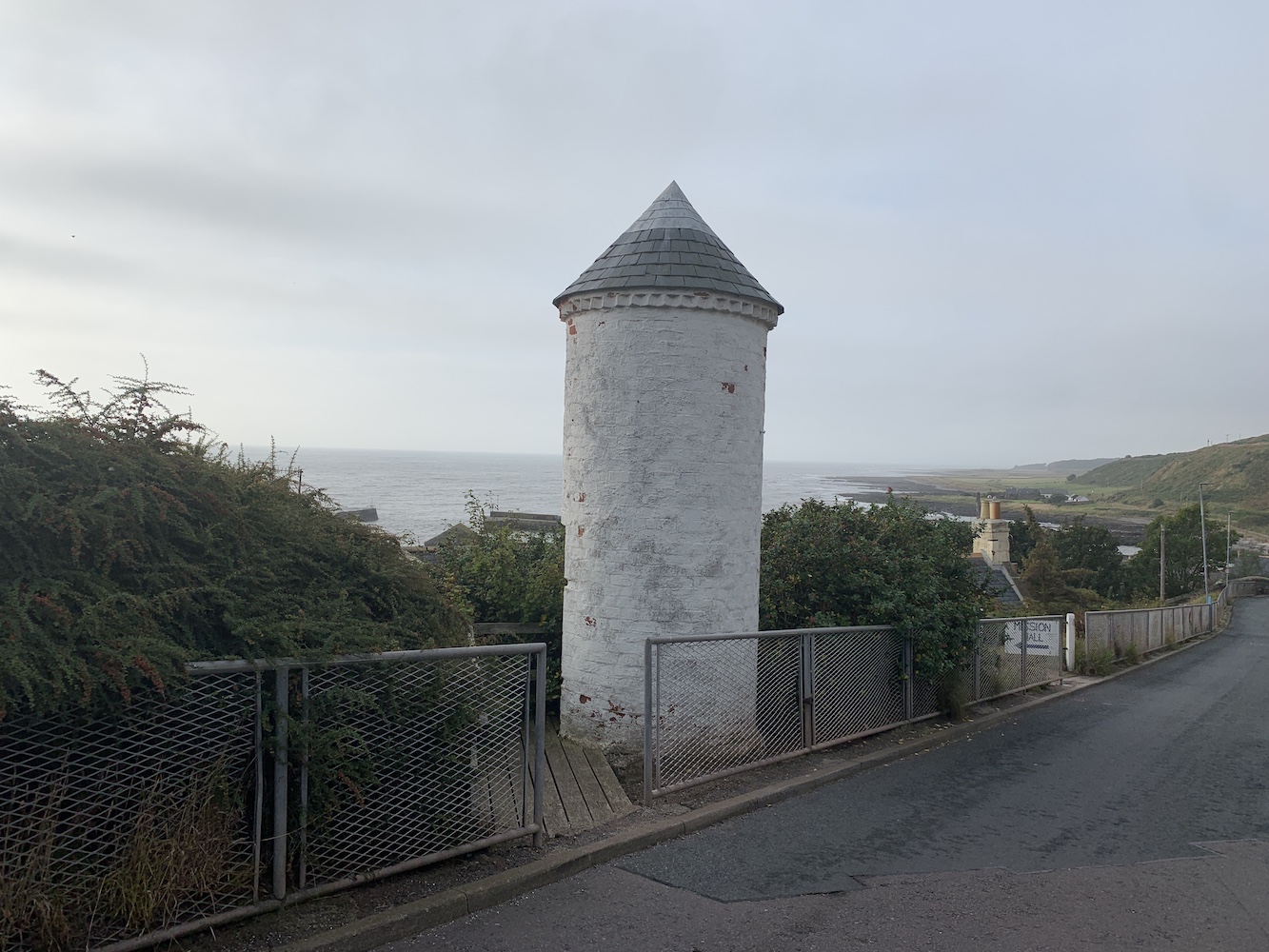
The little lighthouse in Gourdon

We arrived in Ferryden, parked up and began the walk along the beach and then up to the road. The sun was trying to break through the clouds, which is always a good sign. We spotted the lighthouse across the river, which we’d been to a few weeks ago and, of course, there are the various daymarks along the shoreline too. On the way to the lighthouse a lady passed us, obviously keen to get there too, and she arrived a little before we did at 10.35am. She wandered over and asked if we had been at Tod Head just before going down and I realised it was the lady who owns the lighthouse there. She was aware of my book and had a copy back at home so she was pleased to meet me and very kindly invited us back after we had finished at Scurdie Ness. I also said a brief hello to Fiona, the Communications lady at the Northern Lighthouse Board, who I’d met for the first time at their office last week.

Scurdie Ness approach
Scurdie Ness lighthouse

They obviously decided to get going with the trips as there were already a few of us lingering around, so off we went. There is not a lot to see at all going up the stairs, just an endless supply of spiral staircase – or at least that’s how it felt – and a few windows. The Northern Lighthouse Board’s website says there are 170 steps to the top, and that sounds about right. We reached the first floor where Tam Cairns (who showed me and the rest of the Association of Lighthouse Keepers group around Cape Wrath lighthouse in May) and the Retained Lighthouse Keeper for the area, Donald, gave us a bit of an introduction. We then continued up to the next level. There’s not a huge amount to see inside the lighthouse now, as is the case with most operational towers these days. So it was really just cabinets with bits of equipment or batteries inside.

Scurdie Ness stairs
The stairs inside Scurdie Ness lighthouse

We were greeted at the top by four of the modern lights that the Northern Lighthouse Board are introducing to an increasing number of their towers. A friend of mine calls them “puddings”. They contain an LED, which you can see if you look closely enough. Apparently these puddings are £17/18,000 each and are imported from Australia, but require hardly any maintenance unlike the old equipment which was becoming increasingly unreliable. I feel sad that the lights are being replaced by these puddings as it means the loss of a sweeping beam (these new lights just come on and go off). I mentioned this to Tam and he explained that what they have found with this type of light is that crews on board ships see the light flash, but because it doesn’t rotate they find it difficult to keep track of where the tower is between flashes. To resolve this they have been trialing a new set up at St Abbs where a very low level light, which is constantly on, is positioned inside the lamp room too and that light can always be seen. It appears to be working, so they are likely to employ the same set-up elsewhere too.

Scurdie Ness lamp room
The “puddings” in Scurdie Ness lamp room

I also asked about the new light arrangement in Duncansby Head lighthouse as they now have an LED inside a rotating optic, which is great and I hoped they would roll that out further, but alas it seems unlikely. Apparently the light at Duncansby Head needs to have a greater range than the puddings are capable of achieving. I found this quite fascinating as often we think of new technology being able to achieve more than older equipment, but clearly that is not the case here.

Scurdie Ness view from top
The view from the top of Scurdie Ness lighthouse

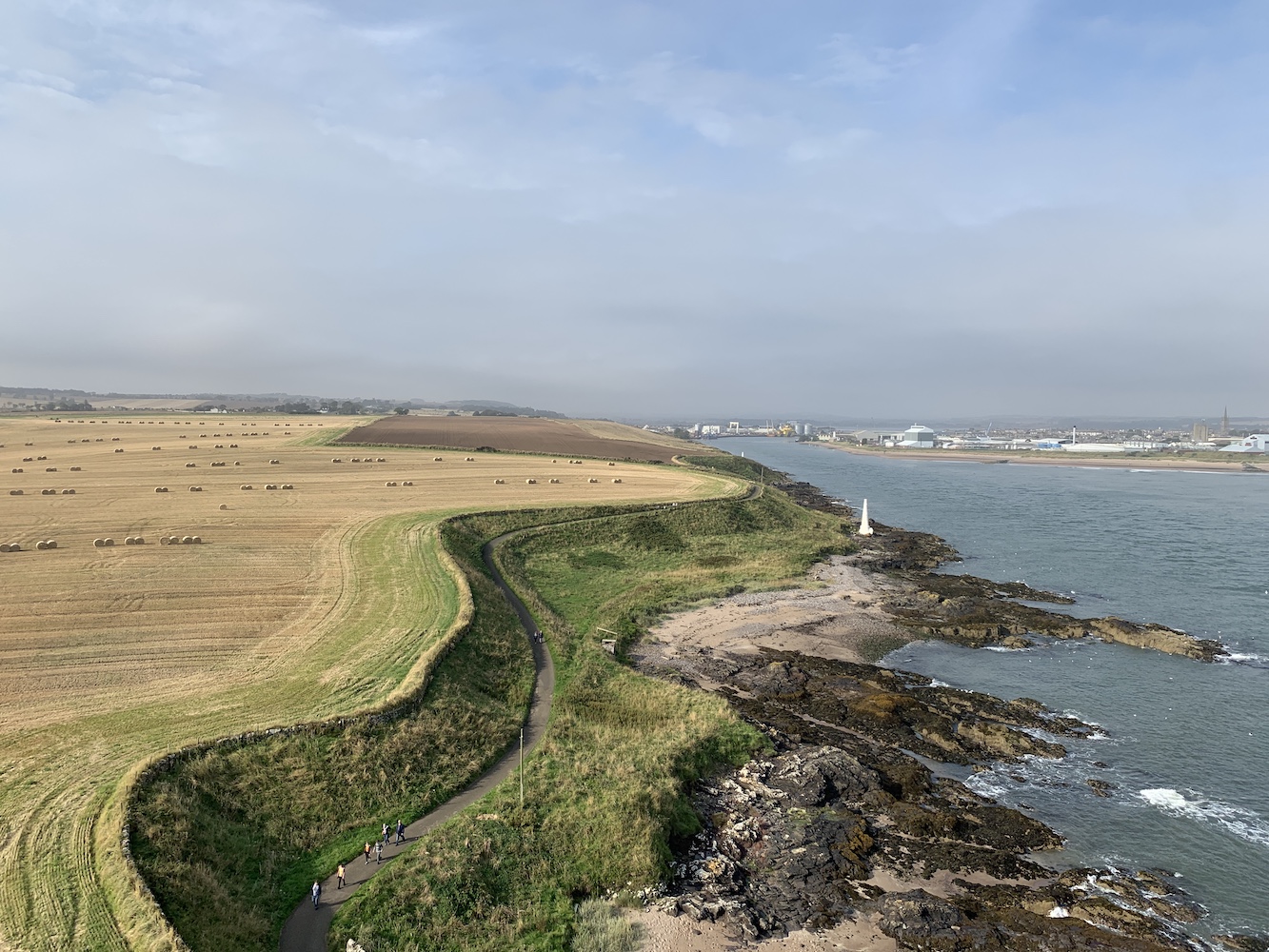
After we left the lamp room we took a spin out around the balcony. There are wonderful views from up there, particularly looking back along the river and, of course, I caught the obligatory lighthouse shadow on the ground below. The queue was well and truly forming below so we felt it was probably time to give someone else a turn. Down and down we went and then we spent a while eating the specially prepared Scurdie Ness lighthouse cake, drinking tea and chatting. The owner of Tod Head, Rohan, still seemed happy for us to visit and, once again it was an opportunity we couldn’t possibly have turned down.

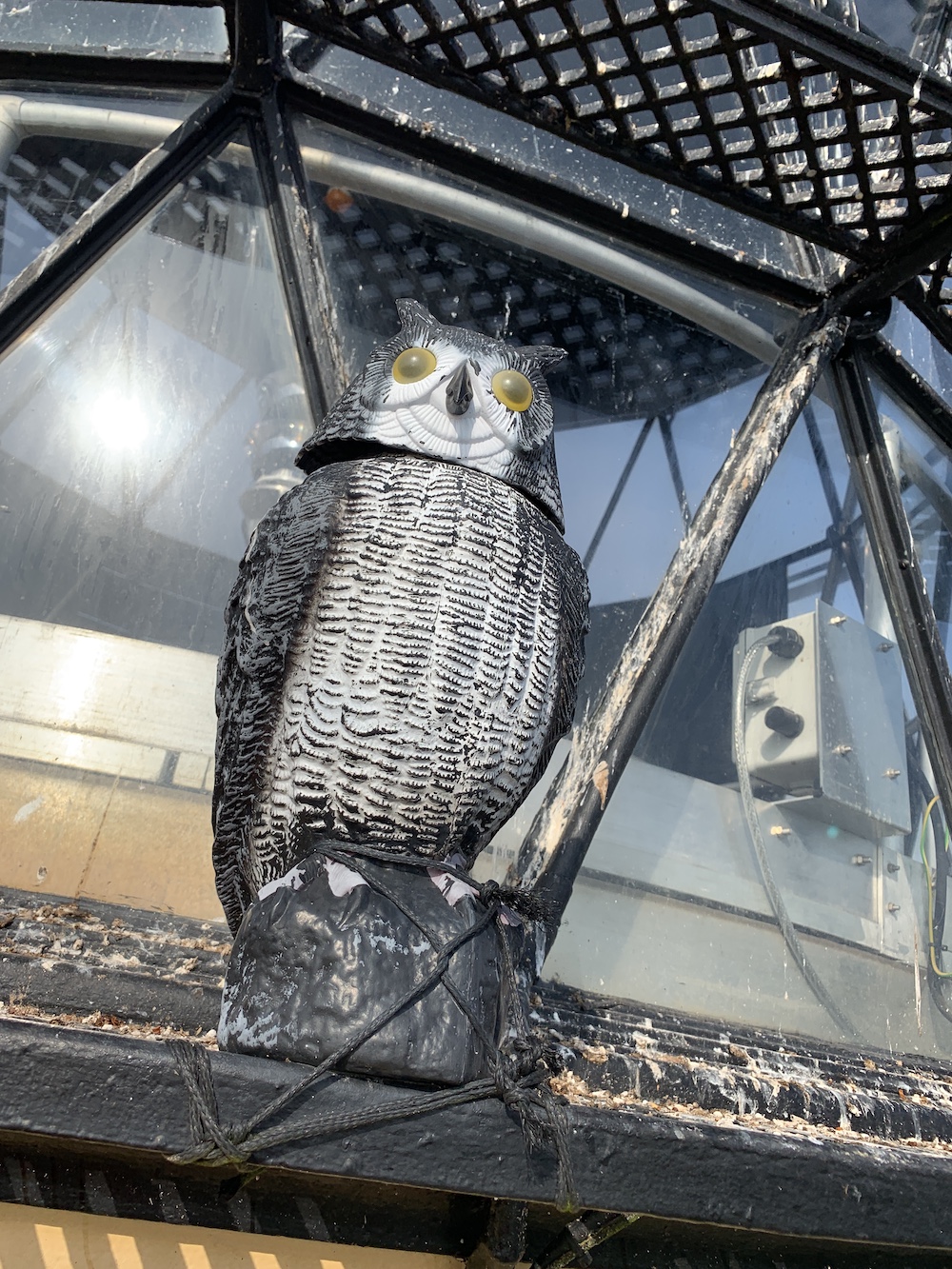
Scurdie Ness owl
The owl at the top of Scurdie Ness lighthouse

We met Rohan back at the lighthouse a little while later. As we were standing outside I said to Bob that I was looking forward to seeing inside as I had a feeling it would be very different from any other lighthouse I’d been inside before. I wasn’t wrong. Rohan bought the lighthouse around the time I first visited it in May 2012 although she hadn’t moved in by that point. Since then she has been gradually doing it up while also maintaining what is a very old building. Rohan has had some incredible work done there. The living room area is fantastic with metal beams still visible and the old unit which used to house some of the main controls sitting in the corner, not to mention the amazing rounded tower that takes over a corner of the room. What I wouldn’t give to have a bit of lighthouse tower in my living room! She has tried to keep hold of a number of the old fixtures and fittings and the kitchen cupboards still feature “Wear eye protection” and “Hand protection must be worn in this area” as well as “Optic battery 12V Nominal”.

Tod Head looking up
Looking up Tod Head tower

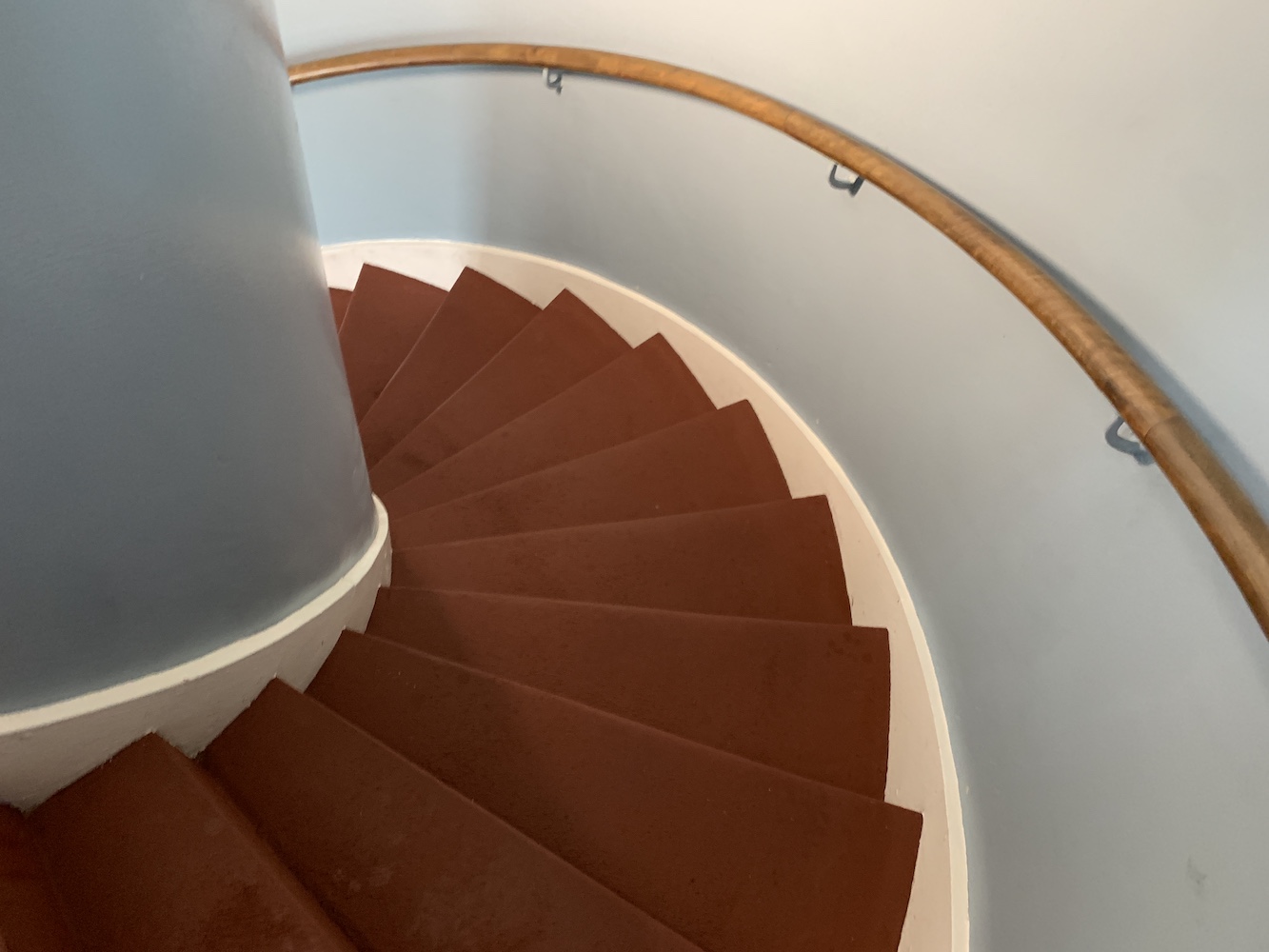
Of course, the most amazing part was the tower. It’s not a tall one, but that really adds to its charm. There is a lower ground floor, which Rohan said they filled in as it used to just be full of mucky sludge. It’s currently being used for storage, but everyone needs that kind of space. We set off up the tower and came out on the first floor. Up here there was a little hatch in the wall that Rohan opened up. It was within the lower part of what used to be a door. She has tried to establish what the door there might have been used for in the past, but has not found any explanation so far. At this point, if you looked up you could see a square panel of glass through which a circular glass design, made up of 12 different sections, was visible. We got another look at both from the next floor up where it was fantastic to look down through the square pane and see the basement floor right at the bottom. The walls here were lined beautifully with wood and this little door leading out to the balcony looked perfect too. There was a small sign leant up against the wall saying that we should wear ‘hedgehogs’ upstairs if we planned on standing on the glass floor. I threw on a pair of pink ones and off I went.

Tod Head door
The little door leading out to the balcony

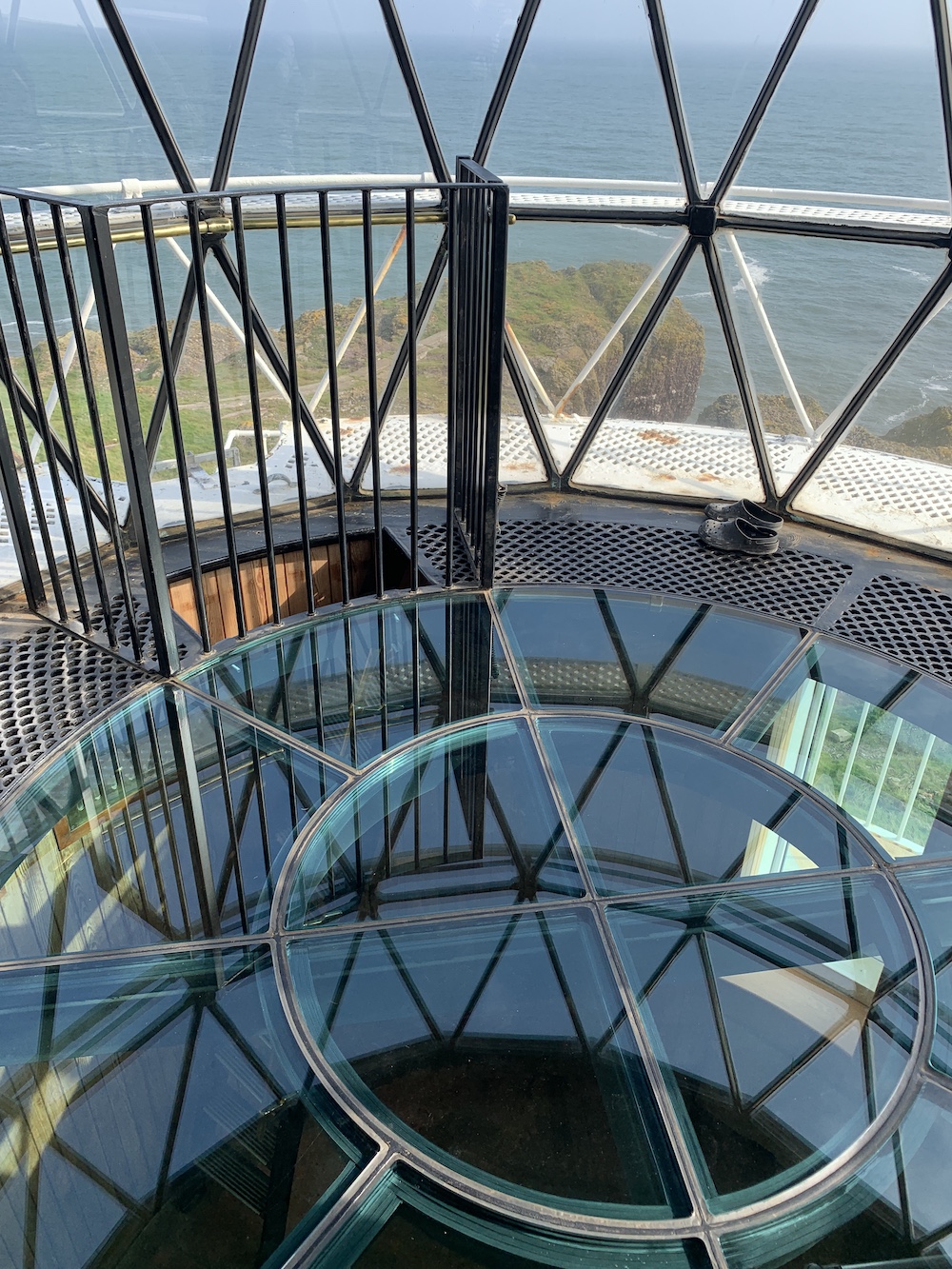
Now, I’m going into an increasing number of lamp rooms these days and it’s always nice to see a light still in them, but this one was amazing. The floor was incredible, the views were stunning and it was also rather hot too with all of the glass making for a lovely greenhouse feel! What a fantastic place to go on a stormy day and watch the waves crashing about below, or even on a nice day such as the day we were there when all is relatively calm and beautiful. There was a lot to love about it.

Tod Head lamp room
Inside the lamp room at Tod Head

The amazing tour continued back down on the next floor and then out onto the balcony. One of the many unique things about Tod Head lighthouse is that it has an extension to the balcony on the seaward east side. Whereas on most lighthouses you struggle to see the lantern properly from the balcony, this bit means you can step back and get a better view – and, of course, there were those brilliant views of the coast again to the north, east and south.

Tod Head lantern
The view of the lantern from the platform at Tod Head

We were up against time a bit as Rohan had some kids visiting for one of their birthdays, but we just had time to sit down at her dining table for a while and chat. I signed her copy of the book and she also offered us the privilege of being able to sign her table, which I was more than pleased to do. Evidence that I was in this beautiful lighthouse. I did tell Rohan that if she ever wants to give her home away then to just give me a call. I can certainly see the appeal of living there.

Before we left I had a quick picture with Rohan taken outside the lighthouse. It was so lovely to meet her and I felt very privileged to have been invited into her home. It was a very special day and a perfect example of why you should never (where possible) turn down an opportunity as you never know where it might take you. 🙂

Wonderful Fife and the Isle of May

Last weekend we spent a few days in Edinburgh in the lead up to a talk about my book at the National Library of Scotland. Of course, we can never miss an opportunity to take in some lighthouses and, following the disappointment of not being able to get out to the Isle of May recently, we decided a day trip there should be a priority. We had the kids with us this time, which brings its own challenges, but also adds to the enjoyment.

On the way from Edinburgh to Anstruther we decided to stop off in Tayport for a re-visit to the lights there. Although we had pictures of them, I couldn’t recall the previous visit so well. After parking up on the approach road to the lighthouses, I jumped out of the car with my son and we set off. It’s very rare that we take the kids on our true “bagging days” when we visit multiple lighthouses in one day. They only usually join us for the odd bigger tower.

Both land based Tayport lighthouses are, unfortunately, within private gardens (although I imagine the owners don’t see this as unfortunate). The first tower we reached was the discontinued low lighthouse. It’s seen slightly better days but is definitely still standing. It’s really quite old, in fact both towers are, dating back to 1823 so almost 200 years ago. Above the door of the cottage there is a plaque saying ‘1823 Erected by the Corporation of the Trinity House Dundee William Nicoll Esquire Master’.

Tayport Low
Tayport Low lighthouse

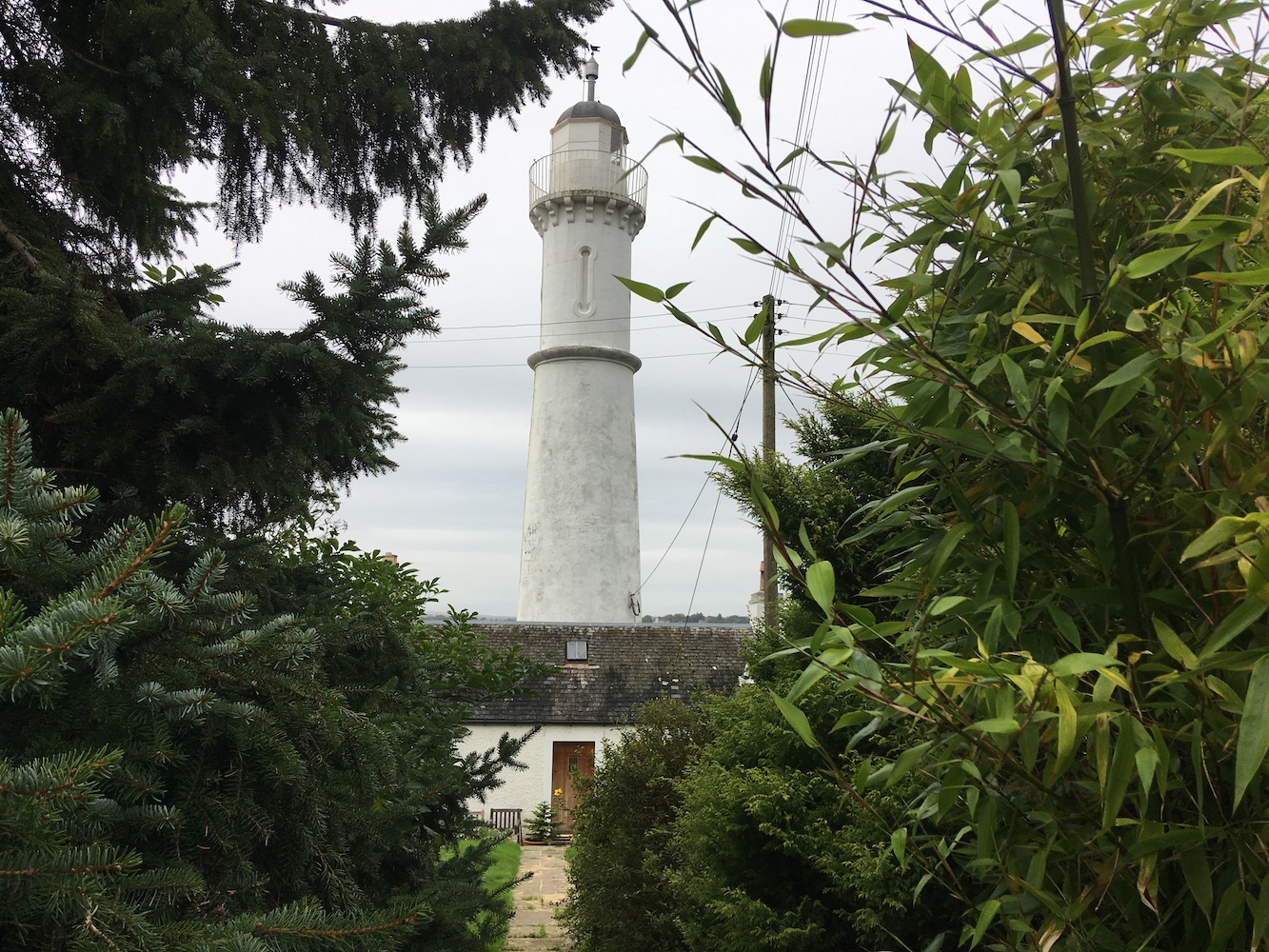
Further on, we went and spotted the operational high light. A much more slender tower this one. As it’s still active the tower is looking a little better maintained than the low light. The cottage that’s next to it is rather lovely and, combined with the lighthouse, makes for a rather pleasant view.

Tayport High.JPG
Tayport High lighthouse

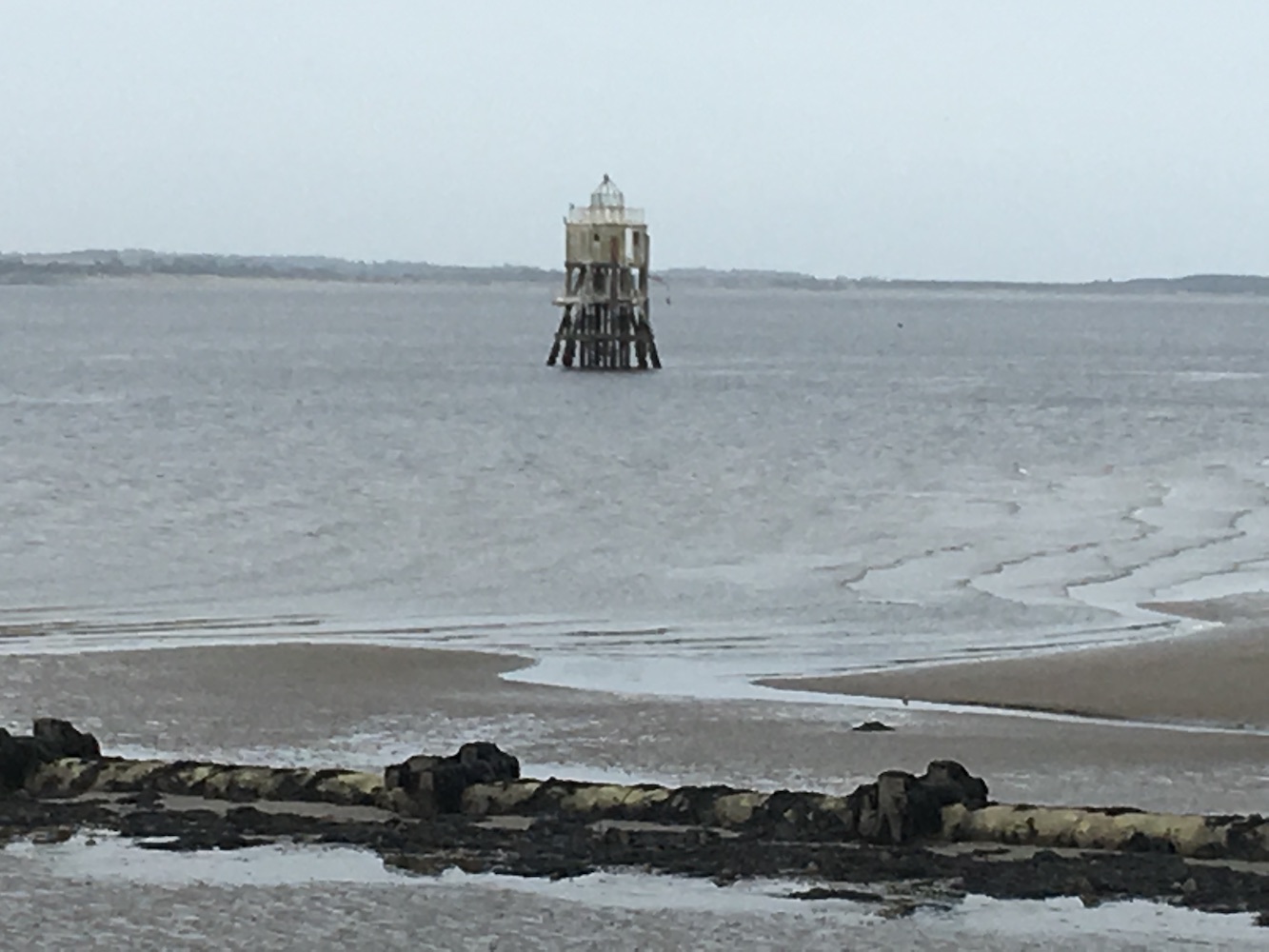
After we had returned to the car, we went for a drive around the harbour to see if we could get a closer view of the pile light just off of the coast. The pier seemed to be the perfect place, although an even closer view some time wouldn’t go amiss. The tower is not looking well these days. This tower replaced the Tayport Low light in 1848, but itself was turned off in the 1960s. I imagine it’s unlikely anyone will adopt it, but it would definitely need more than a little TLC.

Tayport Pile
Tayport Pile lighthouse

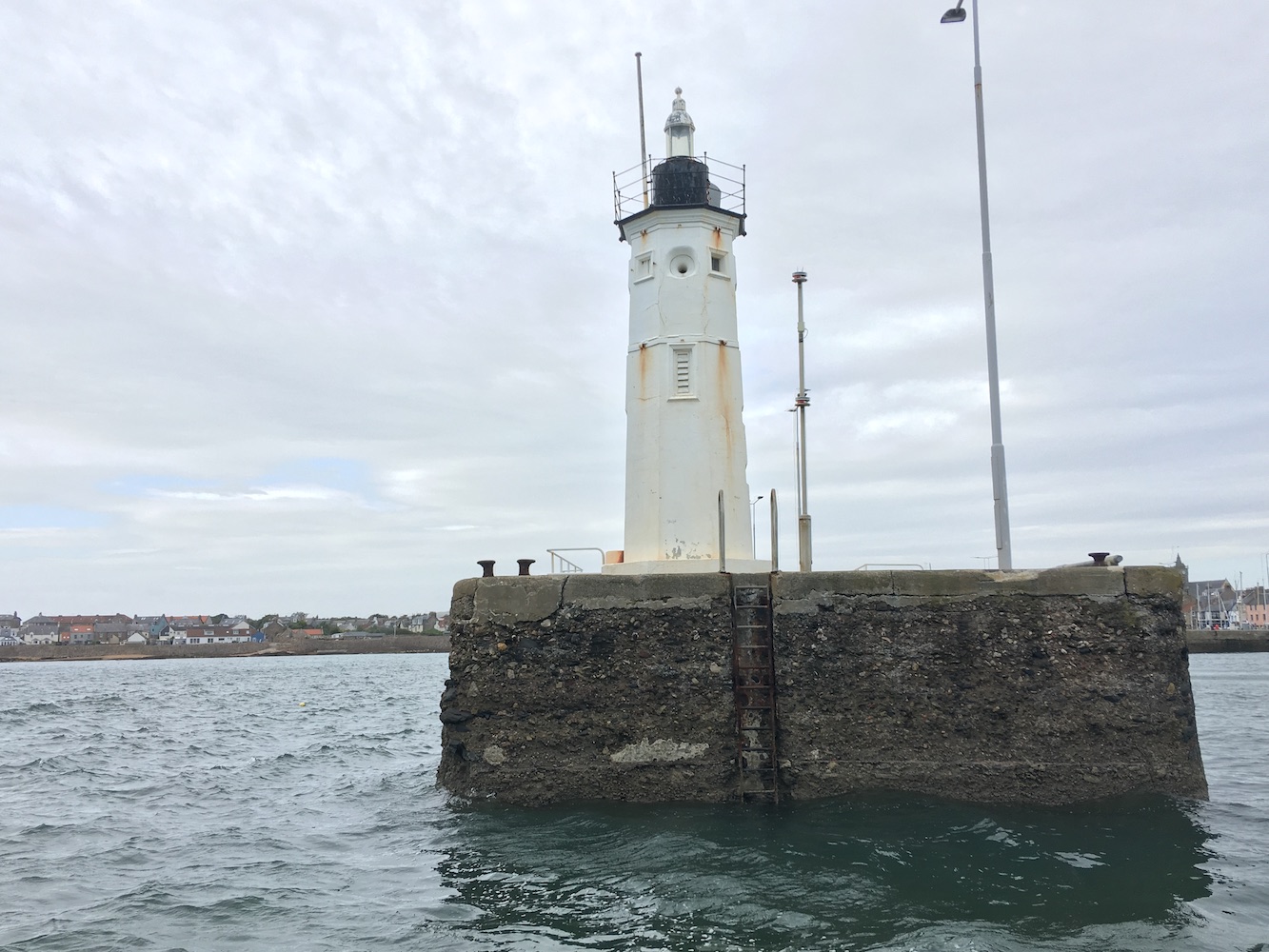
Onwards we travelled to Anstruther and, of course, there is the harbour lighthouse there. Another one that is no longer active. This one has been replaced by lights on a stick. We got some good views of both the tower and the stick with the lights on as we departed on board the May Princess, bound for the Isle of May.

Anstruther
Anstruther lighthouse and lights on stick

We’d been warned that it was a bit choppy out on the sea that day and to keep hold of the kids. It wasn’s so bad though, although we anticipated it would be worse on the way back as we sailed into the wind. It was all rather pleasant really to have the slower approach this time. The last time we went over we took the RIB, which is much faster, but you can’t get a cup of tea on board! Approaching the island from the direction we did was fantastic as we had some wonderful views of all three lighthouses as well as one of the old foghorns. To make it even better, there were signs the sun was trying to come out too!

Isle of May lights
All three lighthouses on the Isle of May

We landed safely on the island and were given the briefing by the warden who lives there from March to November. The most important aspect of this talk though was that he said to gather at the big lighthouse at 4pm and he would open it up for us! Super exciting, but it did mean that we needed to get a move on to be there in time.

We gave our son the option of where to go first and he chose the south foghorn so we went straight for it, making our well-rehearsed foghorn noises all of the way. The sun really had come out by this point and in every direction we were treated to wonderful views. Our son loved the foghorn and decided it was his home, but fortunately he was happy to carry on along the coastal path. I am discovering more and more how your enjoyment of places increases when you go there for a second time and the Isle of May is a perfect example of that. As we wove our way around the coast on the well-trodden path, we were getting ever closer to the island’s piece de resistance, the operational tower which watches over the whole island.

Isle of May foghorn
The foghorn at the south of the Isle of May

Before we got there though I stopped with my son at the helipad so we could spin around pretending to be helicopters. Beyond here, I wanted to take some time to get a closer look at the oldest lighthouse. The little white box of a tower was believed to have been the first lighthouse in Scotland. Since it was introduced it has been reduced in height by around two thirds. When I’d been to the island previously I’d obviously not given it my full attention so it was good to finally see it close-up.

Isle of May old
The old lighthouse on the Isle of May

The active lighthouse on the island was just across the path from here. It’s a fantastic building, very majestic with its castellated walls.

Isle of May
Isle of May’s active lighthouse

I had about 10 minutes before the tour of the lighthouse was due to start and I was keen to go down and see the old low lighthouse. I didn’t want to have to rush once inside the main lighthouse tower and we had to be back to get on the boat at 5pm. I dashed down to the lighthouse and took some photographs. It’s a much more typical Northern Lighthouse Board tower, although it is now discontinued. I find it interesting that the tower here has the small windows in the lantern. The buildings are cordoned off due to the wardens living there at this time of year. It must be a great place to stay and being able to see the active light flashing every night would be incredible.

Isle of May low
The low lighthouse on the Isle of May

I arrived back up at the main lighthouse a few minutes before the wardens turned up to open the door. Our two-year-old daughter has clearly caught the lighthouse bug early as she was the first in and even climbed to the top (well, until we got to the steep ladder) – with a little help from Bob. Our son followed on just behind – the bug is strong in him too! As the light mechanism in the tower was moving, we weren’t able to get right up to the top, but we could go out on the balcony. This is really the best angle to see the island from, stretched out below you on all sides with, of course, even more views of the other towers.

isle-of-may-internal.jpg
The staircase in the Isle of May lighthouse

It’s an absolutely fascinating island and the only issue I have with it is that you don’t get to spend long enough there. Like Stroma, the two times I have been there I have obviously prioritised the lighthouses and then not had time to fit in a stroll along any of the other paths. But then I find I can’t go there without going to the lighthouses! Not a bad predicament really.

It was time to head back down to the boat and we waved goodbye to the lighthouses as we sailed back towards Anstruther. Fortunately, the sea had calmed down, although there were still some rocky bits every now and then which our daughter loved.

Once back at Anstruther, we decided that while we were in the area we should head up the coast a short distance to see Fife Ness lighthouse. I hadn’t been there since my original tour in 2012 and Bob had never been. It is one that I’ve looked at a lot in recent months as it’s an unusual structure, essentially just half a lamp room with a flat roof and a single storey building on the back. I took our little boy with me again to walk around the coastal path that takes you around it. As much as it bothered me when considering certain aspects of my book, I really like it. It’s quite a substantial lamp room and it contains a proper lens too, which is becoming more and more rare.

Fife Ness
Fife Ness lighthouse

Stopping off in Anstruther again for dinner, I strolled along to a car park just beyond the Lifeboat Station to see if I could spot the Isle of May light flashing. I was confident that I would as I could clearly see it from North Berwick as the sun was starting to rise last December. Sure enough, there it was flashing away. On the way back we spotted the small light at Elie Ness flashing too, another one that I was able to see from North Berwick last year. There’s something about seeing lighthouses (or should I say their lights) by night. It’s when they are supposed to be seen. All in all, a really good day and we returned to Edinburgh ready for a good night’s sleep 🙂

A Shetland Adventure – part 10

This post is somewhat delayed due to other tasks taking priority (namely, the book and a presentation related to it – more on that soon!), but it marks the final of my Shetland Adventure series. Reaching double figures is fairly impressive and what a fantastic two weeks it was. The final bagging day was certainly a good end to a thoroughly enjoyable holiday. So, here is what occurred on the final Shetland boat trip…

Aside from the two lighthouses on Fair Isle, I only had one more of the big lighthouses left in Shetland to visit, and that was Out Skerries. I’d been informed by my good friend Brian that landing on Bound Skerry, the lighthouse island within the Out Skerries group, was straightforward and was only difficult on a few days each year. So I was fairly confident about it.

We went out with Seabirds and Seals from Lerwick and I think everyone was a little worried initially about how we might combine. They, of course, are far more used to taking the average tourists about on their lovely, comfy boat to see seabirds and seals, as their name suggests. We, on the other hand, are much more focussed on getting off of the boat and onto islands numerous times a day. It took us a little while to get used to each other, but it turned into a fairly efficient process once we were all settled in. One thing I particularly enjoyed was the number of cups of tea and biscuits we were offered on the boat. It’s a great little set-up they have – and clearly one of the benefits you get from going with a tourist-orientated crew. Earlier in the week I did manage to wangle a flask of tea from Kevin from Compass Rose Charters, the operator who landed us on Muckle Flugga, though while the others were busy doing their island bagging business.

So, back to Out Skerries. The journey out there was easy enough. I’m not used to being on catamarans, clearly, as it felt different. Not so bumpy, a bit more rocky, but it was fine. Unfortunately it was a bit of an overcast day with plenty of rain, but we were informed that it should clear up by the afternoon.

Out Skerries distance
Out Skerries lighthouse awaits

After dropping a few of the group on one of the two main islands, we headed around to Bound Skerry. We’d seen the lighthouse for some time before we arrived there and it was nice to finally be approaching the island. There were only 5 of us going onto the island so we did two runs across in the tender, landing onto slippery platforms and then walking up slippery paths to get to the lighthouse. That’s the problem with rain it automatically makes rock more difficult to walk on, but we arrived at the lighthouse without incident.

Out Skerries path
Looking up the path from the landing area

It felt different there than I thought it would. For some reason I expected there to be more life about in the Out Skerries in general, of course not on the lighthouse island, but there appeared to be no one about – although I must admit that I didn’t land on the main island of Bruray. It all felt a little deserted, and that’s not necessarily a bad thing. I think some of the most fantastic places I have been to are those where people once lived, but no longer do. It is certainly the case with a number of lighthouse islands, but there are others too.

Out Skerries and shore station
The lighthouse with the shore station in the background

The lighthouse is beautiful, and perhaps more so from a distance. It is wonderful to see it close up of course, but when you see it from further away (particularly from the neighbouring island of Grunay) it looks like it is nestled so nicely on the island, almost like it has always been there, as nature intended it to be. There is very little space on the island once you look beyond the lighthouse and helipad. You can see why they built the shore station for the keepers’ families on Grunay instead, although I have just discovered that Grunay was the location of the temporary lighthouse built in 1854 before the current tower was built on Bound Skerry in 1858. You feel very abandoned there, or maybe that was just because our boat went off to drop someone on Bruray and took longer to get back than we had thought! It was a great experience being there though and it’s definitely one of those inspiring places that, if I had the time, I might write some sort of story about. A very interesting visit.

I appeared to be the only one present to have known that Grunay, the next door neighbour island, was home to a little Shetland Islands Council lighthouse. As we approached it I was looking around towards the landing steps and knew exactly the view I was looking for, but just couldn’t see the lighthouse. It turns out that Grunay has a “dog leg” (I’m not sure that’s the right term, but I’m sticking with it). The small islet at the end of this dog leg is what I was looking for. It is separated from the main island by large boulders, which are tricky to navigate your way across – or at least that’s what I found. Whether or not the islet is tidal I’m not sure. I imagine that if it isn’t then in stormy weather the waves would crash over the boulders. Thankfully that day the sea was nice and calm.

Grunay
The lighthouse on Grunay

The little lighthouse on Grunay is similar to those at West Burrafirth, only it is round rather than square. It does have a Council look about it and it’s just tall enough to feature a door. We wandered around it in the long grass for a while before crossing back through boulder city. We knew we didn’t have a lot of time, but wanted to get to the old Out Skerries shore station. By this point I was pretty hot and I’d not had any lunch, so I wasn’t at my best, but as soon as I spotted the lighthouse peering up over the island I felt a bit better.

Out Skerries shore station
Out Skerries shore station (you can just spot the top of lighthouse above the roof)

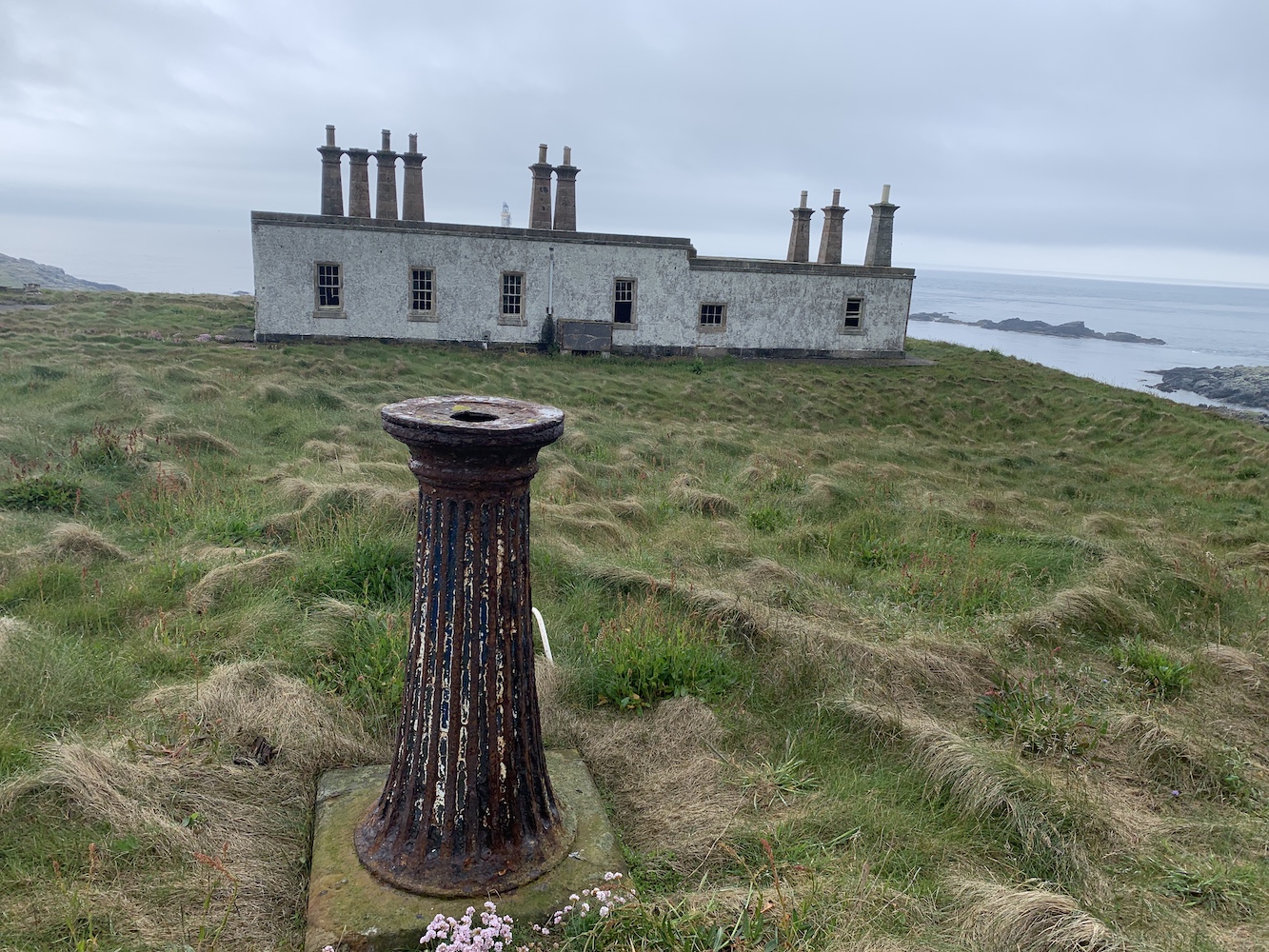
The shore station, while still standing, has seen far better days. The windows and doors are all gone and nature has been left to do what it will to the buildings. I didn’t want to go far into the building as you never know what condition they might be in structurally, but I saw enough to feel a little sad about it. When you are seeing furniture in rooms where people once lived looking in such a bad way it does make you think. Ailsa Craig was the first one I saw,  but at least that one was being used (or should I say abused) occasionally by bird watchers. Here there has been no one since the keepers left the tower in 1972, when it became one of those in the first round of lights to be automated. Forty seven years without maintenance certainly takes its toll.

Out Skerries shore station internal
Inside one of the rooms at the Out Skerries shore station

The rain arrived just as we were walking back to the boat. Once we were back on board and attempting to dry out we went to collect the others who had been sheltering in the public toilets. Due to there still being a number of islands left to pick off on the way back to Lerwick, we only sailed past Muckle Skerry with no attempt to land. Muckle Skerry lighthouse is a flat-pack, and from the distance we saw it at and the conditions at the time it was considerably less inspiring than Out Skerries had been, but still a nice one to see.

Muckle Skerry
Our distant view of Muckle Skerry lighthouse

Our final lighthouse stop of the day was Hoo Stack. I had been informed the night before that: “Hoo Stack is called a stack, but it is anything but”, which I was pleased to hear. Landing on the island was fine, but it was then a bit of a clamber up among rocks and I was very kindly led by Alan while Bob helped with the landings. Alan had also led me up Gruney a couple of days before, so I am grateful to him (not that he will see this as he is a self-confessed techno-phobe). Once we were off of the rocks it was just a short walk up to the lighthouse.

Hoo Stack distance.jpg
Hoo Stack (or is it an island?!)

The lighthouse on Hoo Stack is another flat-pack, but quite an interesting one as it has three levels to it and the bottom level is missing the white cladding, which was very exciting as it meant I could physically get inside it. I’d been wanting to experience that for some time and managing it on the final one of my lighthouse islands of the trip was great. The sun had come out by this point too, which also increases your enjoyment of a place. Of course the others joined me inside the lighthouse too. I think they are really getting into this lighthouse bagging malarkey.

Hoo Stack
Hoo Stack lighthouse in the sunshine

A truly brilliant way to end the two weeks in Shetland. Reflecting back on it now, it seems almost like a dream, as if it never really happened, but it certainly did. The highlight though had to be Muckle Flugga, of course. After that I can’t even begin to pick out the best bits – there were far too many of them. 🙂

A Shetland Adventure – part 9

Every now and then I have a day involving lots of little lights and today was certainly one of them. We spent the day on a boat with Compass Rose Charters (who landed us on Muckle Flugga the other day) in Yell Sound, Shetland. I’d been looking forward to this one as there are plenty of small lighthouses on the approach to Sullom Voe. Some are Northern Lighthouse Board while others were installed by the council.

Our departure point was Toft on Mainland Shetland. First we headed out to the islands of Linga and Samphrey, which gave us a nice view of Firth’s Voe, which we’d walked to the other day.

Firths Voe
Firths Voe from a distance

From Samphrey we set off for the Sound and immediately you begin to spot little white towers around. The rest of the group wanted to get onto a couple of the islands on the east side of Yell Sound, which gave us an opportunity to see the Ness of Sound lighthouse, another one we had walked to during this trip.

Heading towards Brother Isle we could see Mio Ness, which is on the Mainland to the north east of Sullom Voe. Brother Isle was our next stop. By this time the sun had come out. Although the light on Brother Isle has no possible internal access to the tower itself I was still interested in seeing it as we were going there anyway. It’s a fairly interesting structure with a few little additional boxes around it. I’m glad I went to see it anyway.

Brother Isle
The light on Brother Isle

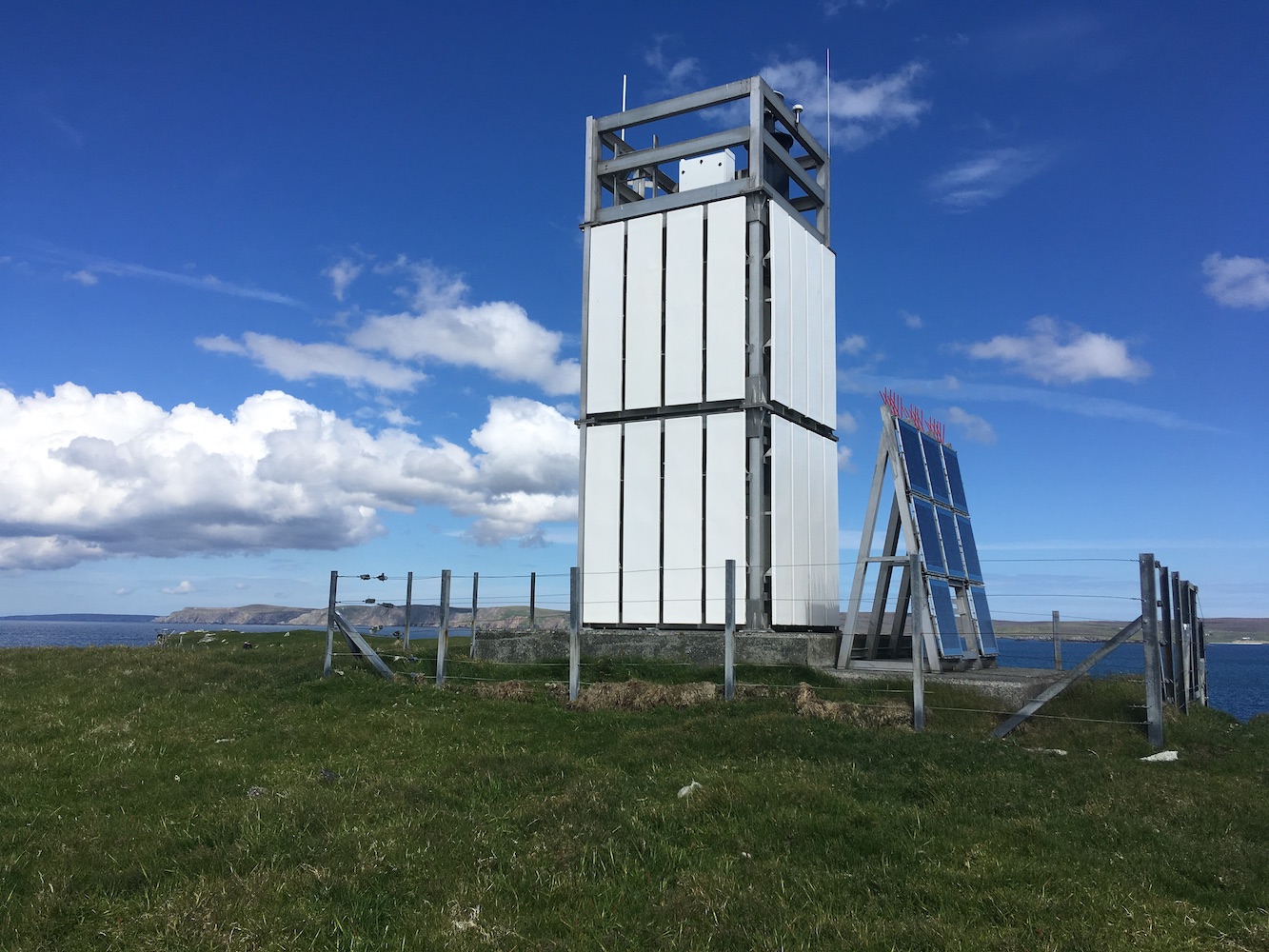
We sailed close to the light on Tinga Skerry. This one appears to be typical council style with the circular white tower made up of panels. The sun began to shin on it just as we were passing, which always has a way of making any structure look better than it otherwise would.

Tinga Skerry
Tinga Skerry lighthouse

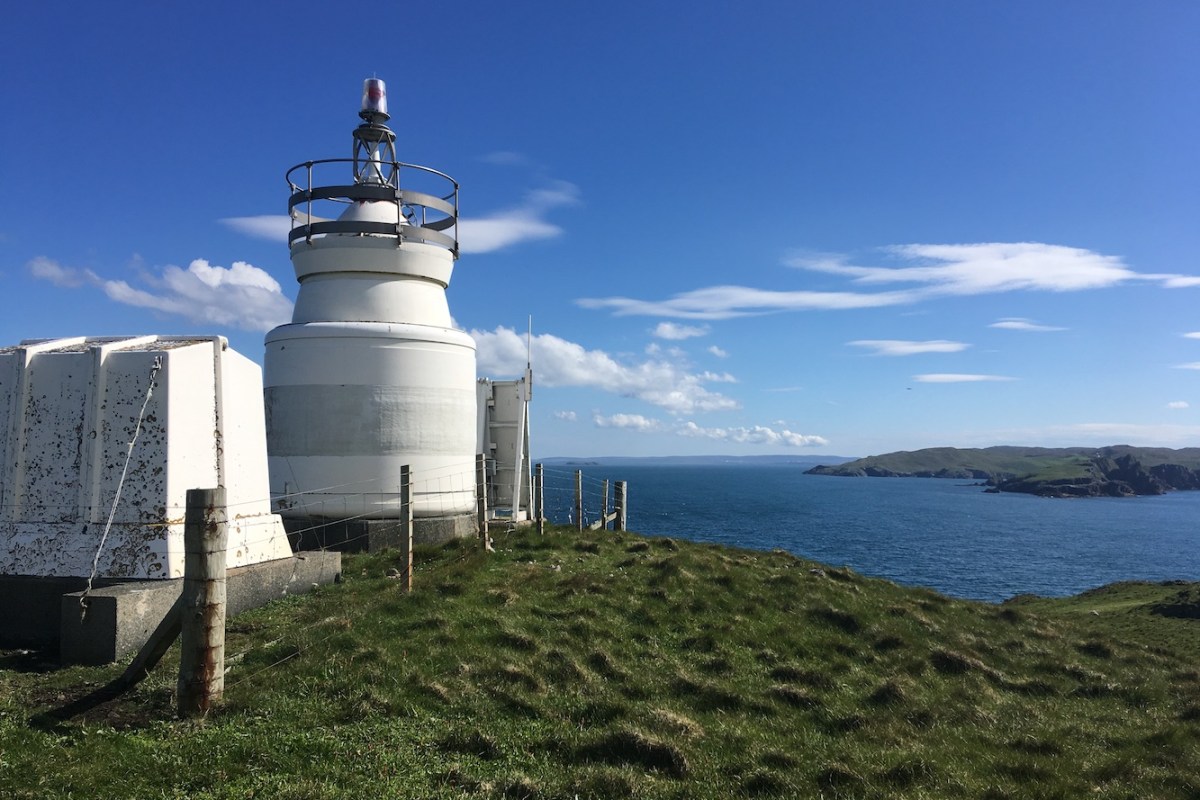
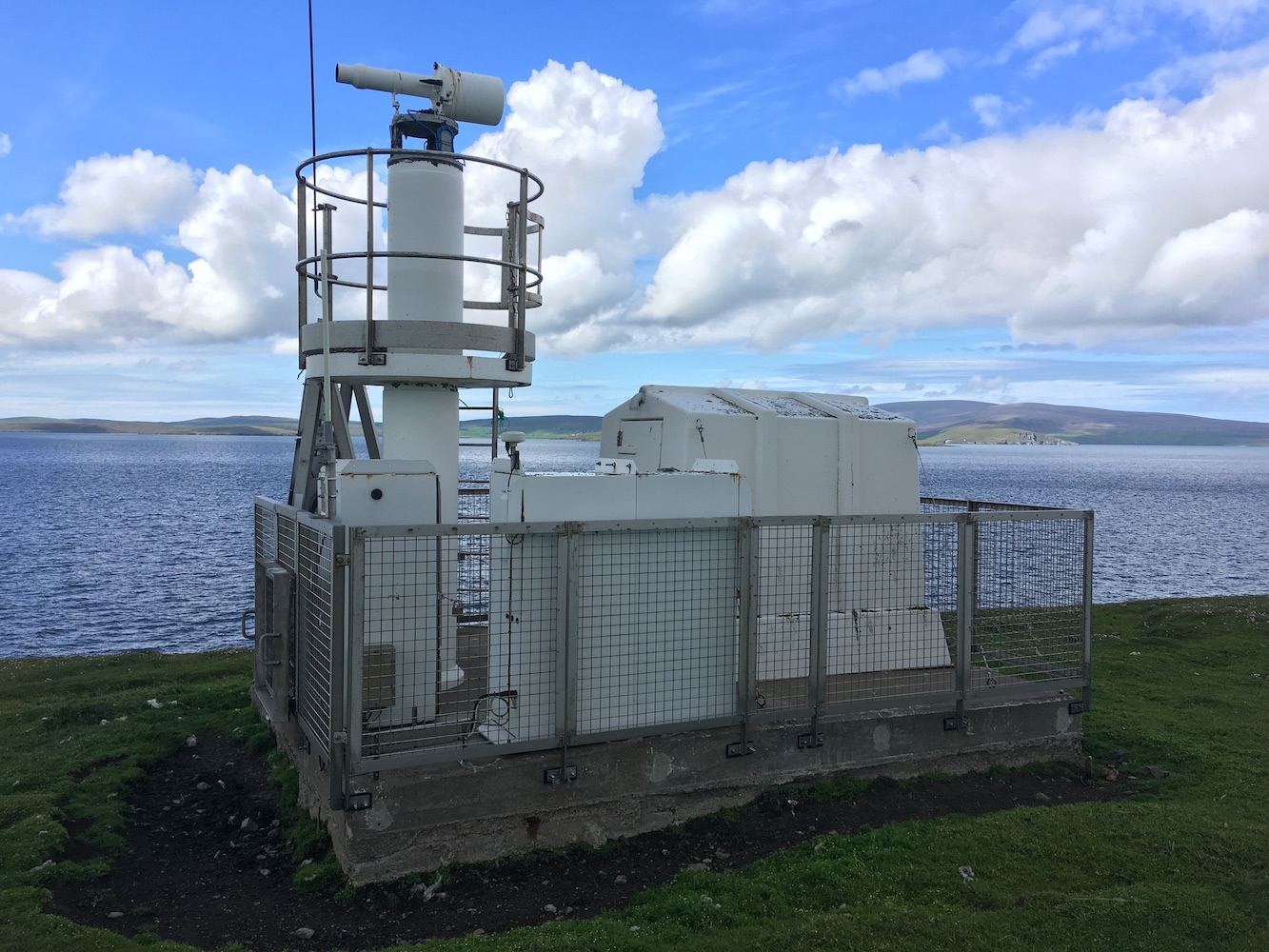
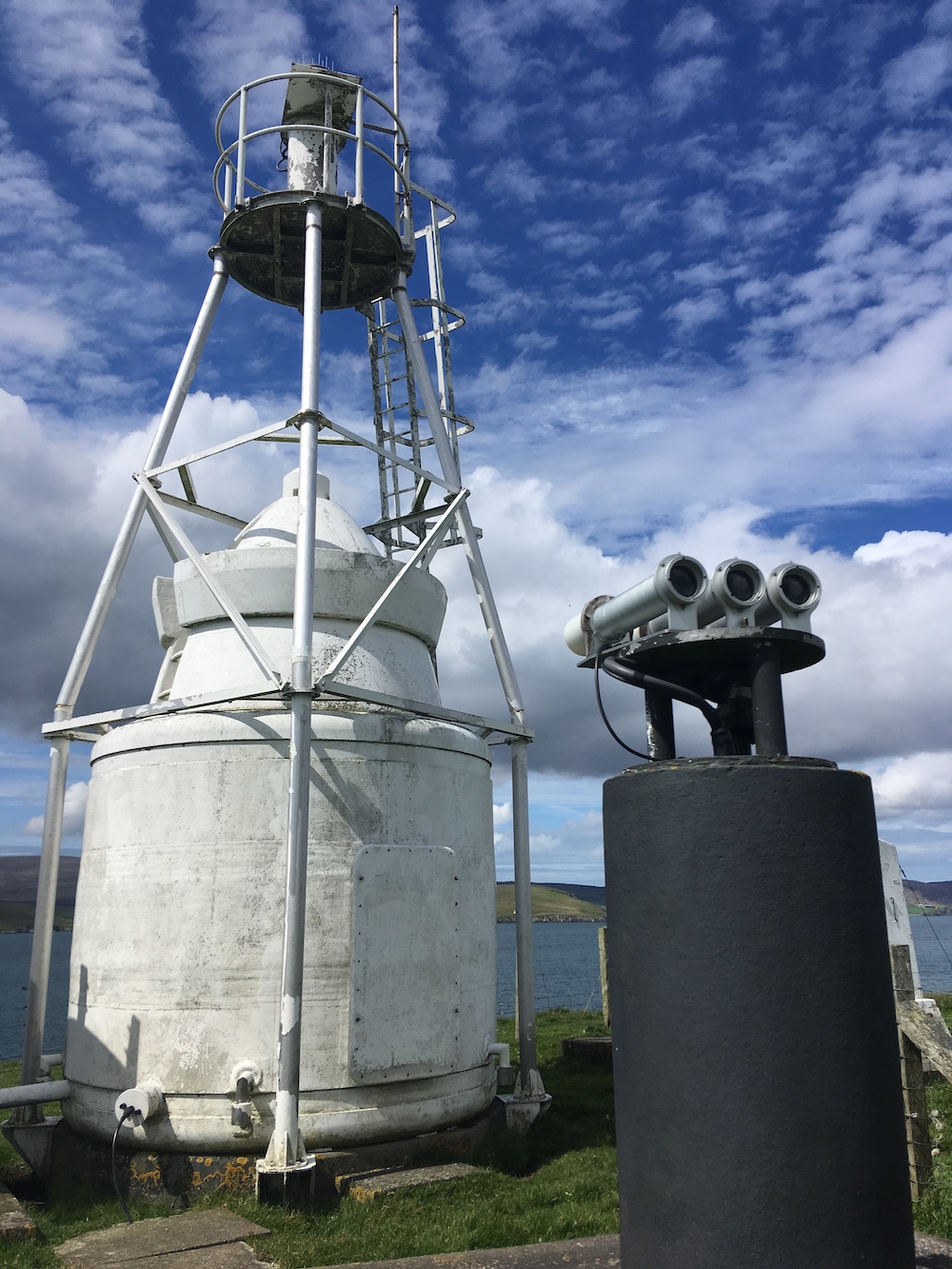
Lamba was our next stop and this was a very interesting one. Not like any I had seen before. Next to the tower was what looked like three little gun barrels lined up. I’m pretty sure they are actually some sort of sector lights, so not quite so dramatic. It was a bit of an uphill walk to get to, but the blue sky in the background was great and it was nice to see something a bit different. It was a bit of a scramble on the rocks to get up, but not too bad.

Lamba
Lamba lighthouse

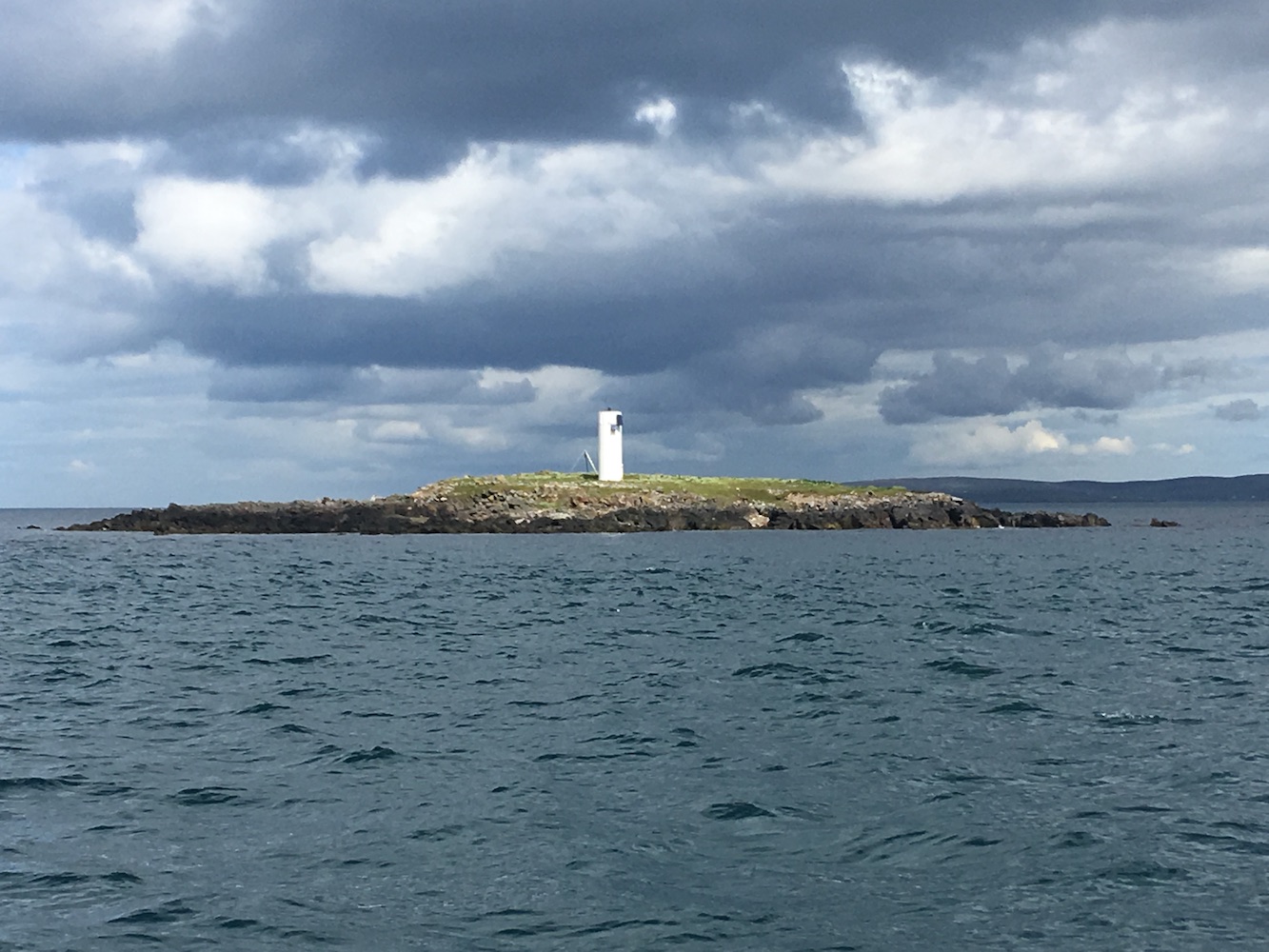
Little Holm was next on my hit list. It’s a tiny island really, but very beautiful. It is covered in patches of thrift and is also relatively low lying so no hills, no bonxies, just a lovely little place. It’s a Northern Lighthouse Board flat-pack but, as with so many of these, it’s the surroundings that make it so enjoyable and that was definitely the case here.

Little Holm
Little Holm lighthouse

It’s neighbour to the north, Muckle Holm, was steeper, but most of the height gain was done before we even left the rocks. This one has a far more dramatic coastline with a couple of big geos to look down into as you walk to the lighthouse. Again it’s a standard flat-pack.

Muckle Holm
Muckle Holm lighthouse

As we continued north we began to see the Point of Fethaland lighthouse, yet another we had paid a visit to on this holiday. It looks very small up on the high cliffs. I think I preferred seeing it from the land!

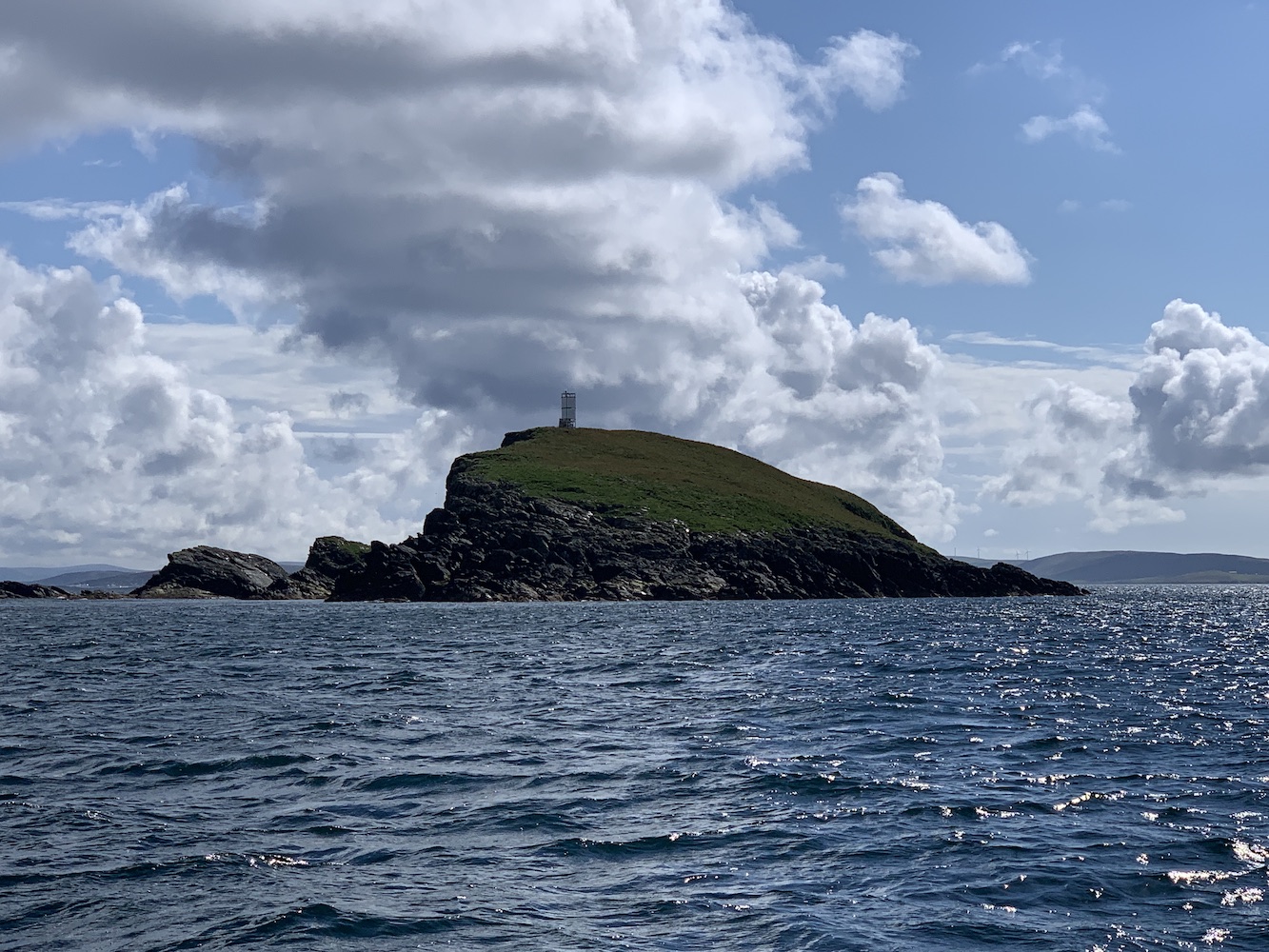
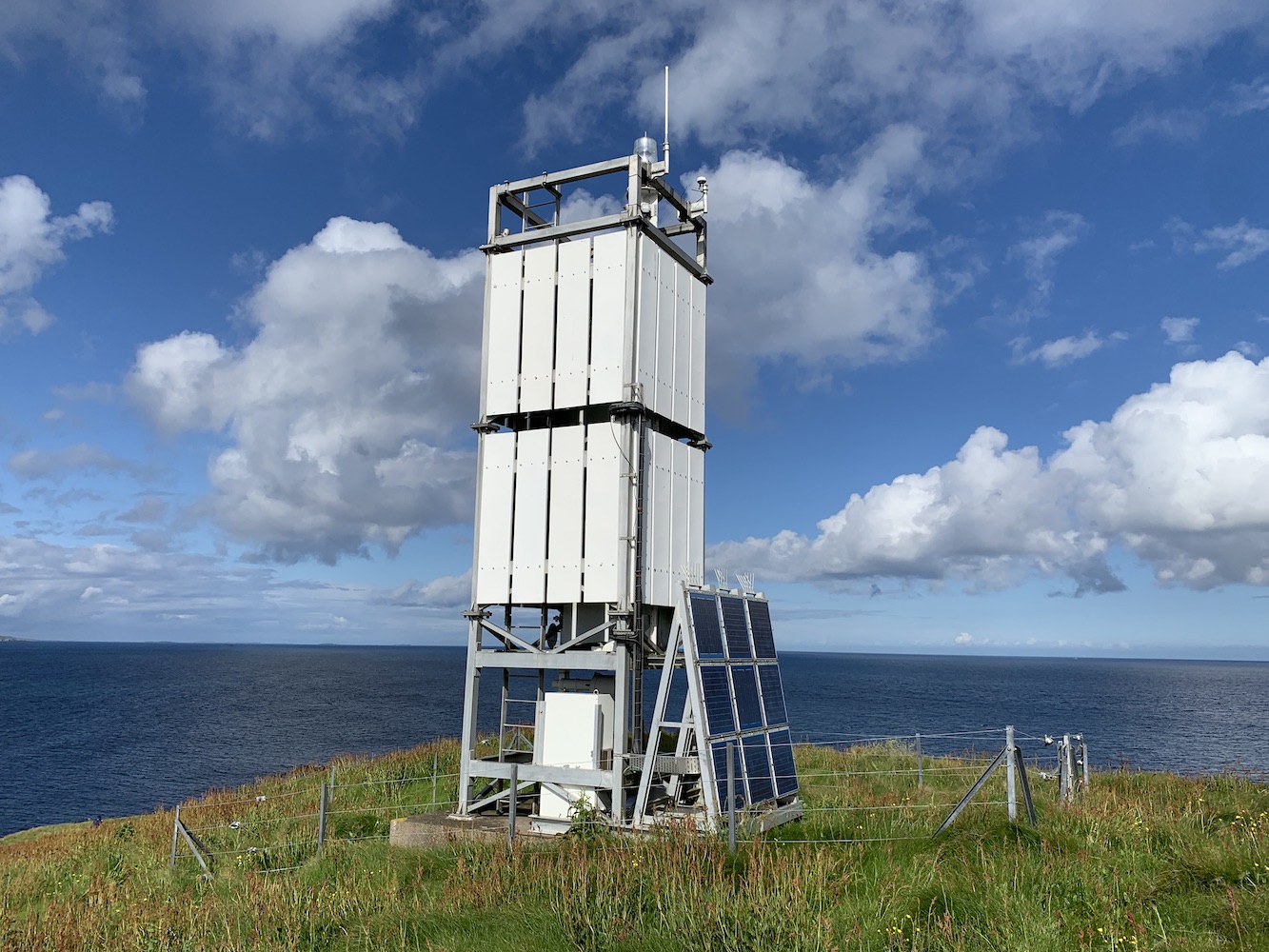
Our destination was the island of Gruney, which sits off of the coast of Point of Fethaland. We had seen the lighthouse on our visit to the Fethaland light, but now it was time to get onto the island and see it close up. This was where it got a bit interesting. All day we’d had flat calm landings on to dry rocks. Due to the direction of the wind and swell we needed to land on the east of the island. There was a relatively sheltered area, but the only problem was that we would be landing on a sloping slab of rock covered in seaweed with no easy place to go to avoid it. We were also struggling a little with the swell, which was moving the boat a bit as people got off. Fortunately Bob and a couple of others had micro spikes with them so Bob was able to land and stomp up the slab to hold the rope. When one of the group slipped on the seaweed I thought “I’m not sure I want to do this”, but a couple of them told me it would be ok so I got off of the boat and clung on to the rope while I shuffled my way up. Once we were past the worst of it one of the other group members helped to guide me up the rest of the rocks. You might think that I would have been relieved to have reached the top, but I was already worrying about how I was going to get back on the boat. I was, however, rewarded with some incredible views in various directions. Firstly the lighthouse was another interesting type. I was surprised to see a Northern Lighthouse Board plate on it as I’ve not seen any of their structures looking like this before. It made me question whether the Lamba light was also something to do with them, although it didn’t have a plate. The views across to Point of Fethaland were great, but the most impressive view was towards the array of sea stacks and a natural arch to the north. It made the effort to get there worthwhile. Getting back onto the boat wasn’t as bad as I’d expected. Bob leant me his micro spikes and the combination of those and holding the rope again made me feel much safer. I was still glad to get back onto the boat though!

Gruney
Gruney lighthouse with Point of Fethaland in the distance

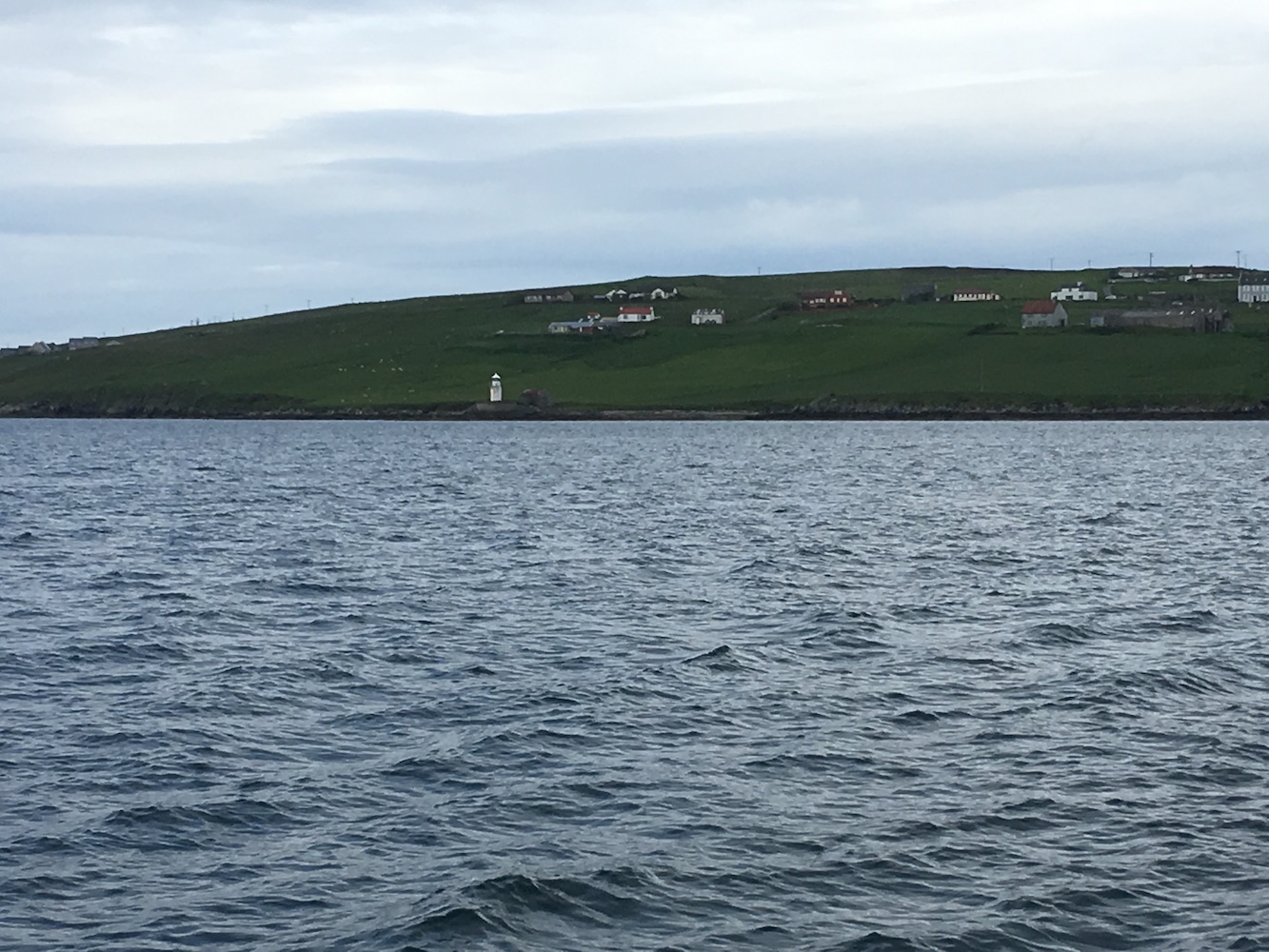
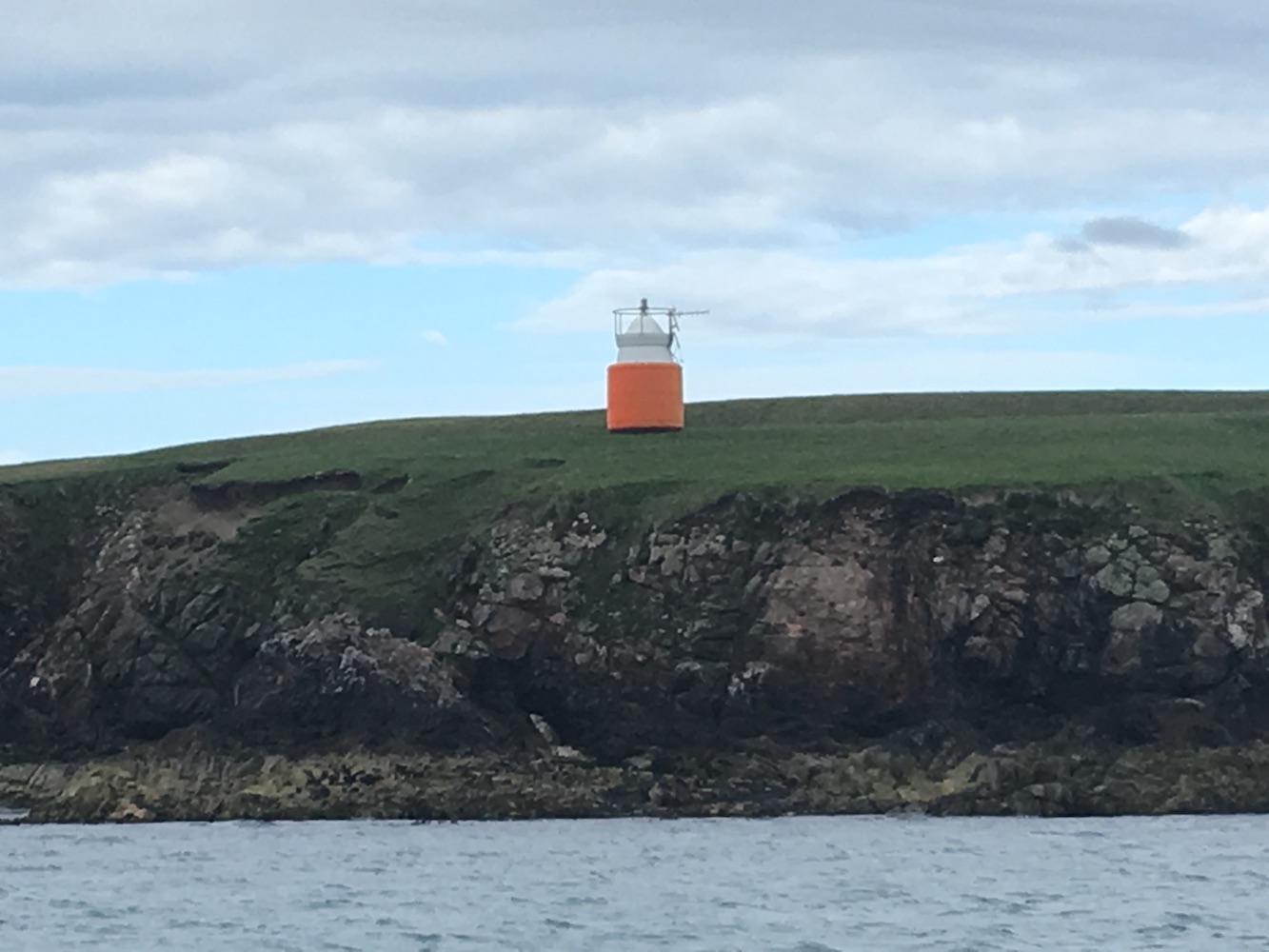
On our journey today we spotted a small white and orange tower on the island of Little Roe. It looked similar to the front light of the nearby Skaw Taing range so we felt it was important to get a closer view in order to judge whether or not it was the type that had internal access. On our way back down to Toft the skipper agreed to travel via Little Roe to give us a closer view. Looking through the zoom lens on the camera it was clear that it was the twin structure to the Skaw Taing Front range light. This was one I had not previously had on my list so I’m glad I found it today. As I said towards the beginning of this post, Yell Sound has plenty of lights.

Little Roe.JPG
Little Roe lighthouse

A really enjoyable day and a very successful one for getting to some of the lights I would otherwise only have seen from a distance. 🙂

A Shetland Adventure – part 8 (the best day)

I’m not even sure how to begin this post really, so I’m just going to dive straight in there and say it. Today was the day we landed on Muckle Flugga!

I’m sure many of you will know it already, but if not then Muckle Flugga is the most northerly lighthouse in the British Isles. It is perched beautifully on top of a big rock a short distance off of the north of Unst in Shetland. Interestingly the lighthouse did, in its early days, used to be known as North Unst. It is renowned for being difficult to land on and fairly wild in terms of sea state and weather.

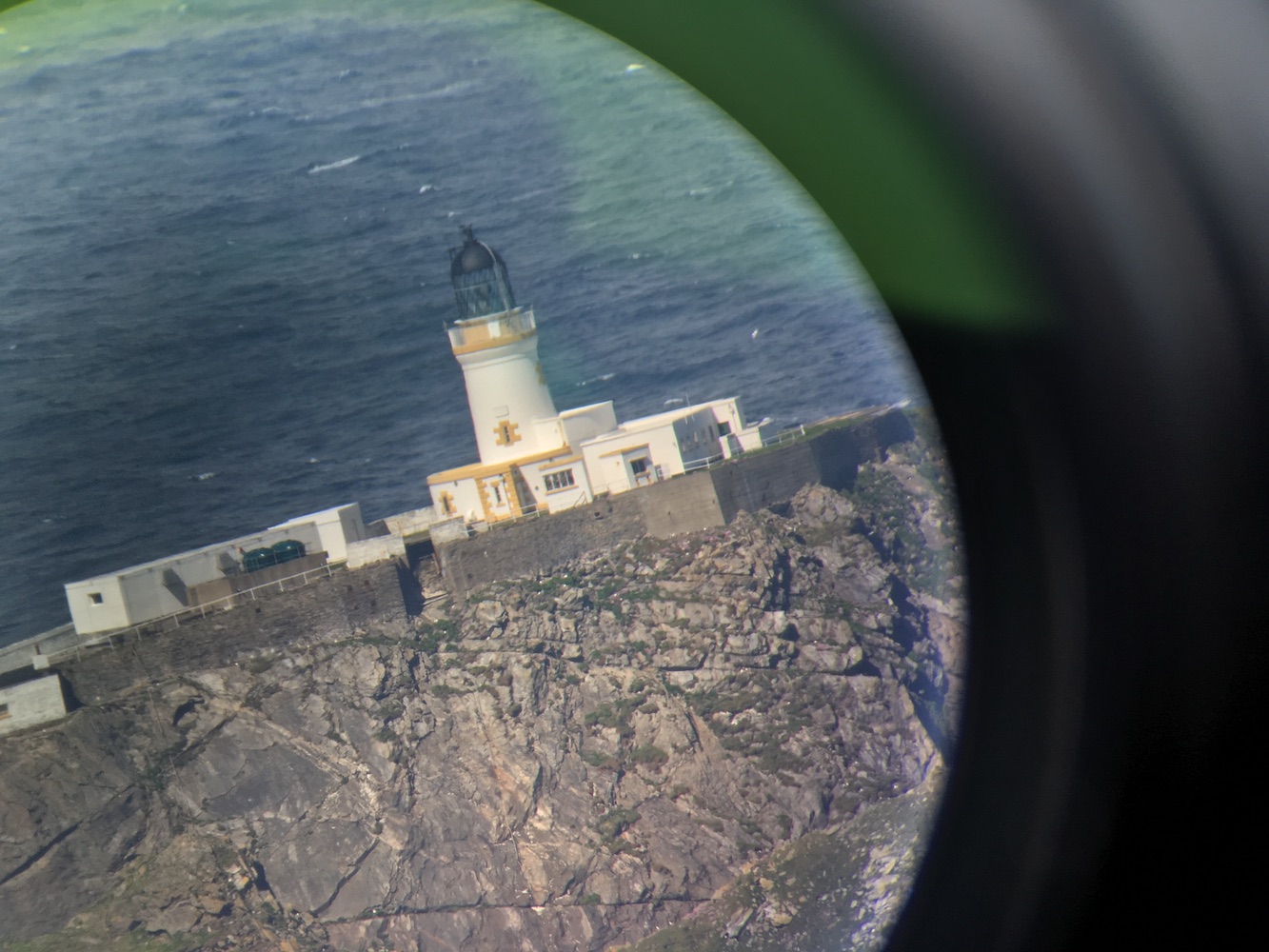
Last week we took a drive up to Saxa Vord with the kids and my parents to see if we could spot the lighthouse. After the fun we had with trying to do that last November I thought it might be difficult to see again, but fortunately the cloud was high and the sun was out. We joined a number of others in looking across at it. My dad had taken his telescope so I was able to get a closer view without actually being closer. That afternoon we went to Unst Heritage Centre, which has a small but incredibly interesting exhibition space dedicated to Muckle Flugga lighthouse. There’s obviously a lot of local knowledge, experience and information there and it gives a great picture of the human side of the lighthouse with the keepers and boatmen. It’s well worth a visit for anyone interested in the lighthouse.

MF through telescope
Muckle Flugga lighthouse through a telescope

I should point out before I get too carried away with today’s trip that the Northern Lighthouse Board do not advise anyone lands on the island and we approached it fully accepting that we were doing it at our own risk.

Back to today’s trip, we had known since early last year that an attempt to land on Muckle Flugga was on the agenda for this two-week stint in Shetland. While I thought that two weeks in June would maximise our chances as much as we possibly could, I never really believed we would manage it. The boatman was hesitant to take us there for a start. He obviously knows the area well and understands that landing there is a rare occurrence. We went out with him on a trip last week and through conversations I had with him it seemed unlikely that we would even attempt it. One thing that did work in our favour though was that the skipper got a chance last week to see just how capable the group are of carrying out tricky landings. I’m not necessarily talking about myself. In fact, not at all, I tend to be helped a lot by my very able companions.

A few days later, yesterday in fact, we received a message from Alan who is organising the trips to say that the first Muckle Flugga group (which included us) would be going today and the forecast was also looking good. It was all sounding positive, but I wasn’t going to get my hopes up to much, just in case.

It was a fairly calm journey up the west coast of Unst, which was encouraging, but of course we had the shelter of the island on our side. The wind had moved around to the south east and the skipper had said last week that any wind/swell from the north would make it impossible to land – another thing in our favour.


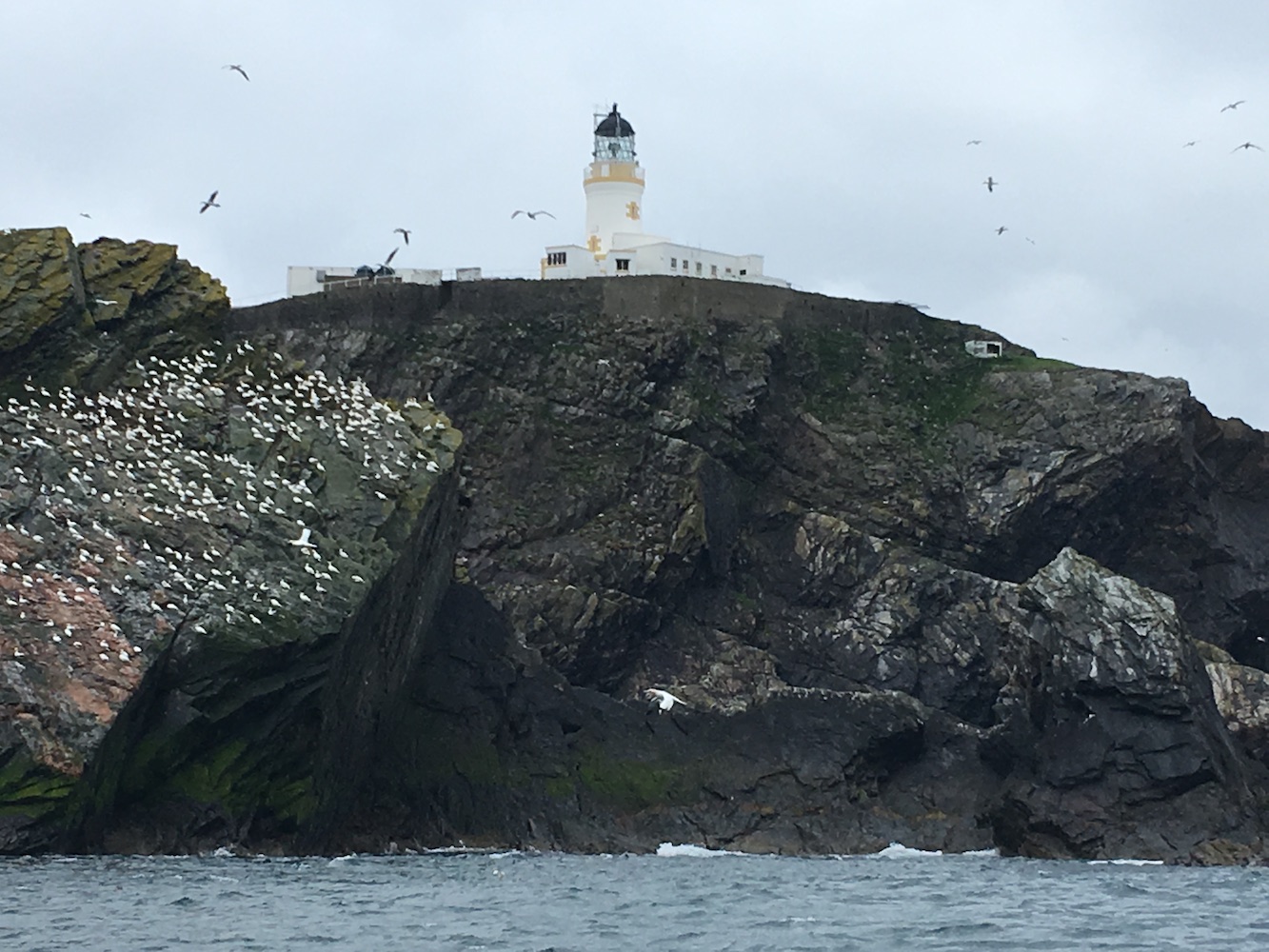
MF from sea2
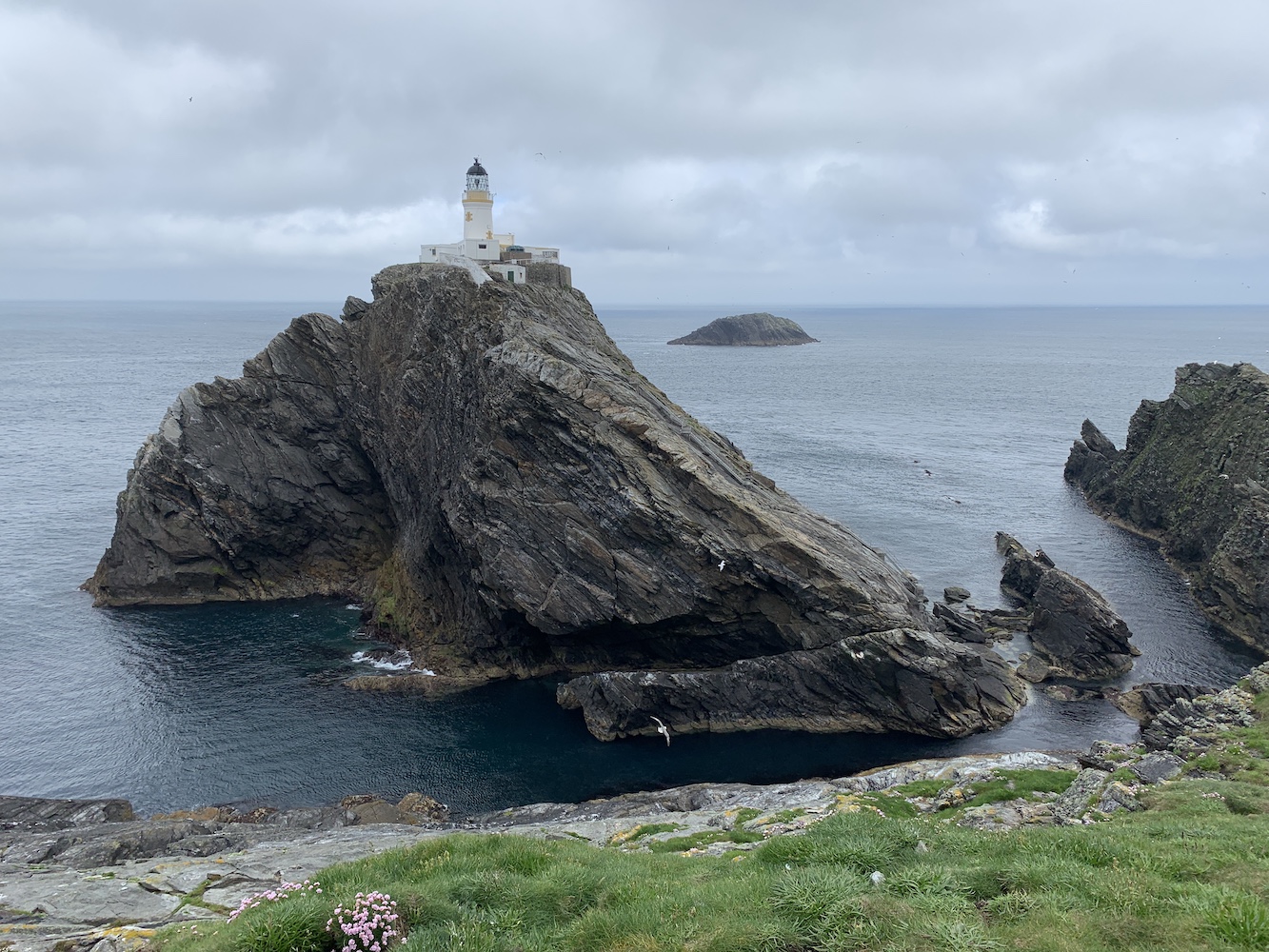
The view from the sea

Around 50 minutes into the trip the lighthouse came into view. The sea still didn’t seem to be too bad and I did think that perhaps we may well be able to do it. This was confirmed about 10 minutes later when we arrived near the landing and the skipper gave a positive indication that we would give it a go. There was still movement in the sea so we moved to the slightly sheltered north west side of the island to unload into the tender. Bob hopped into the tender along with Brian who has experience of landing there. I asked if I should go in the first run too and in I hopped, well slid really as it was a bit of a drop from the main boat into the tender (as I was to find when getting back into the main boat afterwards)! It was a bit splashy on the way to the island and I tried not to laugh too much as the others got splashed full in the face.

MF distance
The view from the sheltered side

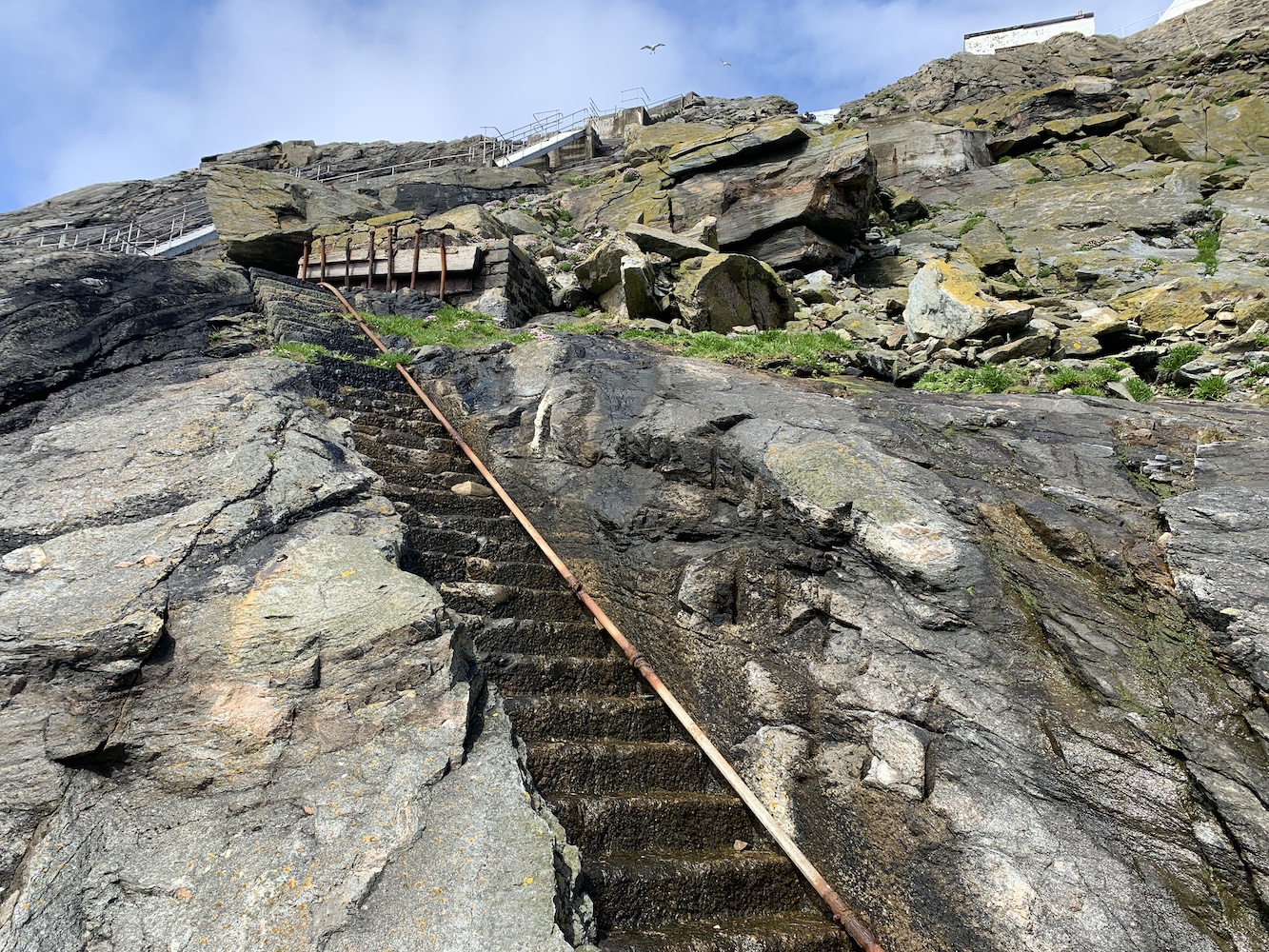
Arriving at the landing place we knew we would need to go up the old steps as the new steps have been removed in places. Bob leapt off of the boat with his micro-spikes on to pull the boat in. The landing on a flat piece of rock was fairly straightforward, but it immediately got slippery for those of us not wearing micro-spikes. There were plenty of steps ahead of us (246 in total I was informed), but we took it slowly and a short time later we were there at the top with the lighthouse in front of us.

MF front
Muckle Flugga lighthouse

It’s astounding to think how the lighthouse and all of the associated buildings came to be here. It’s not even a particularly basic layout for a lighthouse complex. There are more buildings than there are at some other, much less remote lighthouses. How you would look at a big rock like that and think “I need to build a lighthouse there” without also thinking “Where on Earth do I even start?” I don’t know.

MF sector
The old sector light building

In the main courtyard there is the tower and attached buildings along with an old store room as well as a small square building that once housed an old sector light pointing eastwards. This sector light operated until it was replaced by a new light on Holm of Skaw, further around the coast to the south east. On the far side of the tower, just outside the compound, was the helipad and beyond this you could wander downhill slightly to another very small building. Apparently this was used at one point for keeping the Muckle Flugga resident chickens in! Just down the steps from the helipad was a great place to see the local puffins and fulmars from.

MF and helipad
The lighthouse and helipad

The views from the top of the rock are stunning. The low cloud was still rising in the distance when we were first there so there were the tops of a number of the nearby stacks with their heads in the cloud. We could also clearly see across to Out Stack, the most northerly piece of land in the UK, or as the promotional leaflets will tell you ‘The full stop at the end of the British Isles’! Standing on Muckle Flugga feels like a real achievement. The height of the island, the location and everything else bundled together is extraordinary. I found myself singing a lot while we were there, which is a sure sign of excitement.

We’d been brought across in three loads (I think, although I wasn’t paying too much attention to the others at that point) and the final group had a little more trouble with landing. It was becoming clear that we couldn’t spend much longer there without the swell picking up too much, so we began to make our way back down. I may have enjoyed the steps slightly more if they hadn’t been so slippery with some half covered in grassy tufts which seemed to be growing out of the stone! Getting back into the tender was fine, but the journey back was a little wet. The tide was changing and going against the wind, which was making things a bit more interesting. As previously mentioned, I just about managed to clamber back up into the main boat and enjoy the feeling of having been to such a challenging and inaccessible lighthouse.

MF steps
Some of the 246 slippery steps

Bob and a couple of the others were keen to land on Out Stack while we were there. If I was more able to bound about onto and off of rocks then I would have gone too just to be able to say that I’d been to the top of Britain. The skipper was concerned that there was only a short window of opportunity left to get them on the stack before the swell got too big. After a while looking for the best place to land the three of them got onto the stack and successfully reached the top. Getting them back onto the tender was a bit more interesting as they leapt in. At one point I think we all thought one of the guys had gone into the sea, but he emerged out of the boat. Bob was the final one off and leapt like a gazelle onto the tender, as he does!

The others landed on a couple of other islands/big rocks in the area so we were able to gaze lovingly at Muckle Flugga and its lighthouse for quite some time. One of these islands (just south of Muckle Flugga) was Cliff Skerry from which Bob took the most amazing picture looking across to the lighthouse.

MF from Cliff Skerry
Muckle Flugga from Cliff Skerry

What a fantastic place. I feel the same as I did with Sule Skerry and the Flannans, which is something along the lines of “was I really there?”, but I most definitely was and it may sink in at some point. What a place. 🙂