Sunshine and calm seas in Argyll

Argyll is a beautiful part of Scotland, that’s for sure, and never moreso than in Autumn when it’s beautiful tree-lined roads and coastline completely change the colour of the landscape. It also helps when the sun is shining as it very much was yesterday.

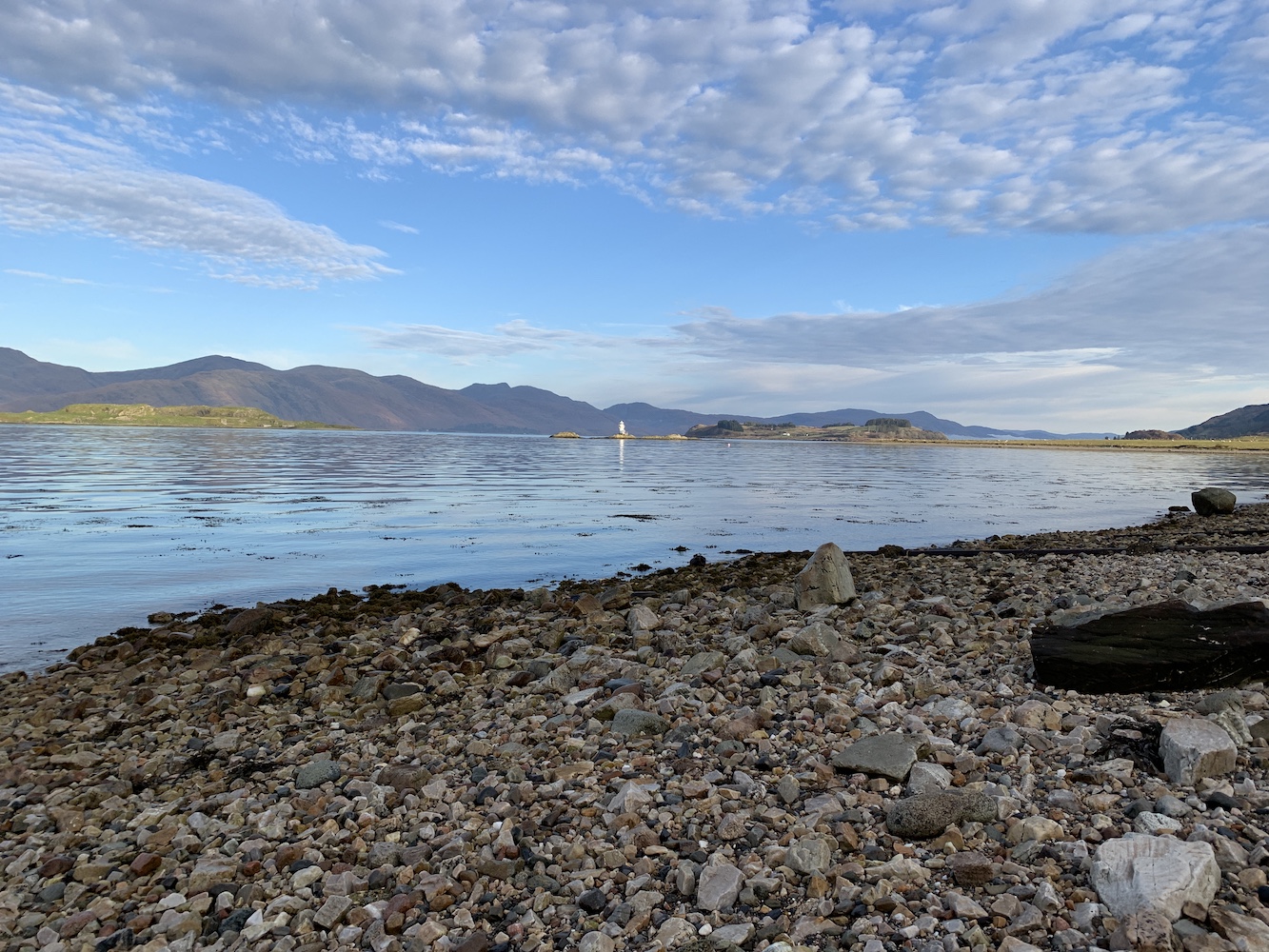
We were due to visit Lismore and had a little time to kill so a stop off at Port Appin to see Sgeir Bhuidhe lighthouse seemed appropriate. It was high tide too, which would give a bit of a different perspective from the last time we were there when we walked out to the light at low tide. It’s very easy to fall in love with this area and the little lighthouse is an important part of the local landscape.
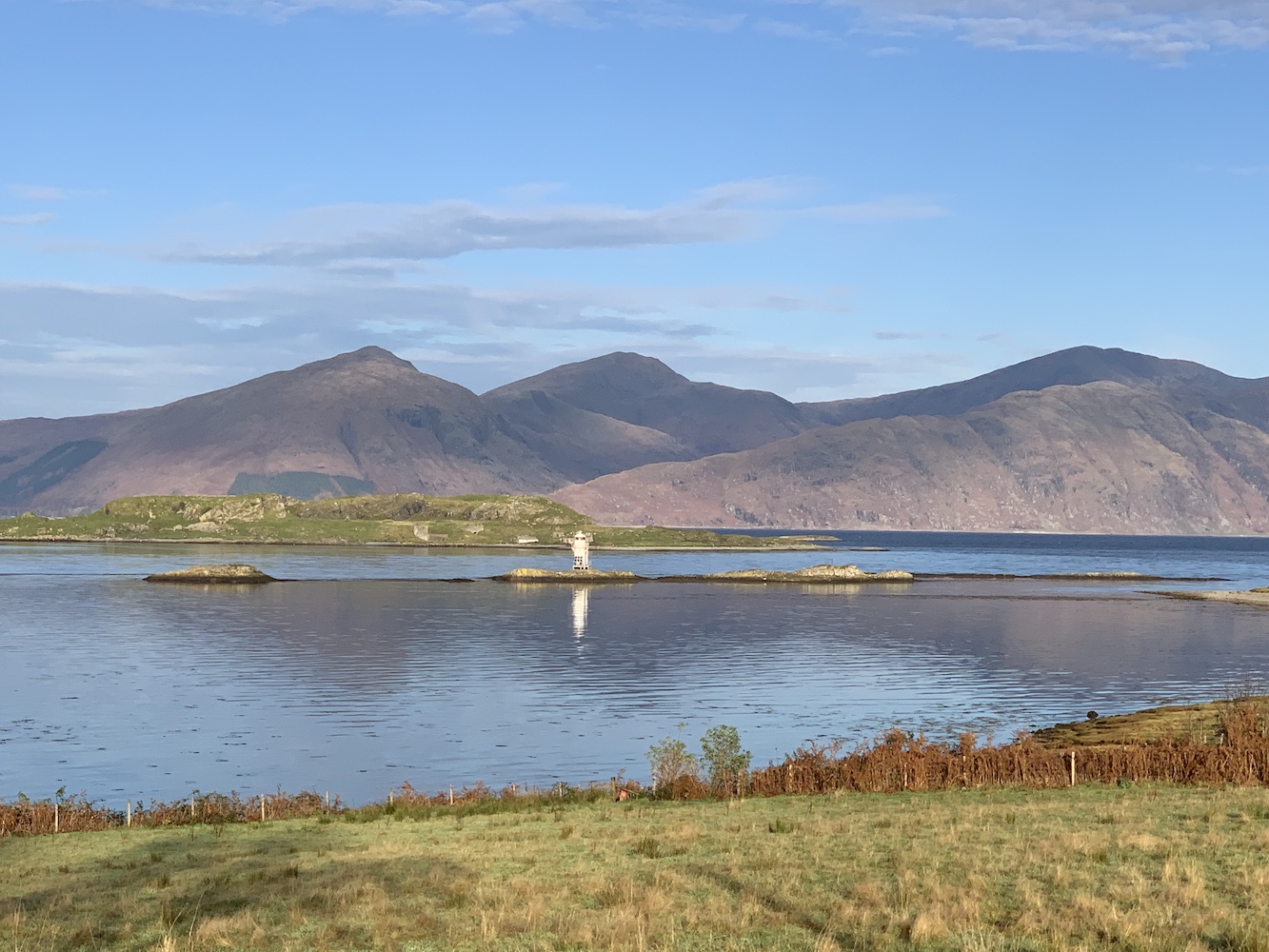
Sgeir Bhuidhe from the approach road to Port Appin

Die hard lighthouse fans will have heard of its rather amusing history, when it was painted to look like Mr Blobby as a protest by a member of the local community during the period when the Northern Lighthouse Board were looking to replace it with one of the IKEA flat-pack lights. I do love a flat-pack lighthouse, but even I would have been devastated by the loss of a lovely little tower if I’d lived in Port Appin at the time.

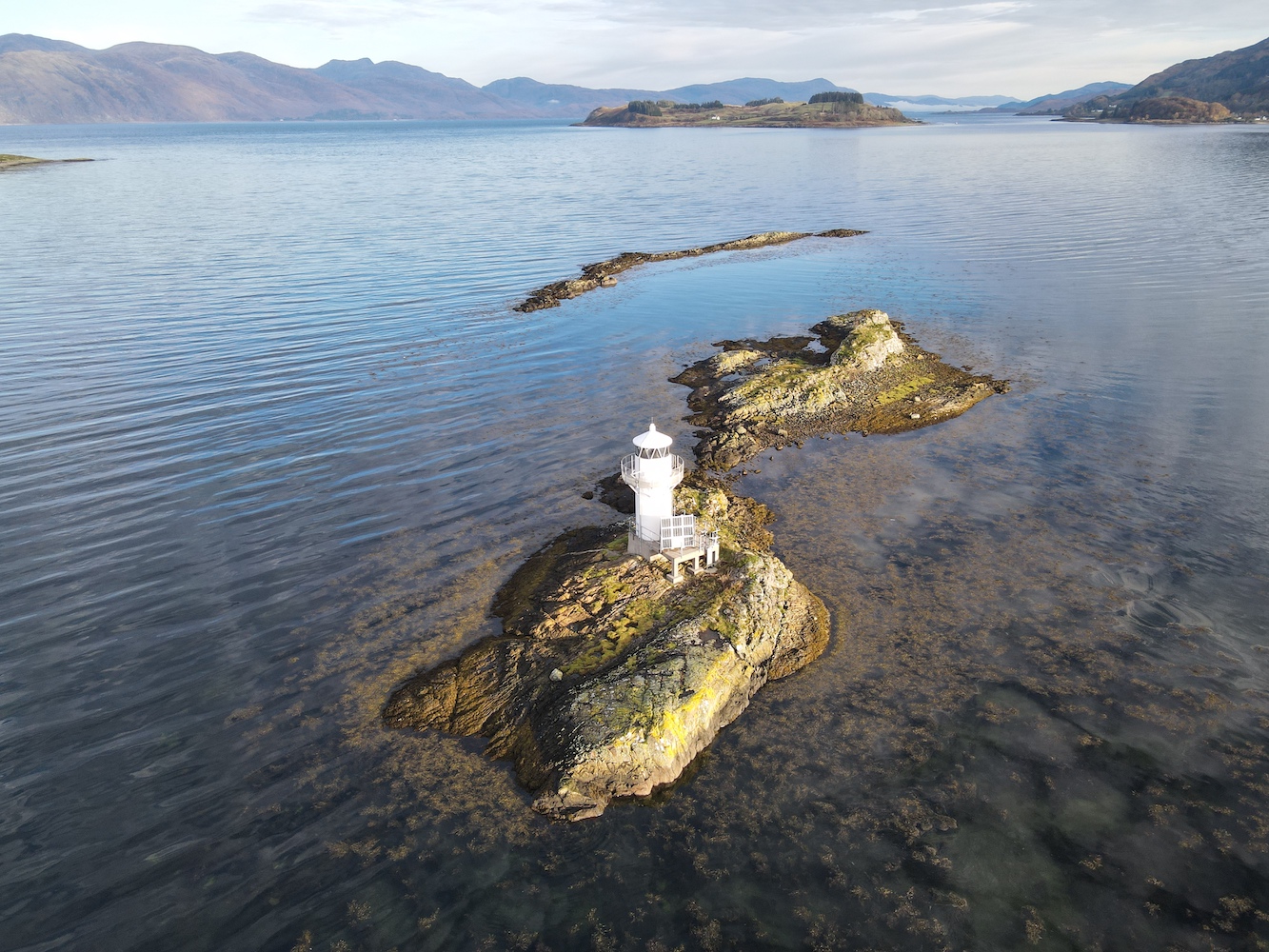
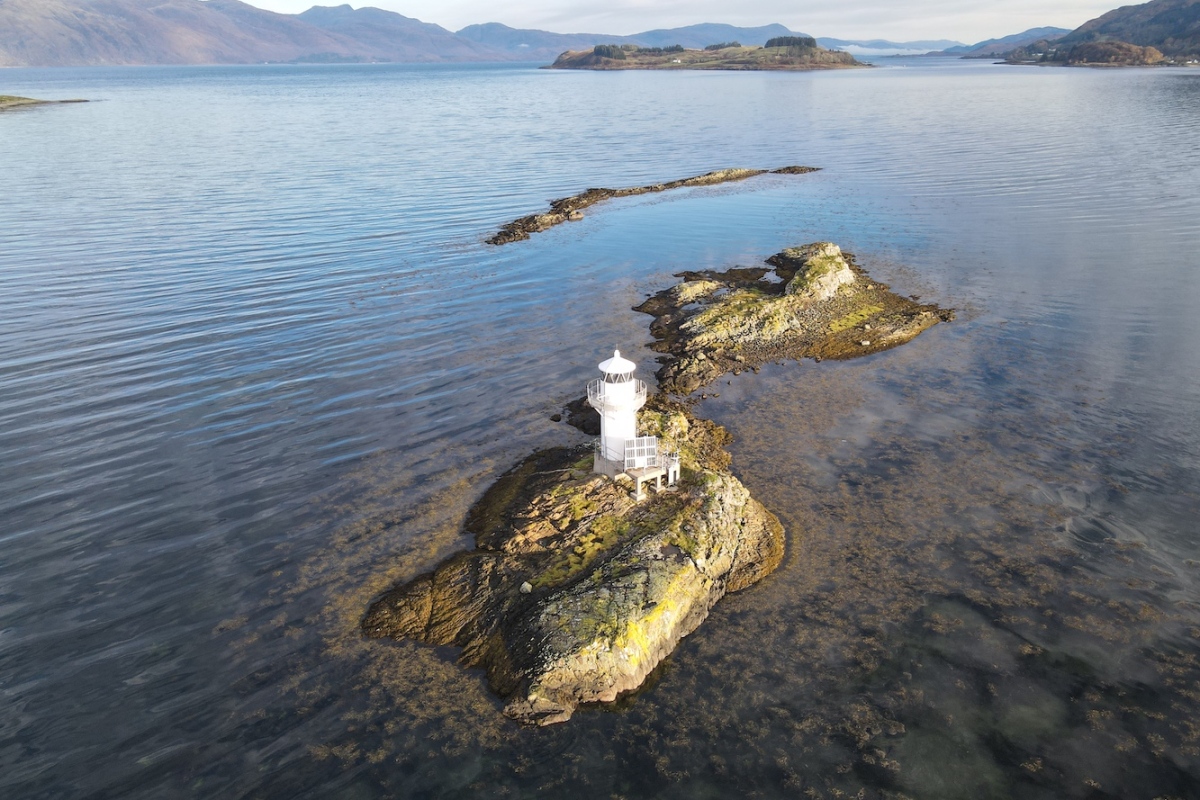
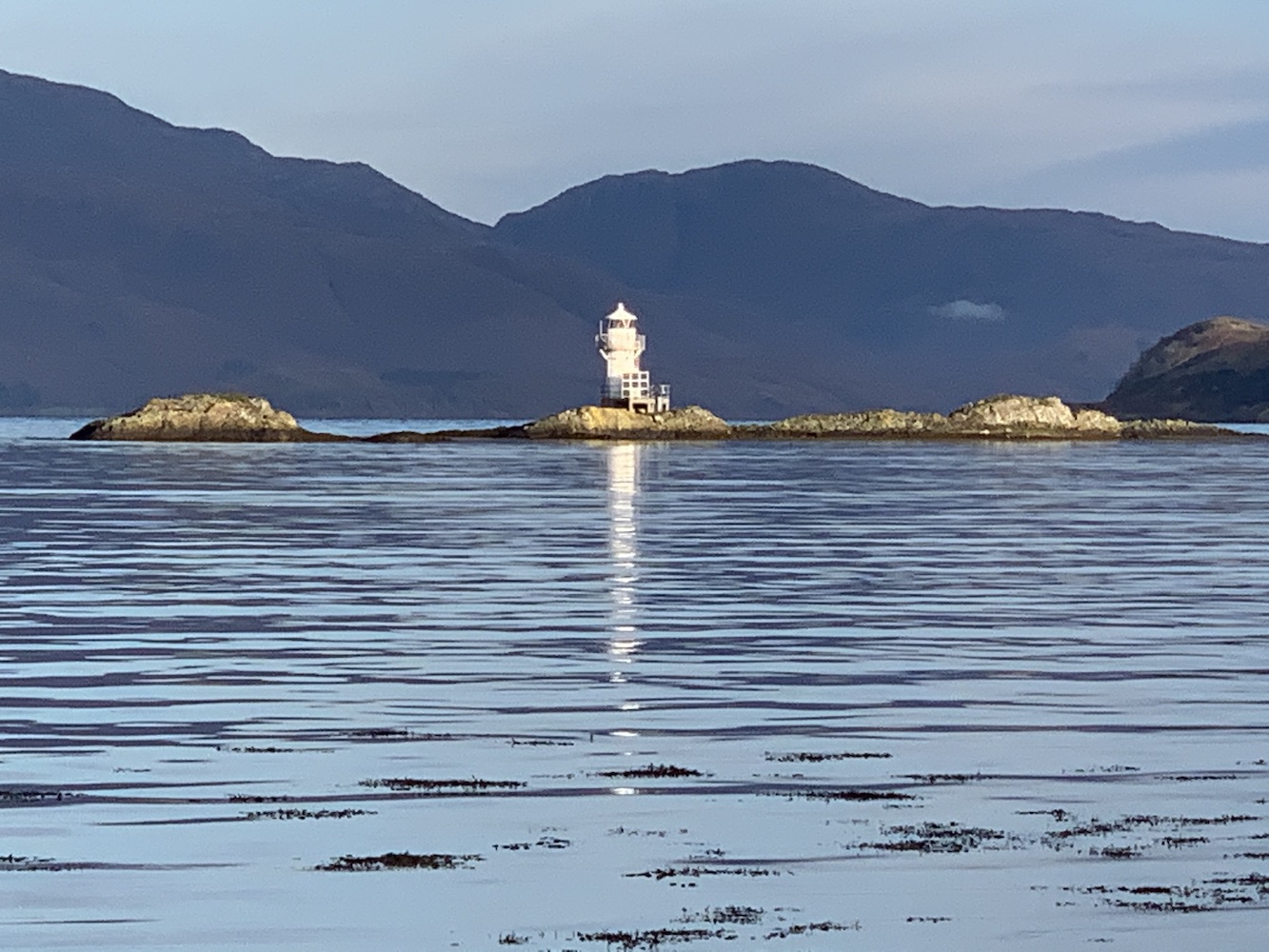
Thankfully a compromise was reached and a replacement modern round tower was installed, and it’s one of my favourite type too. There is so much to love about this one, including the fact that ‘Sgeir Bhuidhe’ translates as ‘Yellow Rocks’ due to the lichen growing on the rocks, which is evident in these pictures that Joe took. Yellow also happens to be my favourite colour.
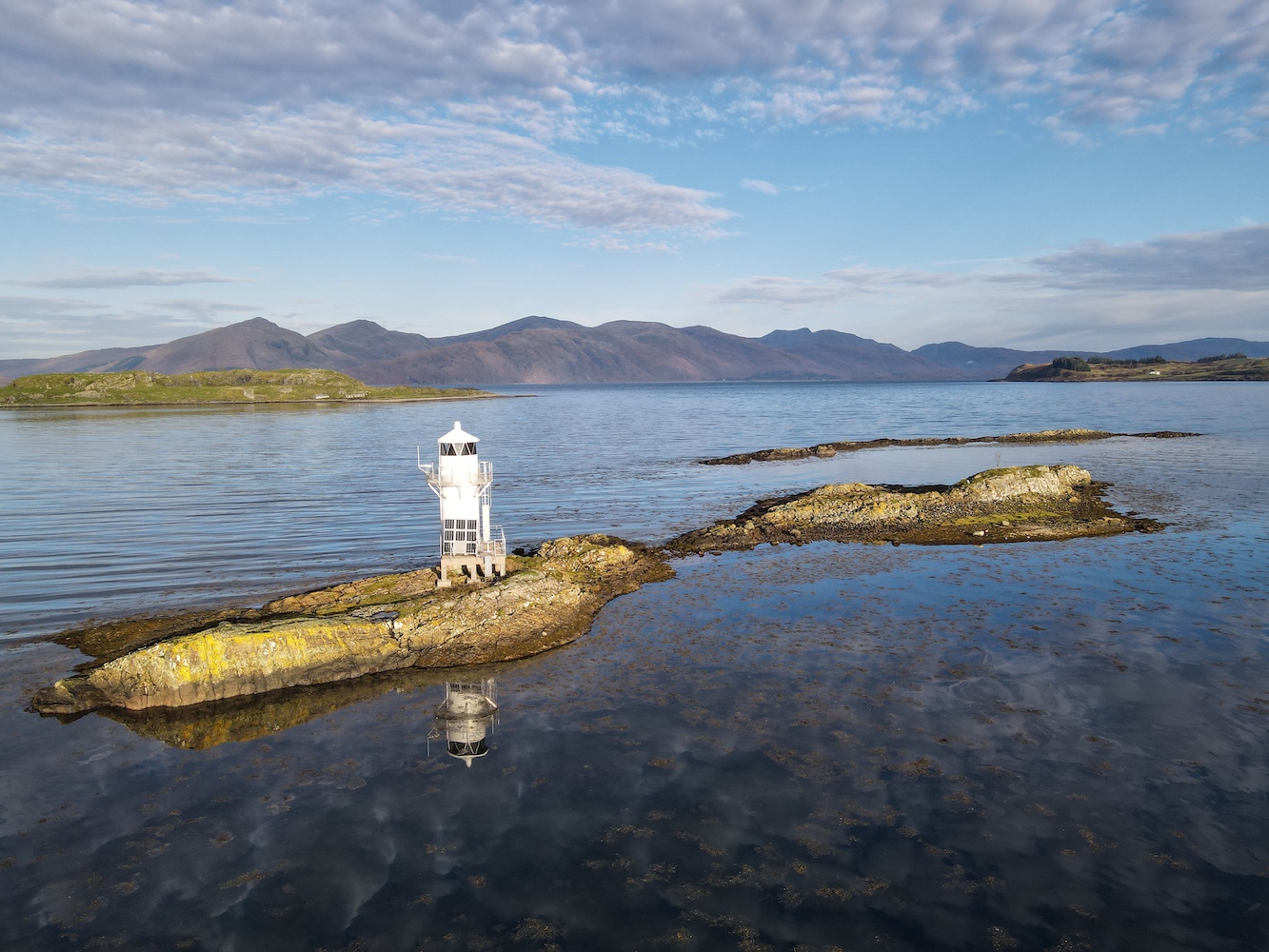
Sgeir Bhuidhe lighthouse on the ‘yellow rocks’

Bob wandered off to find a point that would allow him to fly Joe without breaking any of the rules that apply to the use of drones. I knew he would get some excellent shots because it was a wonderful location anyway, but with the calm water and bright skies it seemed perfect.
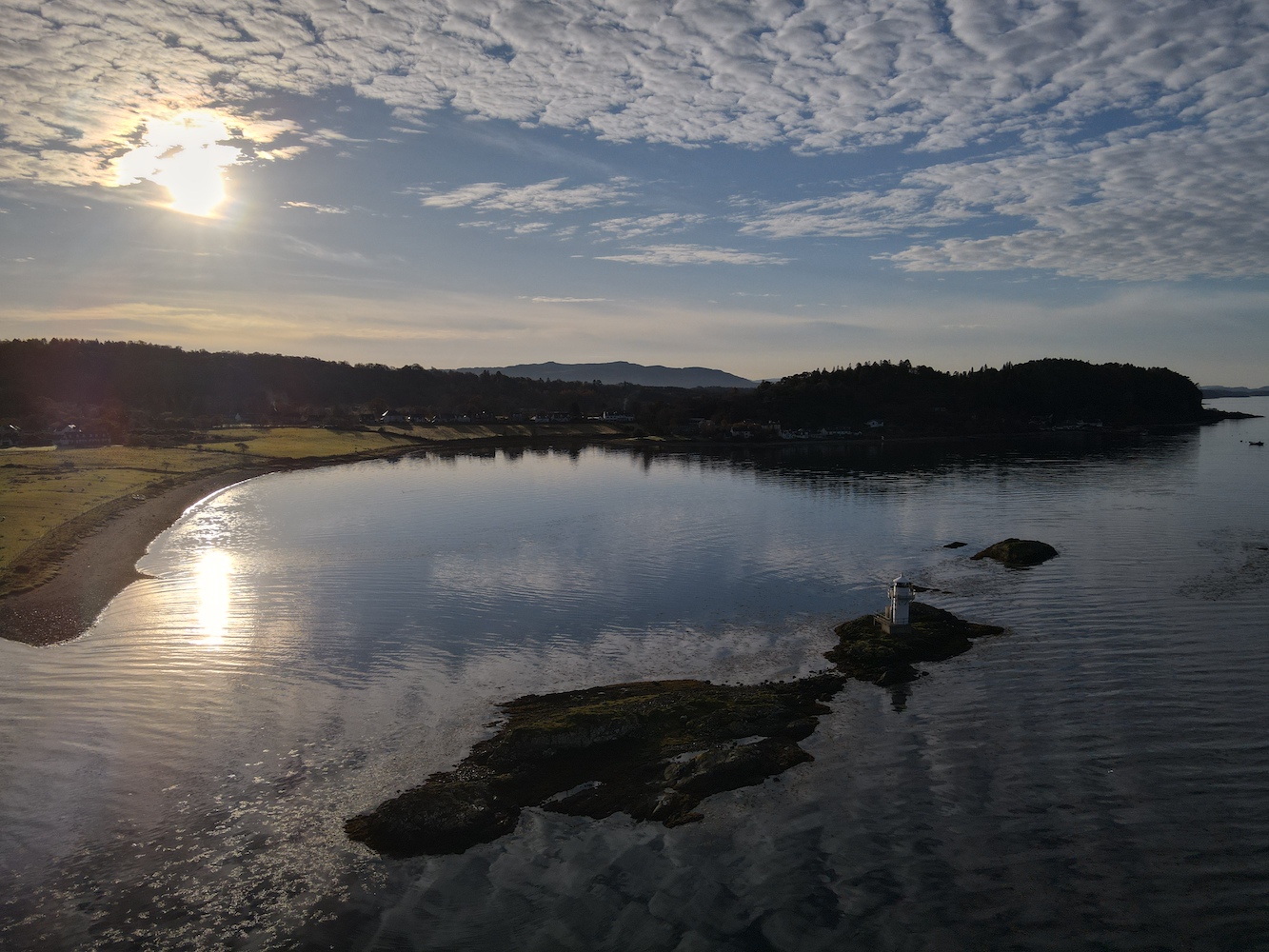
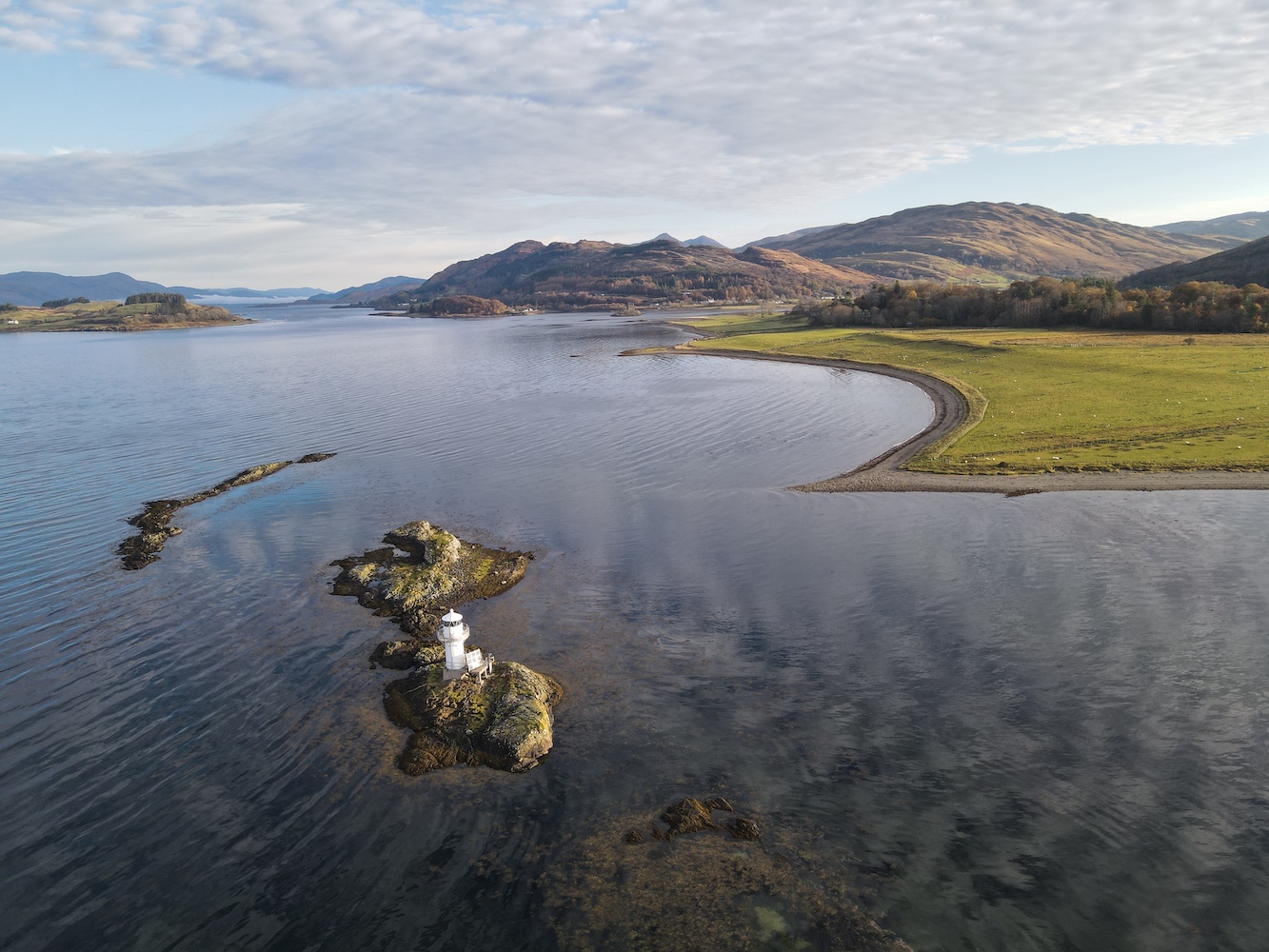
Sunlight on the water at Sgeir Bhuidhe
Sgeir Bhuide from the south
Sgeir Bhuidhe lighthouse from above
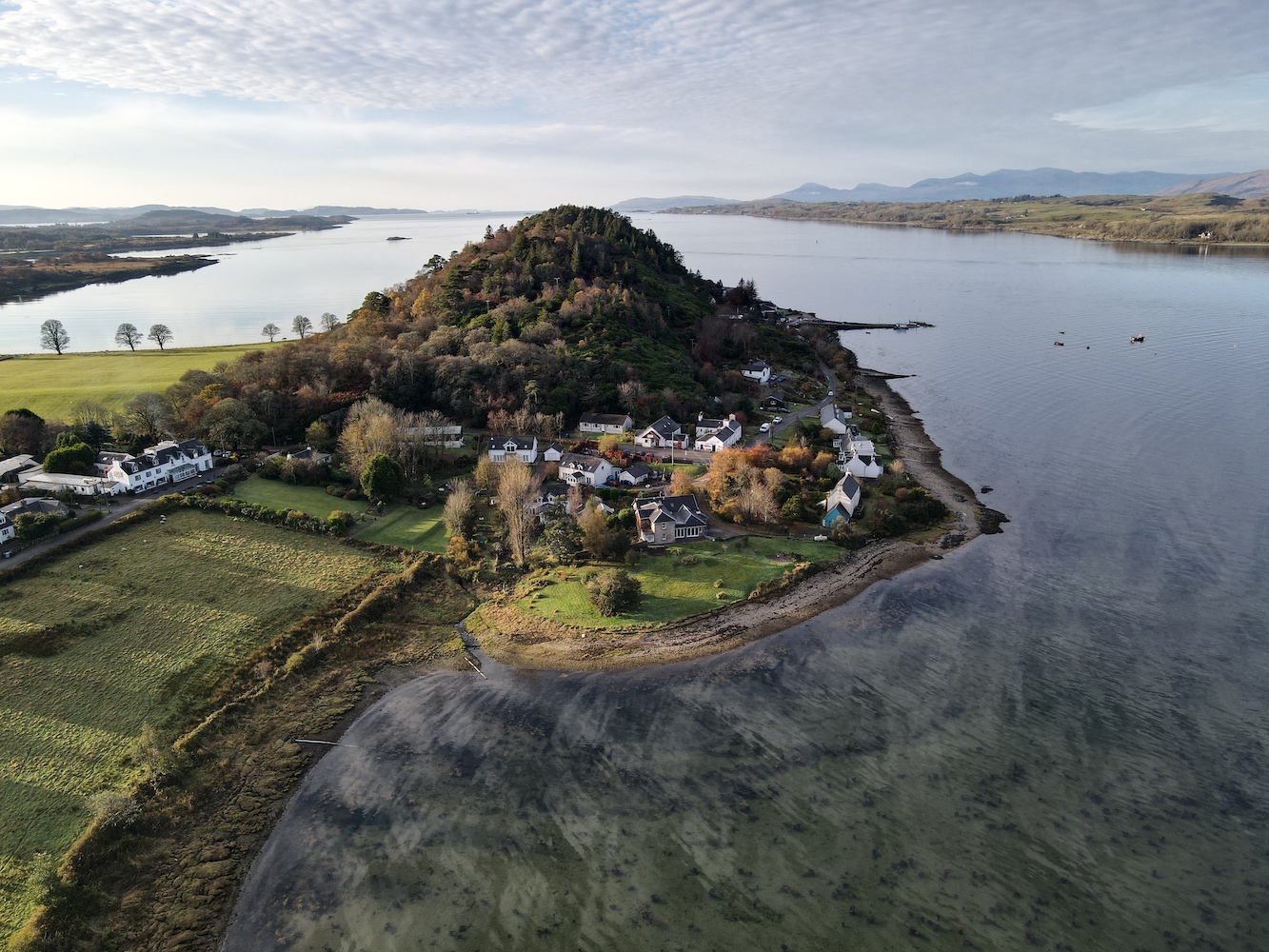
Port Appin

Meanwhile I took a different route. Firstly I stopped off to revisit the old lighthouse lantern. Another arrangement made between the local community and Northern Lighthouse Board was that the lantern from the old tower could stay in the area and the community have installed some information boards inside it. These boards cover local history, biodiversity and the island of Lismore, which can be seen just across the water. More importantly though it has a panel about the lighthouse and it’s history. It’s really quite clever how they have done it.
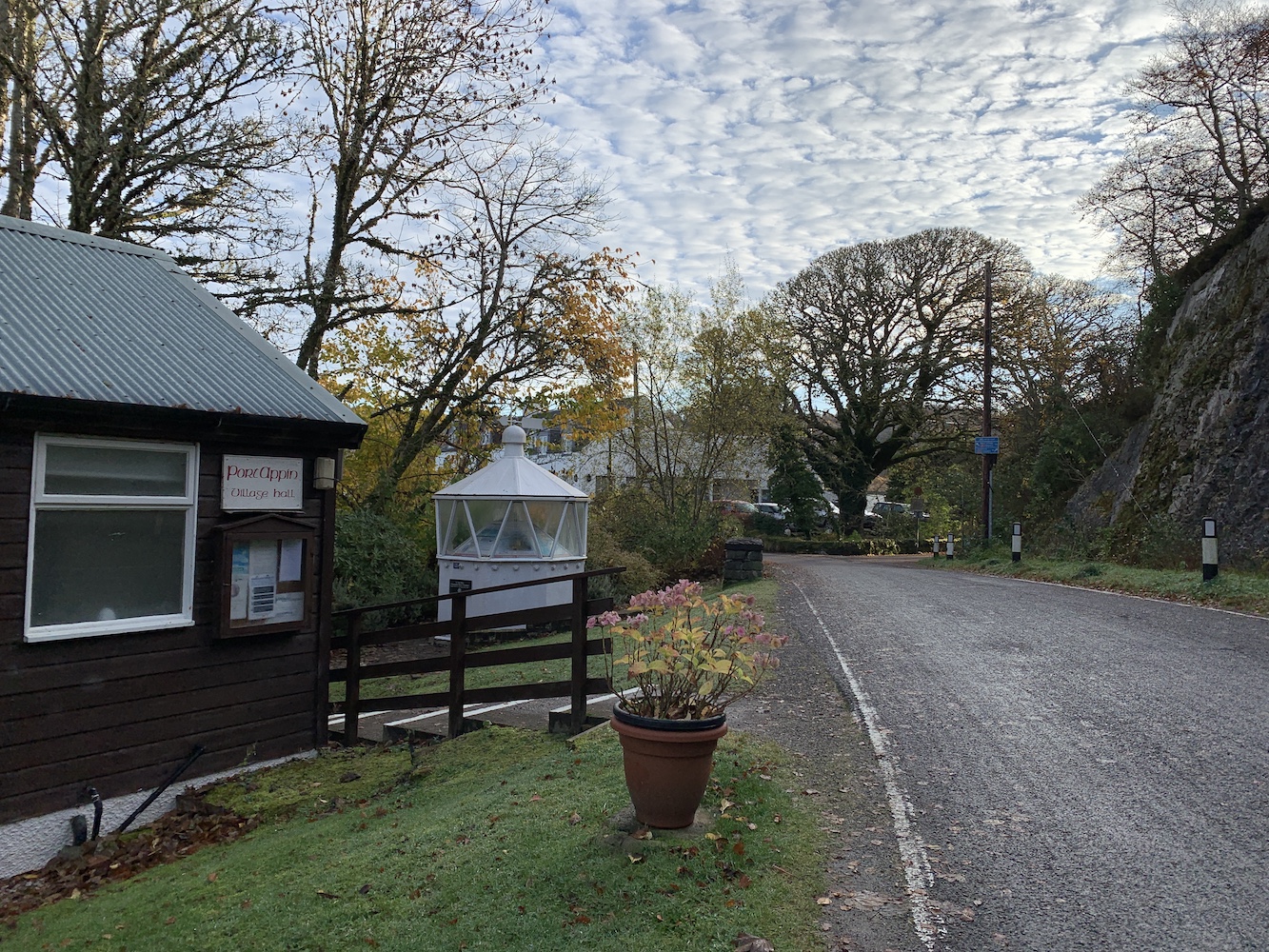
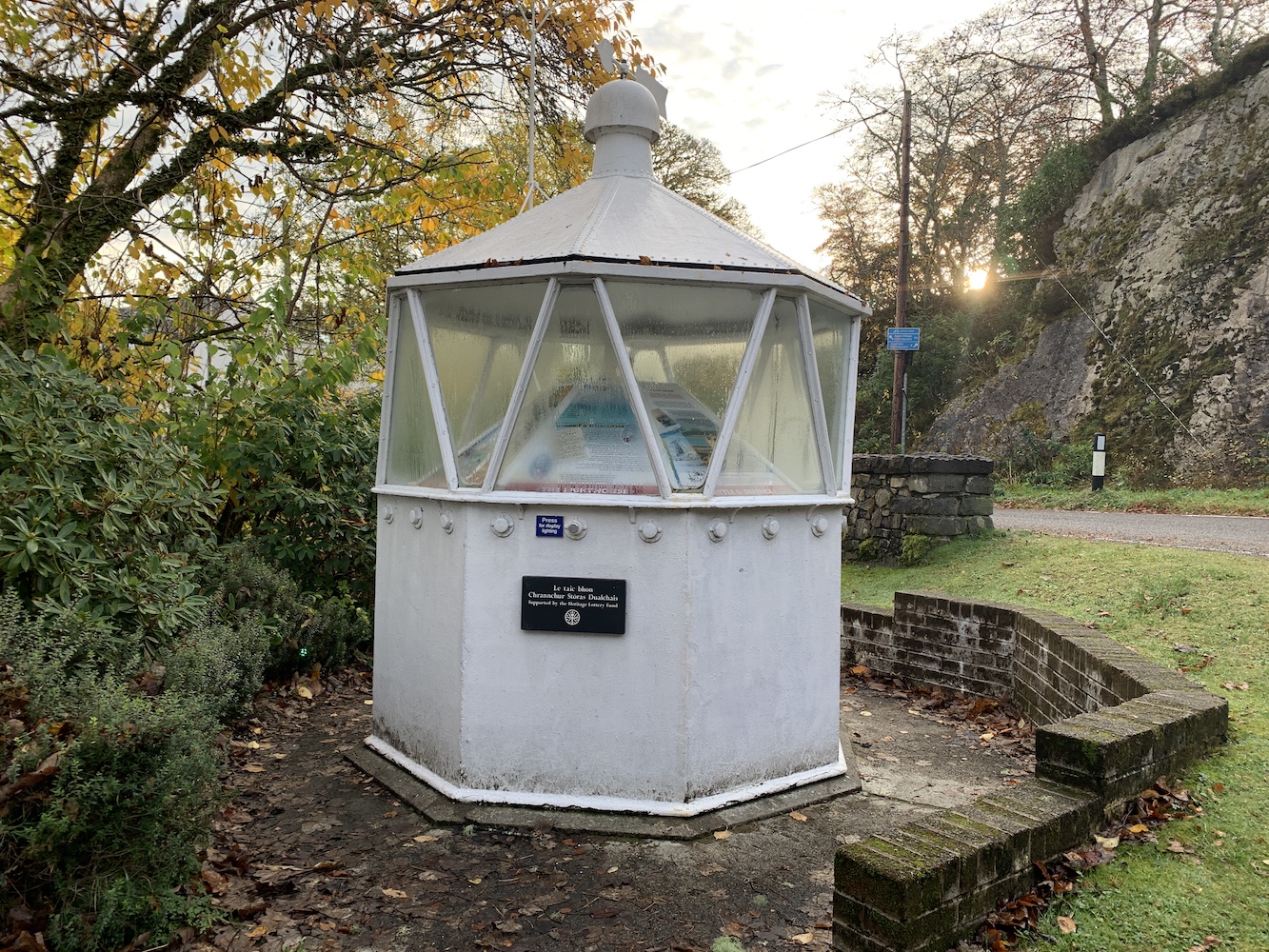
The lantern from the previous Sgeir Bhuidhe lighthouse
The lighthouse exhibition in the old lantern

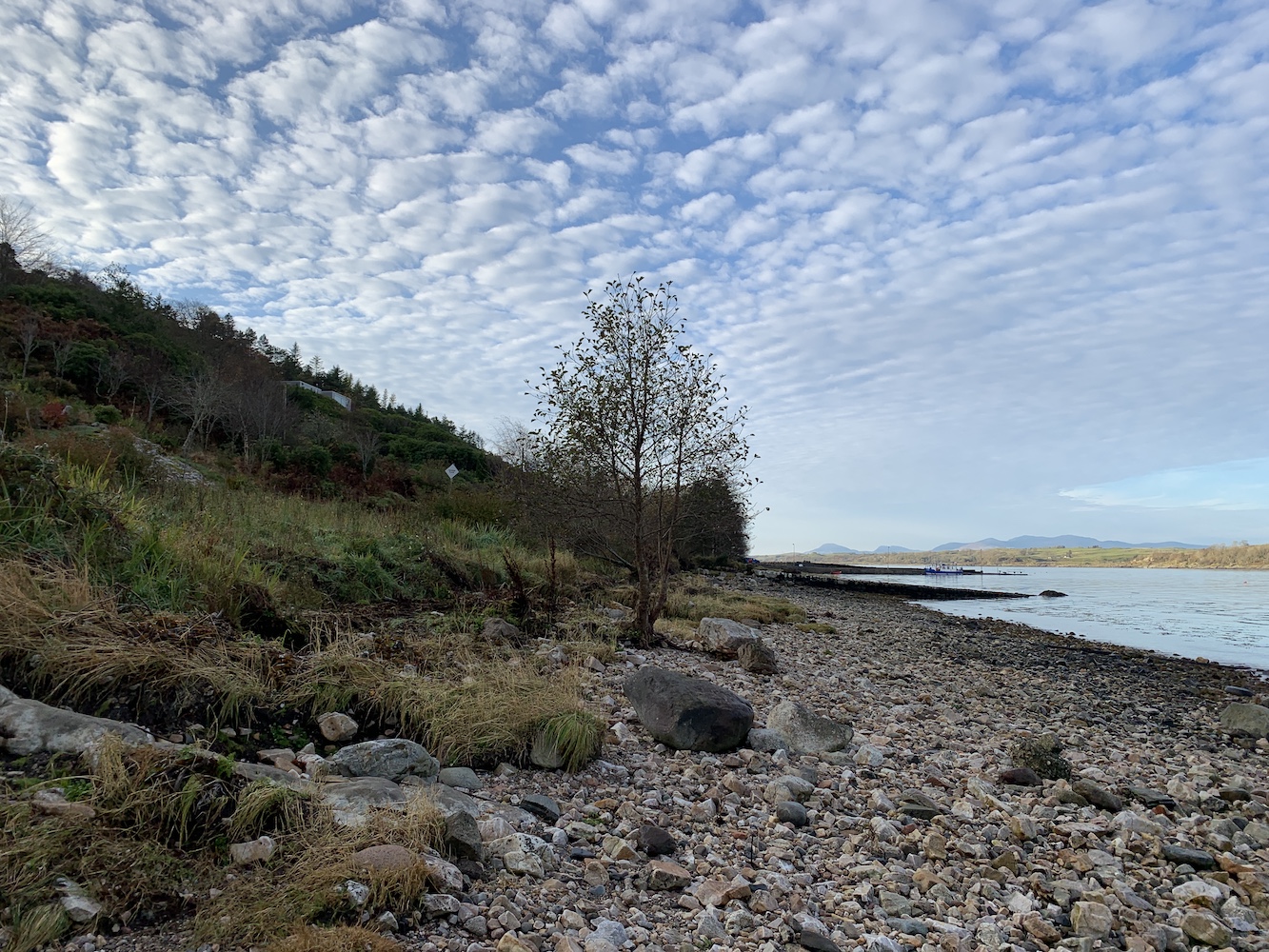
From here I took a walk along the road until I reached the pebble beach where I cut down to the sea. It was so incredibly calm with just the sound of the little waves lapping at the shoreline and the small birds singing from somewhere nearby. It’s such a calming place and somewhere that nature takes over and you can’t fail to be affected by it. I could have spent so much longer there and hope to sometime.
This time though there was a ferry to catch. I’d gazed across the water at Lismore and now it was time to go there. Lismore could be quite deceptive for any new lighthouse bagger. Lismore lighthouse must surely be on Lismore you might think, but in fact it’s on a smaller island, Eilean Musdile, just to the south west of Lismore itself. However, we still hoped we would find something of interest relating to the lighthouse at the Gaelic Heritage Centre.

Lismore was a new island for both of us and after the fairly short ferry crossing we headed towards the southern end of the island. After finding a suitable place to stop the car Bob set off to reach the island high point, which he managed to reach after negotiating the river, walls, fences and a row of cows just before the high point. Once he was back we set off to find the Heritage Centre. It’s a great building. Very modern and a nice contrast to the little blackhouse (if they call them that in these parts too) next door. The blackhouse is an exhibit now, kitted out as it would have been many years ago.
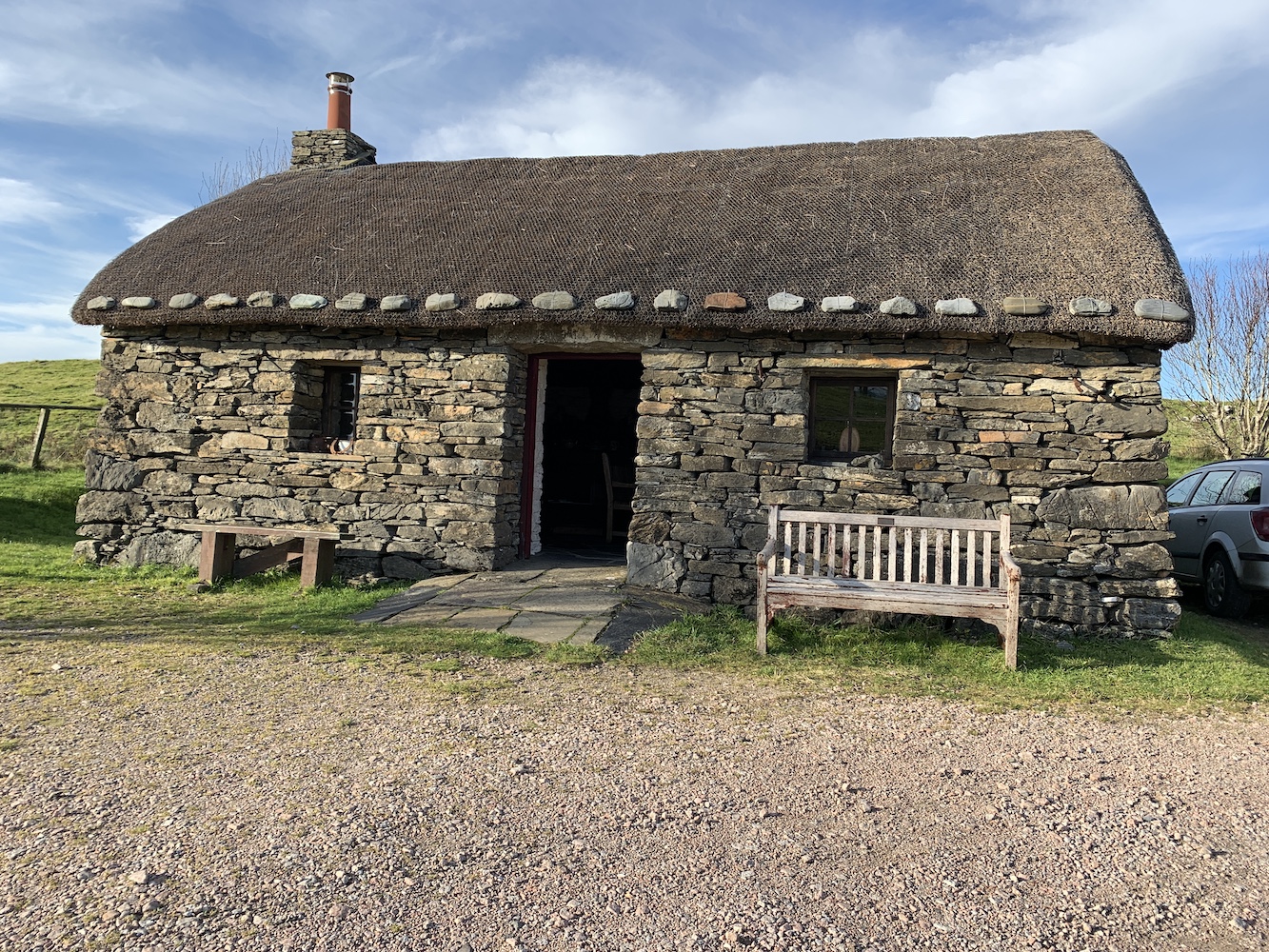
The blackhouse on Lismore

The Centre itself has a lot going for it. It contains a big room with the exhibition panels as well as a shop and a cafe. The exhibition gives a fascinating insight into the island, its history and many other aspects. I found the information about the flora and fauna quite interesting. Lismore is known as The Great Garden, which is how its Gaelic name Lios Mor translates. It is home to 200 species of wildflower and 18 species of butterfly, so it certainly lives up to its name.
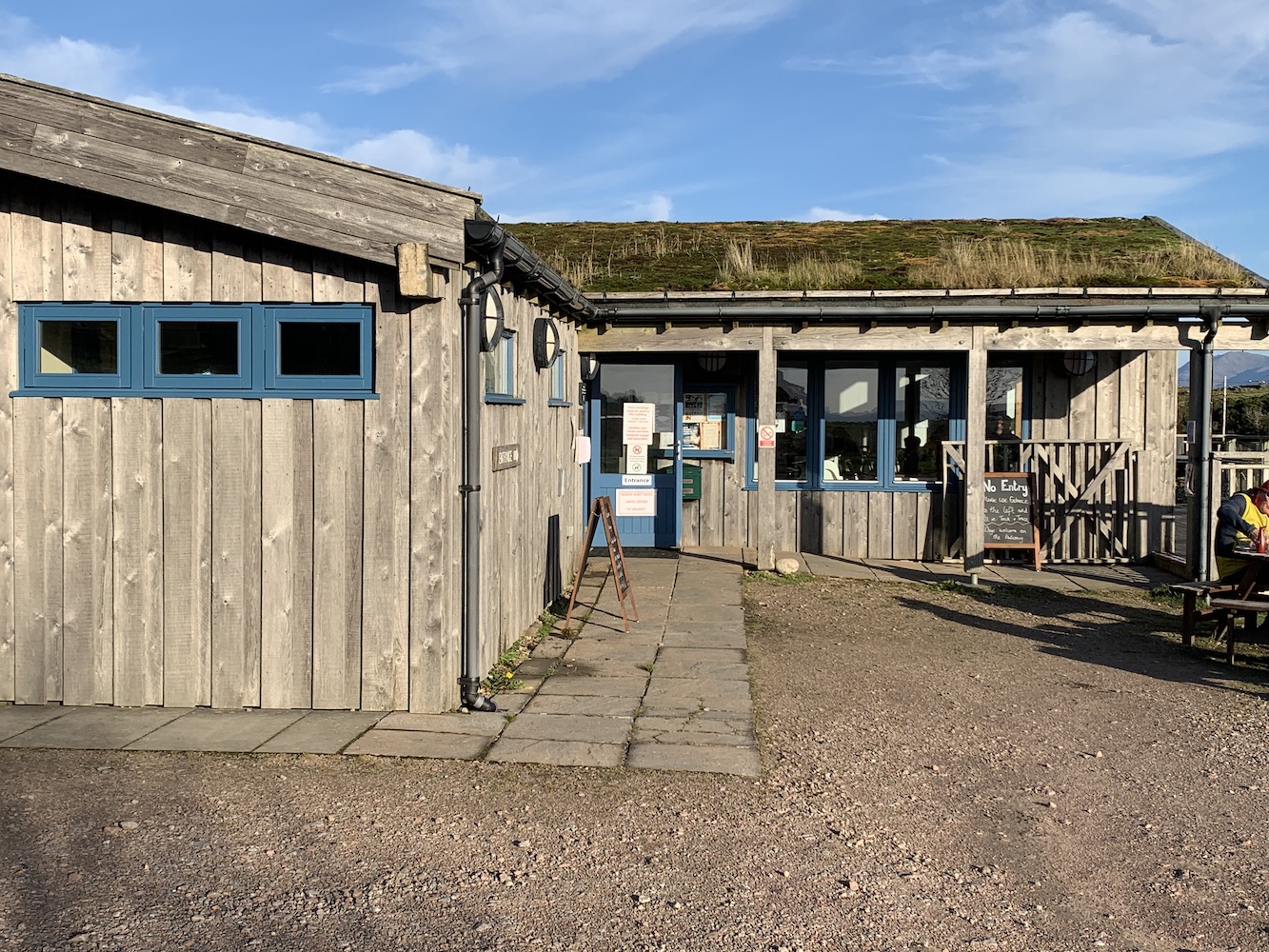
Lismore Gaelic Heritage Centre

Further around the exhibition we spotted some information about Lismore lighthouse and, interestingly, the old telescope from the lighthouse, which is engraved with ‘Lismore Lighthouse (Signalmen)’. A special little artefact. There was also a lovely lighthouse design by the local children on one of the windows.
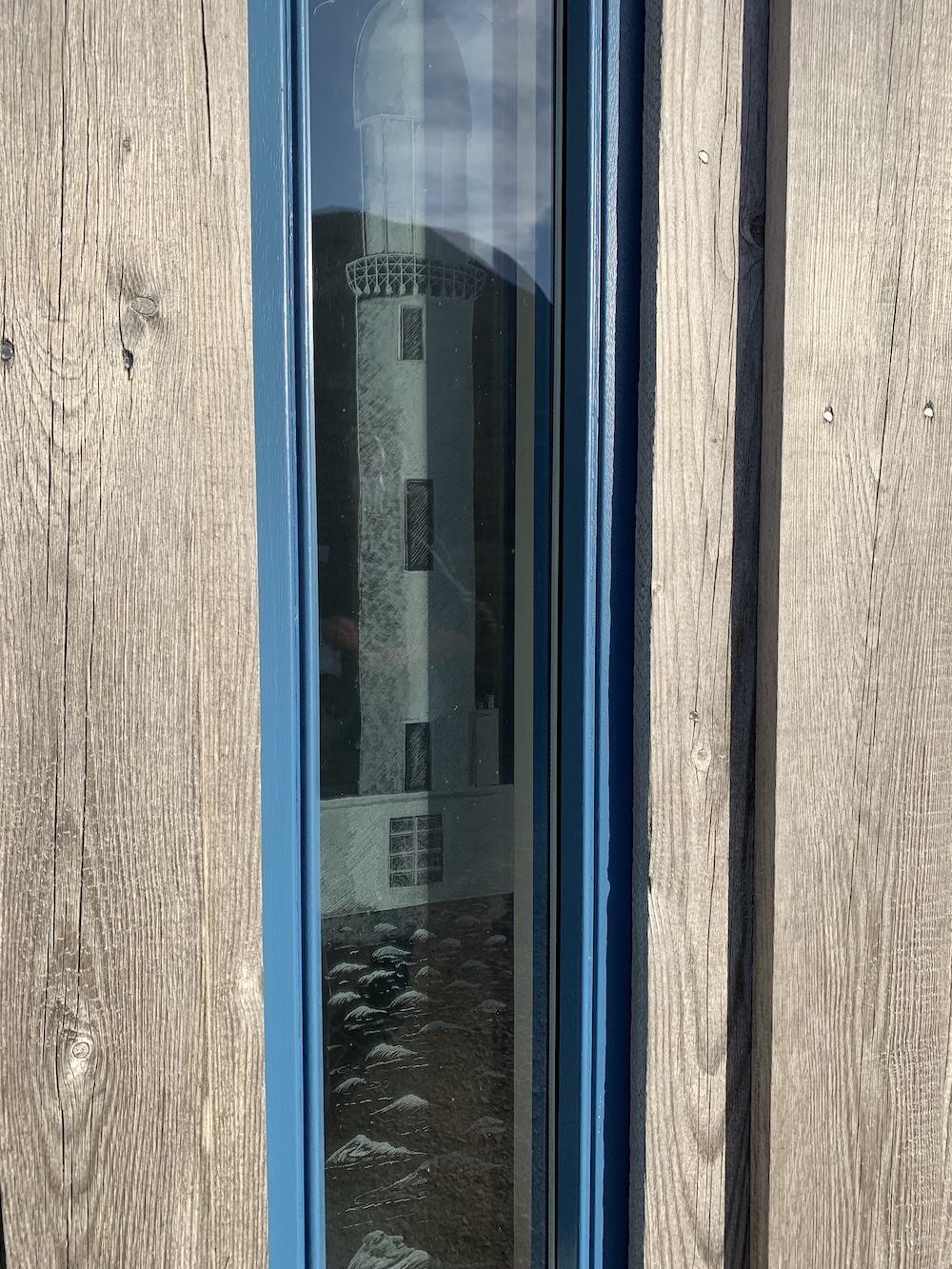
The children’s lighthouse design on the window

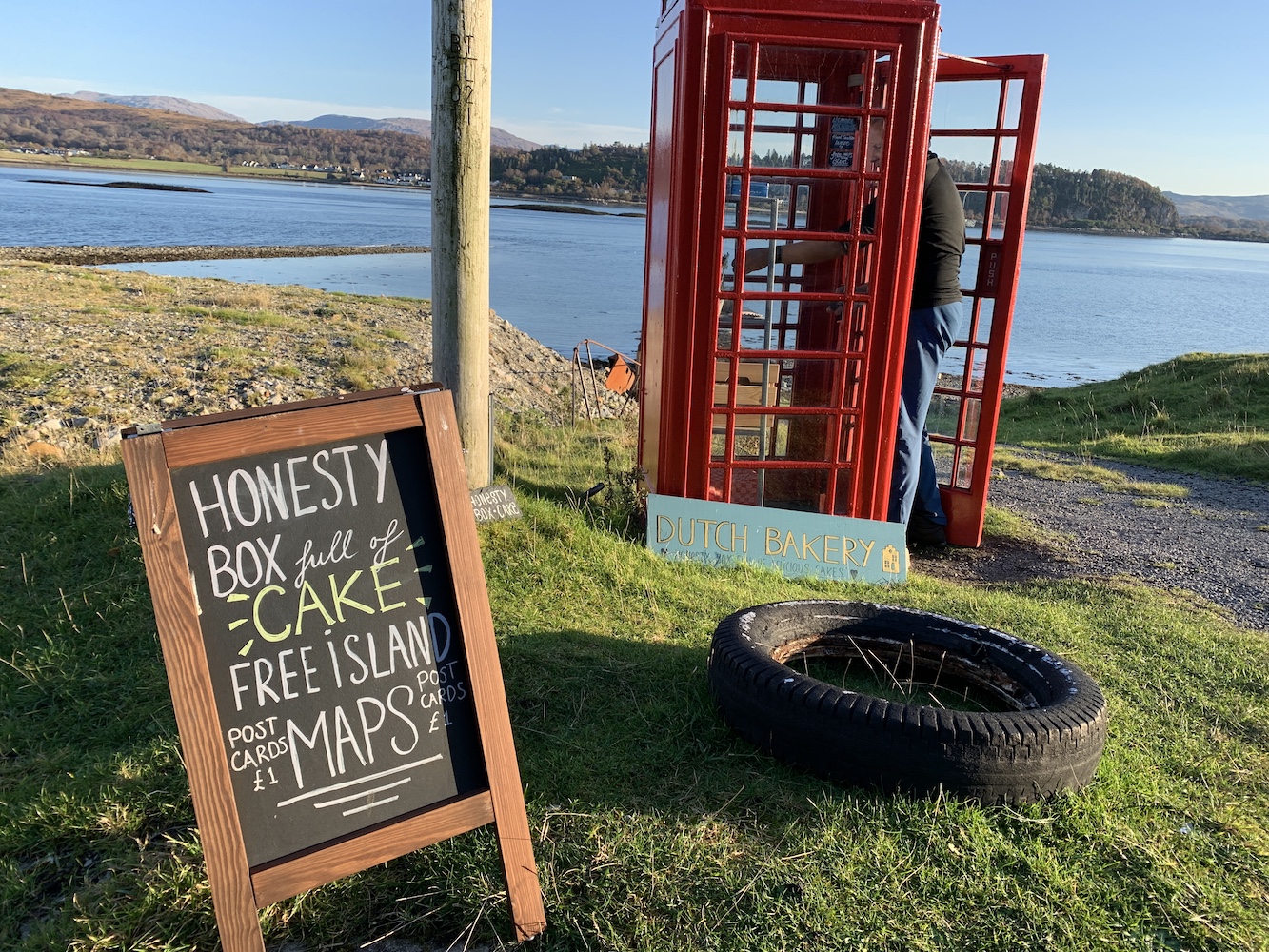
Standing outside on the balcony in the sunshine, we ate lunch before continuing to explore a bit more of the island. Heading up to the arrival point for those travelling on the foot passenger only ferry from Port Appin, we were able to get more views of Sgeir Bhuidhe lighthouse. Before concluding our visit to the island and heading back to the ferry, we even managed to buy a Danish pastry from the little phone box!
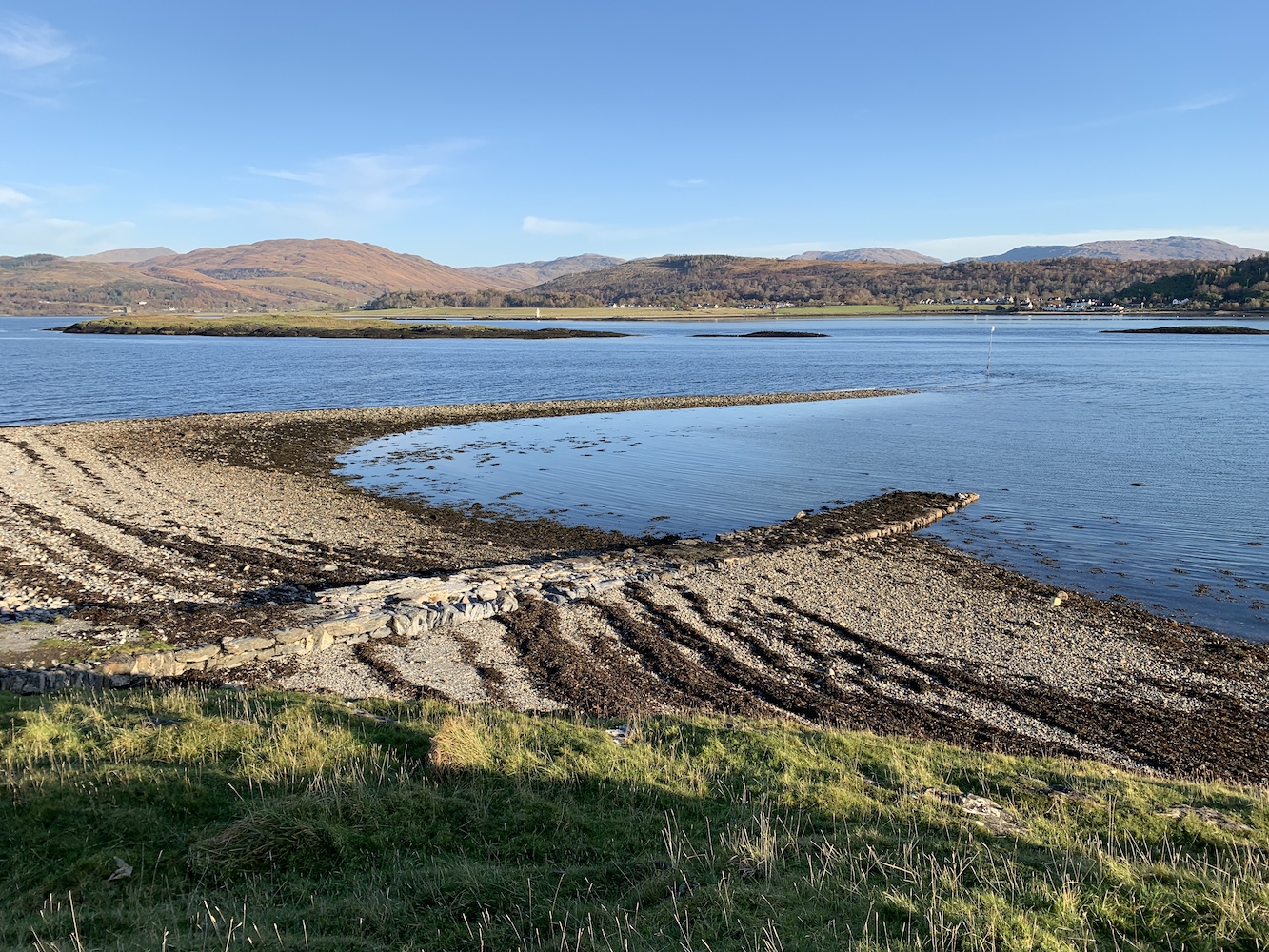
The view from Lismore towards Port Appin

The phone box with with cake

It had been a fantastic day, very much helped by the weather. It’s good to be out and enjoy the outdoors while we can as we don’t know when that might need to stop again. One more post for this weekend to come 🙂
Return to Rubh Re

Those regular readers with a good memory may well recall that the last of my posts signed off by saying it was likely to be the last of the year, although I was hopeful of being able to fit something in. Ever the opportunist, when Bob suggested a weekend away while the kids stayed home with his mum there was no way I was going to turn it down.

But where to go? As always Bob had an idea and it was to travel down to Oban where we would base ourselves for exploring a couple of places. “But Rubh Re is nowhere near Oban” I hear you say, and you would be correct, although it is still in Scotland and still on the west coast. The draw over to this part was two-fold: Joe the Drone had never been there, and the Gairloch Museum (home to the old Rubh Re lighthouse lens) had moved into a new building – a former nuclear bunker, so I’ve been informed – which had only opened last year.

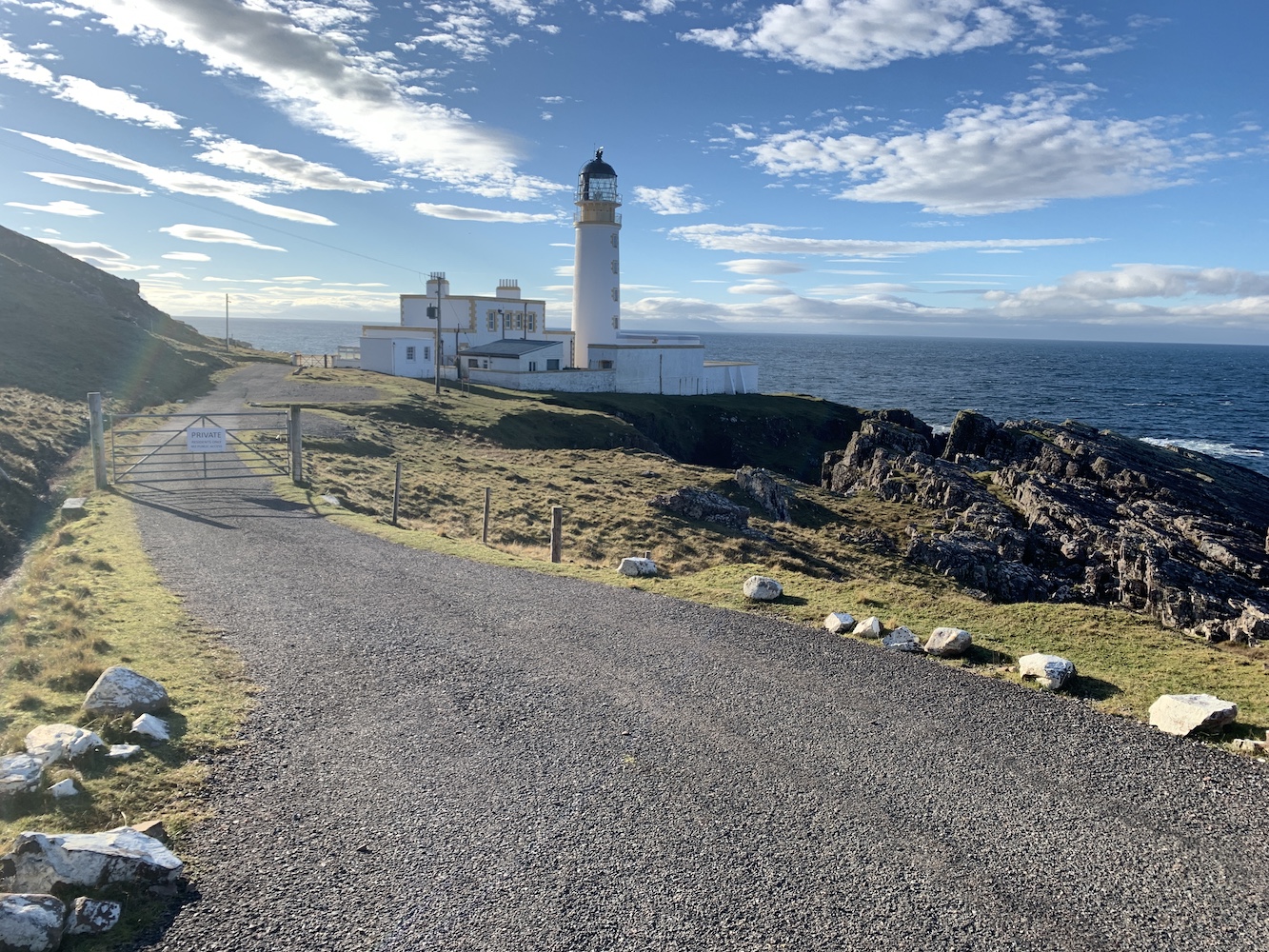
Arriving in the sunshine we decided it would be best to head for the lighthouse first. The road out to the lighthouse has some fairly scary sections, but thankfully there was no unwelcoming signs or people saying it was a private road (as has been the case for many people before). I believe a change in ownership of the lighthouse cottages has helped with that!

Approaching Rubh Re lighthouse

Rubh Re is actually a fair distance from Gairloch, which we drove through on the way there. I always thought it was ‘just up the road and round the corner’ kind of distance, but the road is fairly long and goes through a few outlying villages first. It’s absolutely worth it though as, when the lighthouse comes into view it certainly is a beautiful thing to behold. To me Rubh Re lighthouse is quite distinctive and it is so often photographed from this particular angle and you can see why.

The popular angle on Rubh Re lighthouse

It was quiet there today and although we saw another car in the parking area a short distance before the lighthouse, there were no other people to be seen. As we were leaving we spotted the owner of the cottages hanging out his horizontal washing – or “lighthouse washing” as I like to call it, which must almost always be horizontal with the wind in these coastal areas.

Looking back at Rubh Re lighthouse from the north

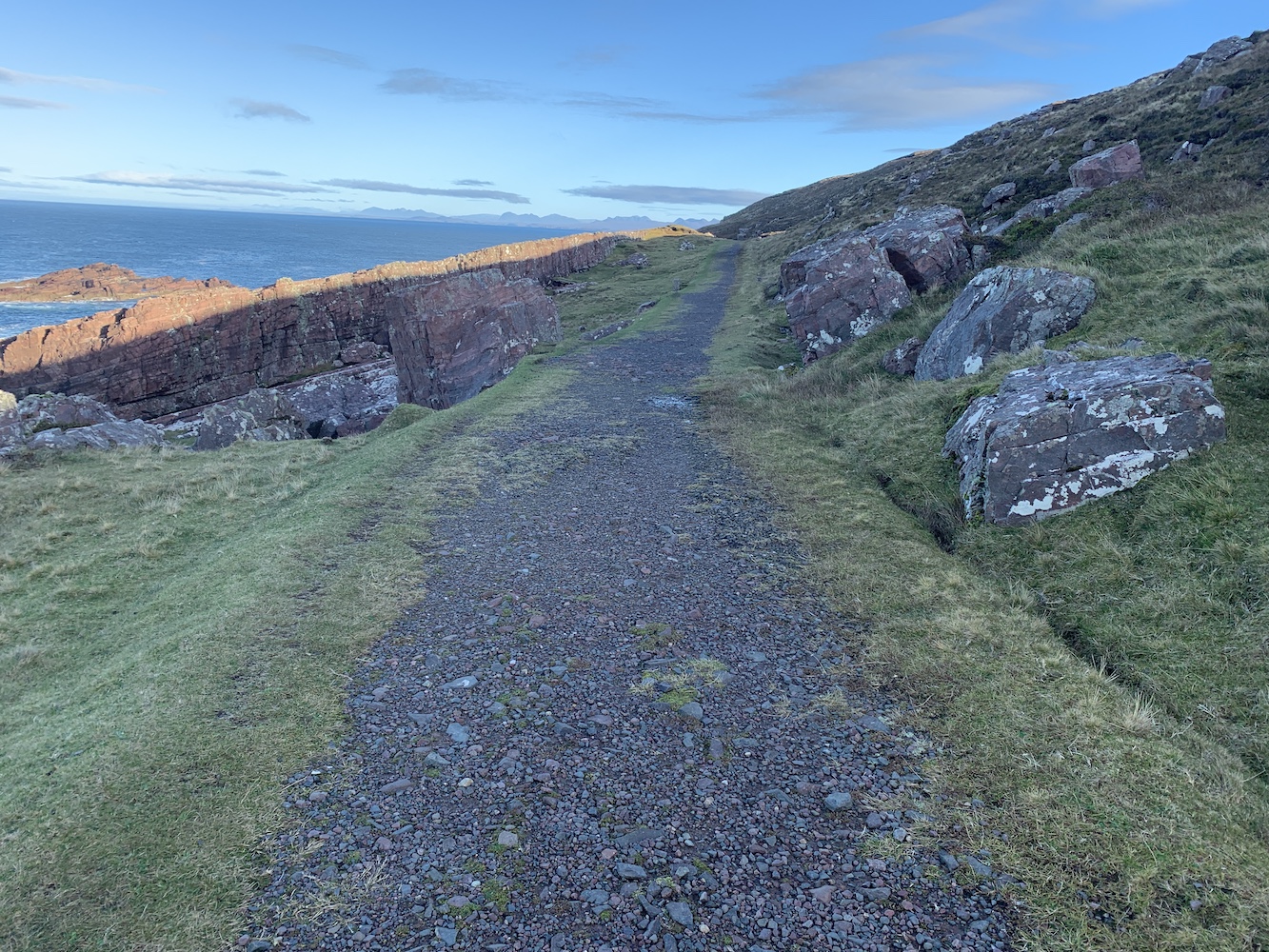
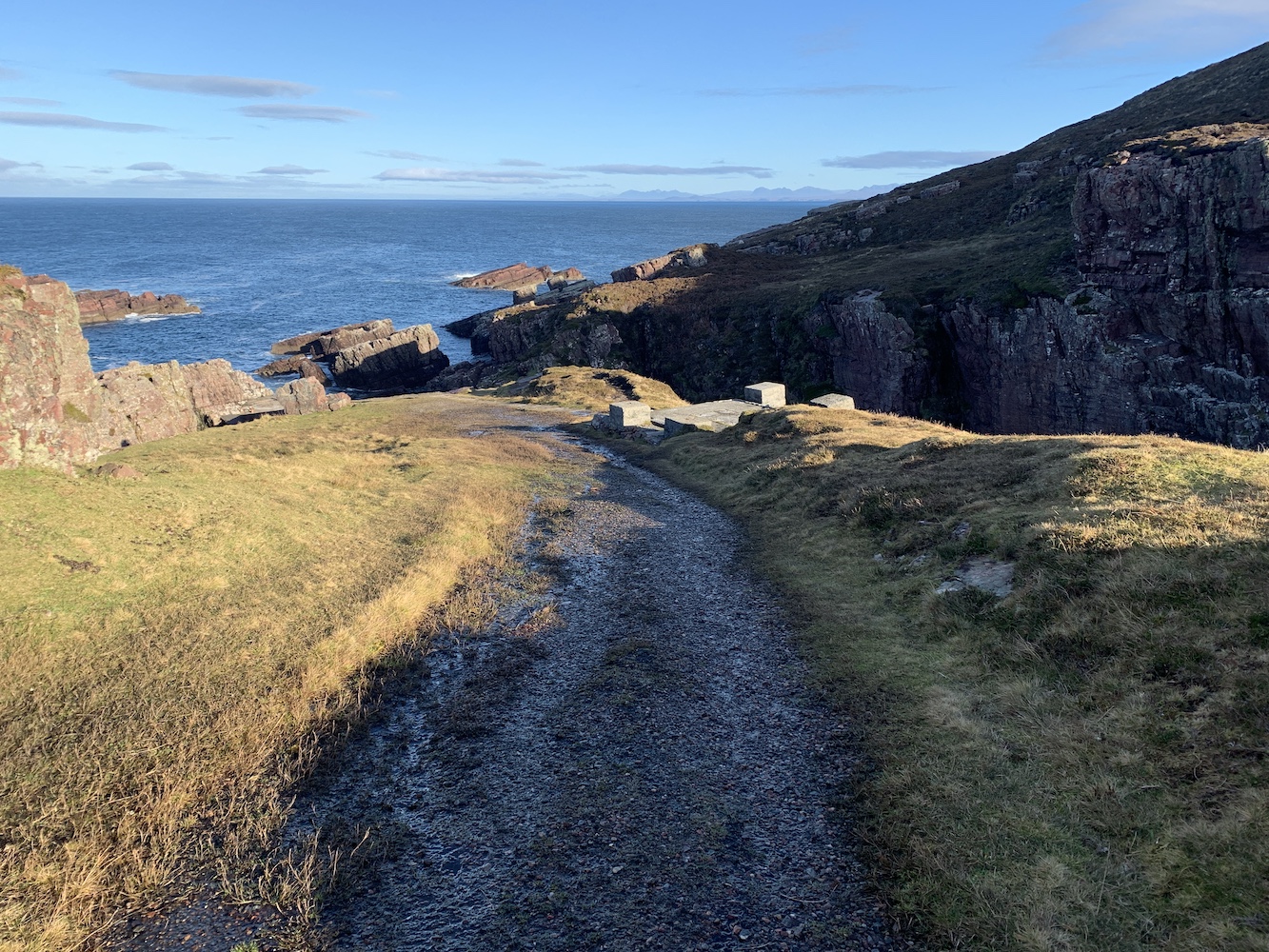
Close to the lighthouse gate there is a sign with a little information about the lighthouse and it also directs you to follow the path to see the old jetty that was used for bringing in supplies when the lighthouse was manned. I decided to take a stroll along that way as I’d not noticed it before. It was a nice little walk in the sunshine, passing a few sheep on the way.

The path to the lighthouse jetty

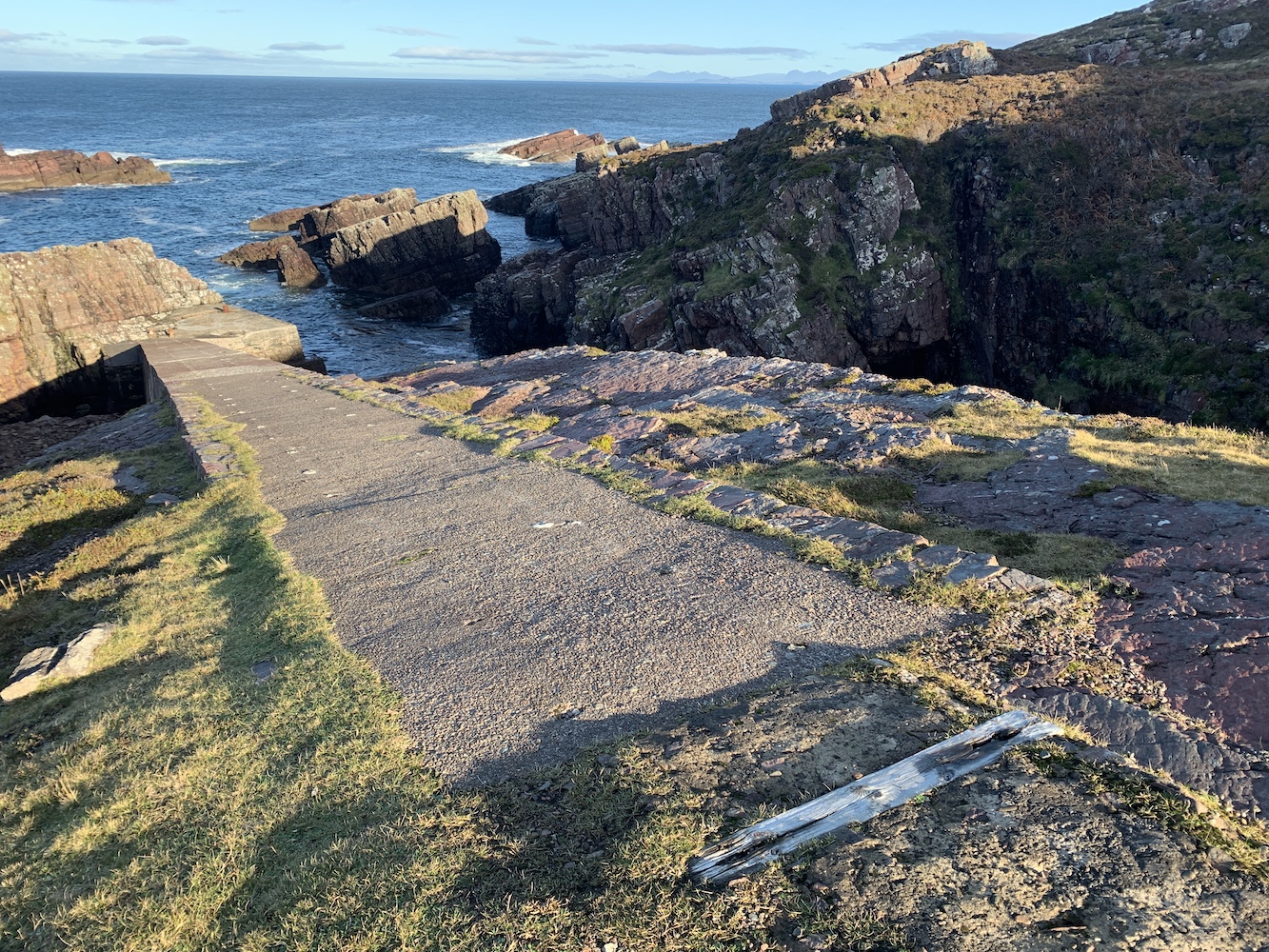
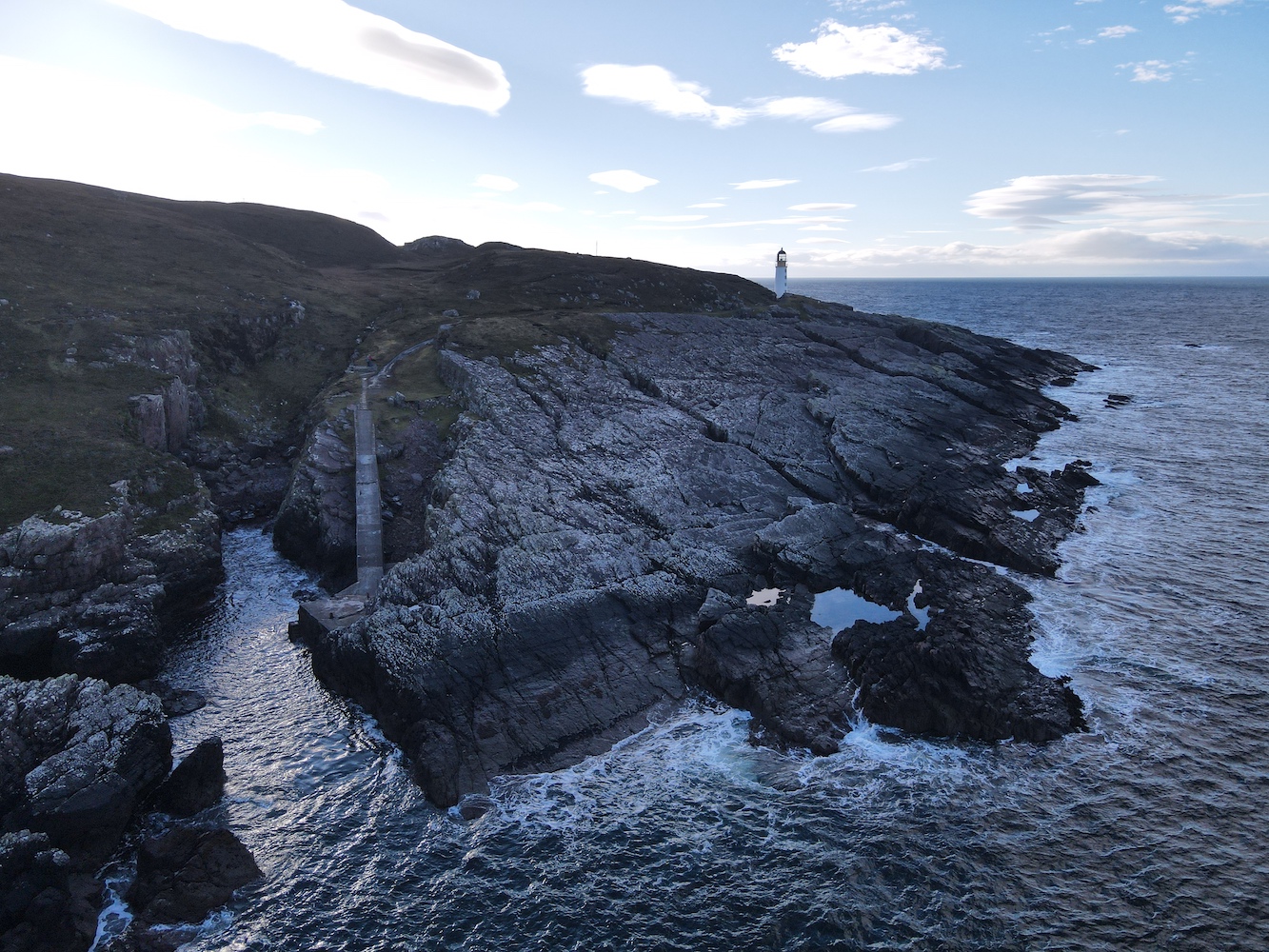
The jetty is looking very good considering it’s probably not used much now. The old mechanisms have obviously gone now, but the little set of steps and the main platform are still very much intact. Tucked away around a corner it seemed like it would be quite a good landing area, but apparently that was not the case. At Gairloch Museum I listened to some accounts from a former keeper and the large rock that sits near the landing caused problems for getting a boat in. I imagine if there was a lot of swell and movement there would be a risk of striking the rock.

Arriving at the jetty
Rubh Re jetty
The landing area and the hazardous rocks

Bob had stayed back at the lighthouse flying Joe about and caught up with me as I was heading back from the jetty. He’d managed to get some great shots of the lighthouse in the sunshine. 

Rubh Re from the south
The view of Rubh Re from the west

Rubh Re and the access road

Unfortunately the sun was hiding behind a long strip of a cloud by the time he got to the jetty so the pictures weren’t so colourful. I called them “moody’. I like to think there’s at least one word for every occasion.

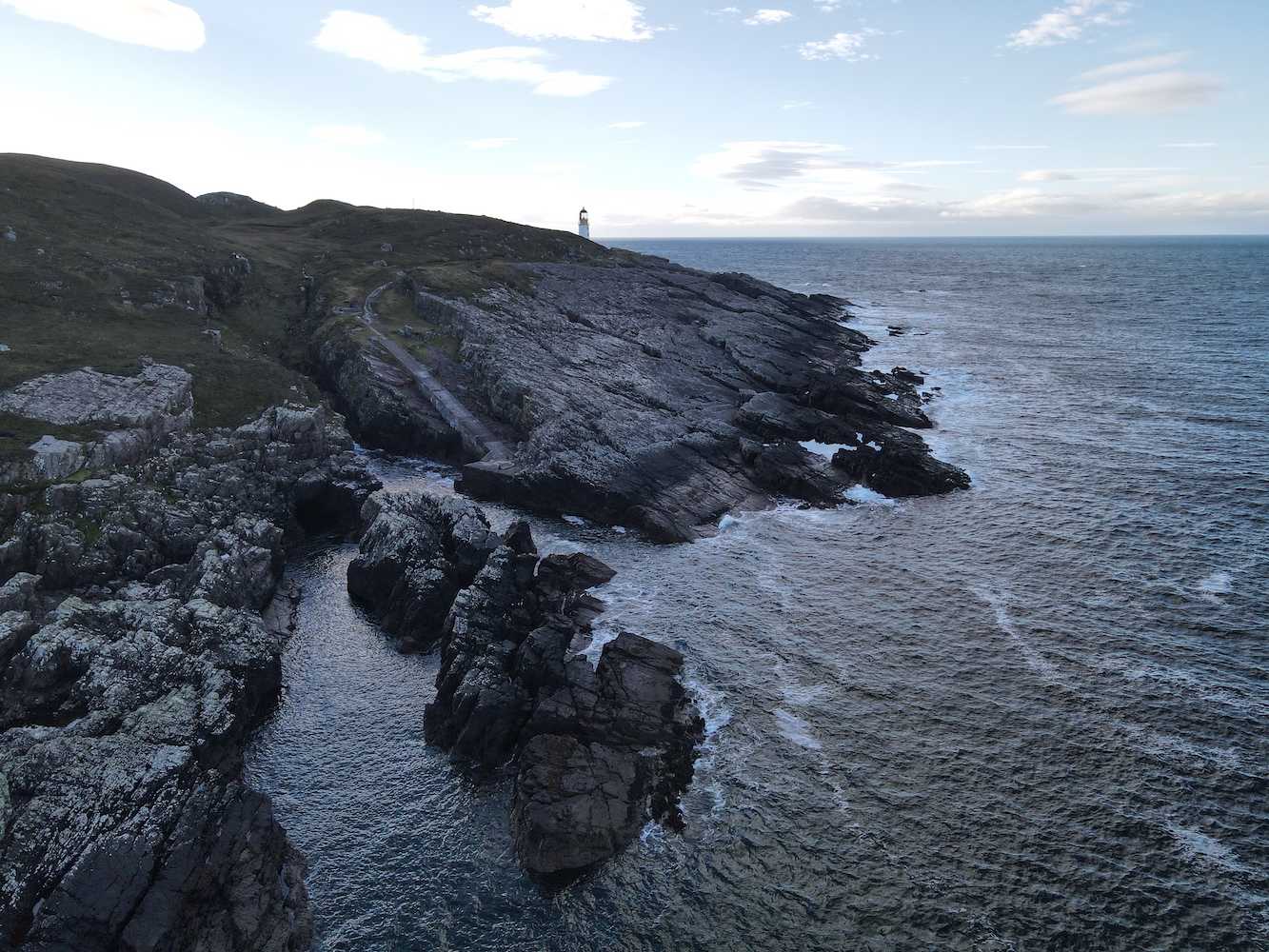
The lighthouse jetty and Rubh Re lighthouse
A closer view of the Rubh Re jetty and lighthouse

Leaving the lighthouse behind (but only because we couldn’t take it with us), we headed back to Gairloch and the Museum. It was a delight to see the old Rubh Re foghorn now has pride of place right outside. It turns out it was only put into position about a month ago. It’s an interesting foghorn with a wheel that opens it up. As it said in the Museum, fog wasn’t a regular occurrence at Rubh Re.

The old Rubh Re foghorn outside Gairloch Museum

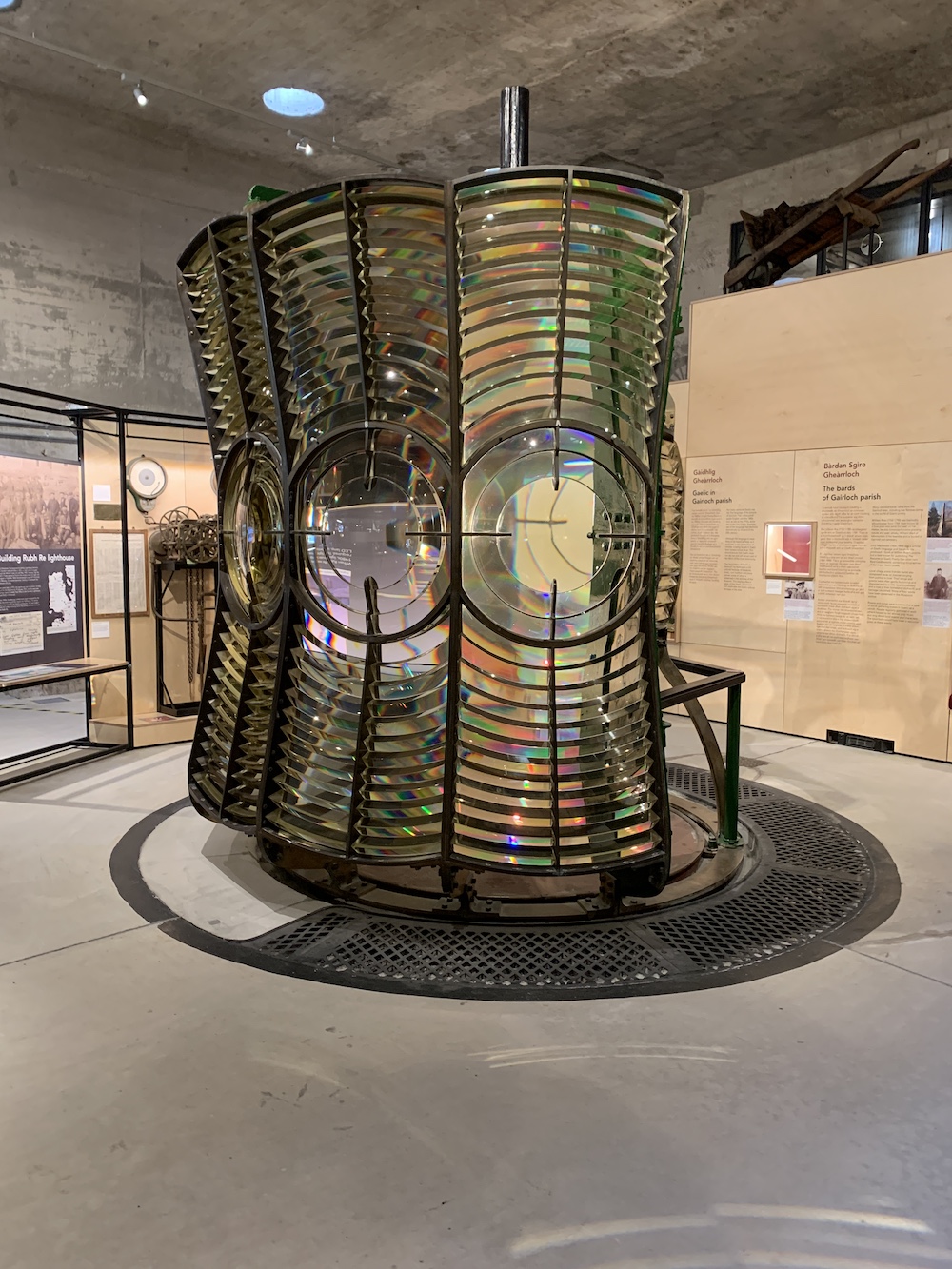
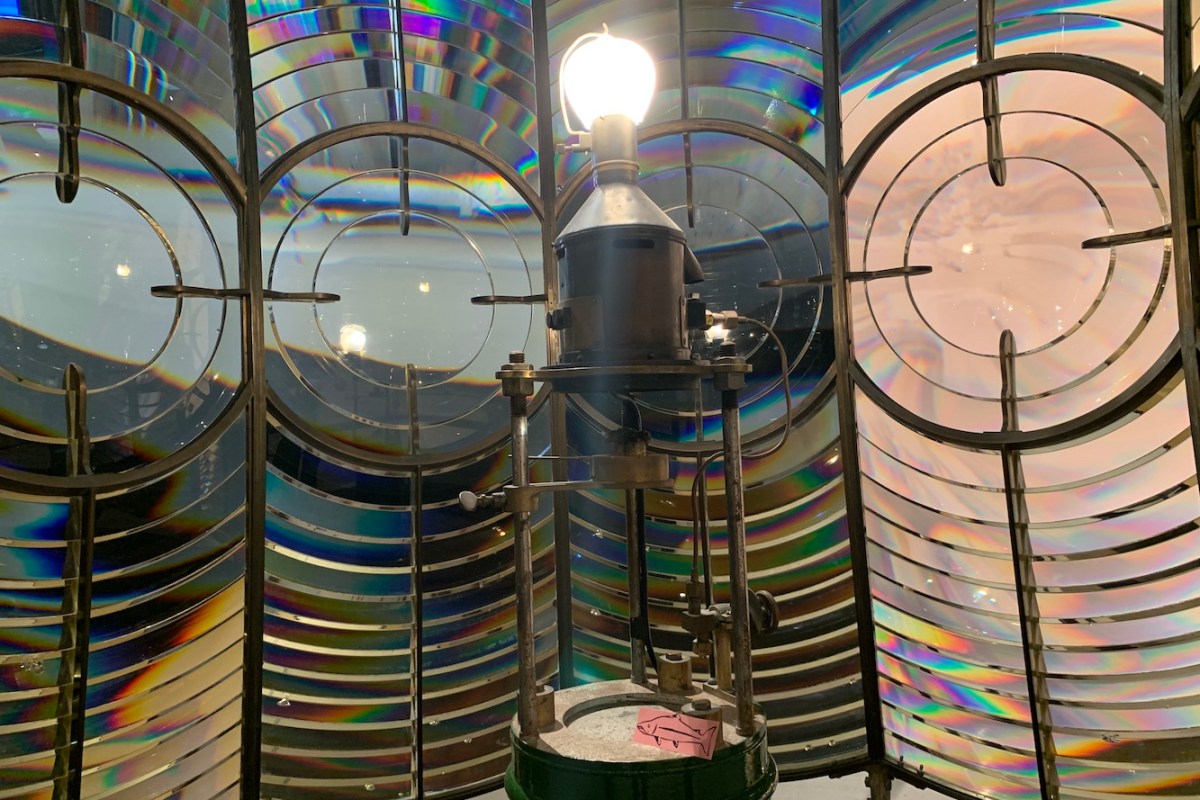
When you enter the Museum now you are immediately in the shop and much to my delight, I spotted a copy of my book on the shelf. That’s always great to see – books for sale in the right places. And this is certainly the right place for it as I spotted the massive lens from Rubh Re lighthouse behind the ticket desk immediately. Once one of the ladies who works at the Museum found out they have my lighthouse book for sale she very kindly showed us her favourite angle on the lens, which is actually from the window close to the entrance. She was right, it was a great viewpoint.

The Rubh Re lens shining above the Museum ticket desk

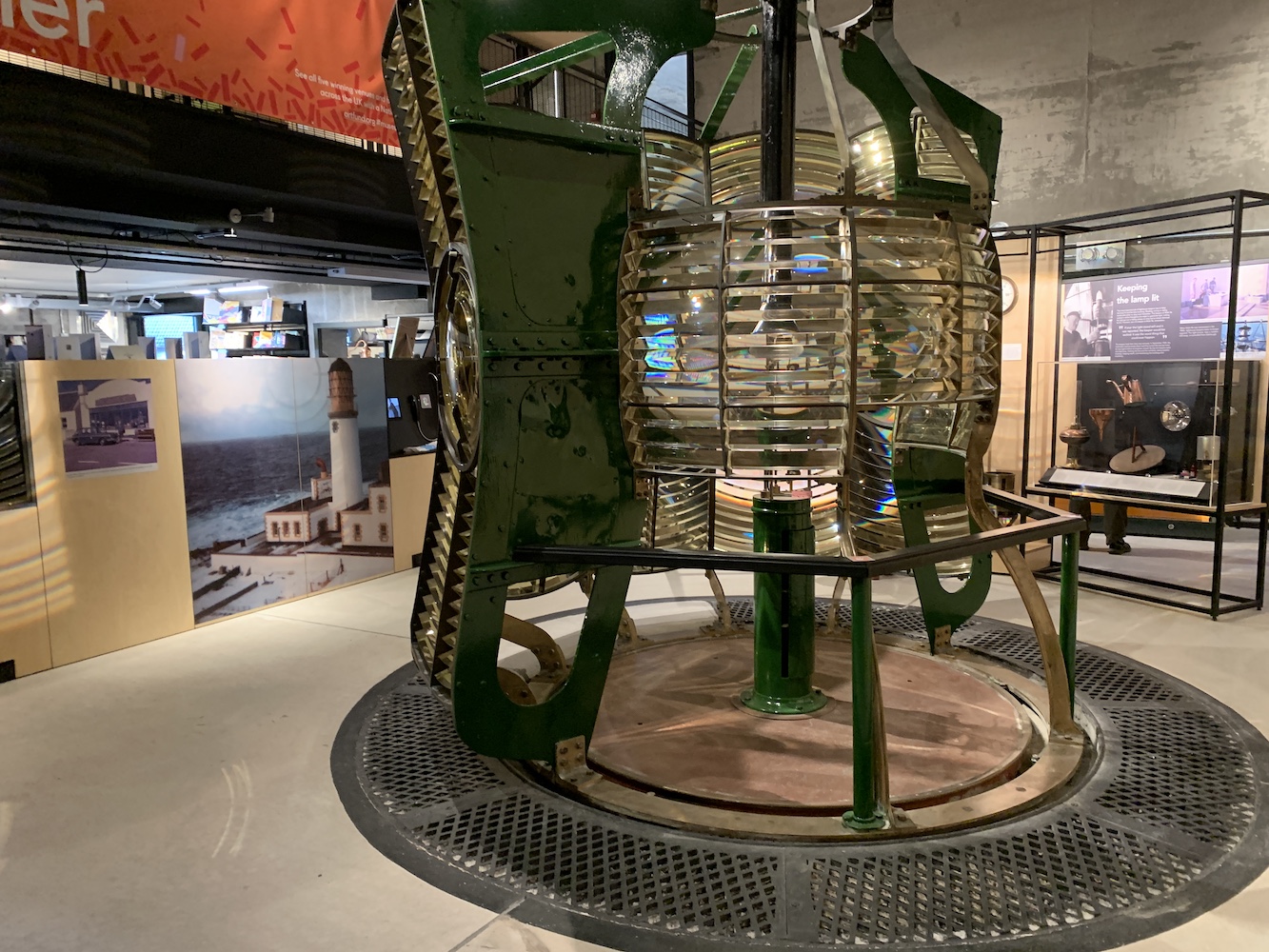
The lens dominates the ground floor of the exhibition and is surrounded by a bit more information about the lighthouse. There’s a real focus on the human side and the keepers with details of each one listed on a screen which tells you where they were from, their previous occupation, how long they were at Rubh Re, where else they served and when they left the service. It was sad to see that three of the keepers died during service with one falling to his death off the cliffs after 6 months of working at Rubh Re.

The Rubh Re lens in all its glory

There are a range of other items removed from the lighthouse after automation on display including the old clockwork mechanism that worked with the lens. It’s a great tribute to the lighthouse and those who worked in it.

The Rubh Re exhibition at Gairloch Heritage Museum

The rest of the Museum is focussed on other aspects of the local area, such as day to day life and crafting, the geology and (Bob’s favourite bit) Gruinard Island which was used for testing anthrax and was out of bounds until 1990 when they were certain it was safe for people to go back to. They tested this by putting sheep on the island and thankfully they survived. It is still often referred to as Anthrax Island.

I couldn’t leave the Museum without a little memento (or three). They had a booklet about the road to Rubh Re which looked interesting. I spotted a copy of a recently released book about the village of Scoraig which had a few snippets of information about Cailleach Head lighthouse. It’s a fascinating place anyway so the book came away with us too and it will be nice to read a bit more about its history and the people who lived there. Finally, I spotted a mug with the Rubh Re lens on it – need I say more…We finished the day with a great drive through Torridon. A nice end to a good day of examining things a little more closely.

More to come over the weekend. 🙂

The little lights of Argyll

Today has been spent exploring some lighthouses in Argyll. With lighthouses being on the coast I’m not so used to being surrounded by trees on my lighthouse adventures, but in Argyll it’s a completely different ball game – the trees are everywhere.

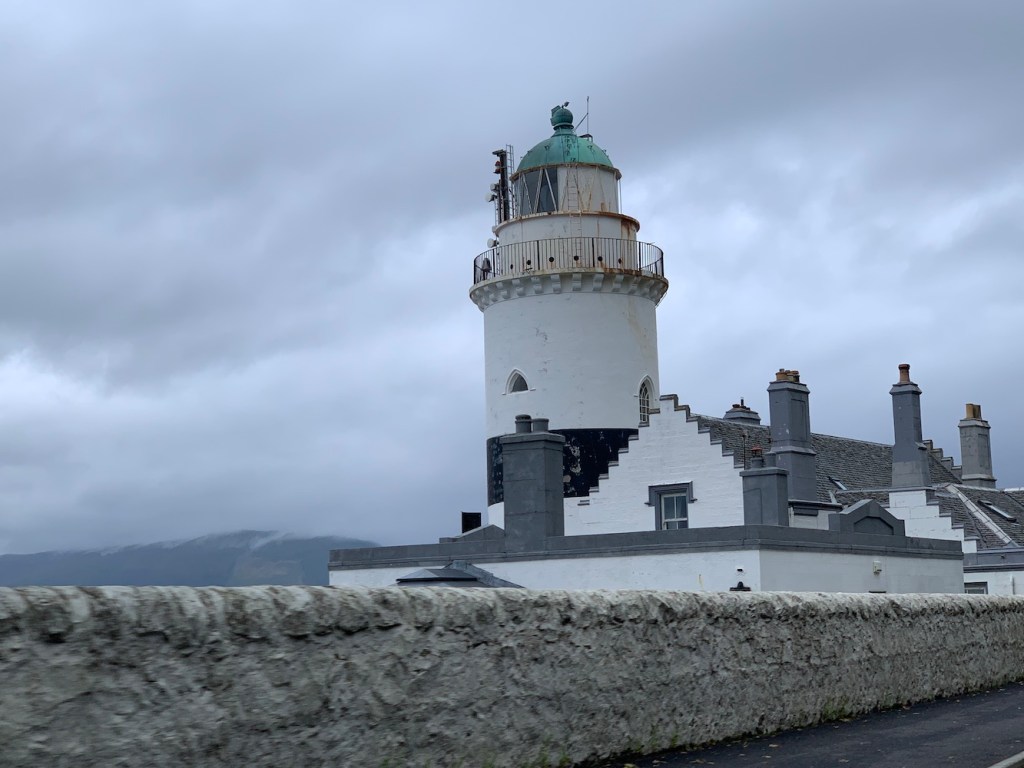
It’s because of these trees that back in 2012 when I did my original lighthouse tour I missed out on seeing Caladh Beacon, just to the north of Tighnabruaich. I remember scouring the coastline there and just not being able to see it. As a result it had remained unvisited, by me at least, ever since. Today was the day I was finally going to see it and so I set off this morning with Bob for the ferry from Gourock to Hunter’s Quay. On the way we passed Cloch lighthouse, which I quickly grabbed a few pictures of as we drove past.

Cloch lighthouse

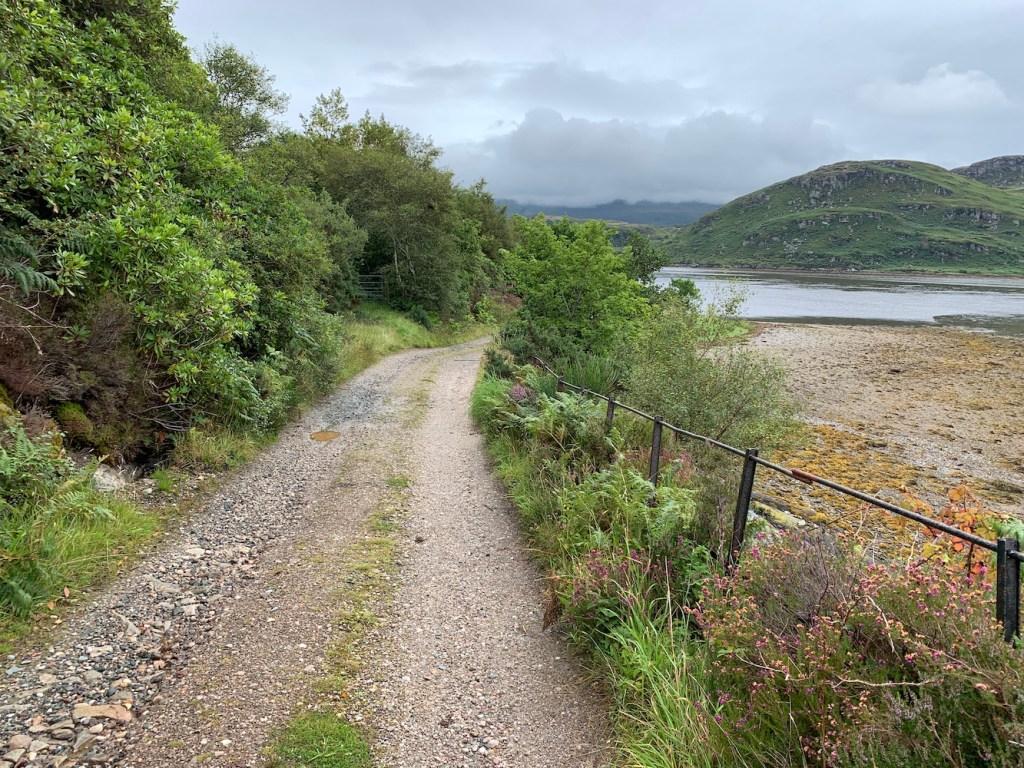
Once on the other side it was a matter of driving tree lined roads until we reached Tighnabruaich, which actually looks quite a big place with some rather expensive-looking houses. We found a space to park and began our walk to the lighthouse. It follows a clearly marked track (or road really) which follows the coast around the Kyles of Bute.

The track to Caladh Beacon

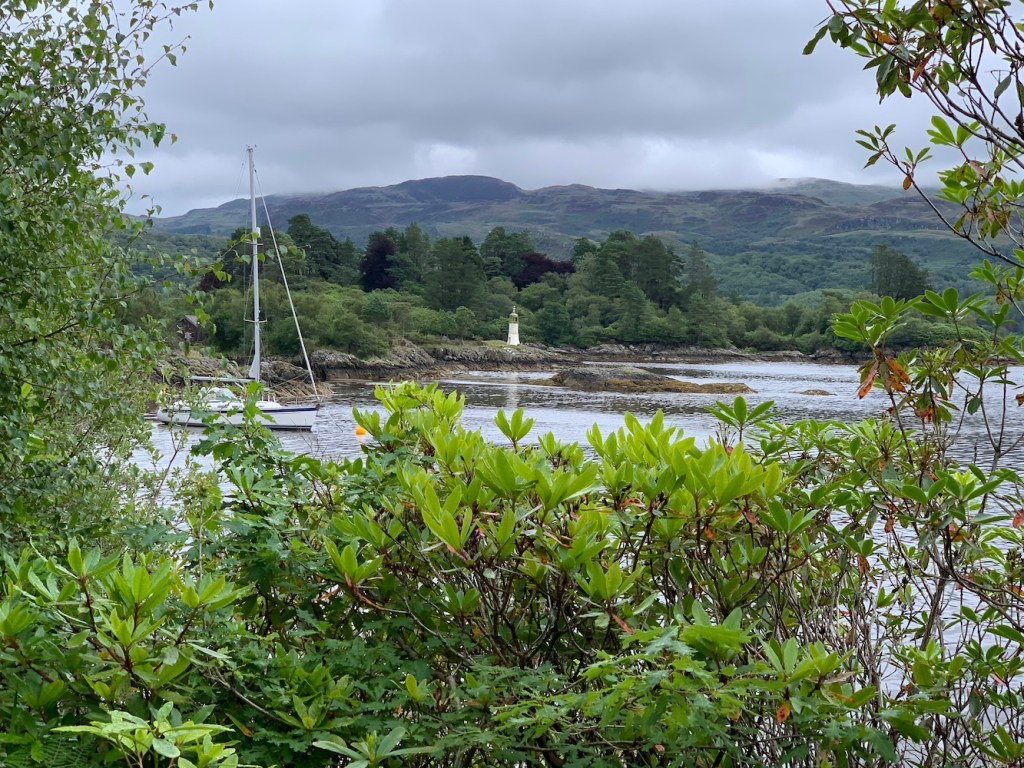
The path went up and down a little with the occasional waterfall running to the side of and underneath the path. Occasionally it was possible to spot the lighthouse between the trees, but very rarely. It was only once you are almost at the little point on which the lighthouse sits that it really comes into view.

Caladh Beacon through the trees

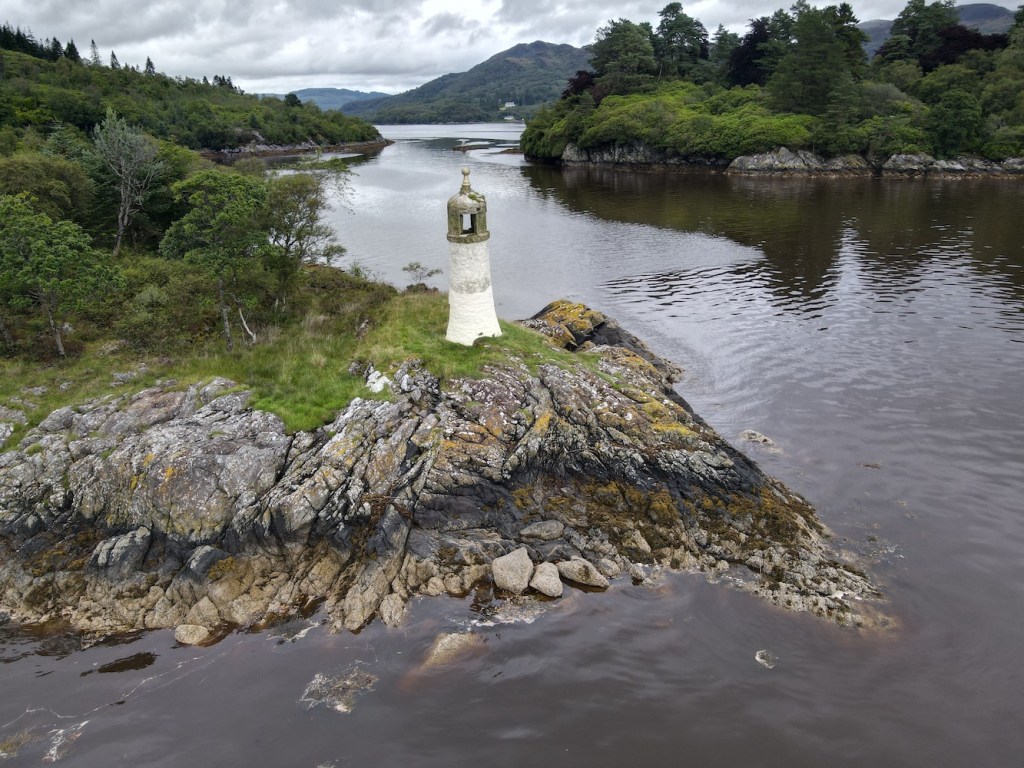
As we approached we noticed a gate with “private” on it and it was clear that it wouldn’t be possible to go that way. We could see a car behind the gate and so suspected someone must be about – the perils of visiting at peak holiday time. I sent a quick message to my ever-trustworthy pal John to ask what he did when he visited previously and he said he’d skirted around the rocks to avoid the garden. Bob decided to send his drone up to check out the lie of the land and it showed that there was at least another car there and a house just behind the tower. While the drone was up he got some great shots.

Caladh Beacon by drone

Just after he’d taken the drone down a couple of locals appeared with their dogs. Bob asked them about access to the lighthouse and they said that it was private. They also said that a man who works for the owners of the house was working up on the road and to ask him if he could sort something out. We never saw the man they referred to and I left feeling a little disappointed. Bob reminded me that I’d got as close to that one as I had to Dubh Artach (although Caladh Beacon was a shorter tower so it looked further away). We decided we’ll see if we can sort out quick access by boat at some point.

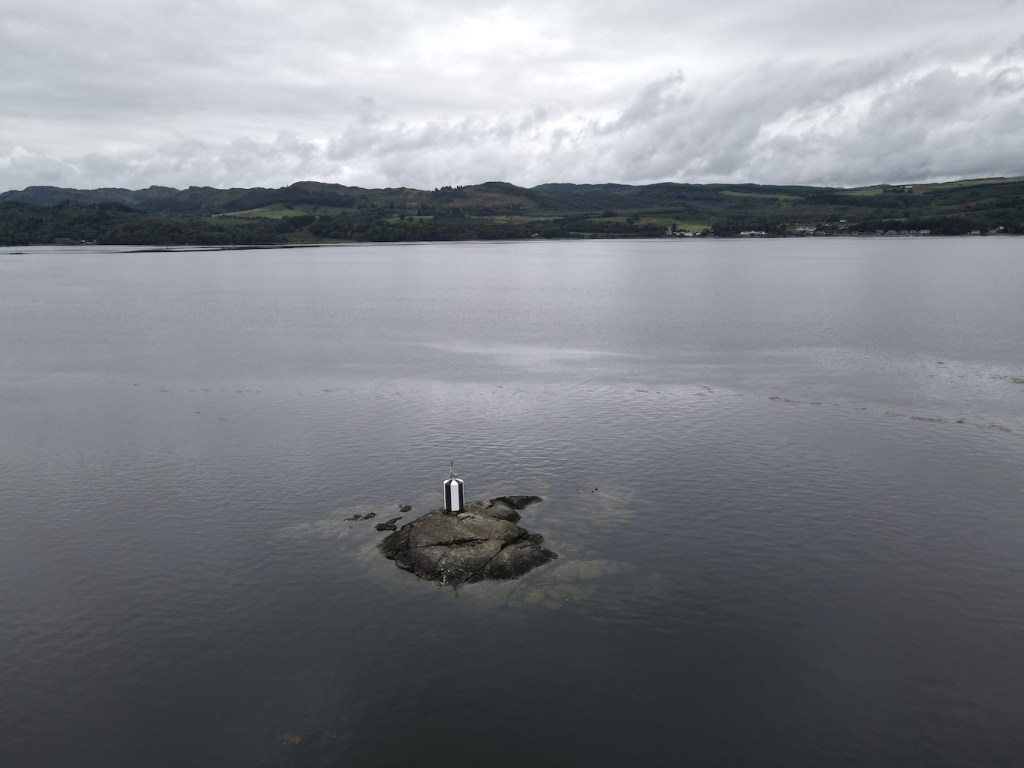
Back from the walk we set off in the direction of Loch Fyne to see what kind of view it was possible to get of Sgeir an Eirionnaich. Finding the car park I had mentioned in my book was easy enough and the shoreline here certainly offered a better view of it than I’d had before. It was still fairly distant though and this is another that needs a chartered boat trip to get a better view.

Sgeir an Eirionnaich, cropped image from the drone

After our viewing of Ravenrock Point from the boat on Saturday, a bit of closer inspection was required, especially as it is so close to the road. Just to the south of Ardentinny we spotted it within the trees and found a lay-by a very short distance away. The structure looked very much as I had expected with the column with lights and radar on top and then a small hut on the landward side which was connected to the light structure only by a series of cables.

Ravenrock Point lighthouse

This sparked a bit of a debate, which I’d already been having in my head anyway, about whether or not it met my lighthouse criteria. I’ll have to think about this one, but it was a nice little tower to visit anyway. It was possible to get down onto the rocks in front of it too with a much clearer path down there than we had experienced at Cnap Point at the weekend!

The ferry back from Hunter’s Quay was certainly busy, probably due to the A83 being closed due to a land slip after all this rain, but we managed to get on and off with enough time to cram in a couple more little lighthouses. Port Glasgow beckoned. It’s been a while since I’ve been there, but they are always a joy to see with their checkered towers. My nearly three-year-old calls them the ‘oyster catcher lighthouses’ due to their colour!

The two Port Glasgow lights

The rain had well and truly set in by this point, but it didn’t matter as there were lighthouses to be seen. 🙂

Getting serious with some January bagging

Happy New Year to you! I’m not sure I’ve managed to say that in a blog post before with the key reason being that bagging season for me doesn’t usually start until at least March. Winter isn’t always conducive to enjoyable lighthouse visits, although last weekend’s trip to Northern Ireland is evidence that it’s not necessarily the case.

Feeling the need to continue the brilliance of last year, and fill some gaps in pictures required for my book (see this earlier post for details of this), a little time in the Islay and Jura area was required. It’s very much been uncharted territory for me so far.  It’s also not the easiest area for visiting lighthouses as some of the lights aren’t so easy to access, being either on rocks in the middle of the water or involving a long distance walk on very rough or boggy terrain.

Ardrishaig
Ardrishaig lighthouse

There is a plan to address this later in the week – more on that in a couple of days, all being well. Before that though, today has been a day of “glimpsing” the lights, almost in preparation.

Travelling from Ayrshire to Kennacraig to catch the ferry, we stopped on the west bank of Loch Fyne at Minard. From here the black and white Sgeir an Eirionnaich (or Paddy Rock) light can be spotted. From such a distance there’s not a lot to say about it, except that one day I hope to get a little closer! Continuing the journey south, we gave the lighthouse in Ardrishaig a quick wave as we passed.

McArthur's Head
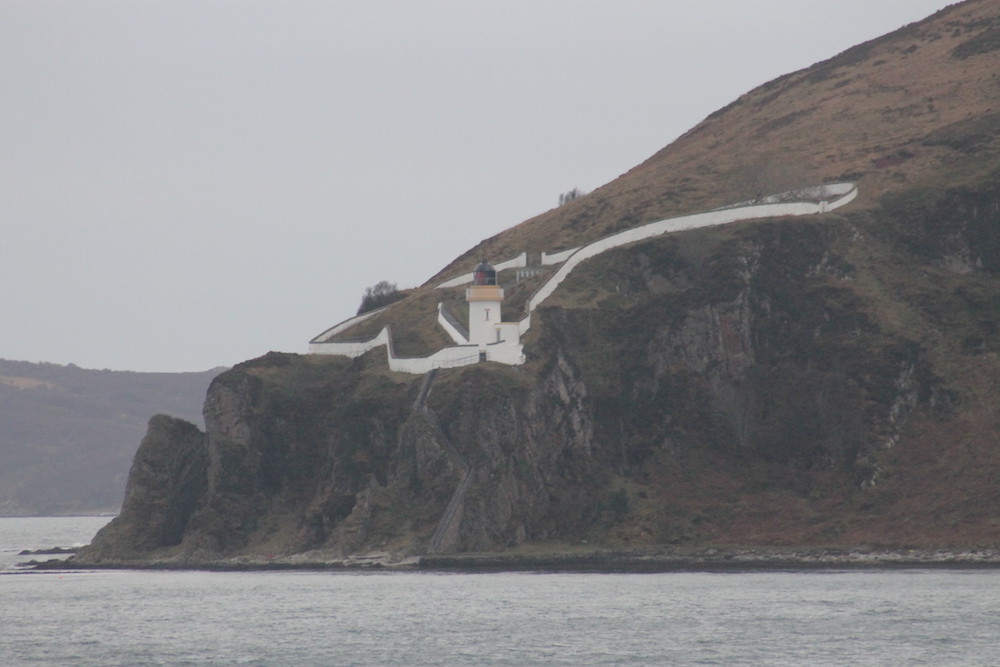
McArthur’s Head lighthouse

We weren’t sure what it would be possible to see from the ferry between Kennacraig and Port Askaig, more specifically the section to the south of the Sound of Jura. I braved the elements and stepped outside with the zoom lens in tow. At first I spotted a white tower in the distance and, checking the map, established that it must have been Skervuile. I was actually on the look out for the Na Cuiltean light at the time, not expecting to see Skervuile, so that was a bonus. I’m really looking forward to seeing Skervuile close up (fingers crossed it will happen this week). Scanning the coast, I finally caught sight of the Na Cuiltean lighthouse, another one to get closer to. It’s not a huge tower anyway, but even if it had been it would have been dwarfed by the incredible Paps of Jura in the background. What an island Jura looks to be from the sea!

I’d had my eye on McArthur’s Head between views of the two lighthouses to the north. I had a few minutes to go back inside and warm up a bit, before it was time to head out again on the approach to the Sound of Islay. Although I’d never seen it in person before, the lighthouse and its surrounding wall at McArthur’s Head are very recognisable. It was wonderful to pass it and see it from a number of different angles with more detail of the landscape emerging with every moment.

Carraig Mhor
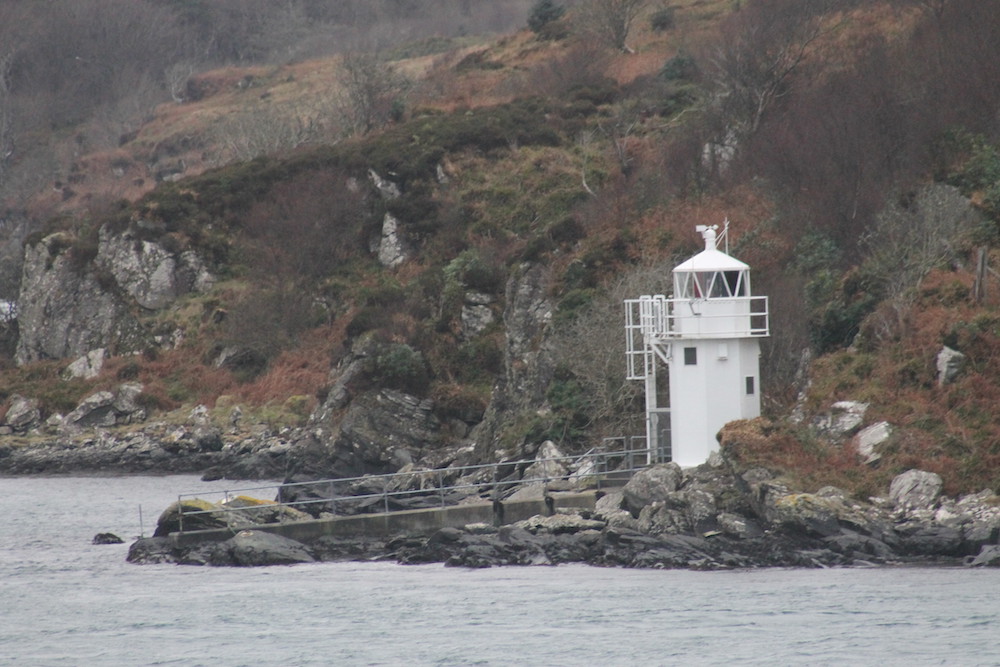
Carraig Mhor lighthouse

The final lighthouse of the journey was Carraig Mhor just to the south of Port Asking. There was no need for a zoom lens for this one. The small, but perfectly formed tower would not even be worth attempting to visit from the island itself, but the very surroundings that make it so inaccessible from land is exactly what makes it such a picturesque view from the sea. The lighthouse is nestled there quite happily with its own jetty.

I’d just started to make my way back inside again when I remembered there was one left to see – Carragh an t-Sruith on Jura. We weren’t particularly close to it, but it was visible and yet another one for later in the week – hopefully. As I said, it’s been a glimpsing day with hopefully better views and clearer pictures to come. 🙂