A brief lighthouse trip to Wales

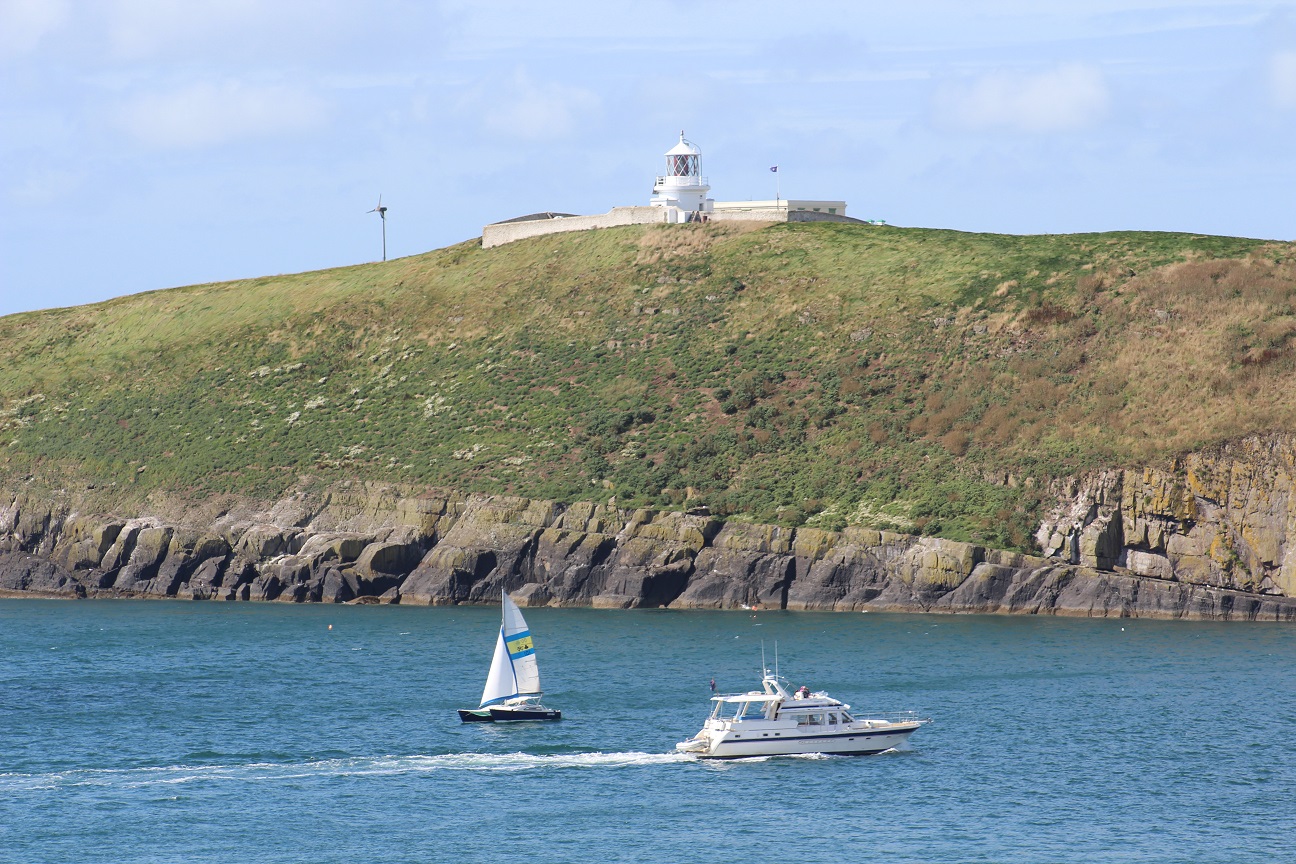
The lighthouse on St Tudwals Island West

A couple of weekends ago, Bob and I made a break for freedom, leaving our little man with his grandparents for the weekend. The purpose of this trip was to spend some time in Wales, particularly for a boat trip out to get a closer look at the lighthouse on St Tudwals Island West off of the west coast. A hill-bagging friend of ours had arranged the trip with the owner of St Tudwals Island East who had kindly agreed to take us to his island. Due to it being August, the owner of the West Island (Bear Grylls) was staying on the island and, understandably, very much likes some privacy with his family. That meant it wasn’t possible for us to land, but Carl did take us on a spin around the West Island so I could get a good view of it. Carl, who co-owns the East Island, was telling us that he suspects the St Tudwals lighthouse may be discontinued shortly, which would mean that Bear Grylls would inherit a lighthouse. Lucky him! It’s an attractive little structure. We spent a short time on the East Island, enough time to wander up to island high point for Bob and to take a stroll around some of the coast there – with some nice views across to the lighthouse too. What amazed me most though was the small house that sits on the east side of the island. From the outside it doesn’t look like there’s much going on, but as soon as you step inside there are tables, decorations aplenty and even an upper floor with a double mattress! It’s a great little island and the owner is full of some amusing stories. He described how he went about getting large stones airlifted onto the island for a stone circle he set up there about 10 years ago. It was a really enjoyable trip and the weather was absolutely perfect.
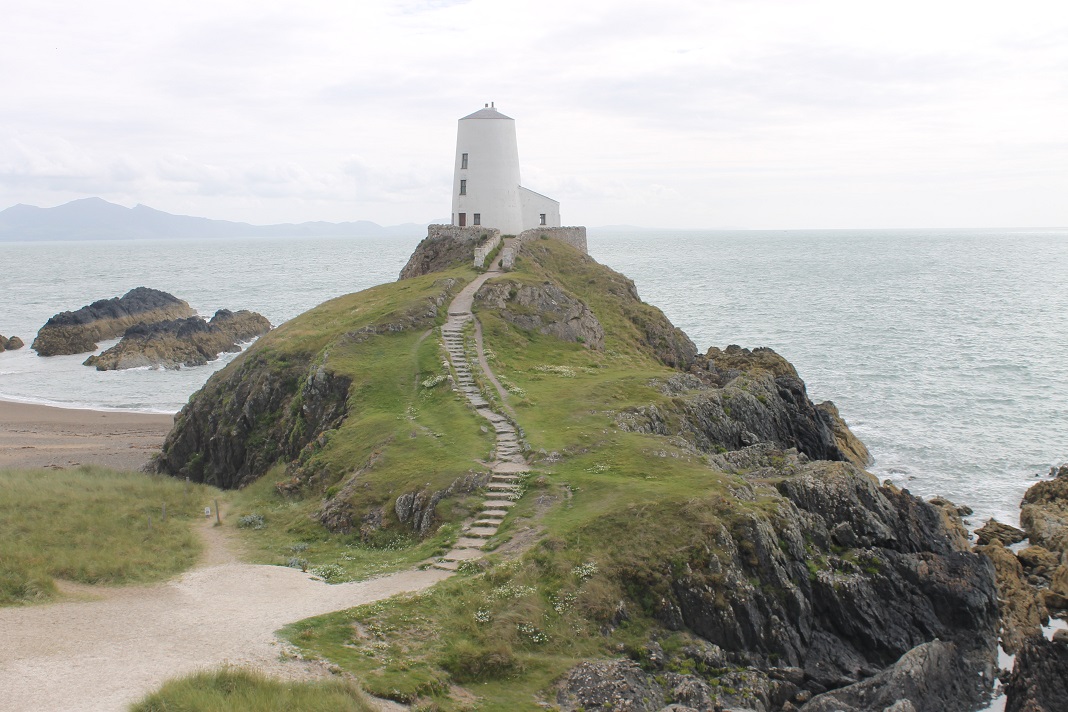
Llanddwyn Island lighthouse

During my tour in 2012, I attempted to visit the lighthouse on Llanddywyn Island off of the south coast of Anglesey. Officially its not a tidal island, but many (and the name itself) would tell you otherwise and, when I visited before it was spring tide time so the tide was particularly high and access to the peninsula was not possible. This time we were able to time our visit perfectly so we arrived as the tide was retreating. From afar it didn’t look like there was much to it, but it’s actually a great place to explore, with paths leading out to the beacon at the very end. The old lighthouse there is really interesting in that the light was displayed from the base of the  structure, rather than the top. I think there is often confusion over which is the lighthouse out of the two as it would be easy to miss the old lamp room in the lighthouse if you’re looking for it at the top. There’s a lot of history surrounding the island (sorry, peninsula) and a great deal of information on display around the island relating to pilgrimages. After leaving the island, we noticed some wooden poles on display near the car park with various carvings on top and one of them was clearly a carving of the old lighthouse. As the weather was so good that weekend there were plenty of people around on the beach, but not so many taking the walk out to Llanddwyn Island, which made it much nicer.
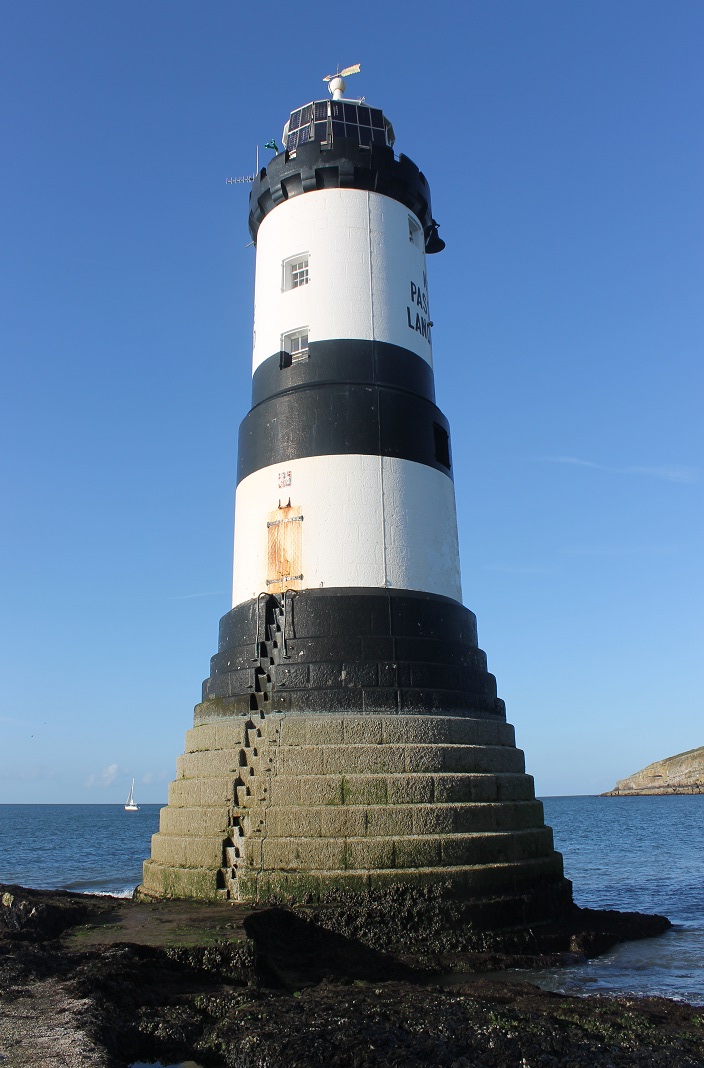
Penmon Point at low tide

We had a little time to spare that day before dinner, so Bob suggested going along to Penmon Point to see the black and white lighthouse there, which I’d visited on my tour in 2012. As we followed the coastal road north it was clear that the tide was quite far out, so we were hopeful that we would be able to walk out to the lighthouse for a proper “bag”. I was very amused when we arrived and Bob, excitedly, when dashing off towards the lighthouse. We managed to get right out to it and Bob, as usual, chose to climb up to the door using the very cleverly built footholds. It wasn’t too busy there either so we only had to share the lighthouse with a couple of other people. There’s nothing worse than crowds of people when you’re trying to get a good picture!

On the Sunday we headed home, but first we needed to get at least one lighthouse visit in, considering it was International Lighthouse-Lightship Weekend! I’d read online that both Leasowe and Bidston Hill lighthouses would be open to the public that day, so it was an opportunity not to be missed. We had a bit of time to kill before Bidston Hill opened, to we had a quick look at Leasowe and then drove along to Hoylake. When I’d been there in 2012, I’d seen the lighthouse (or what I thought was the lighthouse) so this was an opportunity for Bob to see it too. We had a quick stop there and then went on to Bidston Hill. It’s not one I had seen before, so it was an added bonus for me to actually be able to get inside it too.
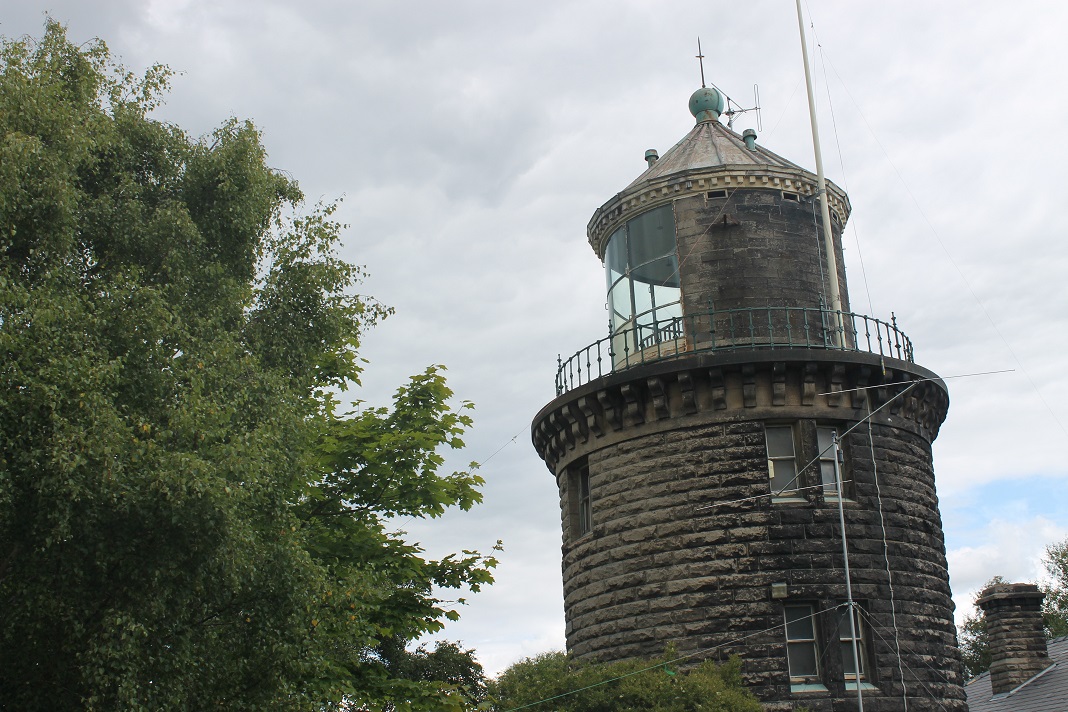
The Bidston Hill lighthouse

We arrived just in time for the first tour of the day, which was run by Stephen Pickles who is an active member of the Association of Lighthouse Keepers. I had, in fact, received an email from Stephen shortly before that weekend asking if I would be interested in preparing a piece on my favourite lighthouse for their journal, Lamp (more on that later in the year). It was a really interesting tour and you could tell that Stephen is not only the owner of the lighthouse, but has a real fondness for its history too. There are some fascinating stories about how they would go about informing the port authorities at Liverpool that a boat was on its way in. There was a group of amateur radio guys halfway up the lighthouse, chatting away to others around the world as part of the Lighthouse and Lightship Weekend. We were fortunate enough to get into the lamp room at the top of the lighthouse, which boasts panoramic views of the surrounding area and out to sea. Sadly, there is a lot of damage to the panes of glass in the lamp room. They suspect someone has been shooting at them from outside and they are currently looking to replace the panes, which isn’t going to be cheap for them. Why anyone would do such a thing is beyond me. We had a chance to speak to Stephen and his wife for a while after the tour and got a stamp for my lighthouse passport. It was during our chat with them that we found out that the building we’d seen at Hoylake is actually a lighthouse folly and not the actual lighthouse. So, we will need to head back there again at some point.

When we left Bidston Hill, we did consider popping into Leasowe to have a look around, but we were running short on time for getting home that evening, so decided to give it a miss this time. We hope we will be back in the area when it’s open again some day soon. We’re nearing the end of our peak lighthouse-bagging season, but it’s not over yet. There will be at least one or two new ones in the next couple of weeks. More on this to follow soon! 🙂

Discovering Manx lighthouses – and beacons

In my previous post on the Calf of Man, I said I would share details of our visit to the Isle of Man mainland, and so I shall!

Heysham harbour lighthouse

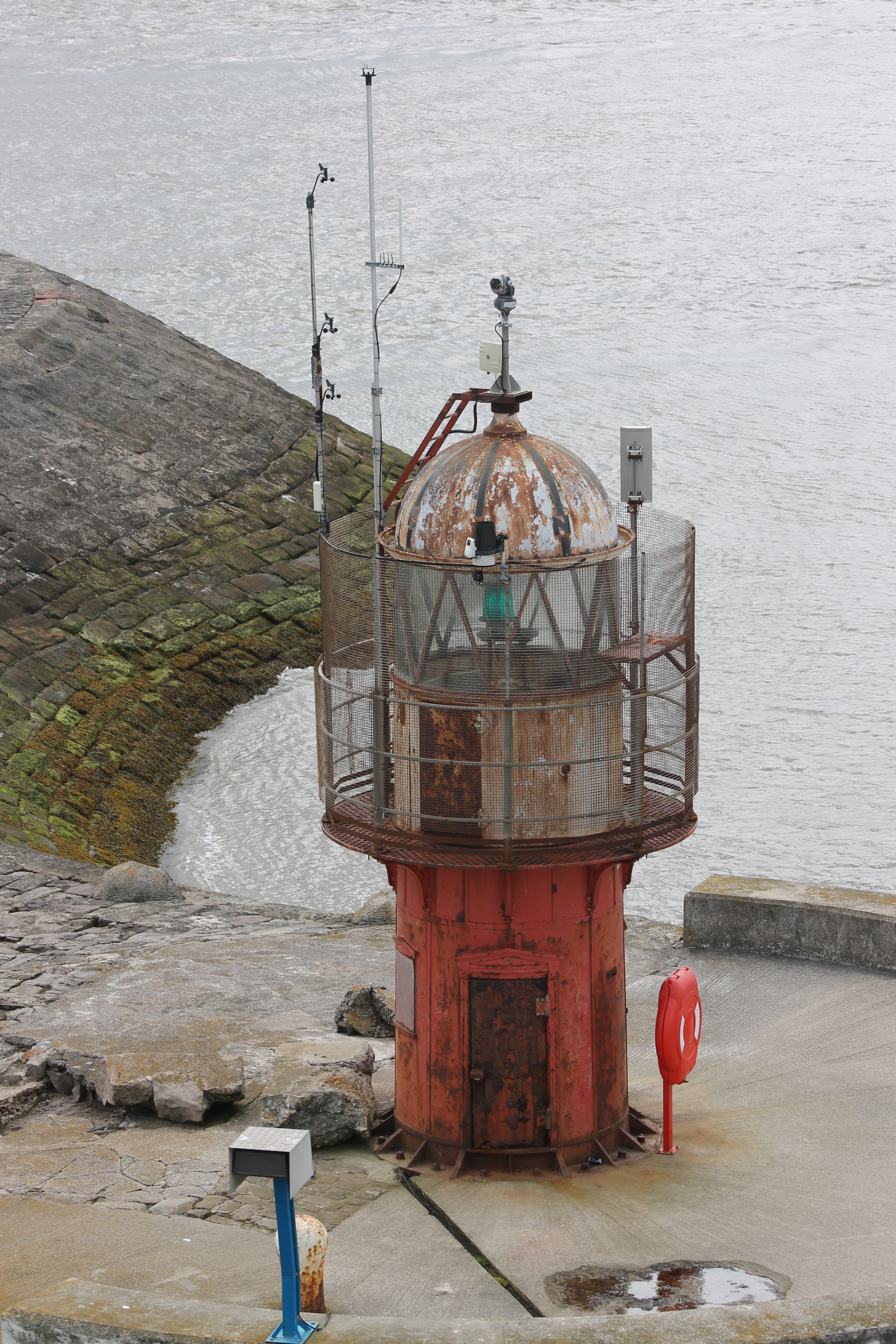
We set off for the Isle of Man on the ferry from Heysham. One benefit of going from here was that I could get a closer look at the lighthouse on the jetty in Heysham harbour. We’d previously seen it from a distance, so I managed to get a closer look. I was about to get some pictures of it once we were past the jetty, but I got waylaid by a man asking me about my camera. I still managed to get pictures from the closest view I had of it though, so I was happy.

As we arrived at Douglas harbour, we saw one of the nine lighthouses we were to visit on the Isle of Man, which sits just to the south of the ferry port. As the Isle of Man is covered by the Northern Lighthouse Board, many of its lighthouses are similar in style to those in Scotland (Stevenson-esque, some might say). In Douglas harbour they also have one of the many lighthouse-looking beacons that the island features.

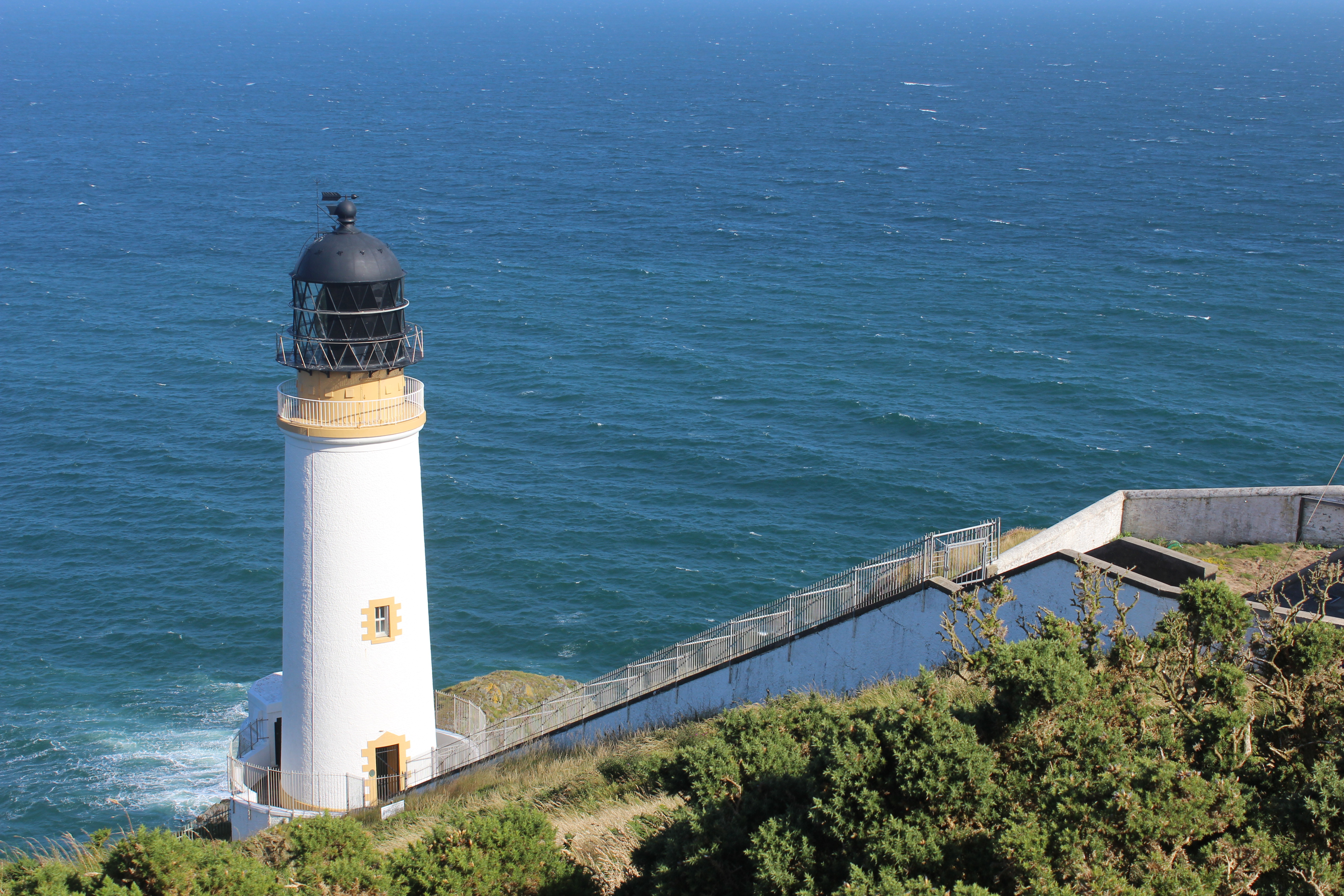
Douglas Head lighthouse

After the Calf of Man, the Douglas harbour lighthouse was the first we visited. This lighthouse was built in 1892 by the Northern Lighthouse Board who had taken over control of the previous lighthouse, but had decided it was not fit for purpose in a visit report dated 1890. It’s another of the Stevenson’s majestic structures with a pretty scary drop on the south side. Apparently it attracted a large amount of tourists in the early years, with people popping in to visit while it was manned. So much so, in fact, that they had to restrict visiting hours. I imagine being a lighthouse-bagger back in those days would have been a lot more enjoyable as you could get inside them all – although travel wasn’t quite so easy. We can’t have it all!

We headed up to the high point of the island, which Seumas walked to from the mountain railway. We then drove north to Point of Ayre to see the two lighthouses on the most northerly point. The large Point of Ayre lighthouse is beautiful with its perfectly painted red and white tower.

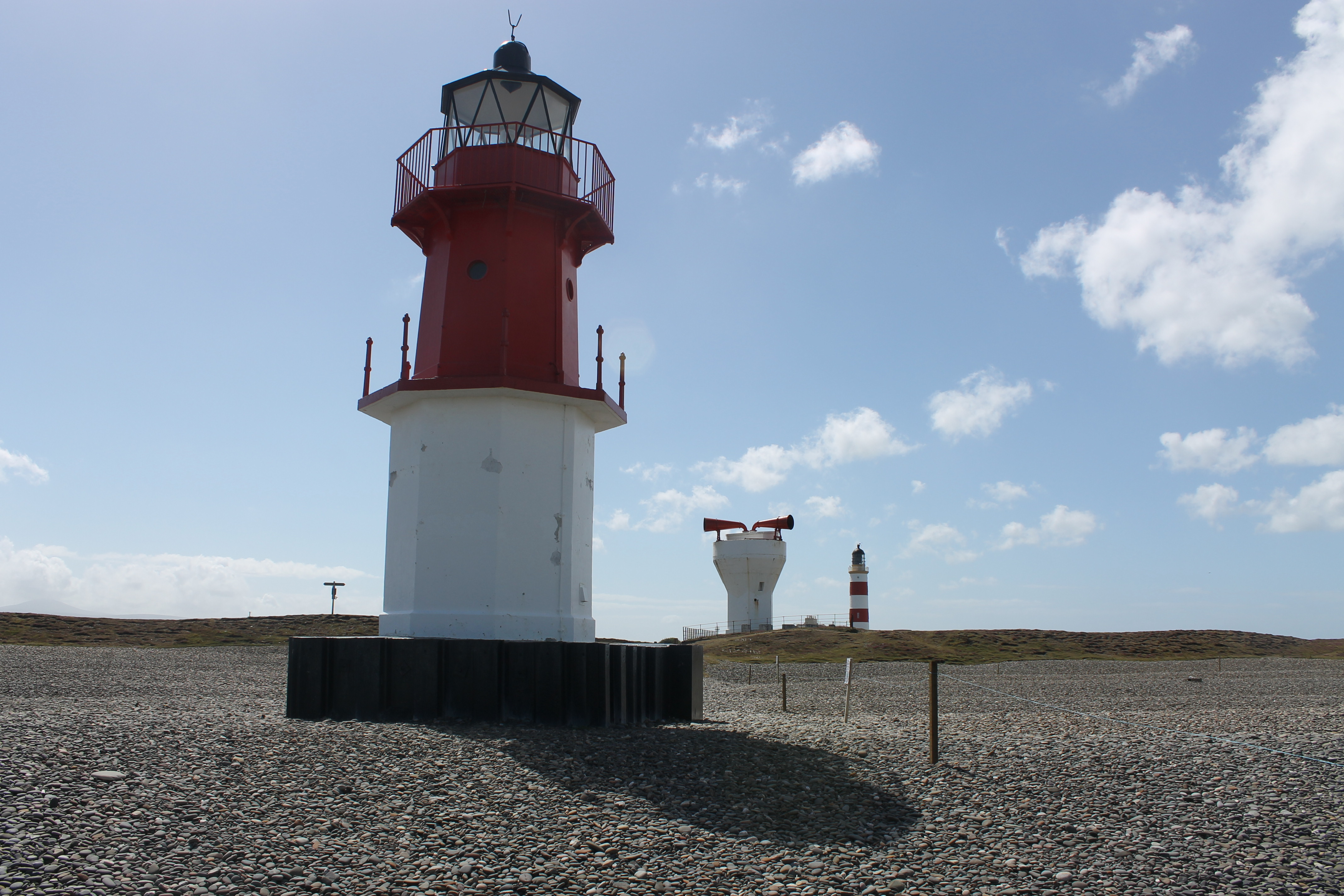
The two lighthouses and foghorn at Point of Ayre

We had some great blue skies, which helped too! The lighthouse was constructed in 1818, the same year as the oldest lights on the Calf of Man, but as it is still in operation it’s looking a lot better in comparison. Further towards the coast at the Point of Ayre is the lower lighthouse, also known as Winkie. After one shipwreck in the area in 1873, two in 1874 and another in 1888, the Northern Lighthouse Board set in motion plans for building a smaller lighthouse on the beach at the Point. This structure (and it’s matching foghorn) was built in 1890 and it turns out that it’s quite a nice little stroll along the path from the foghorn to the lighthouse for an 11-month old!

Maughold Head lighthouse

Our final lighthouse for that day was Maughold Head. This is a relatively new lighthouse in comparison to the others on the island, as it was built in 1914. That’s not to say that there shouldn’t have been one there earlier as a number of ships were wrecked in the area. Even after it was built it has seen its fair share of tragedy with a shipwreck just a year after it was built (although the crew managed to make it to land at Maughold Head and all survived) and, in 1947, an RAF Spitfire hit the lightkeepers cottages in dense fog and caused a great deal of damage. Although it was possible to get a nice view of the lighthouse from the top of the cliff above it, the grounds of the lighthouse and cottages are now private property.

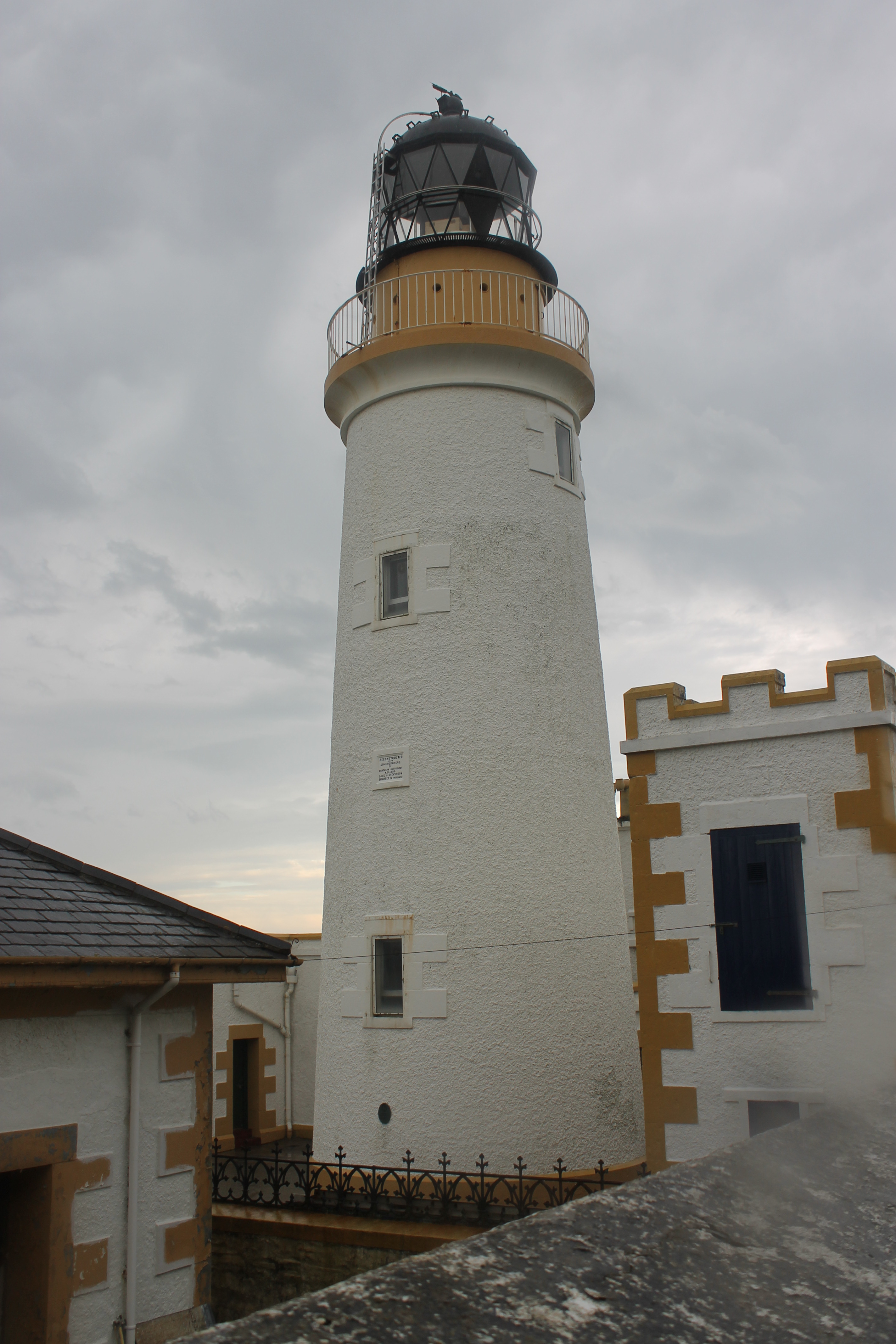
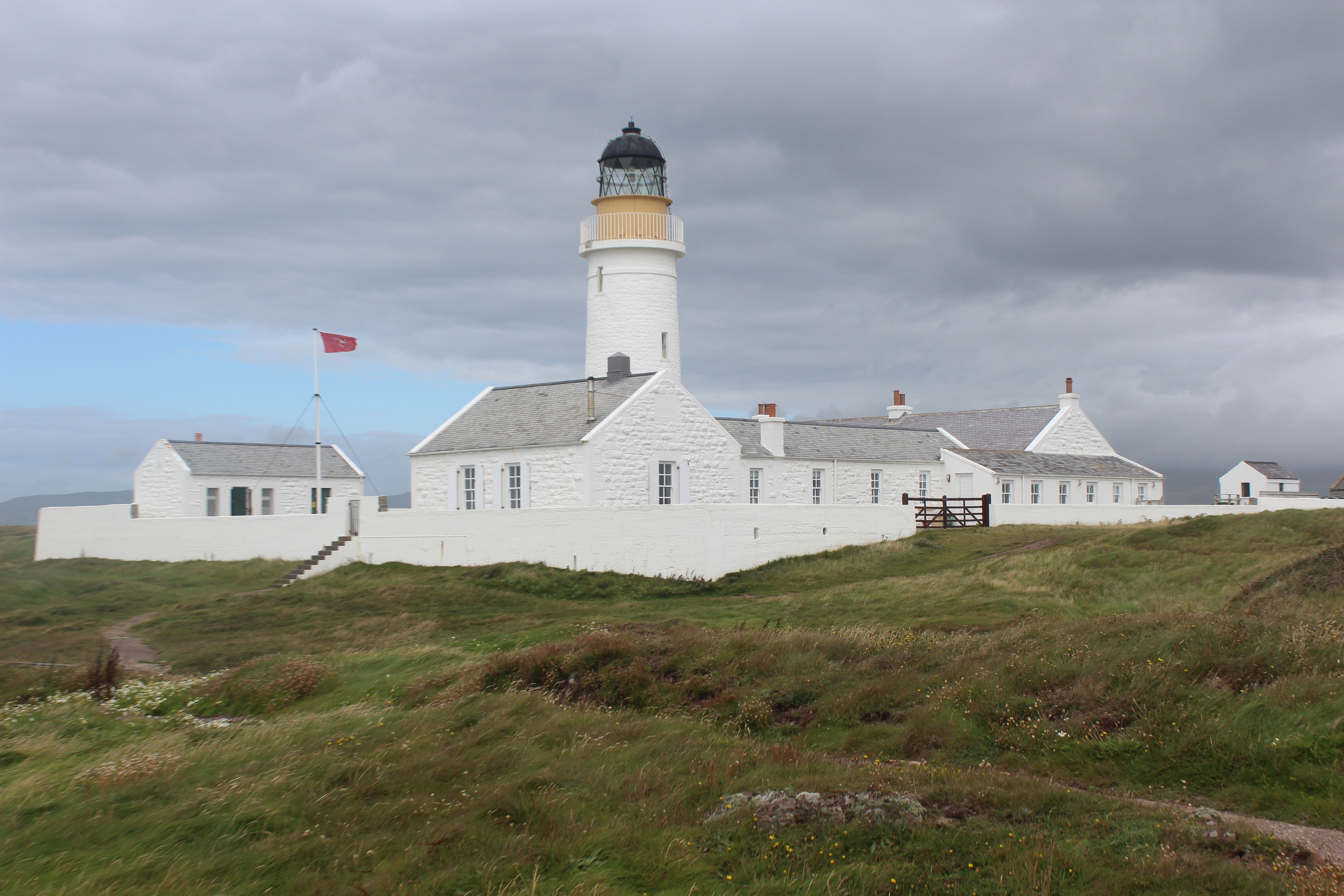
Langness lighthouse
Langness lighthouse

Our final lighthouse of the trip was Langness, which we visited on our last day on the island. It sits on the end of a peninsula on the south east point. It was a fairly choppy day, so we were able to get a glimpse of how rough it can be off of the coast there. This lighthouse was built in 1880 and was the last on the Isle of Man to be automated in 1996. It’s a nice, out of the way location with a really attractive lighthouse and we were able to walk out to the foghorn too.

It was great to have visited all of the Manx lighthouses and see all of the interesting beacons that litter the piers of the main towns as well.

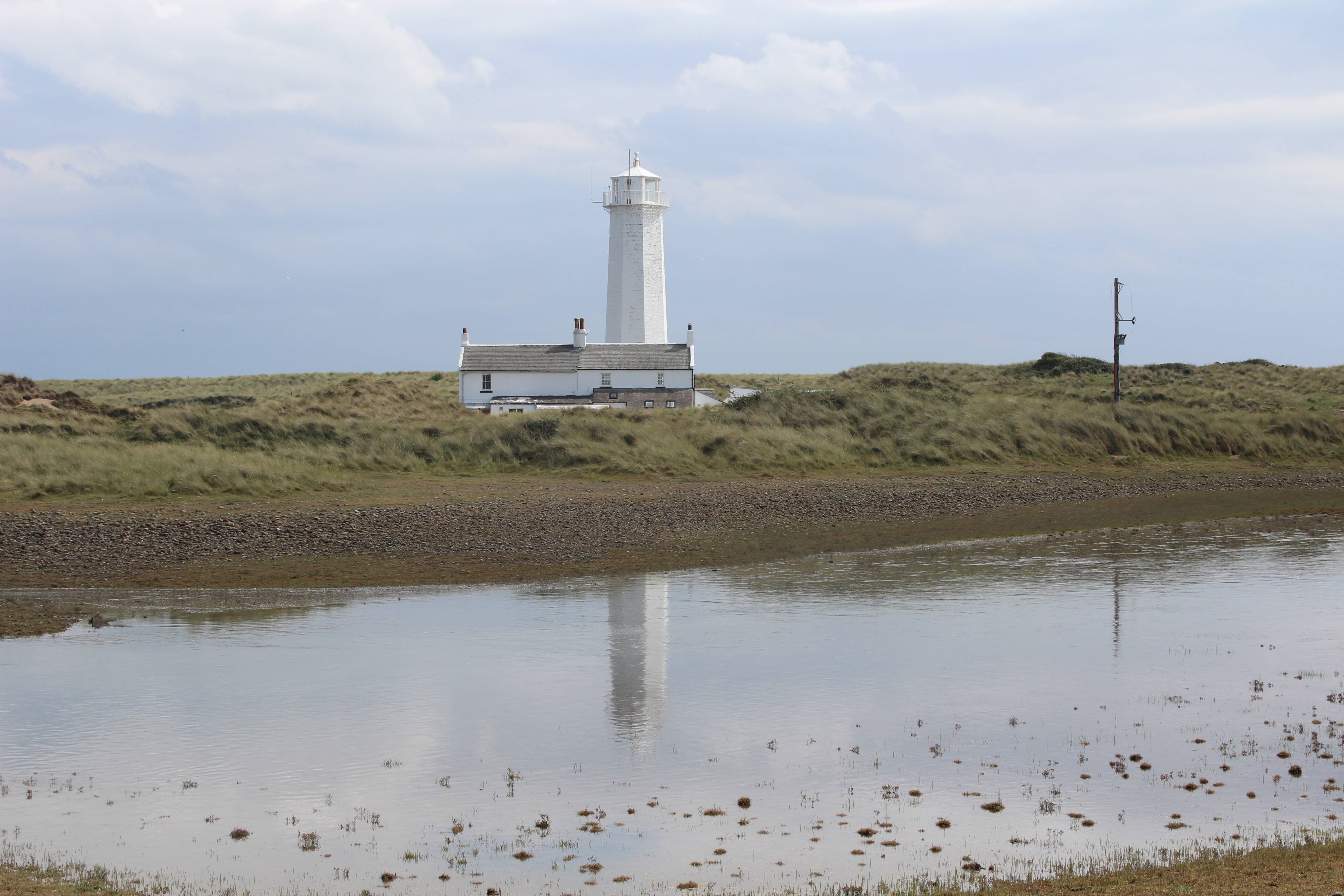
Isle of Walney lighthouse

We decided to use the opportunity, once back on mainland UK, to visit a couple of lighthouses I had either missed or not got very close to on our way home. The first of the two stops was Walney Island, where the lighthouse sits on the edge of a nature reserve. It took us longer to reach the lighthouse here than we thought it would. We parked up and skirted around the reserve, only to find that the land surrounding the lighthouse was privately owned so we couldn’t get as close as we’d hoped.

Hodbarrow Point old lighthouse

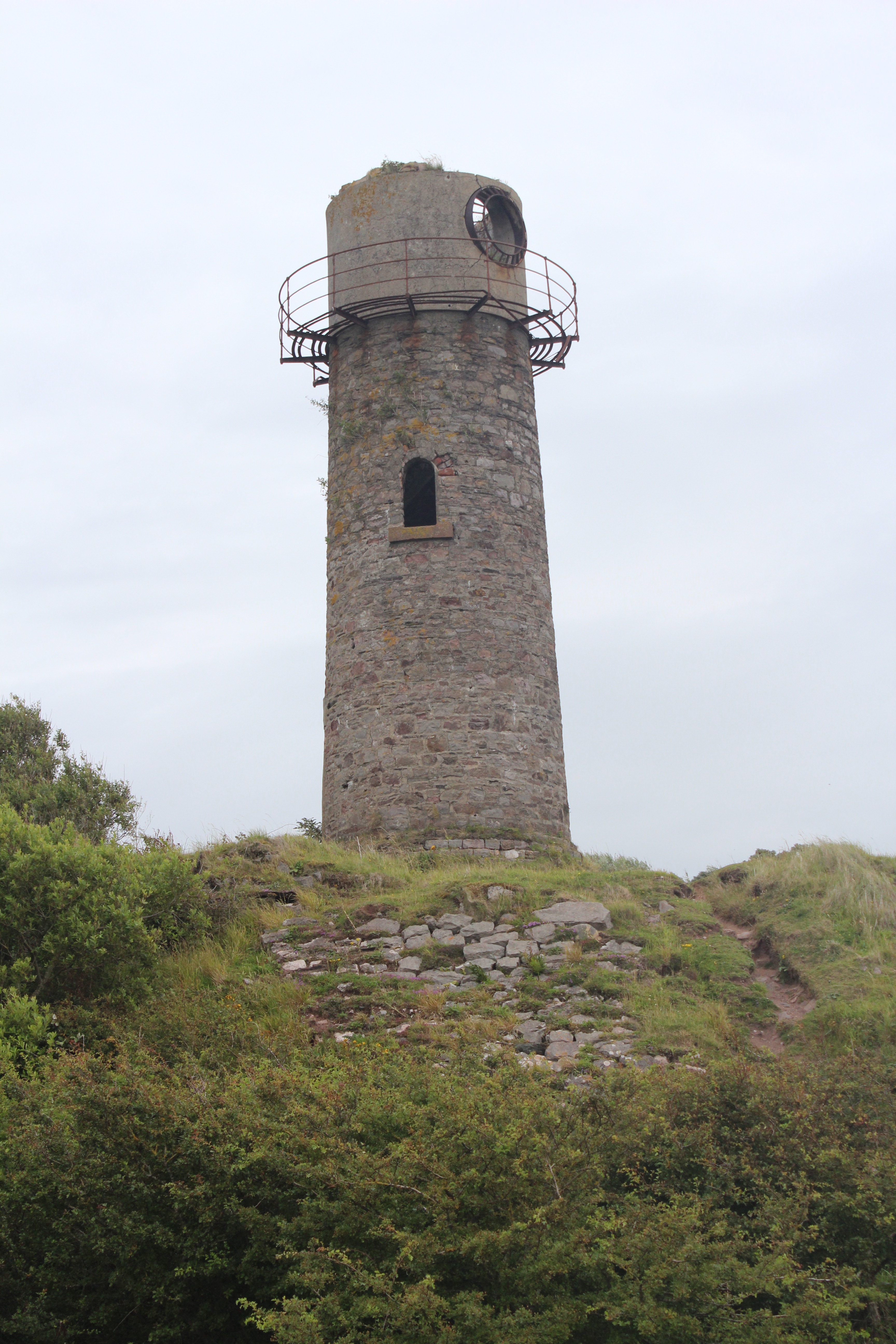
Our second stop on the way home was at Hodbarrow Point. I’d previously visited one of the lighthouses here, but had not seen the old one. The old tower has a very “old” look about it, with no roof and a round opening on the seaward side where the light would have been exhibited. We also spotted another similar ruin nearby, which I have since discovered was an old windmill in its day.

As mentioned two blog posts ago when I was a bit hasty in my next blog prediction, the next lighthouse visit will happen this weekend when we head off to St Tudwal’s East island, which will give us a fairly good view of the lighthouse on the West island, which we expect to sail close to. 🙂

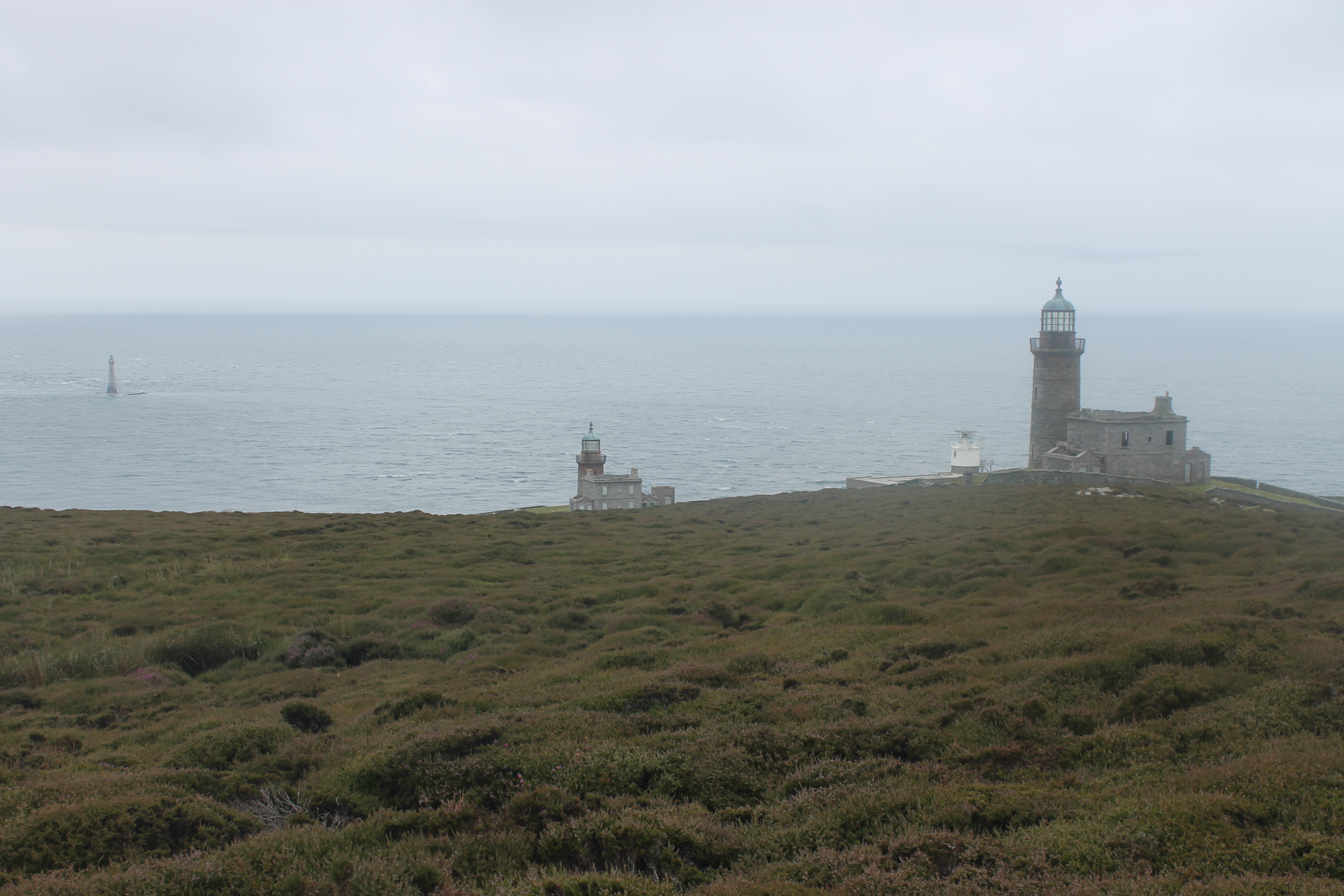
Where can you see four lighthouses at the same time?

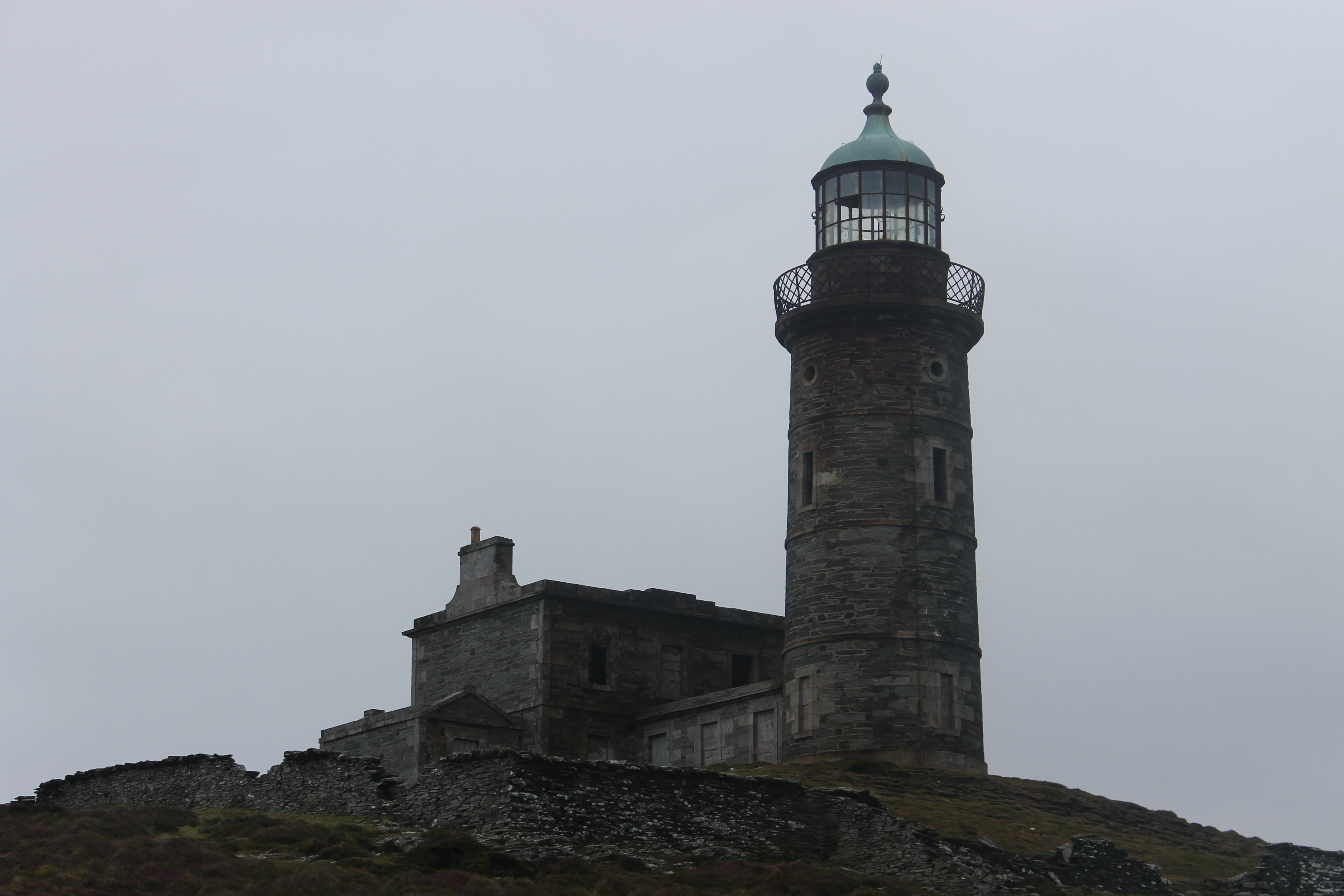
The four lighthouses

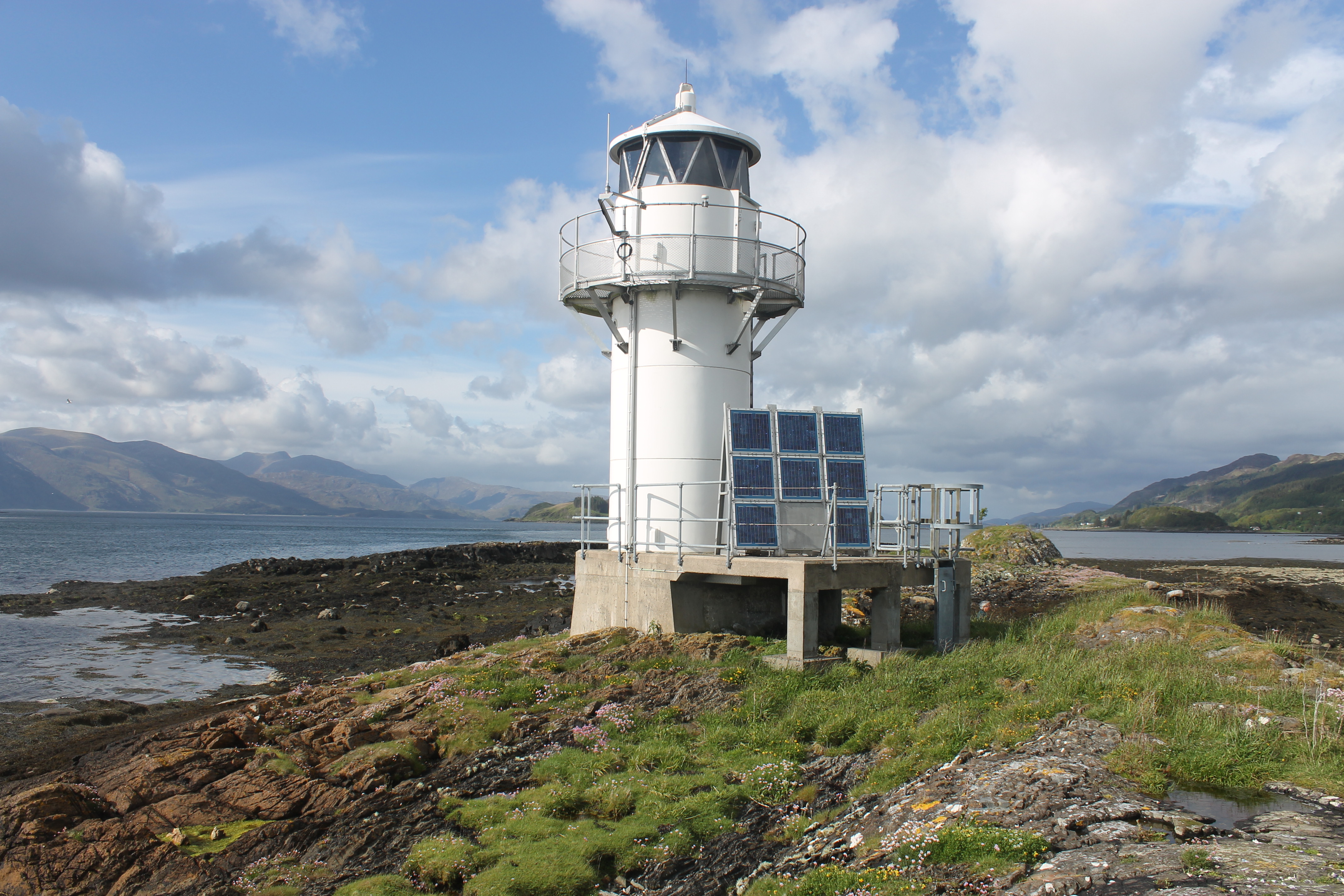
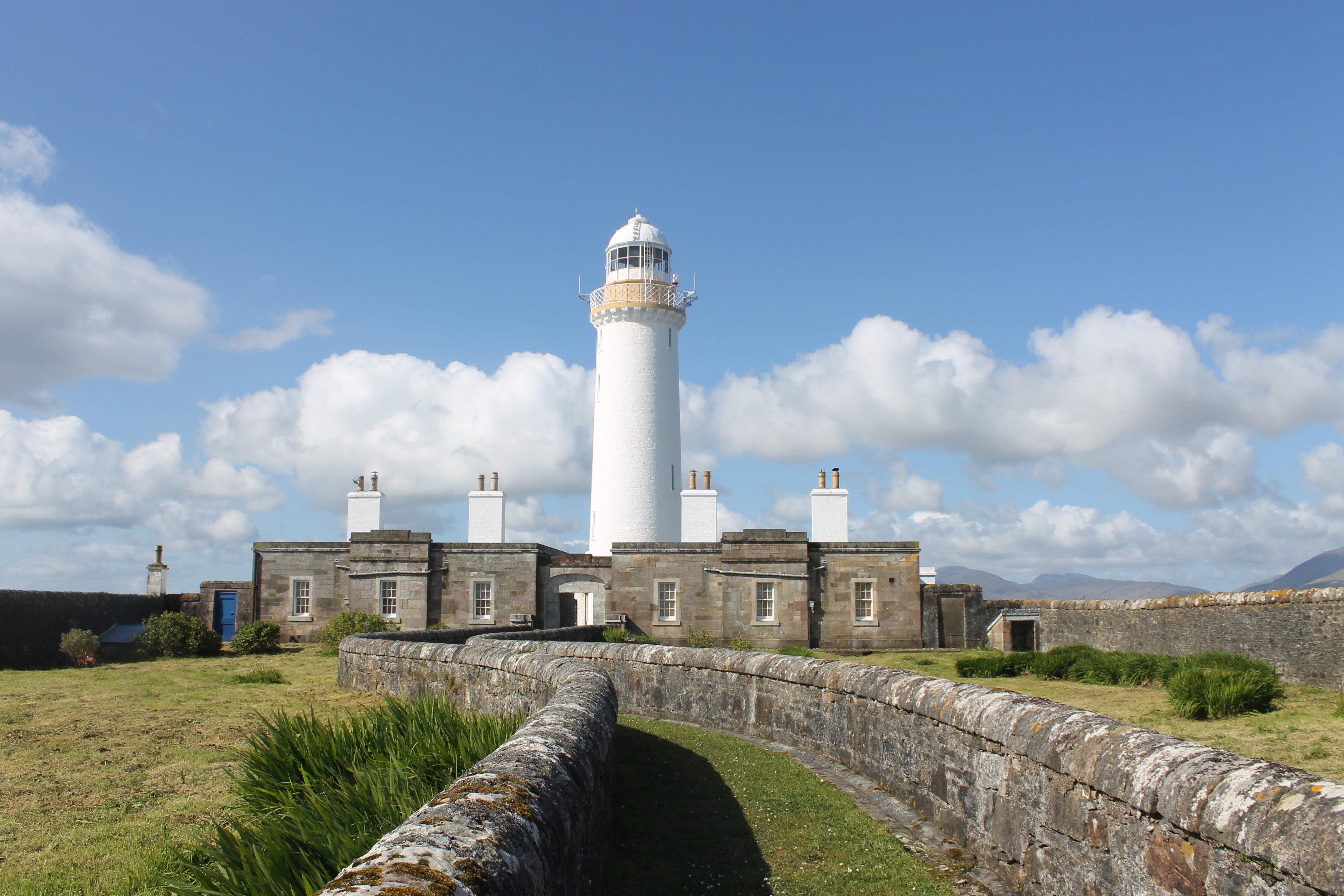
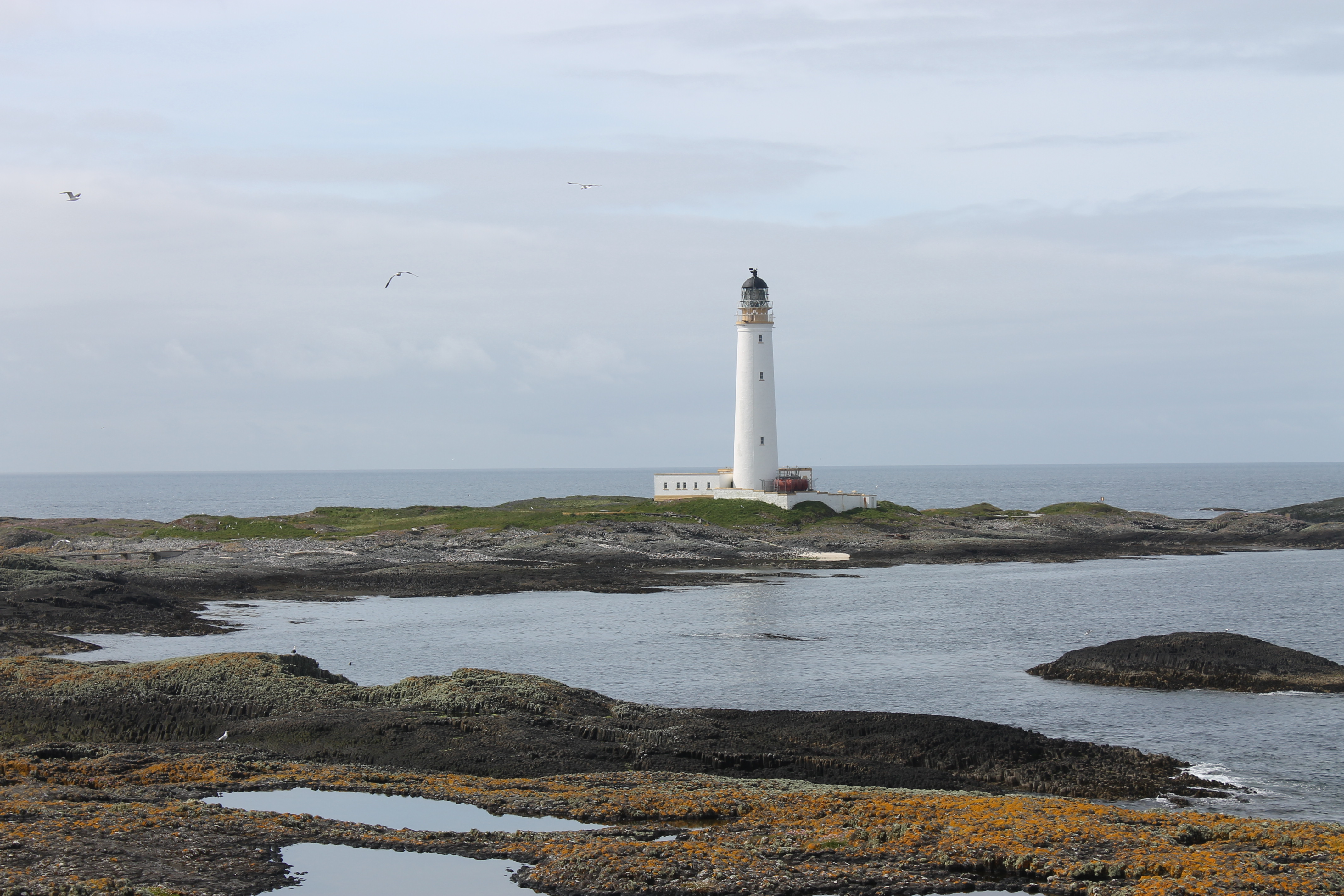
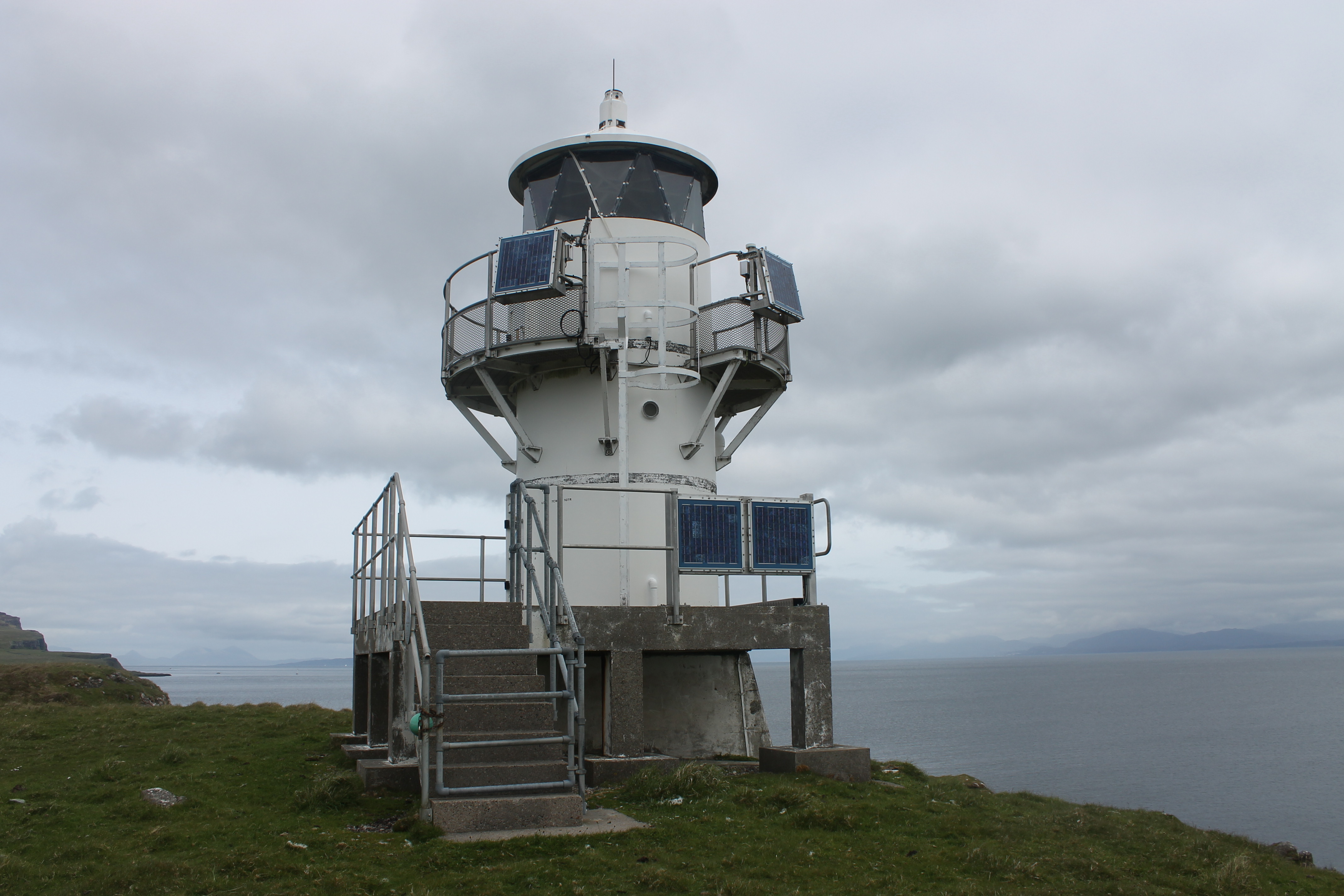
There aren’t a lot of places where you can see multiple lighthouses in one view. It’s possible to see a number of lighthouses in quite a short space of time, but not often you can get a picture of more than one or two at a time. This is what, for me, makes the Calf of Man a little bit more special.

In my last post, I said that my next lighthouse trip would be in Wales, but we made a fairly last minute decision to spend a few days on the Isle of Man. So, last week we spent some time on this island (more on the main island to follow in a separate post) and were fortunate enough to get over to the Calf of Man with Isle of Man Diving Charters on our first day there. We were lucky as high winds were predicted for the following two days and the boatman wasn’t even entertaining the thought of going out then. It was an early start for the three of us, but we arrived a little early and waiting around for quite some time before anyone else arrived. We were told the boat would be leaving at 8.30am so to be there at 8.15. We arrived at about 8.10 and saw no one for at least 20 minutes when others turned up and the boatman eventually arrived. This was our first experience of the Isle of Man’s laid-back attitude. If we hadn’t been so worried that it had been cancelled and we would miss the chance to go, we may have appreciated this apparent cultural phenomenon a little more.

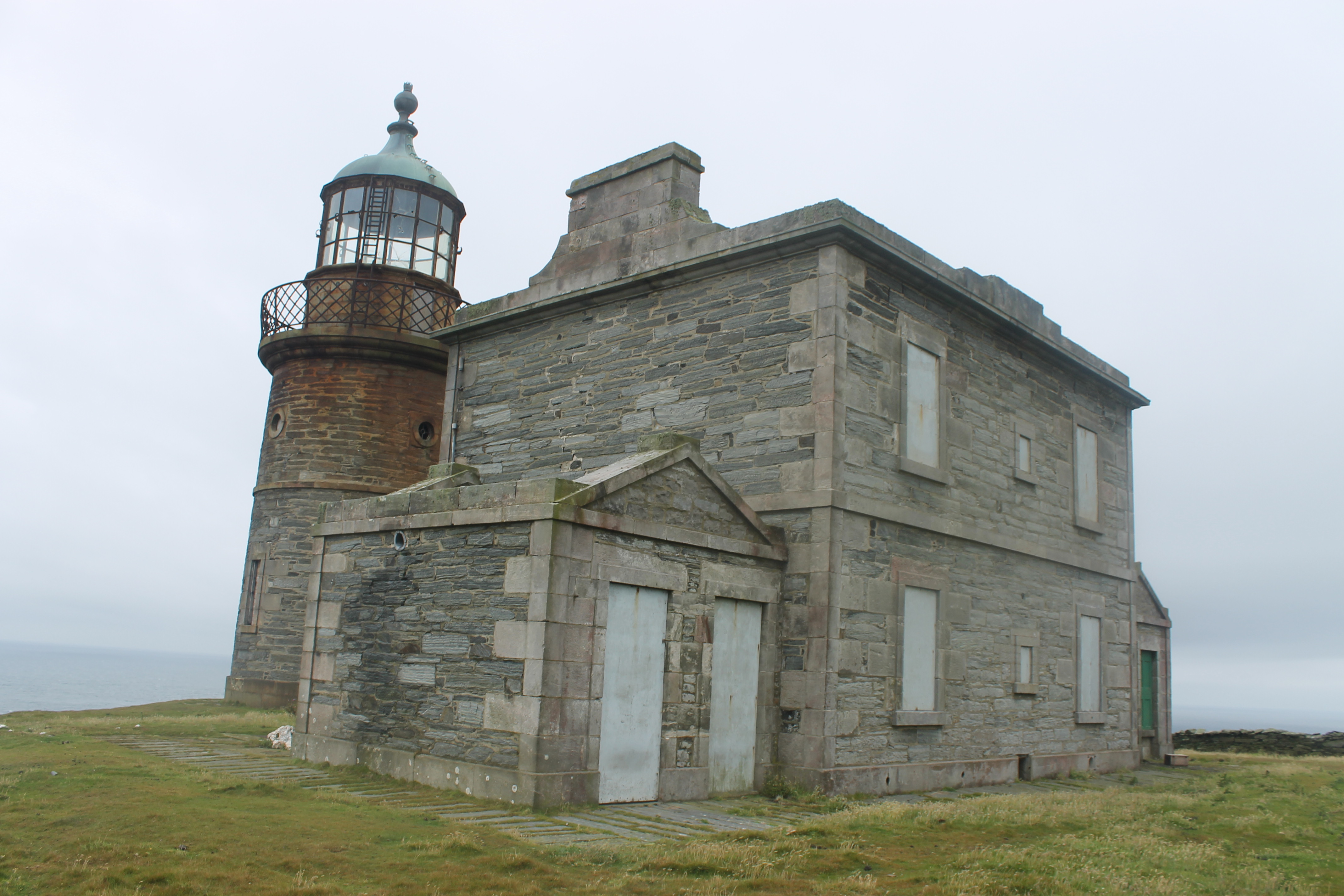
The lower of the 1818 lighthouses

The journey over to the Calf went well and once we’d set foot on dry land at Cow Harbour we set off towards the lighthouses, which happen to be in fairly close proximity to the island’s high point, so we were both happy. It was a nice walk along and we passed the house which contains accommodation for visitors and the wardens.

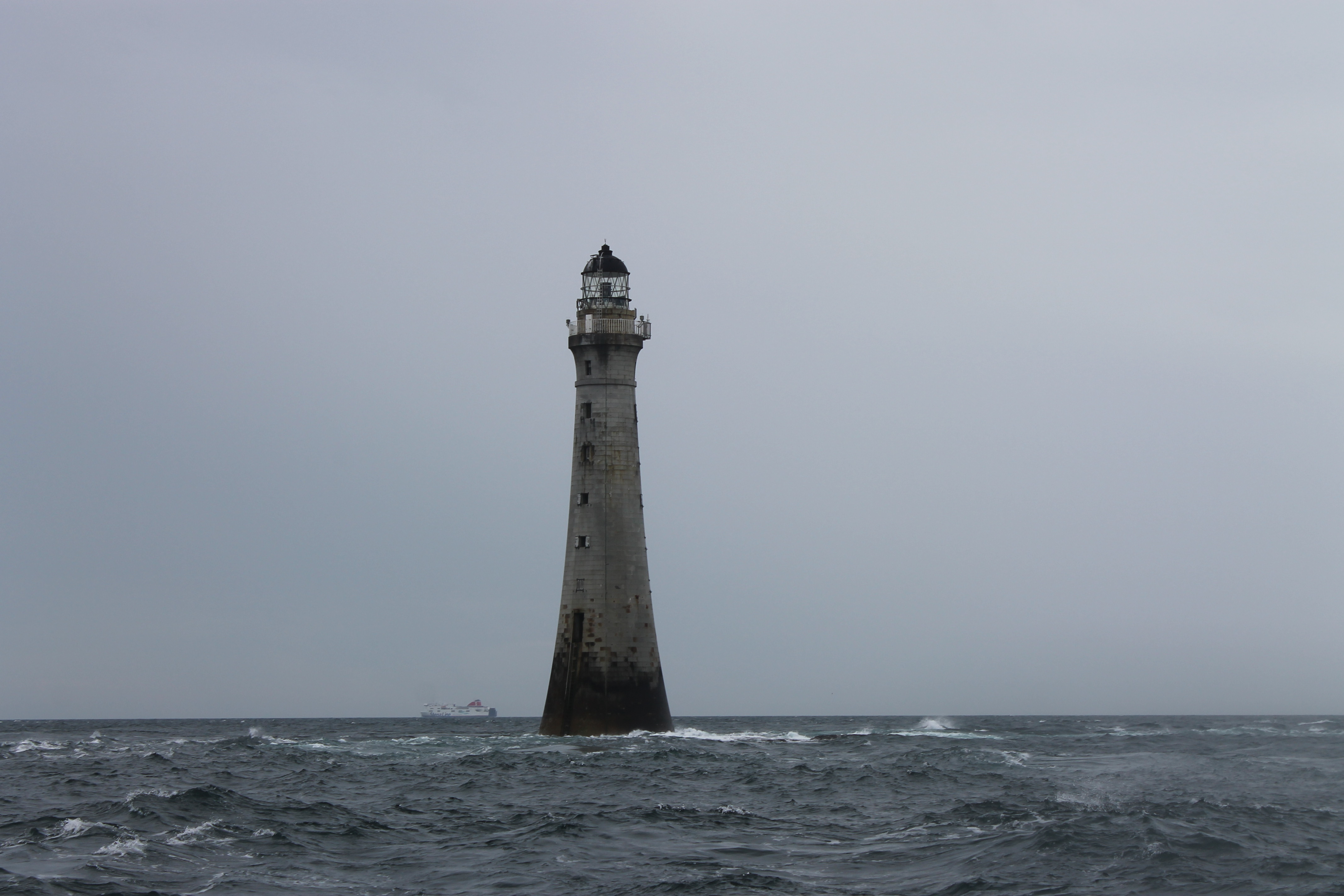
Not only does the island have three lighthouses, none of which are operational, but Chicken Rock lighthouse also sits a mile off of the island. This was the first of the lighthouses we spotted. There’s something very special about a rock lighthouse, they never disappoint. It wasn’t long after seeing Chicken Rock that the other three came into view.

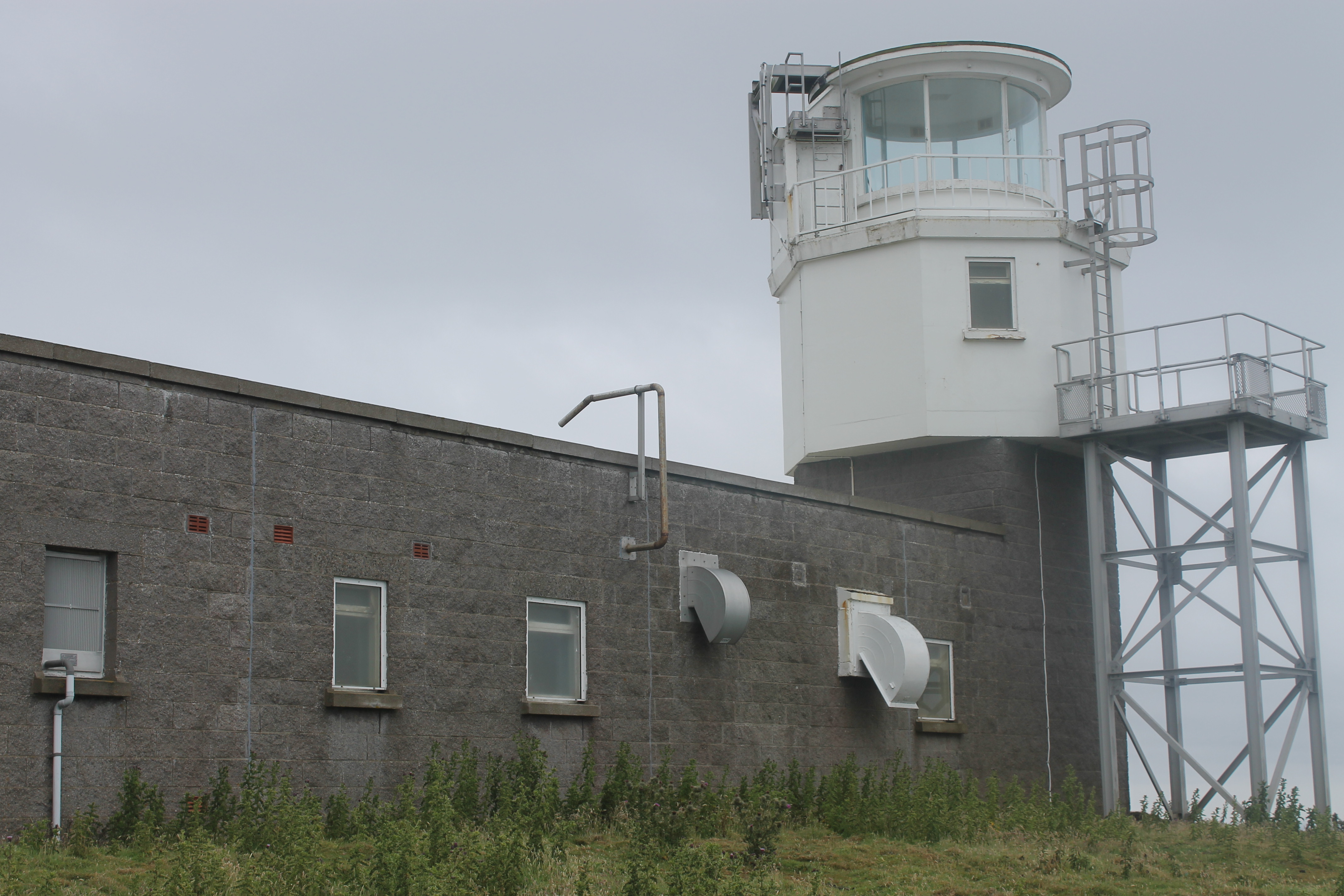
The 1986 lighthouse
The 1986 lighthouse

The two similar-looking lighthouses on the island were build in 1818 by Robert Stevenson & Co. to work as a pair, guiding ships away from the dangerous Chicken Rock. In 1875, however, a lighthouse was built on Chicken Rock itself and the two lighthouses were decommissioned. The fourth lighthouse was built on the island in 1968 by the Northern Lighthouse Board and the lightkeepers lived in the lighthouse building until automation took place in 1995. This lighthouse was finally discontinued in 2007 when the Chicken Rock lighthouse was upgraded. The buildings of the original 1818 towers are still fairly intact (particularly the lower), although the glass of the lamp rooms has cracked in various places. The buildings within the 1968 lighthouse compound is, as Bob said, “very 1960s” and has quite a unique look about it, with the short octagonal tower perched on top of the building. It was quite interesting to see the old fog horn station near the lower lighthouse with, what looked like, an orchestra of trumpets sticking out of it.

The higher 1818 lighthouse

After seeing all of the lighthouses as close as I could, my main aim then was to get a picture of the four lighthouses all at the same time and, fortunately, this meant heading to the island high point. We wandered on up and had lunch at the top, while Seumas had fun “walking” around the high point and finding what we thought was a wildlife camera, which clicked while he was standing in front of it. So, somewhere out there it’s likely that there is a picture of a small boy walking towards the camera on the high point of the Calf of Man! I imagine they’re not used to seeing that!

When we left the high point we headed back towards the lighthouses via a different route, which allowed us to get the ideal picture (see top of post).

Chicken Rock lighthouse

In the lead-up to the boat trip and on the day itself we spoke to the boatman about possibly sailing around the Calf of Man and getting a bit closer to Chicken Rock lighthouse (if you don’t ask, you don’t get). When he came to pick us up from the Calf, he still didn’t sound entirely sure, but said we’d give it a go. I’m pleased we did as we managed to get nice and close, while also getting some views of the coastline around the Calf of Man and views of the three lighthouses from the sea. We were really grateful to him for getting us around there. I think the others on the boat enjoyed it too, even if it wasn’t what they’d expected to be doing. An added bonus all round!

It was a great half-day and once we’d arrived back on the mainland we went to a tea room with views across Calf Sound to the Calf of Man. More on the mainland of the Isle of Man coming soon 🙂

Alone on an abandoned island

I spent Sunday on Stroma, a small island just north of Gills Bay in Caithness. The island was doing quite nicely, population-wise, in the early 1900s, but as the years passed residents began to leave due to its lack of opportunity, increasing economic problems and it’s isolation from the rest of Caithness. The final native residents left in 1962, leaving only the lighthouse keepers until the lighthouse was automated in 1997. The island is now owned by the Simpson family who graze sheep and cattle there. They also, very kindly, will take groups of people across to the island for a day to have an explore. We have a trip booked for the end of August, but an opportunity came up for Sunday, so Bob and I decided one of us would go on this trip and the other could go later. I drew the “long straw” and got Sunday, so off I went this morning to catch the boat.

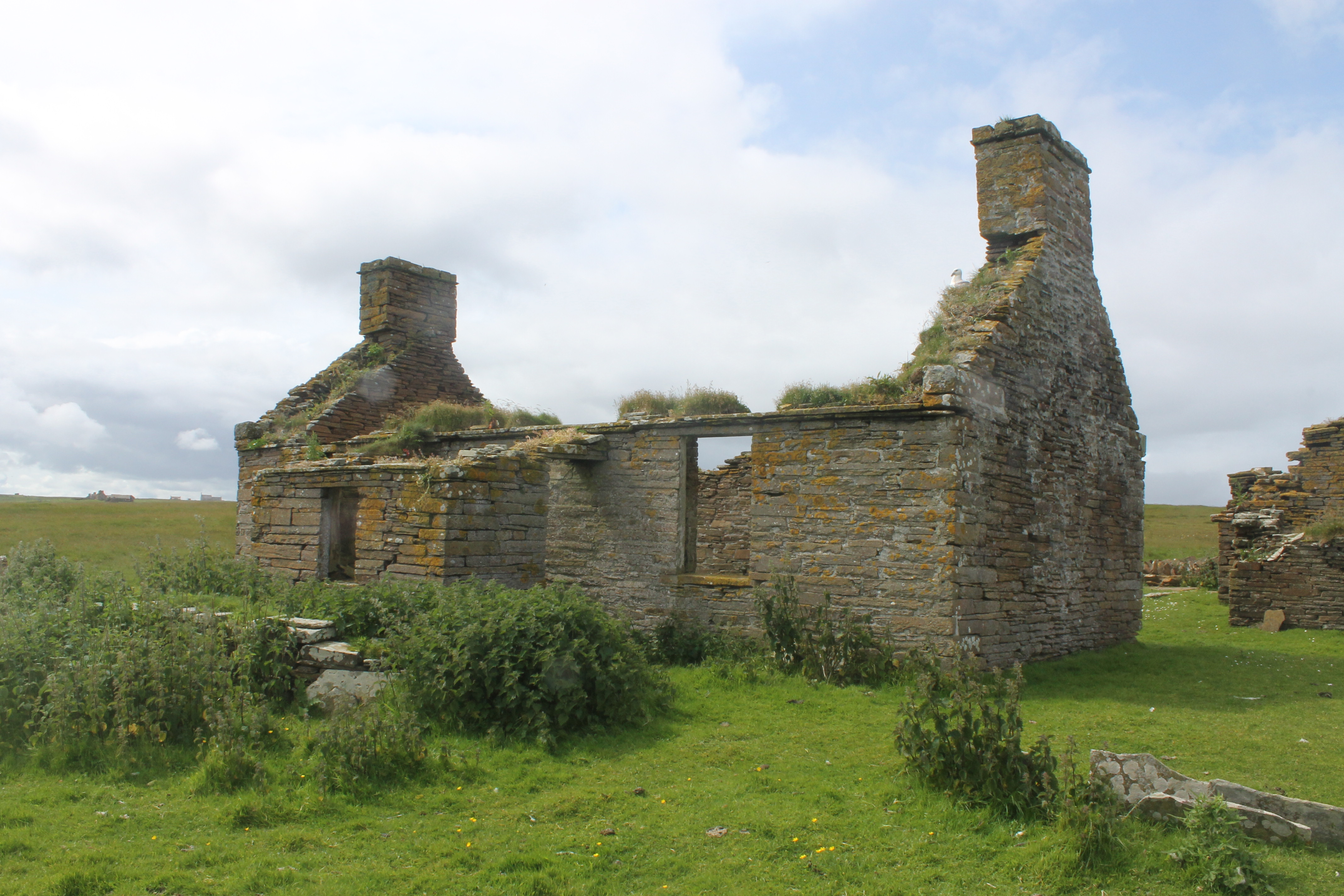
Just one of the derelict houses

We left Gills Bay and a short time later, arrived at the harbour. I was quite impressed by the piers they had there. Not something you’d expect to see on a island with no inhabitants! My first priority was to reach the lighthouse on the north point of the island, which I’d previously only seen from the ferry to Orkney. I set off on the path leading straight up. Almost immediately the derelict houses appeared, all in varying states – some with their roof and windows semi intact and others with no roof, windows and barely any walls at all. As I walked along I heard a gentle hum from behind which grew louder and louder. I turned and saw a man approaching on a quad bike. I stepped aside to let him pass and he joked ‘Cannae move fae the traffic!’ and continued merrily on up to one of the only houses that still looks intact. This house sits just next to the old manse which has a bit of a run down telephone box in front of it – a reminder that it wasn’t too long ago that the island was populated. A little further on is a memorial for those from Stroma who lost their lives in First and Second World War. I then followed a couple of sheep who led me (ran away from me) almost all the way to the lighthouse.

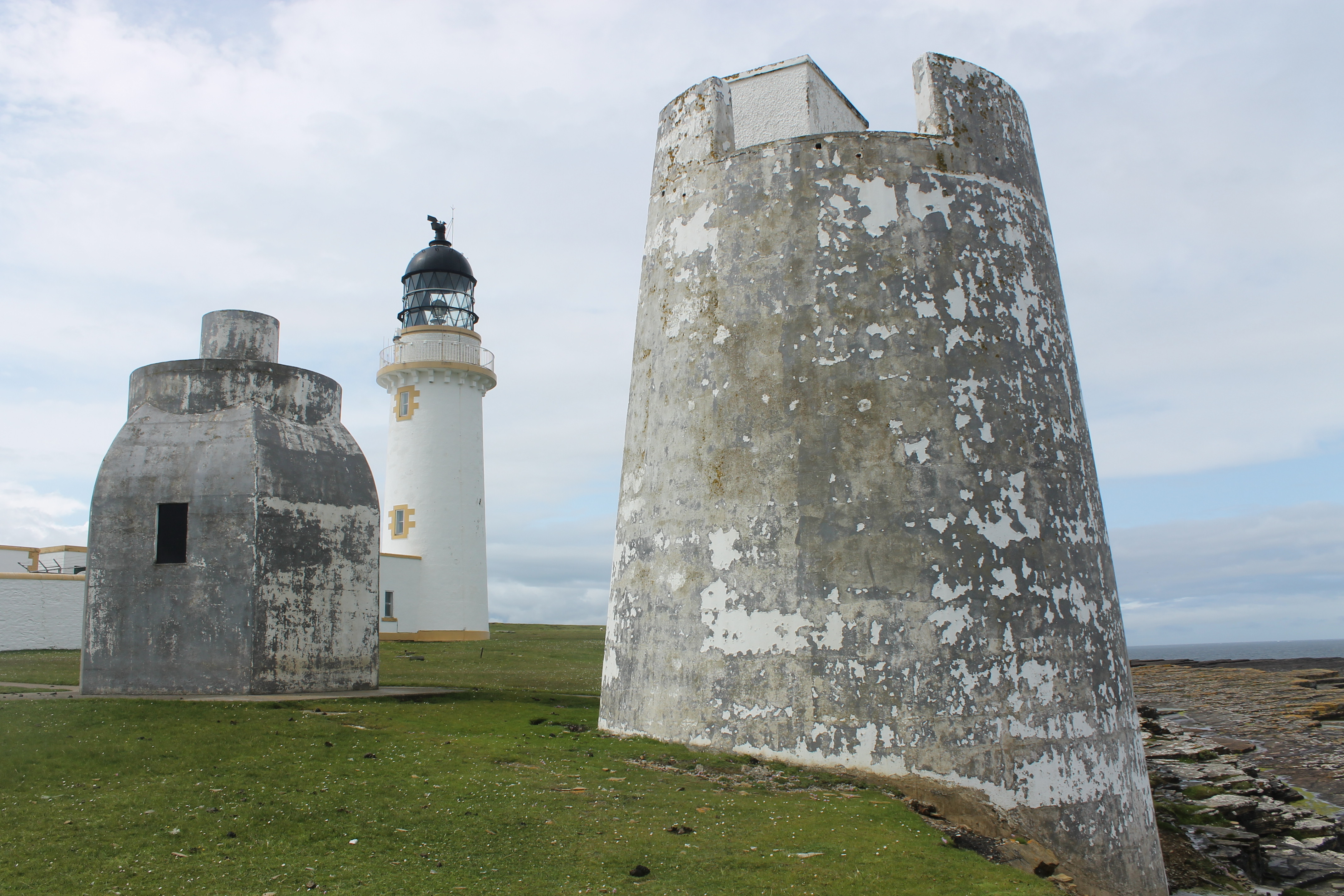
Swilkie Point lighthouse and the foghorn buildings

The lighthouse is a typical Stevenson creation – a bit of a beauty. There is now a helipad next to the compound for the Northern Lighthouse Board to get easy and quick access to the lighthouse. They built a pier a short distance away on the east coast of the island for bringing in supplies when it was manned and it’s possible to see a building near this pier that has a very Northern Lighthouse Board-look about it (white building with yellow/beige-colour decorative stonework). Between the lighthouse compound and the coastline there are two stone structures. I was aware that there was previously a foghorn there, a fact which was confirmed by the presence of a warning sign saying ‘Noise’ near the lighthouse. These two structures are both different shapes and I’m not entirely sure whether they were both foghorn related or if one of them served another purpose. I was able to walk into both of them, although there’s not a great deal to see. At this section of coastline there are large, flat platforms of rock beyond which you can see a great deal of movement in the sea where different tides meet and clash. It’s a great little spot.

The Gloup
The Gloup

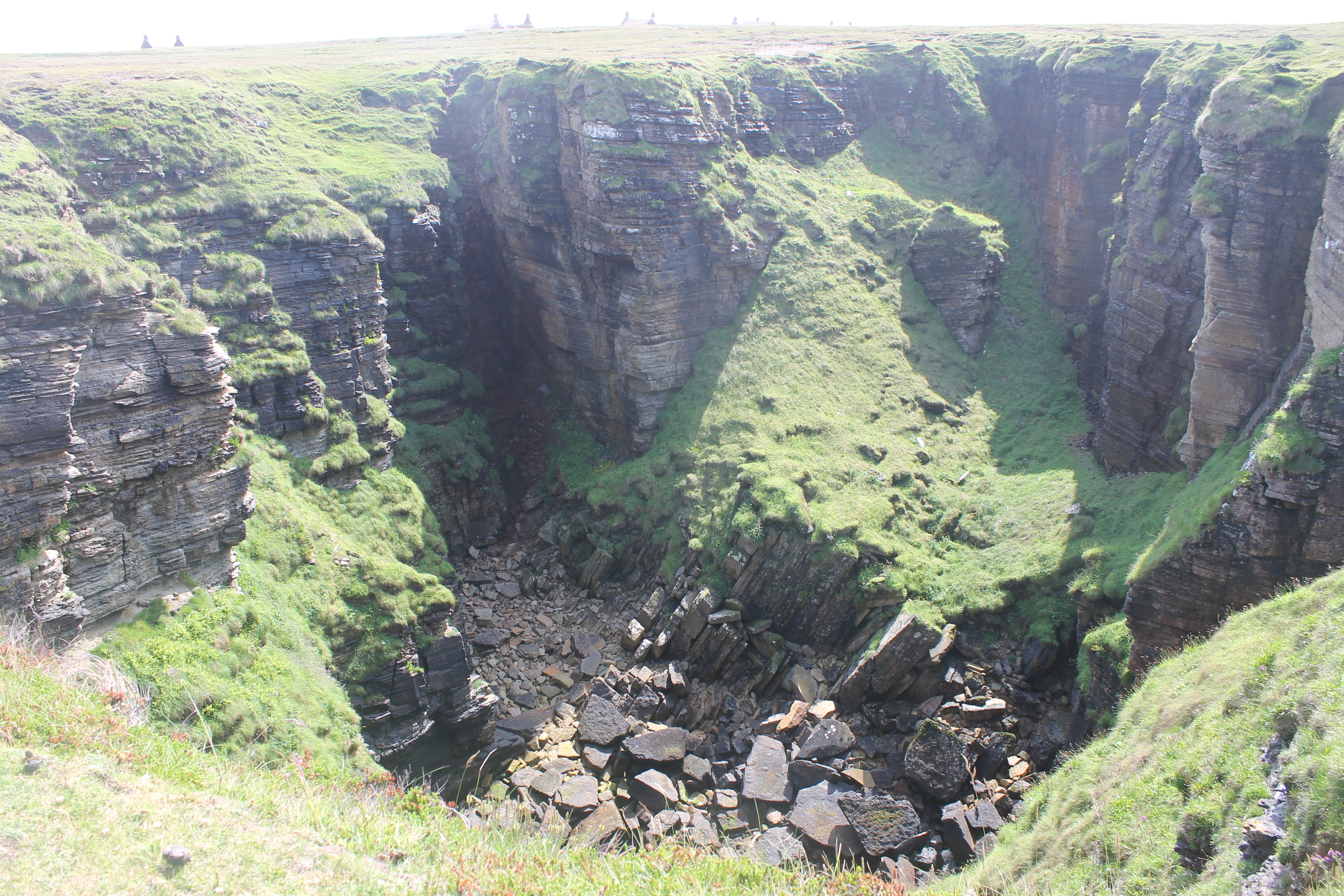
From the lighthouse I took a quick look at a geo on the east coast before heading back inland. On the way I passed a ruined house with no roof. Inside the grass was growing and I spotted a baby gull in the corner shortly before it’s mother threatened to dive-bomb me! I found the main path again and decided to head to the west coast to take a look at the Subterranean Passage and The Gloup. Due to the sheer cliffs and the state of the coastline I didn’t see a great deal of the geo at the entrance to the Passage as I wanted to make sure I didn’t end up at the bottom! The Gloup is fantastic. It’s a huge hole in the ground that is linked to the coast by a tunnel that runs under the ground out to the Passage entrance. A stunning thing to see, especially the vertical, flat cliff above the tunnel entrance.

The wrecked Golden Promise

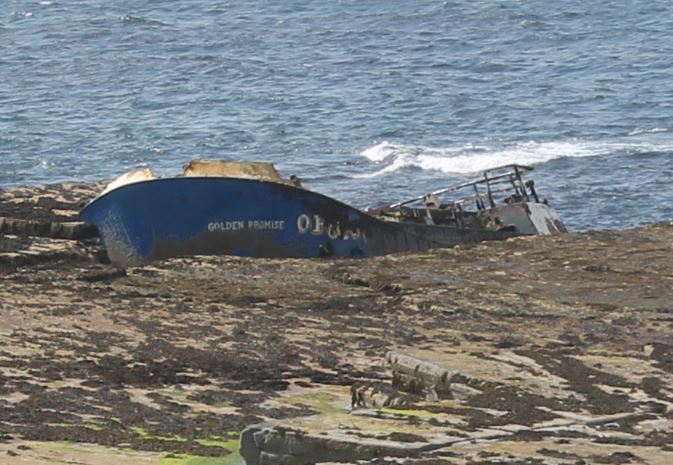
From The Gloup I went to head back to the path, but then realised that I wasn’t far at all from “Loch Lomond”, which was created by the island’s residents in order for them to sail model boats. There were a few little birds running about near the water. It wasn’t long after this, while attempting to head back to the manse, that I spotted a couple of great skuas. Having been to a few obscure islands in the last couple of years, I was aware that these aren’t the type of bird that you’d want to take home! Instead of reaching the manse, I hugged the coast to avoid being attacked by one of the beasts. On another section of flat rock, I spotted a wrecked ship, the Golden Promise, which I have since found out was wrecked in September 2011 after its skipper fell asleep. Everyone had been rescued, but the boat is rusting away there now.

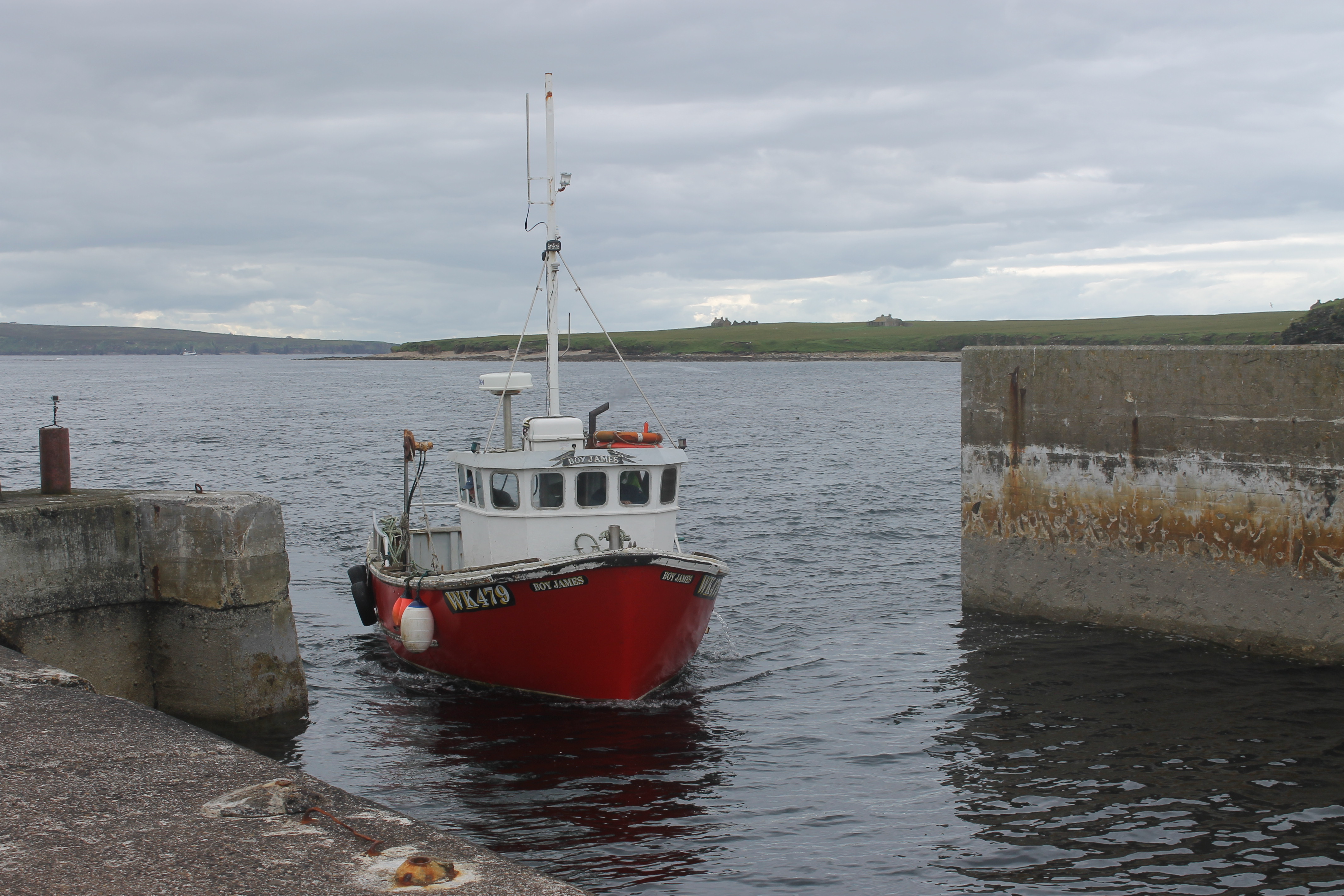
The boat arriving to collect us

I finally reached the path again and quickly wandered along to the highest point of the island, making sure that there were no skuas about. I then walked along a stretch of the south coast of the island before watching seals in the sea from a nice little beach near the harbour. As I wandered around the south of the island I could see the movement of the tide as the stretch of sand between the south west point of the island and the interesting beacon just off of the coast appeared and then disappeared again.

I had a great day on Stroma, although I realised how much I’m now used to going to this type of place with Bob and not alone. The place has a lonely feel about it when you’re on you own. Although there were about 13 others on the trip, for the majority of the time we were there, I couldn’t see any of them. This may have been because they wanted to get pictures of puffins and I had other priorities. One thing that I felt particularly moved by while there were the measures people had taken to weather-proof their houses while they were occupied, such as walls around their gardens and doors on the sides of porches to protect them from the wind. It must have been a very sad day for each of the families when they left, knowing that these measures would no longer matter and the houses would be at the mercy of the weather from that day.

What I found most interesting about the visit, though, was the transition from the sadness I felt about this place in seeing all of the abandoned houses to the realisation that, while there are no humans left, there is a great deal of life still there. There are birds or sheep everywhere you look and, while they may not always be there, during this visit there was no shortage of animal life. It’s a great place and I hope to be able to visit again in the future to see the bits I missed this time 🙂

Back to Devon and Somerset

Towards the end of June we flew south to Bristol for a friend’s wedding. With some time to spare before heading for Oxfordshire, we decided to do a little tidying up in Devon and Somerset. When we had previously been in the area doing some lighthouse bagging back in June 2013 we thought we’d got them all. However, we have since reviewed the Ordnance Survey mapping in various scales and found that three in this area were marked as beacons on the 1:50k scale, but as lighthouses on the 1:250k scale. So we contacted Ordnance Survey directly to ask for clarification on the categorisation of these three potential lighthouses. They responded to say that they were lighthouses and that there was an error on the mapping, which would be resolved in the next update.

Crow Point lighthouse

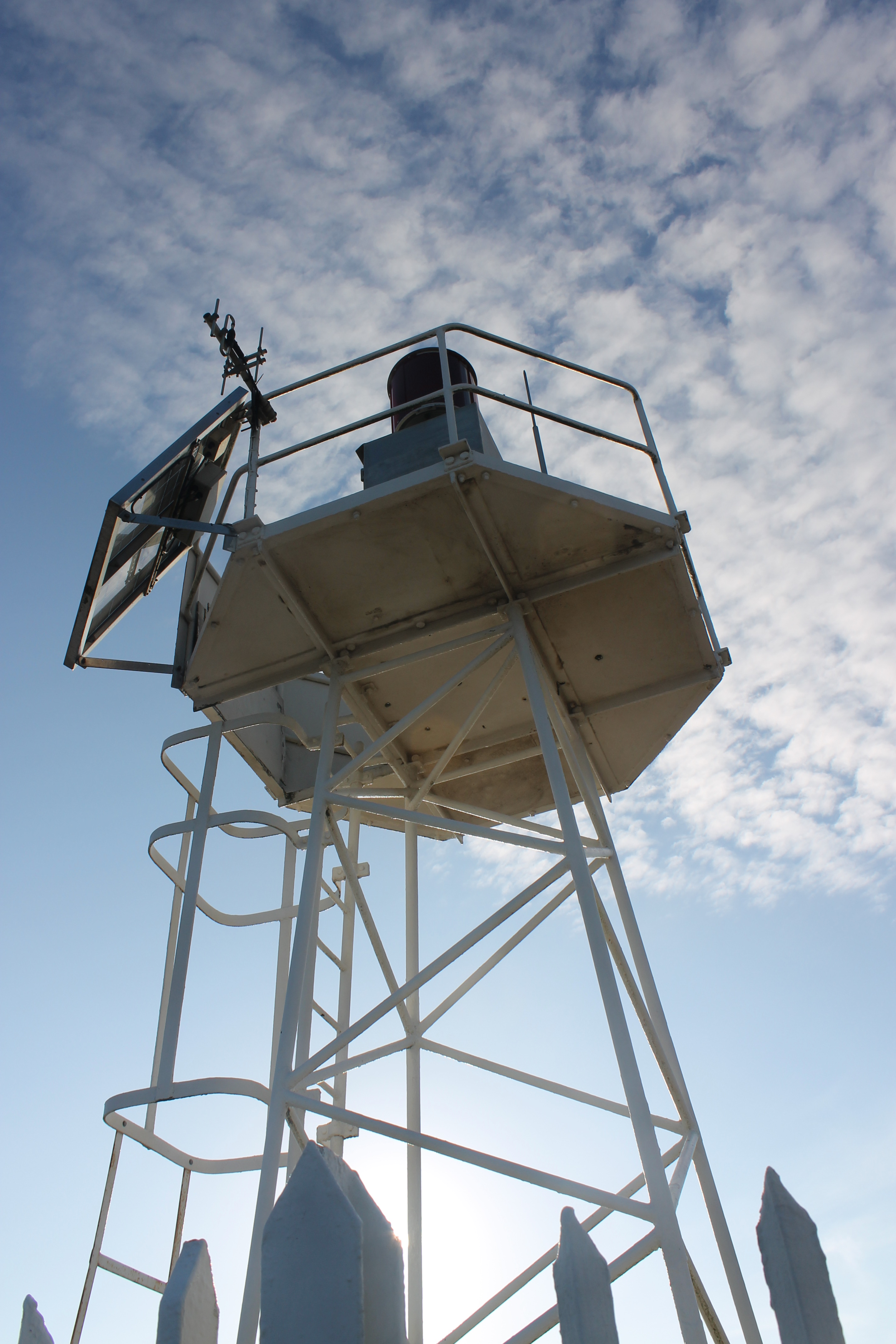
So, after arriving in Bristol we headed west for North Devon and the Barnstaple area. Just before reaching Braunton we turned off and paid £1.50 to use the toll road along to Crow Point. The area is sometimes used as a military training area, but there was nothing going on when we arrived. We parked up and then began the stroll along to a sand bank, knowing only that the lighthouse should be someone on the bank. It was only when we got to the top of the sand bank that we were able to see what we were looking for. It wasn’t the most inspiring of lighthouses. Kind of like the English version of the Scottish “flat-packer”, as we call them. The only thing I can really say in favour of it (aside from its use for navigation) is that there is a great view back towards the mainland if you walk around the west of the sand bank. The sea was lapping just below us on the other side of a row of rocks. We were also there as the sun was going down, which always makes for a nice atmosphere.

Battery Point lighthouse

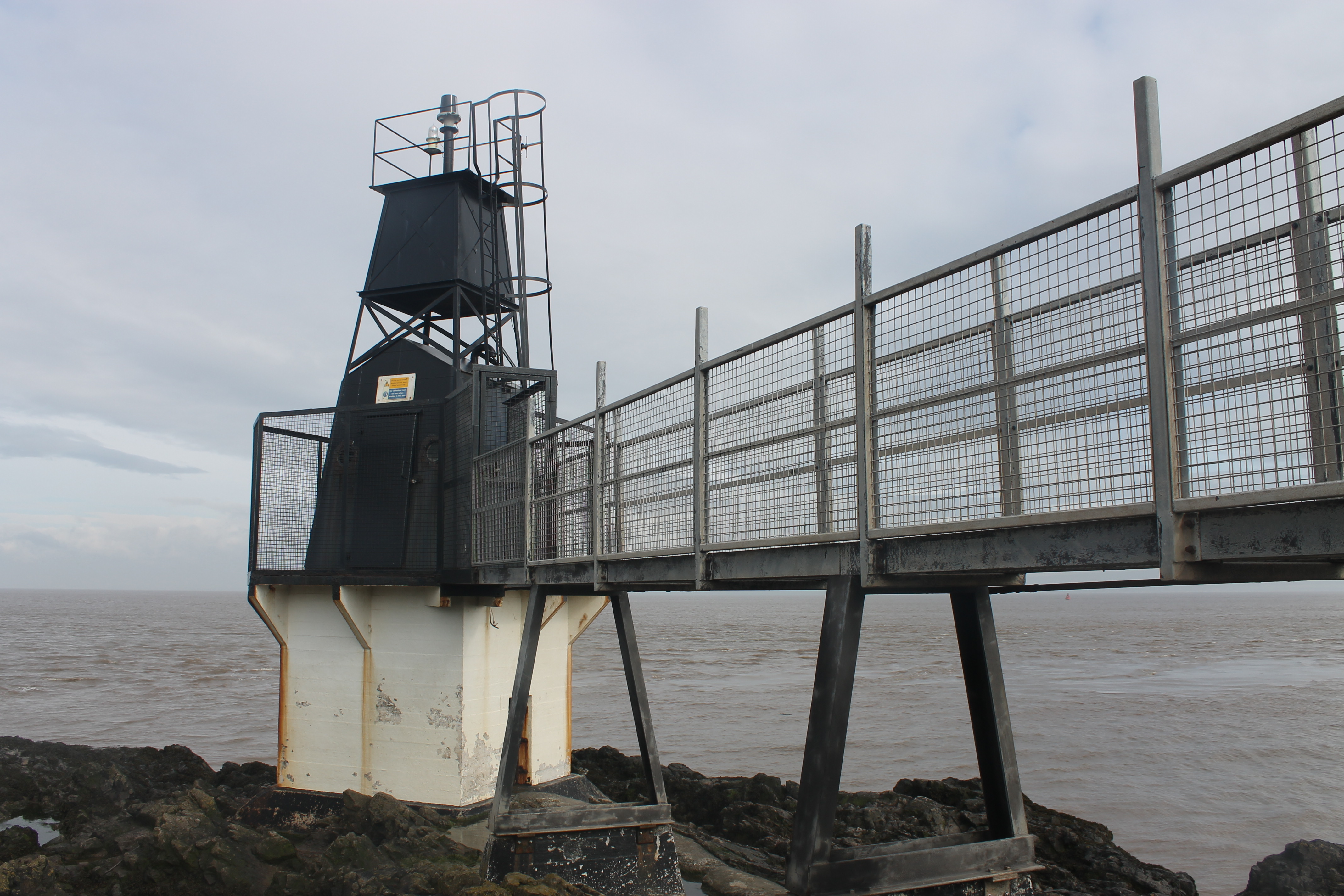
The following day we set off early from our hotel in Portishead to bag a couple more lighthouses before we drove to the wedding. Fortunately these two were not far from each other, both in Portishead itself. Our first stop was Battery Point, just a short distance from the centre of the town. This lighthouse is unlike any I’ve seen before. It’s not one of the “wow” structures and does have similarities to Crow Point, but it has its own uniqueness (as you can see from the picture). There is a small bridge leading across to it, which you can wander across and you can also stroll around on the rocks near the base. We did both, of course. The location is fantastic, a really relaxing sort of place. Nearby there is a memorial stone erected by the Merchant Navy Association North Somerset Branch in 2005 in honour of those from the West Country who sail past the point, some of whom have not returned. Some flowers and messages are placed at the bottom of the stone.

Black Nore lighthouse

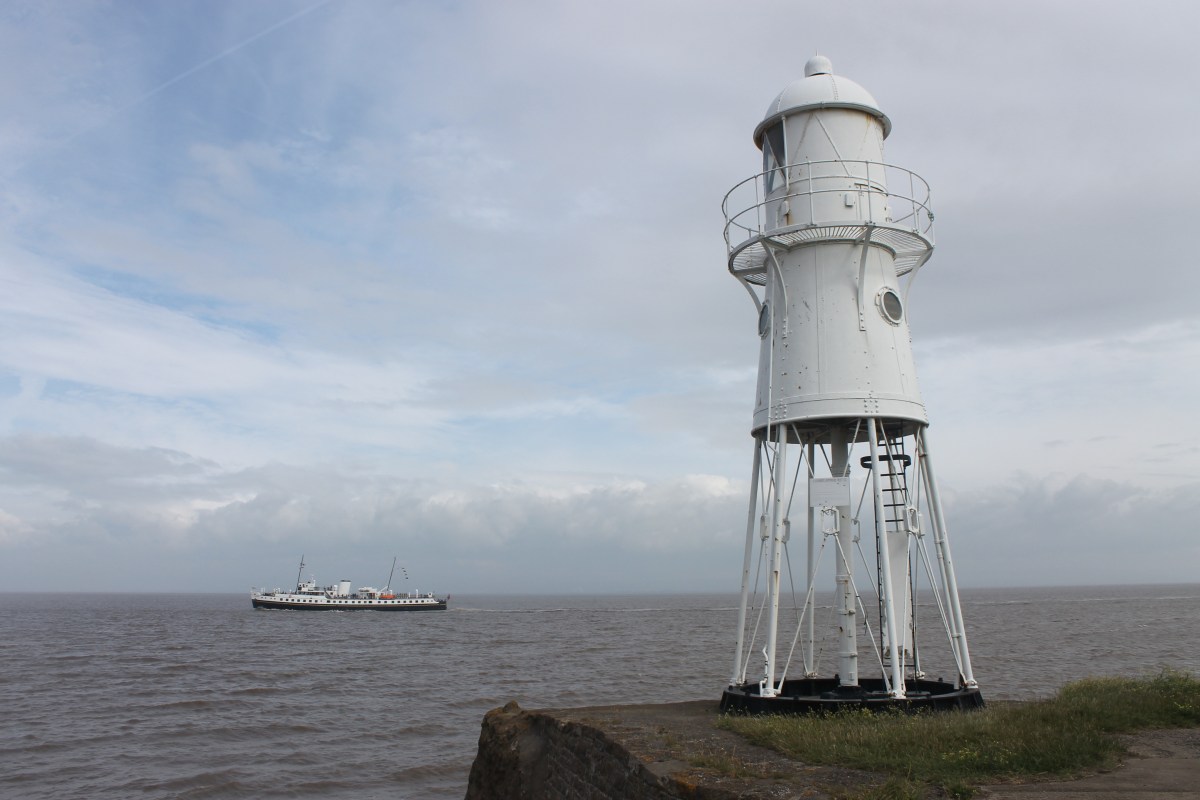
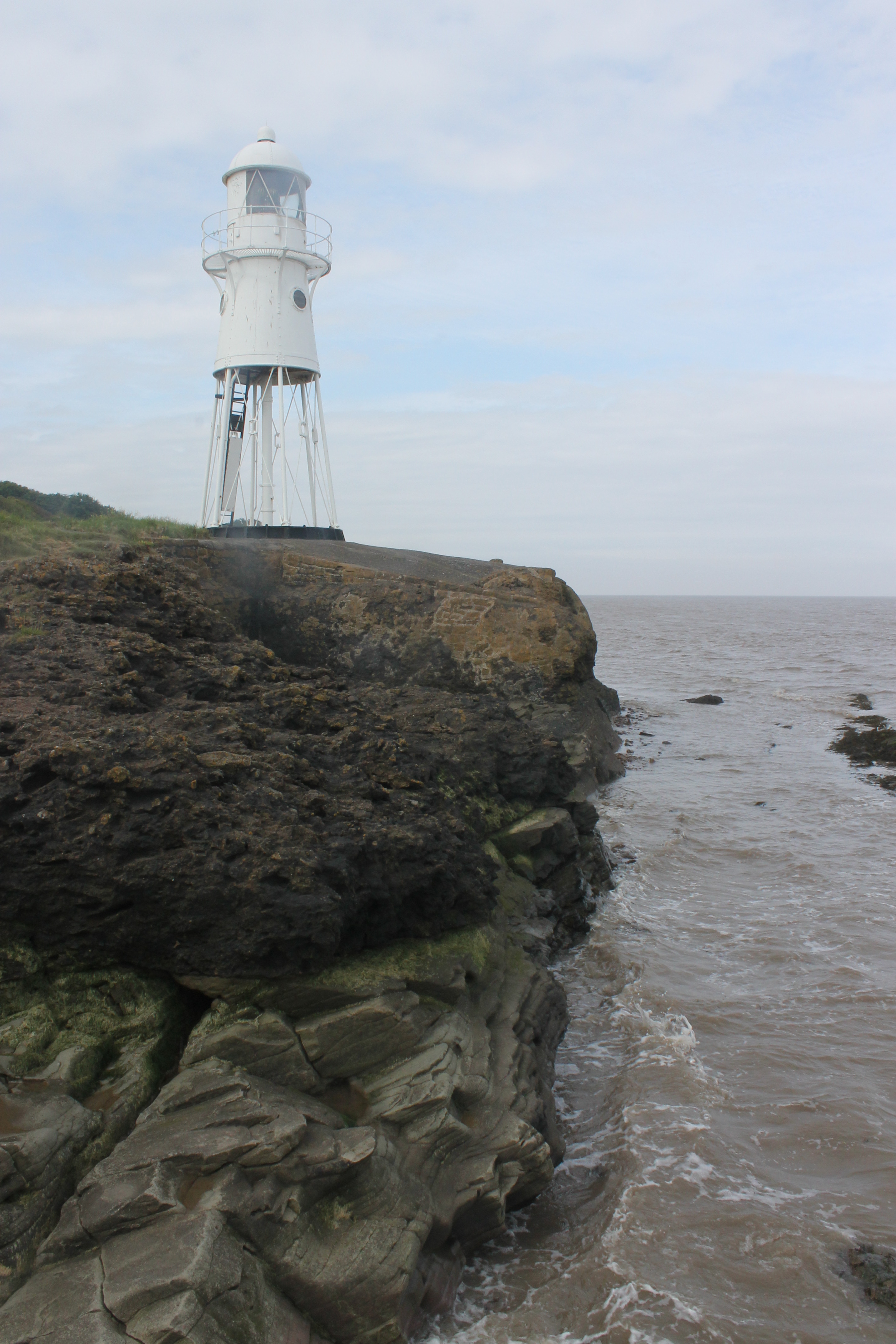
We then drove a short distance across to the west side of Portishead to the West Hills area. We spotted some National Trust signs that looked like they marked paths leading in the right direction for reaching Black Nore lighthouse. I was delighted to see that one of the houses along the road we parked on had a beacon in their front garden (although I’m not really that into beacons) and a beautiful turret-like tower with big windows looking out towards the sea. The walk along to the lighthouse was really interesting. There haven’t been many times that I’ve walked through what seemed like a forest in order to reach a lighthouse. The path runs alongside the coast and you get some nice views between the sections of trees. We reached the lighthouse and, again, it’s not necessarily got the wow-factor like some others, but it is stunning in its location. A really lovely tower and even more delightful that we got to find out a bit more about it. As we were thinking of heading back to the car, we started chatting to a man who was sitting on a nearby bench with his dogs. He informed us that M.V. Balmoral was on its way across from Bristol and we should be able to see it in another 10-15 minutes. He informed us that the Balmoral was built in 1949 and was brought back this year for day excursions after being kept in Bristol Docks in recent years. We decided to hang around to see it. While we were waiting, the man told us a bit more information about the lighthouse. When the light was decommissioned the lens and mercury on which is floated were taken away. The local community successfully campaigned for the lens to be restored and set up the Black Nore Lighthouse Trust in order to maintain the structure, which is the only remaining Victorian iron lighthouse on mainland Britain. The light, which was originally gas-powered and then oil and then electric, is now turned on for special occasions – and they obviously need to send out notification that they are going to do so, in order not to confuse those at sea. He said that a website had been set up about the Trust, but it looks like the domain name may have expired. Hopefully they’ll get it back up and running soon. As we ended our conversation, Balmoral appeared from the east and we watched as it sailed on past – at quite a speed considering its age!

That was it on the lighthouse-bagging front for that weekend. Hopefully there will be more to come over the summer with the potential for some new Welsh island lighthouse bags, all being well! 🙂

Islands and lighthouses – part 2

Eilean an Naoimh lighthouse

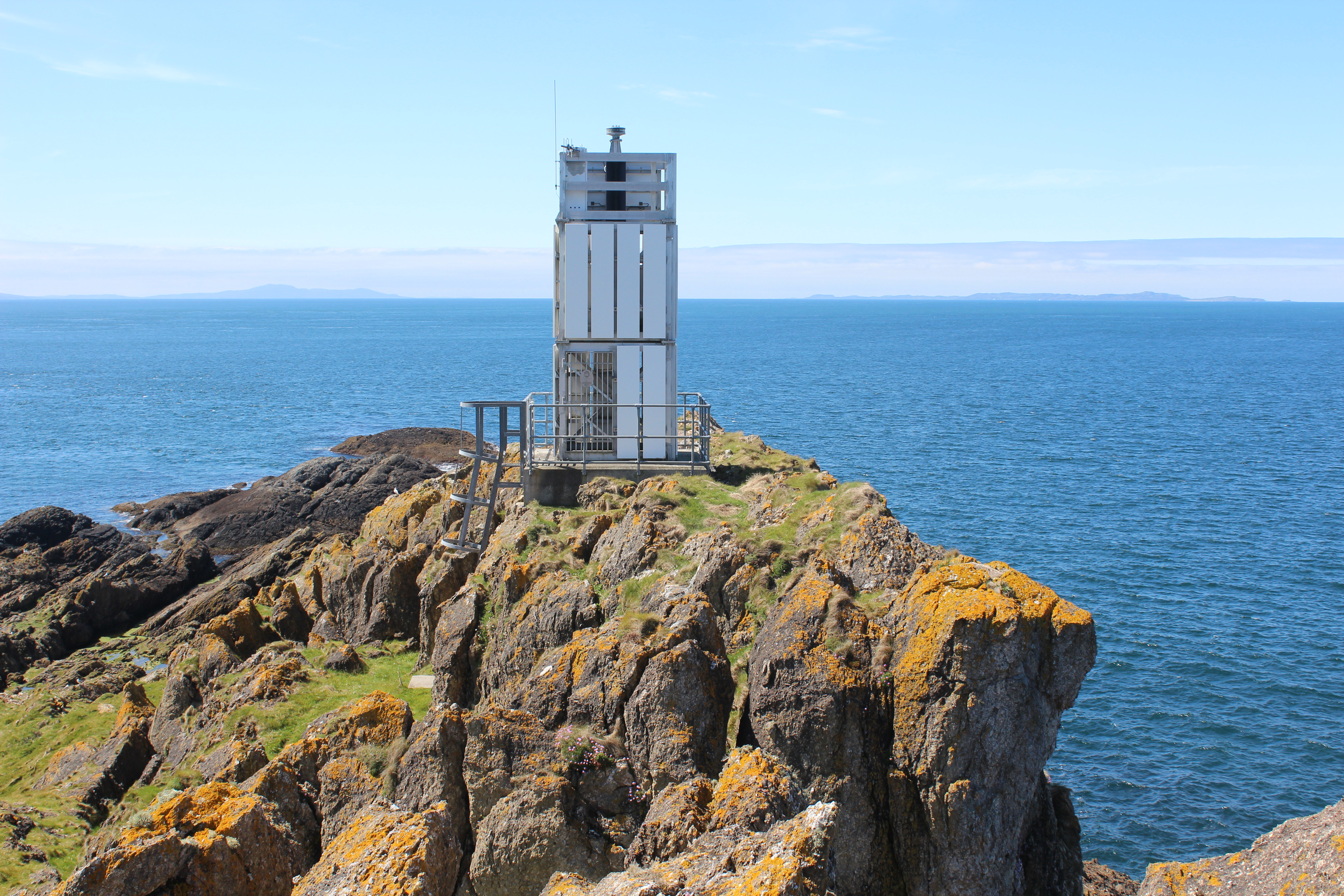
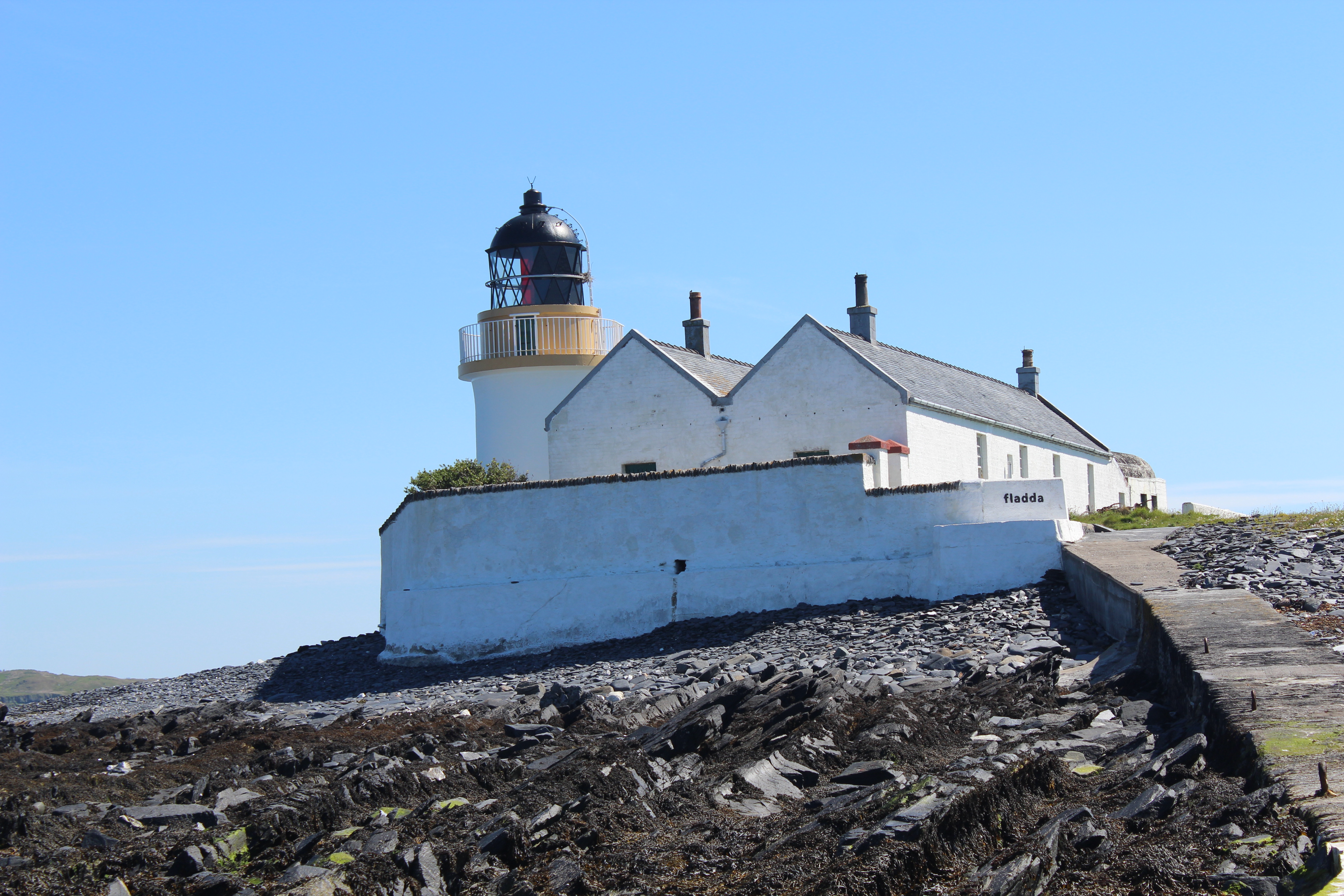
My crazy island and lighthouse-bagging week continued last week with a trip out to the Garvellachs. We were on a fishing boat that day, so it wasn’t so easy to land on many of the islands in this group. While Bob went off, I stayed on the boat. I did leave the boat on one of the islands though, Eileach an Naoimh, as it is home to a lighthouse. It may only be a “flat pack-style” structure, but it is actually in great surroundings. The walk to the lighthouse was a bit of a struggle for me with various terrains to cross and a few ups and downs. But we got there eventually. I wouldn’t say it was my favourite (I’m unlikely to say that about any “flat pack” lighthouse), but it was a good place to visit and there is a fair amount of history on the island too.

Fladda lighthouse
Fladda lighthouse

After the group had reached the high points on a few more islands, we stopped off at Fladda. We’d seen the lighthouse on the way out that morning and it was a welcome relief to visit an island, which didn’t involve leaping off or onto the boat at a very precise moment when the swell was just right! The island seemed very deserted, which meant we could wander freely around and get to the tower. By this point the rest of the group were very aware of my lighthouse fascination and a number of discussions took place about them. I think a few of these island and hill-baggers are developing their own fondness for lighthouses!

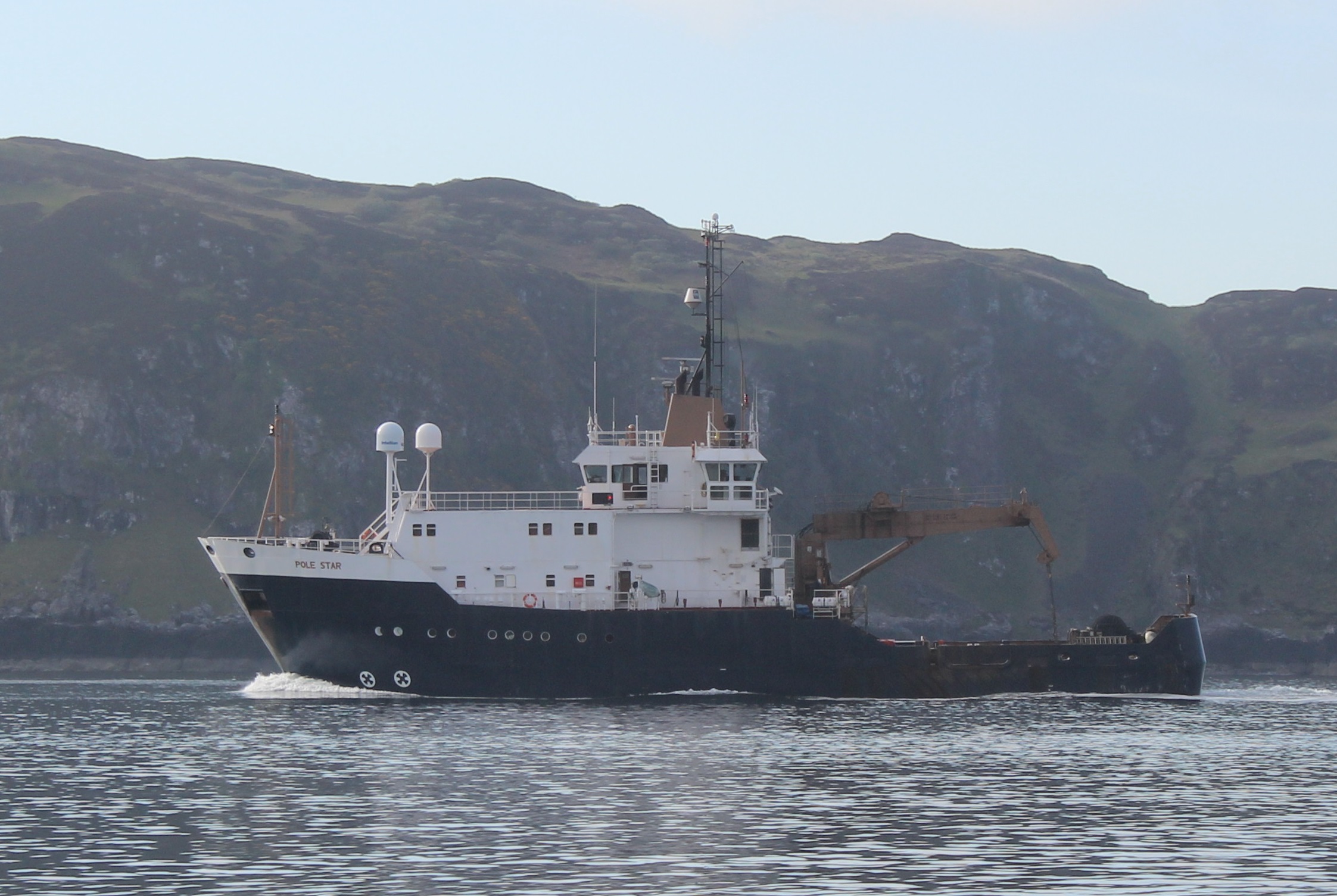
The Northern Lighthouse Board's vessel Pole Star
The Northern Lighthouse Board’s vessel Pole Star

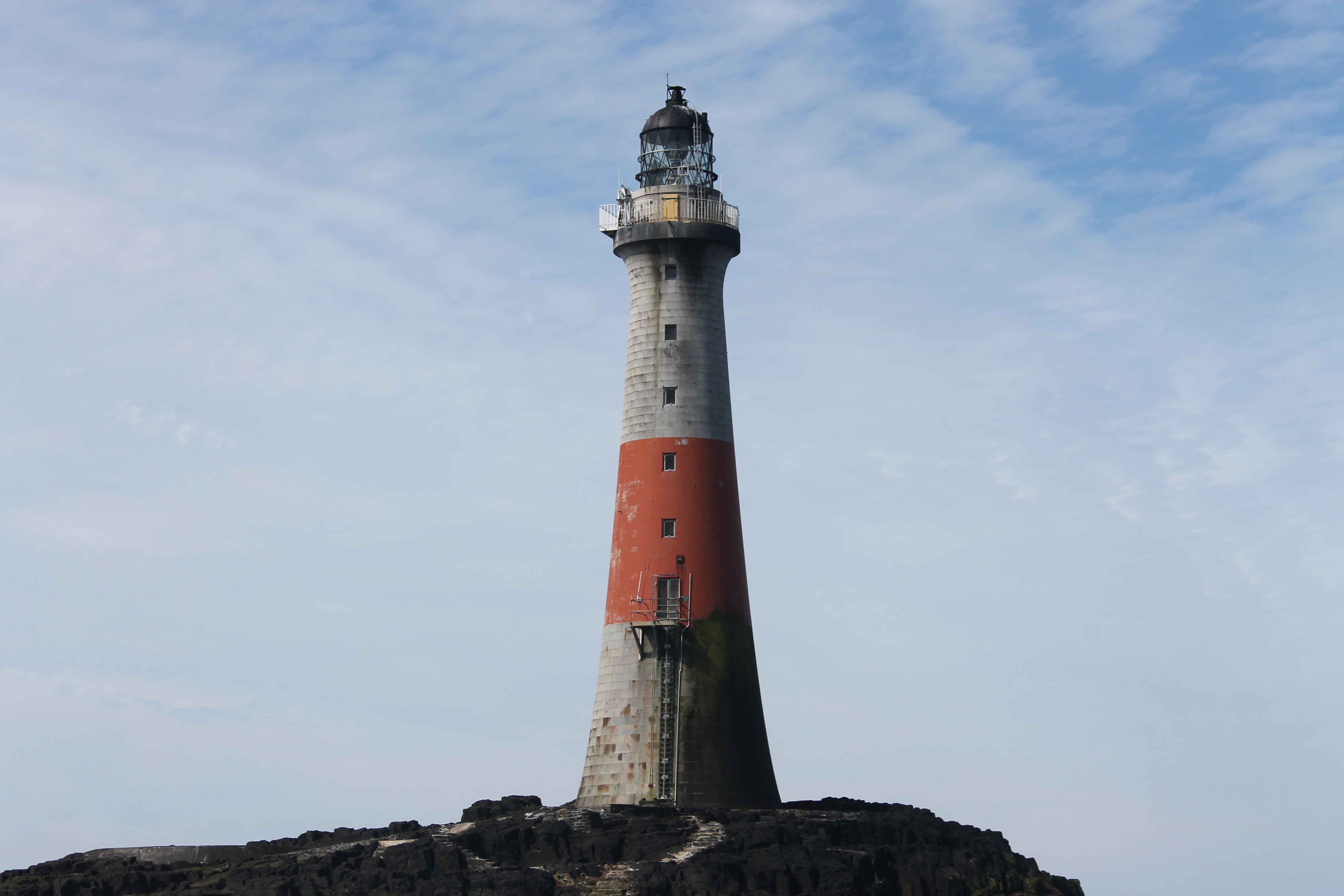
I was delighted to discover that the following day one of the cancelled trips from the previous week would be going ahead. I’d been particularly excited about this one as it involved visiting a lighthouse that I thought I’d be unlikely ever to see in real life. I should have known better really as I probably would have said the same about North Rona, but Bob knew the right people to get us there! Dubh Artach is one of the iconic rock lighthouses of Britain and sits 18 miles south-west of Mull and the prospect of being able to see is close up was an opportunity I couldn’t miss (even if it did mean abandoning our little boy with his grandparents for another whole day). As the sea conditions had been very calm so far that week, we were all secretly hopeful that we’d be able to land on the rock and properly “bag” the lighthouse, but we were also aware that even when conditions were flat calm around Oban and some of the Inner Hebrides, it’s unlikely that it will be the same at Dubh Artach. As we left Oban that morning we spotted a boat that looked similar to the Northern Lighthouse Board’s Pharos ship, which we’d seen earlier in the week. I was able to get access to the web and discovered that it was another of their vessels, Pole Star. Apparently this one doesn’t spend as much time in Oban as Pharos, so we were fortunate to be able to see it.

Dubh Artach lighthouse

On the way out Dubh Artach it was clear that the sea conditions were changing and the gentle, but increasing bumpiness was sending everyone else to sleep! When we got close, the crew from Coastal Connection prepared the dinghy and Bob and I got in with a couple of others. We spotted some steps leading up the lighthouse and there appeared to be a platform at the bottom, which looked like it could be a good spot to get off – except for the fact that it was covered in seaweed. While, at times, it seemed calm enough for us to approach, it was quickly changing and in no time the platform was submerged. We made a couple of attempts to get close enough and Bob managed to get a foot on the rock, but we had to pull back as the dinghy was at risk of tipping us out. I’d already made a decision not to attempt the landing and it seemed that the others were in agreement. We went back to the boat and others went for a closer look while we enjoyed the view from a safe distance. In the end we abandoned the attempt to land, but I was delighted that I’d been so close. Cameron, the skipper, took us for a spin around the lighthouse before we headed on to continue with the day’s agenda.

Our next island was Nave island, off of the north coast of Islay. While there were no lighthouses, it was a nice stroll up to the high point, with fantastic 360 degree views. We then landed on the beach on Oronsay. As Bob had already been to the high point and we’d both wandered along the Strand from Colonsay at low tide last year, we decided to have a walk along the white sandy beach instead. Our final island for the day was Colonsay. Again, we’d been here last year and had both successfully managed the high point and the lighthouse (which we saw again as we approached and left Scalasaig), so we spend the afternoon at the Colonsay Hotel in their beer garden! A great end to a great day!

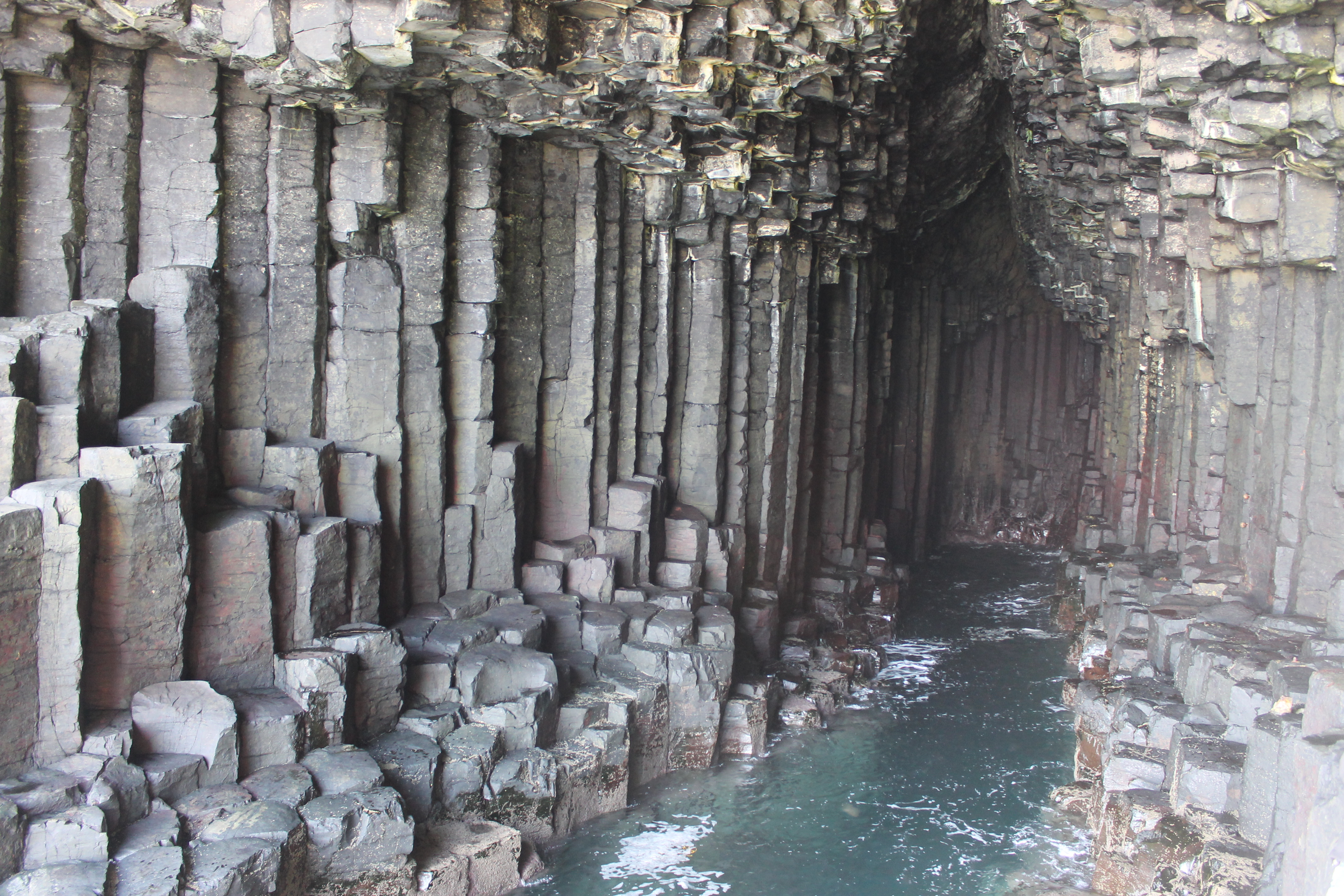
Fingal's Cave on Staffa
Fingal’s Cave on Staffa

Just to complete the week, I went with my parents on a boat trip to Lunga – one of the Treshnish islands – and Staffa to see Fingal’s Cave. The puffins on Lunga were amazing. They are so used to people being around that they come very close. It would be easy to pass a few hours there. Fingal’s Cave was incredible and indescribable really. I don’t think any words can really describe it. Just go there and see for yourself! My dad also spotted a golden eagle on Staffa, following a sea eagle glimpse on the way to Lunga, so he was happy too!

We have more lighthouse visits to come this weekend, so another post is to follow! It’s definitely lighthouse-bagging season! 🙂

Islands and lighthouses – part 1

Following our week in Tobermory, we moved on to Appin where we stayed at one of Appin Holiday Homes’ lodges. Our plans to be in this area at this time were based on the annual meeting of the Marilyn-baggers (those who climb hills with a drop of 150 metres or more on all sides) and a number of associated boat trips. Many of these hill-baggers are now becoming more interested in reaching island high points thanks to Hamish Haswell-Smith’s book on the ‘The Scottish Islands’ and Alan Holmes’ Significant Islands of Britain (SIBs). The interesting thing about Alan’s list is that he has an additional category for SIBlets, which are islands that don’t quite meet the SIB criteria, but are home to a point of interest, such as a lighthouse. Alan himself organised the numerous boat trips that took place around this annual meeting.

The beacon at Port Appin

Due to the poor weather I’d not been able to go on two of the four trips I was booked on during our week on Mull, but conditions were due to improve considerably for our week in Appin. Fortunately Alan had managed to rearrange the trips for the second week, so I didn’t have to miss out on any of the new lighthouses we were hoping to see.

Before the first boat trip, Bob and I took my dad along to Port Appin for a walk out to the beacon on the tidal rocks there. This structure has a rather vibrant past as the ‘Mr Blobby lighthouse‘. As with all tidal islands, we didn’t have much time there at all, but it was a peaceful place to be, made even better by the good weather.

Lismore lighthouse on Eilean Musdile

On the Monday we headed off on a trip with a very exciting first stop. We’d passed Eilean Musdile, a small island off of the south of Lismore a couple of times the previous week. We were planning a visit to Lismore itself and assumed that we’d be able to get across the small channel between the islands at low tide, but we’d been told that it’s not quite so easy. So it was fortunate that we’d signed up to join the trip that landed on Eilean Musdile. We were taken there by Coastal Connection who are based in Oban and regularly run the owners of the island out there and back. We landed on a small jetty and just a minute later reached the gate to the lighthouse complex. The owners are very kind and permit visitors into the grounds of the lighthouse, so we wandered in and strolled along the very pleasant winding walled pathway that leads to the lighthouse. While the lighthouse looks amazing from the sea, it looks even better close up and the island has a wonderful feel about it. If we’d had longer I would have happily spent more time there. We had a little while to explore though and walked across a bridge which allowed the lighthouse keepers more land during their stay there and was used for bringing in materials.

Hyskeir lighthouse
Hyskeir lighthouse

The following day was my favourite of the trips. Although I’d been aware of Hyskeir lighthouse on the island of Oigh Sgeir (the Scottish Gaelic version of the name), I’d never paid it more attention than any other, but it very much deserves it. It is 8 miles west of Rhum and is a fantastic little island. The lighthouse is stunning, as beautiful as so many of the Stevenson structures are. This one has the added benefit of feeling remote, but not too far out and with amazing views in any direction. On the way to the island we passed by Eileanan Glasa lighthouse (between Mull and the mainland), Eilean nan Gall which we’d seen the week before, as well as Ardnamurchan lighthouse. It’s only when you either drive it or take a boat alongside the Ardnamurchan peninsula that you really just how long it is. We also saw some dolphins leaping out of the water alongside us. After landing on the island we all inspected the lighthouse and I discovered that many there had a vague interest in lighthouses too – although not quite to the same level as mine! We then followed a broken path along to the island high point where we could see minke whales slowly passing through the sea. It was such a fantastic place to visit and I wouldn’t hesitate if there was an opportunity to go back again.

Eigg lighthouse
Eigg lighthouse

Our next island of the day was a small island off of Eigg, Eilean Chathastail, which is home to Eigg lighthouse. It was a bit of a climb (for me anyway) to get up from the rocks we were dropped off at, but it was well worth it. The lighthouse itself pales in comparison to the big Stevenson buildings, like Hyskeir, but it was great to stand at the lighthouse and gaze at the views while the hill-baggers went off to do what they do best. Again, the island felt remote, but had a very calming feel. After leaving Eilean Chathastail, we stopped at Eilean nan Each where we all enjoyed a stroll up to the high point. We finished off the day with a visit to Muck itself. Two of us remained on the boat while the rest set off from one side of the island to walk across the hills to the other side. We were delighted to be able to get off at the main harbour on Muck and find a small 24-hour craft shop and a fantastic tea room, which boasted an impressive menu considering its location.

Overall it was a wonderful day and definitely one I will remember fondly for many years to come. More islands and lighthouses to come in the next post! 🙂

A week on Mull

Two weeks ago we spent some time on Mull, staying in Tobermory. As soon as we left Oban on the ferry the lighthouse viewings began, with a glimpse of Dunollie beacon, just north of Oban, and the stunning Lismore lighthouse (more on that one in the next post).

Rubha nan Gall lighthouse

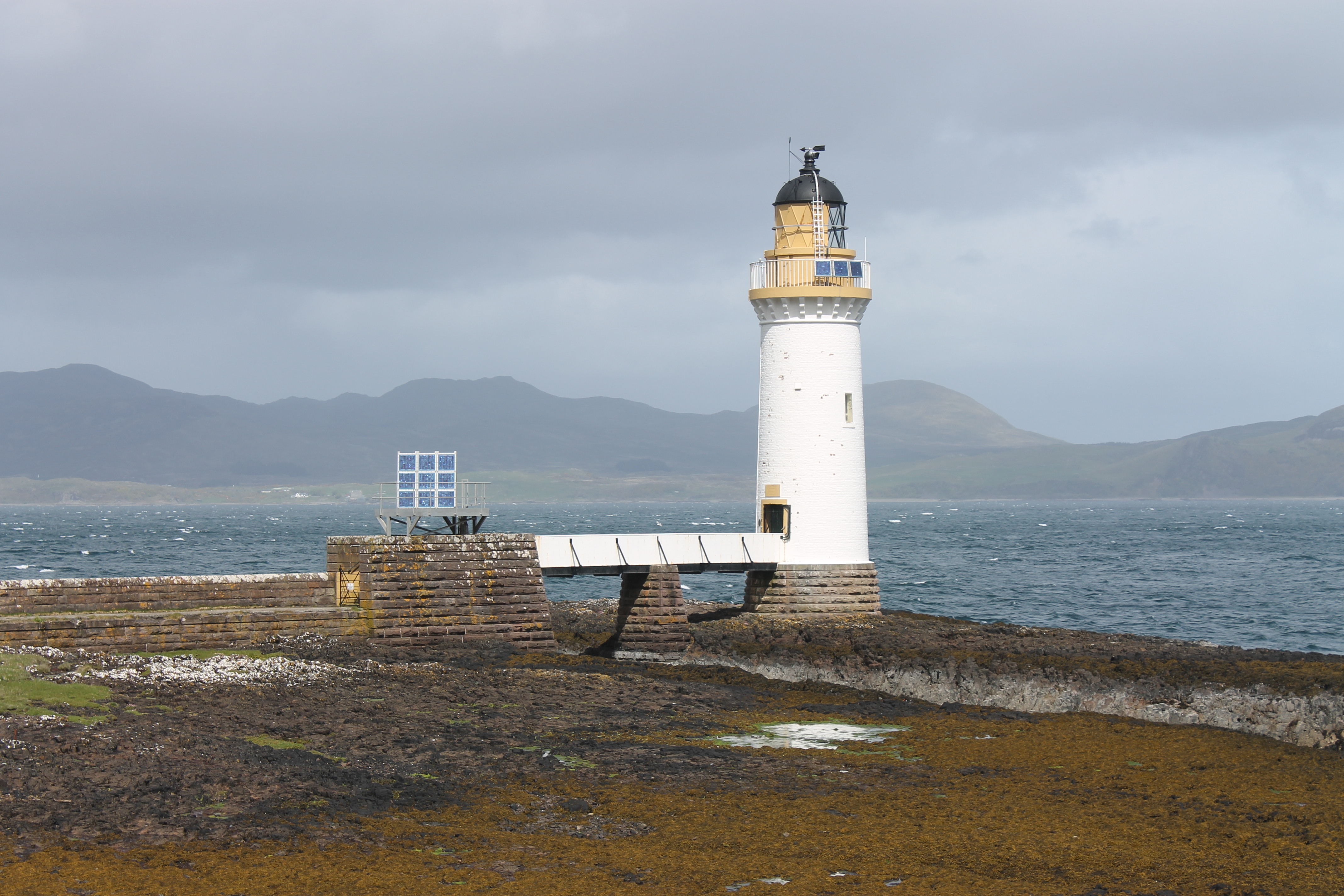
On our first full day we decided to risk getting a soaking by walking to Rubha nan Gall lighthouse to the north of Tobermory. Shortly after leaving the road and heading through the trees, we came across a sign telling us that the path ahead was closed. It was clear that no one had really taken much notice of the sign, so we pretended we hadn’t seen it and continued along the coastal route, which proved to be particularly muddy and narrow in places. It was quite a picturesque walk and we were fortunate not to be rained on. As we approached the lighthouse I remarked on how similar it looked to Eilean Ban lighthouse where we had stayed just a few weeks before. It’s not only the lighthouse that’s similar, but the access bridge as well. Unfortunately a high locked gate prevented us from reaching the tower, but we got some great views anyway from the pier leading to it. We spent a while sitting on the pier and enjoyed the emerging sun while we could, with views across to the Ardnamurchan peninsula. The walk back was equally enjoyable.

When we returned to Tobermory we stopped off at the town’s museum, where we found out about the story of Neptune II that set off on a 100 mile overnight journey from one port to another in Newfoundland in 1929. The ship was caught in a storm which caused them to endure a 48 day, 3,000 mile journey, during which they came across the lighthouses at Skerryvore, Dubh Artach and Ardnamurchan before setting foot on land again. We also found a little more information about the Rubha nan Gall lighthouse at the aquarium in Tobermory.

The observation tower on Erraid, with windows looking out towards Dubh Artach and Skerryvore

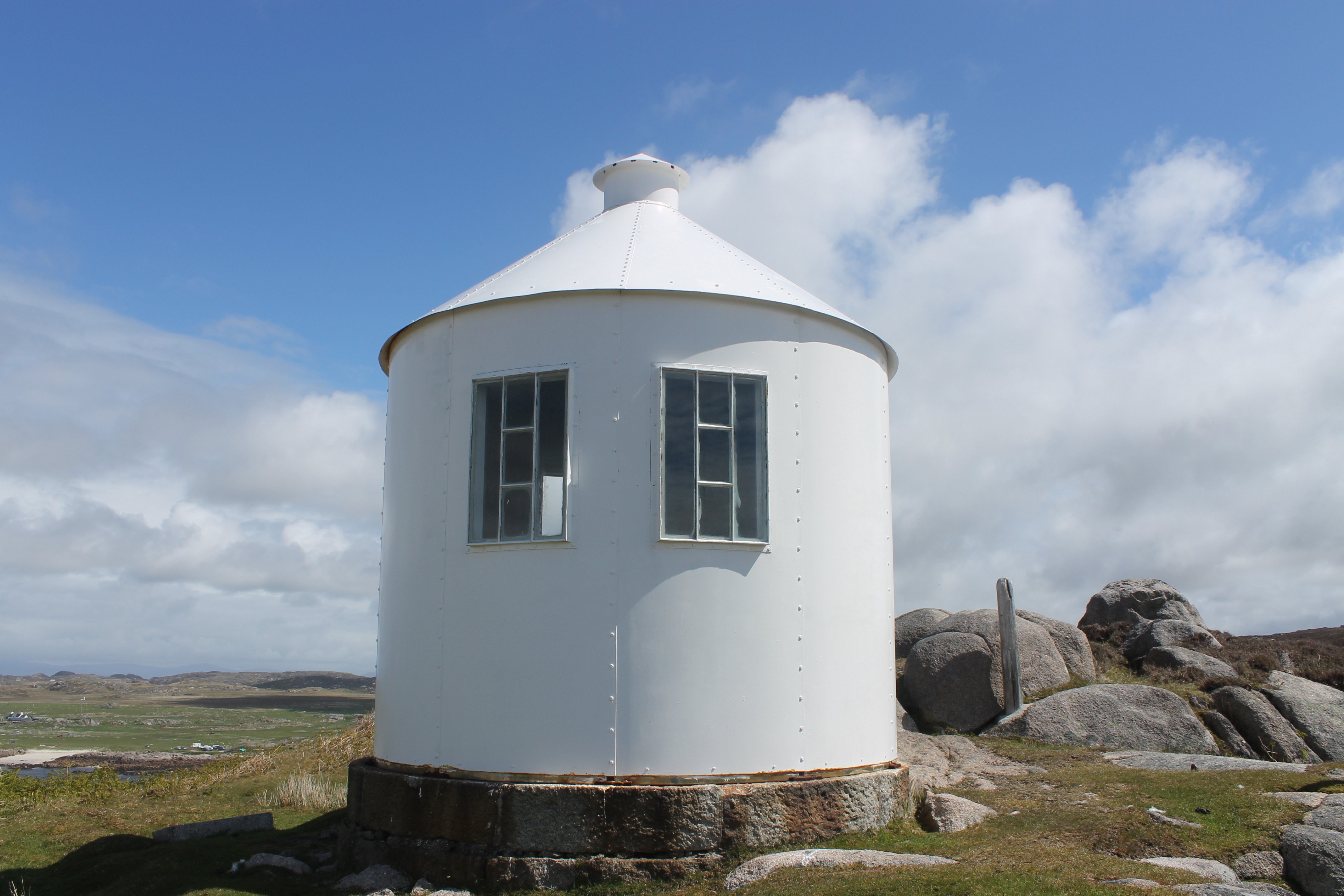
We spent an afternoon walking across to Erraid, a tidal island, and exploring the island. Erraid was used as a base for construction of the Dubh Artach lighthouse, including the quarrying of the granite for the tower. While the lighthouse was in operation, the keepers and their families lived on Erraid and the observation tower was also constructed. We visited the tower and were able to get a distance glance of Dubh Artach lighthouse (more on this one too in another post coming soon). Robert Louis Stevenson visited the island while his father was involved in constructing the lighthouse and set his novella ‘The Merry Men’ there as well as a chapter in ‘Kidnapped’. It’s a fantastic little island and even more enjoyable with the knowledge that you need to get back before the tide turns!

The beacon at Dunollie

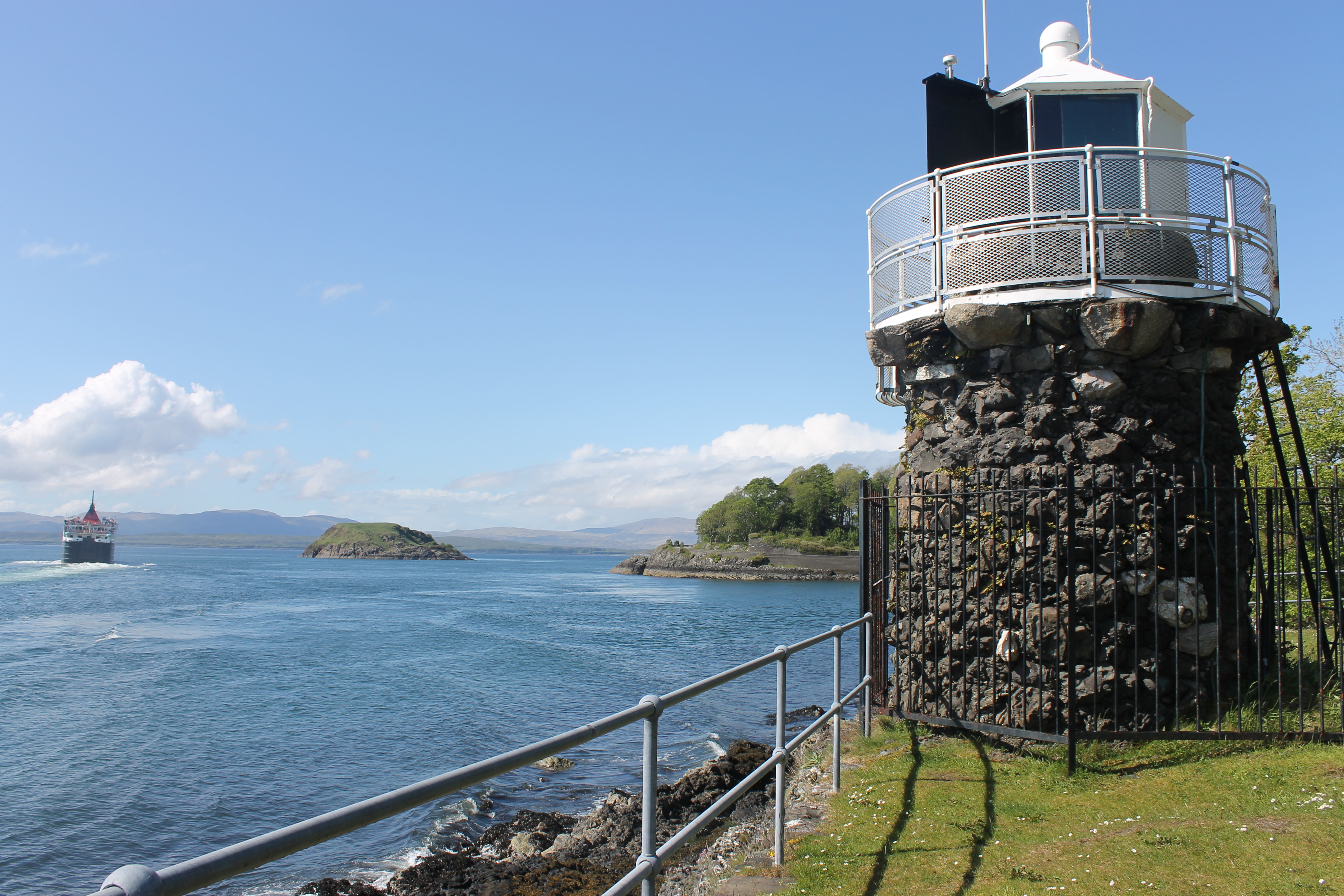
Our final day on Mull was spent visiting Iona. On our return journey to Oban we noticed the Northern Lighthouse Board’s maintenance vessel, Pharos (which we had previously seen at Bell Rock and on our way out to St Kilda), parked up a short distance from the Oban ferry terminal. We took a drive up and noticed that the Northern Lighthouse Board have a terminal there, which is a base for their vessels, but also where passengers for the Hebridean Princess alight. On our way north to Appin, our base for the following week, we stopped to look at the Dunollie beacon a bit closer up.

The following week was a blur of boat trips, remote lighthouses and sunshine. More on this to follow soon! 🙂
And a little closer to home!

Having been a fan of lighthouses for many years, but never having been to any events or lighthouse locations specifically for International Lighthouse and Lightship Weekend (the third weekend in August), we decided it was about time I did!

On my tour I’d stopped at Noss Head Lighthouse, just to the north of Wick (so not quite so far from home this time), but Bob had informed me since that there was an exhibition relating to the old optic at Wick Heritage Centre. So, taking advantage of the fact that it was that particular weekend, we set off to visit the Centre.

Rather than going straight there we took a small detour and stopped off for lunch at the Whaligoe Steps Café, just a short distance down the road from Wick. They serve some fantastic soup there and I’ve not yet managed to encourage myself to try anything else there as I enjoy the soup (and homemade bread) so much.

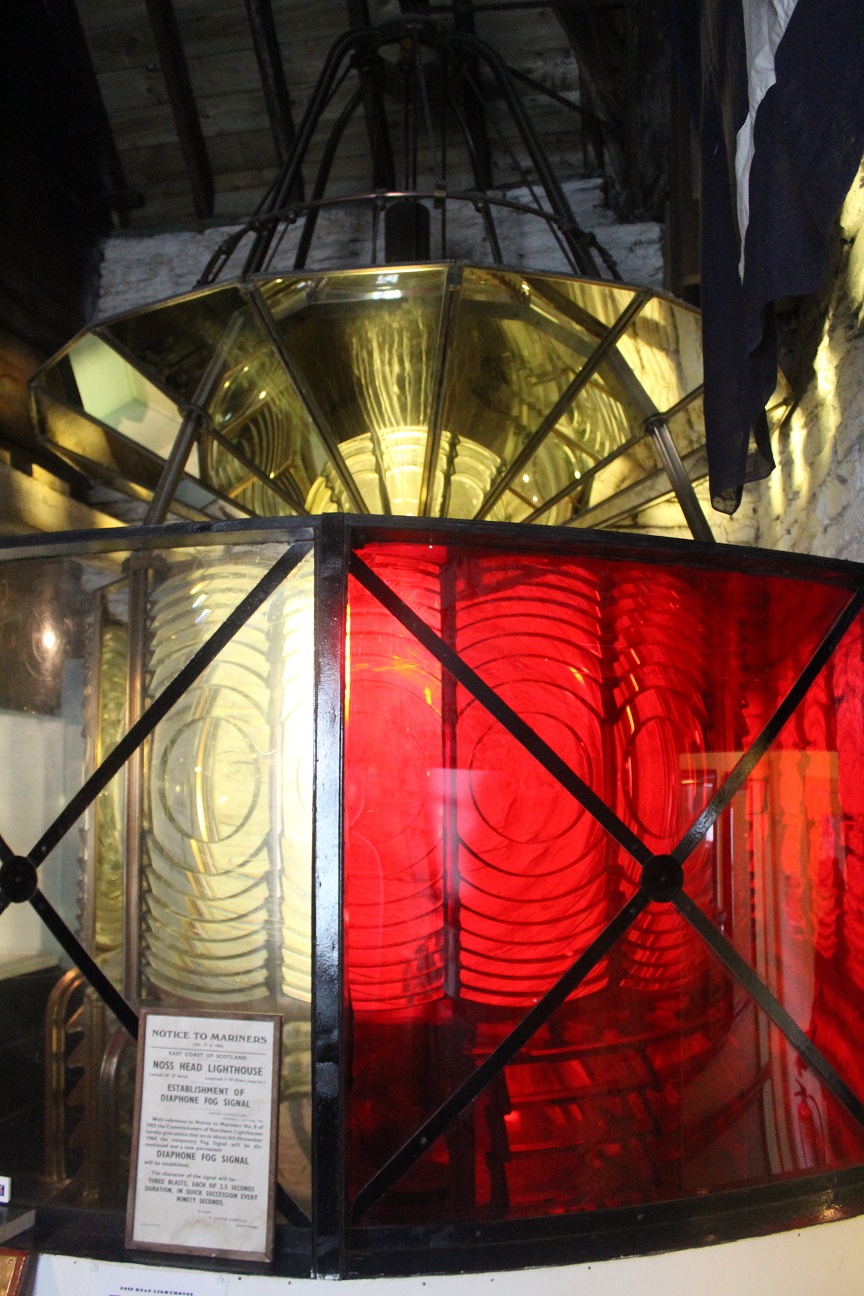
noss head optic
The old optic from Noss Head lighthouse

Arriving at the Heritage Centre, we were given a short introductory walk around and while the staff member strolled on through the lighthouse exhibition saying only ‘This is the lighthouse exhibition’, we made a mental note of where our first stop would be. The story behind the lighthouse optic now being at Wick Heritage Centre is that when the lighthouse was de-manned and automated in 1981, the plan was to just scrap the old optic and replace it with new technology. Fortunately Maisie Sutherland, a founder member of the Wick Society, stepped in and organised for the optic to be delivered to and displayed inside the Heritage Centre. So, we have Maisie to thank for allowing many people to continue to enjoy the optic and (I suppose for many), it is the only chance they will get to see what the Fresnel lens looks like close up. They’ve got lots of other lighthouse and maritime memorabilia there too and it’s great that it’s being preserved.

From the Heritage Centre we drove north to see Noss Head lighthouse itself. On the way we stopped for tea and cake at Rivendell’s Rumblin Tum Café, which was a great little place we’d never discovered before. The owner not only runs the café, but also makes some fantastic wooden carvings and can do personalised carvings too. A wonderful little discovery for us!

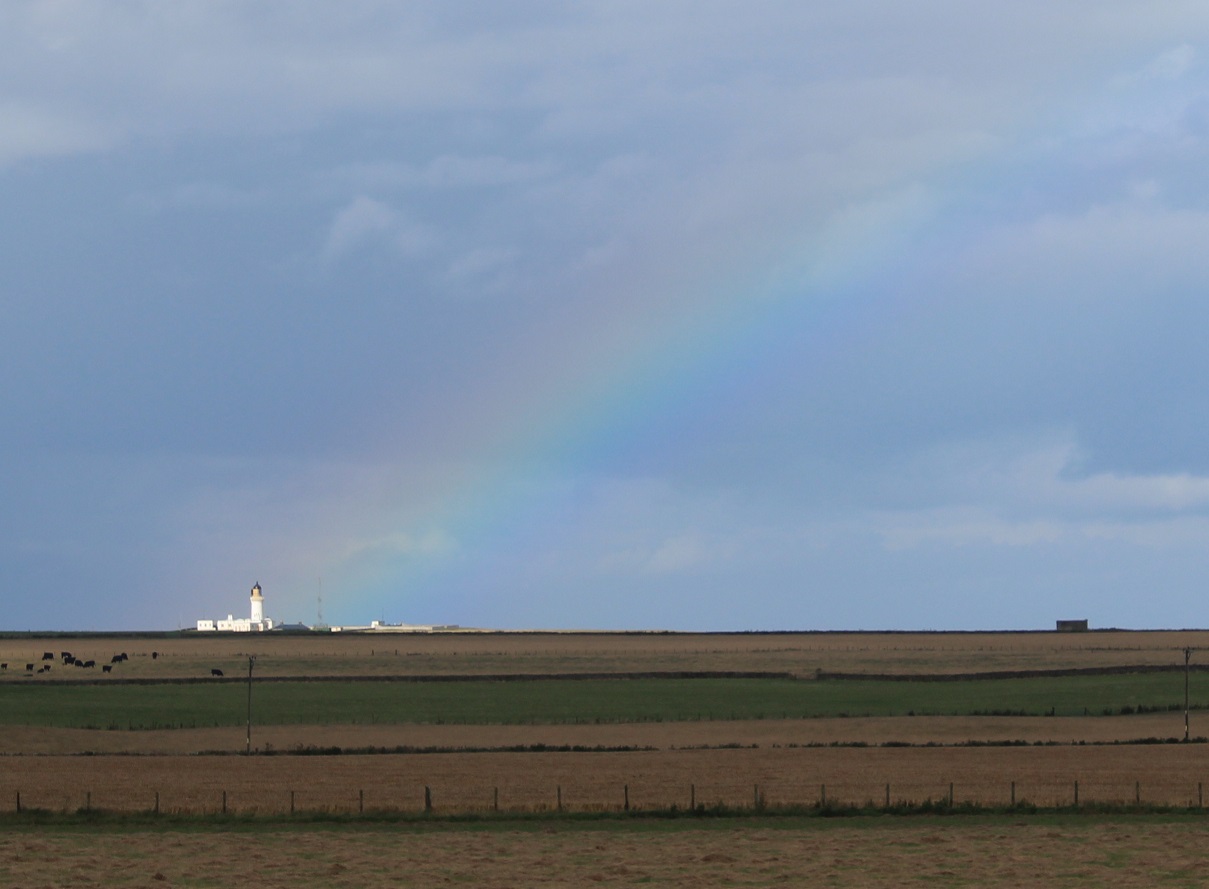
The lighthouse at the end of the rainbow

At Noss Head we weren’t able to get close to the lighthouse itself, but could see it from the car park. It was looking lovely in the sunshine when we arrived. We decided to take the opportunity to stroll along to Castle Sinclair Girnigoe while we were in the area. We’d spotted it a number of times from the road, but never been close so it seemed like the perfect opportunity. Some areas of the castle have been cordoned off, clearly for safety reasons, and it does look like work had begun at some point to maintain it, but much of it is now in ruin and there’s no sign of a roof anymore. Still a really interesting place to look around and the cliffs surrounding it are stunning.

As we headed back to the car the rain began and we were treated to a lovely view of Noss Head lighthouse with a rainbow coming out of it! At least that’s what I saw anyway! 🙂