North and South England: the old and the new

On a recent trip to the Isle of Wight to see my family we made the most of the fact that we were driving almost the full length of the UK by stopping off to bag one new lighthouse for me and re-visit another. Comparing these two gives some idea of the variety of places and structures that I have often encountered when visiting lighthouses. That’s part of the joy of it, that some lighthouses are fairly reserved and serve their purpose with minimal fuss, while others are shouted about and bellow “look at me”!
IMG_7939
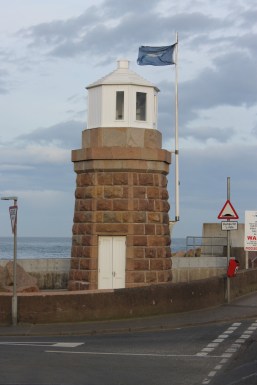
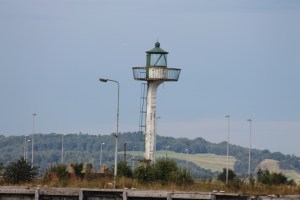
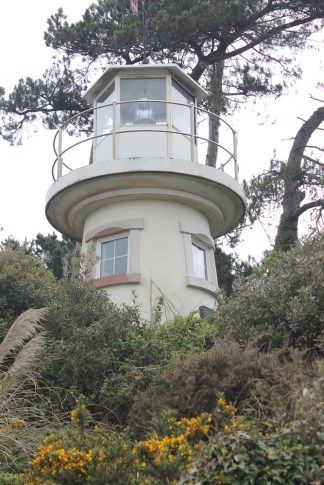
Beaulieu River Millennium Beacon

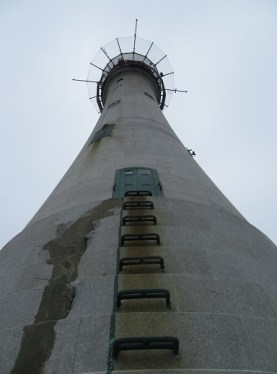
I’d been aware for a while that there was a lighthouse near Lepe Beach at Beaulieu, not far from Southampton, and we had a bit of time to spare before our ferry so decided to head over that way. The lighthouse here is one of the newest in the UK, having only been erected in 2000 (it’s official name is the Beaulieu River Millennium Beacon). A local committee was formed to address the concerns over navigating from the Solent into the river and they finally made the decision to build the lighthouse to resolve this, as well as marking the start of the new millennium. There is a detailed history of the lighthouse and why/how it was installed in an article originally published in the Leading Lights journal. The article can be viewed online here. It may not be the most majestic and inspiring of buildings, but it is much closer in appearance to a traditional lighthouse than many of those that have been installed in more recent years (particularly the “flat pack” lighthouses that can be seen in parts of Scotland now). The land that the lighthouse sits on is within the grounds of Lepe House, which is privately owned, meaning that access to the tower is restricted. So I had to settle for a view from the roadside and small pebble beach just in front of it. It’s close enough though.
IMG_8343
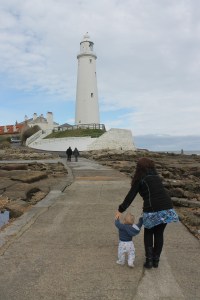
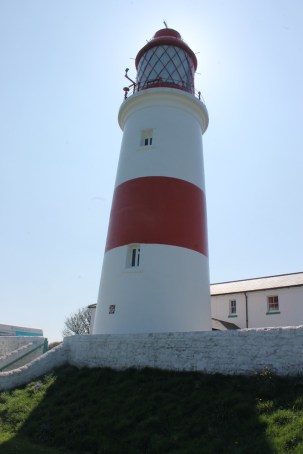
Souter lighthouse

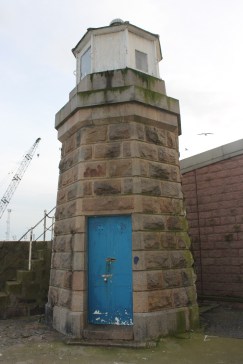
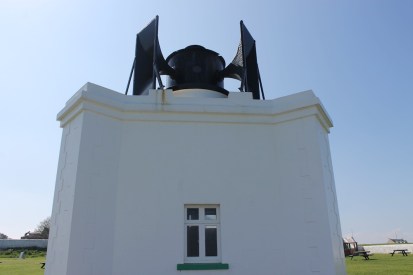
Our second lighthouse was not only in an entirely different part of England, but also completely different in appearance. I had first visited Souter lighthouse, to the south of South Shields, on my original tour in 2012 and then again while in the area a few years ago. Both times I’d managed to miss it while it was open though. This time, while heading back north, we made sure to pay a visit when we could get inside. It is a distinctive lighthouse from the outside and very well maintained. The fog horn, alongside the lighthouse, makes for a particularly dramatic picture.

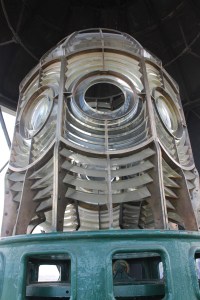
Souter lighthouse was the first in the world to be purpose built to run on electricity. You can access the light room in Souter lighthouse at your own leisure, which was great for us as it meant our three-year-old could climb to the top, counting the steps, at his own speed. This was the first time he’d climbed up the final ladder to reach the light room and also the first time our daughter had been into the light room of a lighthouse.
IMG_8349
Souter foghorn

It’s a great building to wander around. After the lighthouse was decommissioned in 1988, it was bought the The National Trust. They have clearly done a lot of work on it, including maintaining the rooms (and keepers cottage) as they would have been when it was a manned lighthouse.

The Leas is also a wonderful area for strolling around. As well as the stunning scenery, there are interpretive panels along the coastline describing how the area has changed over the years, with Whitburn Colliery and the associated creation and demise of the Marsden community. It really is an interesting place, which satisfies a number of interests. So, if you enjoy lighthouses, geology, history, nature, coastal walks, or just a fun day out for the family then it’s a perfect choice if you’re in the area 🙂

Lighthouse bagging season 2018 begins!

It’s been a long old winter, I think most people would agree. There’s nothing like a young baby and a bit of cold, wild weather to scupper any plans for enjoyable trips to lighthouses. That’s not necessarily the case for Bob though who managed to land on Bass Rock earlier in the year, and Inchkeith this weekend. I’m not jealous at all, not one bit!

Happily, Easter has arrived and, for us, that marks a change in our calendar with the first few trips away to exciting and obscure places throughout the UK. We spent last Easter on Orkney (see a previous blog) and the weather was awful and, when Bob mentioned doing the same again this year and I agreed, it started to look like it might just be the same again. After booking we also realised that it clashed with the very exciting event taking place down in Fraserburgh at the Museum of Scottish Lighthouses, where the old Kinnaird Head lighthouse was turned on for one night only and manned by former lightkeepers to mark the 20th anniversary of Fair Isle South lighthouse being the last to be automated. From what I’ve seen it looked like a wonderful night and, if I could have been split into two for one weekend only, my other half would definitely have been there for that!

IMG_6838
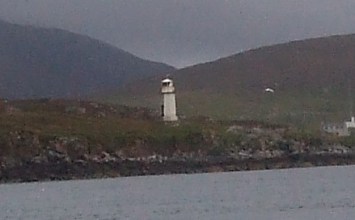
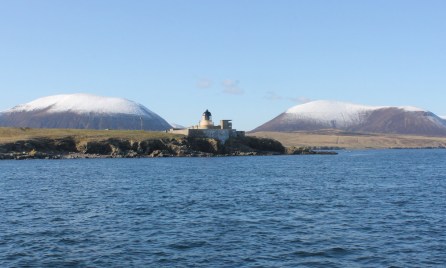
Hoy Low lighthouse with the hills of Hoy in the background, as seen from the boat to Graemsay

Back to Orkney, our key priority this year was to spend a day on Graemsay and visit the two lighthouses (Hoy High and Hoy Low) for me and the island high point for Bob. The main challenge was faced with this trip was that it is only a passenger ferry that serves the island and the current timetable meant we had to choose between a two-hour rush around the island or a six-hour visit, and with two young kids in tow it wasn’t an easy decision to make. Our solution was to go with the longer option and hire bikes from Orkney Cycle Hire in Stromness along with a buggy for the kids to sit in to trail behind Bob. On a day that was due to be sunny, but cold we needed to make sure the kids didn’t freeze and the buggy offered the perfect solution.

IMG_6874
Hoy High lighthouse

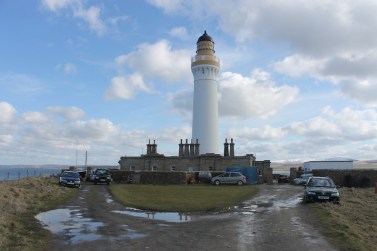
So, along we went with our bikes and buggy. My last venture in riding a bike was on our honeymoon back in 2013 when we cycled between the three lighthouses on Rathlin Island in Northern Ireland (see this post for the fun we had that day!) in the wind and rain. Fortunately we had more pleasant weather this time with some nice sunshine. We reached Hoy High lighthouse first, the tallest and most visible of the two. The 33 metre white tower was built, along with the Low lighthouse, in 1851 under the direction of Alan Stevenson. The two lighthouses operate together as leading lights, guiding ships safely through Hoy Sound. The tower is very in-keeping with the style of many of the other Scottish lighthouses. We didn’t get too close to this one as the former keepers’ buildings are now privately owned.

The road that joins the two lighthouses offer some stunning views (as do pretty much all of the island’s roads). One of the best has to be looking back to the lighthouse from the other end of the beautiful beach at Sandside. We chose this as the perfect spot for lunch a bit later on in the day, using one of the many picnic benches scattered across the island (there was a map at the pier on Graemsay showing where these picnic benches are located). The picnic benches were a nice touch and very welcoming for those of us visitors who do make the journey over (Graemsay doesn’t get the recognition, visitor numbers and attention it deserves in my opinion, but then maybe that’s what the residents of the island love about it).

DSCF9214
Hoy Low lighthouse

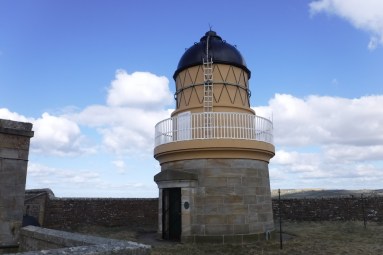
We chose to leave the bikes and buggy at the top of the track down to the Hoy Low lighthouse and walk down. We were glad we did as it would have been a fairly bumpy ride for us all! I’d previously seen Hoy Low lighthouse from the Northlink ferry between Scrabster and Stromness and it was usually dwarfed by the hills on Hoy, which makes for a stunning picture. This lighthouse stands only 12 metres, but it’s a beautiful tower. Nearby there is an old World War II defence building. There are also remains of an old house next to the lighthouse compound, of which very little is still standing. The most obvious remains are of the fireplace, clearly very well built in its day! This lighthouse marked the first official lighthouse “bag” for our little girl at the age of 7 months (slightly later than our son who visited his first on the way home from hospital)! After reaching the bikes again we headed for the high point, which Bob bagged successfully. It’s good that our hobbies run in parallel on many occasions! We then stopped for lunch next to the beach and went for a bit of a walk. The very kind people at Orkney Cycle Hire had lent us some buckets and spades for the beach, but the chilly wind meant we didn’t get a chance to use them.

DSCF9303
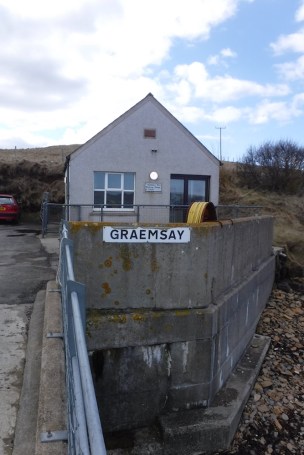
The wonderful waiting room at Graemsay Pier

We managed to complete our tour of the island and lunch within 4 hours and, being aware that the kids had been a bit cooped up, we decided to head back to the pier to see what the waiting room had to offer. I was concerned that it wouldn’t be open, but I needn’t have worried. Quite the opposite! Not only was it open, but the heating was on, which we were incredibly grateful for. Our son was particularly happy to have somewhere to play about and he adopted a small teddy bear from the honesty box – we knew we’d be buying it and taking it home when he started sweeping it across the floor!

All in all, we had a wonderful day on Graemsay. For those going to Orkney and interested in seeing an island that many others choose not to visit it is a must. I imagine the locals are quite fond of its quietness compared the neighbouring (and significantly bigger) island of Hoy. Living there would certainly involve some planning when it comes to such activities as the weekly shop, but I can imagine it’s easy enough once you get into the habit.

This trip involved a number of other activities on Orkney mainland, but no other lighthouses. Every time we leave Orkney we have always already started discussing how our next visit will pan out. We are planning, at some point in the not to distant future, a longer trip, taking in a number of the islands, including Sanday (for Start Point, which involves a bit of planning with the tide), North Ronaldsay and Westray. We also hope to organise trips to some of those that aren’t covered by the scheduled sailings.

Our next potential lighthouse-bagging trip will be next month when we head for the Western Isles again. This will be our latest attempt to reach the Monachs and the Flannans. We shall see what sea conditions await, so watch this space… 🙂
A look behind the Northern Lighthouse Board scenes

At the end of September we were fortunate to be in the Scottish central belt at the time the Edinburgh Doors Open weekend was happening. The Northern Lighthouse Board (NLB) tweeted to say that they would be welcoming the public into their George Street headquarters in Edinburgh for free and I was delighted when Bob suggested we should go. So, on the Sunday, we packed everything we needed for a day out with the kids and hopped on a train.

DSCF6946
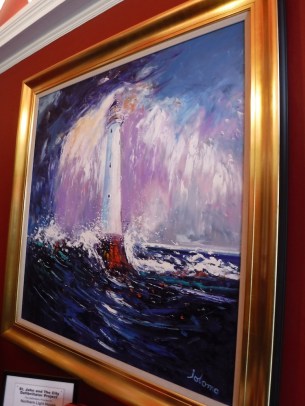
One of the beautiful paintings of the Bell Rock lighthouse – this one just inside the entrance

As we approached I recognised the small model of the Bell Rock lighthouse, which flashes every now and then. Inside there was a real sense of Bell Rock being their most treasured structure, with a number of paintings and pictures of it appearing throughout the building. Among the Bell Rock-related experiences we had there was wearing NLB caps while posing behind a big frame with Bell Rock lighthouse as the backdrop. We were also informed by one of the members of staff in the exhibition area of an experience she had while undertaking some training on the Bell Rock. They had been taken out to the lighthouse by the local boatman who regularly runs trips out there (and whom we had gone out with a few years ago). He clearly had some friends who were intrigued by the lighthouse and wanted an opportunity to have a look around it. That evening or night this NLB staff member thought she heard some unusual noise outside the lighthouse and went to open the door leading to the outside only to find a number of faces looking up at her. Those lucky people!

We also spoke to the same lady about the challenges of getting to Sule Skerry and she was impressed to hear that we’d managed to get out to North Rona.

IMG_0893
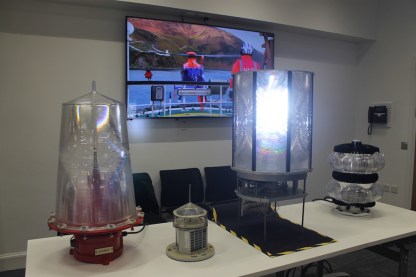
Lights of the past, present and future in the exhibition area

We had a little while in the Board room where the NLB meet. It’s just as you would imagine a Board room would have been in years gone by, with a huge, sturdy wooden table, heavy chairs and beautifully framed paintings. Mike Bullock, the NLB’s CEO, spoke to us for a while about what they do with some facts and figures. The room also boasts some display cabinets with models of the NLB’s maintenance vessels past and present.

In the exhibition area there was some information about the technical side of their work with examples of the different types of lamps they use (and the new ones they are introducing at the moment) or have used as well as the personal protective equipment their staff wear while out and about.

It was a really good experience and an opportunity that we just couldn’t miss 🙂

2017 bagging season begins!

Those who have seen some of my earlier posts (or even looked at the list of months that I have added posts on here) will know that , for me, there is such a thing as “lighthouse-bagging season”. Of course it’s possible to enjoy them just as much in winter, but the dark mornings and evenings aren’t conducive to a good bagging day.

Whenever the clocks change I’m glad of the lighter evenings and how much more of a day you get to enjoy the outdoors. So it’s no surprise that a few weekends ago we set off to visit a total of 10 new lighthouses and a revisit to a few others too. Due to a review of lighthouses we conducted over the winter, we were able to find some more to keep us going (more on this and the definition of ‘lighthouse’ in a future post).

Nairn.JPG
Nairn lighthouse

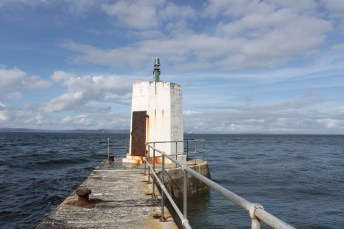
So, that weekend the stretch we covered was on the north east coast between Nairn and Gourdon, just to the south of Inverbervie. Our first stop was Nairn East Pier where I got my feet wet. The design of the pier (which is narrower at the end) means that every now and then a larger wave washes over the top, which is exactly what happened as I approached. It would have happened on the way back too had I not been more prepared for it by then. The lighthouse itself has your typical lighthouse base, but is now topped with a “light on a stick” as I refer to them. I’ve not been able to find out any of the history of the lighthouse itself. The pier that it sits on offers some great views across one of the town’s sandy beaches to the east and towards the Black Isle to the north west.

Burghead.JPG
The two lighthouse at Burghead

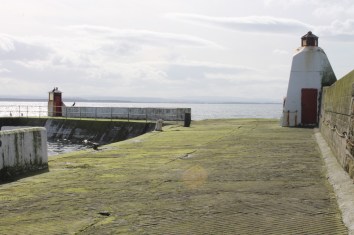
Our next stop was the small town of Burghead where the sturdy-based lighthouse sits on the North Pier. The small lamp looks tiny in comparison to the big, white base. I was nicely surprised to see a squat little structure that also meets my requirements right at the end of the pier. It’s essentially just a cupboard with a light in it. It’s a great short stroll along the pier and a sample of the fantastic rock that adorns this coastline can be seen at the entrance.

Lossiemouth.JPG
Lossiemouth south pier lighthouse

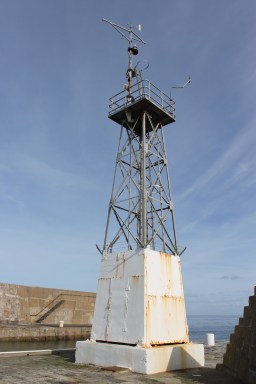
There isn’t a huge amount to be said about the lighthouse on Lossiemouth south pier, except that it gets less and less interesting the further up it you look. It sits on a concrete base with a metal base to the main structure. Out of this metal comes an arrangement not dissimilar to an electricity pylon with a balcony on top. On top of that are a few contraptions on a post including the light. There are some lighthouses that just don’t inspire you (even I will admit that) and this is certainly one of them!

Findochty.JPG
Findochty lighthouse

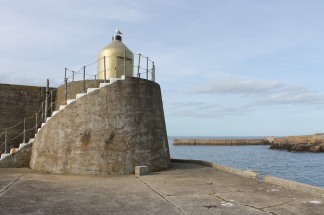
The little gold lighthouse on the end of the breakwater at Findochty had a bit more character to it – partly because of it’s colour. There’s not a lot to it, just a lamp room with a door that sits at the top of a spiral staircase. Having done some research into this, now disused, structure I discovered that it is usually painted gold for the summer months and white for the winter. The minutes of the local Community Council meetings towards the end of last year suggest that the intention   was that it would be painted white, as per this schedule, at some point, but clearly that hadn’t happened, so I suspect it will remain gold for now. I quite like it that colour – it makes it more memorable. We also spotted a dolphin out to sea just before we left, which is always nice.

Portsoy.JPG
Portsoy lighthouse

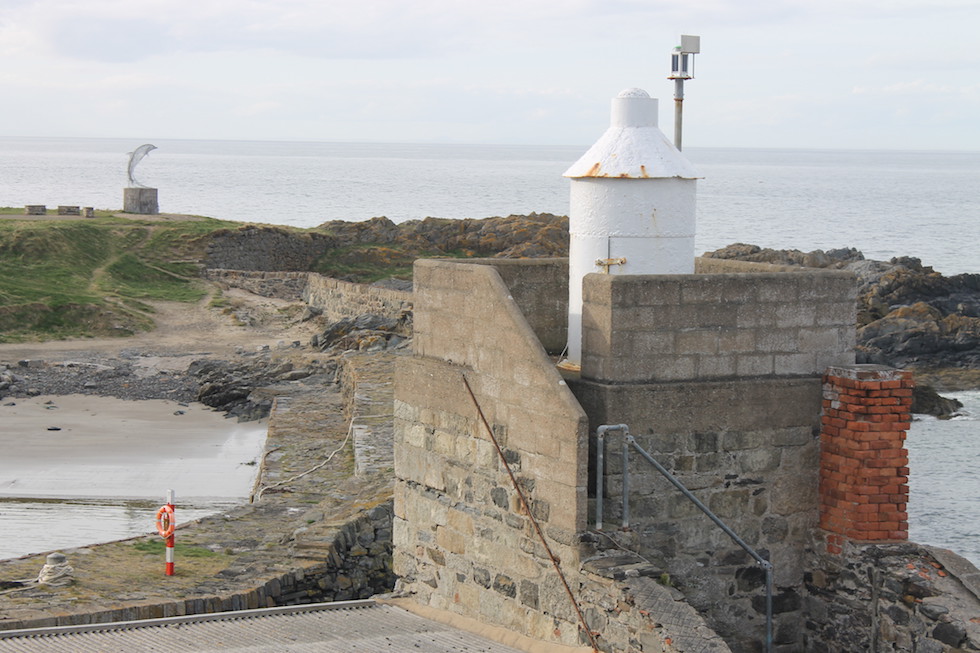
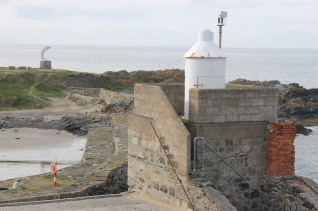
Portsoy is a very pretty little village which sits between the neighbouring villages of Cullen and Whitehills (both of which I visited on day 13 of my original lighthouse tour). While it shares some similarities with the two, Portsoy seems to have its own little charm. The small, white lamp room of the lighthouse sits on top of a private building. It’s possible to get views of the structure from a range of angles though thanks to the cosy little harbour. A beautiful, artistic metal dolphin sits across the other side of the harbour, which adds to the picturesque scene.

Peterhead north.JPG
Peterhead harbour north lighthouse


I wasn’t necessarily looking forward to our final stop for the day, Peterhead. My main memory of it last time was my stay at the campsite and the creepy old men who were also staying there when they only lived a few miles along the road. This time though we were searching the more built-up harbour area for a couple of, what I thought would be, less obvious lighthouses. We were just about to enter the pier that reaches out to the north of the harbour, heading towards the lighthouse near its end when we spotted a lighthouse just at the side of the road. Unlike many of the others we’d seen that day, this looked like a “proper” lighthouse with the stone base and lamp room integrated. After stopping for pictures we continued along the pier and through the various fishing-related buildings to where we were expecting a lighthouse to be. There was, it turned out, nothing to be seen there (apart from a view across to the second lighthouse) and further research has explained the relocation of the north harbour lighthouse. In April 2015 an application was submitted to Aberdeenshire Council to make alterations to the harbour at Peterhead, including the dismantling and re-erection of the lighthouse to its new location. The application states that: “It was proposed the lighthouse would have the masonry moved on a block by block basis after each block had been marked and recorded for position and then erected in the new location.” The application then goes on to say that the lighthouse had already been removed by the point the application was submitted without authorisation. It is noted in the document that the new/proposed location of the lighthouse would make it more accessible for the public, which it certainly is. I would have been quite happy to not have had to go searching around the numerous fishy buildings there and seen fish guts being dumped!

Peterhead south.JPG
Peterhead harbour south lighthouse

The second lighthouse in Peterhead harbour was much easier to find, being located just in front of the Peterhead Port Authority building. It’s basically the twin of the relocated structure, but isn’t looking quite as rejuvenated as it’s partner (presumably they gave the north harbour lighthouse a bit of a clean when the moved it!)

Our weekend of bagging new lighthouse continued, but more on that in the next post. 🙂

Discovering Wee Cumbrae’s lighthouse heritage

At the weekend we spent some time in Ayrshire and, thanks to our friend Rick, we went on a fantastic trip over to Little Cumbrae (also know locally as Wee Cumbrae). It’s always exciting to visit a small island with more than one lighthouse – sort of like visiting the Calf of Man. It’s always a treat. Wee Cumbrae is particularly special though in that it has three generations of lights.

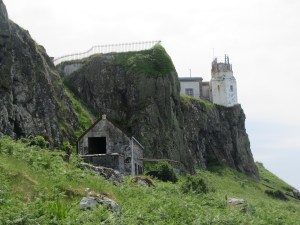
Little Cumbrae old lighthouse

The ride over to the island in a RIB was very short and uneventful, which made a nice change! After saying goodbye to our chauffeurs and their very excitable dog, we began making our way towards the island high point, which was of interest to us all. For me it was to see the island’s oldest lighthouse, while the rest were keen to reach the high point in order to legitimately say they had bagged the island. There was a nice path most of the way to the high point, but as we got closer it became apparent that we would need to go off piste, so we cut across the grass, ferns and various other types of foliage.

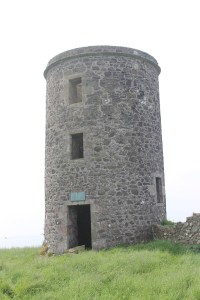
We finally reached the old lighthouse and explored the remains. The tower was originally built in 1757 and, according to Canmore, was a 30ft tower with 3ft thick walls. The coal for the light was supported by an iron cage or grate. From inside the tower it is still possible to see where steps up the light used to be and, to the north of the tower, are the remains of the old keeper’s cottage. Less than 40 years after it was first lit, the lighthouse was replaced. From the lighthouse it was just a short walk to the island high point.

Little Cumbrae lighthouse
The 1793 lighthouse on Little Cumbrae

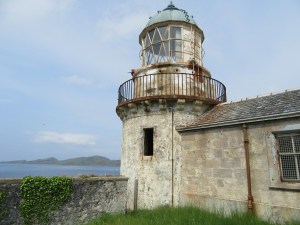
Our next destination was the second of the island’s lighthouses, first lit by the Cumbrae Lighthouse Trust with funds generated from the shipping dues from the old lighthouse. The lighthouse was designed by Thomas Smith, the first Northern Lighthouse Board’s engineers, and its construction was overseen by Robert Stevenson, the first of the “Lighthouse Stevensons”. The lighthouse is a fascinating place to visit now that it is no longer operational. The tower, all of the keeper’s cottages and associated buildings are now open so you can have a good look around. We were pleased to be able to get right to the top of the lighthouse and there is still a distinct smell of mercury about the tower. The keeper’s cottages are home to an interesting array of relics, including some 1970s editions of Reader’s Digest and, oddly, a few sets of old airplane seats. We spent quite some time exploring the buildings and everyone seemed to enjoy it.

Little Cumbrae beacon
The Little Cumbrae beacon now sits on the old fog horn tower

Located close to the lighthouse was the old fog horn control room and tower, upon which the operational beacon now sits. By this point the sun had come out and we enjoyed lunch near the lighthouse, explored the old pier area which was clearly where access to the lighthouse from the sea had previously been, and then headed back across the island.

When we arrived back at our drop-off point we still had a fair amount of time left before we were picked up so a few members of the group wandered across to Castle Island, a very short distance off of the east coast of the island. When I say “wandered” what I mean is that, initially, the group used various methods of getting across the fairly shallow stretch of water. Bob was first across and just waded his way through with his shoes on and everything. The next three sensibly removed their shoes and paddled across. As the tide continued to recede, the next two or three people threw rocks into the water to use as stepping stones for getting across. By the time most of the group had crossed, the water had gone down enough for me to just stroll over to the island without getting wet feet at all.

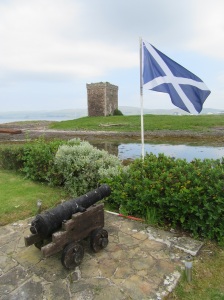
Castle island
Castle Island viewed from the grounds of the yoga retreat

Castle Island is so called due to the beautifully preserved lighthouse which sits upon it. Apparently dating back to the 16th century, there is now a set of wooden steps leading up to the castle entrance. There are some fantastic rooms in the castle, some of which contain some wooden tables and benches. The views from the top, where more benches can be found, are stunning. We spent quite some time up there. By the time we returned from Castle Island the tide was fully out and the crossing was dry.

We spent the remainder of our time on the island looking around the grounds of the yoga and meditation centre. A really well-kept garden and definitely a good island for some relaxation. It was a great island and I was pleased to be able to bag two new lighthouses there 🙂

Welsh offshore rock lights

Last weekend we spent a day in South West Wales in the hope of bagging two very exciting lighthouses! A good friend of ours, Adrian, had organised a boat trip with Venture Jet out from St David’s and the forecast for the weekend was looking good. So, being the committed lighthouse-baggers that we are, we made the day-long trip each way from home to South Wales.

smalls and me
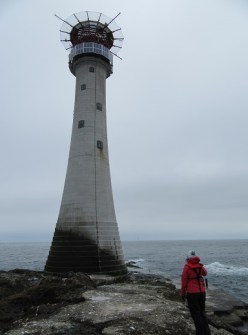
Smalls lighthouse and me – on the same piece of rock!

Due to the tide at the time, our first destination was to be a stunning piece of architecture that sits around 21 miles west of St David’s, Smalls lighthouse. On the journey out, the captain informed us that it may not be possible to land on the rock, so I wasn’t getting my hopes up. We were encouraged to sit on the tubes at each side of the boat and hold onto two handles (basically, clinging on for dear life!), which proved to make for a pretty bumpy ride. Very sensibly, everyone gradually realised that sitting in the centre of the boat was a much more pleasant experience.

As you would expect, we spotted the lighthouse from some way off and as we approached it was looking like a landing on the rock would be possible. In fact, it turned out to be a particularly dignified landing, just hopping off of the front of the boat onto some steps. The trouble came at the top where we encountered a wide area of flat rock covered in particularly slippery seal poo! Obviously that couldn’t dampen our spirits though for having got so close to such a majestic structure.

smalls old struts
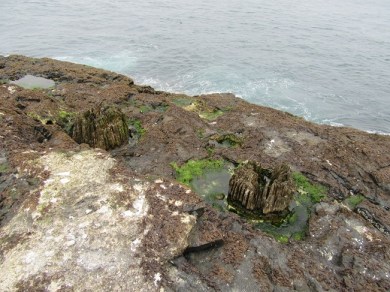
The remains of two of the oak struts from the previous lighthouse at Smalls

The rock, in fact, turned out to be even more interesting as we discovered the remains of the bases on numerous oak struts, hidden within the rock. Having not done my research prior to our visit, I was informed while we were there by someone a little more forward thinking than me, that the tower that currently sits on the rock is actually the second lighthouse to have appeared on the rock. The previous being a timber lamp room and keeper’s house perched on top of these struts as well as some cast iron legs. This lighthouse was built in 1776, but didn’t last long until vital repairs were needed following storm damage. Between January and September 1778 the light was not in operation. After repairs had been made, it then guided mariners for over 80 years until it was replaced by the existing tower in 1861. There is more information about, and drawings of, the old lighthouse on the Trinity House blog and another blog from Heritage of Wales features a diagram showing the positions of all the old struts as well as an artist’s replica of the old lighthouse.

smalls from below
The door to the lighthouse with some damage below

The old lighthouse was the setting for the story of the two lighthouse keepers, one of whom died during their stay on the rock and the other, in the process of trying to deal with his colleague’s passing, was driven mad. It is said that this incident, which is believed to have occurred around 1800, was the reason behind the introduction of the rule that three keepers had always to be present at any one time.

Now, to the existing tower – and what a tower it is – all 141ft of it! It was originally based on the design of Eddystone lighthouse and originally featured red and white stripes, which were sandblasted off in 1997. It is still possible to climb up to the the lighthouse door, which Bob did and tried knocking, but apparently no one was in! I think we were all in awe at how such a building was constructed on such a challenging piece of rock.

smalls storage
One of the old storage rooms built into the rock at Smalls

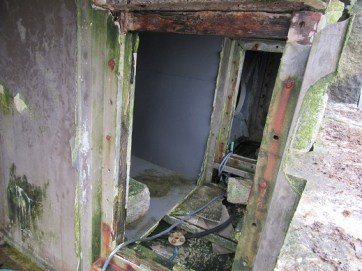
The rock hid a number of other surprises too, like some old store rooms, which had been cut into the rock. I have also seen a picture that shows a separate building that was once located on the flat section of rock, which is no longer there. In short, the place is fascinating and I was pleased that all of the hill- and island-baggers that were on the trip seemed to enjoy the visit too.

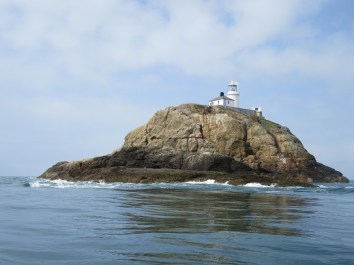
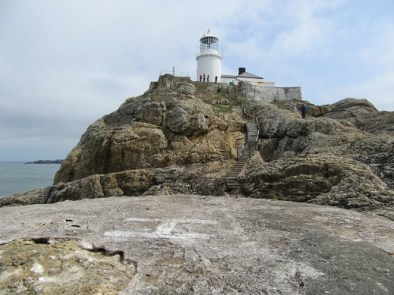
Saying farewell to Smalls, we headed back towards the mainland. You may think that seeing Smalls was enough excitement for one day, but no, there was more! With the tide now at prime position, the landing on South Bishop was just as dignified as it had been on Smalls. We were greeted with a considerable number of steps, impressively crafted from the rock and pretty much all still in good working condition. The steps were worth the climb though when we reached the lighthouse at the top.

south bishop from sea
South Bishop lighthouse

The lighthouse looks impressive from every possible angle from the sea and when on land has a fairly large compound. The lighthouse was first lit in 1839 and, in 1971 a helipad was constructed to allow easier access. However, the helipad was prone to flooding in bad weather and high tides. Both the old helipad and the newer one can still be seen on the island. Bob went off to explore the area surrounding the old helipad and happened upon a piece of concrete with a name engraved into it, ‘Cyril M’, followed by what looks like a date ’24 10′ and then an indecipherable year. Intriguing! (Update: I have since been reliably informed that this would have been engraved by Cyril Matthews, a Trinity House carpenter based out of Swansea). It was a great place to explore and I could have happily spent all day there (particularly as the sun came out for us).

south bishop helipad
South Bishop lighthouse from the old, damaged helipad

On the way back to St David’s, our guides took us to see a small rock island called Daufraich, through which the tide bubbled up to the surface. He said he would quite like to dive there one day, but has concerns about being drowned by an influx of disturbed seals! We were also taken around the south end of Ramsey Island where there are cliffs up to 100 metres high. We also went through a sea cave where seals were chilling out before arriving back at St David’s.

Overall a fantastic bagging day, both for me with the lighthouses and for Bob who then went on to bag 5 Marilyns! A great day and well worth the journey! 🙂

A Lewis walk & a Harris surprise

Welcome to my 100th blog post!

We went over to the Western Isles earlier this month for a week-long holiday, staying in a great four-bedroom house on Harris. I’d been to the Western Isles a few years ago and visited the easier to get to lighthouses, such as Butt of Lewis, Tiumpan Head, Arnish Point and Eilean Glas. So this time the plan was to reach another that involved a bit more of a stretch of the legs, Aird Lamishader.

aird lamishader
Aird Lamishader lighthouse

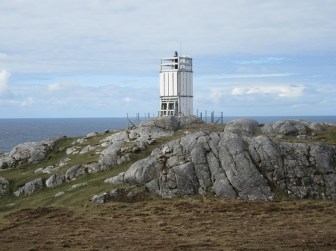
I knew before we set off for the walk from Borghastan/Borrowston that the lighthouse was one of the “flat pack” style. To get there we had to navigate our way down some nice steep slopes (we seemed to miss the sensible path down). Once we made it to the fields below we encountered some particularly friendly/scary sheep that, instead of running away as I would normally expect them to do, started to follow us. I was later informed that it was likely to be because they, and their lambs, were still bring fed by the farmer at that point, so they expected us to feed them. Once we’d passed over the fields we started the wander up a hill that Bob wanted to climb and said would be a more direct route to the lighthouse. So, up we went and spent some time checking out the view before we went down the other side. By this point it was feeling like quite a trek, but at least we could see the lighthouse.

butt of lewis
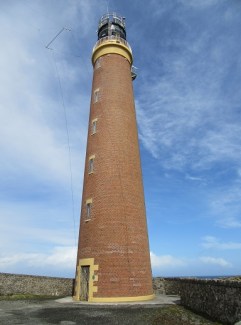
Butt of Lewis lighthouse on a sunny, but chilly, day

After crossing more fields and going up another (considerably smaller) hill we arrived at the lighthouse. As with most “flat pack” lighthouses, there’s not a lot to say about them, but they are often located in places with rather good views and this one was no exception. We were even fortunate enough to catch sight of the Flannan Isles out to sea. Fortunately we walked around the hill on the way back, but in the process met even more over-friendly sheep. I managed to calm down though when we spotted a man heading the same way as us. He was a local former Gaelic teacher who has been growing carrots in the area. He was a friendly man and took us the sensible route back to the car.

The following day we revisited the Butt of Lewis lighthouse briefly. I say briefly because it was a bit wild that day!


flannan isles shore station
The old Flannan Isles shore station in Breasclete

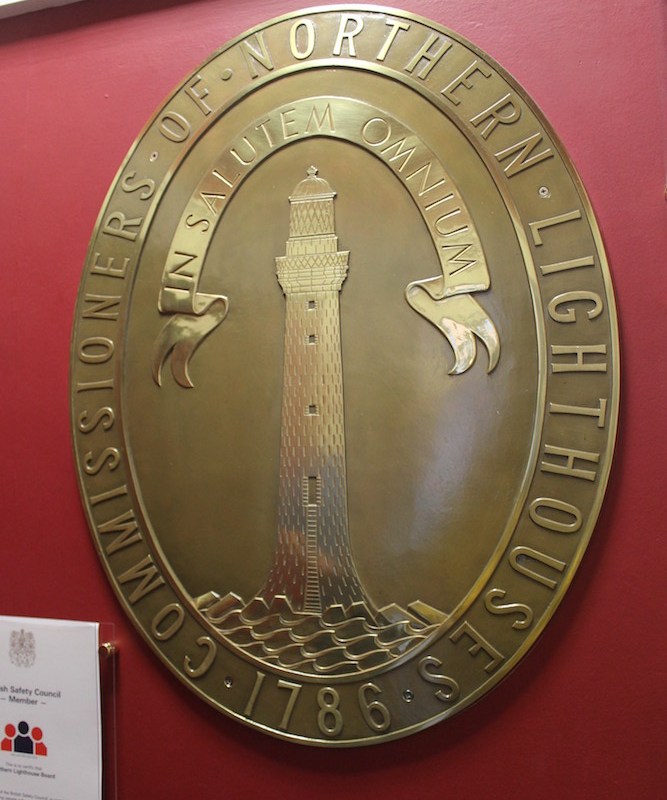
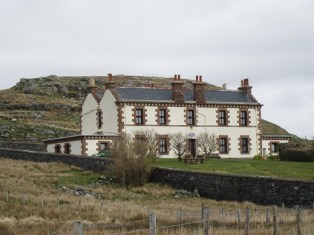
On the way back to our accommodation that day we drove through Breasclete on the west coast of Lewis in search of the old Flannan Isles lighthouse shore station. We spotted the big house from the main road, and as we got closer, noticed the old Northern Lighthouse Board emblem above the front door. I believe there are plans to create a memorial in Breascleit at some point in memory of the three lighthouse keepers that went missing from the Flannan Isles lighthouse in December 1900.

During our trip we stopped by Hebrides Arts, a beautifully located art gallery and cafe with some amazing work from local artists. While we were there we spotted a painting of a lighthouse with the title ‘Leverburgh lighthouse’, which surprised us as we weren’t aware of any lighthouses at Leverburgh, just beacons. The story associated with the picture was that the top section had blown off during a storm, leaving just the tower.

leverburgh
What remains of Leverburgh lighthouse

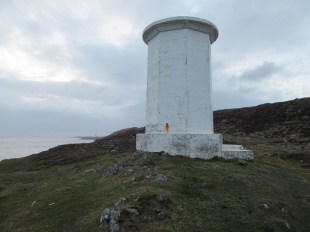
That evening we headed to Leverburgh pier and sure enough, just as the lady at Hebrides Arts mentioned, the tower was visible just across the water to the right. As we headed back up the road, we parked up at the side of the road and walked along to it across some, boggy in places, moorland. The tower turned out to be bigger than I’d imagined and Bob made a note of its coordinates as we hadn’t found it on any maps. Later in the week we spoke to Seumas Morrison, who runs Sea Harris and regularly goes out from Leverburgh pier. His take on it’s history was that the top section on the lighthouse was actually removed and not blown away.

Leverburgh lighthouse Sept 06
Bob’s picture of Leverburgh lighthouse in 2006

Bob had a look back at some of his pictures from the area and found one from 2006 showing the lighthouse intact. A picture he had from 2012 shows the tower alone. There is very little information about this lighthouse online. I was pleased to find out about it though and to visit it during our holiday.

We were due to take a trip out to the Monach islands and possibly Hasgeir, which would have involved two new lighthouses for me, but sea conditions weren’t in our favour on this occasion, so they will be for another time. We did manage to make it to Taransay and Scarp though, and although there were no lighthouses they are still fantastic places to visit if you are lucky enough to be able to get to them.

I have only one lighthouse left to visit on Lewis and Harris now, Rubh’ Uisinis, which involves a lot more planning. I’m not sure I fancy the 10 mile+ walk out to it over bog land (and then there’s the return journey), so will need to think a bit more creatively about that one!

Finally, once we arrived back in Ullapool and began our journey home we took a minor detour as we noticed the van in front of us belonged to the Northern Lighthouse Board. We’d never seen one before so had to get a quick picture 🙂

Returning to Hoylake and off to the Skerries

Hoylake lighthouse
Hoylake lighthouse

Last weekend we were heading to Anglesey for a boat trip and decided to drop into Hoylake on the way. In one of my blog posts from last month, I mentioned that the good people at Bidston lighthouse had informed us that the building I had previously thought was the Hoylake lighthouse actually wasn’t. We were travelling with my sister as she was looking after our little boy while we went on the boat trip that afternoon. We found Valentia Road in Hoylake easily enough and my sister and I looked out each side of the car as it’s not always so easy to spot them when they’re among houses. My sister had the joy of spotting it first and we continued along the road to turn around. We decided to drive to the end of Stanley Road to show my sister the building I’d previously seen, which she was very impressed by. She recommended we do something similar with our little old house on the north coast of Scotland – if only I could! We drove back to Valentia Road and got some great pictures of the actual lighthouse, which is nicely framed by big trees when you see it from the road. It’s a stunning building. The light was last exhibited in 1886 and was one of two built in 1865. The lower lighthouse no longer remains, but actually was operational until later than the existing structure, finally being discontinued in 1908.

South Stack - it would have been rude not to visit
South Stack – it would have been rude not to visit

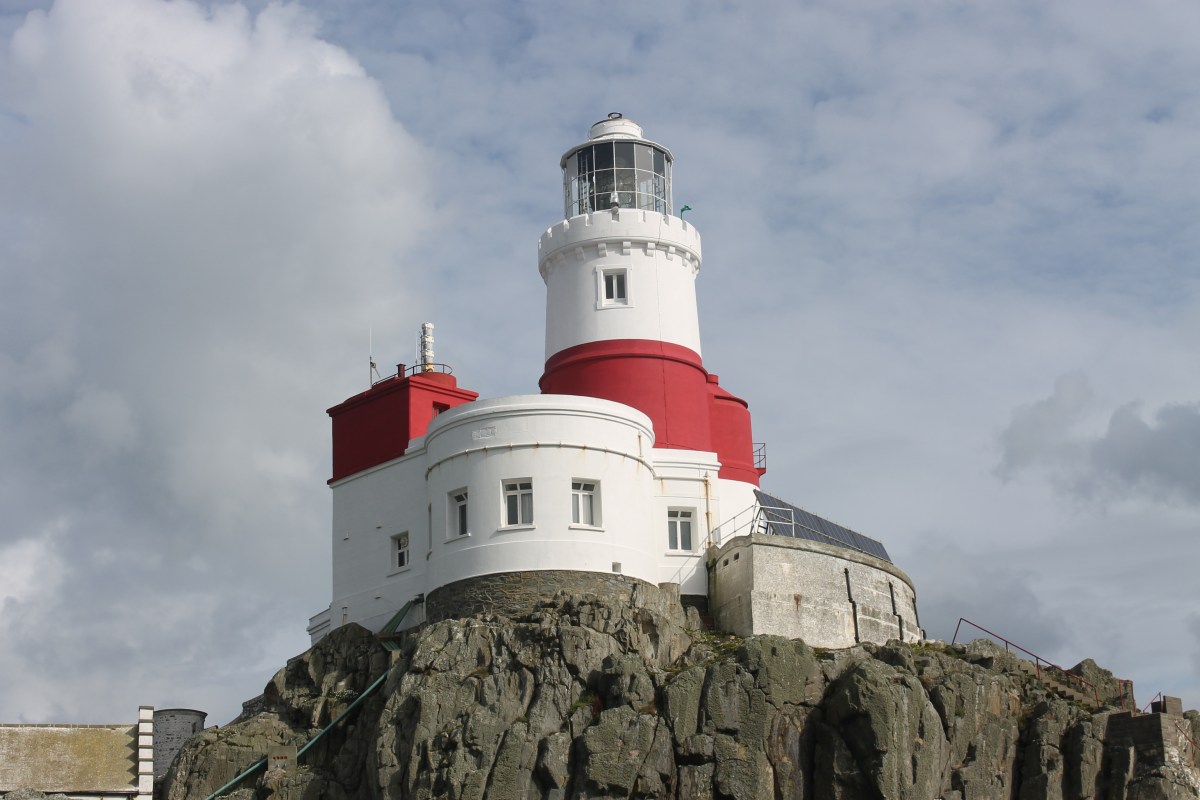
Finally satisfied that I’d seen the real lighthouse, we drove on to Anglesey. We had a brief stop at South Stack to see the lighthouse there, where my sister had a particularly amusing Marilyn Monroe-esque experience with the wind! We parked up at the marina in Holyhead and found a cafe for lunch before meeting the other island-baggers. I’d seen the Skerries before from Holyhead and been fascinated by its beautiful white lighthouse with the red stripe. Fortunately a friend of ours had managed to get hold of Rib Ride who run boat trips from Holyhead and they had agreed to take us out. The boat we went out in was actually formerly owner by Bear Grylls, who just keeps on popping up in my lighthouse endeavours (see my post from August). Bear is actually involved with the company and his boat is actually quite a comfortable set up with nice padded seats. Our pilot, Charles, was also a friendly chap and managed to quickly sort out an engine problem we experienced on the way out, so we made it there safely and Charles moored up alongside a ladder leading up to the island.

The Skerries lighthouse

The Skerries is a stunning place, and I really believe that this is in large part due to the positioning of the lighthouse (though others may disagree). The way it has been built to sit on the highest point of the island is fascinating and every view you get of it from wandering around the main island is perfect. Right on time, the sun decided to come out as we arrived too, so we had great weather for exploring the island. We were also joined by the regular howling of the seals playing about in the natural cove, which offers respite to sailors on rougher days. Apparently, some refer to the Skerries as “the Scaries” due to challenges it presents when the sea is rough. The lighthouse on the Skerries has an interesting history and was originally built by the lease-holder of the island, with the light making its first appearance in 1717. Trinity House had previously objected to the lighthouse being built, but in 1834 they made clear the wishes to purchase the structure. For seven years they fought for ownership and, finally, in 1841 it was sold to them and became the last of the privately owned lighthouses to be bought by Trinity House. It was a wonderful place to visit and nice to be able to share it only with the seals (and some made island-baggers too)!

That trip marked the end of our lighthouse bagging trips (as far as I know) for now. Hopefully there will be more before the end of the year, but we’ll just have to wait and see. The more and more you visit the harder they become to get to. We have some great trips lined up for next year already though, which I’m very excited about 🙂

And finally to Orfordness!

I’d attempted to visit Orfordness lighthouse twice before, the first time missing the last boat by about 15 minutes and the second time turning up on a Sunday or Monday when the boat doesn’t run (bad planning on my part there). So, it had to be third time lucky, surely!

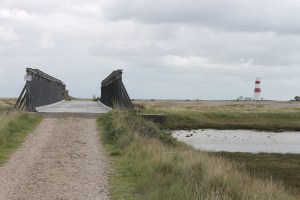
The Bailey Bridge and the lighthouse beyond

With more forward planning this time, we arrived in time for the first boat of the day and happily received the tickets from the National Trust office at Orford. It’s not the cheapest boat trip I’ve ever been on, but you do get maps and a welcome from the National Trust staff on the (roughly) 10 mile long shingle spit that is Orford Ness. They informed us that, although it does say it on the map we’d received, it was very unlikely that we’d step on some unexploded ordnance. The spit was used by the Ministry of Defence during both the First and Second World War as well as the Cold War for secret testing and was also a test site for early developments in radar. There are a number of the old atomic testing buildings still standing on Orford Ness. Although the general outline of what went on there in the past is known, there is still a lot that remains secret. Visiting it on a quiet, calm day as we did, you can’t imagine all of this going on there.

It is also an important conservation area and there is a trail, as defined by the National Trust, that provides the best route if that is your priority. We had plans for the afternoon, so decided to head straight for the lighthouse. It’s possible to see the lighthouse from Orford itself, but it’s actually on the other side of the spit, so it’s a bit of a stroll – a nice one though.

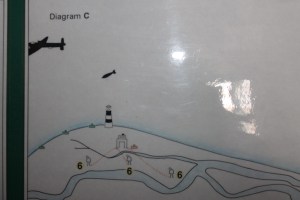
A picture on display in the old Bomb Ballistics building showing testing near the lighthouse

It was back in 2013 that I first heard of the problems with Orfordness lighthouse. Early reports on this said that the lighthouse had been discontinued by Trinity House with the optic removed as the risk of it being washed away was imminent. Another story shortly afterwards revealed that it wouldn’t happen quite as suddenly as the original story suggested and that it had a few years remaining yet (it turns out that an earlier lower lighthouse on Orford Ness was actually washed away in 1730). So, it came as a bit of a surprise to see a vehicle drive past us with ‘Trinity House’ on the side. As we continued our walk, we noticed the vehicle stopped at the lighthouse. I’d received news earlier in the summer that the lighthouse was to be open to the public for three days, none of which I was able to make. So, the idea that someone would be at the lighthouse and might let us get inside was unexpected and a quite exciting. We stopped off at the old Bomb Ballistics building on the way to the lighthouse, which contained some information about what used to take place there. It showed some of the testing exercises they carried out with bombs being dropped into the sea just off of the coast there, scarily close to the lighthouse in my opinion.

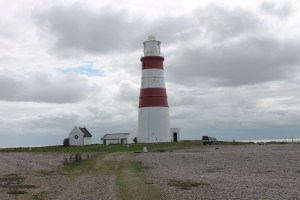
The lighthouse and its buildings

As we set off for the final stretch towards the lighthouse we noticed that the door to the main tower was open and, as we approached we could hear voices coming from inside. It turned out that Nicholas Gold, the owner of the lighthouse, was there that day showing people around and, even better, he was happy for us to have a walk up the tower. Apparently, he’d heard about the risk to the lighthouse and contacted Trinity House to ask if they could come to some sort of deal over ownership of the buildings and tower. Fortunately they could (I assume Trinity House were pleased to get rid of it, as it no longer served a purpose for them) and he set up  the Orfordness Lighthouse Trust to allow the local community to have a say over how the lighthouse was maintained in the future. The Trust aims to preserve the tower for as long as possible and some stabilisation work has already been carried out to protect the lighthouse.

The view down from the lamp room

So, in we went and met the owner on our way up. We made it all the way to the lamp room, which offered some great views of the surrounding area and we could look down and see from above the distance between the sea and the lighthouse. It’s an interesting lighthouse with some unusual platforms on the way up unlike any I’ve seen before. Just inside the entrance there is some information about the lighthouse and the work that has already been done to try to preserve it. We left a donation and made our way back outside where the owner allowed us to look inside the interestingly-shaped building that had previously been used to store the oil for the lighthouse. Such a great smell inside that building! There was also the other building, which would have provided living quarters for the keepers. All in all, a fantastic visit and perfect timing as, on our way back, the owner drove past us and offered us a ride back to the boat on the back of the vehicle. We said “no, thank you” at the time, but realised with hindsight that it could have been quite fun – the three of us bouncing about on the back! So, he’d obviously not stayed there much longer after we’d left. Perfect timing!

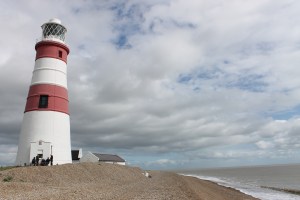
A beautiful location for a beautiful tower

It was a great few hours spent in a unique place. Whether or not the lighthouse is open, it’s definitely worth a visit, particularly to see the beautiful lighthouse tower with it’s perfect stripes before it ceases to be a part of the skyline there. I just hope the Trust are able to preserve it for many years to come.

We have one more trip lined up this coming weekend, which I will report on soon. There’s nothing, as yet, following that, but these things can change in the space of a week if we suddenly decide we want to do something! 🙂

Cramming in some lighthouse visits

The middle pier light at Granton

At the weekend, we travelled down from the north coast to the Isle of Wight to see my family for our son’s first birthday. Of course, it wasn’t possible to do the journey without at least one lighthouse stop! In my attempt to finalise a list of lighthouses in the UK, I have discovered more and so we took a detour along the coast north of Edinburgh after our stopover in Perth. I’d been to Granton during my lighthouse tour in 2012 to see, what I have recently discovered, is actually a former Northern Lighthouse Board training facility. There is a Stevenson-style lamp room sitting on top of a building and, rather than being used for navigation, it was only ever used for trainee light keepers. I had found out about the additional two lighthouses here though just last week, one on the end of the east pier and the other on the middle pier. I won’t say a huge amount about either as there’s not a lot to say. We weren’t able to get very close to the middle pier light, which is essentially a small lamp on the top of a pole. The other was a white square structure on the end of the pier. It was a nice wander out to it, but it’s looking a little derelict now with graffiti all over it. We’re not sure if it is still in operation as it doesn’t look like it, but there is a solar panel on top. We didn’t spend long in the area as we had to get down the road.

Off we go to St Mary's lighthouse!
Off we go to St Mary’s lighthouse!

This didn’t stop us from calling in on St Mary’s island lighthouse nearly Whitley Bay as we passed by though. When I’d originally been in 2012 the tidal island had been cut off and when Bob and I had made a quick stop there more recently we didn’t have time to enjoy a walk across the causeway to the island. This time around we chose to make time for it. It’s a stunning tower and it’s tidal access adds an extra appeal to it. It turns out they have a real good set-up there, although the funding hasn’t come easily to keep it going.

We had a quick walk around the outside of the tower before heading in to the shop and buying tickets to go to the top of the lighthouse. What I often find in many lighthouses that you can reach the top of is that you need to go on a guided tour with someone who works there. St Mary’s is different though and you can wander up at your own leisure. This time we had our son with us and he is very keen to walk up steps at the moment, so he was more than happy to wander on up (holding his daddy’s fingers). He got about two thirds of the way up before Bob decided it was too much for his back, so he was carried the rest of the way up. It was a bit of a challenge to get Bob and our son through the small opening up to the lamp room, but they got to the top and, for our little man, it was the first time he’s been to the top of a lighthouse.

The old Withernsea optic in St Mary's lamp room
The old Withernsea optic in St Mary’s lamp room

There were some great views from the top and, although the optic in there is not the original (it came from Withernsea), it is still nice to see an optic in there. After having a good look around we started our descent. At the bottom of the tower we noticed live footage of the nearby rocks so people could look out for seals. However, I noticed that the camera could be spun around to see the lamp room. So, I then headed back up to the top, leaving Bob with the instructions to take pictures of me at the top once I got there. I’m not really sure why I decided to go back up – it’s much more exhausting the second time around, but we got the pictures and I then returned to the bottom of the tower. While we were there, we got a certificate for our little man to mark his climbing of the lighthouse.

By the time we left the lighthouse the sun had come out and so we took a slow wander back along the causeway before grabbing an ice cream and hitting the road again.

The following day was particularly exciting as I managed to bag another lighthouse on my third attempt at it. That’s all I’ll leave you with! More to follow soon 🙂