The Association of Lighthouse Keepers’ Cornwall event continued on Thursday and it kicked off with a return to the National Maritime Museum in Falmouth.
This time we’d hired a meeting room so the ALK’s South West Regional Rep, Ken Trethewey, who is also the author of ‘The Lighthouses of Cornwall and Devon: A Narrative’ among other books, could share his knowledge and personal experience of lighthouses in Cornwall and some further afield too.
Ken kicking off his excellent talk
It was a great presentation, starting off with a picture of St Catherine’s Point Lighthouse in Fowey. I was banned from answering the ‘where is this lighthouse?’ question! Ken then went on to talk about Wolf Rock Lighthouse and the amazing opportunity he’d had to fly by helicopter to the lighthouse and take a look inside.
Ken is one of the original lighthouse baggers and so was part of the very lucky – and much smaller – group who would have actually visited the lights while there were still keepers working in them.
Ken also speaks very fondly of Eddystone Lighthouse and the lesser known Plymouth Breakwater Lighthouse, which he was able to organise an ALK trip to see a couple of months ago. Hopefully we can do a re-run of that next year and I’ll make sure I can join next time too. I call it a perk of the job!
The second part of Ken’s talk was fascinating when he delved into his family history and the discovery that three of his ancestors were lighthouse keepers with a particularly close connection to South Foreland Lighthouse. Working alongside his brother, he has released a new book, ‘Light on the Forelands’ which details their findings.
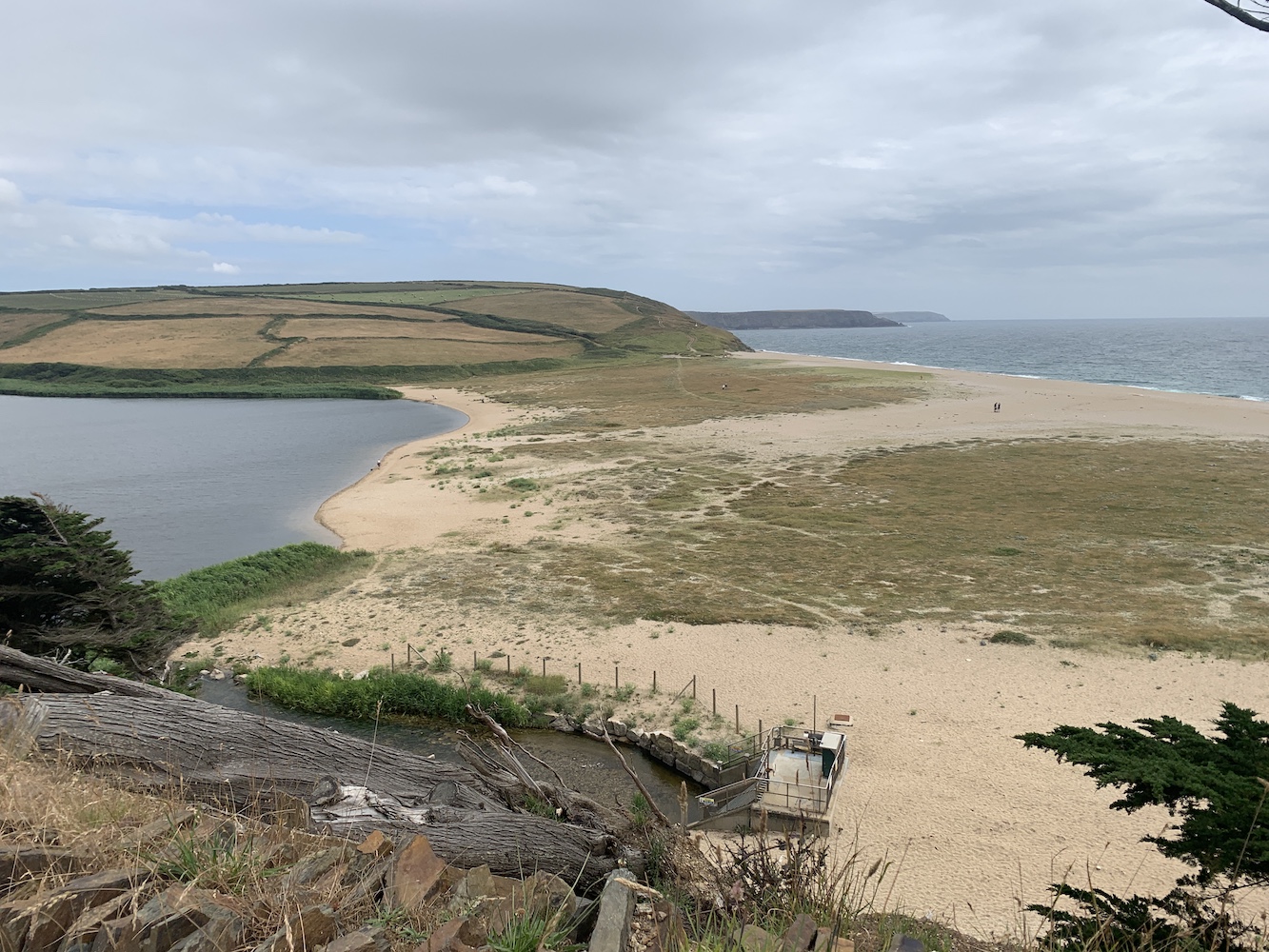
After an enlightening morning it was time for me to get some fresh air so I headed to Helston on the bus for a walk around The Loe, Cornwall’s largest natural freshwater lake. The Loe is only separated from the sea by a sand bar which forms part of the circular walk. No lighthouses there, but still some great views nonetheless.
The Loe Bar which separates The Loe from the sea
Arriving back in Helstan just in time, it was then a matter of journeying south to the Lizard Lighthouse. Unfortunately the Lizard Lighthouse Visitor Centre is currently closed with no signs of it reopening. This obviously caused us a problem for getting in, but once again Nick from Trinity House offered to help out and we got permission for access to the lighthouse only, not the Visitor Centre.
Lizard Lighthouse
There’s something about lighthouses that are frequently visited and very popular. I’m sure I’ve mentioned in at least one blog post before that my affections generally always lie with those that are often overlooked, usually because you can’t just drive to them and it takes more than a short walk. Lizard is, dare I say it, one of those that I just find too popular, but it was actually nice to get inside the tower knowing that it would only be our group in there and it wouldn’t be a matter of battling past numerous others.
The view across the keepers’ houses to the second tower
It certainly is a nice-looking lighthouse though and the addition of the second tower as well adds more visual interest. Perhaps as evidence of its popularity, Nick showed us a cupboard on the ground floor where they store a range of sizes of plimsolls as they had people turning up wearing completely inappropriate footwear.
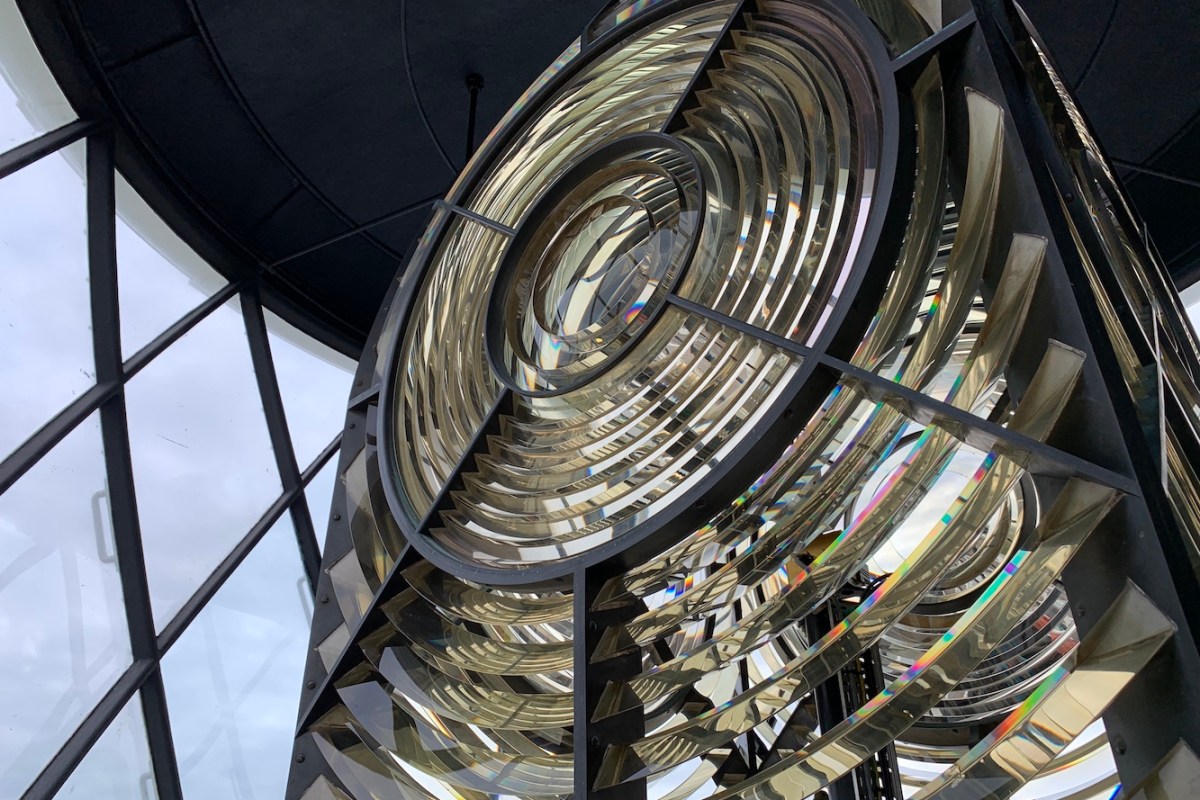
The lens in Lizard Lighthouse is fantastic and rotates incredibly fast. It gives off an incredibly powerful light, which can be seen for an impressive 26 nautical miles, which will presumably be largely to do with it being on the most southerly point of the UK and aiding navigation of both the English Channel and vessels arriving from the wider Atlantic to the west.
Lizard’s impressive lens
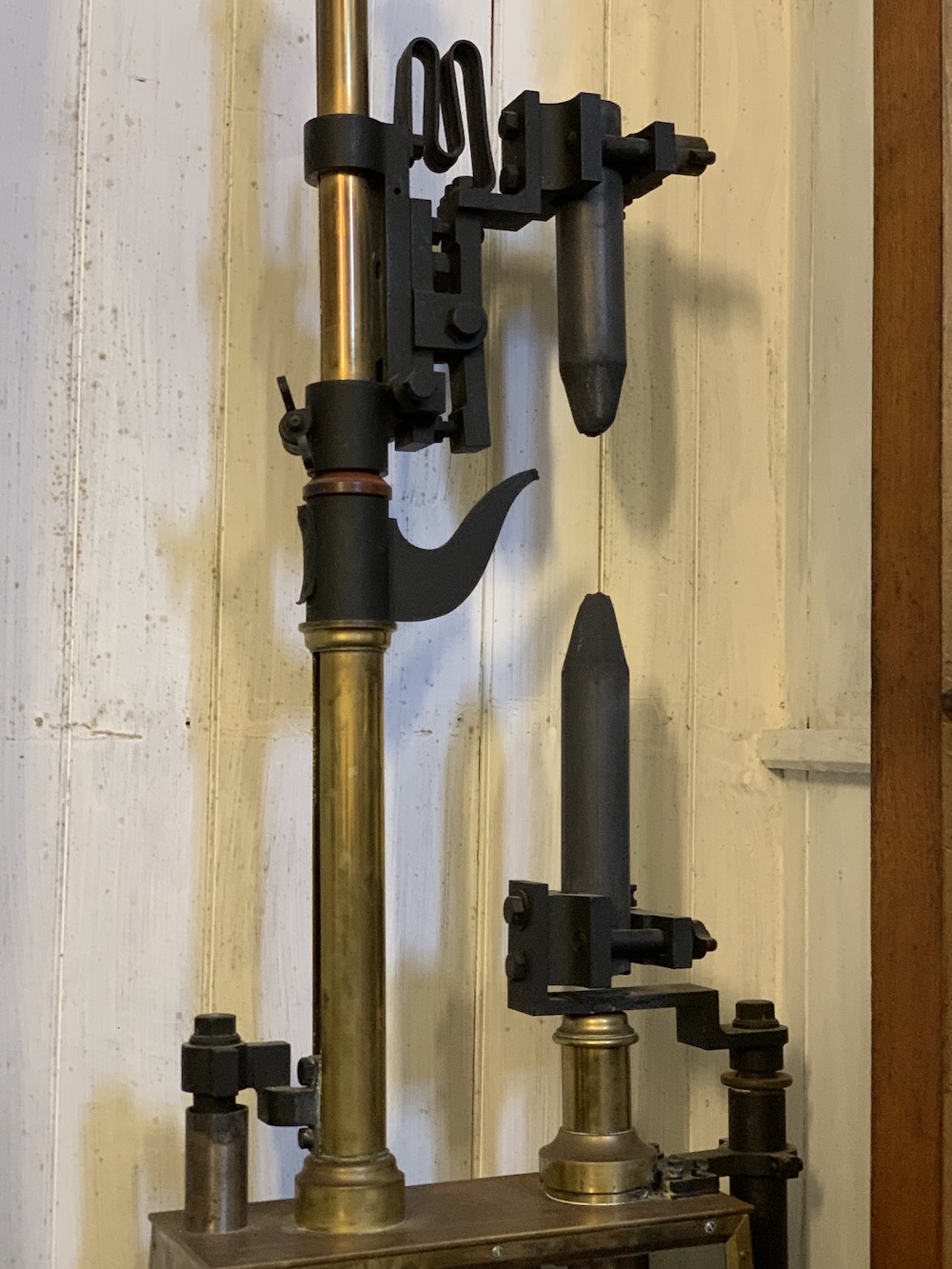
Ken actually stepped in again at one point to describe in more detail an old light mechanism that is contained in one of the cupboards at the lighthouse. This was the old Carbon Arc Lamp used in the lighthouse from 1903 to 1936. Lizard was one of the first lighthouses to have electricity and this method of powering the lighthouse involved applying a high voltage of electricity to the two carbon rods, which created a permanent spark between them. I’d never seen one of these before.
The Carbon Arc Lamp previously used at Lizard Lighthouse
Of course Joe the Drone was up to his usual tricks.
A Joe’s eye view of Lizard Lighthouse
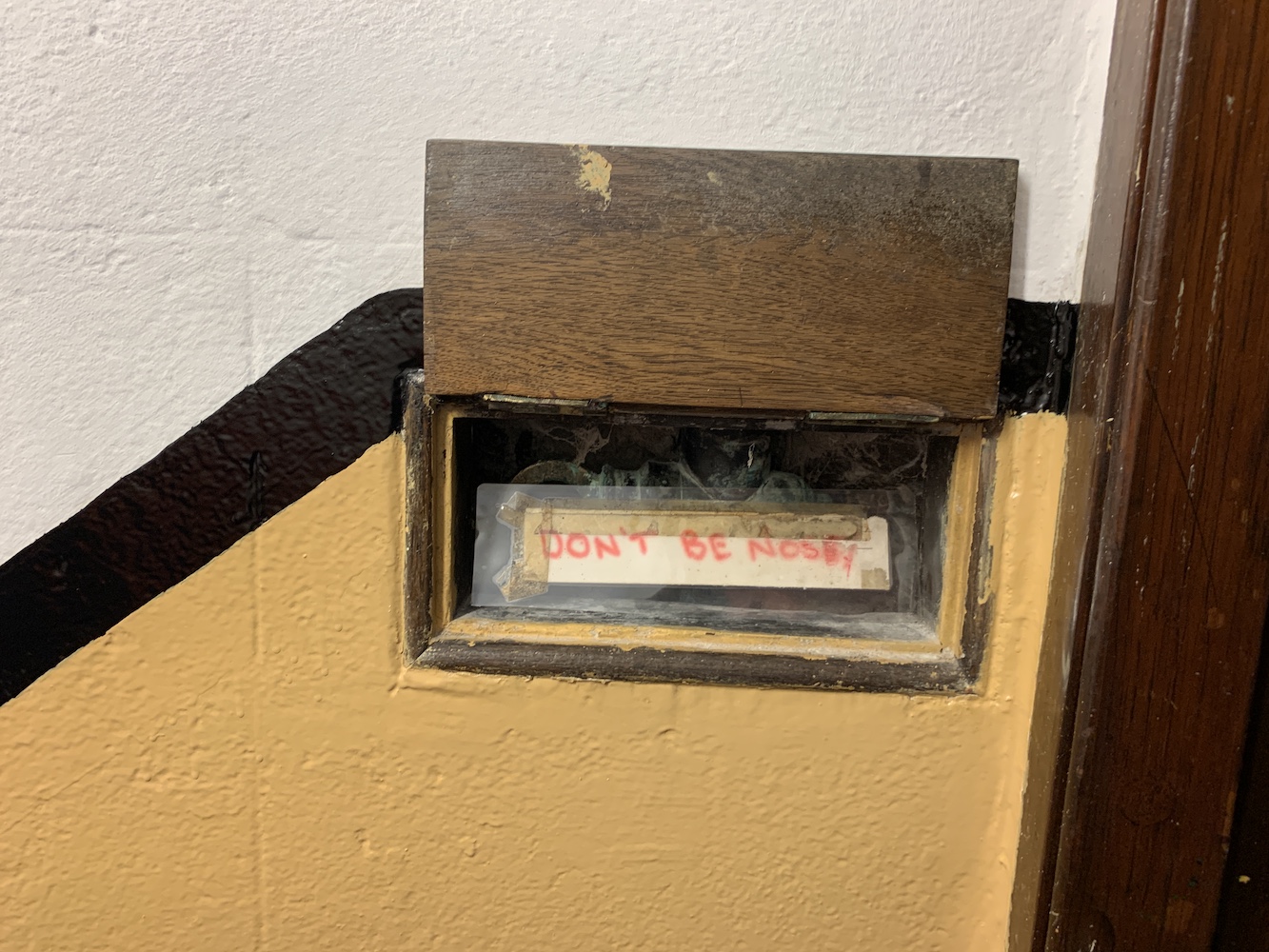
One extra little gem that we discovered while coming back down the ladder from the lamp room was a tiny hatch. When you lifted the little door you were greeted with a sign saying ‘Don’t be nosey’.
Sometimes these little touches can help make a visit more memorable – and enjoyable too 🙂
Since Autumn 2018 I have been organising trips for the Association of Lighthouse Keepers (ALK). The first year went relatively well, but as you can probably imagine March 2020 did it’s Covid-y thing and put a stop to such events. Prior to that I’d been working away on the ALK’s Annual General Meeting weekend, which always comprises far more than just a meeting. We’d got the go ahead to proceed with Belfast as the location for 2020 and suddenly the brakes went on and rescheduling for 2021 became necessary.
Fast forward a year and we faced another period of uncertainty with on/off restrictions and Covid cases still high. Recognising the importance of keeping everyone safe it was again agreed to postpone for a year.
At the time it meant much less work, that’s for sure, but time passes so fast these days that it wasn’t long before connections needed to be re-established, bookings confirmed and details shared.
To say Belfast was an ambitious location for the AGM would be something of an understatement. With around 70 members signed up and transport and a ferry to be arranged for most there was a lot to do. Establishing some kind of relationship and trust with Irish Lights was important too. As a result, this post will be a bit different and hopefully give an insight into the trials and tribulations of event planning!
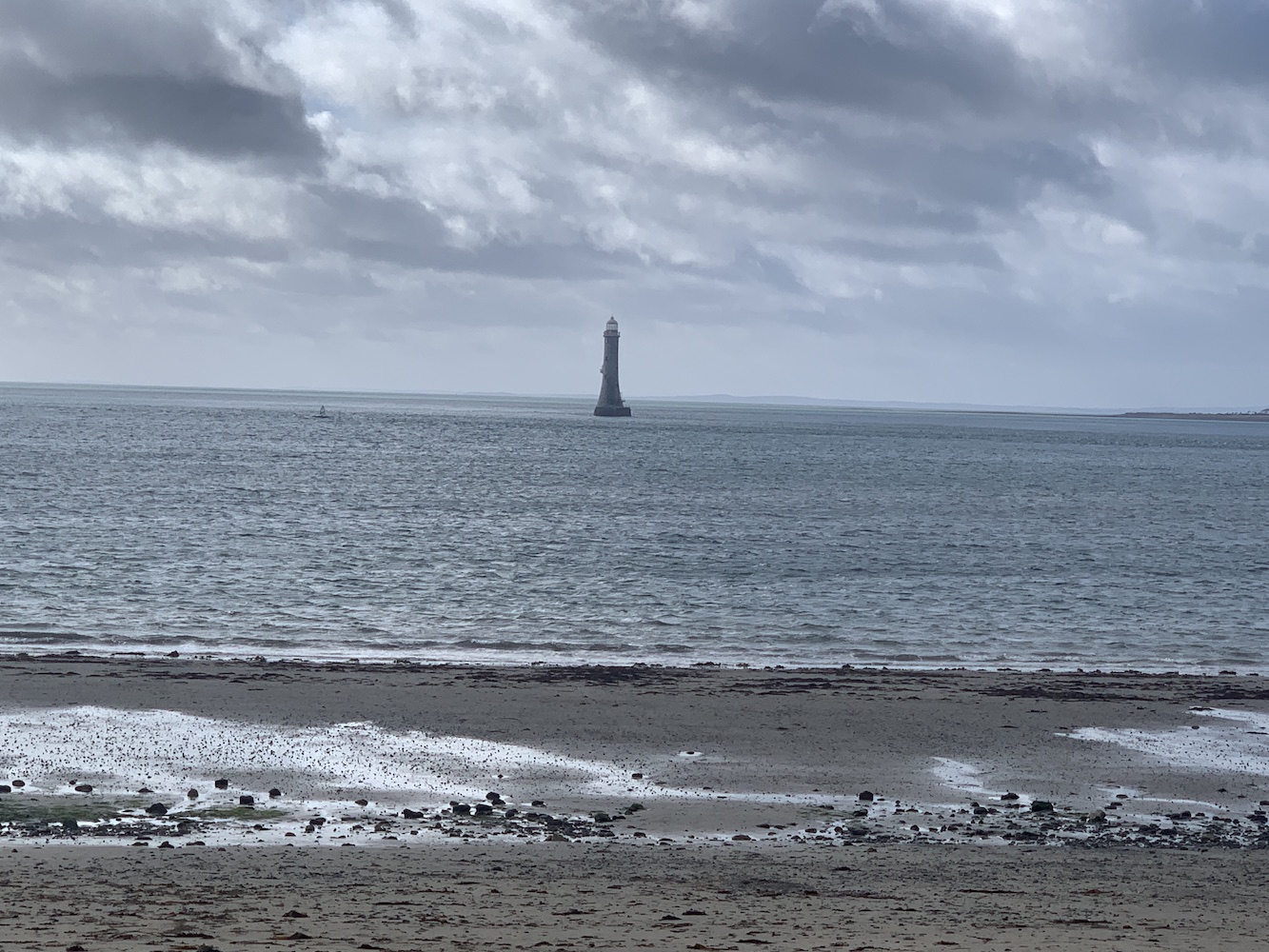
The first day was reserved for the formal meeting and dinner, although I did get a quick visit to Greencastle in with Bob, Steve and Lianne to see Haulbowline Lighthouse in Carlingford Lough. It’s always one that’s so close, but still too far away.
Haulbowline Lighthouse in Carlingford Lough
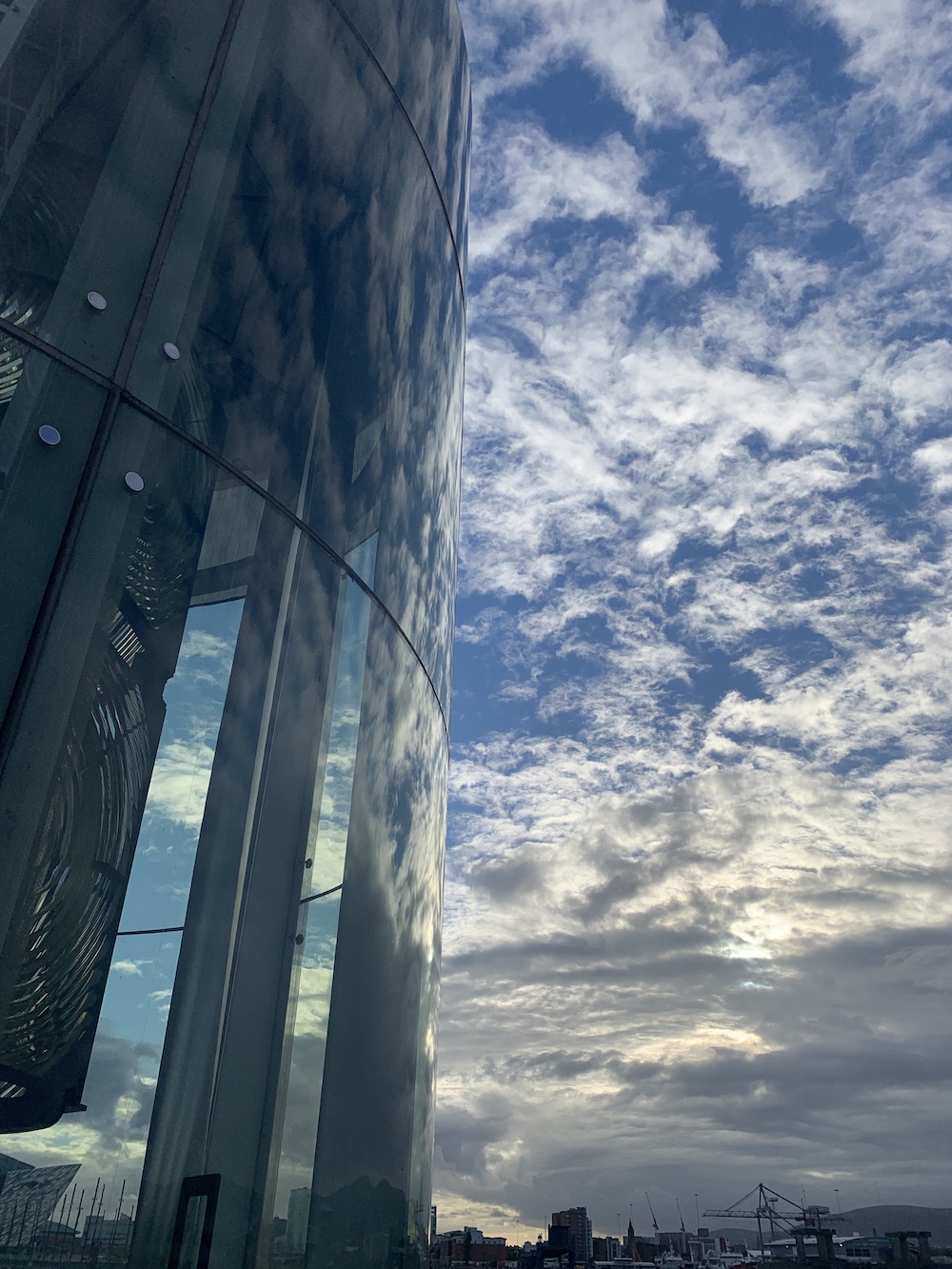
Between the meeting and dinner I joined other members as we went to take a look at the ‘Great Light’ on the Titanic Walkway. This hyper radial lens was previously located at the top of the Mew Island Lighthouse tower, casting its incredibly powerful light over the sea surrounding the east coast. It’s really very impressive and is surrounded by plenty of lens-related information.
The Great Light in the Titanic Quarter
On the second day we all gathered at the wonderfully picturesque town of Donaghadee, arriving in two separate parties so as not to inundate the place in one big go. I’d organised boat trips for the groups to head out around Mew Island to see the lighthouse there – the former home of the lens seen the previous day. The boat trip also gave some views of the old lighthouse in the Copeland Islands group which is now in ruins.
Mew Island Lighthouse
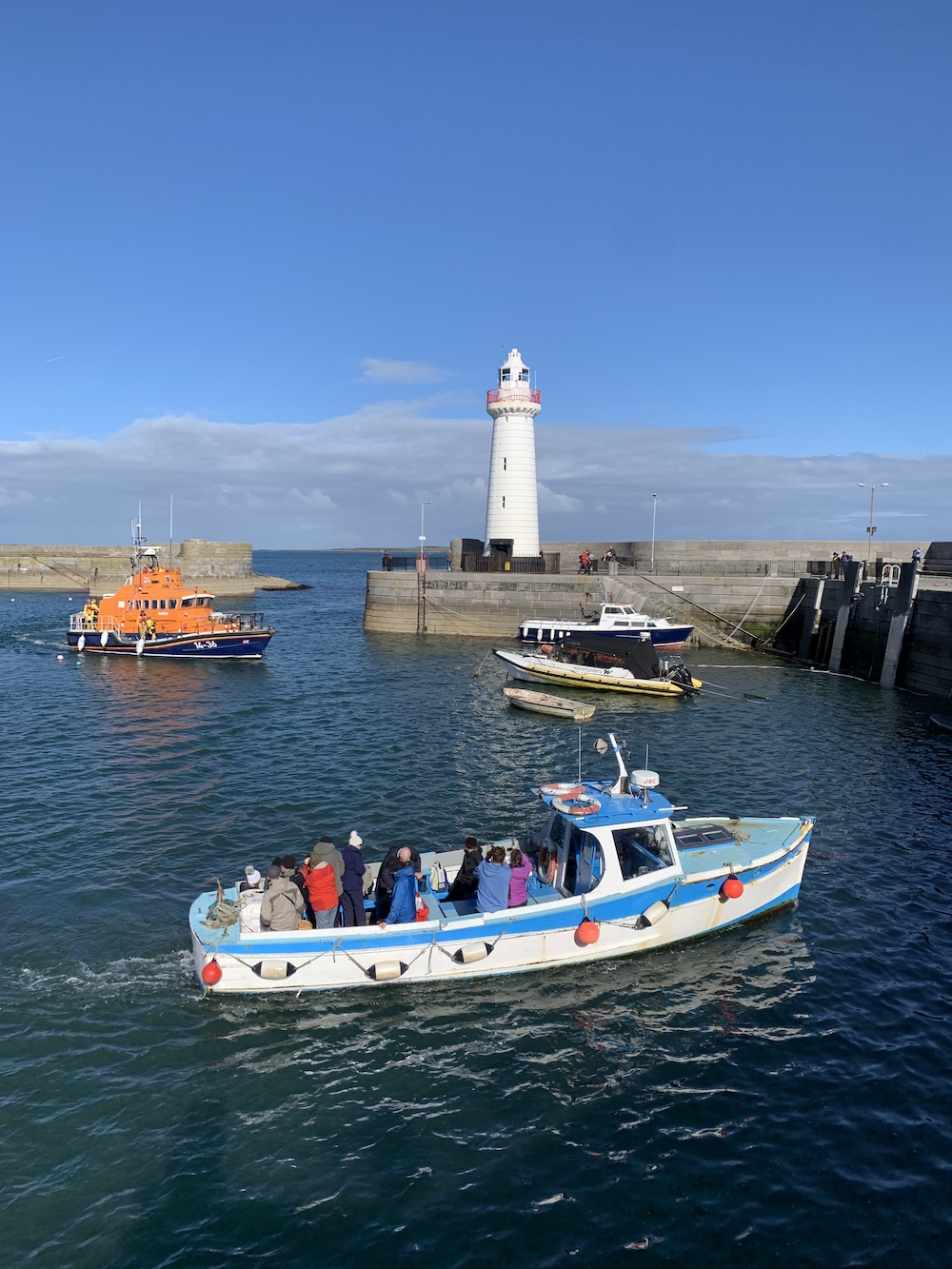
The local attendant along with Irish Lights area manager opened up the harbour lighthouse for us there. Harbour lights are generally pretty small, but Donaghadee is an exception. It’s bright white exterior and horizontal band detailing gives it a really unique look. Being the organiser I was the last to go up the lighthouse and managed a private tour of my own when all the others had disappeared off to explore Donaghadee a bit more.
The lifeboat, our Mew Island boat and the lighthouse in Donaghadee
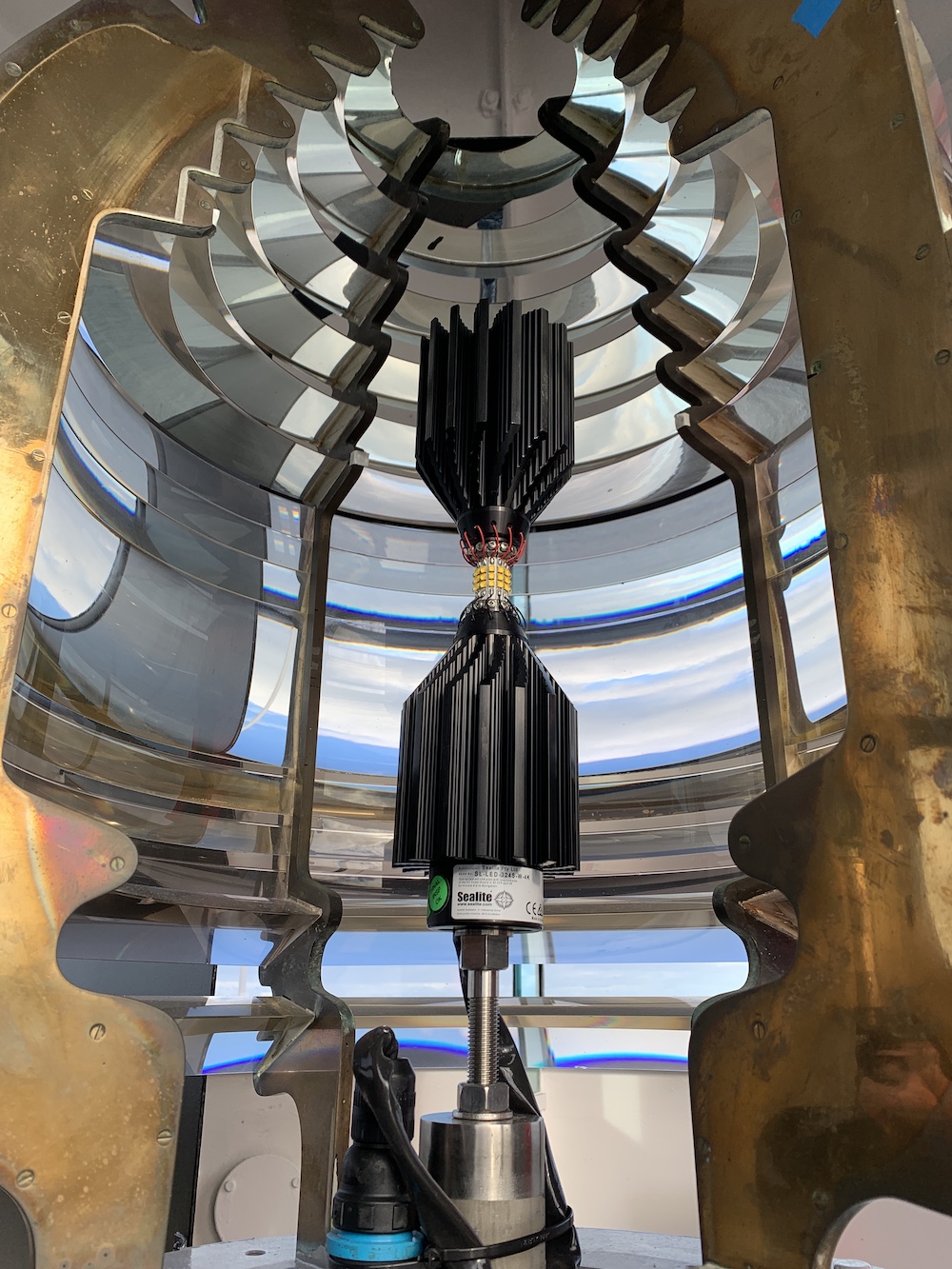
The LED and lens inside Donaghadee Lighthouse
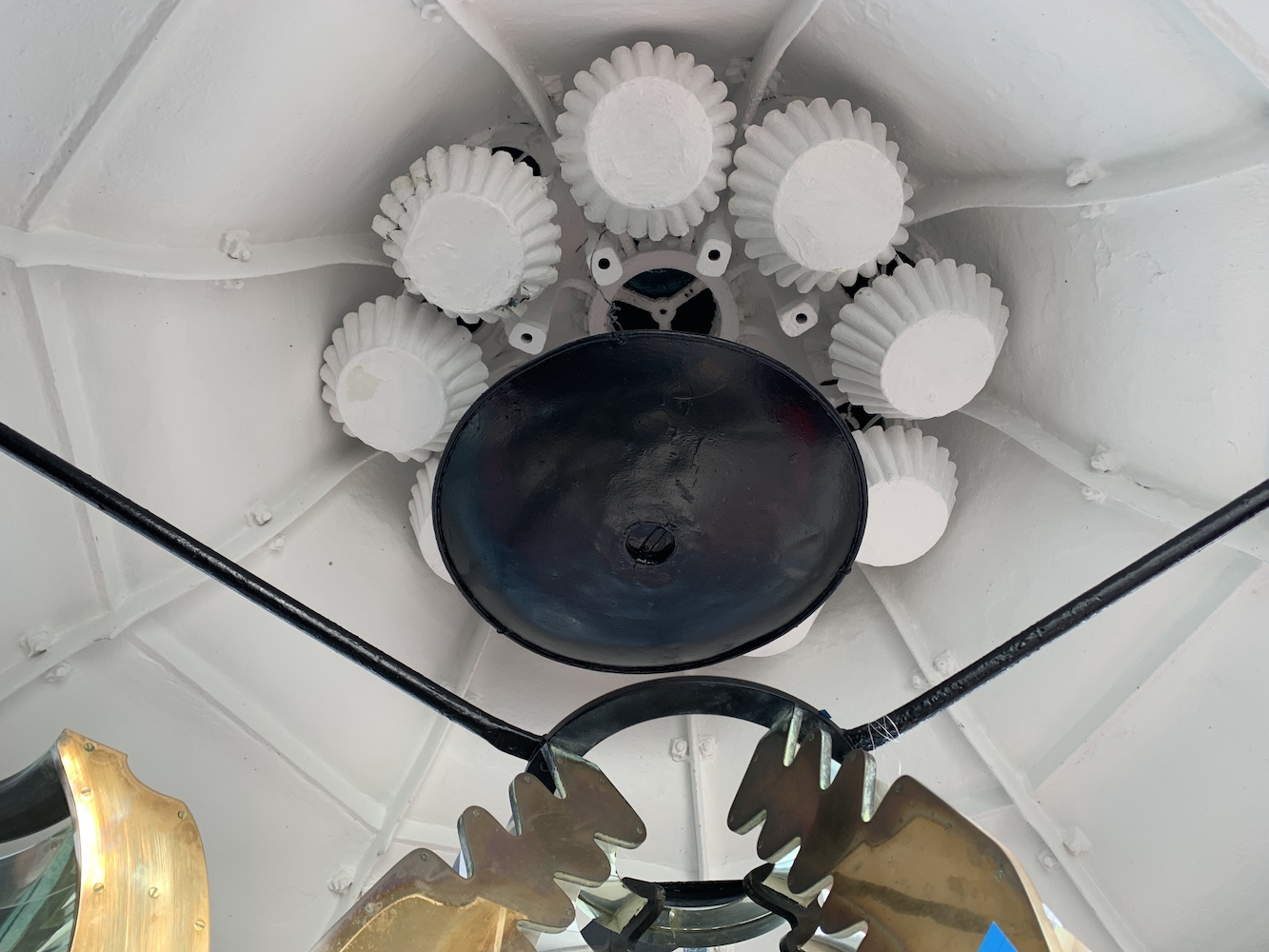
The interesting ‘cupcake cases’ at the top of Donaghadee Lighthouse
The RNLI team in Donaghadee had very kindly opened up their station for us to look around and also provided tea and coffee. Among the ALK membership there are also a number of Lifeboat enthusiasts so this went down rather well. They were great hosts too.
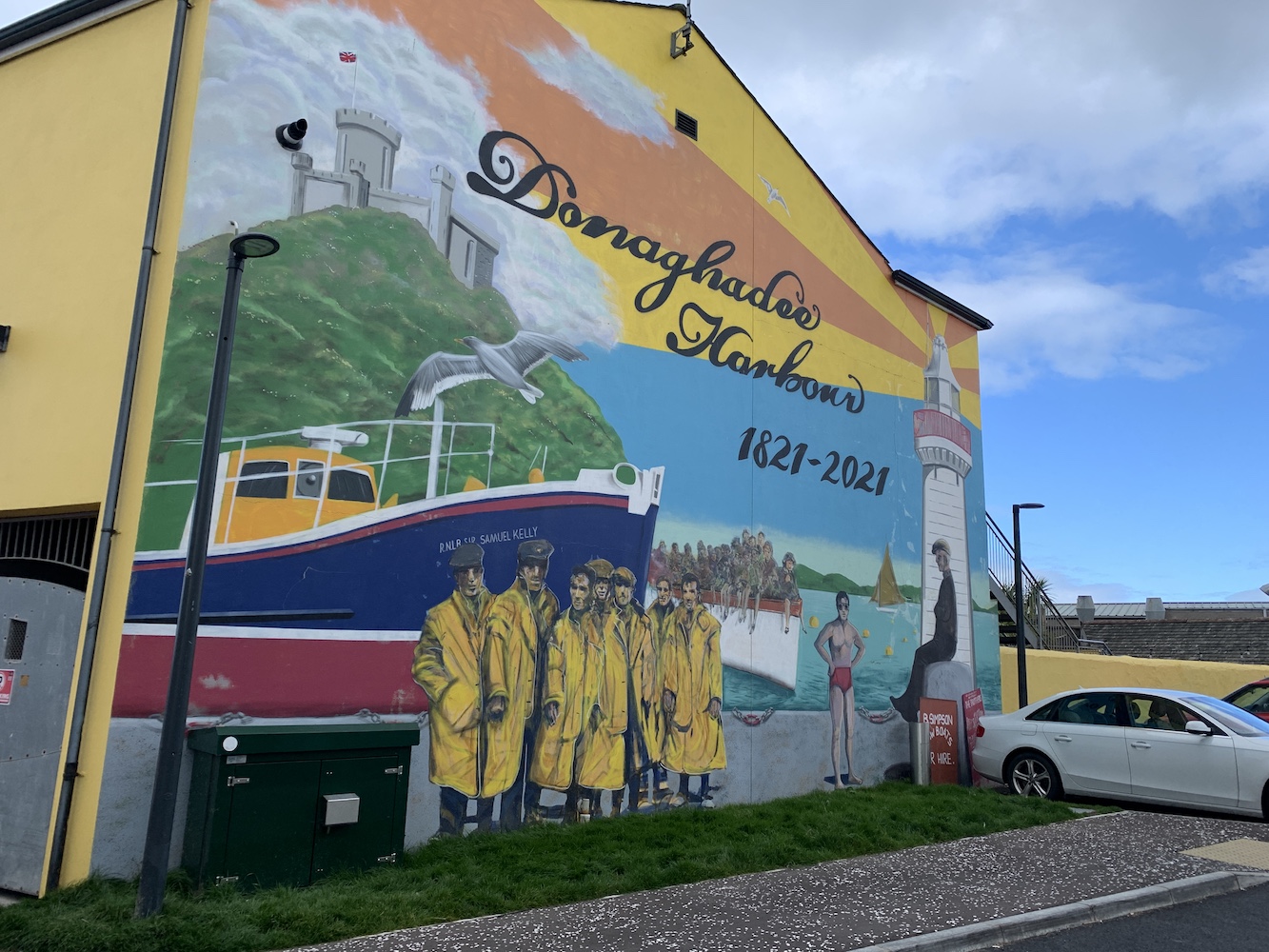
An excellent mural close to the Donaghadee Lifeboat station
It became clear quite early on that the boat trips around Mew Island were running late so it wasn’t a surprise when the boatman announced he wouldn’t be able to take the last group out due to the fading light. After a moment of panic I worked out a solution with the boatman which meant the final handful of ALK members went out the following morning instead. Just one of perils of event organising!
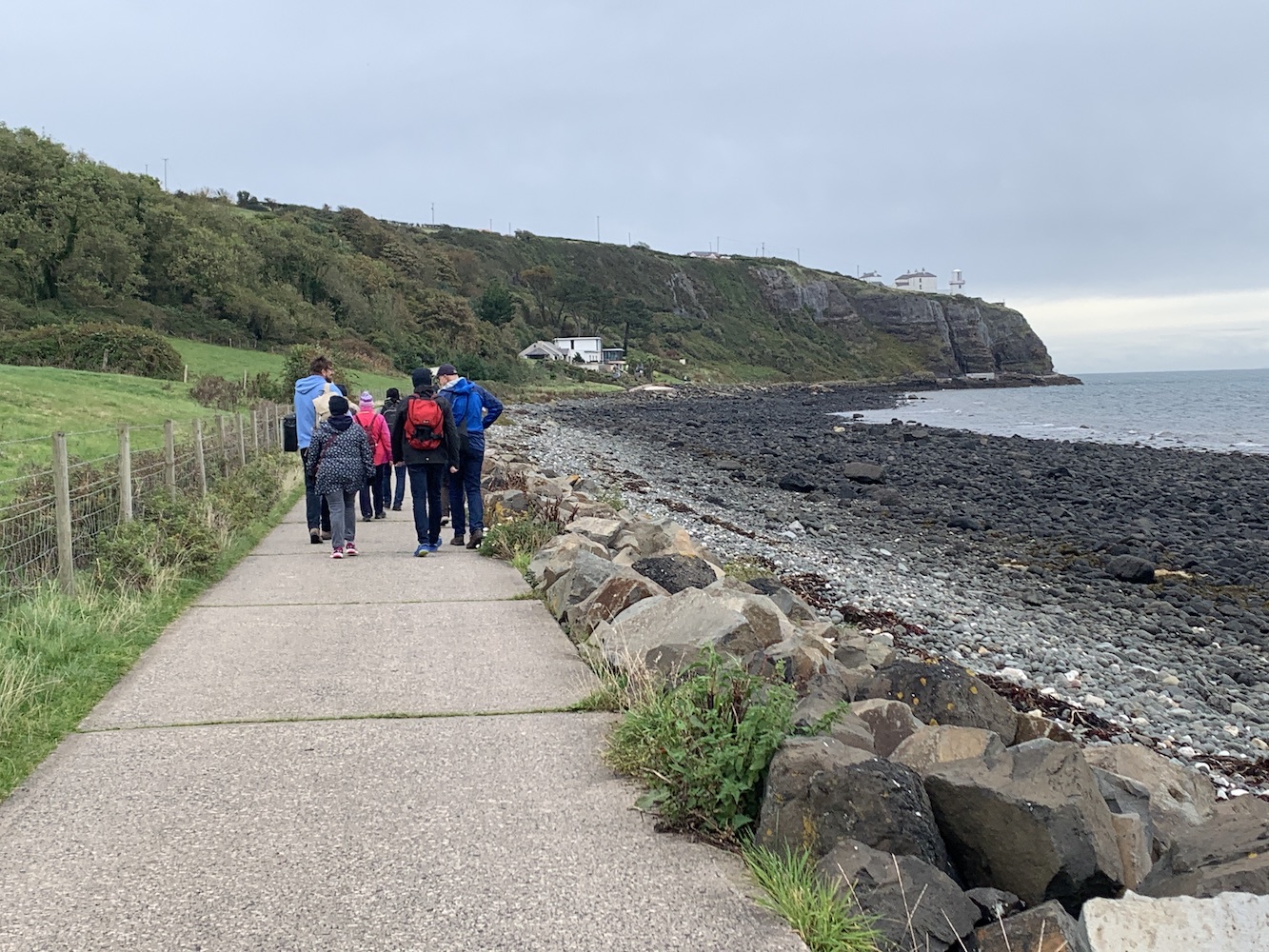
On the Monday we set off for Blackhead Lighthouse. When the coach company announced they wouldn’t be able to get along the access road to the lighthouse I was delighted personally as it meant we’d get to walk along the coast from Whitehead. Obviously, with my event organiser head on though I was concerned about those who weren’t able to manage the walk, but thankfully we got them sorted with lifts on cars and all turned out well in the end.
Heading for Blackhead Lighthouse
The great view looking south towards Whitehead
Blackhead is a great place to hang out and even standing around at the bottom of the short tower making sure everyone got a chance to go up offered plenty of opportunities to catch up with the members as they came and went. Joy and Patrick Tubby who were staying in one of the cottages along with others were excellent hosts with food and drink on offer once people had taken a look around the lighthouse.
Arriving at Blackhead Lighthouse
Once again, I was the last to go up and it had all got very chilled out by that point so I was able to amble around up the tower with Patrick and John before heading up to the cottage.
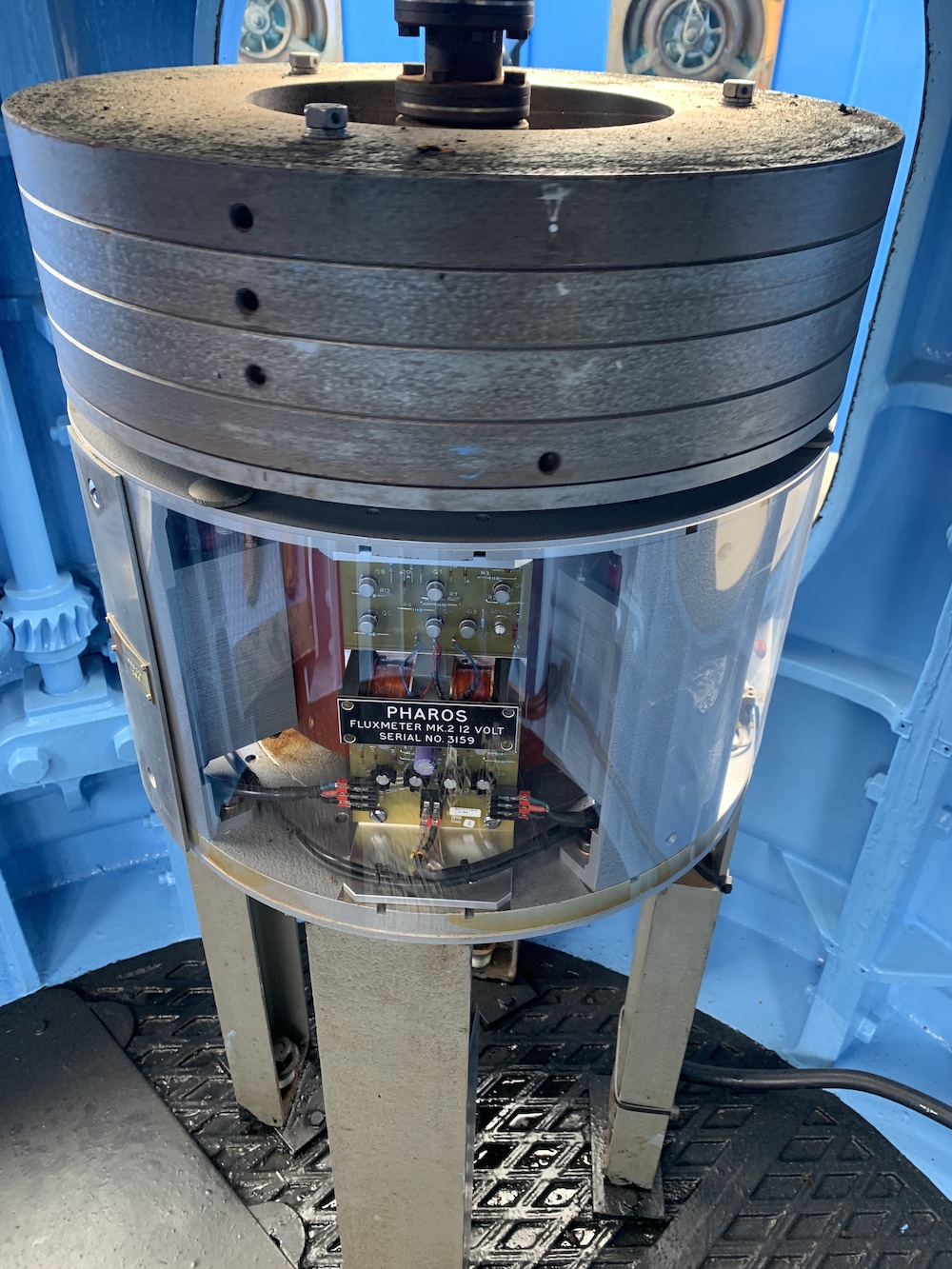
The lens at Blackhead
The light mechanism at Blackhead
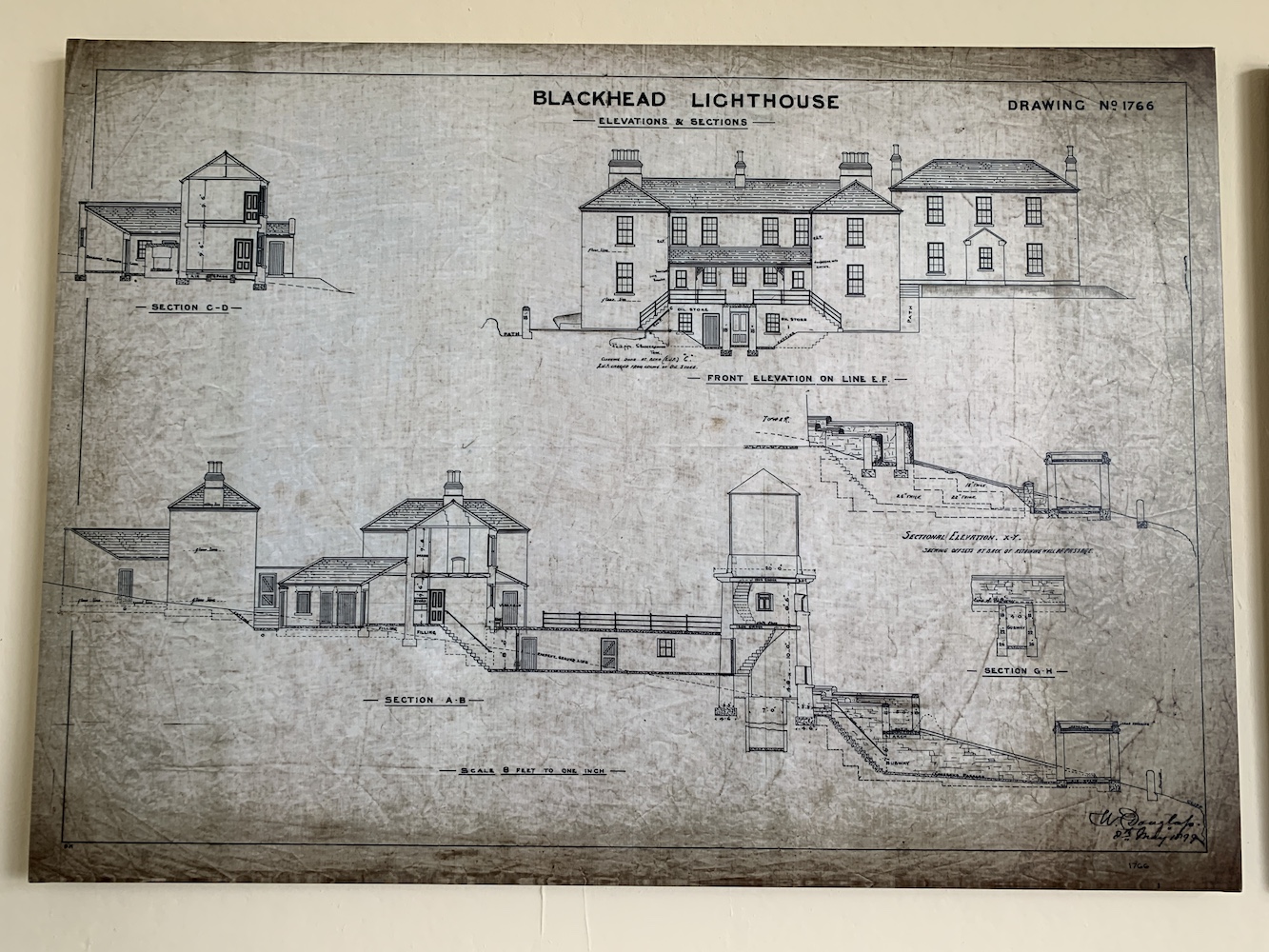
We also got the chance to see inside one of the old lighthouse buildings which contains information boards about the area
After bidding farewell to the final members as they made their way back along the coast to the coach, the rest of that day was reserved for drinking wine with friends at Blackhead. Probably not wise given that the following day was the biggest of all, but also good fun.
The final day arrived and the members gathered for the journey up to Ballycastle to catch the ferry over to Rathlin Island. Taking a group of around 50 people over was no mean feat, but thankfully everyone behaved and the herding of the cats was straightforward enough. The only problem was a couple of our former lighthouse keeper members were caught in traffic, but thankfully the ferry crew knew them well and so it was no trouble at all to leave a bit late to make sure they got on board. Gerald Butler who lives at Galley Head Lighthouse was among the latecomers and his ability to charm the socks off anyone once again worked its magic!
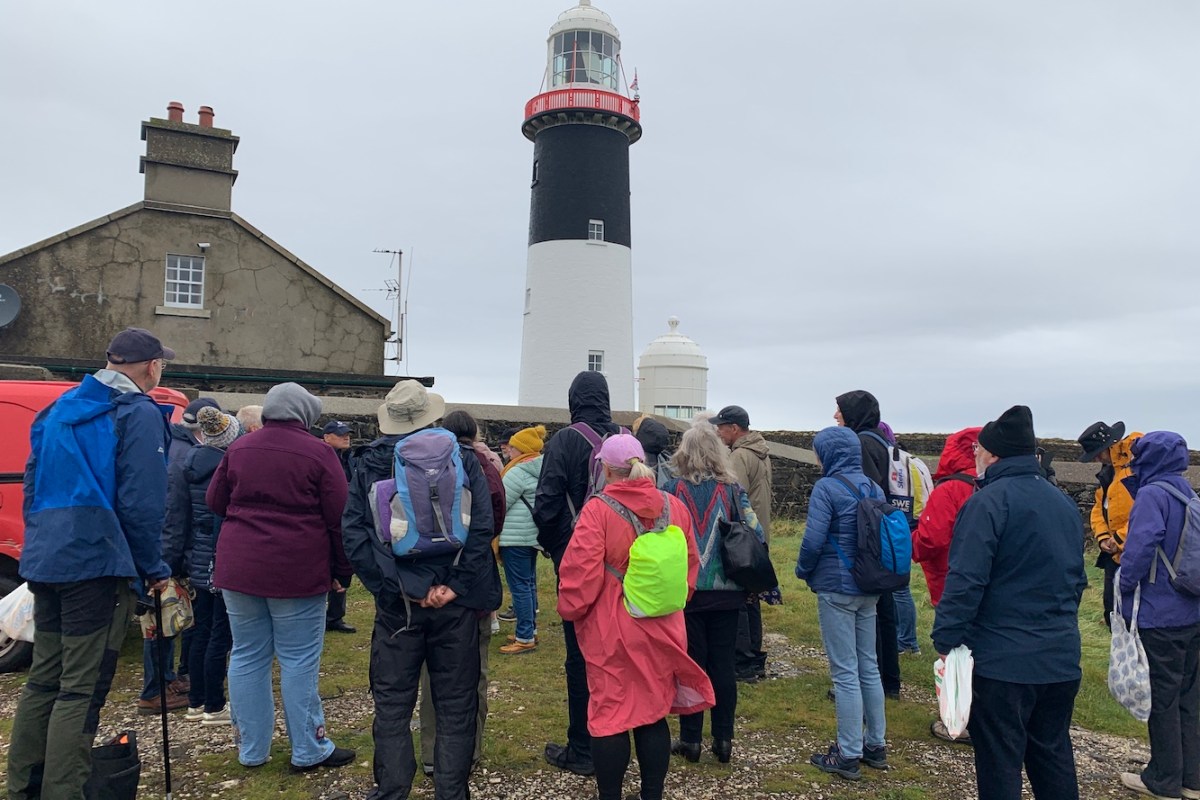
My detailed transport plan, developed in partnership with Bert’s Puffin Bus, for getting two groups around with just one bus worked very well indeed and the first group set off for Rathlin West Lighthouse. When the bus returned I joined the second group for the journey to the East Lighthouse. For me this was an exciting one to get inside. It’s an absolute beauty from the outside and the light operates 24 hours a day, although at the time of our visit it was operating on the emergency light outside as maintenance work was in progress.
Rathlin East Lighthouse, including its old low lantern
Once again I timed my visit to the top, among the last lot again having had the job of being that annoying person at the door who had to tell the general public they couldn’t come in as it was a private visit.
The view of the cottages from a lighthouse window
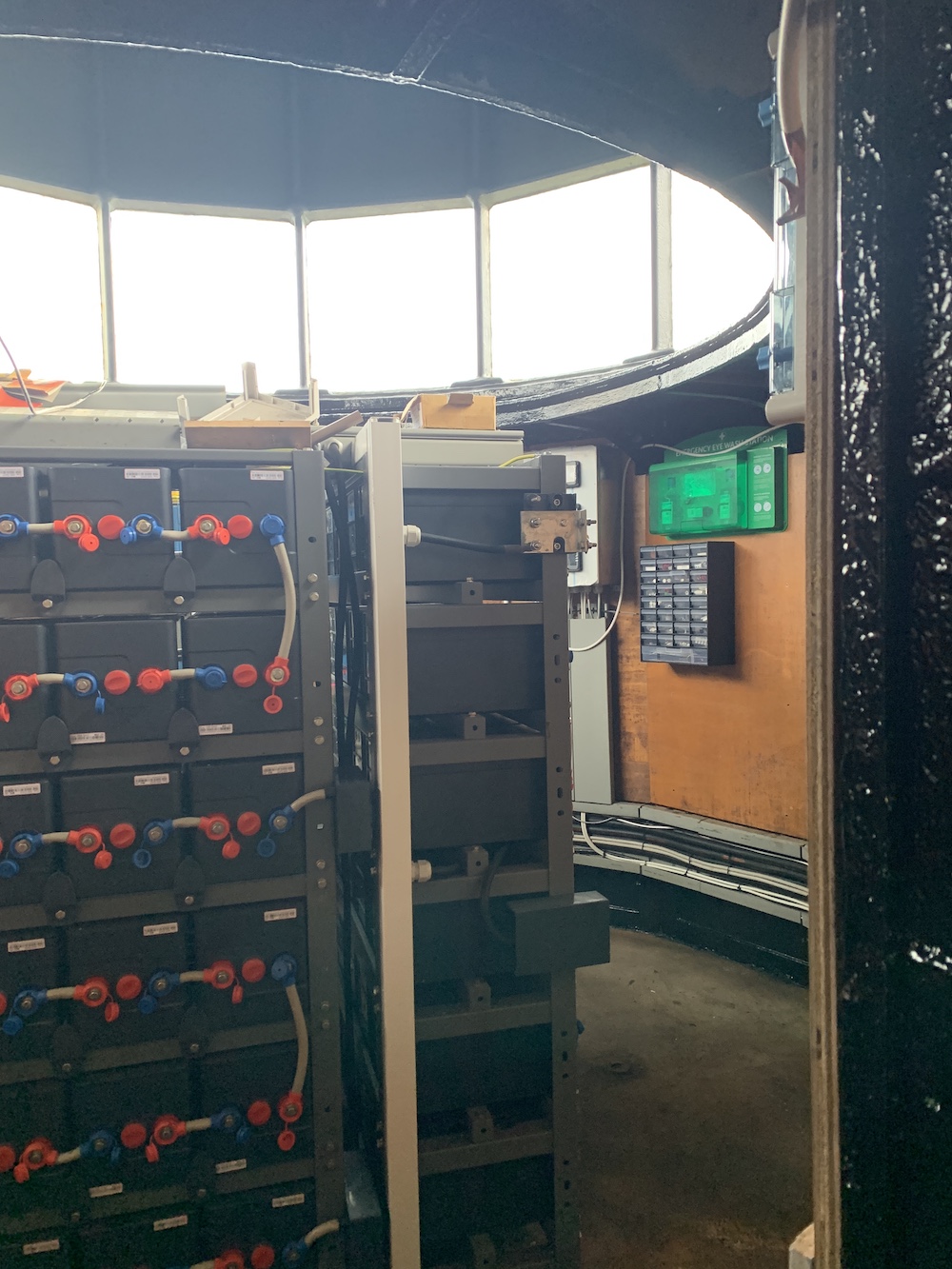
The emergency light in operation on the gallery at Rathlin East Lighthouse
The view from the top of Rathlin East Lighthouse
Looking west from the top of Rathlin East Lighthouse
The glorious view to the south from the top of Rathlin East Lighthouse
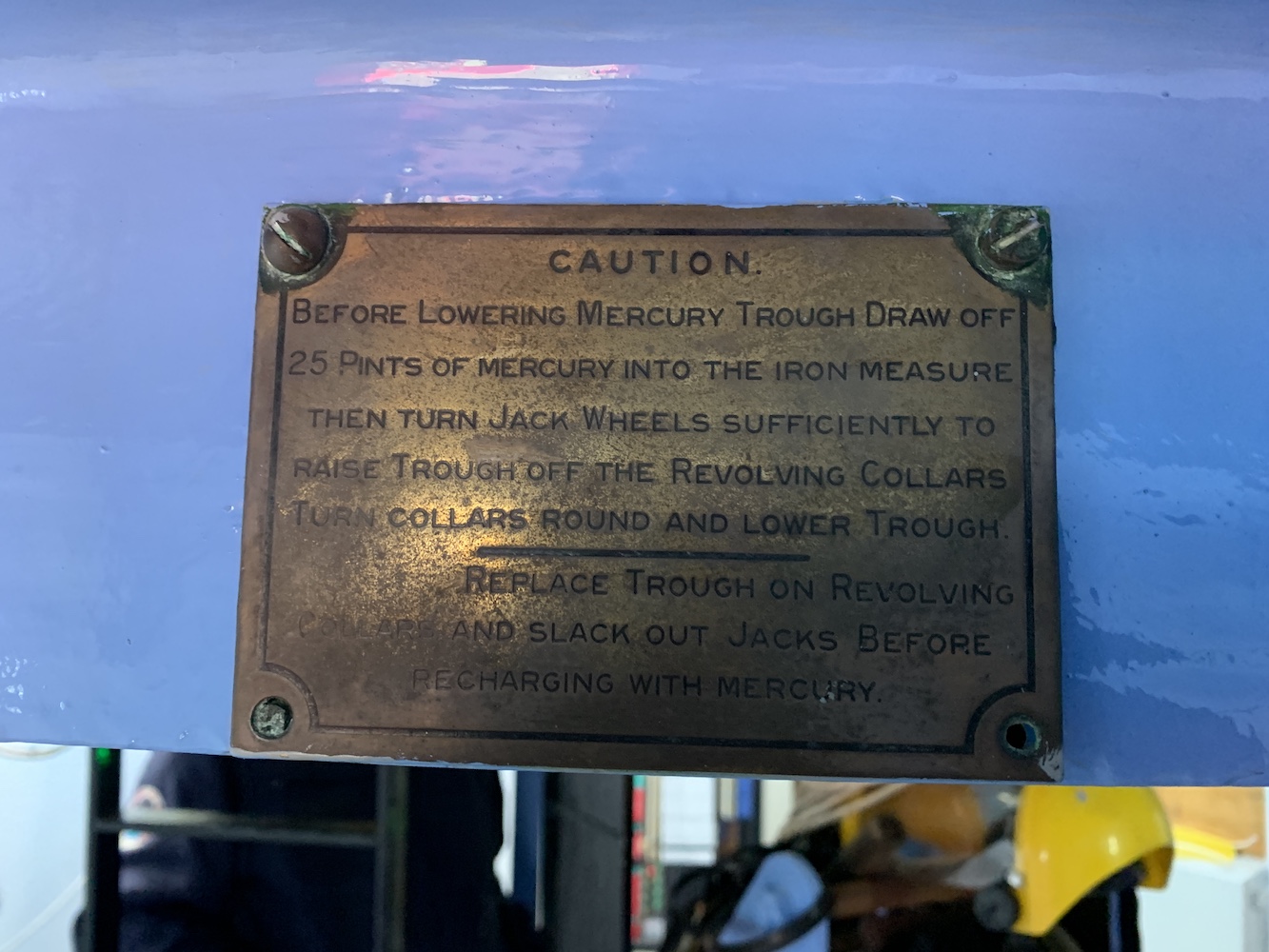
Instructions at Rathlin East Lighthouse
Inside the old low lantern at Rathlin East
When you get former keepers together the conversation just flows and flows so I had the pleasure of listening to Gerald and Eddie chatting to Noel, the attendant keeper for Rathlin. The fondness with which they speak is always a joy to hear.
Gerald and Noel having a catch up
When the bus returned it was time to head for the West Lighthouse – the upside down light. This is such a special place to visit and not only for the lighthouse, which involves going down copious amounts of staircases to get to the lantern.
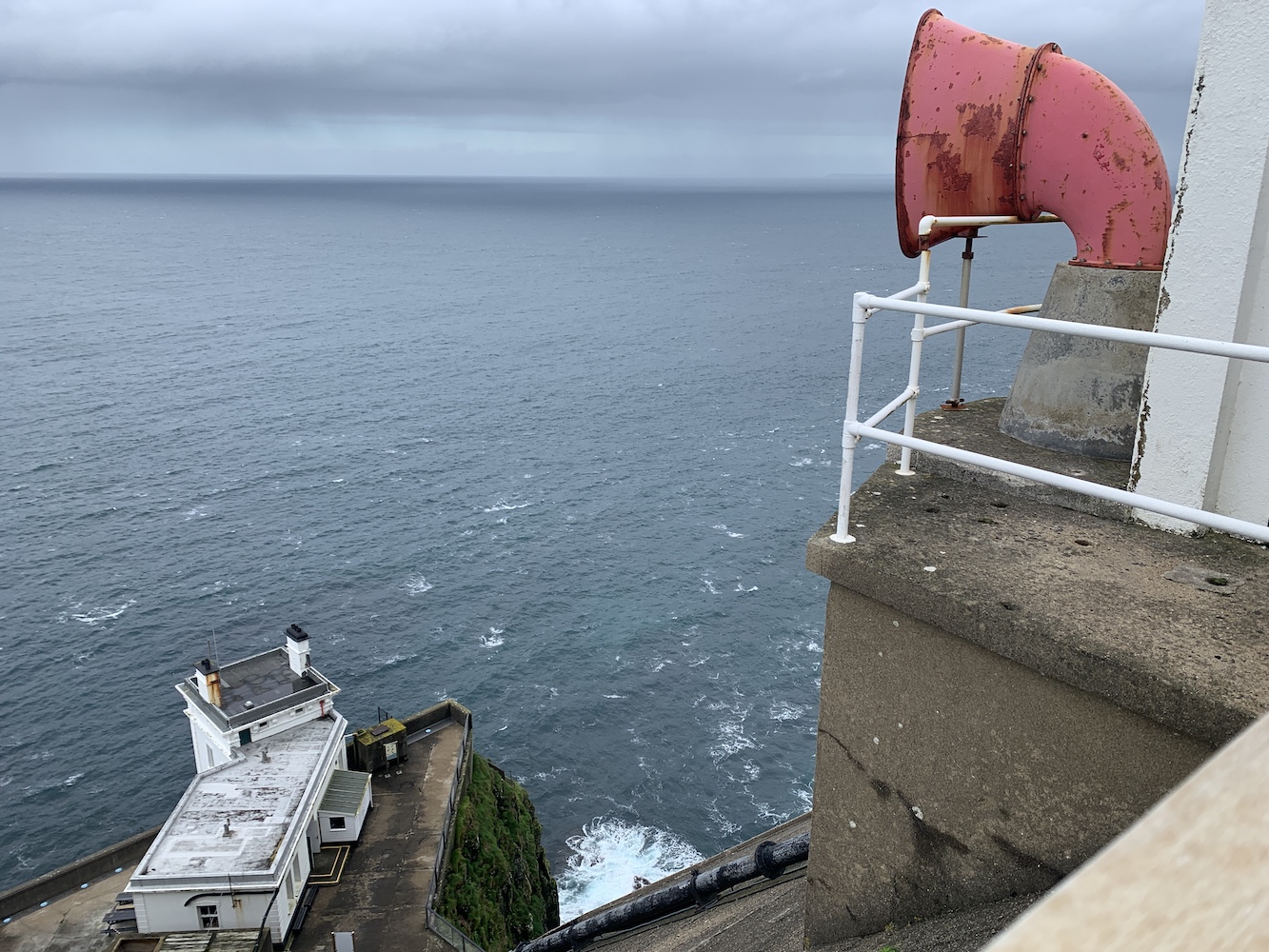
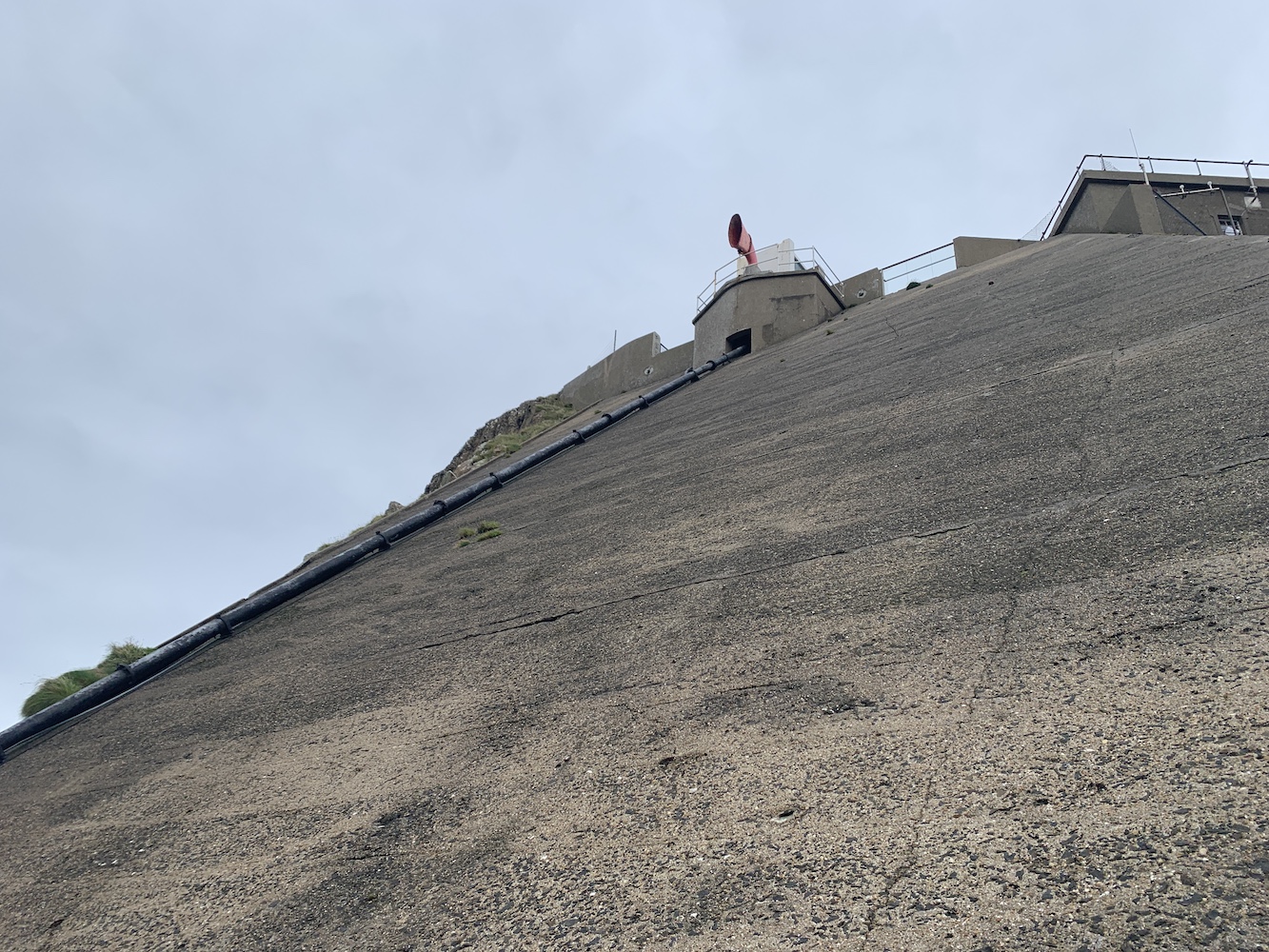
Rathlin West foghorn and the top of the lighthouse tower
Rathlin West Lighthouse
The view to the south at Rathlin West
Plenty of concrete at Rathlin West
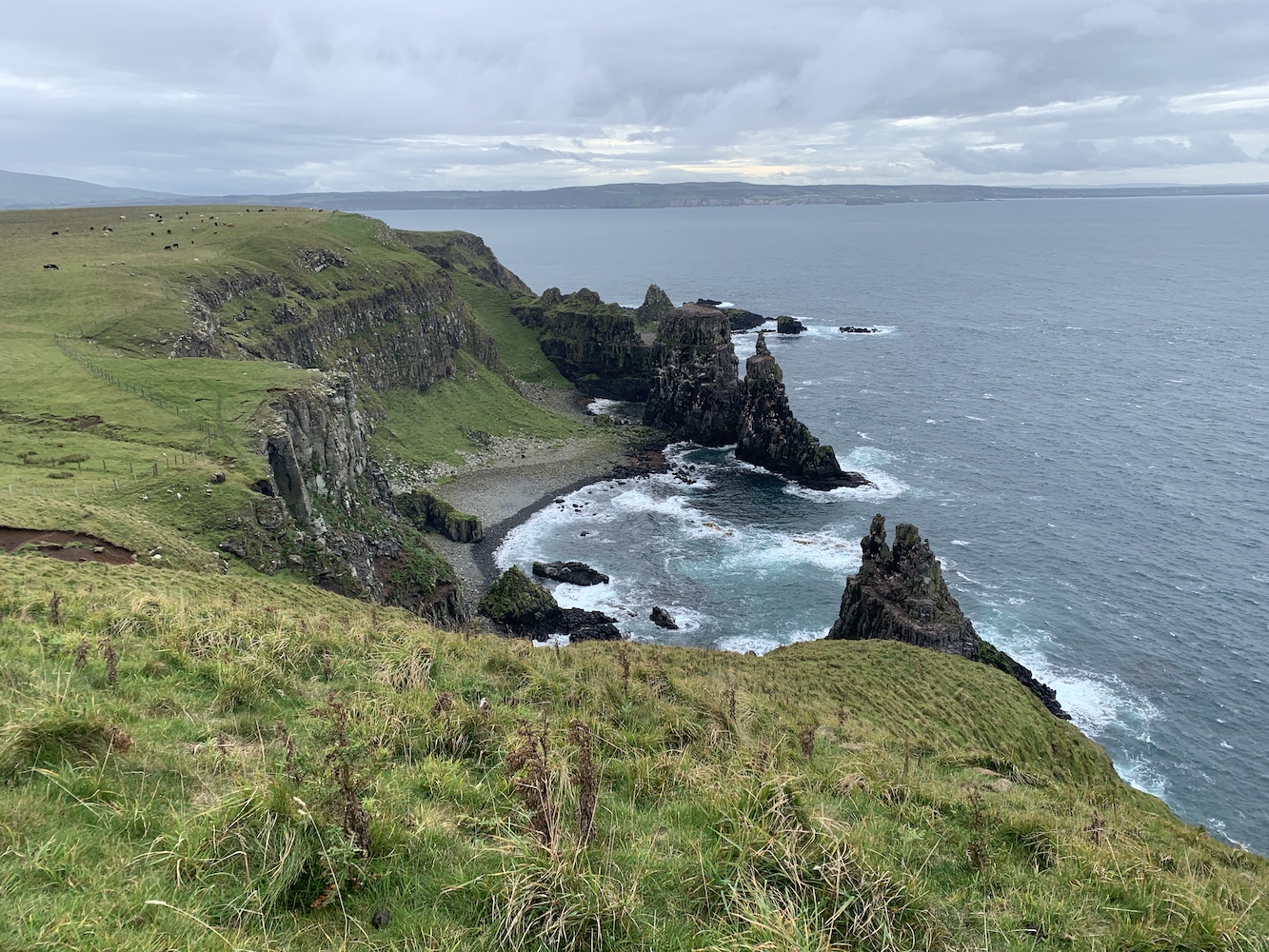
Perhaps my favourite bit at Rathlin West though are the incredible views looking north from the grounds of the lighthouse. The cliffs are fantastic and I could easily have spent an extended period of time gazing at that view had time allowed.
My favourite view, looking north
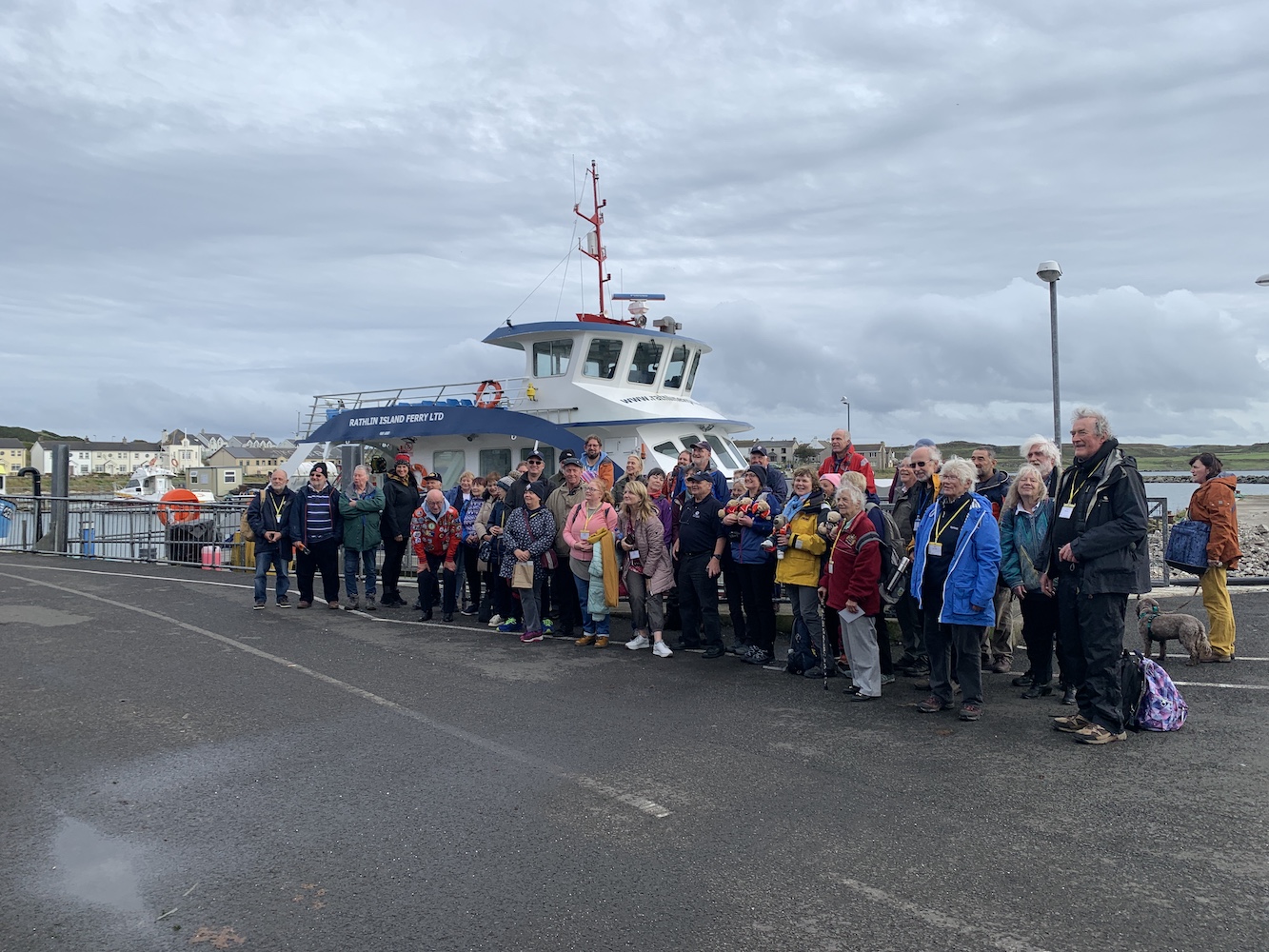
Once everyone had enjoyed the tea and coffee provided by the RSPB team there and been coaxed back up the lighthouse we set off back for the ferry terminal where we got a great group photo, minus the few who decided to go to the pub!
The merry band almost ready to head back to Ballycastle
After the return ferry and coach journey it was time to bid farewell to everyone. It had been a busy few days, but luckily with no major problems. For many of the ALK members attending, this was one of the first times they had visited lighthouses in Ireland and I’m pleased to say the wonderful Irish hospitality and charm worked a treat! There was plenty of appetite among the members to spend more time exploring lighthouses in other parts of Ireland too.
Although it was a relief when the event was over, it was also a massively rewarding experience and I was receiving gifts through the post for weeks afterwards, paid for by contributions from all of those who attended the event. It was a pleasure and a really excellent way of getting better engaged with the ALK’s Irish members as well as Irish Lights 🙂
Throughout my lighthouse “career” (if you can call it that), I’ve tended to stick to the towers. Not literally, of course, but I’ve not necessarily been distracted by the intricate details of the lights and how they all worked, the lighting sources, how the keepers lived – although I find it all very fascinating, and knowing some former lighthouse keepers now that area is of particular interest. In terms of visiting things though, it’s always been about the towers – until now!
I have a growing fascination with the optics, or lenses, that once projected the light out of the towers. Perhaps it’s because I’m seeing more of them or they are becoming less common with technological advances. Or maybe they are just incredibly beautiful. Whatever the reason is behind it, I am very much enjoying discovering lenses.
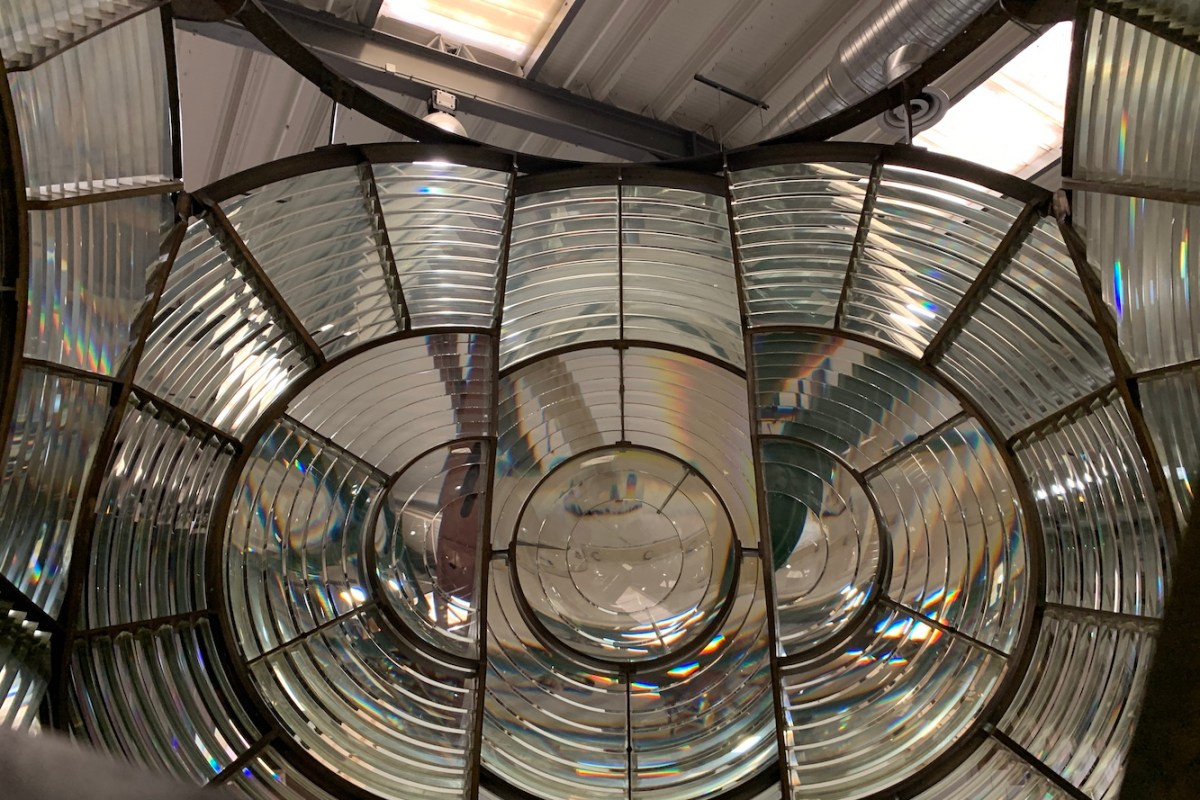
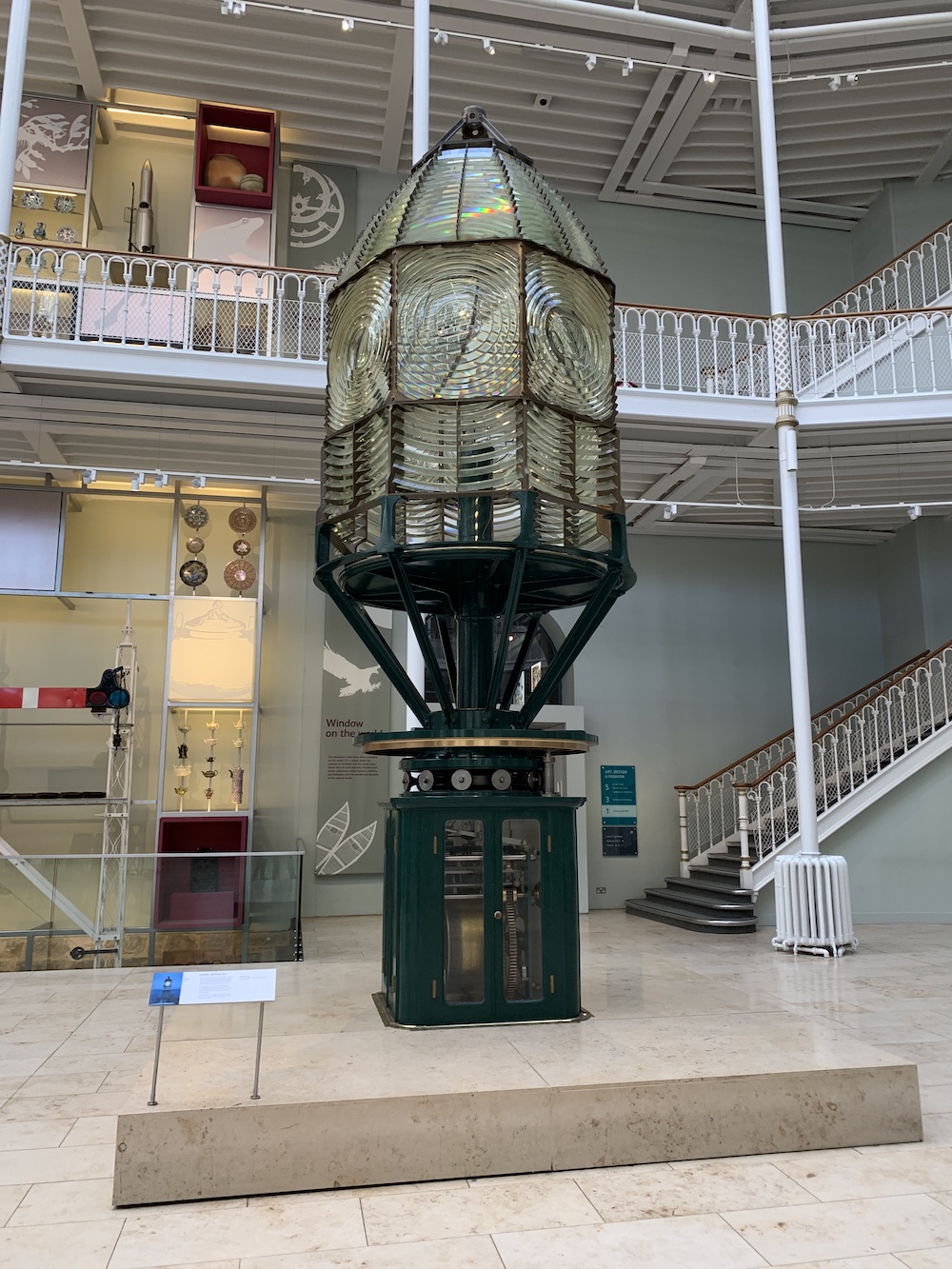
I had seen the former Inchkeith lens in one of the large halls at the National Museum of Scotland in Edinburgh earlier in the year and a couple of weeks ago I got to see it again. Most people use the platform it sits on as a seat and probably pay it very little attention (and get in the way of my photos), but it really is beautiful. It is a first order dioptric lens designed by David A Stevenson and it served its purpose in Inchkeith lighthouse, in the Firth of Forth, for 96 years before it was replaced in 1985. It is accompanied by the mechanism that rotated the lens. I recently spoke to a lady who curates the lighthouse exhibits for the museum (more on that very kind lady in a bit) and she said that they did try getting the lens and mechanism up and running in the museum in the past, but there were a number of technical problems with it. They have a number of other lighthouse-related exhibits at the museum with a dedicated section including a couple of films related to the keepers and the trials and tribulations of lighting the Eddystone Rocks off of the South Devon coast.
The Inchkeith lens
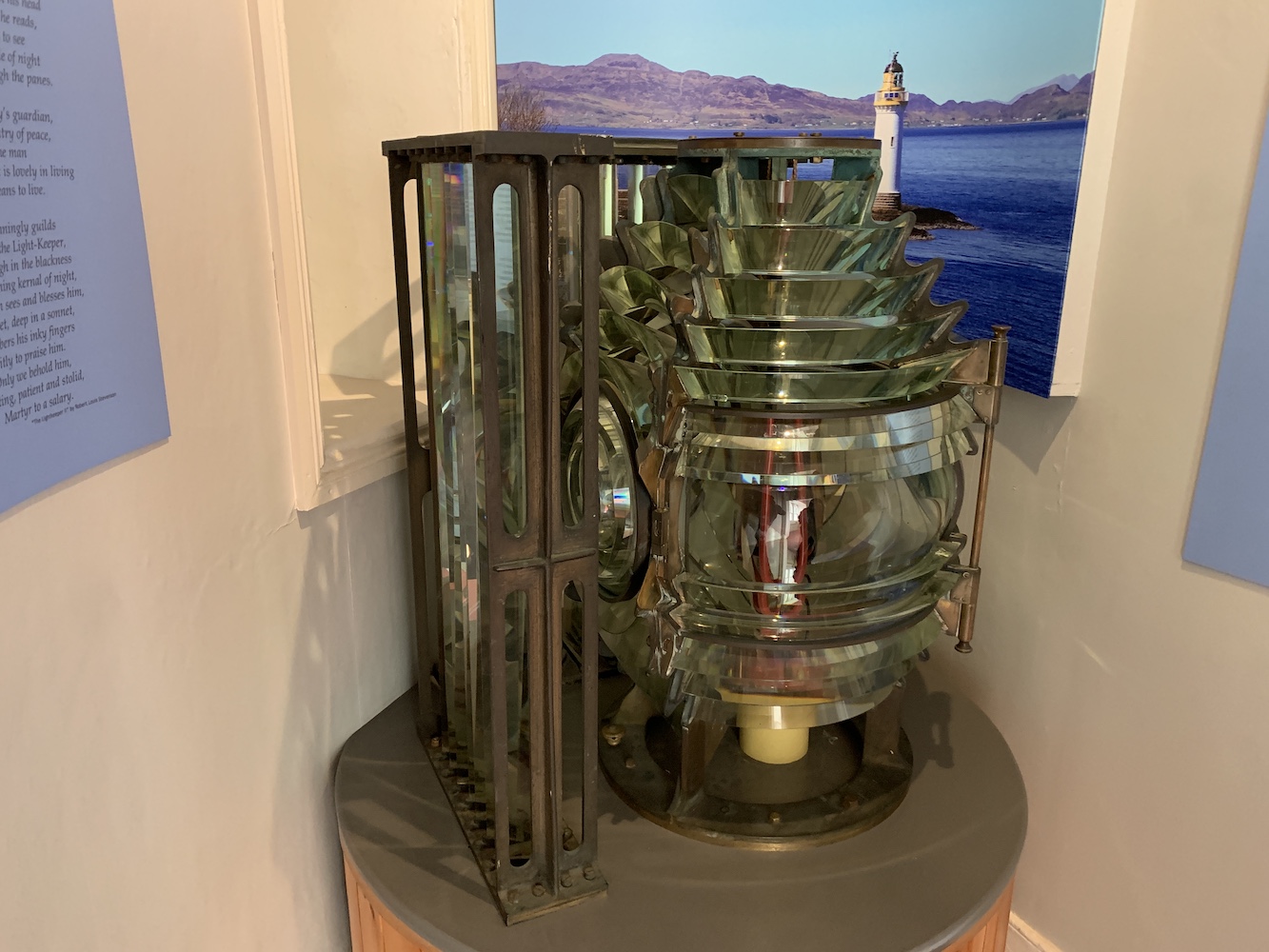
A few days later we found ourselves back in the centre of Edinburgh for a day. We were going to head towards the museum again, but our son decided that he wanted to walk up Carlton Hill to see the tower and buildings up there, so that was the decision made, up we went. We’d not necessarily planned to go into the Nelson Monument up there, but again the little man decided we would. As it was his birthday weekend and a bit of climbing up a tower is good exercise off we went. There are some great views from up there, including the island of Inchkeith where the lighthouse mentioned above can be found. It was back on the ground floor that we found an item of particular interest. Well, it was actually Bob who discovered it just as we were about to leave. It was the old lens from Rubha nan Gall lighthouse, just to the north of Tobermory on Mull. This one is a fixed Fresnel lens, named after physicist Augustin-Jean Fresnel who invented this type. It was removed from Rubha nan Gall lighthouse in 2012. That was quite a good find as there is very little information available about this one being hidden here. I’m hoping that will change now though since I’ve seen it and am telling everyone!
The Rubha nan Gall lens
Now, this is where it gets really exciting. Back at the beginning of the year during a visit to the Museum of Scottish Lighthouses I was talking to their Collections Manager, Michael Strachan, who is really into lenses and knows all of the different types, which I am still getting to grips with. His knowledge of lenses is extensive and he particularly likes the hyper-radial type (the biggest and most powerful of all, so it’s completely understandable). I can’t recall exactly how the subject came up, but I must have mentioned that I was planning on going to Sule Skerry this year and he informed me that the old hyper-radial lens from Sule Skerry is now in the possession of the National Museum of Scotland. A little while later I discovered that it was kept in storage at the museum’s facility in Granton. I was in contact with the curator at the museum, Julie, and we left it that I would contact her when I was next in the area to arrange a visit to see it.
Although I’d not forgotten about it, I did leave it too late on this occasion to contact Julie, but she did get in touch and managed to make it along to my talk at the National Library of Scotland last month. She quickly introduced herself after the talk and we agreed that I would let her know when I was next in the area. By this point I was becoming a bit obsessed with wanting to see the lens. To be honest I’ve been a little obsessed with Sule Skerry lighthouse in general since visiting it in May – or maybe the obsession began before that when I could only refer to Sule Skerry as “the place that cannot be named” due to getting over-excited every time I thought about it.
I did know that I would be passing Edinburgh at the end of last week on the way down to the Association of Lighthouse Keepers AGM in Hull. It seemed like the perfect opportunity to call upon Julie’s very kind offer to finally see the lens. Thankfully she was available and she also informed me that they are currently re-building the old Tod Head lens and mechanism next to the Sule Skerry lens – this was just getting better and better!
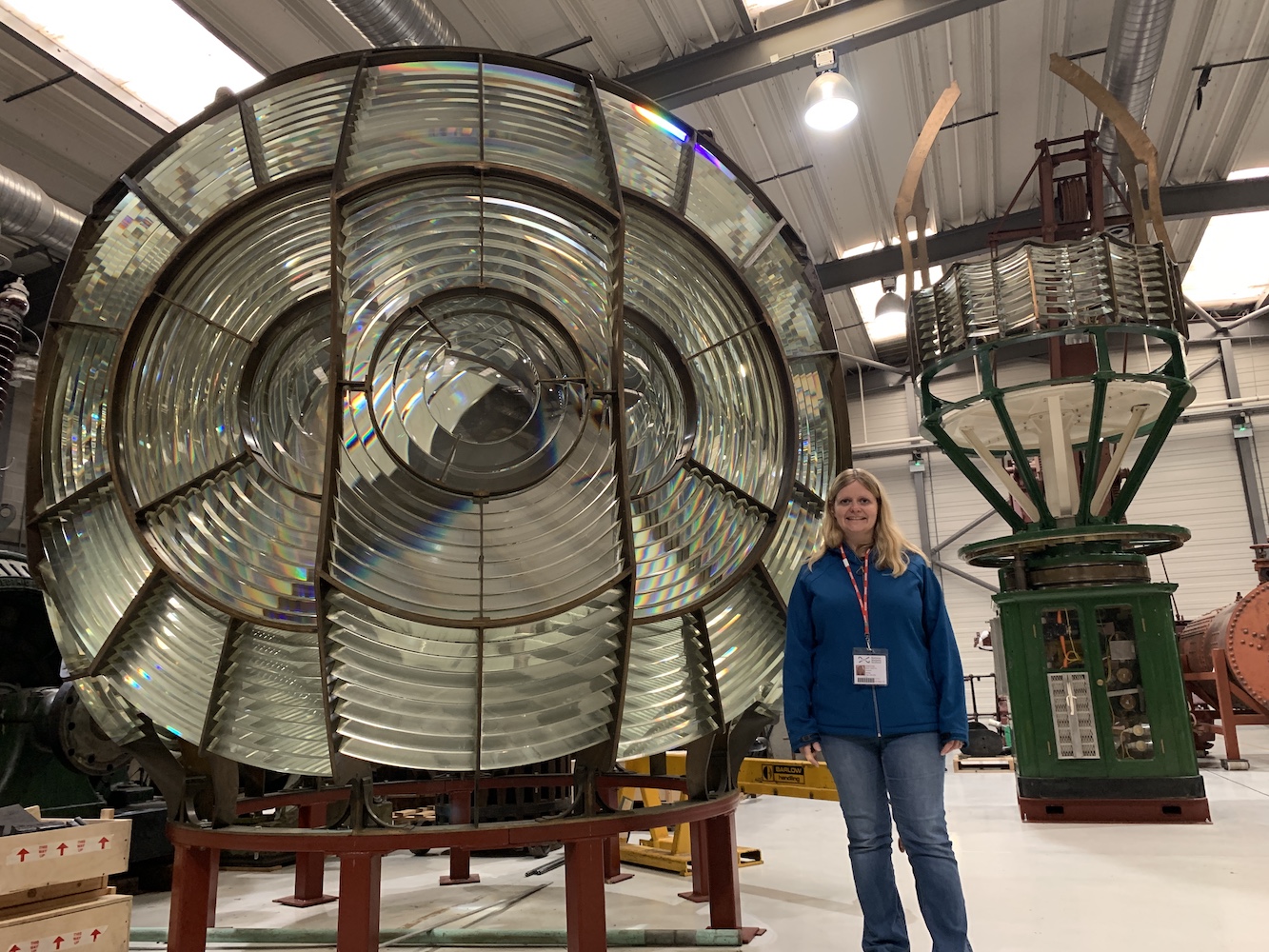
We turned up in Granton last Thursday and met Julie who took us straight to the large item store. There are certainly some large items in there. We skirted around the outside of them before arriving at the incredible lens that I had been so desperately waiting to see. Needless to say it is huge and I would have quite liked to have tried to see how many people you can fit inside it, but there were only three of us there and I don’t think we would have been allowed inside it anyway. I’m guessing at least 8 people there. It’s just incredible and when you see the size of it and the profile of the tower it came from with its oversized lantern, I immediately wanted to invent time travel so I could go back and see it in action with its powerful beam sweeping around – probably as I get blown off of the island! I did try to recreate what it must have been like by walking around the outside of it whilst filming, but there’s no light in the middle anymore so it didn’t really work. The lens was built by Barbier and Benard and was first lit in 1885. It was removed from the tower on 23rd April 1977. I can’t seem to find any pictures of the tower with the lens inside, so I may need to do some asking around to uncover one. If anything the visit here has possibly made me even more obsessed. I think I’ll be ok though, but I’m now even more desperate to go back for a re-visit.
The Sule Skerry lens with me to give an idea of its size. The Tod Head lens and mechanism can be seen in the background.
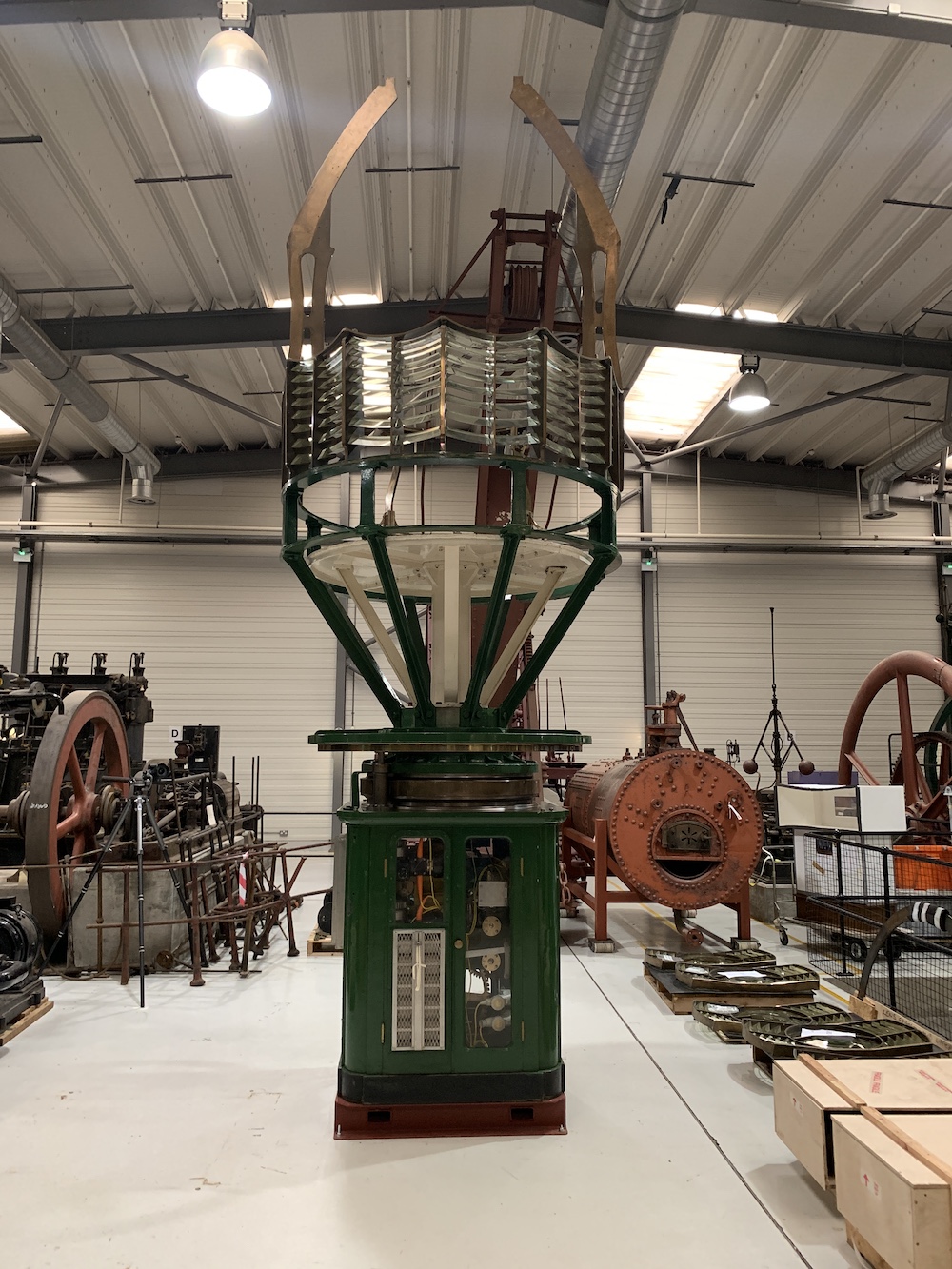
As expected, the Tod Head lens (another Fresnel) and mechanism were just next door to the Sule Skerry lens. This had actually been transferred here from the Museum of Scottish Lighthouses. There’s still some work to be done on it, but it’s getting there and it was quite nice to see it partially constructed with some of the parts still left to go on stored close by. When you see the lenses fully constructed you don’t tend to think about how difficult they must be to build, but seeing them partially constructed gives a bit of an insight into how much of a puzzle it must be. Perhaps not so much in this case when everything is so clearly and helpfully labelled. What a job that must be to do though! It was great to see this one having recently been inside the tower at Tod Head. It’s nice to be able to link these lenses to their original homes.
The Tod Head lens (so far) and mechanism
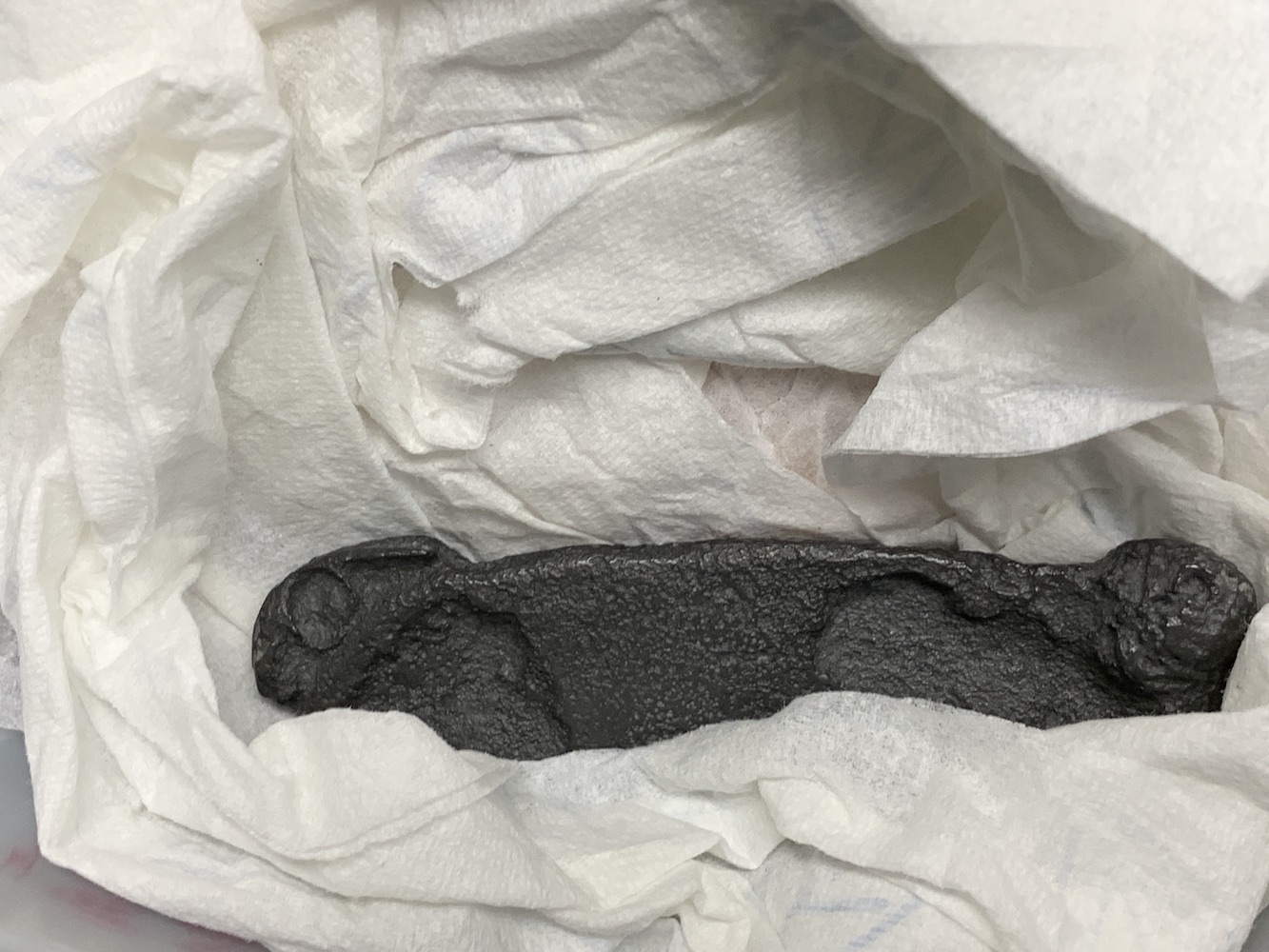
Julie then showed us around some of the smaller lighthouse-related items they hold in storage, including a beautiful model of one of the old lights that was on the Eddystone (I think it may have been the Rudyerd tower judging by the shape of the tower. There was a 3kW bulb (or lamp) which was rather impressive, but the best bit (of the small items) had to be a small piece of lead. There is a story associated with this particular piece of lead and it relates to the Rudyerd tower built on the Eddystone Rocks, which was first lit in 1709. The story goes that in December 1755 the lantern caught fire at the top of the tower and the keeper on watch at the time, Henry Hall, attempted to put the fire out by throwing water upwards at it using a bucket. Molten lead was dripping down from the lantern and some of this lead dripped into Hall’s mouth and down his throat. Hall died 12 days later and the piece of lead extracted from his stomach is that very piece that we saw at the museum stores last week. It’s a very dramatic story and there is even more details about it and the lengths the doctor who extracted the lead went to following the incident on the Trinity House website.
The piece of lead found in Henry Halls’ stomach
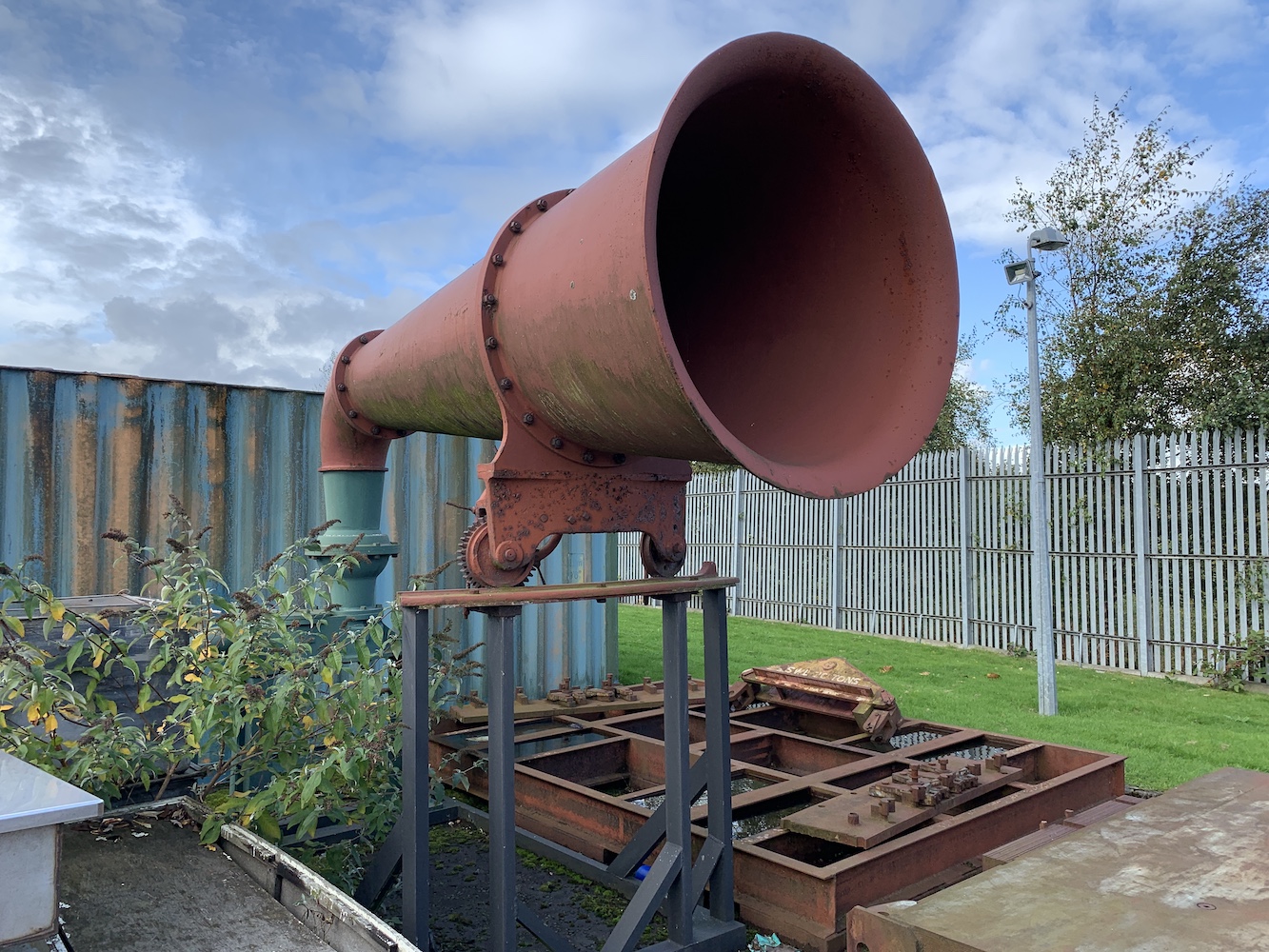
Just before we left the stores Julie took us right to the back of the grounds where we found the old foghorn from Inchkeith, which she explained will be moved inside soon.
The old foghorn from Inchkeith
What a fantastic time we spent with Julie. The stores are a treasure trove of various items and Julie is working her way through them, getting everything sorted out, dated, etc. It’s fascinating. As I said to Julie, when you go to a museum you have no idea that you are probably only seeing a relatively small percentage of what the museum actually owns or holds. This visit gave a great insight into exactly how it works.
For anyone who is interested in joining a tour of the stores then the museum do run monthly tours and you can find out more about them here. You can also organise a private visit like we did. It comes highly recommended. 🙂
I have got a little behind with these posts due to having too much fun on the West Coast Adventure. On Saturday, day three of the adventure, we had another lighthouse and island-filled time. Setting off from Kilchoan it was only a short journey to our first stop, Ardmore Point on the north coast of Mull. The sun was already shining bright and the sea was fairly calm, which made landing on the rocks below the lighthouse straightforward. The lighthouse sits a little way up from the sea so we needed to find an appropriate route up, which was a bit of a struggle for me – although Bob was leading the way so I really just needed to follow him. John joined us too and it was only after we’d spent a while clambering up onto the rough grass that we spotted the skipper hopping across the rocks and taking what looked like a much more direct route. I didn’t enjoy the walk to the lighthouse, but as usual the lighthouse managed to cheer me up. Although the tower itself is a standard flat-pack (with multitudes of solar panels), it differs from most others in that it is accompanied by an extra little building.
Ardmore Point lighthouse
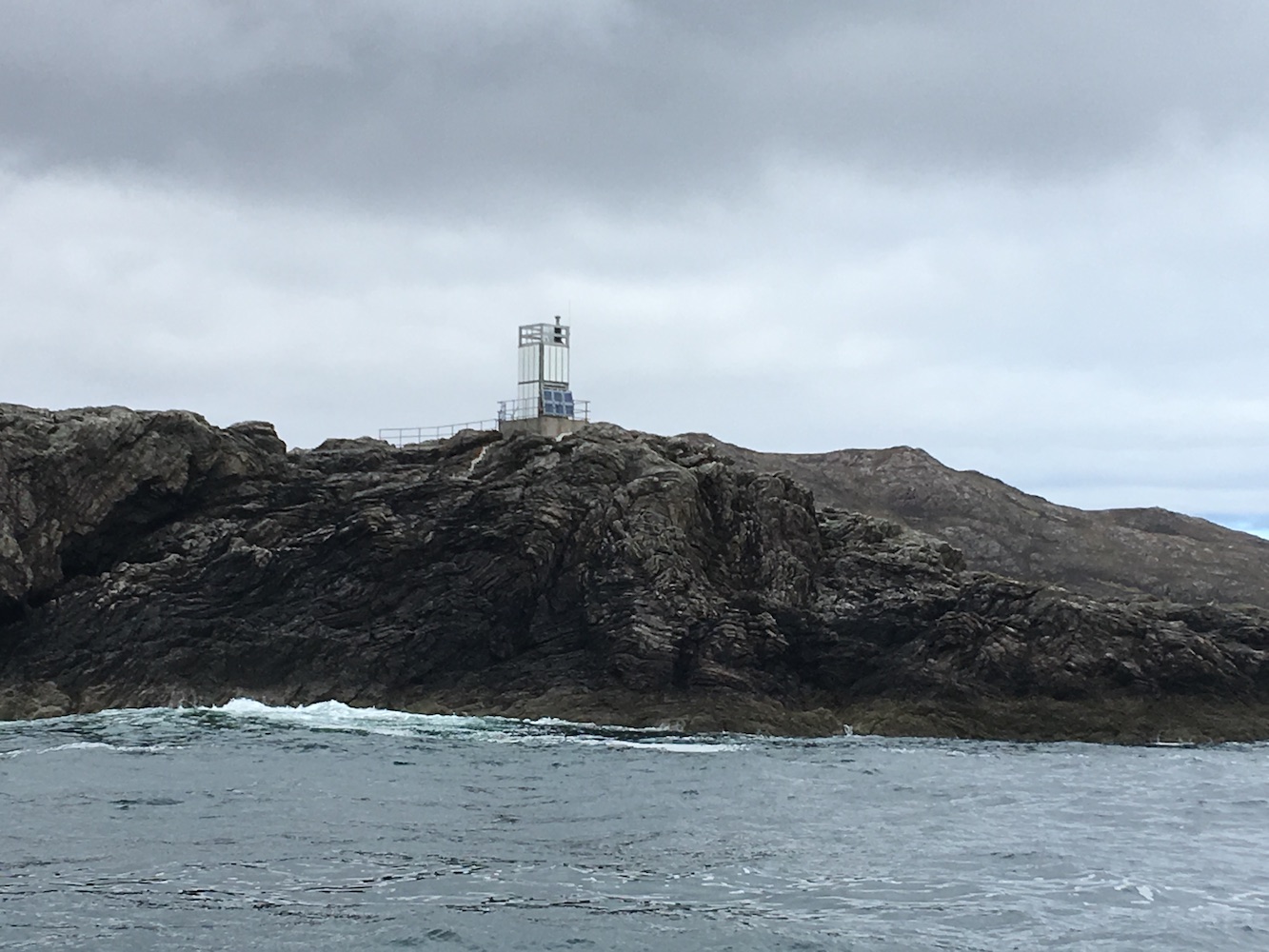
Returning to the ‘mothership’ we set off again. We’d planned to head out to the Cairns of Coll, but a storm was forecast for the afternoon so we weren’t sure if it would be worthwhile. As it turned out the storm never reached us (or passed over the night before), so we decided to attempt it. Waving to Ardnamurchan on the way, we began the journey out to the north end of Coll. On our trip last year, we had been to the Cairns of Coll, but had not been able to land on the lighthouse island, Suil Ghorm, from the RIB we had been on due to the shallowness of the water. As we arrived at the island group it became fairly clear that we would be unsuccessful again. A couple of members of the group attempted a landing on a neighbouring island, which didn’t go particularly well so the decision was taken to abandon any attempt to land. Skipper Derek from North Coast Seatours did sail as far around the lighthouse as he was able to though so we could get some good pictures. It was nice to see it again even if it wasn’t as closely as we’d hoped.
Cairns of Coll lighthouse
The Small Isles were our next destination. I was looking forward to this as it included a stop at Eilean Chathastail, home to Eigg lighthouse. I’d been here with Bob and a group of island baggers back in 2015 and absolutely loved it. It’s the type of lighthouse I am very fond of and the opportunity to revisit was one I jumped at the chance of. It was also one that John had been wanting to visit too as he’d previously only seen it from the sea. With the storm nowhere to be seen and the sea calm, there was no problem at all with landing on the north west of the island. This was a little different to last time when we landed on the east coast of the island, closer to the lighthouse. This did mean we’d need to walk a bit further and I was glad that Bob had offered the use of his GPS device as it kept us on track for getting to the lighthouse. As it is set down a little from the highest ground on the island it is difficult to see from the north of the island until you are almost at it. The walk wasn’t too bad and we were rewarded with some fantastic views when we got to the lighthouse. We could see across to the pencil-looking Ardnamurchan lighthouse, this time to the south west, standing tall. I was reminded again of how calm the place feels and I enjoyed the visit as much, if not more, than the first one.
Eigg lighthouse
After lunch at the cafe on Eigg, we continued our journey north. We were soon approaching Skye and we sailed close to the flat-pack lighthouse at the Point of Sleat. It’s quite a walk to the lighthouse, but an interesting one as explained in my post from 2016. Certainly much easier to visit/see from the sea!
Point of Sleat lighthouse
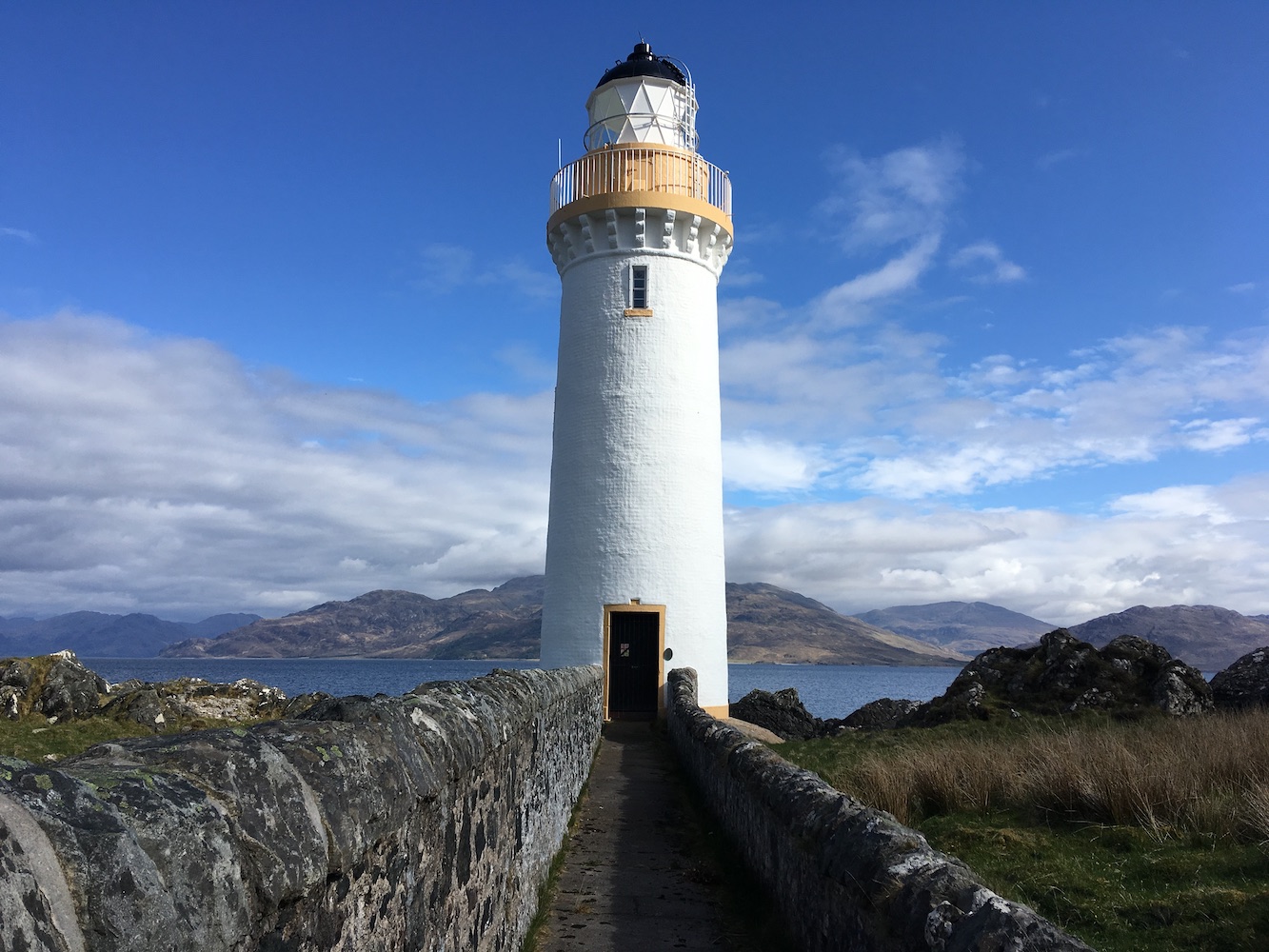
I’d been looking forward to our next stop and I felt a little bit like a child in the back of a car as we sailed up the east coast of Skye. I had to stop myself a few times from asking “Are we nearly there yet?” On my original tour I’d seen Ornsay lighthouse from the village of Isleornsay when the tide had been in. On the second visit, Bob and I had walked out to it at low tide, and a last visit a few weeks ago was again just a quick stop looking across the water to the island of Ornsay and it’s tiny neighbour Eilean Sionnach, the island with the lighthouse. I wrote a fair amount about the beauty of the lighthouse in a recent post so I won’t go into too much detail in that respect this time. However, I was intrigued to see whether the lighthouse would lose any of its beauty for other angles. With the mountains as the backdrop from the general viewing area, I was concerned that it was just that view that made it so stunning. I am happy to confirm that there was no need for concern. I’m not sure what it is about the lighthouse, but it is amazing whichever side you see it from. Of course, with conditions being so calm, we had to land on the island for another opportunity to see it close up. While the sky at Ornsay lighthouse always seems to have been blue when I have visited, it was bluer than ever this time with a few clouds for added effect. I could have happily stayed there for hours and if the cottages ever come up for sale, well… I think the picture below says it all really.
Ornsay lighthouse
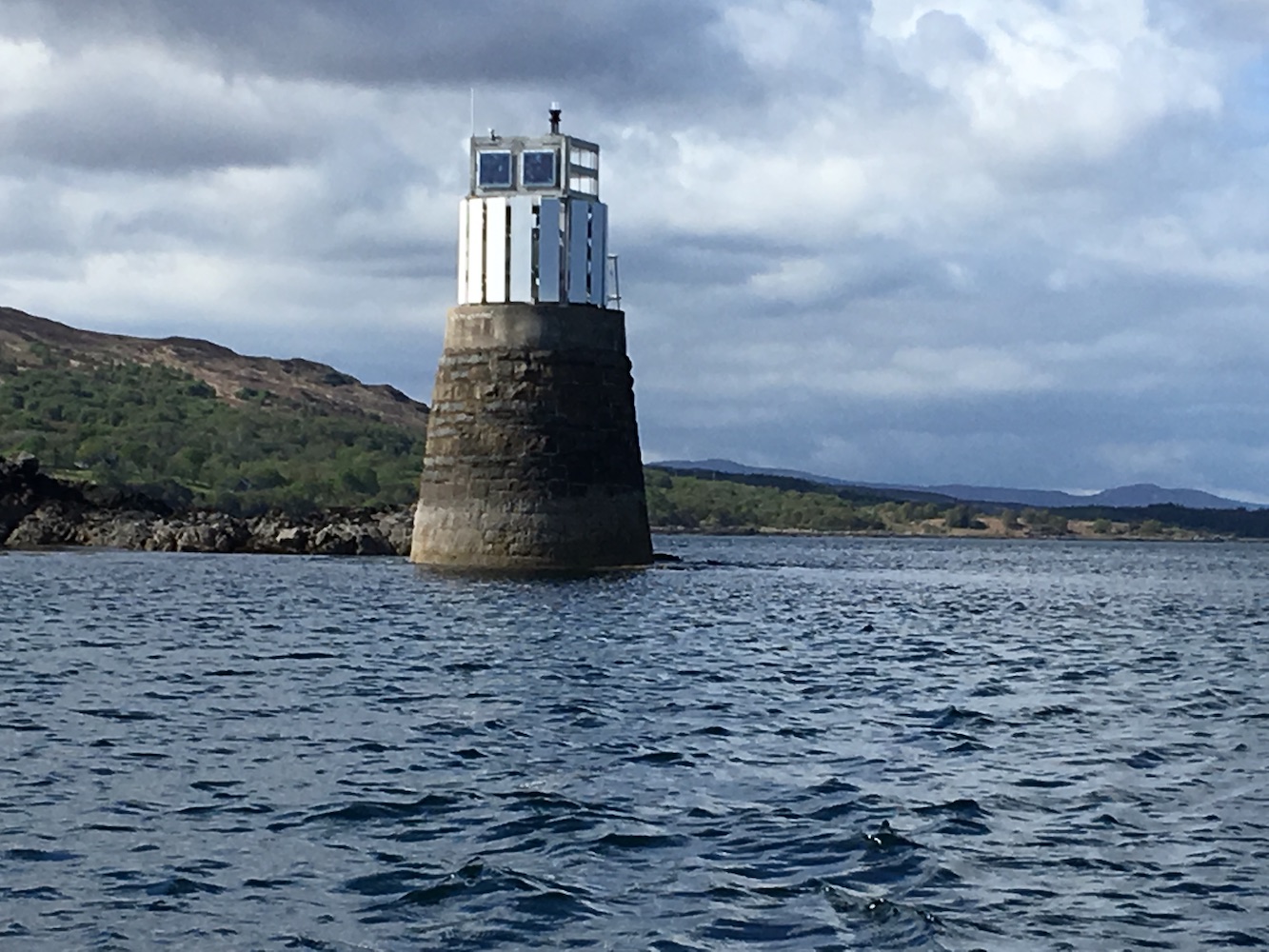
I’ve got a bit carried away and not yet mentioned the Ornsay Beacon Lighthouse, which we actually visit in the small tender before landing at the big lighthouse. Although, from a distance, it doesn’t look like there is much to this one, when you see it close up it’s far more substantial. It is a solid round stone tower topped with one level of the flat-pack arrangement. Of particular note though is that, everywhere else, the flat-pack has a square footprint, but this one has rounded edges. It’s a good structure and really nice to get a chance to see it at close range. This is why I enjoy getting closer to this type as it is difficult to appreciate them from a distance when they all look pretty much the same. You also don’t get a true feel for the location unless you are on the island they sit on or very close to it. This one was great to see.
Ornsay Beacon lighthouse
Once the island baggers had bashed their way to the high points of a number of islands as we moved further north, we arrived at the Sandaig Islands. The Sandaig lighthouse is on Eilean Mor which, unlike most of the other islands within the group, is not accessible from the mainland at low tide. As the group were all looking to achieve different things on these islands, only a few of us were dropped off on Eilean Mor. With Bob joining us a little later, John took on the role of lead navigator, establishing whether attempting to walk along the rocks or across the island was the better route. Opting for the more foliage-filled option it wasn’t too long before John spotted a series of wooden posts sticking out of the ground that seemed to lead in the direction of the lighthouse. The path that these posts followed was quite good in places and a little rougher in others, but we were definitely glad to have found it. As we approached the lighthouse John joked that Bob was likely to just turn up around the corner at any moment and then, as if by magic, he appeared strolling across the rocks. I’ve taken to referring to Bob fondly as ‘Goat Legs’ on these trips due to his ability to make any walk across any terrain like like a stroll in the park. This is another brilliant island and so it was a pleasure to visit the flat-pack structure. I must admit though that it would have been nice to have seen the old lighthouse (now located at Glenelg pier – see my earlier post for more information on that one) in place, but still a great place to visit. Once we’d finished at the lighthouse we followed the posts across the island and to a little sheltered rocky bay. The three of us sat, chatting in the sunshine surrounded by beautiful views, while we waited to be collected.
Sandaig Island lighthouse
That was the end of our lighthouse adventures for the day. Glenelg was where we based ourselves that night. What a wonderful day we all had. While a large percentage of the UK was experiencing the wrath of Storm Hannah, we had avoided it entirely. What a lucky bunch we were 🙂
This afternoon a slight detour on the way home took us to Fraserburgh for another trip to the fantastic Museum of Scottish Lighthouses. I first visited the museum on my original tour in 2012 and then again in January 2014. Five years and countless new lighthouses later I knew it was time for a return and that I would appreciate it so much more than I ever had before. Hence why it is getting its own blog post this time.
For anyone into lighthouses it’s a gem of a place. Not only is it home to the old Kinnaird Head lighthouse (the first to be built and lit by the Commissioners of Northern Lights (now the Northern Lighthouse Board), but its modern replacement as well as the former towers from Suther Ness in Shetland and Hoxa Head in Orkney.
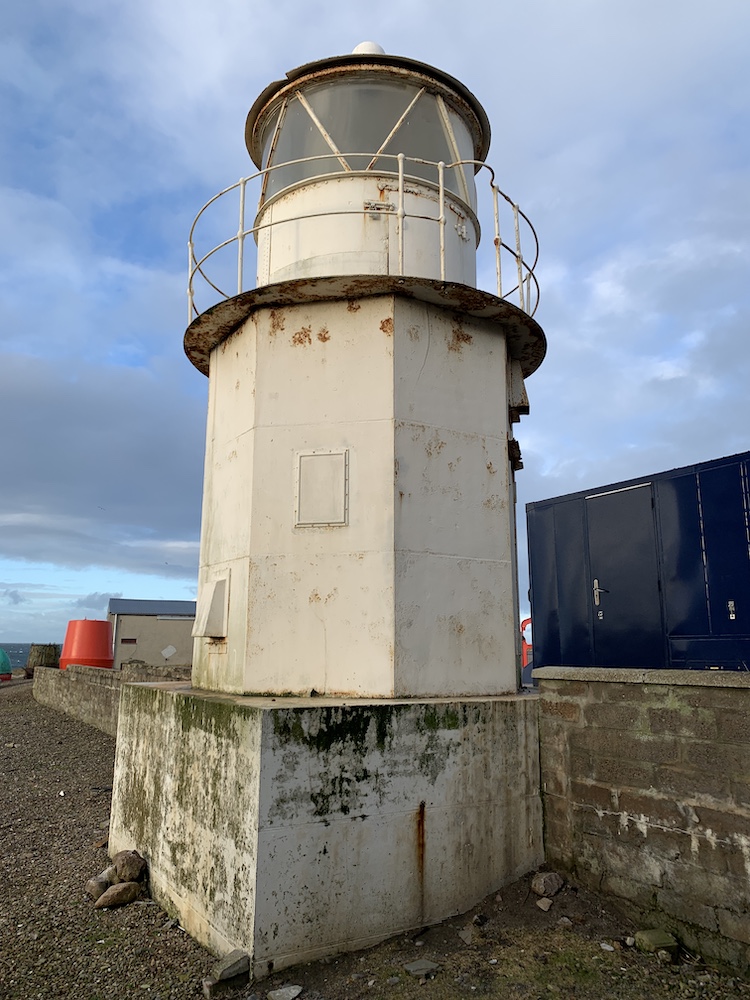
The old Suther Ness lighthouse from Shetland
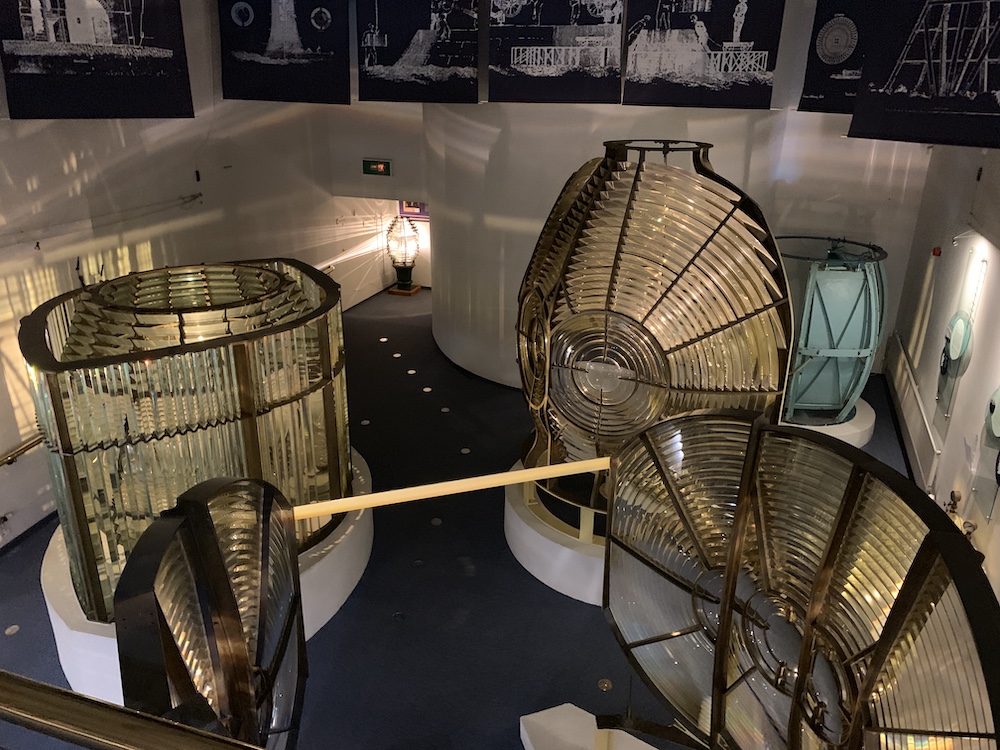
As soon as you step inside the door you know you’re in a very special place. The staff, for a start are so welcoming, and as soon as you enter the exhibition you are greeted by the most beautiful display of lighthouses lenses. The first room is home to 10 stunning pieces originally from the likes of Dunnet Head, Turnberry, Fair Isle South and Neist Point.
The wonderful display of lighthouse lenses. Pictures here are those from Fair Isle South, Chanonry, Dunnet Head, Neist Point and Turnberry
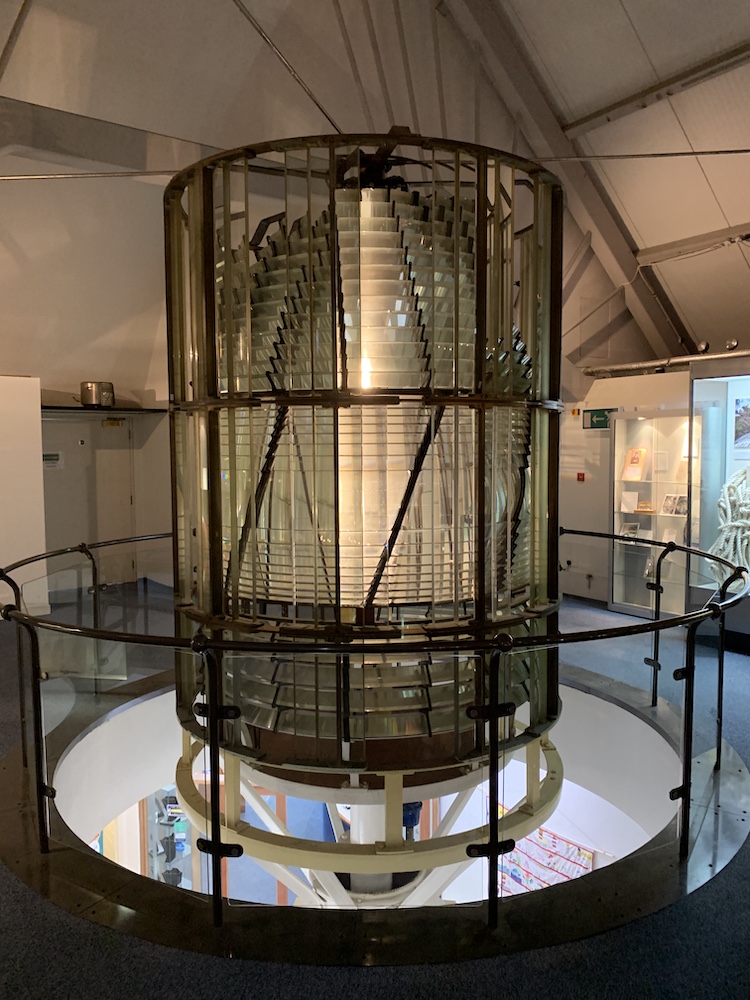
We didn’t have time to catch the film this time, but we enjoyed the other exhibition rooms, including one I couldn’t recall seeing before, oddly. That’s the one featuring the old Hoxa Head lighthouse. You can walk inside and read the information on display – or just treat it like a fun little house to walk into and out of repeatedly as the kids did. There are far too many artefacts in the room, and all of the rooms for that matter, to even consider mentioning them all. Definitely worthy of mention though is the lantern and lens from the former Roseness lighthouse in Orkney as well as the lenses and light mechanisms from both Ailsa Craig and Langness. The award for most impressive lens and mechanism combination goes to Sanda though, which is so huge it needs two storeys to show off its full glory. The mechanism itself is visible at the entrance to the exhibition while the optic appears on the upper floor. Truly amazing.
The old Sanda lens
It was approaching 3pm and we set off back down to the museum entrance for the guided tour. I’d been in contact with Michael Strachan, Collections Manager at the museum, prior to this visit in relation to a couple of questions I had for my book. Fortunately, it was Michael who was our tour guide today, which was a good opportunity to put a face to a name and thank him for his help.
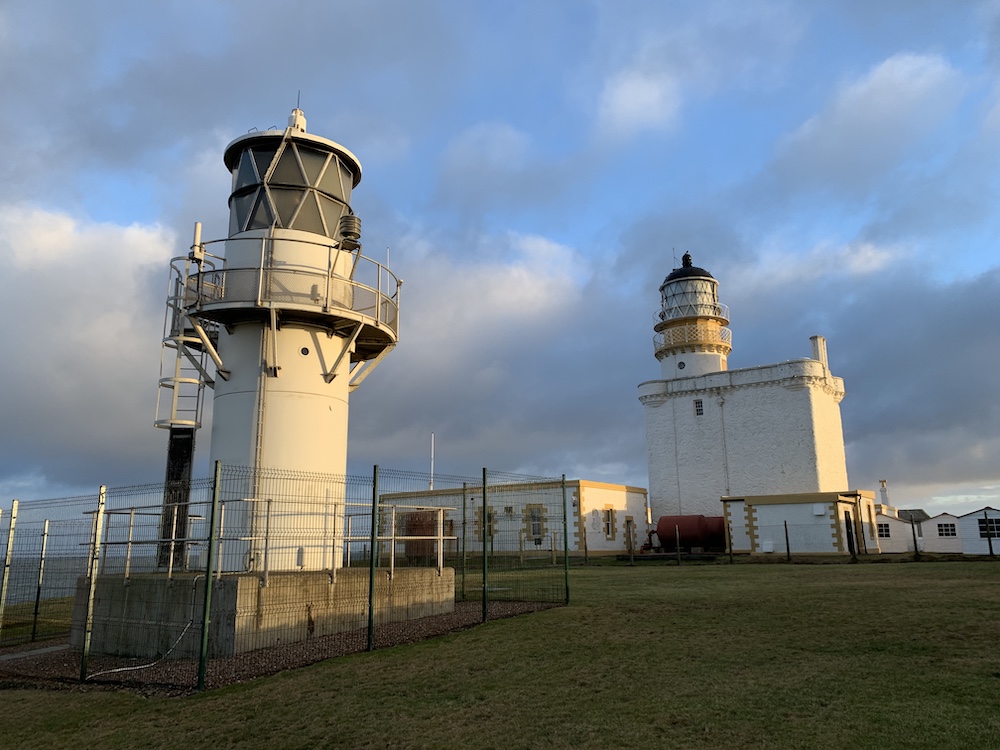
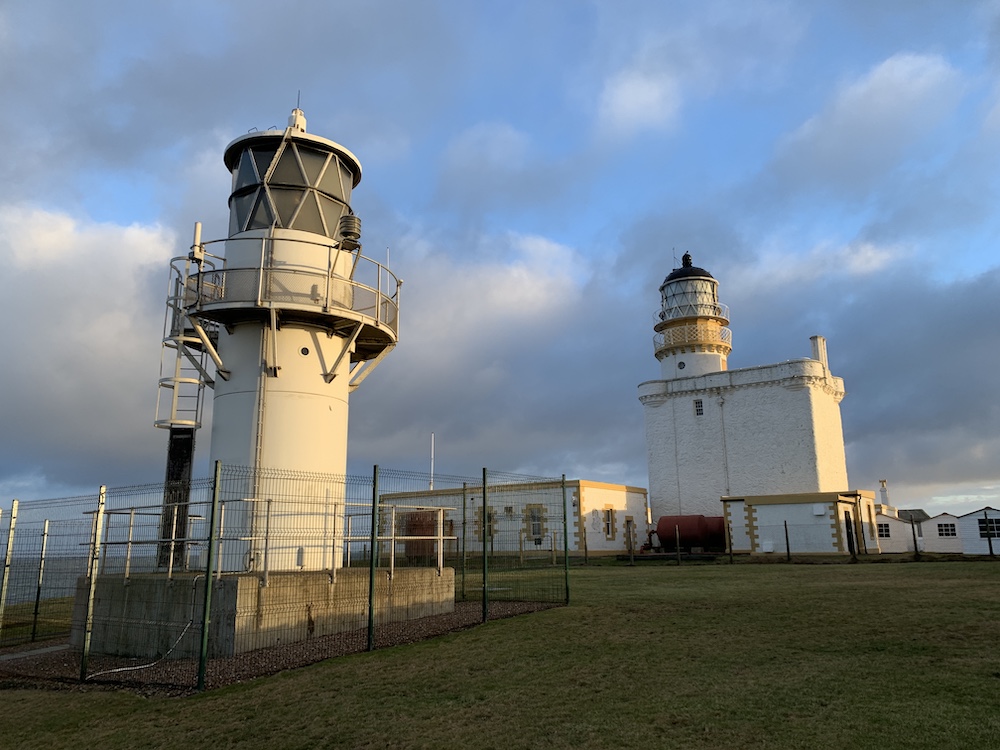
The modern and old lighthouses at Kinnaird Head
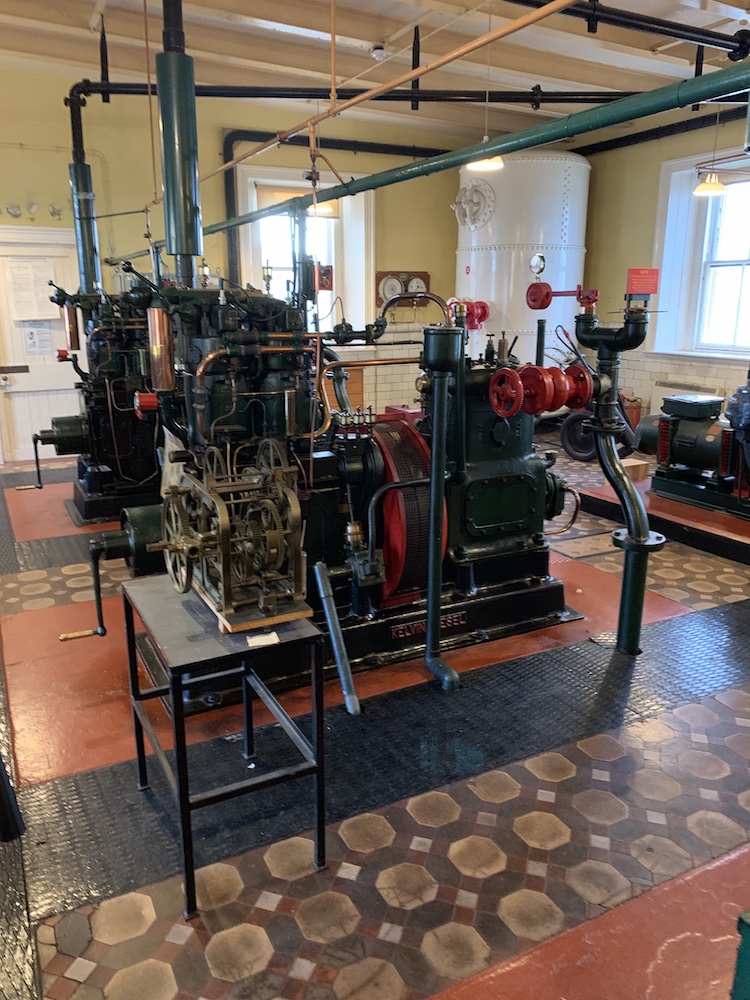
Due to the chilly breeze at Kinnaird Head, which Michael informed us is always windy, we went straight to the old foghorn engine room to start the tour. I imagine that even hundreds of years down the line, the smell of these rooms will not have changed. As if they were only used yesterday. Every time I am in one now I will remember watching Brian at Sumburgh Head starting the machines up with such meticulousness.
The foghorn engine room at Kinnaird Head
From here we went to the old castle through which the lighthouse was built. There is nothing now to indicate how the building was used before the lighthouse was constructed. The tower is still as it was when the lighthouse was manned though. The wonderful paraffin smell is very much present and I always enjoy seeing an old television with buttons on it such as the one in the old occasional lighthouse keeper’s room. There is a distinct lack of buttons these days!
At the top of the tower
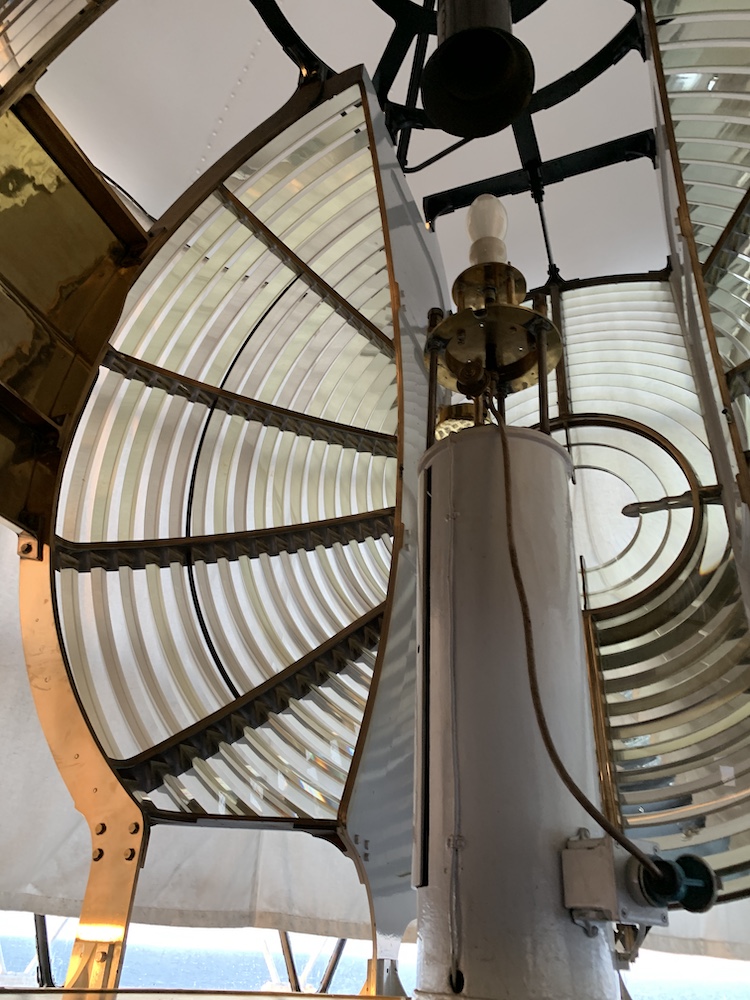
The original lens still sits proudly in position at the top of the tower. Always a great room to spend some time and then we had a brief wander around on the balcony. After leaving the tower, we had a chance to quickly look around the Principle Keepers’ accommodation, which is full of information about the life of lighthouse keepers.
Back in the shop, the kids received their certificates for climbing the tower, although now I think of it, I don’t know that I have one myself yet!
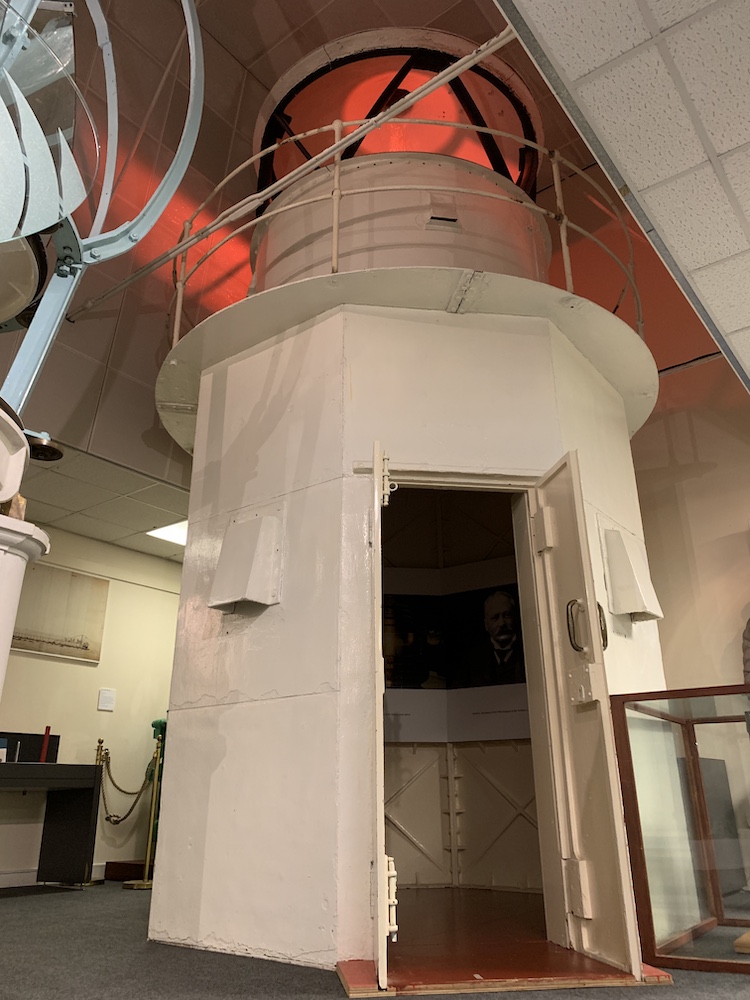
Michael has very kindly provided me with information about the lenses the museum own as well as others he is aware of. I spoke to him about the old lens from Sule Skerry, which I’d attempted to visit yesterday at the National Museum of Scotland in Edinburgh. He’d had the same experience recently and had found out through social media just yesterday that it is indeed in storage there. Let’s hope it becomes more visible to the public soon. It’s a shame to let these things sit in storage with no one able to enjoy them. I’m obviously biased though and think that every museum should have at least one lighthouse exhibition!
The old Hoxa Head lighthouse from Orkney
I thoroughly enjoyed returning to the museum again and will make more of an effort to ensure it’s not another 5 years before I am back there again. It sounds like there are exciting plans for introducing the old Fair Isle North lens, among others, to the collection. Something to look forward to seeing next time hopefully! 🙂















 uklighthousetour