Today has been spent exploring some lighthouses in Argyll. With lighthouses being on the coast I’m not so used to being surrounded by trees on my lighthouse adventures, but in Argyll it’s a completely different ball game – the trees are everywhere.
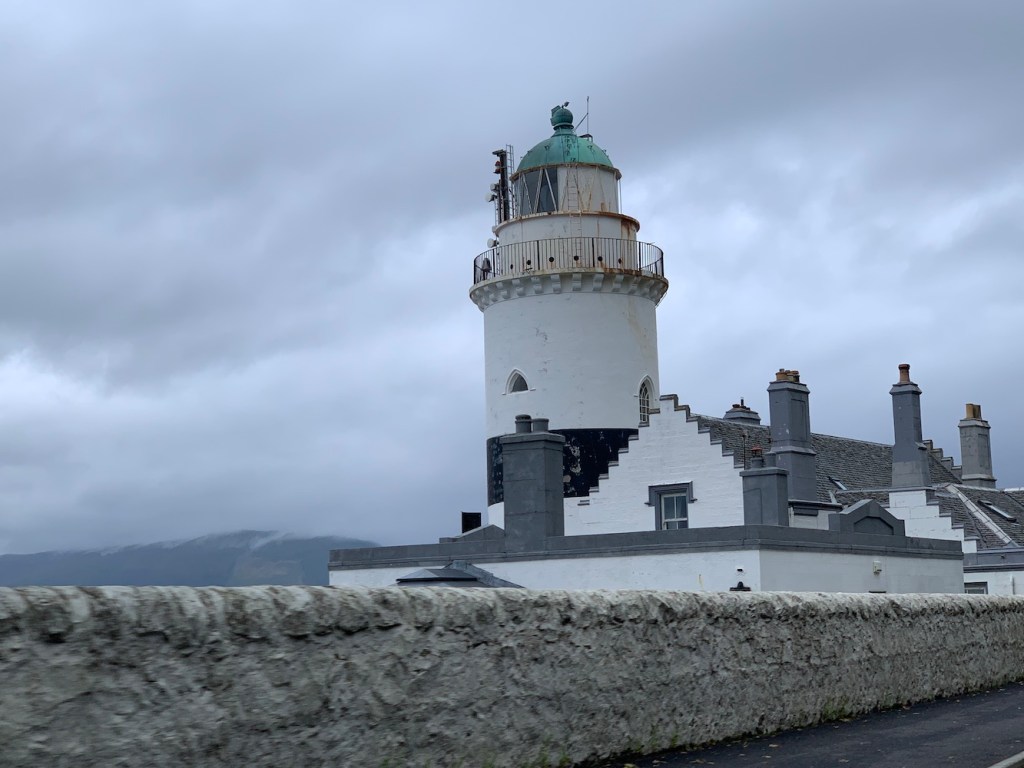
It’s because of these trees that back in 2012 when I did my original lighthouse tour I missed out on seeing Caladh Beacon, just to the north of Tighnabruaich. I remember scouring the coastline there and just not being able to see it. As a result it had remained unvisited, by me at least, ever since. Today was the day I was finally going to see it and so I set off this morning with Bob for the ferry from Gourock to Hunter’s Quay. On the way we passed Cloch lighthouse, which I quickly grabbed a few pictures of as we drove past.
Cloch lighthouse
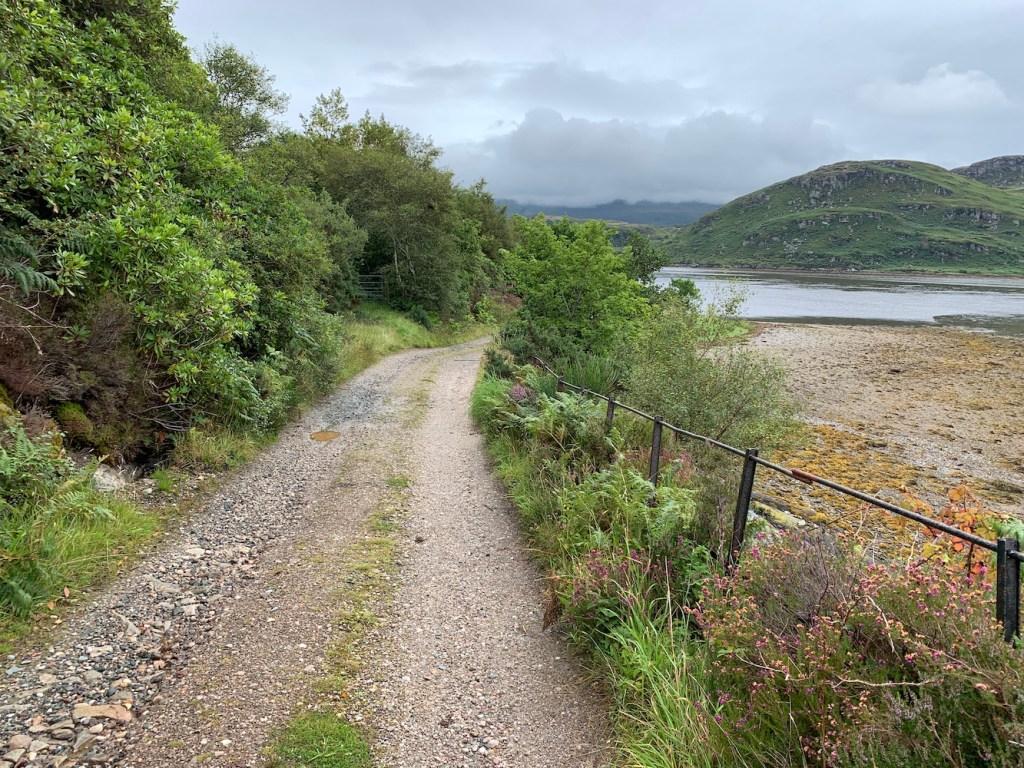
Once on the other side it was a matter of driving tree lined roads until we reached Tighnabruaich, which actually looks quite a big place with some rather expensive-looking houses. We found a space to park and began our walk to the lighthouse. It follows a clearly marked track (or road really) which follows the coast around the Kyles of Bute.
The track to Caladh Beacon
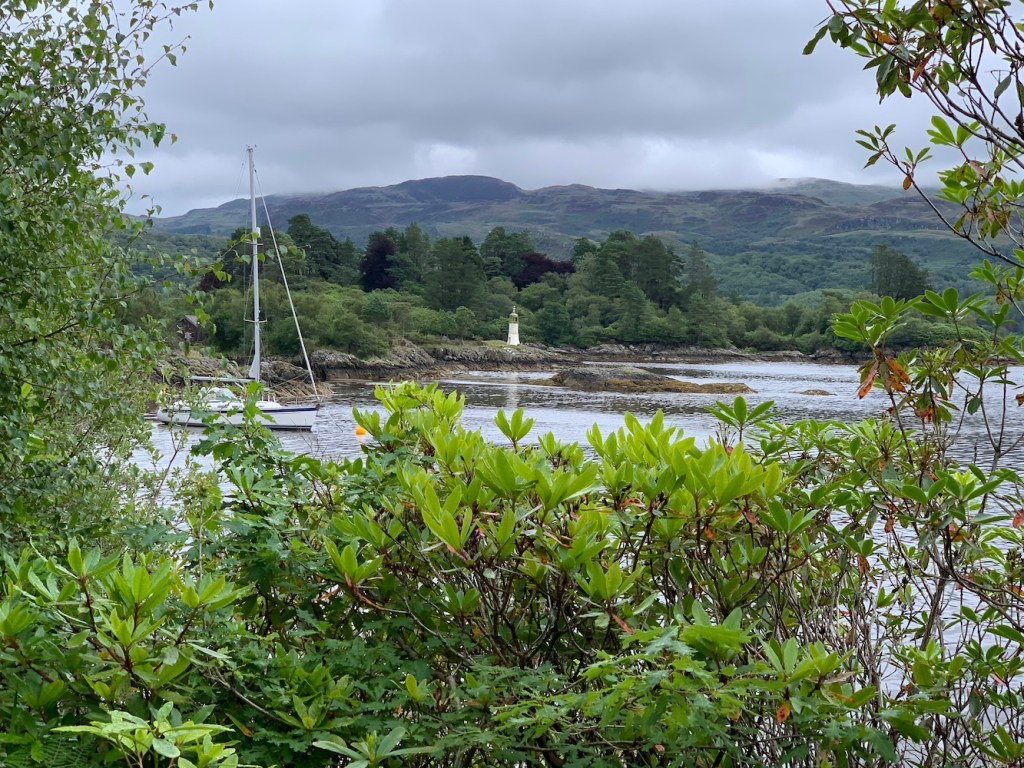
The path went up and down a little with the occasional waterfall running to the side of and underneath the path. Occasionally it was possible to spot the lighthouse between the trees, but very rarely. It was only once you are almost at the little point on which the lighthouse sits that it really comes into view.
Caladh Beacon through the trees
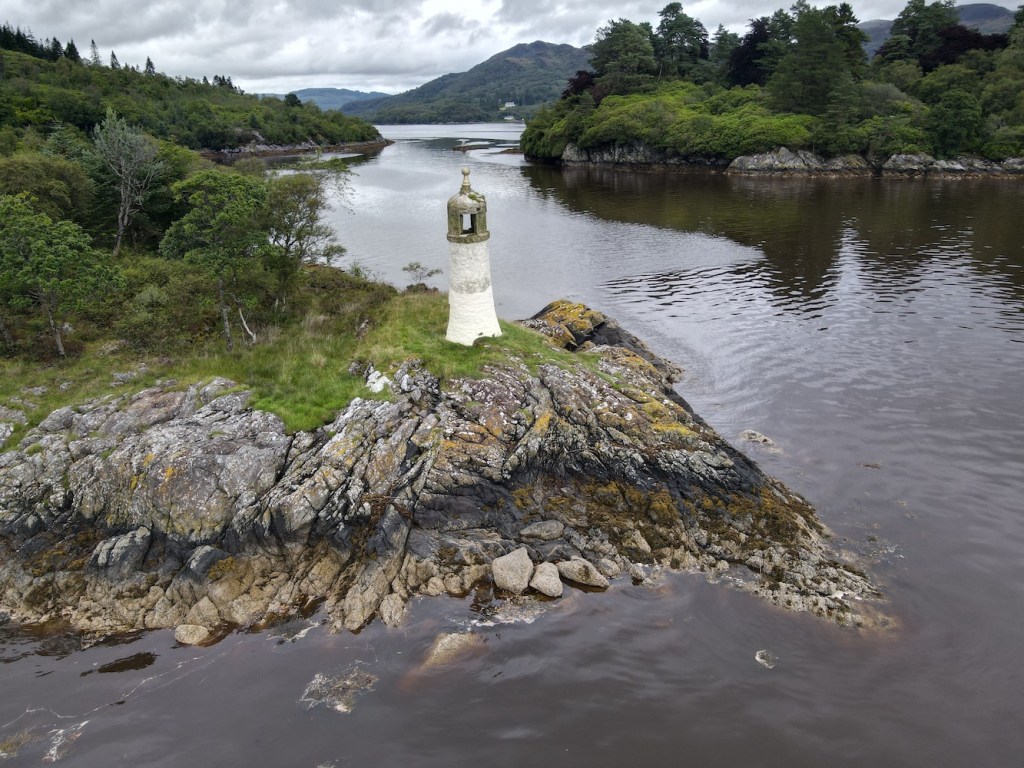
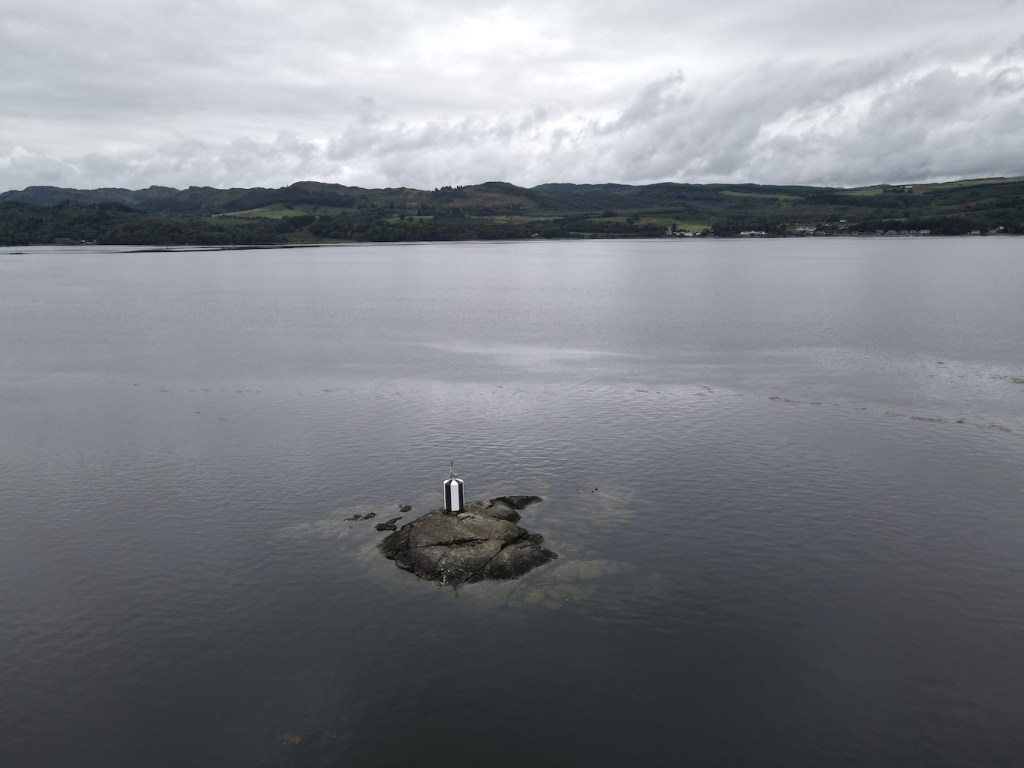
As we approached we noticed a gate with “private” on it and it was clear that it wouldn’t be possible to go that way. We could see a car behind the gate and so suspected someone must be about – the perils of visiting at peak holiday time. I sent a quick message to my ever-trustworthy pal John to ask what he did when he visited previously and he said he’d skirted around the rocks to avoid the garden. Bob decided to send his drone up to check out the lie of the land and it showed that there was at least another car there and a house just behind the tower. While the drone was up he got some great shots.
Caladh Beacon by drone
Just after he’d taken the drone down a couple of locals appeared with their dogs. Bob asked them about access to the lighthouse and they said that it was private. They also said that a man who works for the owners of the house was working up on the road and to ask him if he could sort something out. We never saw the man they referred to and I left feeling a little disappointed. Bob reminded me that I’d got as close to that one as I had to Dubh Artach (although Caladh Beacon was a shorter tower so it looked further away). We decided we’ll see if we can sort out quick access by boat at some point.
Back from the walk we set off in the direction of Loch Fyne to see what kind of view it was possible to get of Sgeir an Eirionnaich. Finding the car park I had mentioned in my book was easy enough and the shoreline here certainly offered a better view of it than I’d had before. It was still fairly distant though and this is another that needs a chartered boat trip to get a better view.
Sgeir an Eirionnaich, cropped image from the drone
After our viewing of Ravenrock Point from the boat on Saturday, a bit of closer inspection was required, especially as it is so close to the road. Just to the south of Ardentinny we spotted it within the trees and found a lay-by a very short distance away. The structure looked very much as I had expected with the column with lights and radar on top and then a small hut on the landward side which was connected to the light structure only by a series of cables.
Ravenrock Point lighthouse
This sparked a bit of a debate, which I’d already been having in my head anyway, about whether or not it met my lighthouse criteria. I’ll have to think about this one, but it was a nice little tower to visit anyway. It was possible to get down onto the rocks in front of it too with a much clearer path down there than we had experienced at Cnap Point at the weekend!
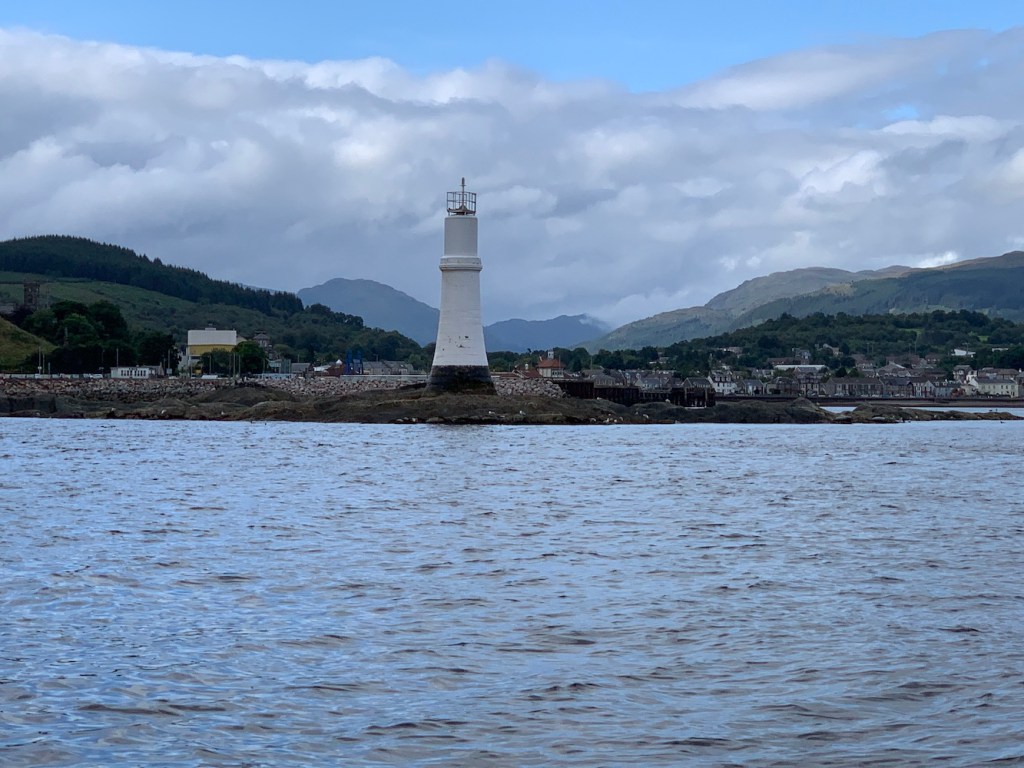
The ferry back from Hunter’s Quay was certainly busy, probably due to the A83 being closed due to a land slip after all this rain, but we managed to get on and off with enough time to cram in a couple more little lighthouses. Port Glasgow beckoned. It’s been a while since I’ve been there, but they are always a joy to see with their checkered towers. My nearly three-year-old calls them the ‘oyster catcher lighthouses’ due to their colour!
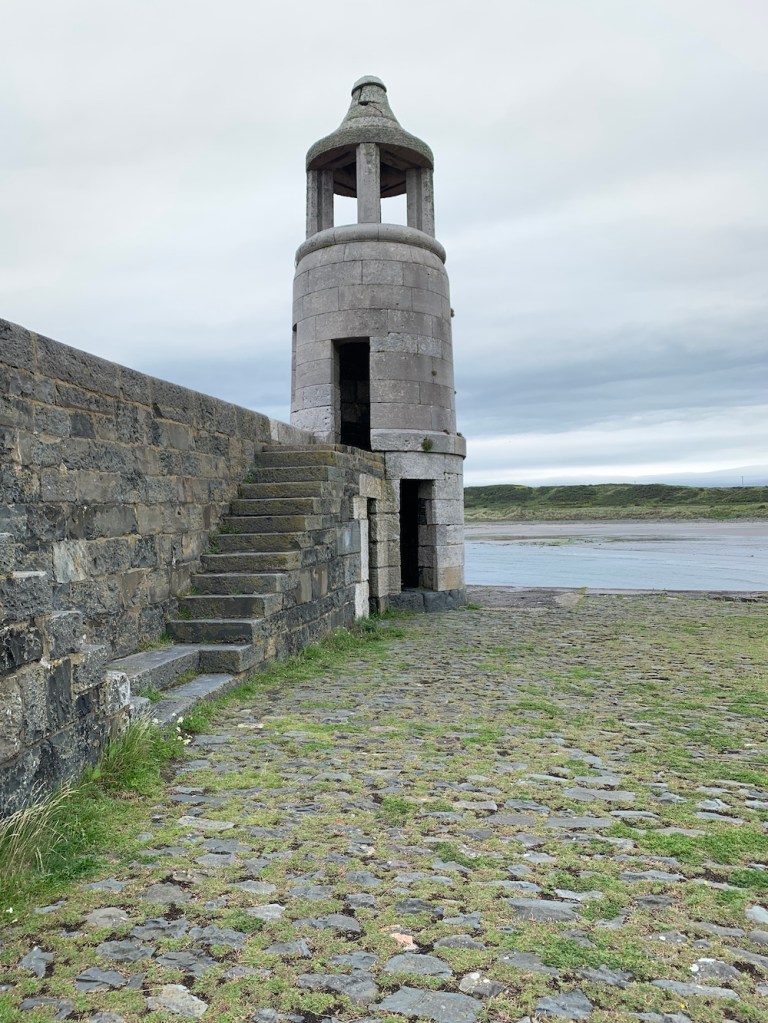
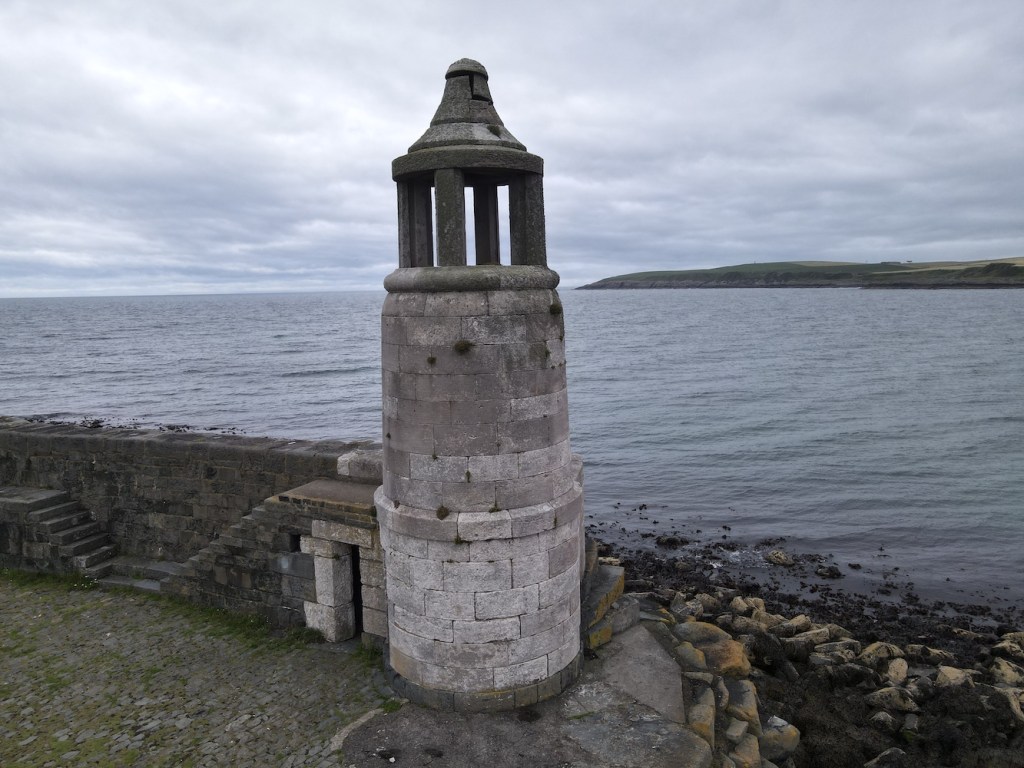
The two Port Glasgow lights
The rain had well and truly set in by this point, but it didn’t matter as there were lighthouses to be seen. 🙂
Whilst it’s true that I do spend a lot of my lighthouse time trying to get to those I’ve not seen before it is always nice to be able to say “yes!” to an opportunity for a revisit, especially if it is revisiting two places that I enjoyed so much the first time around: Lady Isle and Little Cumbrae.
My lighthouse accomplice, John, had been very keen to get to Lady Isle to see its wonderfully unique lighthouse for a long time and had organised a trip in May, which of course had to be postponed. He’d spoken to the boatman at the weekend who had said that Monday (today) was looking suitable. I told John that I would be happy to go along if there was space with boat companies limiting numbers due to social distancing. Fortunately I was given the thumbs up and this morning we departed Fairlie on board Black Magic, an open RIB operated by C&C Marine. This was the boat that I’d previously visited Lady Isle on so we knew he had been there before and could get us onto the island as long as conditions allowed. Along for the ride too were Steve and Lianne who had driven for 5 hours to make it up just for this boat trip. They are fantastic company and such a lovely couple.
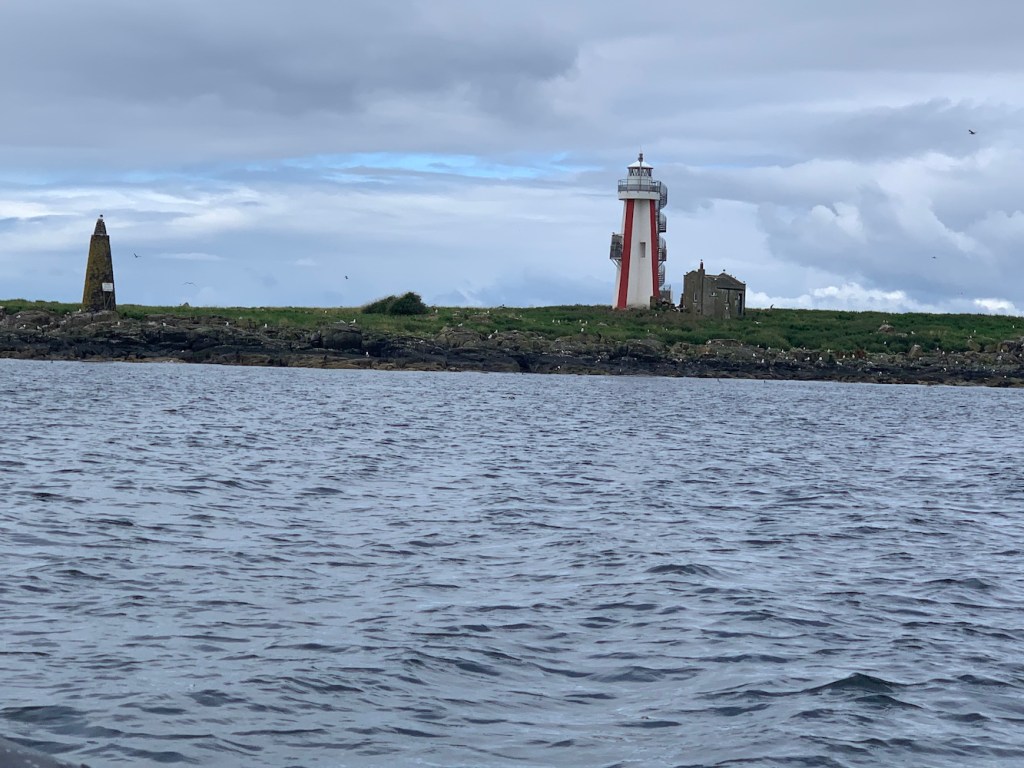
Lady Isle with its daymark and lighthouse
It took us about 90 minutes to reach Lady Isle and was a pretty comfortable journey – or at least it was for Lianne and I who sat on the nice comfy seat while the men bounced about a lot on the sides of the boat. As we approached the island the skipper had a look around at the area we’d landed at previously, but feeling it was just too bumpy we pulled back and moved in closer to the day mark on the east of the island. This was a good area to slide down on to the rocks without getting wet feet. Thankfully it hadn’t rained for a while so the rocks were nice and dry for walking over. What wasn’t so easy to walk over was the grass on the island itself, which was particularly long but nothing compared to what was to come later that day!
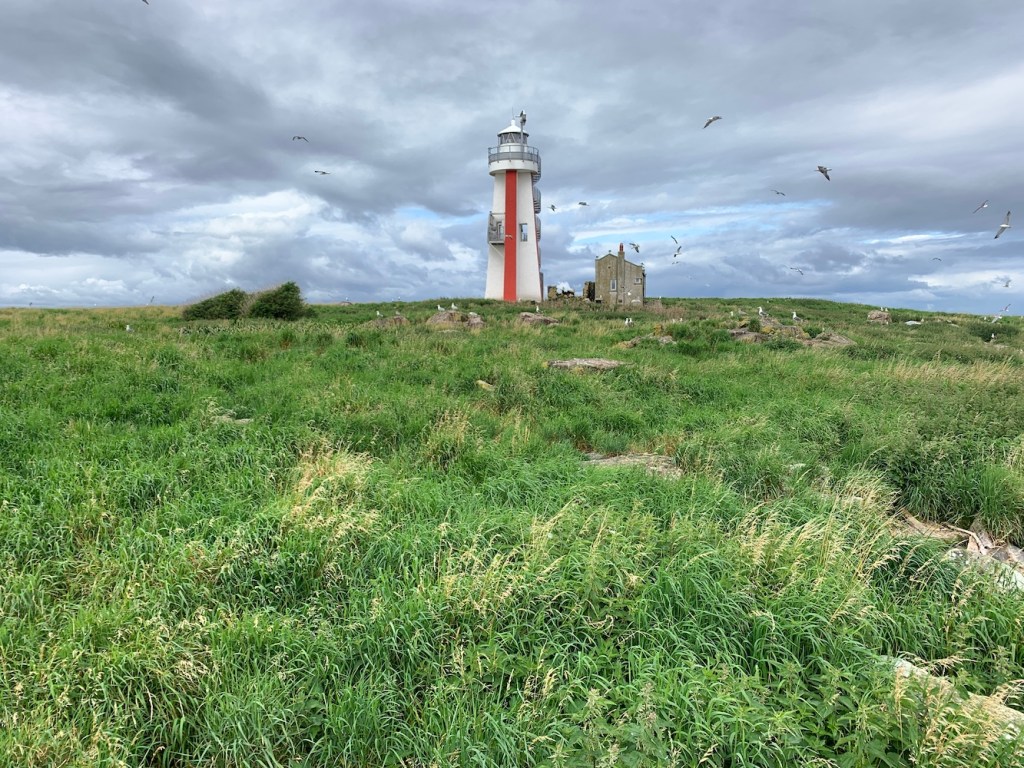
Lady Isle lighthouse
Lady Isle lighthouse really is very special and, as Lianne pointed out, it’s nice to have the island to yourself. I find that’s often one of the wonderful things about visiting these lights on islands that require a chartered boat. For the period you are there it almost feels like its your own little space. While we were there I sent a picture over to Bob of the island and it turned out the family were down at the seafront in Troon and spotted our boat approaching the island.
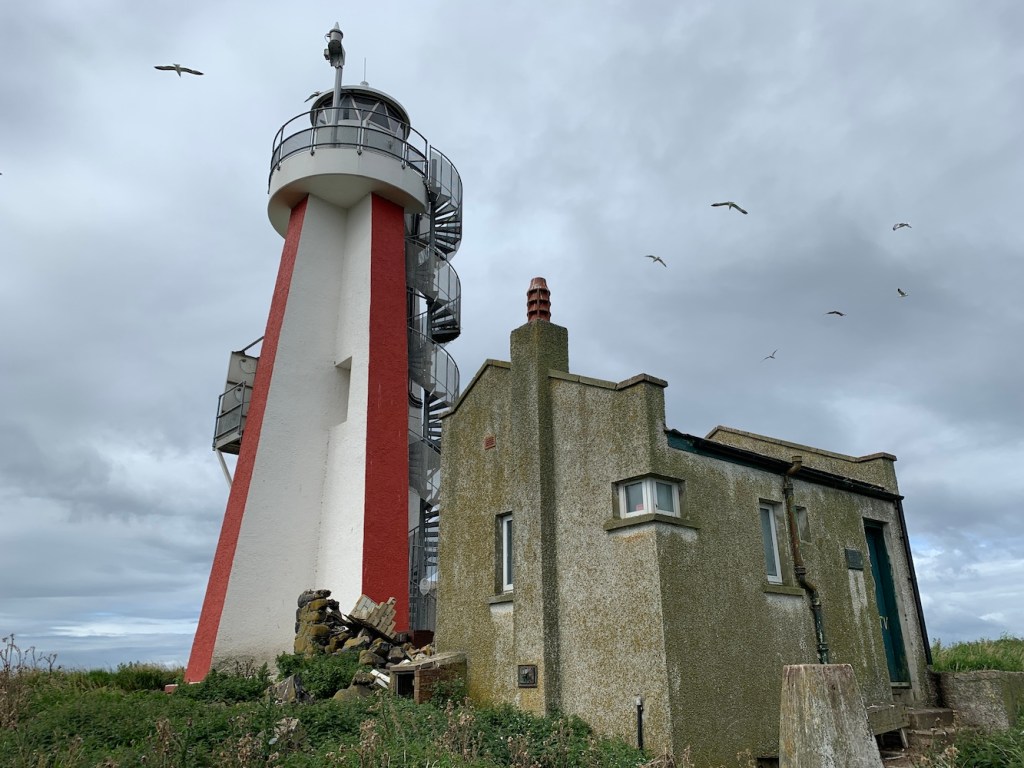
Lady Isle lighthouse with its external spiral staircase
There was genuine excitement amongst the group at managing to get there and land and I was pleased for John as, not only was it his final lighthouse in the area, but he had been very worried about whether or not we would make it and if it would be a wasted trip for Steve and Lianne. It certainly wasn’t and we all eventually returned to the boat. Getting back on the boat for Lianne and I with our short legs was rather amusing, but we managed it with a lot of help from the others!
One island simply wasn’t enough though and our second stop for the day was Little Cumbrae, which was a new island for Steve and Lianne. We weren’t sure, due to the wind direction, whether we would be able to land at the pier on the west side of the island, closest to two of the lighthouses, but the crew managed to get us in and it was lovely to follow the old tracks and steps up to the two more modern lighthouses.
Little Cumbrae lighthouse taken from the steps up from the pier
Cumbrae Elbow is the active light that now operates on the island and presumably it works quite nicely alongside Rubh’an Eun on Bute to guide vessels through the channel between the two islands. Next to this light is the old engine room for the foghorn which still contains the machinery, although it’s not looking anywhere near its best. I usually love the smell of these rooms, but with broken windows and open doors the smells seems to have gone in this one.
Cumbrae Elbow lighthouse
Exploring the old keepers’ cottages for the older lighthouse was again rather sad as the buildings have so much potential and could make incredible homes. There are signs that some improvements were made, but it is still in a bad way.
Inside the old foghorn engine room
Having both been to the island before, John and I knew there was a way to get into the tower and we thought this was through one of the cottages, but it became clear that it wasn’t and we eventually found the entrance around the side. One benefit of not remembering where we needed to go though was that John was able to show us a really nice carving of a lighthouse above one of the windows on the outside of the building. It seemed like such a nice little touch, but a bit odd that it was above a window when normally these things would be over doors.
Little Cumbrae lighthouse
After eventually finding the entrance to the tower (and Steve who had already happened upon it) we set off up the tower. Not much had changed up there, but the views were still fantastic and it was just nice to be there again and enjoy the feeling of being at the top of a lighthouse.
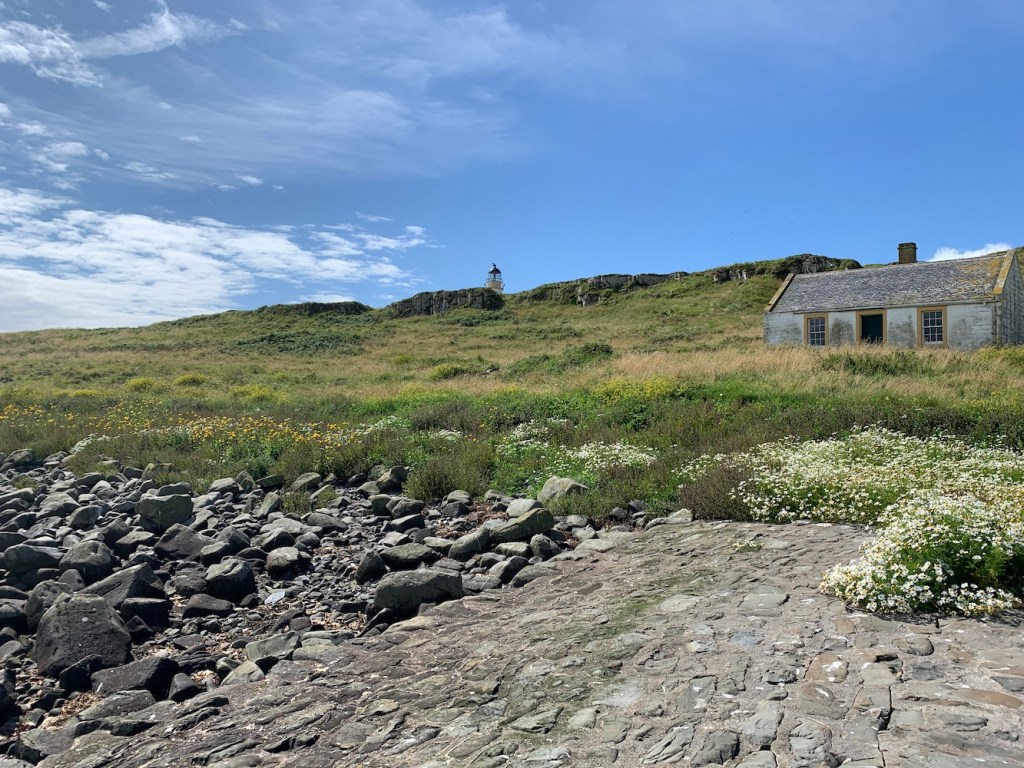
With what looked to be a patch of rain approaching we decided to retreat to one of the cottages to eat lunch. We were going to head straight off from the lighthouse after lunch, but another building caught our attention and so we spent some more time exploring that and, in trying to establish what was at the far end of the building, John managed to find the old foghorn lying in the long grass!
The old Little Cumbrae foghorn
Realising that we were running short on time for making it across the island we set off up the hill, which seemed steeper than I remember it being last time. The path on the approach to the hill was very overgrown in places, but it was still clear enough that we could find our way through. We’d already decided that we wouldn’t attempt to reach the remains of the oldest of the three lighthouses on Little Cumbrae which is close to the highest point on the island. The grass and ferns were already becoming difficult enough to get through to even consider battling our way through even less tamed terrain. We could see it from the path though.
The old lighthouse on the summit of Little Cumbrae
In most places the path was relatively obvious, but a couple of times we were met with what seemed to be a dead end, but Steve and John managed to guide us through. Some of the ferns were ridiculously long with some reaching up higher than mine and Lianne’s heads. It seemed an almost unrecognisable place compared to my last visit and the path seemed to go on for such a long time, leading at least two of us to say that Little Cumbrae wasn’t so little after all.
We were all very pleased when we spotted the top of the castle on the little tidal island near the pier that we were aiming for. The boatmen were there waiting for our arrival – thankfully only 5 minutes after the agreed time – and a couple of other men there who had camped on the island overnight had said they’d been across the island and attempted to resurrect the path a bit. During the recent Covid-19 lockdown there have obviously been fewer people visiting the island and stomping down the path and so nature has started to reclaim the island again.
The castle on the small tidal island off of Little Cumbrae
Once back on the boat it was a short little journey back across to Fairlie. It was an excellent day and a real pleasure to return to both of these islands. The company was great and the weather did hold out for us with the rain only starting as we were heading back to the marina. As Steve said a few times today while we were out – and I often say it on this blog – this type of day is what it’s all about. 🙂
After the success of yesterday’s adventure on Loch Long, the crew at Sea Clyde had reserved the best weather day this weekend for getting to the island of Pladda – and what a day it was!
We set off from Largs mid-morning – the fabulous four: Bob, John, Seumas and I – with skipper Dan and were pleased to hear that conditions we’re looking great for landing on the island, but there was a fair amount to see from the boat even before we got there.
After an unsuccessful attempt to see Kylie, the resident dolphin, we continued on our way towards Little Cumbrae. Hugging the coastline as we went to protect us from any swell, we sailed down the west side of the island, taking in the views of the two lighthouses (and of course the old lighthouse on the approach) while at the same time occasionally glimpsing across to Bute where Rubh’ an Eun lighthouse could be seen from a greater distance. This felt like a proper return to the islands, even if we were just bypassing them.
The old and modern lighthouses on Little Cumbrae
Onwards towards Arran we went and as we approached the small stretch of water between Arran and Holy Isle the skipper pointed out a submarine in the water ahead of us. Now I know I was there for the lighthouses, but to see a submarine in real life was very exciting. Needless to say Seumas was delighted too! There are restrictions on how close you can sail to these monstrous vessels, so it wasn’t like sailing straight past it at close range, but it was still great to see.
It wasn’t long until we were sailing down the west side of Holy Isle and, of course, there was the Holy Isle Inner lighthouse ahead of us. This little tower is in such a great location and seeing it reflected in the water with the land rising to the highest point of the island behind it was just beautiful. That really is the best angle to see this one from.
Holy Isle Inner lighthouse
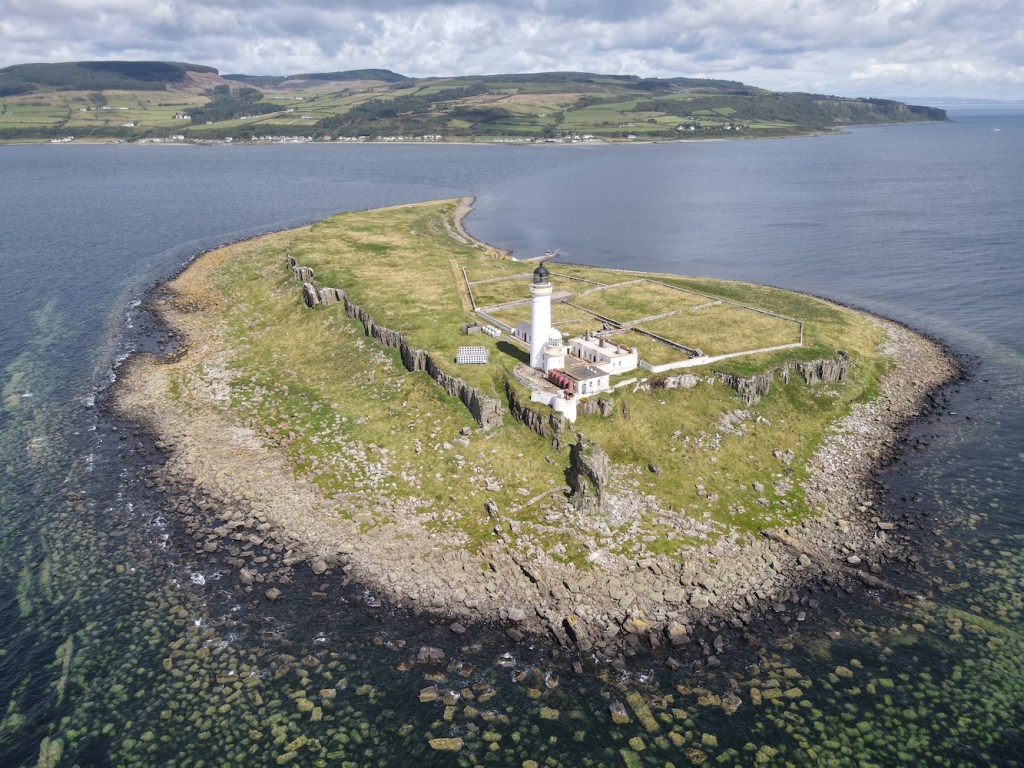
Back out into the sea again and rounding a corner I heard the cry “lighthouse” from the back of the boat – Seumas has really taken to the role of lighthouse spotter. There ahead of us was Pladda with the fantastic two towers basking in the lovely sunshine.
An aerial view of Pladda
It’s always a pleasure to land onto a nice jetty rather than rock hopping. It feels a little like luxury. The jetty is actually looking a little worse for wear now with large cracks running down it. Still it held together under our combined weight and that’s the most important thing.
Arriving on Pladda
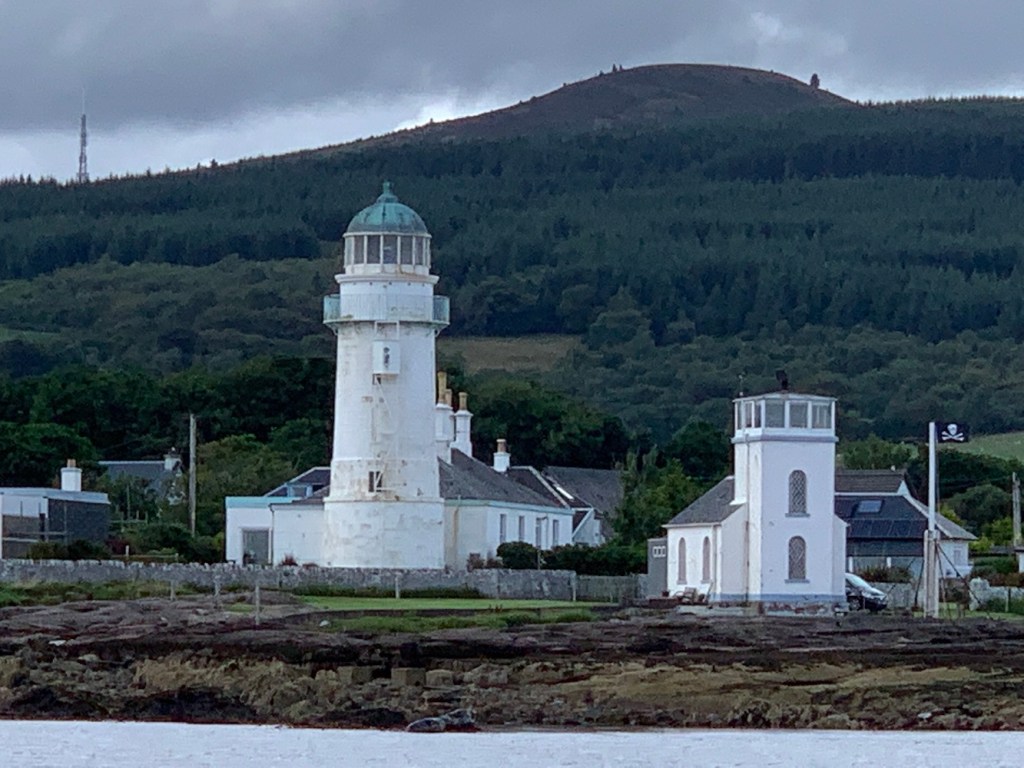
From the jetty it was a short uphill walk to the level grassy section of the island following a good, clear path which took us all the way to the lighthouse. The double towers are absolutely fantastic and, although the low light is no longer in operation it is still very well maintained on the outside.
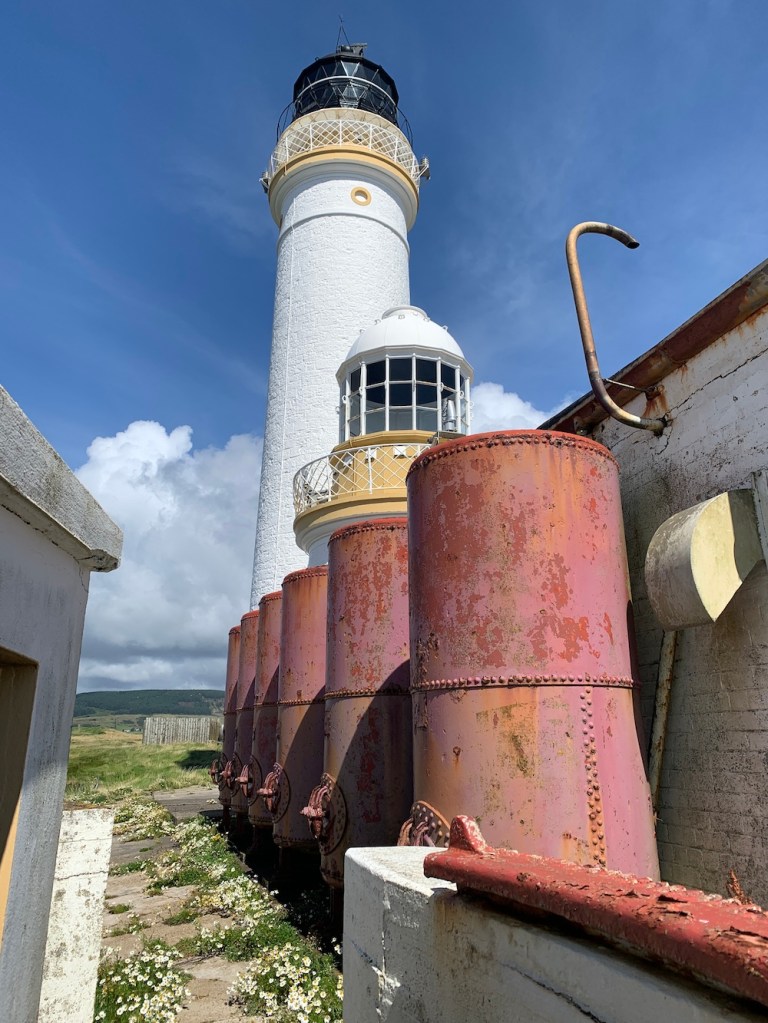
One thing about Pladda lighthouse is that it’s not the easiest one to take a picture of, particularly if you want both towers in the same shot without one looking like it’s leaning toward the other. You can get some rather dramatic views from the courtyard though.
The two towers on Pladda and the old foghorn air compressors
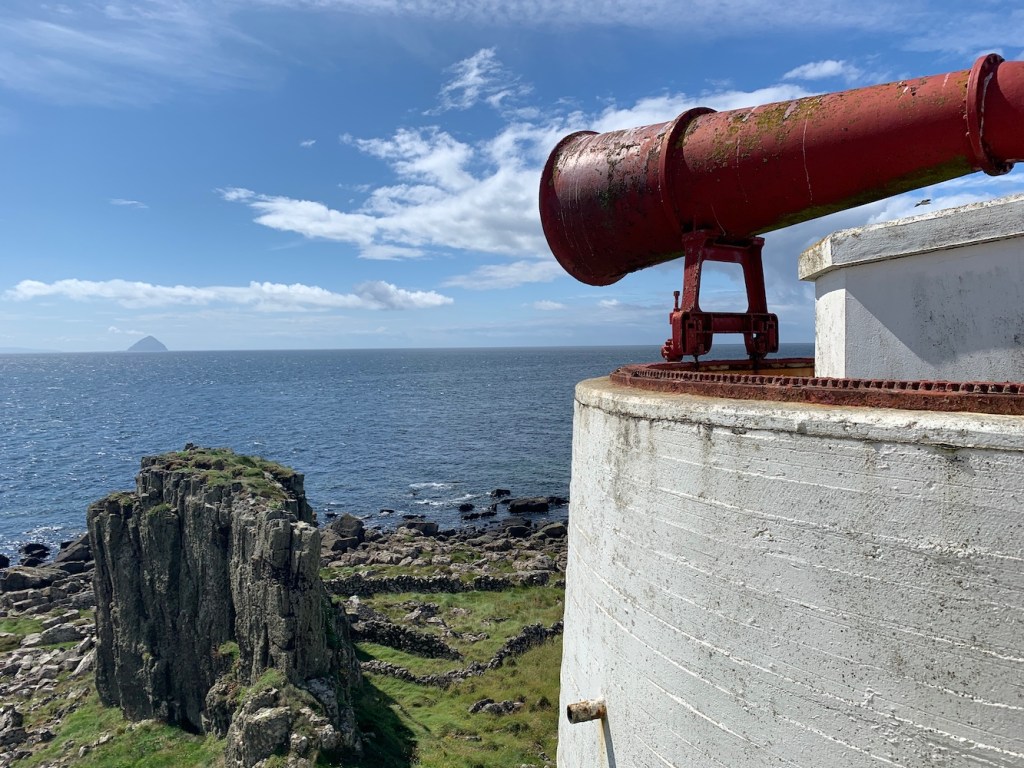
While Bob was flying his drone and capturing various aerial views, the rest of us explored around the old foghorn and took a number of pictures of the foghorn looking out towards the beautiful lump that is Ailsa Craig.
Looking out towards Ailsa Craig from the Pladda foghorn
In our next attempt to get a good view of the two towers I suggested the best area might be down near the rocks to which John replied that it would, but it would be a bit of a “jaump” (which I believe is a combination of “jump” and “jaunt”!?) He was right, although I wouldn’t have jumped it! There was another spot a bit closer next to the solar panels that I thought could be a good angle so we made our way around there, wading through the thick grass. This was a slightly better viewpoint, but still not quite right. John did find a ladder though that went down to the lower level. He went down, but decided not to walk too far as the birds were getting a bit stressed.
The Pladda towers, taken from the solar panels
We did a quick selfie using the drone (a “dronie” I believe it is called) and then explored the old gardens a bit. It was here that we discovered the best angle for getting both towers in the one picture and although it did mean upsetting a few birds we tried not to disturb them too much.
The two towers on Pladda seen from the garden
We trekked across the long grass towards the highest point on the island, which gave some excellent views towards the lighthouse (minus the little tower, which is obscured at that angle) with Ailsa Craig sitting quietly in the middle of the sea in the distance.
The view from the highest point on Pladda
It was then time to head back to the boat where we found Bob and Seumas playing on a small section of rocky beach. Seumas had built a lighthouse in the water and was throwing rocks (or asteroids) into the water surrounding it. That was his favourite part of the day!
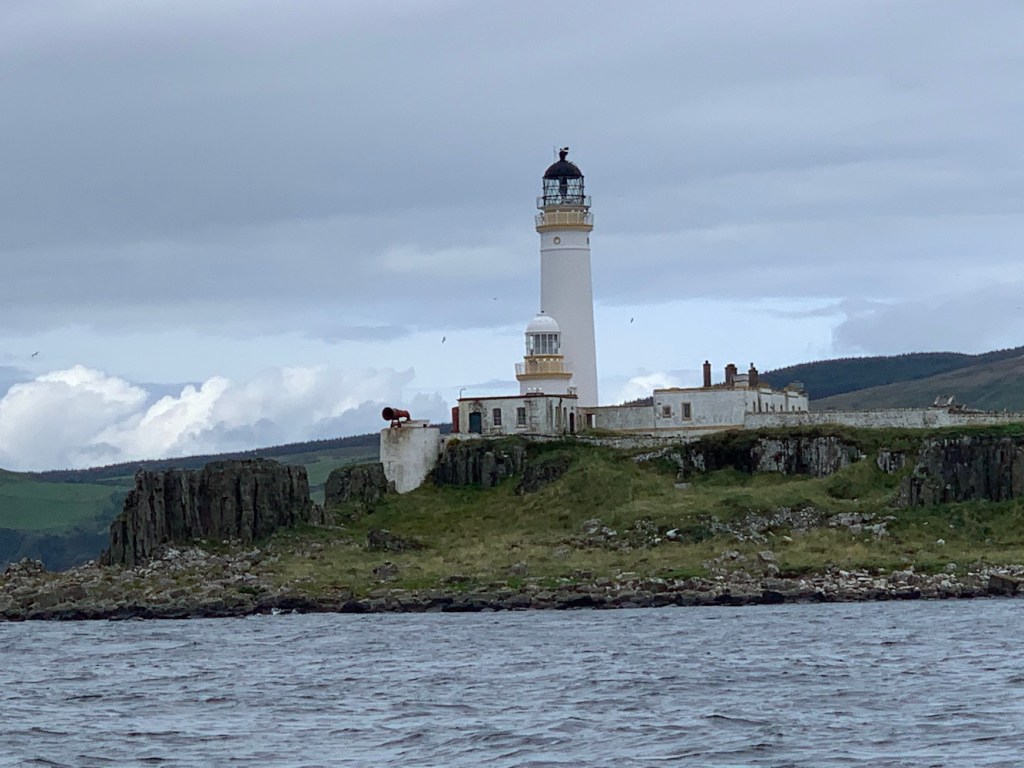
Hopping back on the boat we took a quick spin around to see the lighthouses and foghorn from the sea, which again gave another interesting angle.
Pladda lighthouse towers and foghorn from the sea
Then the return journey began. This time we sailed up the east side of Holy Isle to get a nice view of the Pillar Rock lighthouse, which lived up to my expectations in terms of views. The steep slopes behind it looked a little frightening and Bob pointing out one of the crevasses up near the high point added to this.
Holy Isle Pillar Rock lighthouse
There was still no sign of Kylie the dolphin on the way back, but arriving back in Largs I think we all agreed that it had been a very successful and enjoyable day out. Pladda has most certainly moved up a number of places in my favourite lighthouses list. It’s such a great island with its unique two tower arrangement. Days like this really is what it’s all about. 🙂
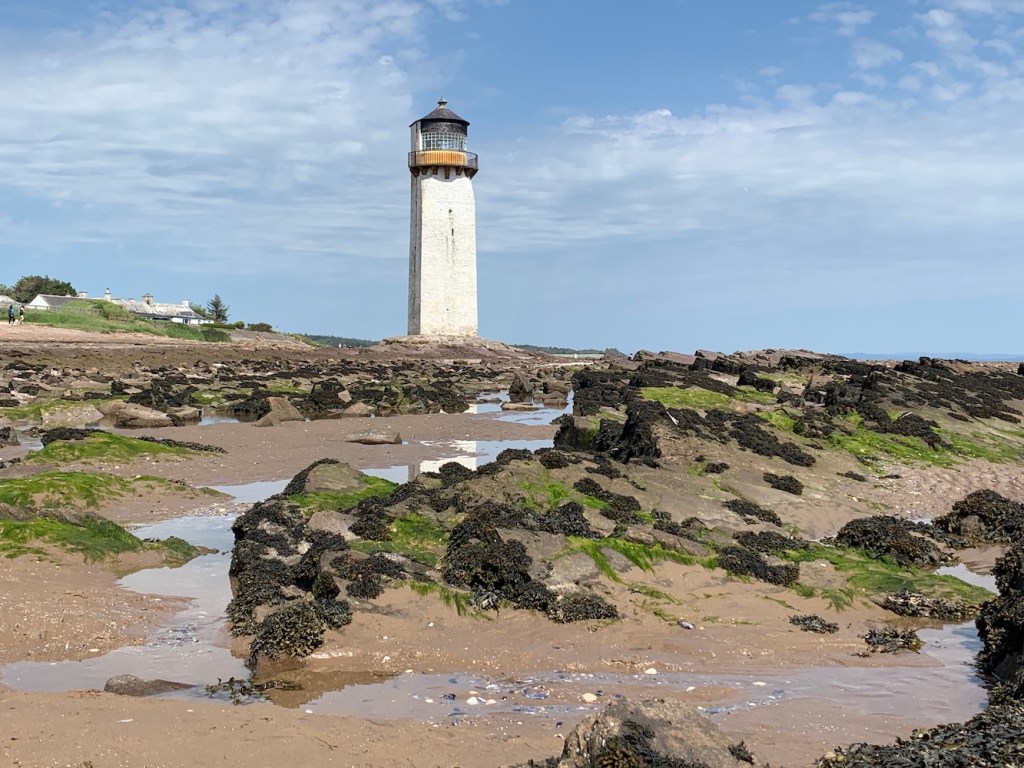
After the visits to Hestan island and some of the lights on the Rhins of Galloway last weekend, we had a great week in Dumfries and Galloway, including a fishing trip during which my son and I both caught our first fish. We also spent yesterday afternoon on the beach at Southerness. The location, of course, was based on there being a lighthouse there. I’m not sure I’ve spent quite so long at one lighthouse before as we did yesterday, but it was great to see it with the tide out as the previous visit had been at high tide.
Southerness lighthouse
Bob took the opportunity to play with his drone again and got some great images of the lighthouse from above.
Southerness lighthouse from above
We are now based over in Troon, staying with Bob’s mum. There have always been a few tricky lighthouses to get to in the area and so, with childcare on hand, we headed out today from Largs with Sea Clyde. We took along our little boy, Seumas, and my lighthouse friend John. Our destination for today was Loch Long, with a couple of others thrown in on the way there and back.
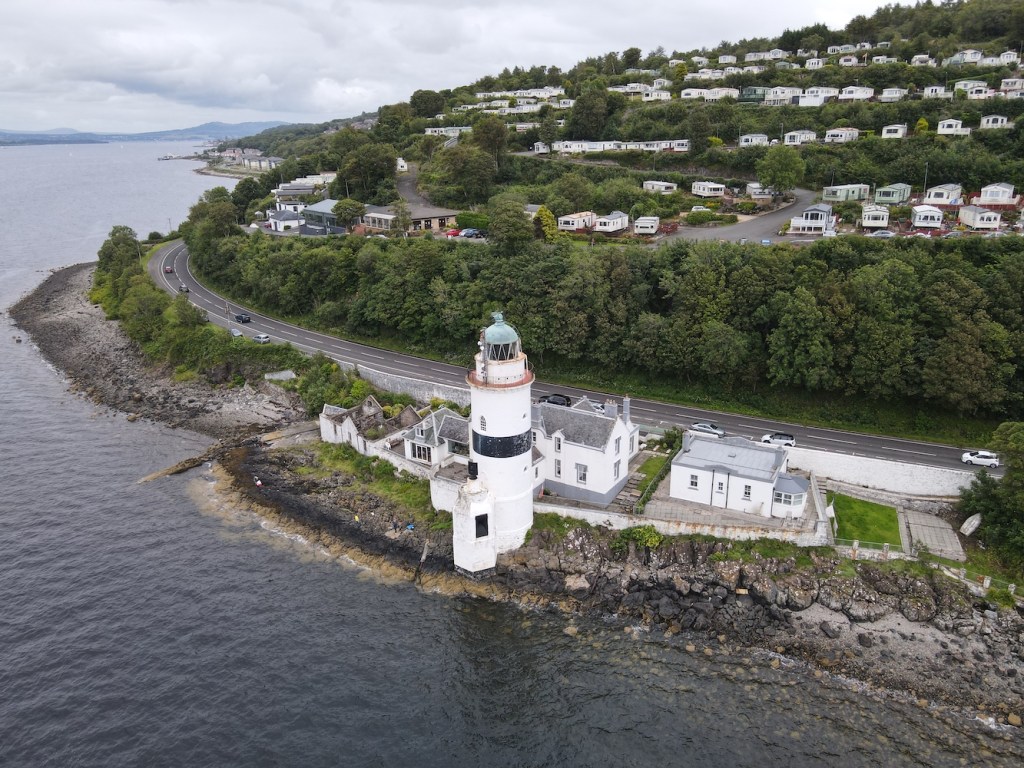
Regardless of how many times you see a lighthouse from land it is always different seeing it from the sea. After all they were made to be seen from the sea as John pointed out. On the way out today we sailed close to Cloch lighthouse and stopped for a while for some pictures. It looked a popular spot for fishing and it was good to see the foghorn in more detail too as the view is limited from the road.
Cloch lighthouse
Bob had his first attempt at launching the drone from a boat and landing it back down, which scary and amusing in equal measure. After a slightly stressful first attempt at taking off he then got on fine. Landing it back on the boat was very entertaining with the drone ending up giving John’s arm a firm hug!
An aerial view of Cloch lighthouse
Our next light was Ravenrock Point on the west bank of Loch Long. Due to social distancing guidance, Sea Clyde weren’t able to take along a dinghy to help with landings so we didn’t expect to be able to land at any of the lights today. The crew, John and Dan, took a look at how deep the water was around the lighthouse, but it wasn’t possible for us to land there. However it’s not too bad as this one is next to the road anyway so can be visited by land at another time. It looks like an interesting one to get a closer view of.
Ravenrock Point lighthouse
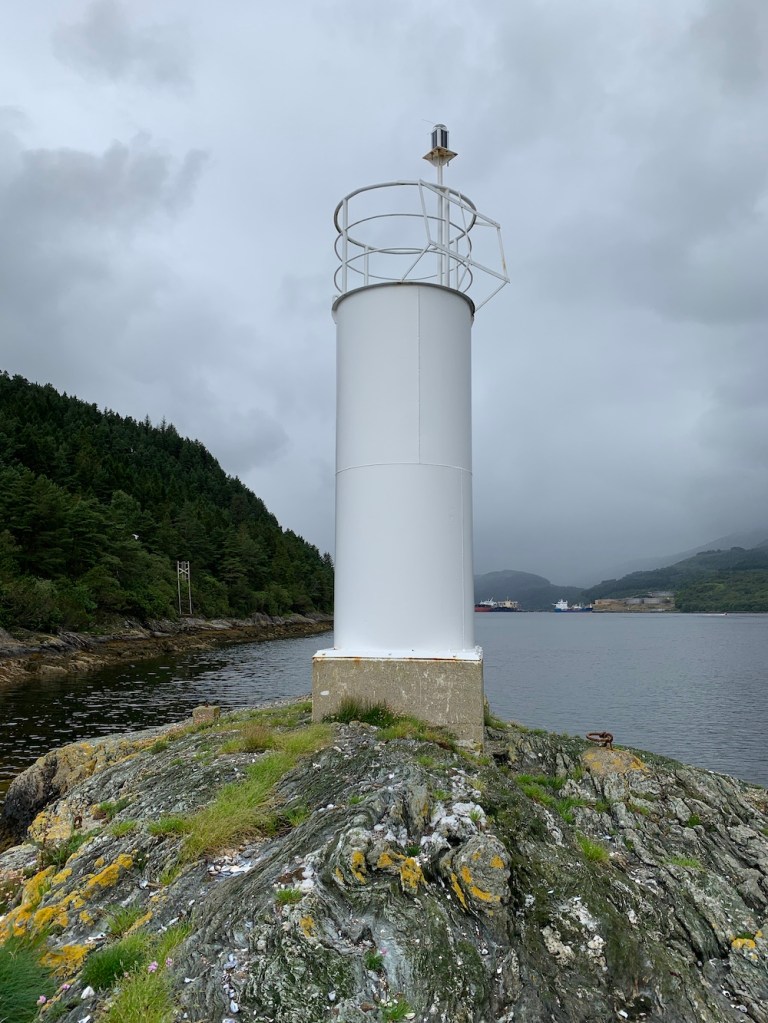
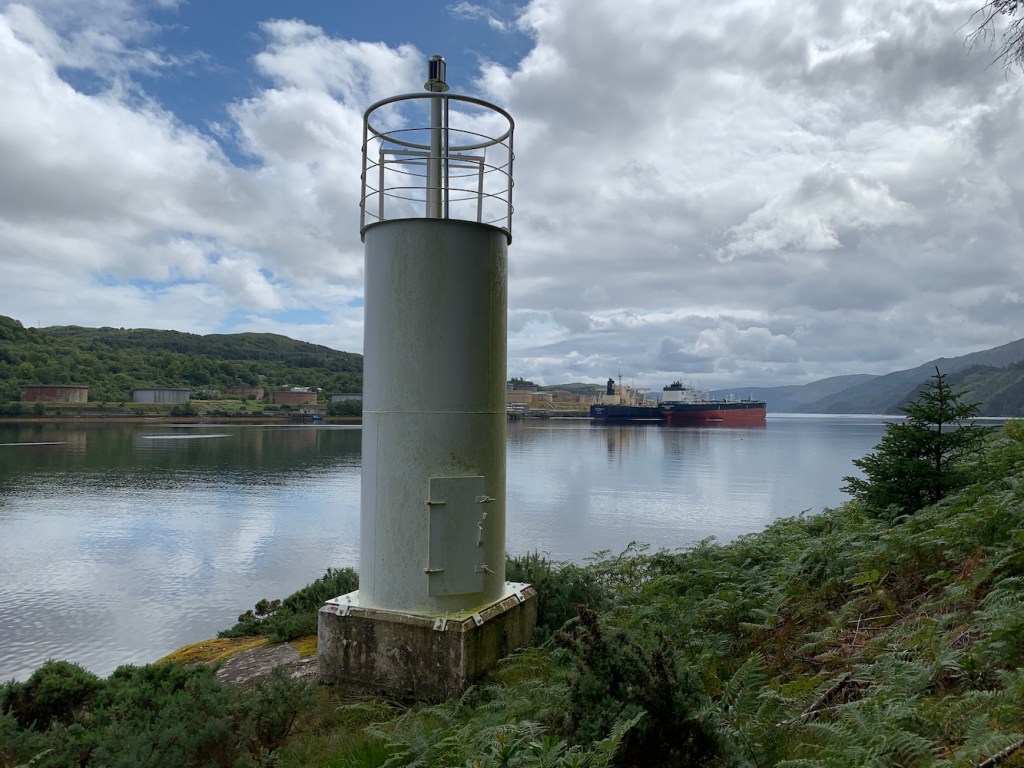
Further up the loch we stopped at Carraig nan Ron, or Dog Rock, and the water was nice and deep around this small rock which allowed them to get the boat right up to it. It was also dry and covered in barnacles so perfect for stepping onto. Seumas stayed safely in the boat with his camera, taking pictures of us as we visited the light. It was great to be back out and stepping onto these little islands again. There wasn’t much to the lighthouse, just a white column with the light sticking up from the top, but it had a little door and the rock was big enough to get some nice angles on it.
Carraig nan Ron (Dog Rock) lighthouse
We’d sailed past Coulport where nuclear warheads are stored and loaded onto submarines. As we sailed away from Dog Rock, John pointed out that from one particular angle the rock and lighthouse looked a little like a submarine. On the way back down the loch later in the trip we noticed the rock could be accessed from the mainland at low tide – although I wouldn’t want to advise anyone to get to it that way through the huge expanse of forest!
Carraig nan Ron in Loch Long
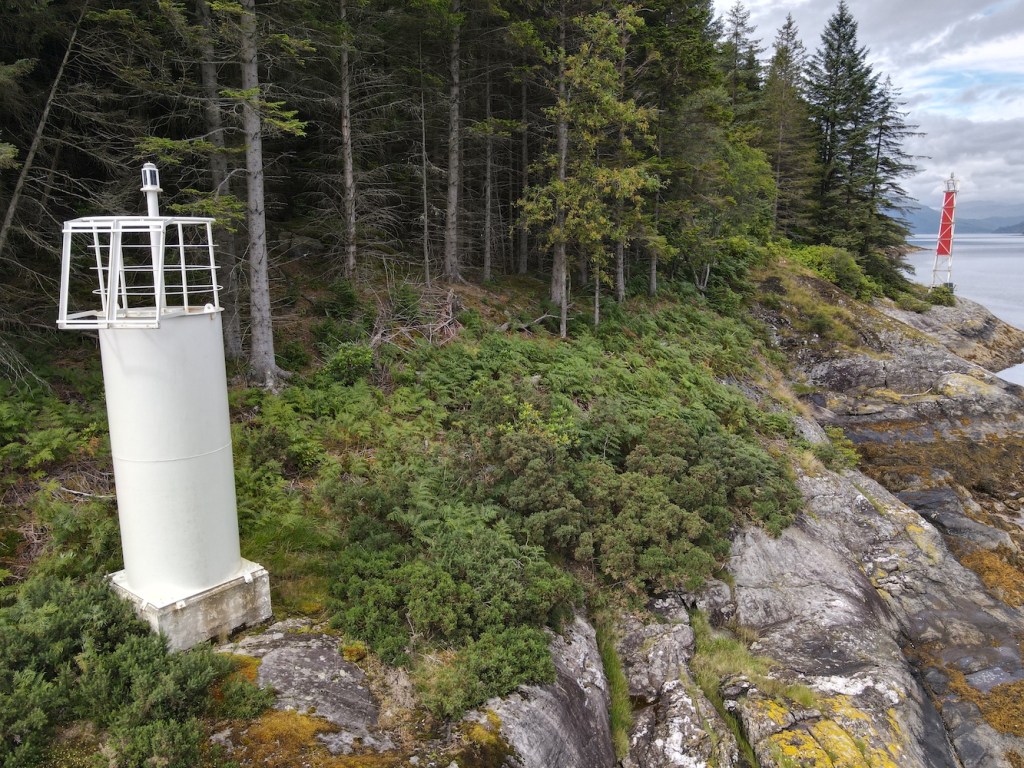
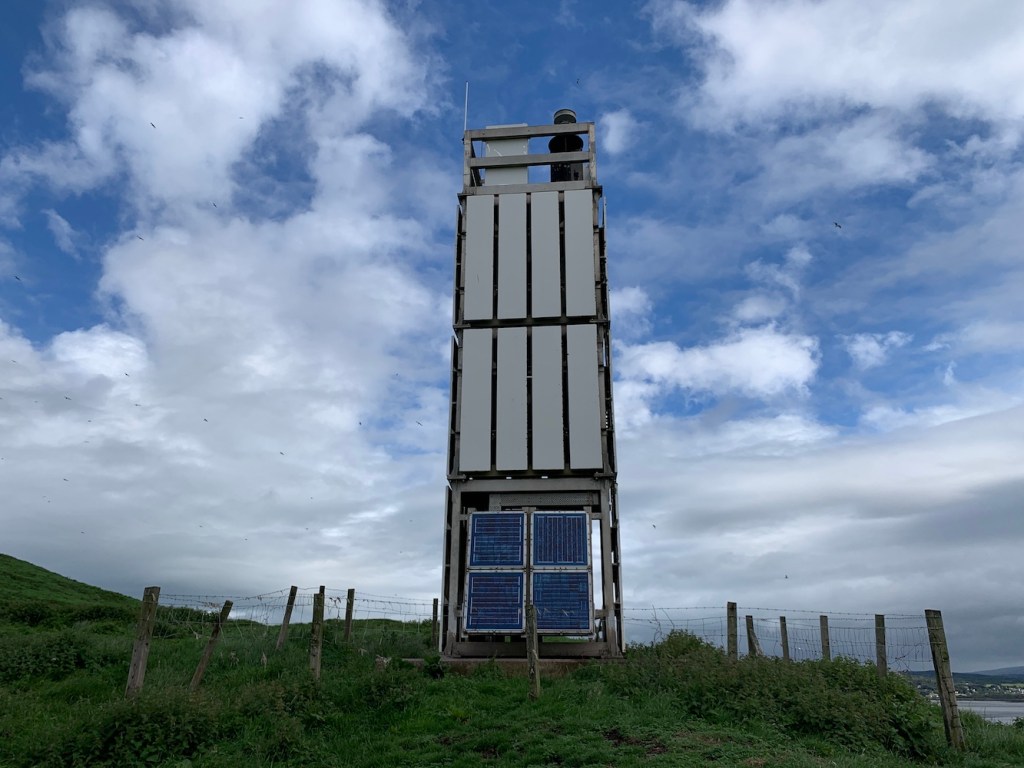
Our final disembarkation for this trip was Cnap Point, which turned out to be rather an adventure in itself. The easiest place to land was slightly to the south of the lighthouse which meant finding a route through the foliage and undergrowth to get the the lighthouse. Seumas stayed on the boat again this time while the three of us went ashore. Once we were past the rocks we found ourselves having, as I called it, “a nice forest walk”. It’s fair to say that Argyll Forest Park is very much a forest. Bob went off ahead to find a suitable route. At one point we lost track of where he had gone and John suggested we head down towards the coast to assess the route that way rather than continuing through the forest. It turned out to be a very good move as we heard Bob shout out a few times closer to the lighthouse. It turned out he’d walked into a wasp nest on the final approach to the lighthouse and had a battle with the wasps. Avoiding the same fate, John and I took the coastal route and arrived safely at the tower. It’s the same type of structure as Dog Rock, but with even better views around it. This light is the front in a range setup and the rear light – a framework tower with brightly coloured panels – was easy enough to see from a short distance.
Cnap Point lighthouse
The return walk was slightly less dramatic, thankfully, and once back on the boat we sailed further around to see both range lights from the sea. There aren’t many lighthouses you can see surrounded by trees and Argyll is fairly unique in that way, along with the Glenelg area in the Highlands.
The Cnap Point front and rear range lights
On the way back to Largs we passed The Gantocks and The Perch beacons in the Firth of Clyde. Although they are not officially lighthouses in my book, they are still interesting structures.
The Gantocks beacon
Our final lighthouse of the day was Toward Point. I’d only seen this one once previously from the land and so it was good to see it from the sea, even if John did refer to the foghorn as looking like a car exhaust. The foghorn building itself is quite interesting. Although it lacks the majesty of many of the bigger towers, it’s still a nice one.
Toward Point lighthouse
So that was my first boat trip of the year, which is strange to say in August. Normally by now most of my boat trips would have been and gone, but it’s certainly good to be back on the sea again. 🙂
It was going to be difficult to beat the success of Saturday’s Hestan Island visit Saturday’s Hestan Island visit, but we had a very good go yesterday anyway.
After a two-hour drive over to the Rhins of Galloway we met up with John, Steve and Lianne at Port Logan. The little harbour lighthouse at Port Logan had alluded me on previous visits to the area. Somehow I’d not known about it and, with it being so easy to get to it seemed rather odd that I’d still not made it there.
Port Logan lighthouse
It’s a lovely little tower, dating back to 1818, although obviously no longer in use. The original report proposing the introduction of a lighthouse as part of a new harbour here was drawn up by John Rennie. It’s possible to access both the ground and first floors as well as the attached little out-house type room which looks like it contained a bath! From the first floor you can look up and see the inside of the old lantern area. Originally the lantern would have been accessed by ladder from the first floor. It was nice to wander around and the kids enjoyed going in and out too, sheltering from the wind that had picked up overnight.
Looking up to the lantern in Port Logan lighthouse
Bob had taken along his drone and this was his first opportunity to experiment with using it around lighthouses. Of course they are an excellent feature for drone images.
A drone’s eye view of Port Logan lighthouse
Leaving my parents and the kids to play on the beach the rest of us set off for an attempt to visit Crammag Head lighthouse. Steve and Lianne had visited last year, although found it was not the most pleasant of experiences as it involved crossing a field of cows. I think we were all expecting the same again yesterday, but we thought we had to try it as it was one that John and I had both been keen to get a closer view of – having previously settled for a view from the road.
After a brief chat with the people staying at the holiday accommodation at the nearby farm we set off towards the gate and were very pleased to discover two empty fields with no cows to contend with. Aside from a muddy section the walk was easy and it was such a fantastic feeling to see the top of the tower emerge over the hill. I am particularly fond of this type of lighthouse and it was wonderful to see a new one of these close up. John clearly shared my joy by giving the lighthouse a hug alongside me. It’s almost as if the weather knew what a happy moment it was as it sent in blue sky shortly after we‘d arrived.
Crammag Head lighthouse
While there we saw the base of the old lighthouse, which made a perfect take-off and landing pad for Bob’s drone. We took a stroll down to the old landing area for the lighthouse, which we assumed must have – at some point – featured a derrick for bringing materials etc. in as it was nowhere near sea level.
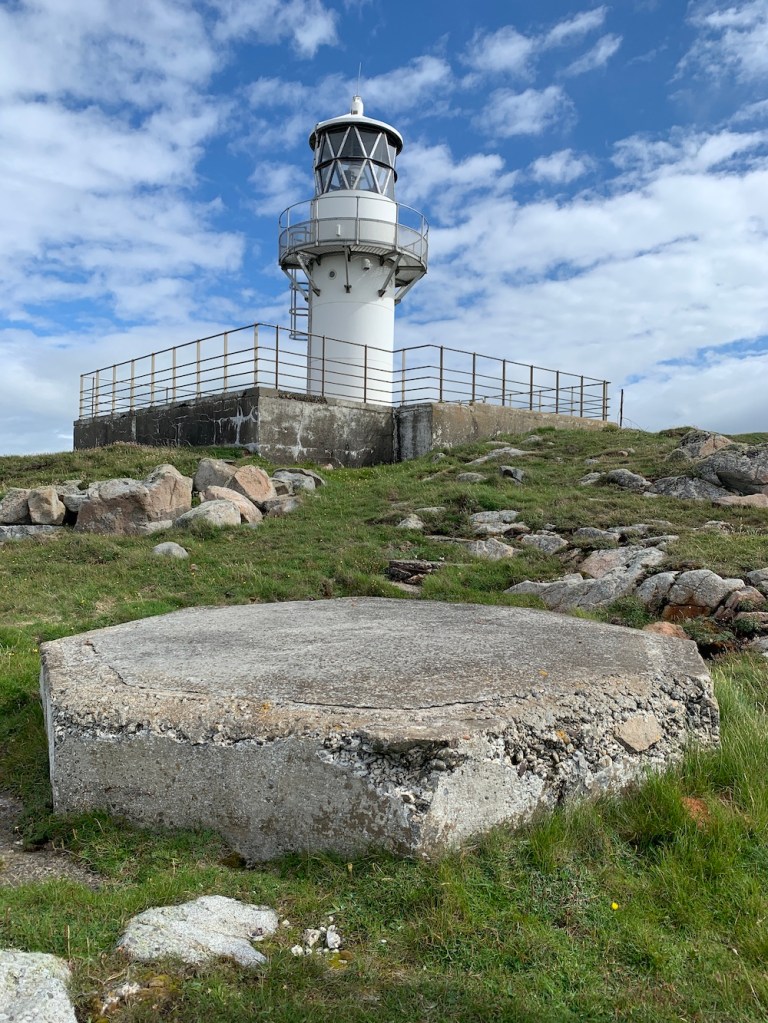
The base of the former lighthouse at Crammag Head with the modern light behind
I’d always associated this lighthouse with cows, but the visit yesterday changed my mind entirely. It’s a relatively new tower, although a lighthouse has stood here since 1913, having been replaced in December 2009.
Crammag Head from the sky
We stopped back in Port Logan briefly to pick up the others we set off for the Mull of Galloway for lunch. My plans for a nice picnic were perhaps a little unrealistic as the wind was a bit “fresh”. It was 8 years ago I last visited the Mull of Galloway lighthouse and that was on my original tour. I managed a tour of the tower that time. Due to the pandemic, the lighthouse is closed this season, but that didn’t seem to have put people off. It was the opposite end of the scale to Crammag Head where we were alone.
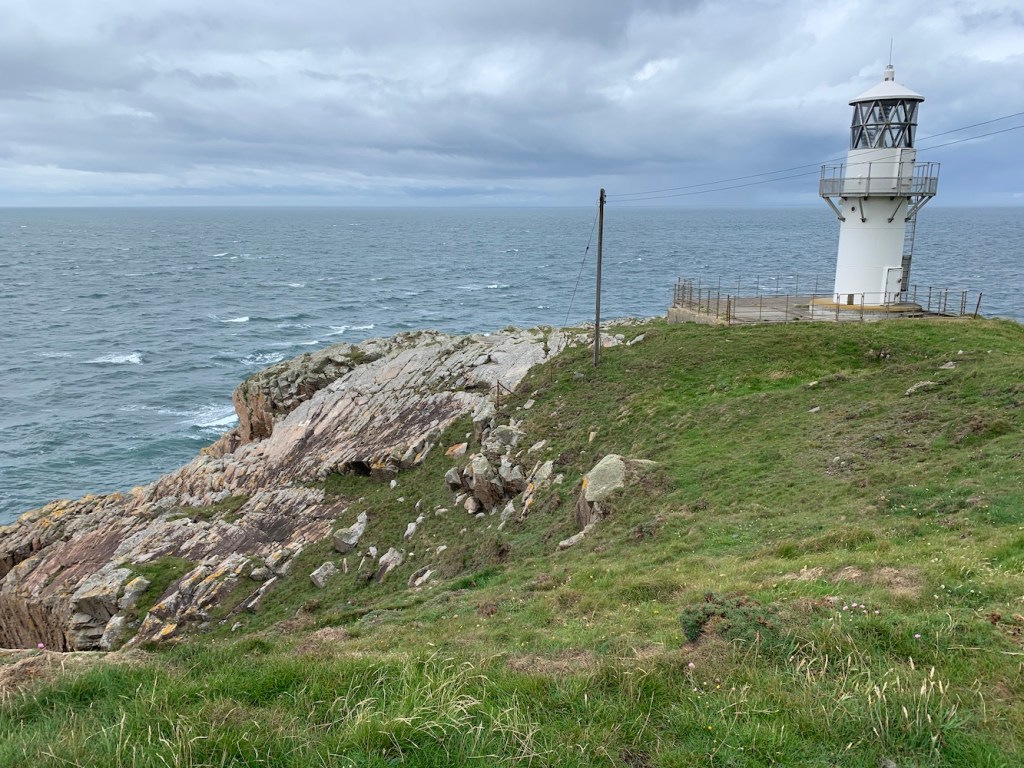
Mull of Galloway lighthouse
While walking around the lighthouse complex I mentioned to John that Mull of Galloway wasn’t one of my favourite lighthouses and he asked if it was because you could “just drive up to it and wander around” – clearly he’d paid attention while reading yesterday’s blog post! I suppose I’ve spent a lot of time visiting more remote lighthouses and I have grown to love not seeing lots of people at these places. It somehow makes the visit feel more personal and special when you are the only ones around.
Looking up to Mull of Galloway lighthouse from the foghorn
On my previous visit I’d not paid much attention to the foghorn, apart from seeing it from the top of the lighthouse. I received a message from Bob to say that our son wanted to go down to the foghorn so we set off to join them. There are a fair amount of steps down to it, but it’s worth it for the views. Foghorns are really starting to grow on me and one day it would be great to go back there to hear it being sounded.
Mull of Galloway foghorn
All in all it was a great day with Crammag Head being the real highlight. I’ve missed the lighthouses in recent months and it’s great to be getting back to them again. 🙂
This post feels like it’s been such a long time coming. After months of no new lighthouses, no travelling and cancelled trips today was the day I’d been waiting for.
We had originally booked 10 days in Shetland over this period, but with the ferry journeys cancelled for us we decided to chance it and book a week’s stay at a cottage near Lockerbie with a good cancellation policy. Thankfully restrictions were lifted enough to enable the trip to happen.
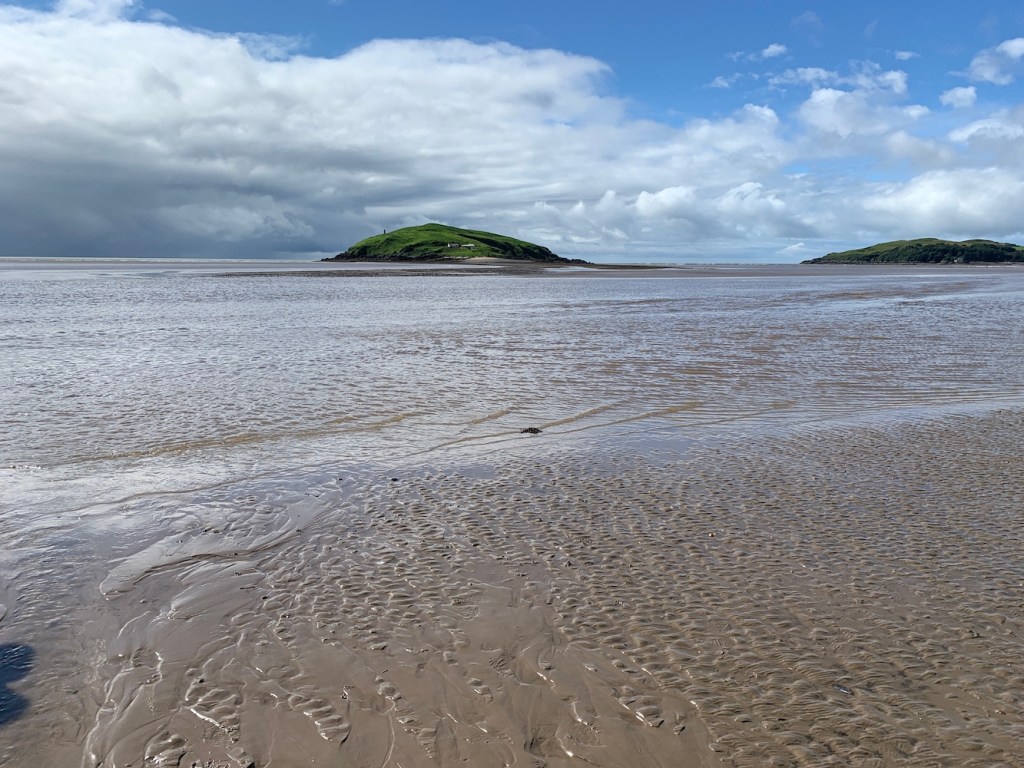
One of the key lighthouses I wanted to get to while in Dumfries and Galloway was on Hestan Island. Hestan Island is accessible at low tide from Almorness Point and so, in preparation for the trip, I looked at the days with the lowest tide during our stay in the area, which happened to be the first morning when it would be 0.93 metres at 10.18am. This meant an early start, meeting at 8.15am to allow us to begin our walk, returning from the island at the lowest tide.
The forecast was looking grim to say the least with heavy rain on the agenda, but we must always continue when the opportunity is there. The opportunity was even more appealing as we were to be joined by my wonderful lighthouse partner in crime, John, and a couple of lighthouse friends who share our enjoyment of islands and lighthouse, Steve and Lianne. There was no way this could be missed.
As we approached Palnackie, just to the north of Almorness Point the rain stopped and the cloud began to look like it was clearing. We parked up, met the others and all set off (with my dad along too) in our waterproofs. It turned out the waterproofs weren’t needed as the grey clouds continued to clear and the sun and blue sky even came out at a few points.
Part of the first section of the track
The walk to the sea was great. A clear track all the way and interesting enough to make it feel like it wasn’t onerous. It became muddier towards the end, evidence of the recent heavy rainfall.
Our first view of the lighthouse, which can just about be seen in the far distance
We arrived at the coast, a nice beach, and caught our first glimpse of the lighthouse in the distance. Changing into our wellies, applying Skin So Soft to put the flies off and removing a layer of clothing, we then set off from the beach across the, sometimes sticky, sand to reach the “wet” section. I say the wet section as it is never fully clear of water.
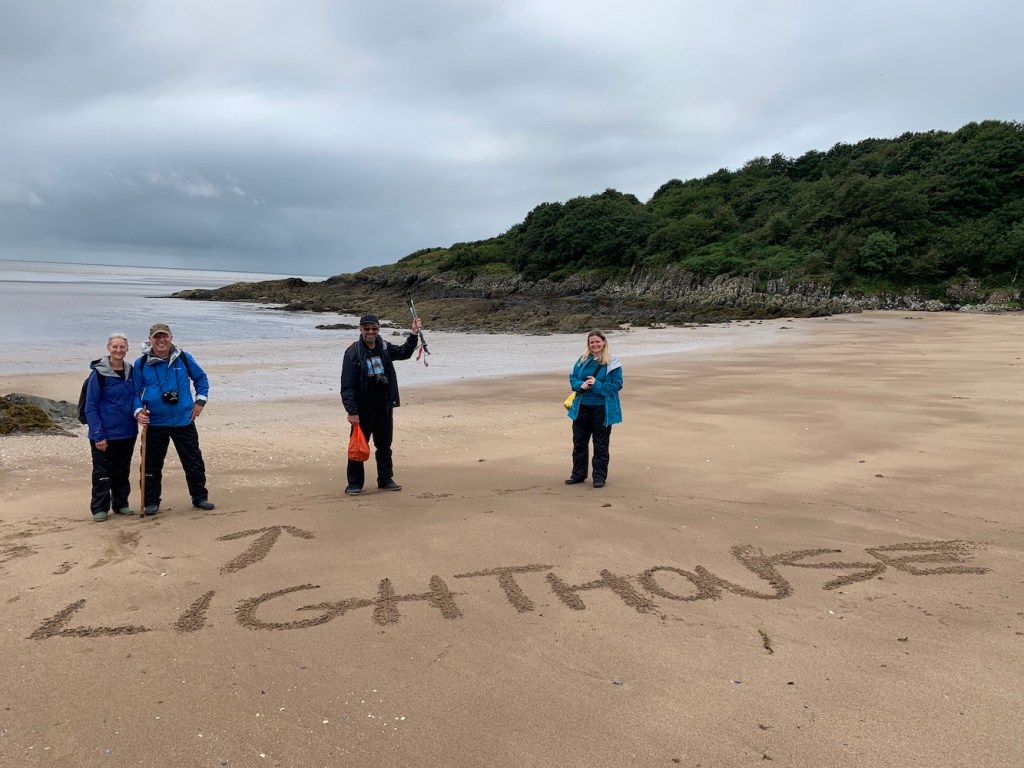
Enjoying time with friends
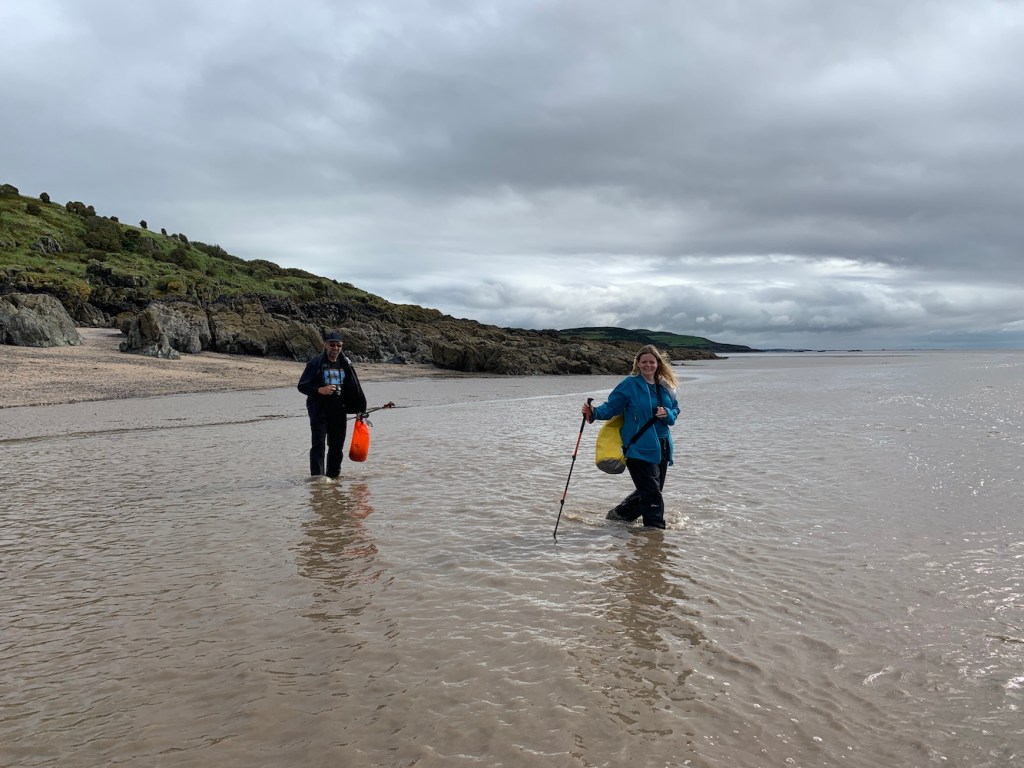
Thankfully Bob had visited last year and knew the best place to cross the water. After giving us instructions to walk sideways, facing the current, if we felt it was getting too strong we set off. Never before have I paddled in water that deep to see a lighthouse, but it was great fun. The water level was higher than we had expected, although we crossed around 45 minutes before low tide. We put this down to the amount of rain we’d had overnight and that morning. The pebble section beyond it was harder to walk on, but we were rewarded with some fantastic views of the island ahead of us.
Paddling to the island
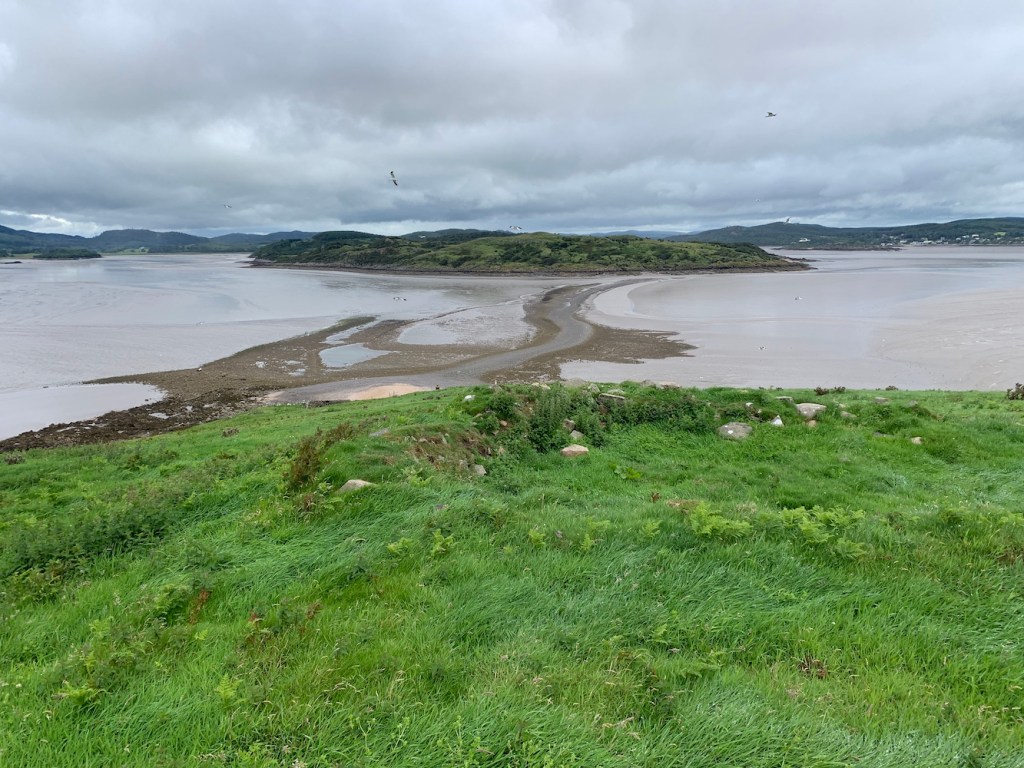
There is a holiday home on the island and the owners were clearly there as their dog jumped around barking in welcome at us. Once on the island we set off to the right of the house and up toward the high point. I’m not really a fan of walking uphill and John echoed my thoughts when he said “Is he [Bob] taking us to the high point?” He was, but it turned out that was the most direct route to the lighthouse. I must also give him extra credit as the views from the top were stunning, especially down towards the lighthouse and then back across the way we had come.
Looking back from the island
Of course, after we’d reached the highest point we then had to go back down the other side and, throwing our hoods up to avoid the circling gulls doing their business on our hair, we set off straight for the lighthouse.
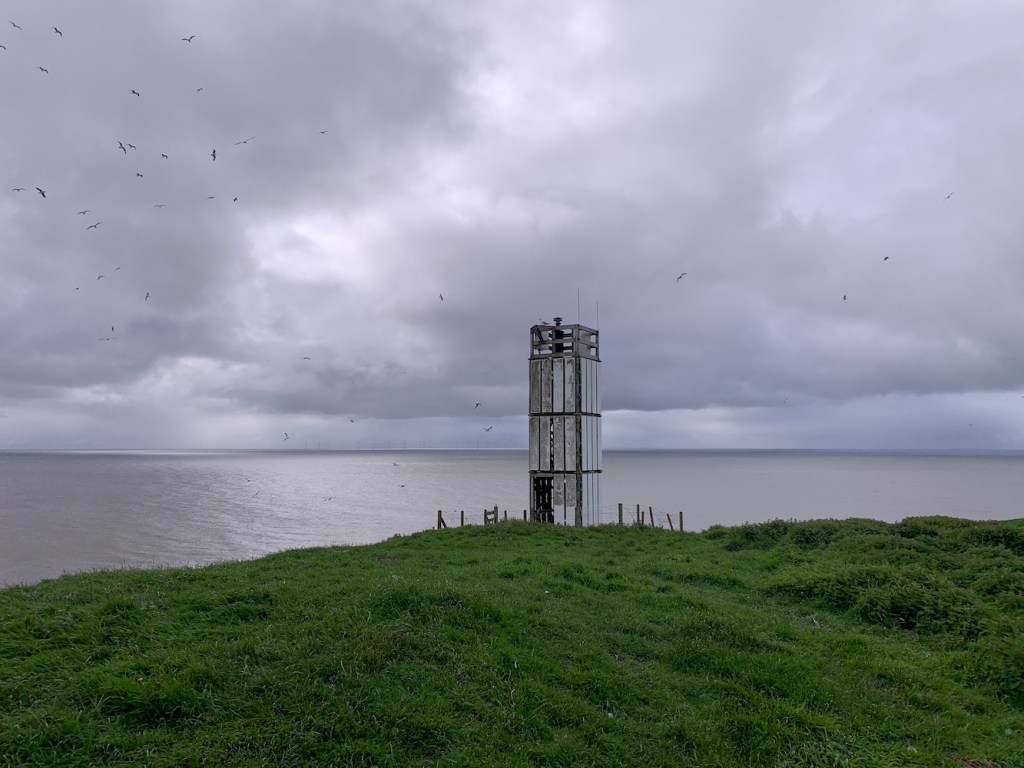
The rather grubby lighthouse
The lighthouse is a flat-pack (or IKEA) style, but what is worthy of note is that it is a three tier flat-pack and these are fairly rare – the only others that we could remember between us being on Hoo Stack and Shillay in the Monach Isles. This one is not pretty-looking and is quite dirty. As we approached we spotted the lack of a door. It would have been rude not to have stepped inside and so we did. The hatch up to the next level of the tower was sadly padlocked so we had to settle for viewing the ground floor level only, but we had made it and all thoroughly enjoyed the walk there. I think the lack of lighthouse visits in recent months added to this enjoyment and we were all relieved that we could be back out there and doing something we love.
Hestan Island lighthouse
I still strongly feel, and I said this today, that I often enjoy the journey getting to these flat-pack lighthouses more than I do the bigger lights. Their remote and challenging locations often make for some much more memorable moments, especially compared to driving to a car park next to a lighthouse wall and wandering around for a while.
Being up against the tide meant we couldn’t stay long so we began our return journey. We were all expecting the tide to have dropped further on the way back, but there appeared to be little change apart from the final section where we now had to move fast to avoid getting stuck in the sand.
Celebrating with Tunnock’s Caramel Wafers for a moment we enjoyed the views back to the island before continuing our walk back.
Looking back towards the island
These few hours going to and from Hestan Island were fantastic and sharing it with some brilliant friends and family made for a very special occasion. I will remember it for a long time to come and it was a perfect way to start a rather late bagging season this year. 🙂
This is the final of my three ‘looking back’ posts where I write about lighthouse visits that pre-dated my 2012 tour.
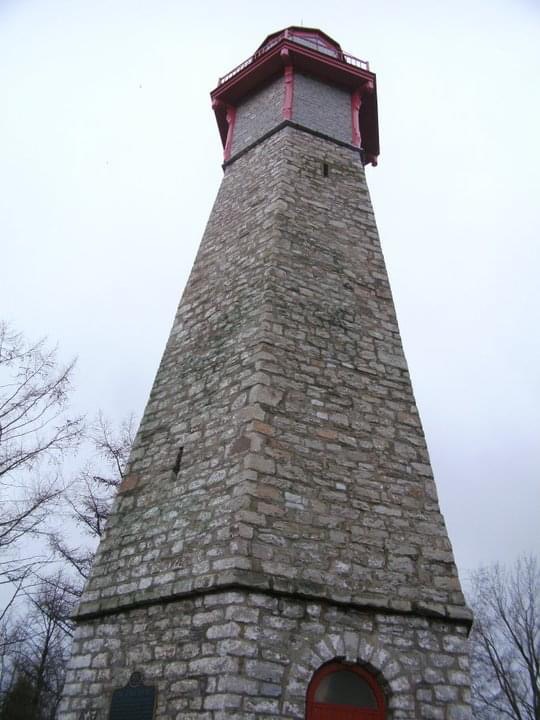
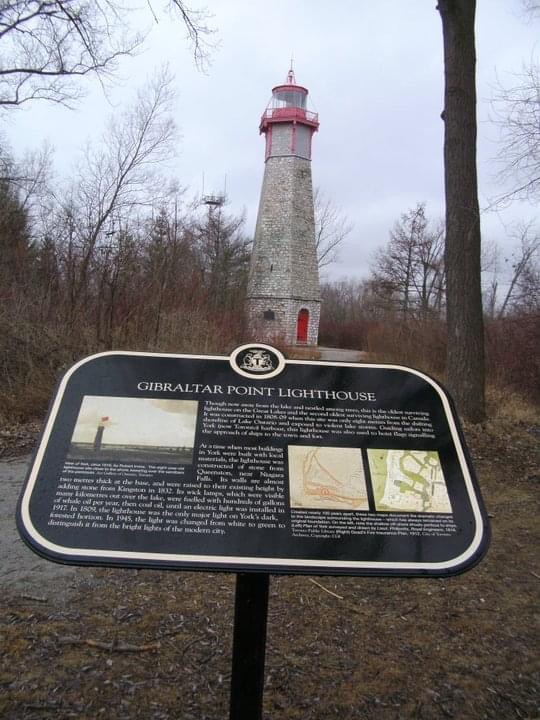
In 2011 I went to Toronto for a work trip. When I considered the trip originally I had big dreams of travelling along the fabulous lighthouse trail in Nova Scotia. I was still learning to drive at this point though and managing it without driving would have been a huge challenge. Abandoning that idea I decided that I couldn’t visit Canada without visiting at least one of its lights. I chose Gibraltar Point on the Toronto Islands. Gibraltar Point lighthouse is the second oldest in Canada, being constructed in 1808-9. It also holds the acclaimed title of oldest lighthouse on the Great Lakes.
The view of Toronto from the islands
As the name suggests, the Toronto Islands are a collection of islands with Centre Island the largest and home to the lighthouse. They weren’t always islands though and when the lighthouse was built just 8 metres from the shoreline of Lake Ontario it was a peninsula. The area is prone to shifting sands though and Centre Island was first cut off from mainland Canada in 1852. A breakwater was built to reconnect the island and mainland, but the island was permanently cut off during a storm in 1858. The long-term effects of the sandbar moving include the lighthouse now being around 100 metres from the coast
One of the many little lakes on the islands
The tower was built to guide sailors safely into York, the city now known as Toronto. It was also used to hoist flags signalling the arrival of ships, in the same way as was done near Bidston lighthouse. In 1832 the tower was heightened and once cut off from the mainland, the keepers became the first residents on the island. Over the years the community grew.
The light was turned off in 1957 and the following year ownership passed to the Metropolitan Toronto Parks Department. Since taking it over they have restored the lighthouse, demolished the old keeper’s cottage and they occasionally open the tower to the public.
Gibraltar Point lighthouse
The lighthouse is probably best known for the disappearance of its first keeper in 1815. There are various stories about what happened including murder by some soldiers and human remains being found nearby. As a result of the disappearance, the lighthouse has gained a reputation for being haunted.
The lighthouse is easy enough to reach with regular ferries running from Toronto to Centre Island. I went over with a friend who joined me for part of the walk. I don’t have a particularly good memory so can’t recall many details, but it was a nice walk and had an interesting feel about it. It did feel like an extension of the city with various buildings, and man made structures and features – I wonder if the same would have happened if it had stayed a peninsula? It was certainly different from many of the islands I’ve been to since.
The lighthouse is impressive although it’s strange to see it surrounded by trees. It was a slightly overcast day and the area did have a bit of a creepy feel about it. Maybe it would have felt different had it been in the sunshine. It’s fantastic that it’s being cared for though and let’s hope it stays that way. It was well worth a visit. 🙂
What inspired me to go on my 2012 tour of lighthouses? Well, I loved lighthouses for a start, but I also had a taste of just how great it can be to go on a trip specifically to see multiple lighthouses back in July 2010. Thanks to my flatmate at the time and my sister, I was treated to a few beauties on the south coast of England over a long weekend.
Visiting multiple lighthouses wasn’t the only similarity to my later tour, as we also camped too. Camping wasn’t something any of us had done much of at all and I recall plenty of laughter and confusion when putting the tent up. It turned out to be good practice for me.
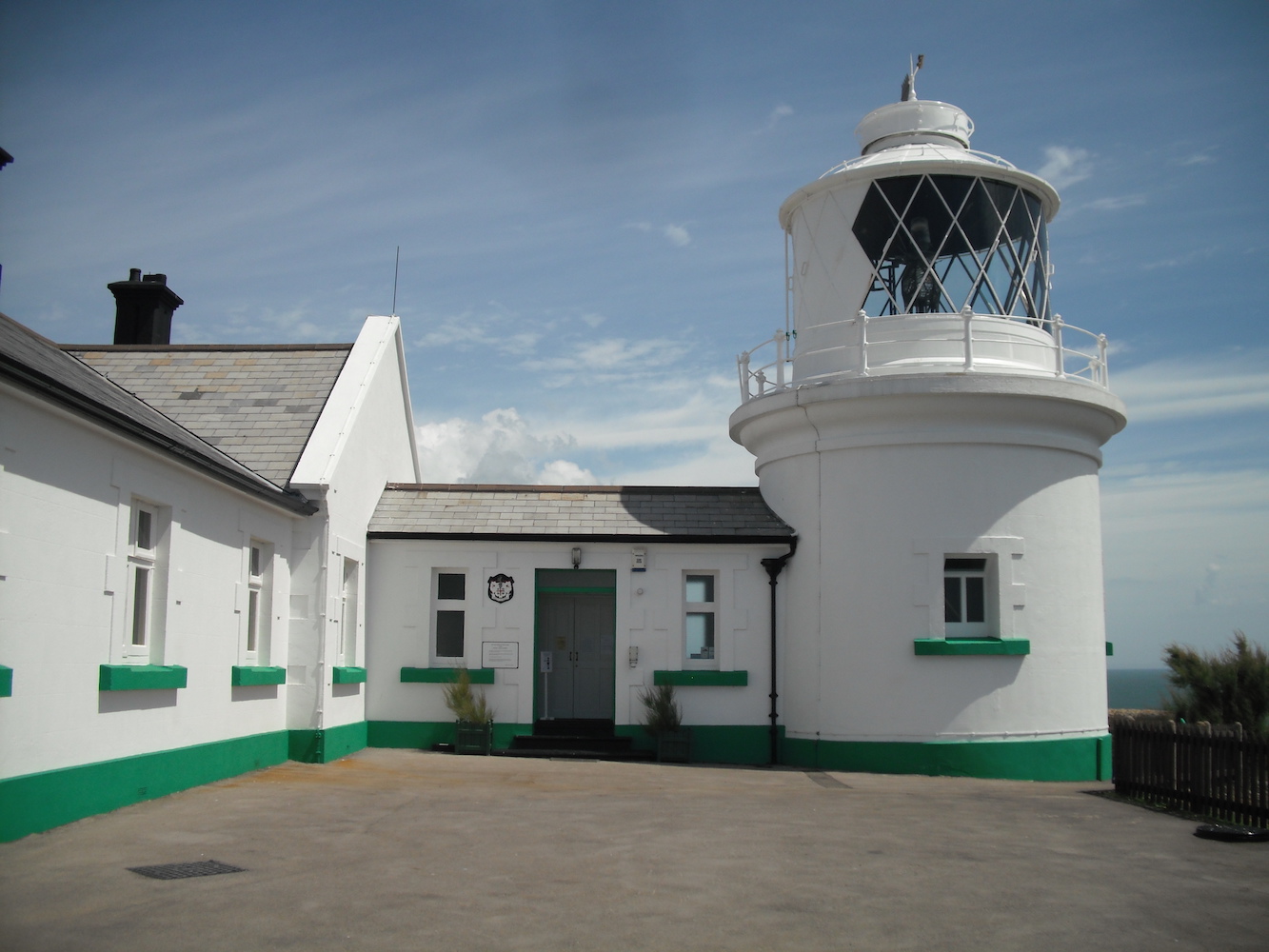
Our first lighthouse of the trip was the small but beautifully located Anvil Point. Thankfully we had excellent weather all weekend which made the walk from the Durlston car park to the lighthouse all the more enjoyable – and I remember the walk which is always a good sign!
Anvil Point lighthouse
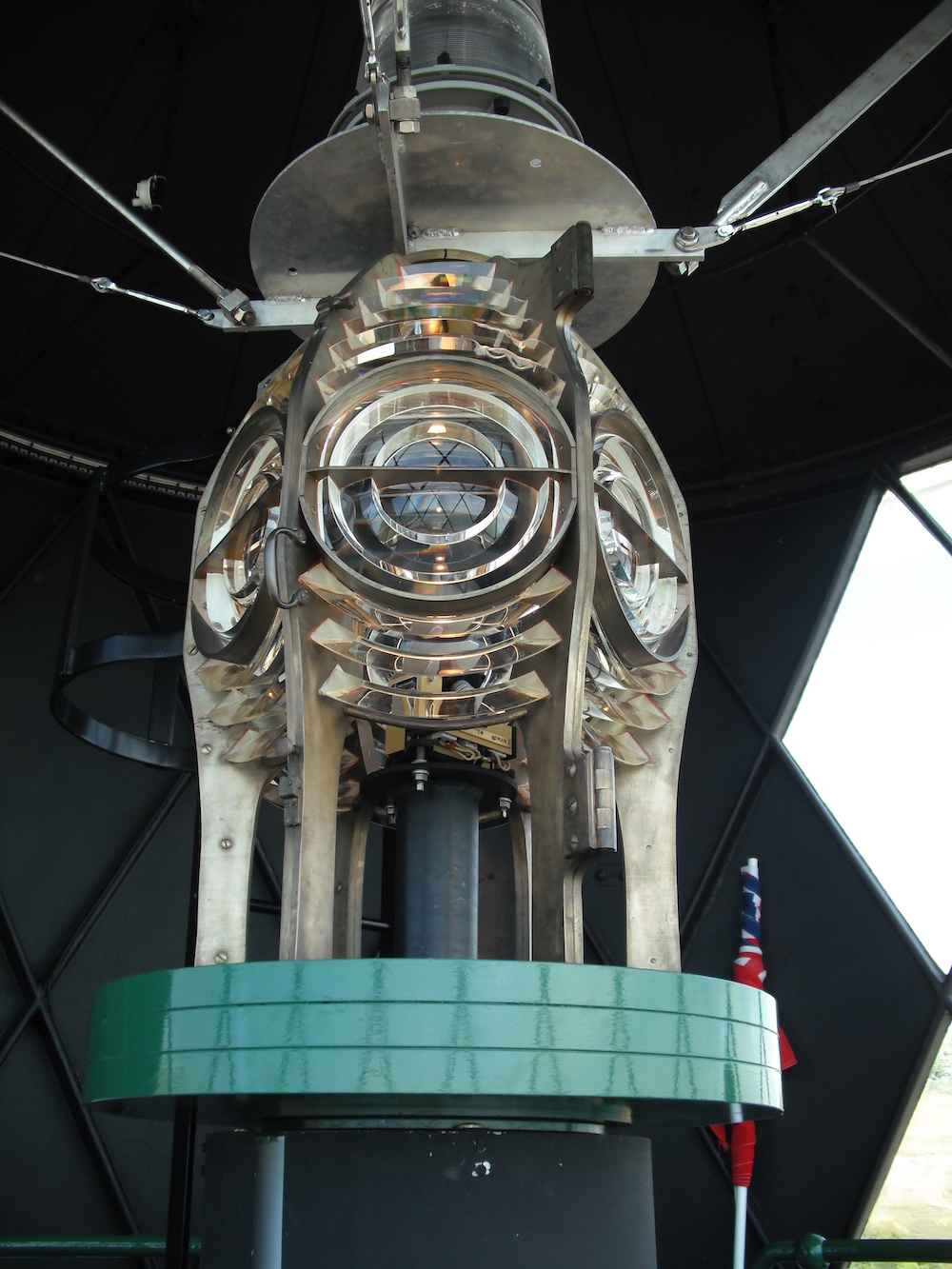
Rather fortunately the lighthouse was open for tours on that particular day, although these are sadly no longer running, so I’m even more glad to have done it when I did. I remember the tour guide being really friendly and pleased to meet someone else who had a genuine interest in lighthouses. I look back now at pictures of the tour and it brings back memories of being in awe of it all, which is a feeling I often still get when I reach the top of a lighthouse. I suppose you never lose that feeling of wonder – or I hope I never do anyway.
The lens inside Anvil Point lighthouse
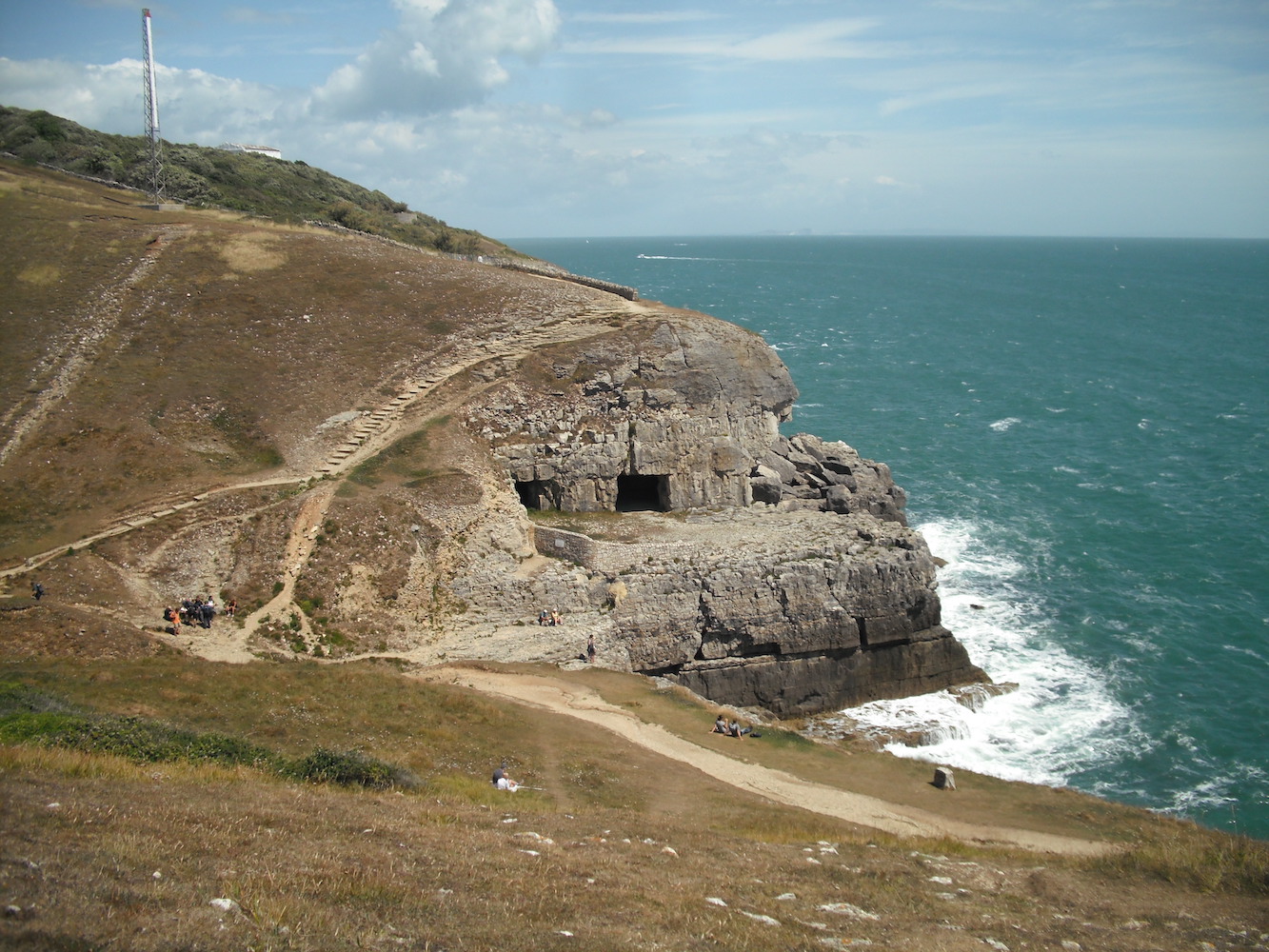
The views from the top of the tower were amazing, with the turquoise sea and the various tracks littered along the coastline around the lighthouse. We wandered a little further around to the east after we’d left the lighthouse and read up on the Tilly Whim Caves.
Looking towards the Tilly Whim Caves
We then continued on to our next destination: Swanage. No more lighthouses on that particular day, but we did have a nice ride on the Swanage Railway Steam Train to Corfe Castle. The Castle wasn’t open for long after we arrived so we settled for a wander around the outside and dinner in a pub nearby. We finished off the day with a visit to Swanage beach before heading back to the tents.
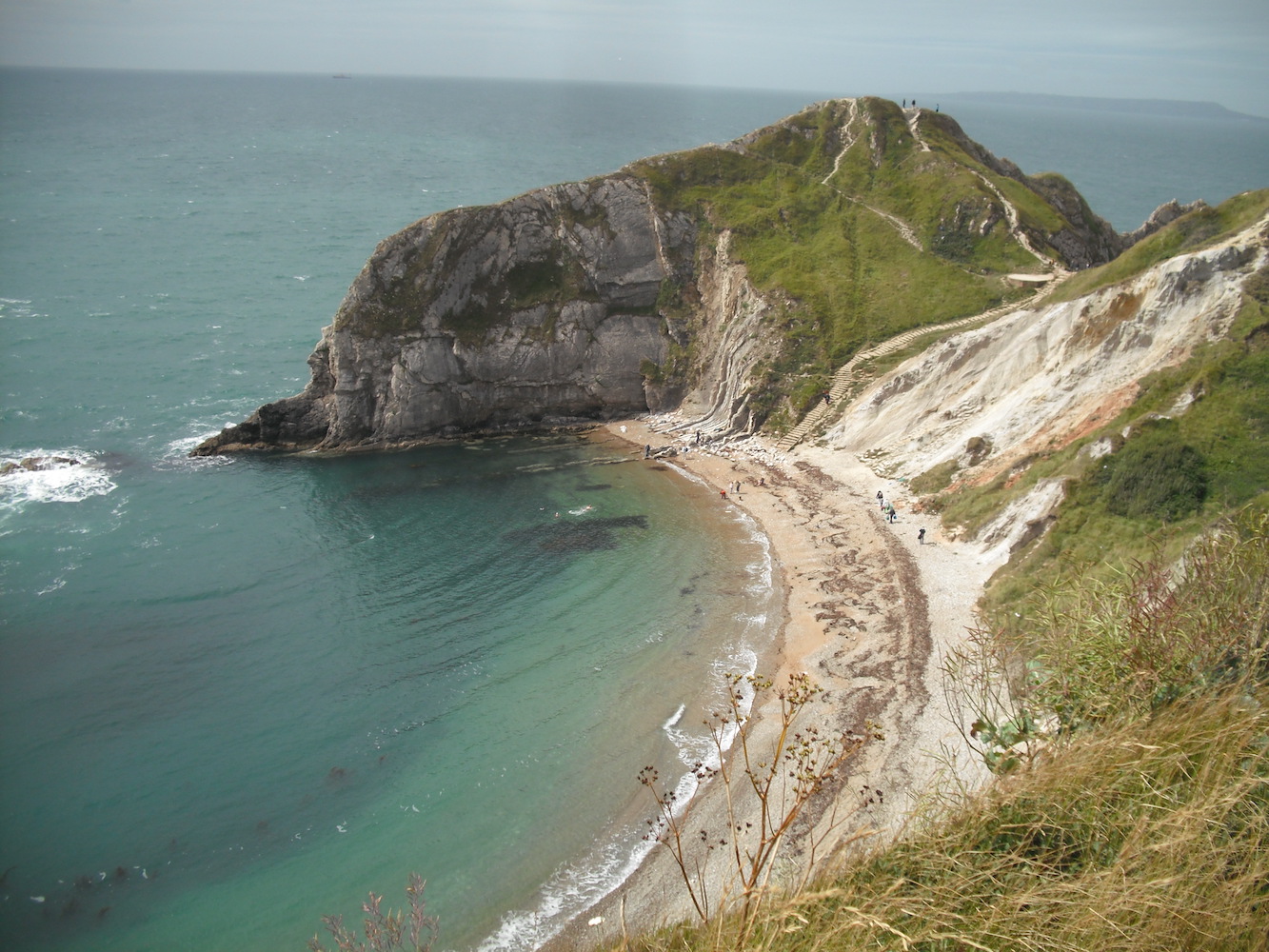
Day two was to bring back lots of memories for me and certainly made some wonderful new ones too. As a student I was based in Weymouth for a couple of years so Weymouth itself, Portland, and the coast around Lulworth Cove and Durdle Door became my playground and I am still very fond of the area to this day. I’ve obviously seen a lot of coastline since then, but it’s never dampened my appreciation of that area. Just looking at the pictures makes me want to go back. Lulworth Cove and Durdle Door were our first stopping points that day, followed by lunch and cider in Weymouth (for old times’ sake, of course).
One of the many great views at Lulworth
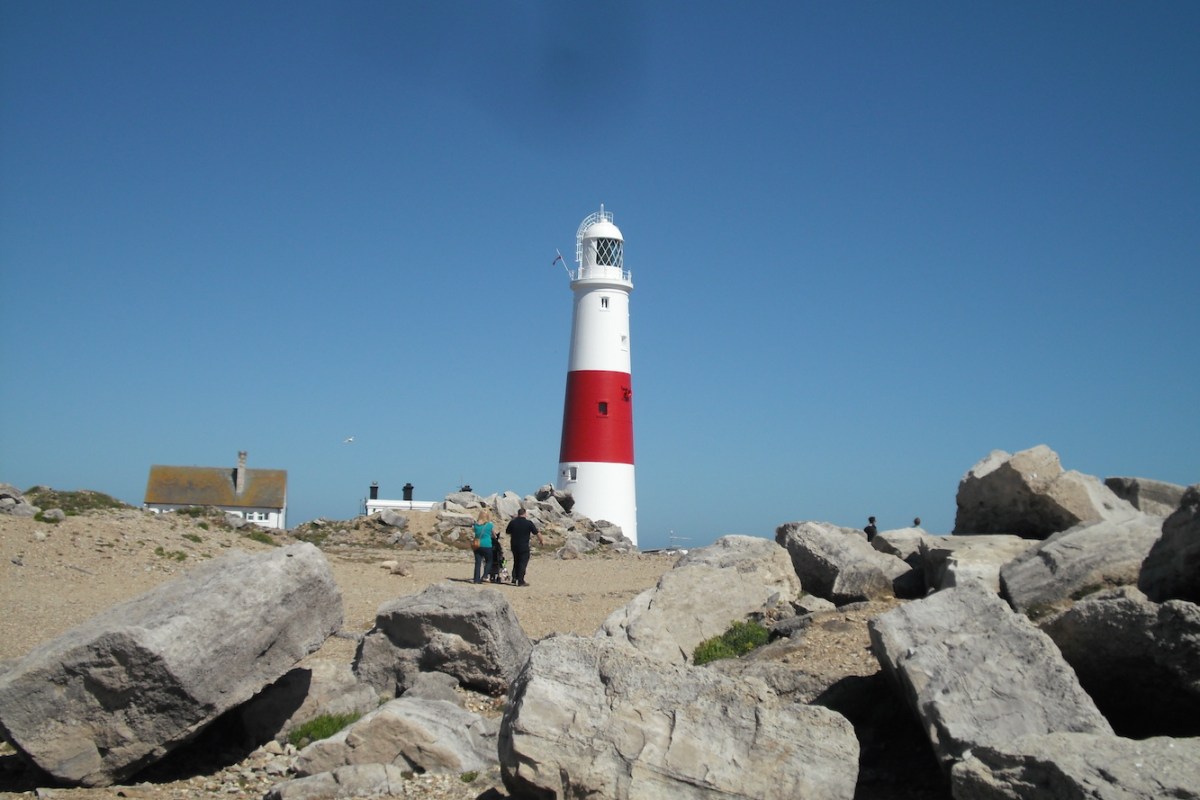
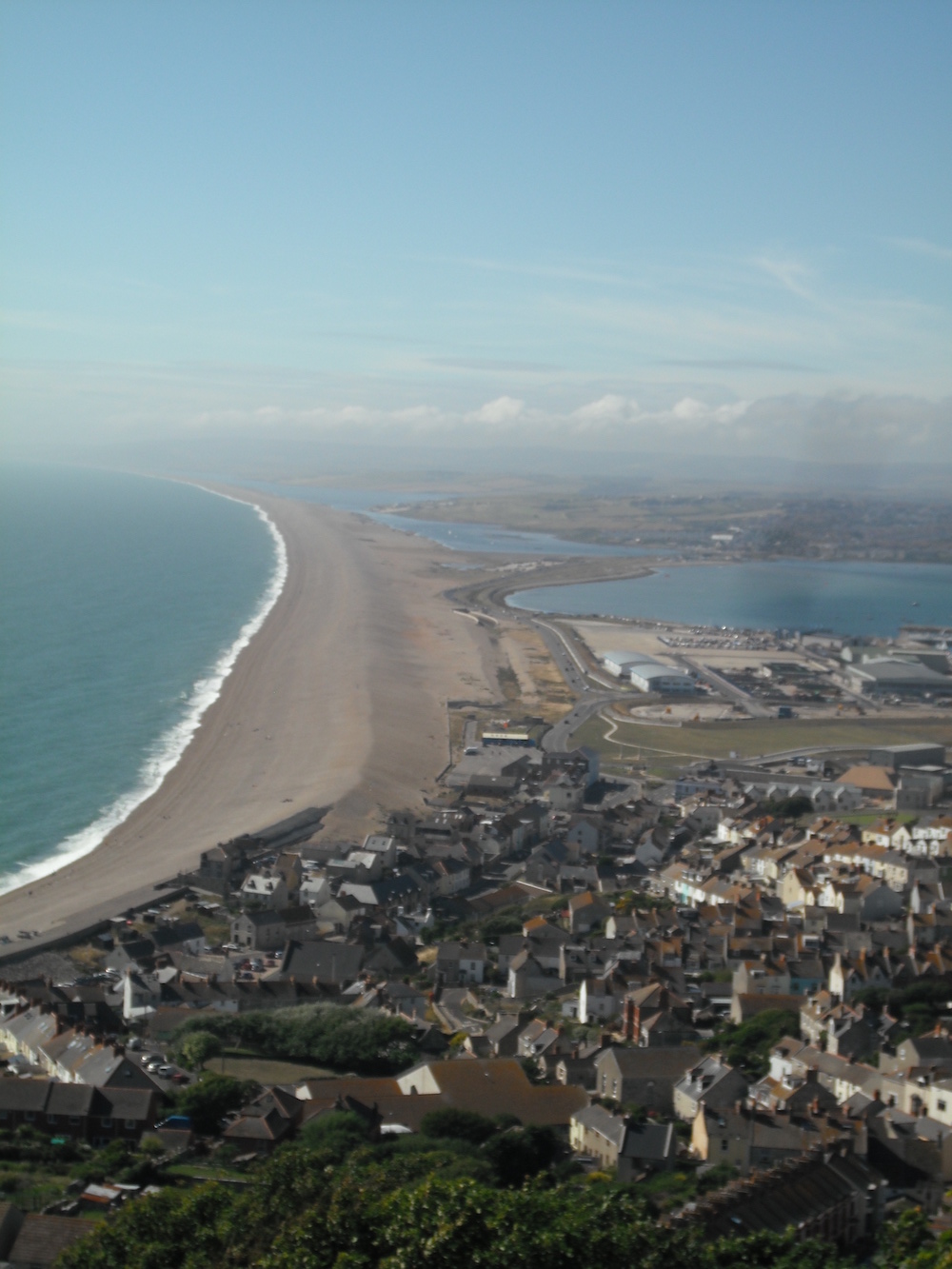
Continuing onwards to Portland, we set off to see its three lighthouses. Portland Bill is a pretty famous lighthouse and you can see why it attracts a lot of people, it makes for a nice day out. It’s another scenic area, particularly the views looking down on Chesil Beach as you climb higher and higher up Portland itself. It is incredible what nature does, and I could happily spent hours researching barrier beaches and tombolos, which I fell in love with in Shetland last yet, (put extremely simply, it’s an island attached to the mainland by the narrow spit). It’s truly incredible what nature does and we are so lucky to be able to witness it, either in a single moment or (if we are really lucky) to see how it changes over the years. Of course not all of the change is good of course as we are seeing at Orfordness now.
Looking back at Chesil Beach from Portland
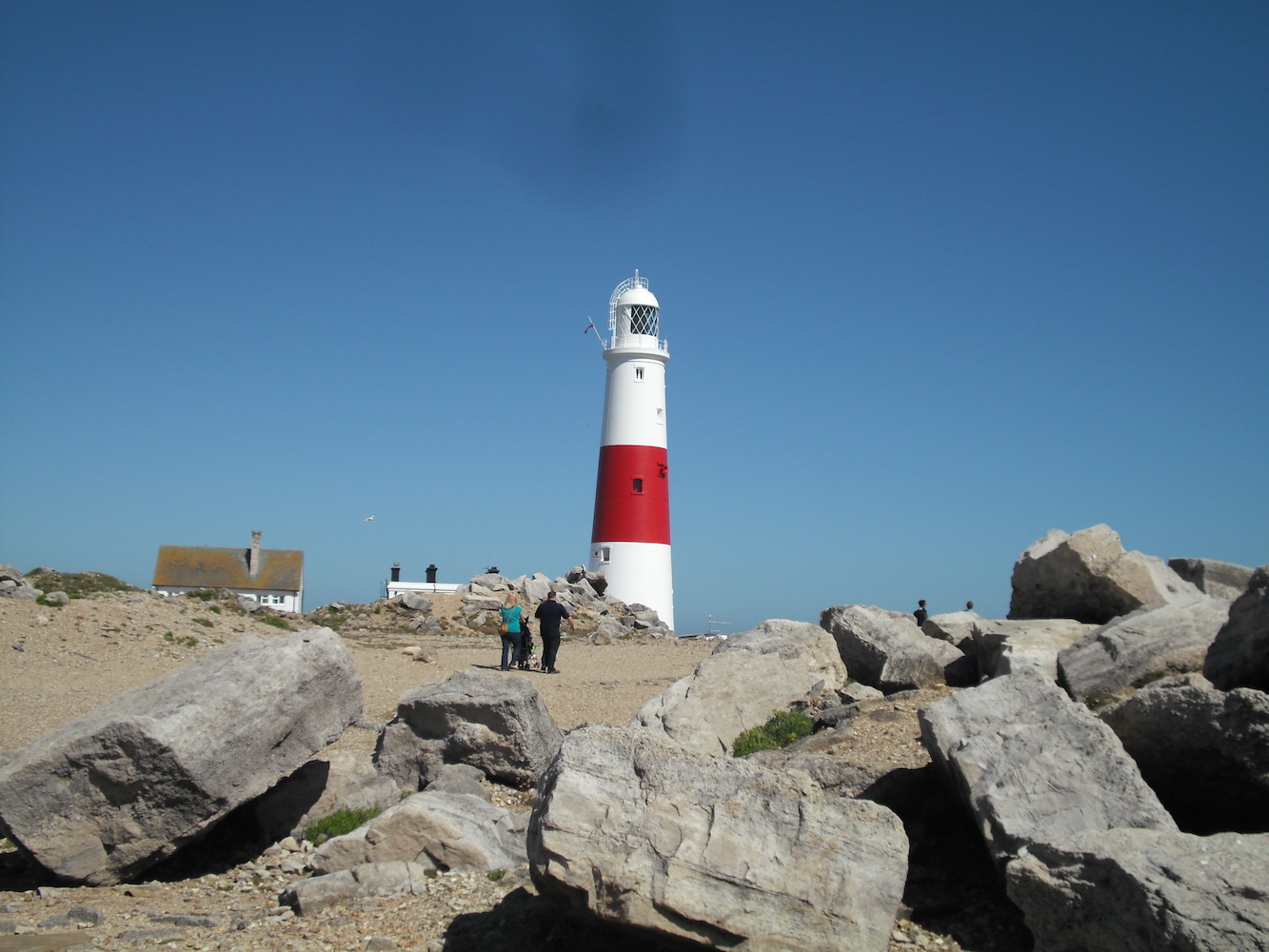
The lighthouse at Portland offered another chance to climb some steps – plenty more this time than at Anvil Point. Even more lovely views of the Dorset coastline were to be had from the top of the tower and it was great to see the big lens in there too, although this has recently been removed. Back down on the ground we strolled around for a while and I captured a couple of pictures of the other two lights before we returned to camp.
Portland Bill lighthouse
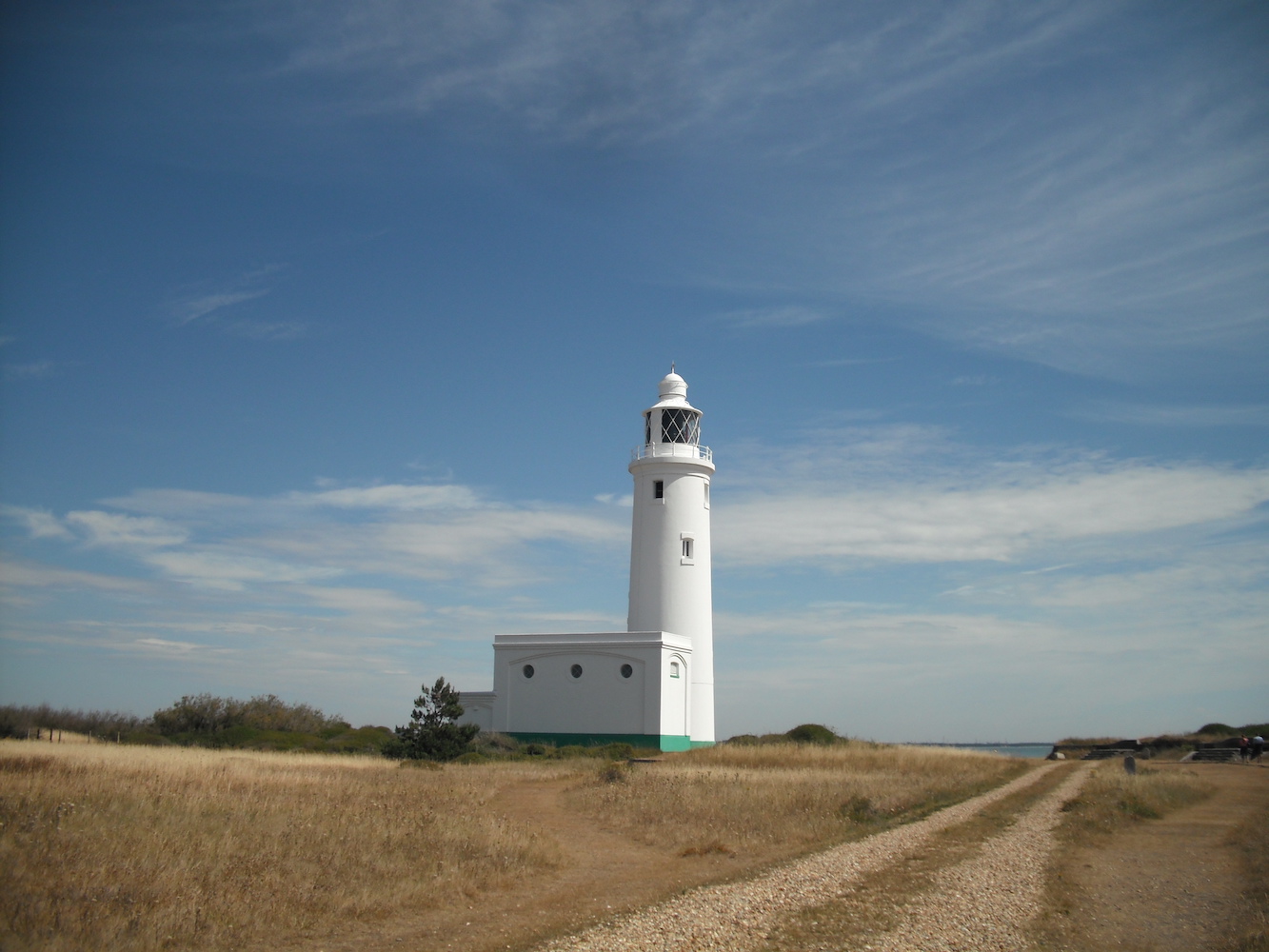
Our final day began and great adventure awaited us, this time in the form of a boat trip which would take us out to Hurst Point. It was another beautiful day and I gave the big white lighthouse at Hurst a hug as that was as close as I could get to going inside. For some unknown reason we didn’t go into Hurst Castle itself, which with hindsight was rather foolish of me as there would have been the other two lighthouses in there and I may well have discovered the Association of Lighthouse Keepers sooner as they have some excellent rooms there, which I finally got to see last year.
Hurst Point lighthouse
It’s interesting looking back at my pictures from that visit to see how the area around the Castle looked then compared to how it is now, although there was clear evidence then that the movement of the shingle was a problem. Again, it’s nature doing its wild and wonderful thing.
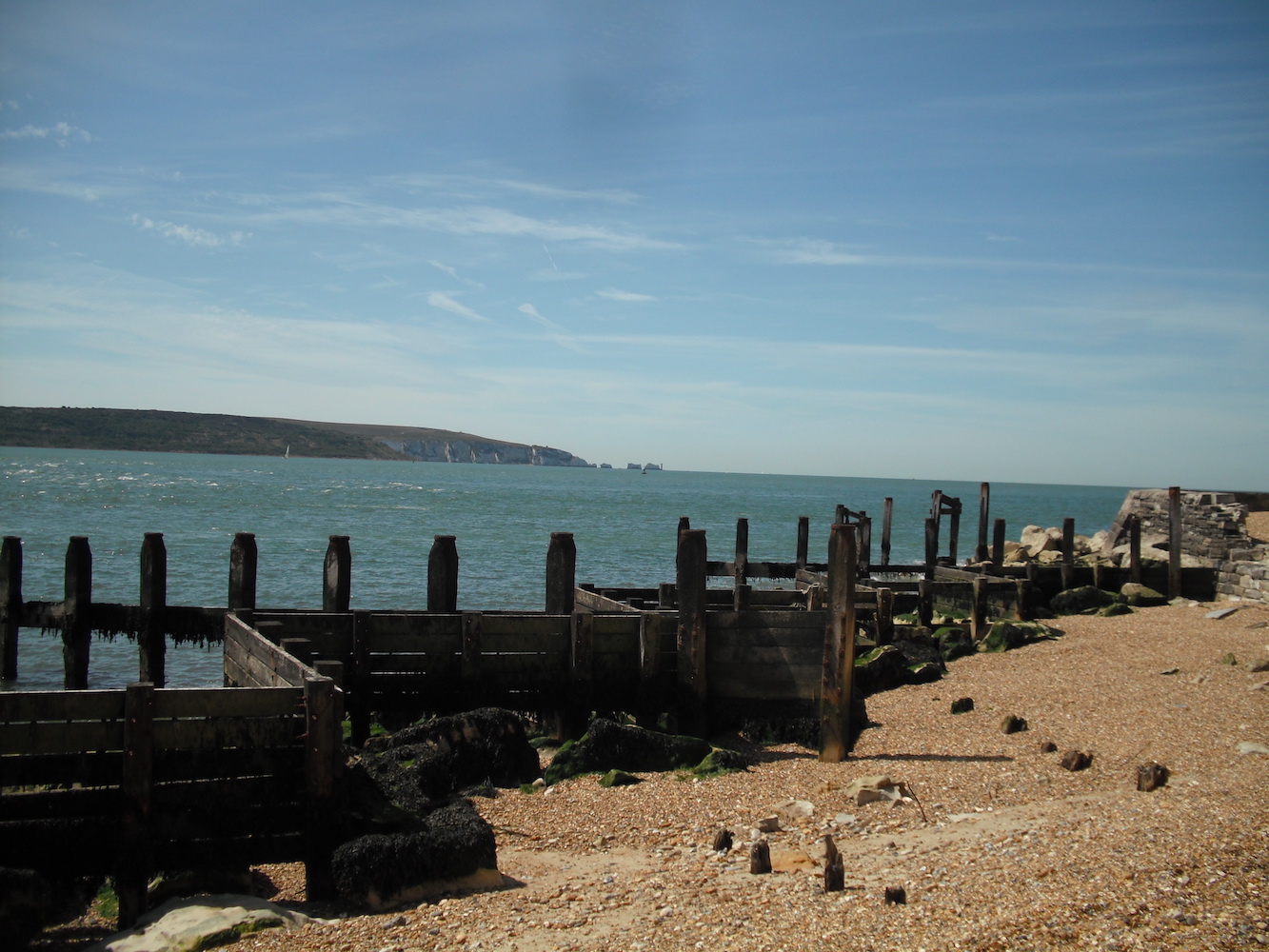
The view towards the Needles from Hurst and some of the sea defences in place at the time
Only a short visit to Hurst that time, but it was a perfect end to an inspiring trip. It was only a few months after this that I began learning to drive. The weekend had given me a taste of what could be done, and I knew I needed a car and a licence to be able to do it. The rest, as they so often say, is history! 🙂
It is unusual for me to not be posting here at this time of year as we enter prime lighthouse bagging season. Of course the coronavirus situation has put paid to any hope of trips and I certainly had an exciting April lined up. However, better not to dwell on these things.
I recently discovered a couple of lighthouse pictures I thought I had lost from a pre-lighthouse tour trip. I shared these with a friend who suggested writing some blog posts on the lighthouses I saw before I started this site in 2012. It seemed like a sensible suggestions, so here is the first of, what I suspect will be, three posts.
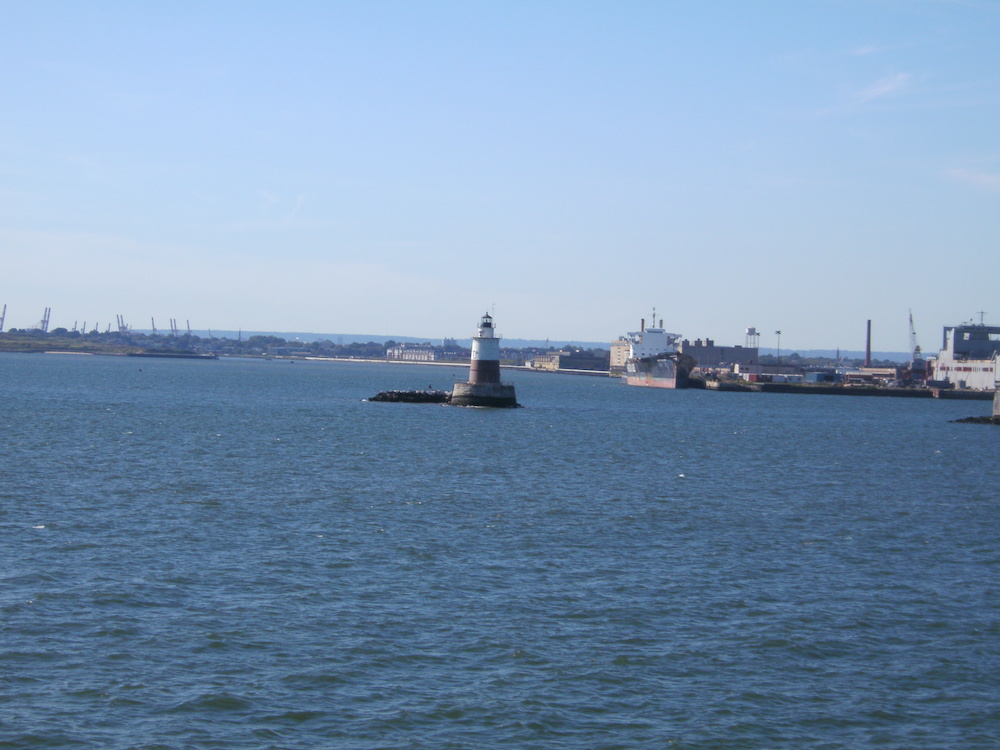
Back in 2009, a year before I started travelling around specifically to see lighthouses, I went to New York for a work event and I also spent a few days exploring the city. I was looking through my pictures recently and noticed a picture I had taken on that trip of a single lighthouse. I had absolutely no idea which lighthouse is was, all I knew was that I had taken it from the ferry to Staten Island. I’d gone over to the island with a couple of colleagues (who are also good friends) and had considered trying to find the Staten Island Range Lighthouse while there. Unfortunately the return ferry times didn’t allow enough time to reach it.
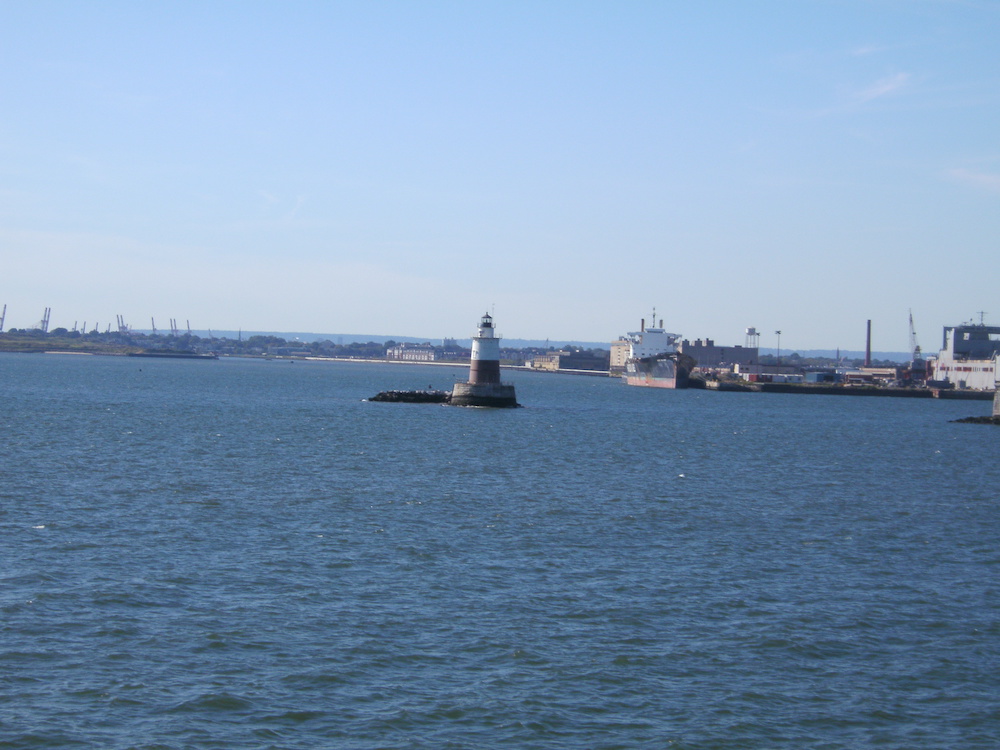
Robbins Reef lighthouse
I’ve now had a chance to find out more about the lighthouse I passed on the way there. It is called Robbins Reef lighthouse. I like to call it New York’s answer to Oxcars as it sits in the middle of a river on a stone platform and has a band. The current tower pre-dates Oxcars by 3 years, dating from 1883, although another tower marked the reef from 1839. It marks a sand reef at the eastern end of the Kill Van Kull strait. The increasing use of New York Harbor was the reason for its introduction.
The current tower is known as a Caisson or “spark plug” lighthouse, which is a cast iron offshore light on a concrete platform. This type was introduced as a cheaper alternative to screwpile towers.
Possibly the most famous story associated with this particular lighthouse – and where it gets its nickname “Kate’s Light” – is that of Kate Walker who was married to the keeper at Robbins Reef. It is reported that Kate initially disliked living at the lighthouse and wouldn’t unpack her suitcases, but gradually she settled in and became a very good assistant to her husband. When her husband passed away Kate applied to be the keeper of the light, but there was hesitance in assigning her the role. It was a few years later that she was officially given the job and she then single-handedly managed the lighthouse, fog bell and taking care of her children too – including rowing them to school and back each day! In addition she carried out a great number of rescues. A real inspiration, that’s for sure. There is a very detailed history of the lighthouse here, including some stories of Kate’s time there, here.
It’s a really interesting light and I’m glad I came across the picture and looked into it a bit more. My first – and hopefully not last – American lighthouse! 🙂
I have just returned from a great couple of days discovering a lot about the Association of Lighthouse Keepers (ALK) archives. The archives are at Bidston lighthouse, although some items are in storage elsewhere. The purpose of the weekend was to begin to establish what video footage is held in the archives, what condition it is in, what is worth keeping and what should be digitised.
When I arrived on Friday the videos were in full swing. They had already taken a look at some footage of Royal Sovereign lighthouse and its platform being moved into place. Everyone’s feedback on that one was really positive so hopefully it will be possible to watch that one at some point, especially as it is going to be removed within the coming years. I caught a short section of a VHS showing Lighthouse Keepers at the Needles lighthouse enjoying Christmas dinner, and this was made even better by one of the Keepers being present. So lovely to see.
A few of us were whisked off to another room to have a look at some of the slides. These had all been clearly labelled, the only problem was knowing which way to put them in to make sure they didn’t display sideways or upside down – we got it right on the third attempt. Fortunately the slides we looked at were chosen by someone else who is into the Northern Lighthouse Board lights so it was lovely to see those on the Isle of Man, including quite a few of the harbour lights. We also looked at some from various parts of England and Wales (I think we were at the end of the alphabet as we had South Stack, Whitehaven and some of the old Thames lights). Great to see those.
We then watched Keepers of the Light, which is quite a sad documentary as it was filmed at the time the lighthouses were being automated and the Keepers were leaving them for the last time. I find it such a unique situation, where the whole profession became redundant (aside from the Retained Lighthouse Keepers or Attendants – although that is nowhere near the time commitment the Keepers had). As lighthouse keeping was so closely linked with their off-duty time as well, they lived in the cottages at the lighthouse or in the towers themselves, it must have been such a huge blow for them, and their families too. It’s no wonder ex-Keepers speak so fondly of their days in the lighthouses.
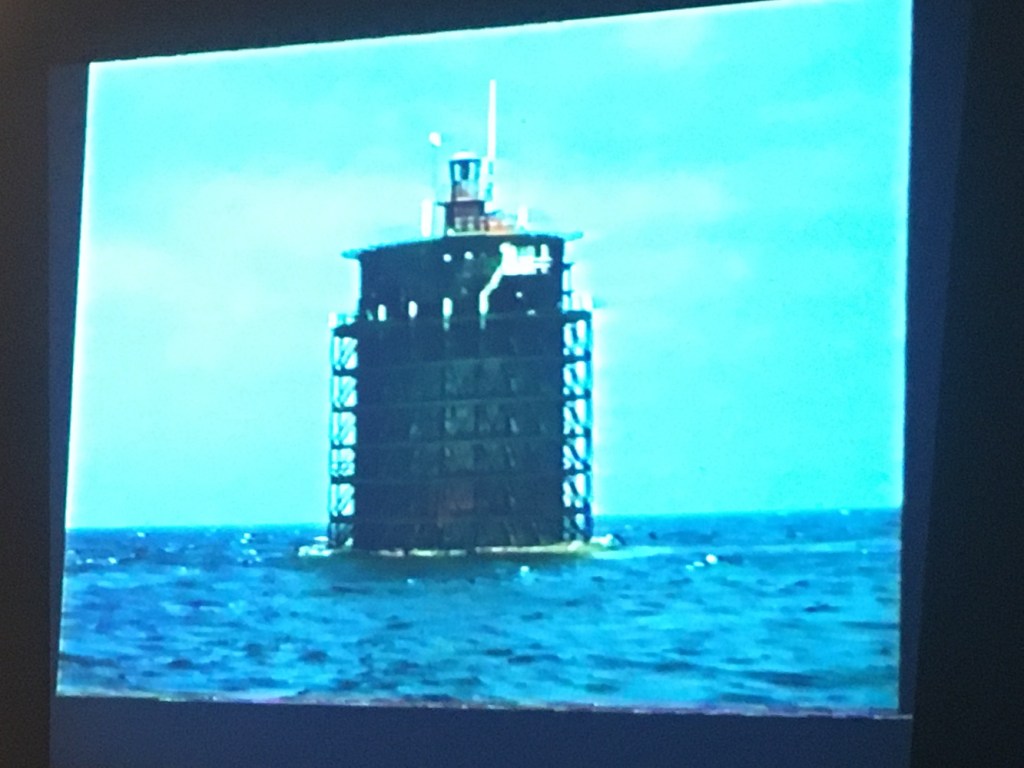
Footage of the Nab Tower with its former lighthouse was shown over the weekend
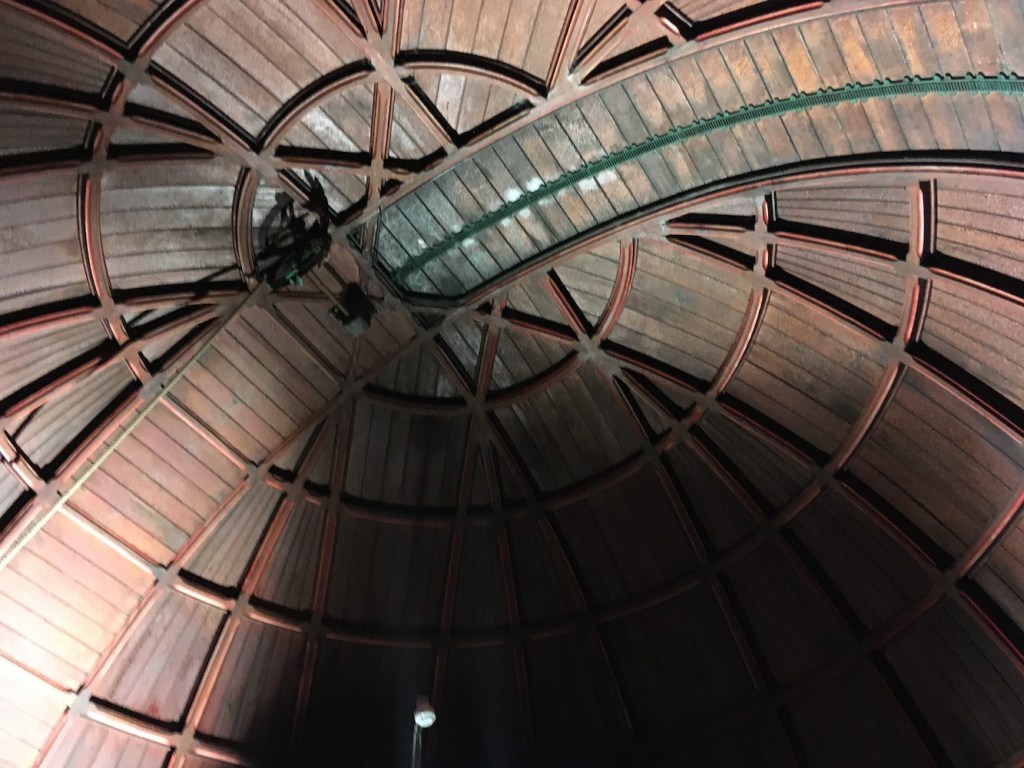
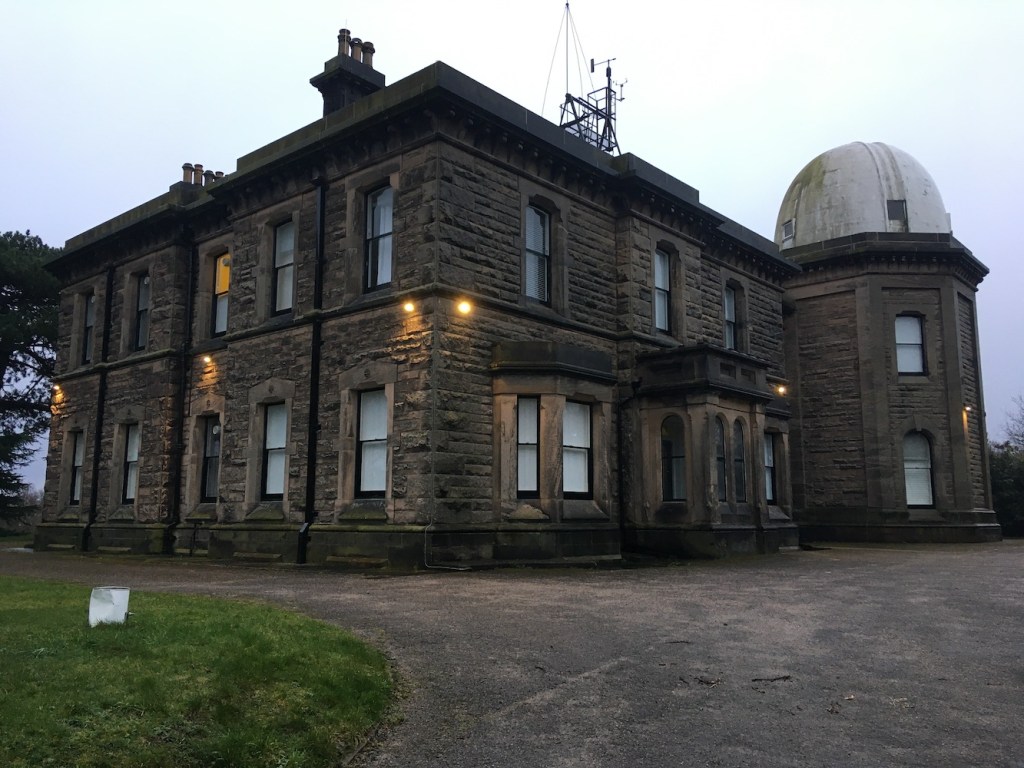
The screenings and accommodation for the weekend all took place inside Bidston Observatory – an outstanding building with so many rooms, floors and points of interest. On Friday evening we went up onto the roof and had panoramic views of Liverpool and Wirral at night. We also went inside one of the domes on top of the building and you could see how it would have moved and been operated in the past.
Inside one of Bidston Observatory’s domes
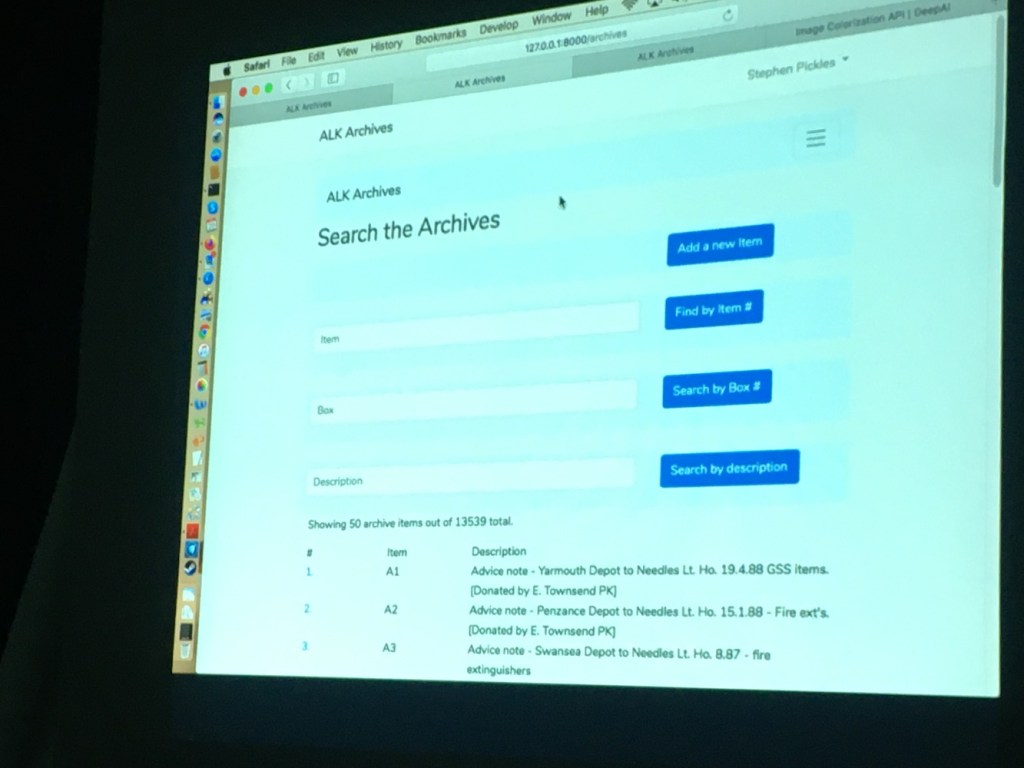
On Saturday morning we started off discovering what stage the archiving is currently at. Stephen, who works alongside his wife Mandy on the archives, showed us the software he had developed for this purpose. There are currently over 13,500 items logged on the archive software with more still to go. The software allows you to search the archives in general or by various categories such as lighthouse stations, light vessels, depots and countries. We did a few random searches and looking at Southwold alone we found more than 50 items.
A demonstration of the archive software was given
The archives had started out with one of the founding members of the ALK, a Lighthouse Keeper, logging the items by hand in 6 index books. The transcription from these books was started by another active member of the ALK before it was passed on to Mandy and Stephen.
The archives are a real treasure trove of information, pictures, films, artefacts etc. You immediately look at some of it and think “this should be available for everyone to see”. However, as Stephen explained, these days it’s not as simple to just putting documents, pictures and films online. With the new GDPR rules it is essential that they are careful with information about people and whether or not anyone in the pictures or videos are happy for them to be shared. In addition to this, there are issues around copyright and whether or not the owner of the copyright gives permission for them to be made available publicly. These are complications that many wouldn’t think of and so it’s definitely not as easy as making everything digital and getting it up on the internet.
Another challenge they have faced has been the categorising of items relating to light vessels. There are a range of vessel names and numbers as well as station names. Some names and numbers have been reused as well, making it difficult to establish how different items should be categorised.
The discussion moved on to female lighthouse keepers. Trinity House and the Northern Lighthouse Board never had female keepers, although there are now female Retained Lighthouse Keepers in Scotland. The only female keepers worked in privately owned lighthouses and the name Peggy Braithwaite was mentioned. Of course the next VHS we watched was a television interview with Peggy who was a Keeper at Walney. That was really lovely to see.
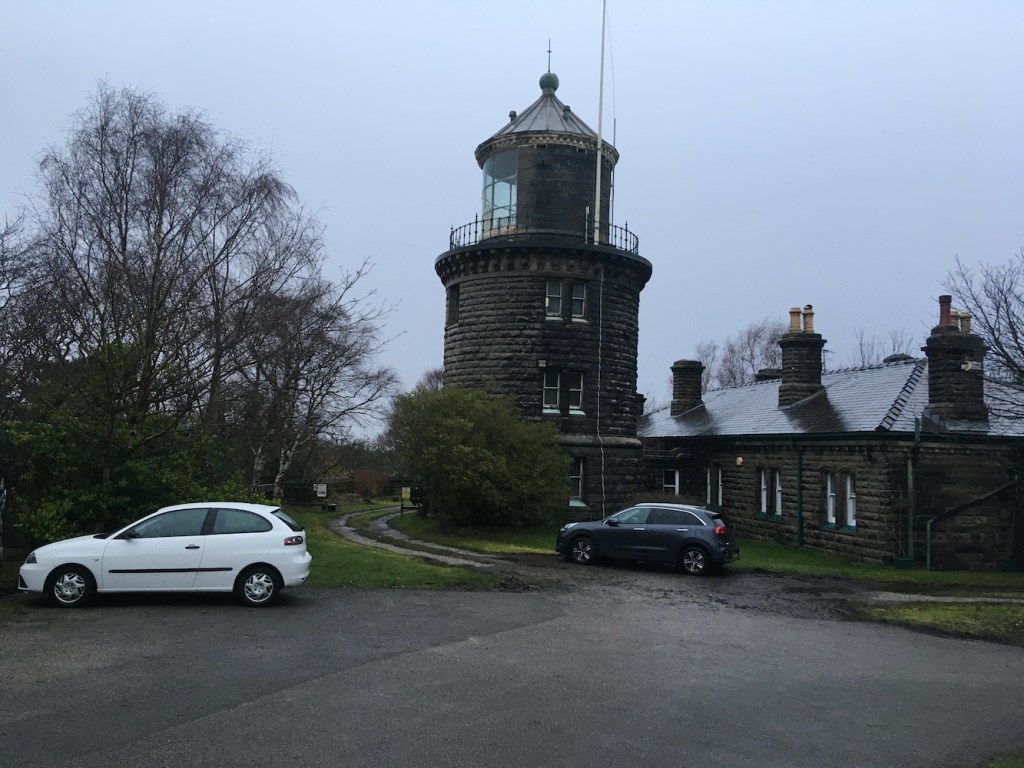
Bidston lighthouse
Of course it wasn’t possible to go to Bidston without setting foot in Bidston lighthouse and Stephen had very kindly offered to give us a tour, not only of the lighthouse, but also the archives. As well as boxes in other areas, there was a room near enough dedicated to the archives. There was even a special cupboard containing some of the old visitor books from lighthouses. I have been informed that within the archives there is a visitor book from The Needles which has been signed by Charles Dickens! That is really quite special.
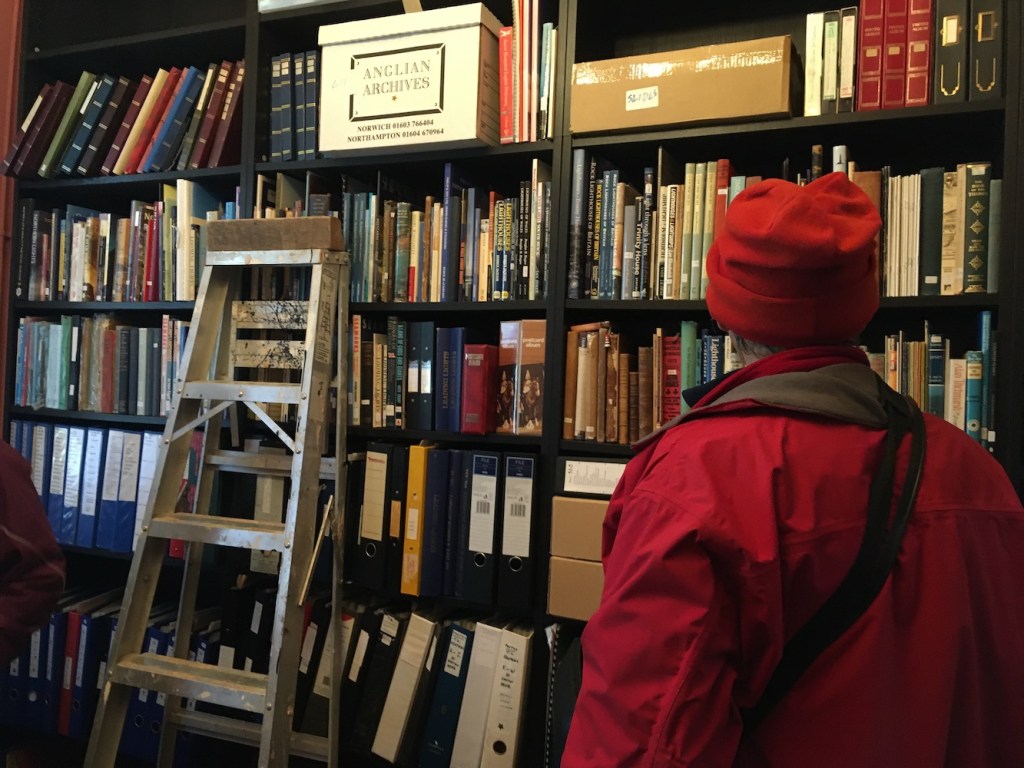
Just some of the ALK archives at Bidston
It’s been a few years since I last had a tour of Bidston lighthouse and it was very nice to return. Stephen is an expert tour guide, so full of knowledge and not just about Bidston either. The lighthouse is beautiful (I had a wonderful view of it from the bathroom in the Observatory), but it is a part of the Bidston “package”. I was speaking to Stephen about Low Head lighthouse in Tasmania and he said that there is so much there: the lighthouse, the foghorn, archives… It’s the fact that it’s everything brought together that makes it so interesting and I would say the same for Bidston.
The lighthouse has a lot of history and this is all so well presented throughout the tour by a combination of visual aids and Stephen’s talk. I wouldn’t want to go into too much detail as I feel it’s worth experiencing these things first hand if you can rather than reading someone else’s account (if you are reading between the lines there you may have guessed that what I was trying to say was “Go to Bidston and do the tour!”) One thing that always fascinates me though – and it did so last time too, but probably moreso this time – is the way they used to use flags on Bidston Hill for signalling when and which boats were coming in to Liverpool Docks. Because of the hill’s location it blocks the view from the Docks to the sea. While very useful to the people at the Docks, they were also helpful to the local families who had fathers, sons, brothers etc. out at sea and the flags enabled the locals to find out when their loved ones were on their way home so they could prepare (as Stephen said “kick the lodger out”). For some reason that piece of history always touches me and one of the others in the group said they felt the same. There really is so much history and I would highly recommend you make Stephen the person to tell you all about it.
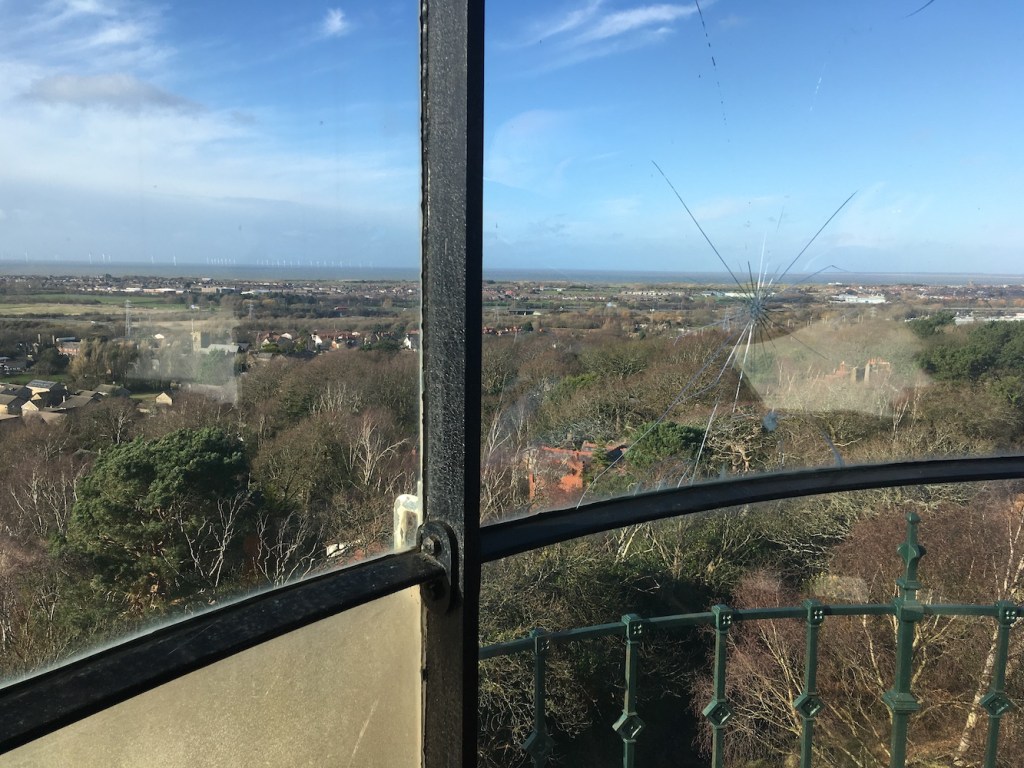
One of the many views from the top of Bidston lighthouse
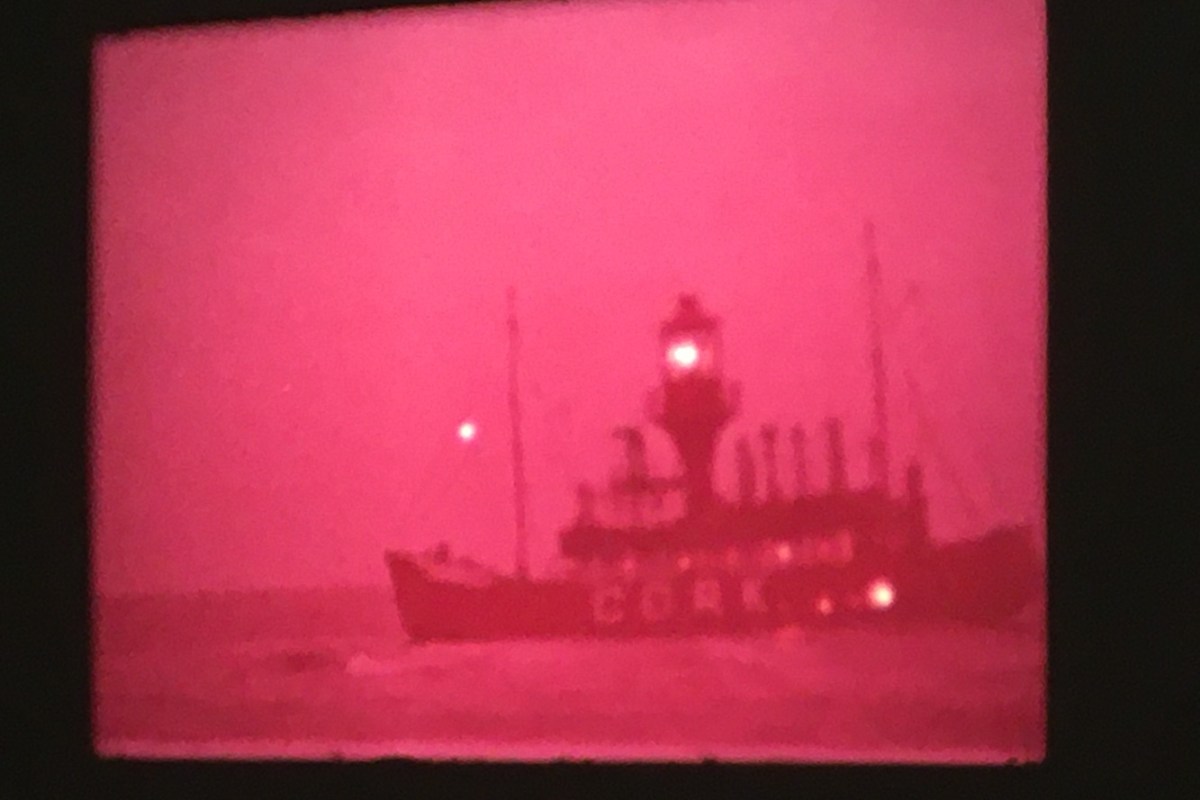
Back over at the Observatory we were in agreement that we wanted more cine film so we put the ex-Keepers to work setting it up. We watched a really interesting documentary about light vessels, with footage from the Essex and East Anglia coasts. It was thought that the film probably hadn’t seen the light of day for many years so it was fantastic to see it in working order still.
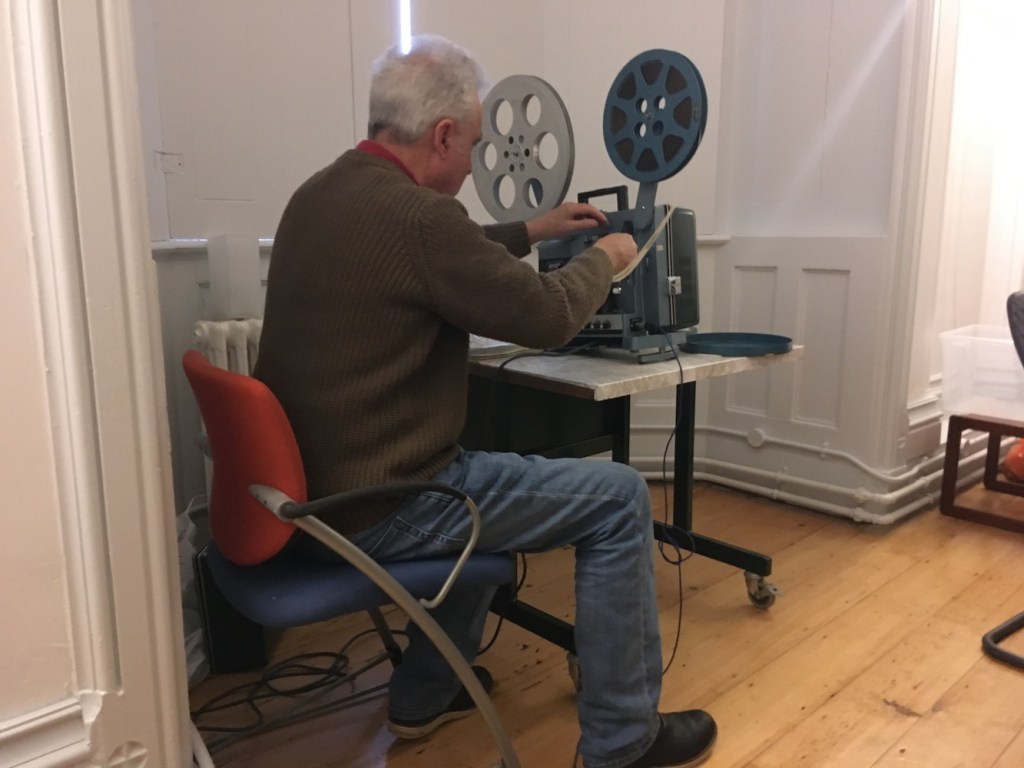
Setting up the cine film
Moving back to the other room, we watched a few interesting VHS tapes, including one about Skokholm, which features pictures from around 1915. It’s an island I’ve still to reach so it obviously gave me slightly itchy feet and it may have climbed a little higher up my priority list as a result.
This film was followed by the island lighthouses of Tasmania. I love an island anyway, but some of those look so beautiful on incredibly rugged and awe-inspiring islands. Very much like the far-flung lights around Scotland like the Flannans, Muckle Flugga and Sule Skerry. A veritable feast of lights at the top end of the “particularly challenging to reach” category. One particular island at the time was reached using a boat/off-road vehicle combination that was launched from the main maintenance vessel. It sailed through the water and then bounced its way up the long track to the lighthouse. Looked like good fun to me!
We began watching a film about lighthouses in South West England. It was another interesting one, but the sound went off after a while and so Stephen decided to play us some of his foghorn music, which also featured gull sounds! Once it was pointed out that some of the foghorns sounded like cows I became increasingly amused by it.
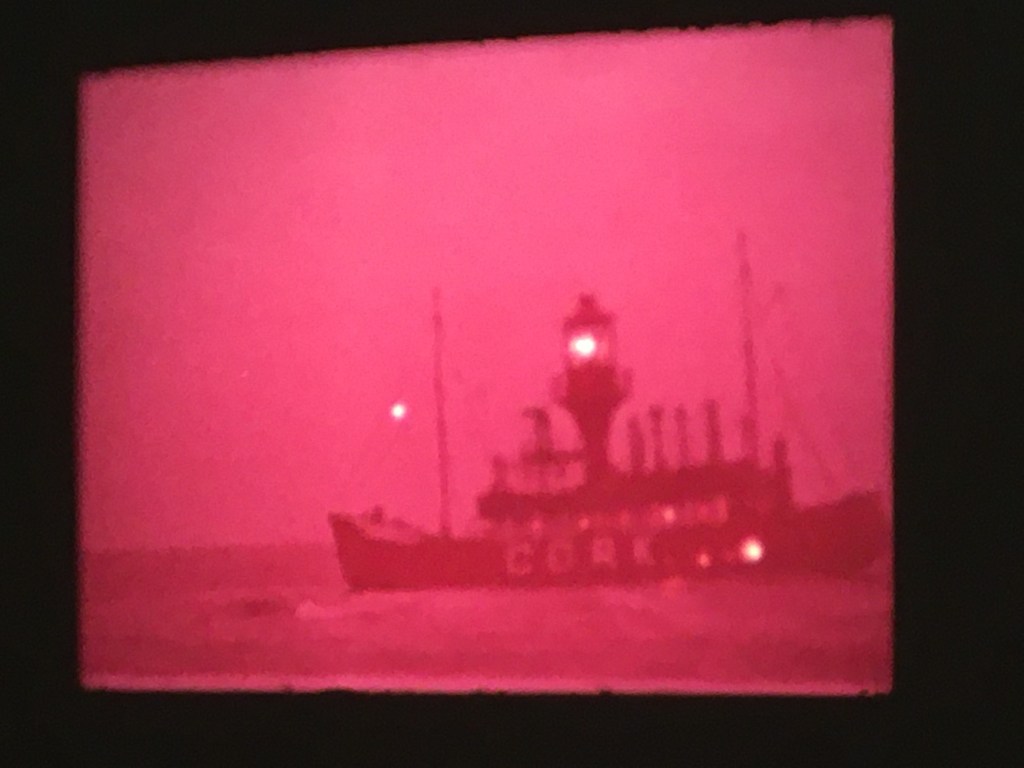
A shot of the light vessel cine film mentioned above
One of the things I enjoyed most about the weekend was the gathering of Keepers. A lot of the ALK events I have been to the Keepers have been a minority and so I don’t get to hear them speaking to me or each other so much. They really do have some of the greatest stories and what I find particularly wonderful is that many of them never met while in the lighthouse service. They sometimes served on the same stations, but it is only through the ALK that they have come to know each other and share their memories and experiences with each other as if they are old friends. It is so heartwarming to watch and I took some wonderful pictures of two of them looking at some images on a camera. It seemed like such a special moment and this is the perfect example of two men who never met through work but have bonded through their experiences.
I realised on the final evening that I’d not ventured down into the depths of the Observatory, which I had heard a lot about. The building became even more fascinating then. One of the rooms downstairs contained tables covered in pictures of all of the work the current owners had put into improving the Observatory. Such a hidden gem, it really is.
Bidston Observatory
I should also mention before I finish this post, because I’ve said I will include it, that at about 7.15am on Saturday morning I managed to lock myself out of the Observatory. I’d decided to go out for a short stroll to take a picture or two of the lighthouse and wander around the Observatory. Rather foolishly I’d forgotten to put the front door on the latch so it didn’t take long to discover my error. I was standing out in the rain with no idea if anyone else was awake inside and wondering what to do with myself when another early riser opened the door. He’s possibly never seen anyone look quite so glad to see him as I was, although I had only been standing outside for a few minutes. What a relief that was!
It was a really interesting weekend and there was talk of planning more during the year. I will also take this opportunity to say that the ALK does some really wonderful work (archives and in other areas) and I would highly recommend becoming a member if you have an interest in lighthouses at all. ALK events enable you get to spend time with others who are just as mad about lighthouses as you are, or maybe even slightly more mad! At the heart of it though are is the Keepers: a fantastic bunch of kind, welcoming and humble individuals. 🙂





















 uklighthousetour