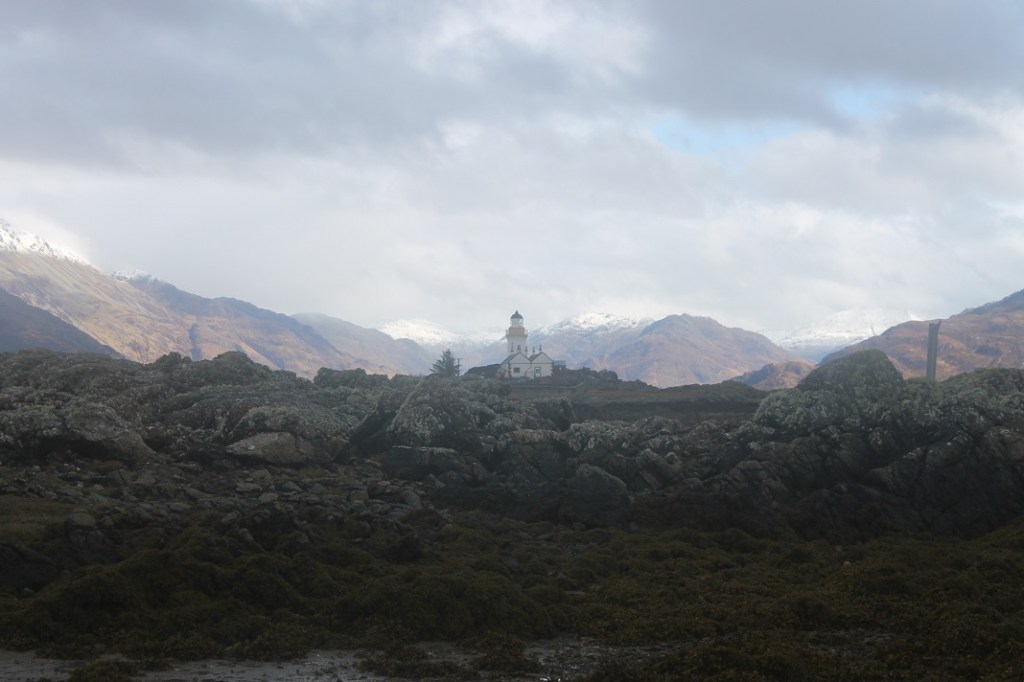
More from Orkney

eday.JPG
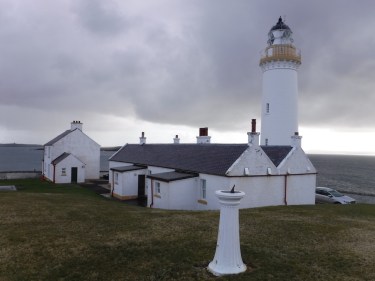
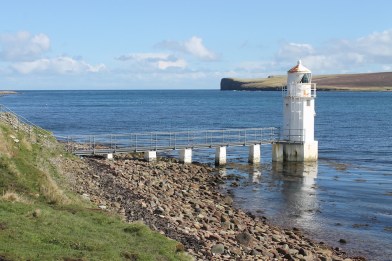
Calf of Eday lighthouse

Our Easter trip to Orkney was introduced in my previous post which covered our first day. The second was spent on the island of Eday. In comparison to Hoy, Eday is physically smaller and has much less to offer visitors – fortunately it does have a lighthouse at the north end, which overlooks the Calf of Eday. This was obviously our reason for choosing this island (we would have loved to go to Sanday, but the tide times weren’t going to tie in for visiting the lighthouse there). Finding somewhere to park for walking to the lighthouse wasn’t so easy. The map showed a trail along the coast and we eventually found somewhere further back than we’d hoped to set off from. Luckily the sun was out though and it was a really pleasant walk through a few fields before we reached the lighthouse. It’s in a fantastic location and the only other living creatures that appeared to be around were sheep and birds, which isn’t such a bad thing sometimes. Due to the ferry times we were then left with a few hours to kill on Eday when there wasn’t much else we could do, particularly when we had to consider that our little boy would need a sleep at some point and that the few places there were to go were closed. We had a good time on the beach though before we headed back.
kirkwall
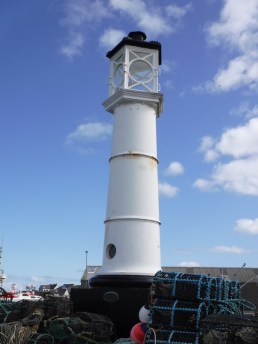
Kirkwall west pier lighthouse

The remaining day and a half were spent on Orkney Mainland where we visited a few tourist attractions we’d not been to before. In addition to this, we had two lighthouses to visit. We were staying just on the outskirts of Kirkwall at Orkney Villas‘ The Courtyard, which was a perfect base to work from. The first of the lighthouses we visited was on the west pier in Kirkwall itself, so this was just a small stroll along the pier before we headed into the town to look around. It may not be the most impressive of lighthouses, but it has its own little charm. Having looked at older pictures of the lighthouse online it looks like it’s been spruced up a bit in recent years. This would probably be explained by the following inscription, which appears on a plaque on the lighthouse: “To commemorate the 200th anniversary of Kirkwall pier 1811-2011. Designed by Thomas Telford.”
brough of birsay
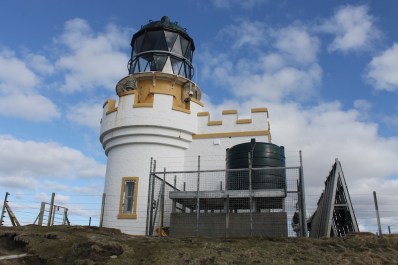
Brough of Birsay lighthouse


When Bob and I had last visited Orkney, we’d driven to Birsay and looked across to the tidal island, the Brough of Birsay, wondering if the tide was going in or out and whether we could make it across and back to bag the lighthouse at the top of the island. Me being more cautious than Bob when it comes to decision-making, we decided it would be too risky and that we’d have to visit again. So to be able to plan our visit around the tides this time was a bonus. We set off across the (sometimes slippery) path which becomes exposed at low tide to see the lighthouse. As I’ve found with every other tidal island I’ve ever been to, it was a great place. There are remains of ancient buildings just as you reach the island. We, of course, set straight off for the highest point where the lighthouse could be found. It is a stunning lighthouse with a really interesting design in an amazing location, so it was a joy to visit. Very few others who visit the Brough of Birsay seem to go that far (or at least they didn’t on that particular day), which makes it even more enjoyable. The views from the lighthouse of the neighbouring islands and the coastal landscape are very impressive. I would love to go back again some day.
hoy high.JPG
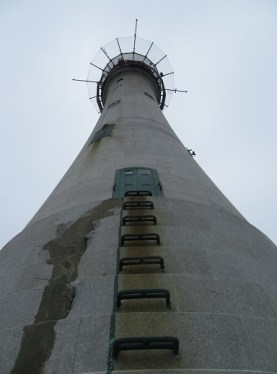
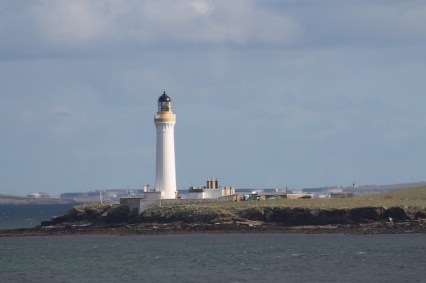
Hoy High lighthouse

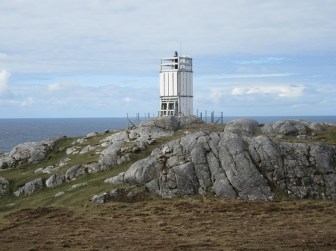
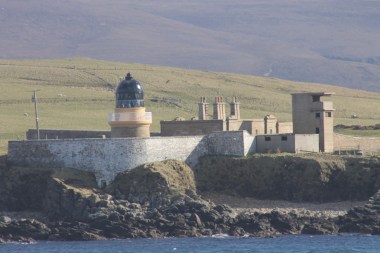
So, that was it for our lighthouse bagging during our visit to Orkney. We did, however, get some good views of the two lighthouses on Graemsay, Hoy High and Hoy Low, from the ferry as we left though. We had tried to work out a way of getting a trip to Graemsay added to our itinerary for the weekend, but with the boat times it just wasn’t going to happen. Something for another time. Hoy High lighthouse stands tall and differs greatly in height from Hoy Low, which is a squat tower. Both designed by Alan Stevenson, there is no denying that they are beautiful structures. Hopefully one day we will get a much closer look at them.
hoy low.JPG
Hoy Low lighthouse

We were then treated to some wonderful views of the domineering cliffs of Hoy as well as the Old Man of Hoy as the ferry sailed past. That is the joy of taking that particular route on the ferry rather than the Gills Bay ferry.

We still have plenty left to see and do on the Orkney islands so expect more in the future at some point 🙂

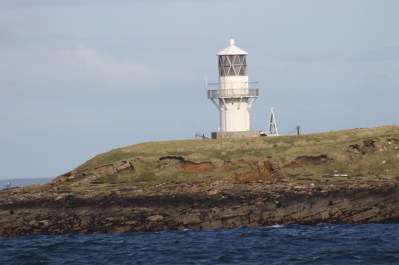
Orkney at Easter

We always like to make the most of a long weekend and we usually end up travelling a fair distance to do so. This Easter was a bit different though. For a change we decided to stay a bit closer to home and check out a bit more of Orkney, as I had only spent one day on Orkney mainland before. For many Orkney would be a pretty long-haul journey, but we were pleased to just go for a short drive before hopping on the ferry for once.

cava.JPG
Cava lighthouse

Our first full day was spent on Hoy, which is a pretty amazing island. A day is definitely not long enough, but we made the most of the time we had and – as well as lighthouse bagging – we went to Sandwick Bay, the Dwarfie Stane, the Scapa Flow Visitors Centre and Betty Corrigal’s grave (the story of Betty is incredible – you can find out more on the Hoy Orkney website). The boat journey across to Hoy enabled us to see the lighthouse on the Calf of Cava. Although it isn’t as majestic as the Stevenson lighthouses, I have become quite fond of this style of lighthouse. We were also able to get distant views of Barrel of Butter, which – unfortunately – doesn’t qualify for my lighthouse list based on my definition (as described in my last post). It’s a pretty good name though – I believe it has something to do with the cost of lighthouse dues in the past, something like that!

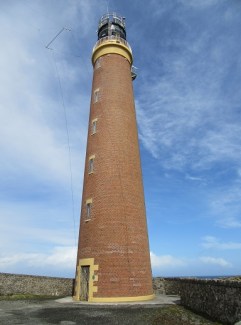
cantick head.JPG
Cantick Head lighthouse

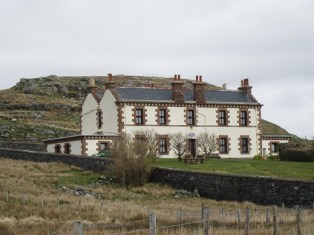
Of course the main draw of visiting Hoy for me was Cantick Head lighthouse, which we went for first. We always love spotting a “For sale” sign on the gate of a lighthouse – not that we could afford to buy a lighthouse, or former keeper’s cottage – but there’s always the hope that one day we might! We have occasionally been known to take advantage of these sales for getting closer to certain lighthouses! The lighthouse at Cantick Head has been operational now for over 150 years and it is currently possible to rent the old keepers cottages for holidays. Next time, that’s what we’ll be doing!

tor ness
Tor Ness lighthouse

The second lighthouse we were hoping to visit while on Hoy was Tor Ness on the west coast. We were hopeful that we would make it there, although it involved a bit of a walk (and with a 2-year-old that’s not always easy, especially as we discovered later that day that the carrier we had for him had suddenly become too small!). As we approached and began to drive around it became apparent that it might not be as straightforward as we’d hoped. The nearest access route to the lighthouse is across croft land and, although the farmer was happy enough for us to proceed, we were fully aware that the first stage of the walk would involve walking through a field of cows, some with calves. We decided that it wasn’t worth the risk and that we’d review it a bit more for next time. Better to be safe and sensible about it. Besides, it’s another reason/excuse to go back!

More on Orkney to follow tomorrow! 🙂

Beauty and solitude on Lady Isle

I alluded to a search exercise Bob and I carried out over the winter (and have been working towards for the last few years) a couple of posts ago. This exercise had two parts:

  1. To establish my own definition of what constitutes a “lighthouse”
  2. To do a scoping exercise, based on the above definition, into which structures I need to add to my “to bag” list

The first point above sounds easier than it is in practice, because there are in fact many factors to take into consideration. Obviously there are the majestic structures (those designed by the Stevensons in Scotland, for example) that we all know and love, but what about the smaller lights on piers or tucked away off of the beaten track? While some might say they don’t deserve to be viewed in the same regard, does it mean they aren’t a lighthouse? And if they are still lighthouses, how do you know? What type of structure do they need to be? What range does their light need to have to warrant such a title, rather than “beacon”, for example?

It would be easy to place a blanket definition from the comfort of your own home, but when you start to look at the lighthouses that exist out there and how there are areas of change (the reduction of light ranges, the discontinuation of lights, etc.) it suddenly becomes more tricky an exercise.

It was only over the winter just gone that I decided on my own definition, which is: A fixed structure that was built to exhibit a light for the purpose of aiding maritime navigation and allows access for at least one person inside any part of it.

This definition is similar to that described by Ken Trethewey in his really interesting article “What Is A Lighthouse? A Modern Definition”, which was published in World Lighthouse Society Magazine (1st Quarter 2013, Volume 11, Issue 1, p5-14). This is available at www.worldlighthouses.org. I would say that the main difference between our definitions is that mine is more inclusive of redundant lighthouses. Of course, this is my personal definition and, while my key interest is in the structures themselves, I recognise that some lighthouse baggers may prioritise other aspects, for example, the light’s range, which would require a different definition.

DSCF6188.JPG
Lady Isle lighthouse

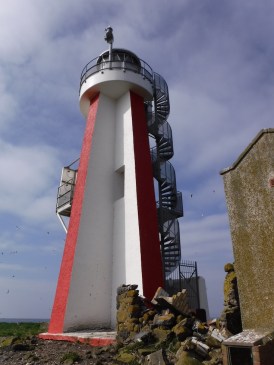
The reason I have chosen this particular blog post to explain my definition is because the unusual lighthouse on Lady Isle, 2 miles off of the Ayrshire coast, could easily have slipped through the net of my definition! It is such lighthouses as these, which are substantial structures but contain very little in the way of a tower, that is the reason I chose to specify that a person needed to be able to fit into any part of it. You will see from the picture that the lighthouse actually has an external staircase leading up to an enclosed lamp room – the lamp room being the part that qualifies it as a lighthouse within my definition.

A good friend of ours had managed to secure us a boatman to take a group of us out to Lady Isle on a particularly lovely day in April (yes, I am delayed with my posts as usual). While I mentioned above the Lady Isle is only 2 miles off of the coast, our departure point of Largs made for a slightly longer journey (not that we minded as it gave us a view of Little Cumbrae, which we visited last year, and we had an excuse to get an ice cream from Nardini’s once we’d got back).

DSCF6167.JPG
The remaining old beacon on Lady Isle

Fortunately the sea was fairly calm that day, which made for a (mostly) smooth RIB ride and an easy landing on Lady Isle. You cannot help but admire the unique design of the lighthouse with it’s red and white cross-sectional pillar, spiral staircase and lamp room. It certainly dominates the island. Looking back at the history of the island, there were actually two beacons (one of which still remains and the other in the position of the lighthouse) to guide vessels to safety. In 1903 the current lighthouse was introduced.

Although it is so close to civilisation (if you compare it to a number of more remote island lighthouses), you still get a sense of isolation out there and that’s one thing that I particularly like about these places.

DSCF6304.JPG
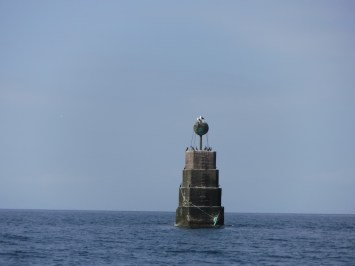
Lappock Rock Beacon

On our return journey back to Largs the boatman kindly sailed us fairly close to Lappock Rock Beacon, which is just a mile from the coast. Bob was particularly keen to see this close up and, being brought up in Troon, he had seen it from the mainland for many years. It’s another unique structure and, although it doesn’t qualify as a lighthouse under my definition (there is no internal access) it was still good to see.

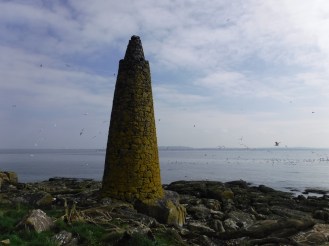
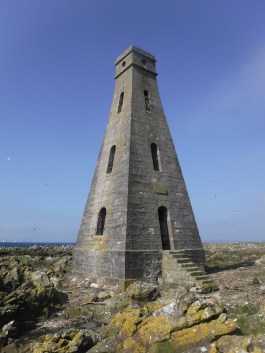
We were also treated to close-up views of Horse Isle and the large stone tower at its south end. Since the trip I’ve done some research into this tower to see if it was ever used as a lighthouse or beacon. Some sources suggest it was built as an aid to navigation, but mapping just describes it as a “landmark” or “tower”. If it was used as a lighthouse, and was ever lit in the past, then it would certainly qualify for inclusion on my list. Perhaps one to look into a bit more 🙂

DSCF6393
The tower on Horse Isle

In and around Aberdeenshire

IMG_5163.JPG
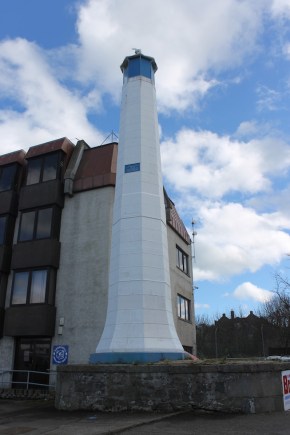
The Torry rear lighthouse

Following on from my previous post, we continued our visit to new lighthouses in Aberdeenshire. On my tour, and on more recent visits, I’d seen a variety of the lights in Aberdeen itself. Of course there’s Girdle Ness, as well as the interesting little white structure on the end of the south breakwater. In addition we’d spotted one of the Torry leading lights at the side of the road too, but had managed to miss the other. So, one aim was to spot the other of the Torry lights, which incidentally is on the other side of the same road a little further back! It looks exactly the same as its partner down the road, but features a small blue plaque stating that is was built in 1842 by the Harbour Trustees.  These two lighthouses were built to lead vessels safely into the harbour after the south breakwater and north pier were constructed – which led to the harbour entrance becoming narrower.

IMG_5143
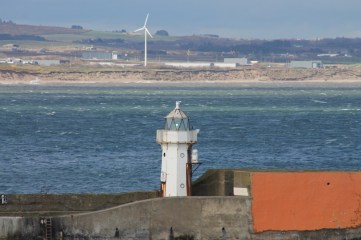
Aberdeen north pier lighthouse


The second of the lighthouses we hadn’t seen in Aberdeen was that at the end of the north pier. Having looked at the map, we already had a feeling that accessing this one might be tricky. Using a long lens on the camera while we were there confirmed this as there is an impassable gate a short way along the pier. We estimated that the views across to the lighthouse from Greyhope Road (the road leading out to Girdle Ness) was the closest we could get. And so that’s where we went. We did also drive around to Esplanade later on that day, but there were no better views from there. Sometimes you just need to admit defeat and settle for the best you can do!

IMG_5253.JPG
Gourdon lighthouse

Our next, and final, lighthouse of the day was at the fishing village of Gourdon, south of Aberdeen. The rear range lighthouse that sits at the side of Brae Road isn’t too dissimilar to that at the side of the Caledonian Canal at Fort Augustus. Although you can walk right up to this one, it’s not so easy to get a good picture of it as it’s fairly surrounded by houses and trees. The picture shown here is probably the best I could do on the day.

DSCF5890.JPG
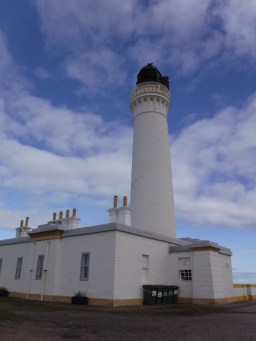
Covesea Skerries lighthouse

So that was it for day two of our trip. Day three, however, was even more exciting as Bob had managed to arrange a visit to Covesea Skerries lighthouse on our way back home. When I visited Covesea back in 2012 it had sadly just been switched off. Over the past 5 years there has been a lot of work done by the local community to get the lighthouse open as a tourist attraction. They have a great website, http://covesealighthouse.co.uk, where you can find the contact details for arranging a visit. It’s run by volunteers so it’s not possible to just turn up, unless you arrive at 10am or 11am on a Saturday during the summer. After a bit of planning via text message with Sheila (one of the volunteer team), we managed to organise a visit for the Sunday, thanks to the very accommodating team – particularly Lynne and Graham who showed us around and allowed our little boy up to the top – he was very proud to have climbed to the top!

IMG_5316.JPG
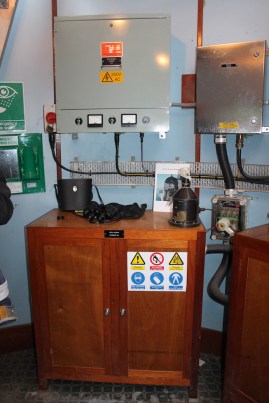
Some of the old lighthouse equipment in Covesea Skerries lighthouse

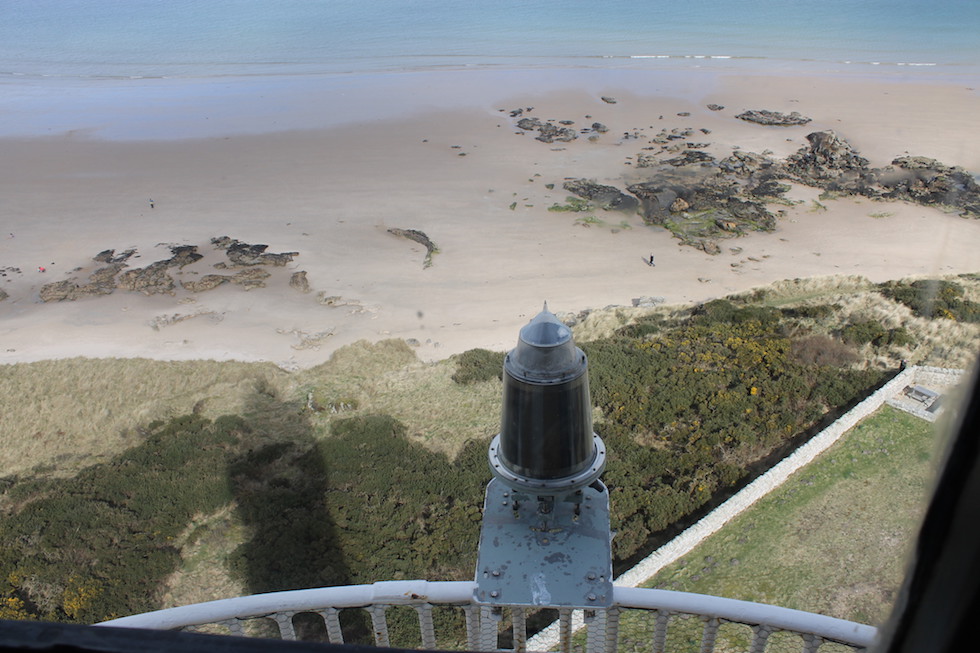
They have obviously put a lot of time and energy into opening the lighthouse up. They’ve even had local students there painting it. Of course, opening any building up to the public brings a lot of safety regulations along with it and they seem to have managed this really well without making any areas off limits. There were fantastic 360 degree views from the top of the lighthouse across the sea to the north and then Lossiemouth to the east. It was a great place to see across to RAF Lossiemouth too and they’d had a variety of planes landing and taking off from there just the day before our visit. The lamp itself has now been removed, unfortunately, but we were informed that it has now found a home at Lossiemouth Fisheries and & Community Museum (although this was closed on the day we were in the area, so we’ll need to pop back some time).

It was a fantastic opportunity and we are so grateful to Sheila, Lynne and Graham for making it possible. I would highly recommend it. I see it only getting better and better as more and more people become aware of it. Fingers crossed they keep getting the support they need 🙂

IMG_5291.JPG
Just one of the views from Covesea Skerries lighthouse (including its own shadow)

2017 bagging season begins!

Those who have seen some of my earlier posts (or even looked at the list of months that I have added posts on here) will know that , for me, there is such a thing as “lighthouse-bagging season”. Of course it’s possible to enjoy them just as much in winter, but the dark mornings and evenings aren’t conducive to a good bagging day.

Whenever the clocks change I’m glad of the lighter evenings and how much more of a day you get to enjoy the outdoors. So it’s no surprise that a few weekends ago we set off to visit a total of 10 new lighthouses and a revisit to a few others too. Due to a review of lighthouses we conducted over the winter, we were able to find some more to keep us going (more on this and the definition of ‘lighthouse’ in a future post).

Nairn.JPG
Nairn lighthouse

So, that weekend the stretch we covered was on the north east coast between Nairn and Gourdon, just to the south of Inverbervie. Our first stop was Nairn East Pier where I got my feet wet. The design of the pier (which is narrower at the end) means that every now and then a larger wave washes over the top, which is exactly what happened as I approached. It would have happened on the way back too had I not been more prepared for it by then. The lighthouse itself has your typical lighthouse base, but is now topped with a “light on a stick” as I refer to them. I’ve not been able to find out any of the history of the lighthouse itself. The pier that it sits on offers some great views across one of the town’s sandy beaches to the east and towards the Black Isle to the north west.

Burghead.JPG
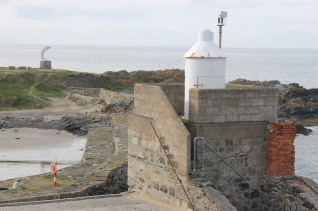
The two lighthouse at Burghead

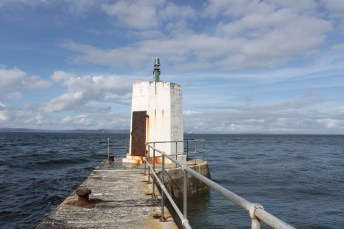
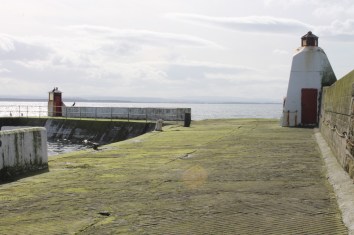
Our next stop was the small town of Burghead where the sturdy-based lighthouse sits on the North Pier. The small lamp looks tiny in comparison to the big, white base. I was nicely surprised to see a squat little structure that also meets my requirements right at the end of the pier. It’s essentially just a cupboard with a light in it. It’s a great short stroll along the pier and a sample of the fantastic rock that adorns this coastline can be seen at the entrance.

Lossiemouth.JPG
Lossiemouth south pier lighthouse

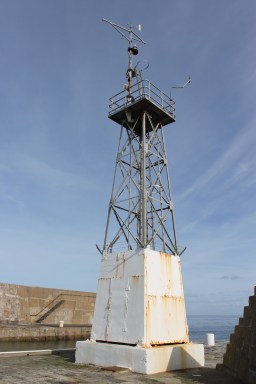
There isn’t a huge amount to be said about the lighthouse on Lossiemouth south pier, except that it gets less and less interesting the further up it you look. It sits on a concrete base with a metal base to the main structure. Out of this metal comes an arrangement not dissimilar to an electricity pylon with a balcony on top. On top of that are a few contraptions on a post including the light. There are some lighthouses that just don’t inspire you (even I will admit that) and this is certainly one of them!

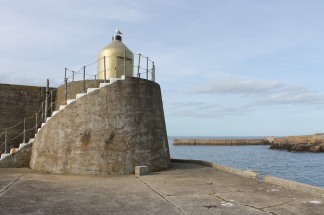
Findochty.JPG
Findochty lighthouse

The little gold lighthouse on the end of the breakwater at Findochty had a bit more character to it – partly because of it’s colour. There’s not a lot to it, just a lamp room with a door that sits at the top of a spiral staircase. Having done some research into this, now disused, structure I discovered that it is usually painted gold for the summer months and white for the winter. The minutes of the local Community Council meetings towards the end of last year suggest that the intention   was that it would be painted white, as per this schedule, at some point, but clearly that hadn’t happened, so I suspect it will remain gold for now. I quite like it that colour – it makes it more memorable. We also spotted a dolphin out to sea just before we left, which is always nice.

Portsoy.JPG
Portsoy lighthouse

Portsoy is a very pretty little village which sits between the neighbouring villages of Cullen and Whitehills (both of which I visited on day 13 of my original lighthouse tour). While it shares some similarities with the two, Portsoy seems to have its own little charm. The small, white lamp room of the lighthouse sits on top of a private building. It’s possible to get views of the structure from a range of angles though thanks to the cosy little harbour. A beautiful, artistic metal dolphin sits across the other side of the harbour, which adds to the picturesque scene.

Peterhead north.JPG
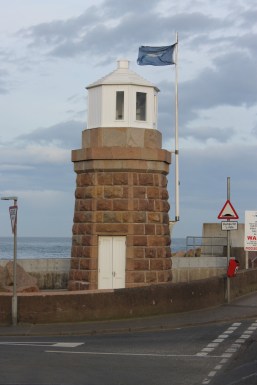
Peterhead harbour north lighthouse


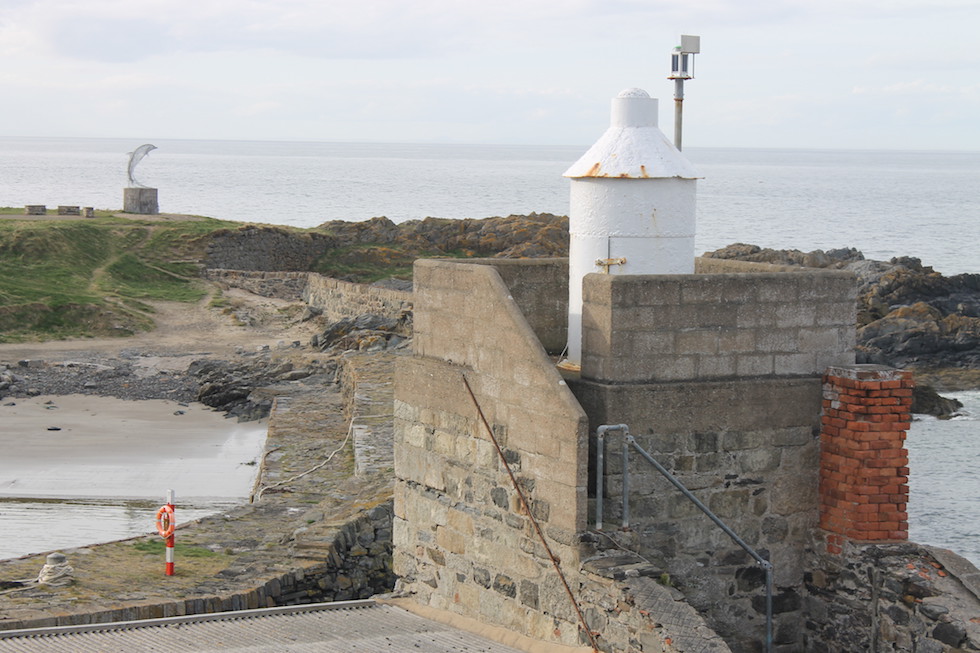
I wasn’t necessarily looking forward to our final stop for the day, Peterhead. My main memory of it last time was my stay at the campsite and the creepy old men who were also staying there when they only lived a few miles along the road. This time though we were searching the more built-up harbour area for a couple of, what I thought would be, less obvious lighthouses. We were just about to enter the pier that reaches out to the north of the harbour, heading towards the lighthouse near its end when we spotted a lighthouse just at the side of the road. Unlike many of the others we’d seen that day, this looked like a “proper” lighthouse with the stone base and lamp room integrated. After stopping for pictures we continued along the pier and through the various fishing-related buildings to where we were expecting a lighthouse to be. There was, it turned out, nothing to be seen there (apart from a view across to the second lighthouse) and further research has explained the relocation of the north harbour lighthouse. In April 2015 an application was submitted to Aberdeenshire Council to make alterations to the harbour at Peterhead, including the dismantling and re-erection of the lighthouse to its new location. The application states that: “It was proposed the lighthouse would have the masonry moved on a block by block basis after each block had been marked and recorded for position and then erected in the new location.” The application then goes on to say that the lighthouse had already been removed by the point the application was submitted without authorisation. It is noted in the document that the new/proposed location of the lighthouse would make it more accessible for the public, which it certainly is. I would have been quite happy to not have had to go searching around the numerous fishy buildings there and seen fish guts being dumped!

Peterhead south.JPG
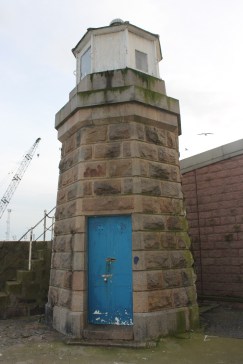
Peterhead harbour south lighthouse

The second lighthouse in Peterhead harbour was much easier to find, being located just in front of the Peterhead Port Authority building. It’s basically the twin of the relocated structure, but isn’t looking quite as rejuvenated as it’s partner (presumably they gave the north harbour lighthouse a bit of a clean when the moved it!)

Our weekend of bagging new lighthouse continued, but more on that in the next post. 🙂

Cornish lights with an added bonus

Our summer holiday for this year had been booked for the Isles of Scilly, which presented the perfect opportunity for a quick stop at a couple of Cornish lighthouses I had yet to see.

IMG_3289 copy
Mevagissey lighthouse

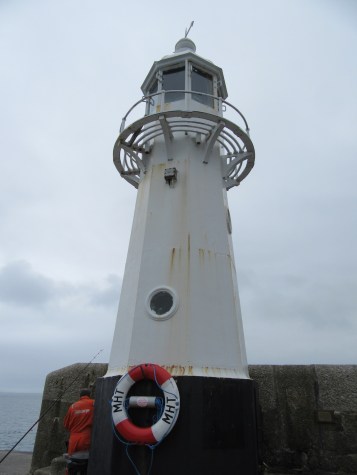
The first of these was at Mevagissey, just south of St Austell on the South Cornwall coast. It’s a lovely little place with plenty of gift and craft shops for tourists and some great pubs and eateries on the seafront with views across the harbour. The lighthouse sits on the end of the south breakwater and has done since 1896 – although it has been well-maintained and is clearly regularly re-painted. The white tower with a black band at the bottom is 8 metres tall and made of cast iron. The spot is popular with fishermen, which was evident during our visit. I was particularly pleased that we were joined by my parents for this lighthouse visit as I couldn’t recall ever having visited a lighthouse with them both (the closest we’d been previously was on our wedding day). Mevagissey is a perfect example of a small, visitor-friendly fishing village. Driving around it may be a challenge, but parking is easy enough in the public car parks to avoid the narrow, pedestrian-filled roads.

IMG_3316 copy
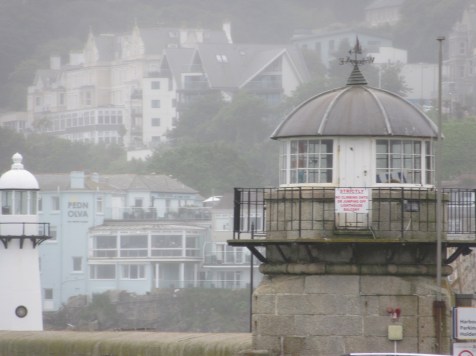
The new and old lighthouses at St Ives

The challenge of driving around Mevagissey pales into insignificance though in comparison to our second stop, St Ives. To start with it’s like a maze, with roads of varying sizes all over the place going uphill, downhill and everywhere. Secondly, it’s busy – and I don’t just mean on the roads (which actually weren’t too bad considering – clearly everyone knows St Ives better than we do and uses the Park & Ride). There are a lot of people in St Ives though. There are also very few places to park. Once we’d found a road close enough to the pier (we managed to avoid the easy route straight along the seafront) and decided it was too risky to drive down the narrow road with tight bends, I leapt out and hurried down to the pier while Bob sat in the car in a cul-de-sac. Smeaton’s Pier had a surprise lined up for me though, boasting not one lighthouse, but two! I’ve since read that the original lighthouse, built in 1831 by John Smeaton (of Smeaton’s Tower fame), was replaced in 1890 by the new lighthouse after the pier was extended. The old lighthouse is a more rustic and, in my opinion, attractive tower. The new tower, apart from being a metre taller and octagonal, looks very similar to that of Mevagissey, which was based upon the design of the St Ives tower. Although my visit was a bit rushed, it was great to see an example of lighthouse heritage in St Ives and another of Smeaton’s creations.

Overall, it was a successful day in a county in which I very rarely find myself. Setting aside the challenging roads, both places were well worth a visit 🙂
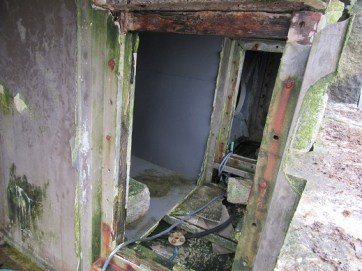
Discovering Wee Cumbrae’s lighthouse heritage

At the weekend we spent some time in Ayrshire and, thanks to our friend Rick, we went on a fantastic trip over to Little Cumbrae (also know locally as Wee Cumbrae). It’s always exciting to visit a small island with more than one lighthouse – sort of like visiting the Calf of Man. It’s always a treat. Wee Cumbrae is particularly special though in that it has three generations of lights.

Little Cumbrae old lighthouse

The ride over to the island in a RIB was very short and uneventful, which made a nice change! After saying goodbye to our chauffeurs and their very excitable dog, we began making our way towards the island high point, which was of interest to us all. For me it was to see the island’s oldest lighthouse, while the rest were keen to reach the high point in order to legitimately say they had bagged the island. There was a nice path most of the way to the high point, but as we got closer it became apparent that we would need to go off piste, so we cut across the grass, ferns and various other types of foliage.

We finally reached the old lighthouse and explored the remains. The tower was originally built in 1757 and, according to Canmore, was a 30ft tower with 3ft thick walls. The coal for the light was supported by an iron cage or grate. From inside the tower it is still possible to see where steps up the light used to be and, to the north of the tower, are the remains of the old keeper’s cottage. Less than 40 years after it was first lit, the lighthouse was replaced. From the lighthouse it was just a short walk to the island high point.

Little Cumbrae lighthouse
The 1793 lighthouse on Little Cumbrae

Our next destination was the second of the island’s lighthouses, first lit by the Cumbrae Lighthouse Trust with funds generated from the shipping dues from the old lighthouse. The lighthouse was designed by Thomas Smith, the first Northern Lighthouse Board’s engineers, and its construction was overseen by Robert Stevenson, the first of the “Lighthouse Stevensons”. The lighthouse is a fascinating place to visit now that it is no longer operational. The tower, all of the keeper’s cottages and associated buildings are now open so you can have a good look around. We were pleased to be able to get right to the top of the lighthouse and there is still a distinct smell of mercury about the tower. The keeper’s cottages are home to an interesting array of relics, including some 1970s editions of Reader’s Digest and, oddly, a few sets of old airplane seats. We spent quite some time exploring the buildings and everyone seemed to enjoy it.

Little Cumbrae beacon
The Little Cumbrae beacon now sits on the old fog horn tower

Located close to the lighthouse was the old fog horn control room and tower, upon which the operational beacon now sits. By this point the sun had come out and we enjoyed lunch near the lighthouse, explored the old pier area which was clearly where access to the lighthouse from the sea had previously been, and then headed back across the island.

When we arrived back at our drop-off point we still had a fair amount of time left before we were picked up so a few members of the group wandered across to Castle Island, a very short distance off of the east coast of the island. When I say “wandered” what I mean is that, initially, the group used various methods of getting across the fairly shallow stretch of water. Bob was first across and just waded his way through with his shoes on and everything. The next three sensibly removed their shoes and paddled across. As the tide continued to recede, the next two or three people threw rocks into the water to use as stepping stones for getting across. By the time most of the group had crossed, the water had gone down enough for me to just stroll over to the island without getting wet feet at all.

Castle island
Castle Island viewed from the grounds of the yoga retreat

Castle Island is so called due to the beautifully preserved lighthouse which sits upon it. Apparently dating back to the 16th century, there is now a set of wooden steps leading up to the castle entrance. There are some fantastic rooms in the castle, some of which contain some wooden tables and benches. The views from the top, where more benches can be found, are stunning. We spent quite some time up there. By the time we returned from Castle Island the tide was fully out and the crossing was dry.

We spent the remainder of our time on the island looking around the grounds of the yoga and meditation centre. A really well-kept garden and definitely a good island for some relaxation. It was a great island and I was pleased to be able to bag two new lighthouses there 🙂
Welsh offshore rock lights

Last weekend we spent a day in South West Wales in the hope of bagging two very exciting lighthouses! A good friend of ours, Adrian, had organised a boat trip with Venture Jet out from St David’s and the forecast for the weekend was looking good. So, being the committed lighthouse-baggers that we are, we made the day-long trip each way from home to South Wales.

smalls and me
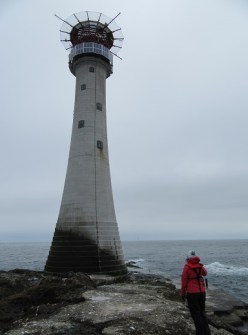
Smalls lighthouse and me – on the same piece of rock!

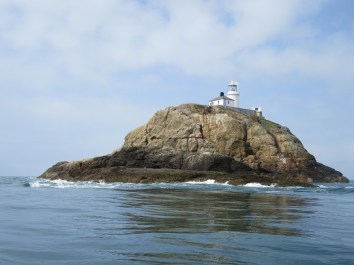
Due to the tide at the time, our first destination was to be a stunning piece of architecture that sits around 21 miles west of St David’s, Smalls lighthouse. On the journey out, the captain informed us that it may not be possible to land on the rock, so I wasn’t getting my hopes up. We were encouraged to sit on the tubes at each side of the boat and hold onto two handles (basically, clinging on for dear life!), which proved to make for a pretty bumpy ride. Very sensibly, everyone gradually realised that sitting in the centre of the boat was a much more pleasant experience.

As you would expect, we spotted the lighthouse from some way off and as we approached it was looking like a landing on the rock would be possible. In fact, it turned out to be a particularly dignified landing, just hopping off of the front of the boat onto some steps. The trouble came at the top where we encountered a wide area of flat rock covered in particularly slippery seal poo! Obviously that couldn’t dampen our spirits though for having got so close to such a majestic structure.

smalls old struts
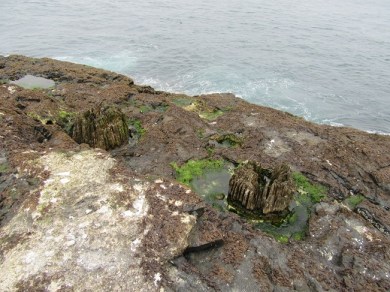
The remains of two of the oak struts from the previous lighthouse at Smalls

The rock, in fact, turned out to be even more interesting as we discovered the remains of the bases on numerous oak struts, hidden within the rock. Having not done my research prior to our visit, I was informed while we were there by someone a little more forward thinking than me, that the tower that currently sits on the rock is actually the second lighthouse to have appeared on the rock. The previous being a timber lamp room and keeper’s house perched on top of these struts as well as some cast iron legs. This lighthouse was built in 1776, but didn’t last long until vital repairs were needed following storm damage. Between January and September 1778 the light was not in operation. After repairs had been made, it then guided mariners for over 80 years until it was replaced by the existing tower in 1861. There is more information about, and drawings of, the old lighthouse on the Trinity House blog and another blog from Heritage of Wales features a diagram showing the positions of all the old struts as well as an artist’s replica of the old lighthouse.

smalls from below
The door to the lighthouse with some damage below

The old lighthouse was the setting for the story of the two lighthouse keepers, one of whom died during their stay on the rock and the other, in the process of trying to deal with his colleague’s passing, was driven mad. It is said that this incident, which is believed to have occurred around 1800, was the reason behind the introduction of the rule that three keepers had always to be present at any one time.

Now, to the existing tower – and what a tower it is – all 141ft of it! It was originally based on the design of Eddystone lighthouse and originally featured red and white stripes, which were sandblasted off in 1997. It is still possible to climb up to the the lighthouse door, which Bob did and tried knocking, but apparently no one was in! I think we were all in awe at how such a building was constructed on such a challenging piece of rock.

smalls storage
One of the old storage rooms built into the rock at Smalls

The rock hid a number of other surprises too, like some old store rooms, which had been cut into the rock. I have also seen a picture that shows a separate building that was once located on the flat section of rock, which is no longer there. In short, the place is fascinating and I was pleased that all of the hill- and island-baggers that were on the trip seemed to enjoy the visit too.

Saying farewell to Smalls, we headed back towards the mainland. You may think that seeing Smalls was enough excitement for one day, but no, there was more! With the tide now at prime position, the landing on South Bishop was just as dignified as it had been on Smalls. We were greeted with a considerable number of steps, impressively crafted from the rock and pretty much all still in good working condition. The steps were worth the climb though when we reached the lighthouse at the top.

south bishop from sea
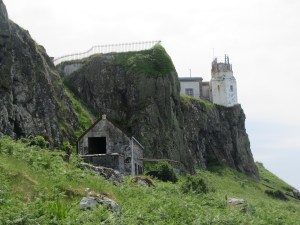
South Bishop lighthouse

The lighthouse looks impressive from every possible angle from the sea and when on land has a fairly large compound. The lighthouse was first lit in 1839 and, in 1971 a helipad was constructed to allow easier access. However, the helipad was prone to flooding in bad weather and high tides. Both the old helipad and the newer one can still be seen on the island. Bob went off to explore the area surrounding the old helipad and happened upon a piece of concrete with a name engraved into it, ‘Cyril M’, followed by what looks like a date ’24 10′ and then an indecipherable year. Intriguing! (Update: I have since been reliably informed that this would have been engraved by Cyril Matthews, a Trinity House carpenter based out of Swansea). It was a great place to explore and I could have happily spent all day there (particularly as the sun came out for us).

south bishop helipad
South Bishop lighthouse from the old, damaged helipad

On the way back to St David’s, our guides took us to see a small rock island called Daufraich, through which the tide bubbled up to the surface. He said he would quite like to dive there one day, but has concerns about being drowned by an influx of disturbed seals! We were also taken around the south end of Ramsey Island where there are cliffs up to 100 metres high. We also went through a sea cave where seals were chilling out before arriving back at St David’s.

Overall a fantastic bagging day, both for me with the lighthouses and for Bob who then went on to bag 5 Marilyns! A great day and well worth the journey! 🙂
A Lewis walk & a Harris surprise

Welcome to my 100th blog post!

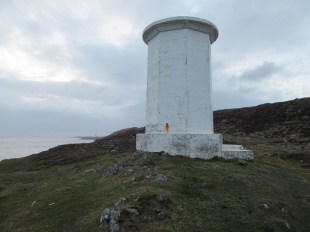
We went over to the Western Isles earlier this month for a week-long holiday, staying in a great four-bedroom house on Harris. I’d been to the Western Isles a few years ago and visited the easier to get to lighthouses, such as Butt of Lewis, Tiumpan Head, Arnish Point and Eilean Glas. So this time the plan was to reach another that involved a bit more of a stretch of the legs, Aird Lamishader.

aird lamishader
Aird Lamishader lighthouse

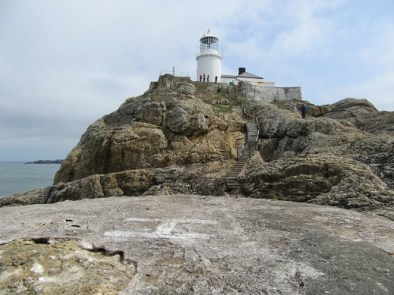
I knew before we set off for the walk from Borghastan/Borrowston that the lighthouse was one of the “flat pack” style. To get there we had to navigate our way down some nice steep slopes (we seemed to miss the sensible path down). Once we made it to the fields below we encountered some particularly friendly/scary sheep that, instead of running away as I would normally expect them to do, started to follow us. I was later informed that it was likely to be because they, and their lambs, were still bring fed by the farmer at that point, so they expected us to feed them. Once we’d passed over the fields we started the wander up a hill that Bob wanted to climb and said would be a more direct route to the lighthouse. So, up we went and spent some time checking out the view before we went down the other side. By this point it was feeling like quite a trek, but at least we could see the lighthouse.

butt of lewis
Butt of Lewis lighthouse on a sunny, but chilly, day

After crossing more fields and going up another (considerably smaller) hill we arrived at the lighthouse. As with most “flat pack” lighthouses, there’s not a lot to say about them, but they are often located in places with rather good views and this one was no exception. We were even fortunate enough to catch sight of the Flannan Isles out to sea. Fortunately we walked around the hill on the way back, but in the process met even more over-friendly sheep. I managed to calm down though when we spotted a man heading the same way as us. He was a local former Gaelic teacher who has been growing carrots in the area. He was a friendly man and took us the sensible route back to the car.

The following day we revisited the Butt of Lewis lighthouse briefly. I say briefly because it was a bit wild that day!


flannan isles shore station
The old Flannan Isles shore station in Breasclete

On the way back to our accommodation that day we drove through Breasclete on the west coast of Lewis in search of the old Flannan Isles lighthouse shore station. We spotted the big house from the main road, and as we got closer, noticed the old Northern Lighthouse Board emblem above the front door. I believe there are plans to create a memorial in Breascleit at some point in memory of the three lighthouse keepers that went missing from the Flannan Isles lighthouse in December 1900.

During our trip we stopped by Hebrides Arts, a beautifully located art gallery and cafe with some amazing work from local artists. While we were there we spotted a painting of a lighthouse with the title ‘Leverburgh lighthouse’, which surprised us as we weren’t aware of any lighthouses at Leverburgh, just beacons. The story associated with the picture was that the top section had blown off during a storm, leaving just the tower.

leverburgh
What remains of Leverburgh lighthouse

That evening we headed to Leverburgh pier and sure enough, just as the lady at Hebrides Arts mentioned, the tower was visible just across the water to the right. As we headed back up the road, we parked up at the side of the road and walked along to it across some, boggy in places, moorland. The tower turned out to be bigger than I’d imagined and Bob made a note of its coordinates as we hadn’t found it on any maps. Later in the week we spoke to Seumas Morrison, who runs Sea Harris and regularly goes out from Leverburgh pier. His take on it’s history was that the top section on the lighthouse was actually removed and not blown away.

Leverburgh lighthouse Sept 06
Bob’s picture of Leverburgh lighthouse in 2006

Bob had a look back at some of his pictures from the area and found one from 2006 showing the lighthouse intact. A picture he had from 2012 shows the tower alone. There is very little information about this lighthouse online. I was pleased to find out about it though and to visit it during our holiday.

We were due to take a trip out to the Monach islands and possibly Hasgeir, which would have involved two new lighthouses for me, but sea conditions weren’t in our favour on this occasion, so they will be for another time. We did manage to make it to Taransay and Scarp though, and although there were no lighthouses they are still fantastic places to visit if you are lucky enough to be able to get to them.

I have only one lighthouse left to visit on Lewis and Harris now, Rubh’ Uisinis, which involves a lot more planning. I’m not sure I fancy the 10 mile+ walk out to it over bog land (and then there’s the return journey), so will need to think a bit more creatively about that one!

Finally, once we arrived back in Ullapool and began our journey home we took a minor detour as we noticed the van in front of us belonged to the Northern Lighthouse Board. We’d never seen one before so had to get a quick picture 🙂

More Skye lights

So, lighthouse bagging season begins again…

At the end of March, we made the most of the long Easter weekend and booked a trip to Skye to discover a bit more about what goes on south of the bridge. We’d both been to the centre of the island a few times, but seen very little of the south. We booked ourselves into an annexe at Tigh Na Cairdean in Duisdale, owned by the lovely Emma and Jon. They very kindly left us some fresh eggs (as well as chocolate eggs) on Easter Sunday!

The forecast wasn’t looking great so we decided that the relatively “dry” day would be the best day for a walk to the Point of Sleat, the very southern tip of Skye. We set off on the five-mile walk from Aird of Sleat – all kitted out in waterproofs, which we didn’t actually need for the first hour or so and even after that the rain wasn’t much more than drizzle. The path was initially quite good and we happily splashed through puddles in our wellies – partly to entertain our son, but mostly because it’s what you do when you’re wearing wellies (isn’t it?!)

The path got a little more interesting after we began heading south off of the main track. Due to the amount of rain in recent days, the path was pretty wet and muddy and we were both even more glad of the wellies at that point. The track passes by the secluded Camas Daraich beach, which we chose to save for the return journey. Past the beach it felt like we were heading out further and further without making much progress, but once we’d spotted the lighthouse at the very end of the point and navigated our way down a slope, we arrived.

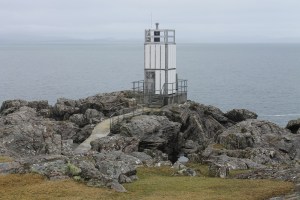
sleat
Point of Sleat lighthouse

Being a “flat-pack”-style lighthouse (as I often refer to them), the structure lacked the beauty of the traditional lighthouses, but the surroundings certainly helped to make it appear better than the average “flat-pack” lighthouse. Although the cloud was low, we were able to see across to Eigg and it’s little neighbouring island of Eilean Chathastail, which we had visited last year, and to the east at various points of the walk we could see the mountains of Knoydart.

We stopped for lunch near the lighthouse, with Bob pulling a 4-man group shelter out of his bag for us to sit under. It’s essentially like being in a tent, but you use your heads to keep it up at either end and sit on it to keep the weather out. All in all quite a fun little picnic!

On our way back we stopped off at Camas Daraich beach, which may not have looked its best with the grey skies, but would certainly be quite a find on a nice, sunny Scottish day! The walk back went well and we stopped off at the Clan Donald Centre at Armadale Castle on the way back to warm up and dry out.

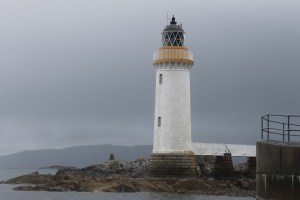
ban
Eilean Ban lighthouse

The following day we had some time to kill in the morning – we were waiting on the tide, you see to get to the next lighthouse. We decided to pop to Kyleakin for a ride on Seaprobe Atlantis, a glass-bottomed boat that offers various tours of the local area. Fortunately, the trip we were on took us north underneath the bridge, providing us with another view of the Eilean Ban lighthouse and the cottage we stayed at last year. We’ve now seen it from above, from inside, from the island itself and now from the sea. I don’t think we can do much more to improve on this one! Watching the underwater wildlife from the bottom of the boat was really quite fascinating. Not being a particular fan of being submerged in water, it’s not something I’d experienced before, so it was a great little trip.

Now, back to that tide and the plans we had during low tide. On my lighthouse tour I’d been to Isleornsay and looked across the water at the lighthouse on Eilean Sionnach, but the tide had been in, so there was no chance to get across to it. Even if the tide had been out, I would have been hesitant to wander on over. My theory with any tidal island is to make sure you do your tide research first, unless you fancy getting stranded overnight! [2021 edit: the cottage is now available as a holiday let which actually makes being stranded there sound idyllic].

Fortunately, Bob had done the research this time so I didn’t have to. The realisation that the clocks had changed overnight came as a bit of a shock and led to some confusion (for me anyway), but we got it sorted and set off across to the tidal island of Ornsay to then wander along to the further tidal island of Eilean Sionnach. It’s not often that you get the opportunity to walk across to a tidal island to then walk to an additional one. It also means you need to be extra careful with your timings though!

As we walked across, for a change we were attempted to the stick to the seaweed rather than the soft sand. We’d learnt earlier in the day on the Seaprobe Atlantis that seaweed sticks to rocks and doesn’t have roots in sand as we had previously thought. So, treading on it (although it may have been slippy) was preferable to sinking into the sand. We made it across the first stretch of exposed sand and then across to Eilean Sionnach. There is a house on the island, the former lighthouse keepers cottages, which are currently being renovated. We made a mental note to keep an eye on it. If it becomes available as a holiday let then we’ll be there!

feature
Eilean Sionnach lighthouse (bigger than my usual pictures, so you can appreciate it)

Unlike the lighthouse at the Point of Sleat, this one is a traditional Stevenson lighthouse, first lit in 1857. What I find particularly interesting about this one is that, unlike many of the others within Scotland (and the Isle of Man for that matter), it is not monitored remotely from the Northern Lighthouse Board’s headquarters, but instead relies upon an observer to let them know if there are any problems. The most amazing thing about this lighthouse though has to be the fantastic views across to the Knoydart mountains. We found a small mound a short distance from the lighthouse that provided a panoramic scene of the lighthouse with the mountains in the background – we were obviously both happy with that.

Fortunately, we decided to leave the lighthouse after a short time to make sure we got back across the sand before the tide came in. Our return path was a little less direct due to the already incoming tide, so once we reached the mainland of Skye we hugged the coast a little more closely and made it safely back.

We had a great weekend and were really pleased to be able to explore a part of Skye that had been fairly unknown to us beforehand. Since we took a trip there last year and another this year, I’ve informed Bob that it should now be an annual tradition. We’ve still got Waternish Point to get to after all! 🙂